

Israel and the first human civilization
 |
Description
Book Introduction
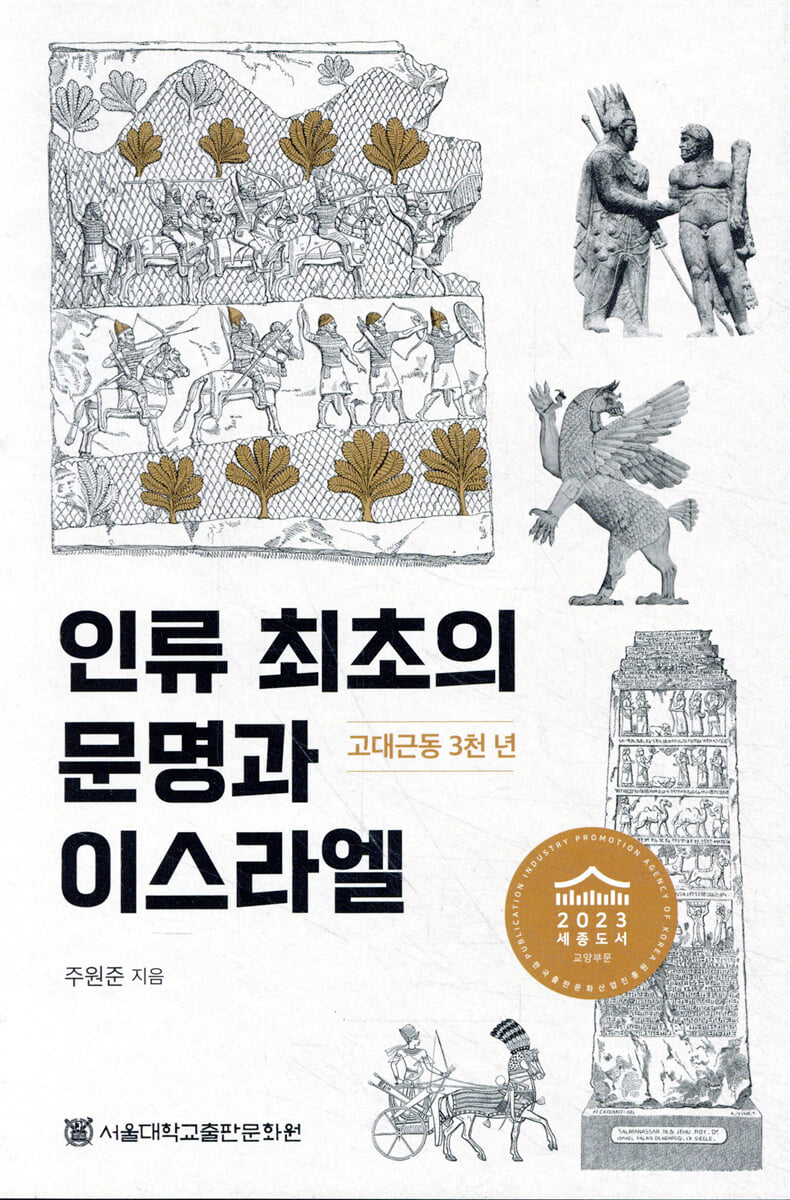
A glimpse into humanity's first civilization, the 3,000-year history of the Ancient Near East.
The ancient Near Eastern civilization, the first civilization of mankind, lasted for over three thousand years across a vast area encompassing Western Asia, North Africa, and parts of Europe. It was the direct background of Judaism, Christianity, and Islam, and its influence on ancient Indian religions was also considerable.
However, Korean intellectuals were surprisingly ignorant of this important ancient Near Eastern world and lacked adequate resources to quench their intellectual thirst.
This book is Korea's first attempt to provide basic historical information that allows for a comprehensive understanding of the "pre-Greek world," while also providing an easy and calm explanation of its interpretation and meaning.
This book, which contains the author's experience of teaching 'Ancient Near Eastern Religion' for over 10 years, is an introductory and general book that allows readers to encounter diverse stories about literature, religion, society, and history of the ancient Near Eastern world. At the same time, it is designed so that readers who want to gain in-depth knowledge can lay the foundation of ancient Near Eastern studies through the "Read More" section that introduces research books and reference books in the field of ancient Near Eastern studies.
The ancient Near Eastern civilization, the first civilization of mankind, lasted for over three thousand years across a vast area encompassing Western Asia, North Africa, and parts of Europe. It was the direct background of Judaism, Christianity, and Islam, and its influence on ancient Indian religions was also considerable.
However, Korean intellectuals were surprisingly ignorant of this important ancient Near Eastern world and lacked adequate resources to quench their intellectual thirst.
This book is Korea's first attempt to provide basic historical information that allows for a comprehensive understanding of the "pre-Greek world," while also providing an easy and calm explanation of its interpretation and meaning.
This book, which contains the author's experience of teaching 'Ancient Near Eastern Religion' for over 10 years, is an introductory and general book that allows readers to encounter diverse stories about literature, religion, society, and history of the ancient Near Eastern world. At the same time, it is designed so that readers who want to gain in-depth knowledge can lay the foundation of ancient Near Eastern studies through the "Read More" section that introduces research books and reference books in the field of ancient Near Eastern studies.
- You can preview some of the book's contents.
Preview
index
preface
introduction.
Ancient Near Eastern Studies
The scope of ancient Near Eastern studies
Lower regions of the Ancient Near East
Fertile Crescent
Research history and major references
Characteristics and limitations of feed
Ethnic name and Nisba ending
[Read more 1] Foundations of Ancient Near Eastern Studies
I Mesopotamia in the 3rd millennium BC
The Beginning of 'Europe of the East'
The Revolution of the City
Sargon the Conqueror
Arcad's innovation
Neo-Sumerian period
[Read more 2] Sumer and Akkad 81
II Egypt in the 3rd millennium BC
Two Egypts
The land of Maat, the China of the West
A history of unification and division
Old Kingdom.
The Great Pyramid Era
Light and Darkness of the Old Kingdom
[Read more 3] Old Kingdom of Egypt
III.
First half of the 2nd millennium BC
Mesopotamia and its neighbors
Asshur.
The first commercial colony
Amur.
City people and nomads
Hammurabi.
Babylonia's Golden Age
The Hittites attack Babylon
The Age of the God of Storms and Rain, the Age of Baal
[Read more 4] Mesopotamia and its neighbors
Middle Kingdom of Egypt.
The World of the Thebans
Amun-Re, the new supreme god
Second Intermediate Period.
The strange rulers, the Hyksos
[Read more 5] Egypt's Middle Kingdom
IV.
late 2nd millennium BC
Hittite.
The first feudal system
Mittan.
The land of chariots
An era of fierce diplomatic warfare
Assyria of military force, Babylonia of culture
[Read more 6] The Age of Great and Small Nations
New Kingdom of Egypt.
Pharaoh Moses
Hot suit.
Daughter of the Holy Spirit
Amenhotep III.
The Age of Peace, the Independence of the Sun Disk
Akhenaten.
Failure of Monotheism Reform
Ramses II.
New heyday
The first world war.
Destruction and disconnection
[Read more 7] New Kingdom of Egypt
V.
1st millennium BC
Syria-Palestine.
A changed world
Neo-Assyria.
The full-scale development of imperialism
Victims of Neo-Assyria
Neo-Babylonian.
The pinnacle of Sumerian-Akkadian culture
A people in exile.
Arameans and Israelites
Persia.
A new dimension of empire
The End of the Ancient Near Eastern World
[Read more 8] 1st millennium BC
References
Image source
introduction.
Ancient Near Eastern Studies
The scope of ancient Near Eastern studies
Lower regions of the Ancient Near East
Fertile Crescent
Research history and major references
Characteristics and limitations of feed
Ethnic name and Nisba ending
[Read more 1] Foundations of Ancient Near Eastern Studies
I Mesopotamia in the 3rd millennium BC
The Beginning of 'Europe of the East'
The Revolution of the City
Sargon the Conqueror
Arcad's innovation
Neo-Sumerian period
[Read more 2] Sumer and Akkad 81
II Egypt in the 3rd millennium BC
Two Egypts
The land of Maat, the China of the West
A history of unification and division
Old Kingdom.
The Great Pyramid Era
Light and Darkness of the Old Kingdom
[Read more 3] Old Kingdom of Egypt
III.
First half of the 2nd millennium BC
Mesopotamia and its neighbors
Asshur.
The first commercial colony
Amur.
City people and nomads
Hammurabi.
Babylonia's Golden Age
The Hittites attack Babylon
The Age of the God of Storms and Rain, the Age of Baal
[Read more 4] Mesopotamia and its neighbors
Middle Kingdom of Egypt.
The World of the Thebans
Amun-Re, the new supreme god
Second Intermediate Period.
The strange rulers, the Hyksos
[Read more 5] Egypt's Middle Kingdom
IV.
late 2nd millennium BC
Hittite.
The first feudal system
Mittan.
The land of chariots
An era of fierce diplomatic warfare
Assyria of military force, Babylonia of culture
[Read more 6] The Age of Great and Small Nations
New Kingdom of Egypt.
Pharaoh Moses
Hot suit.
Daughter of the Holy Spirit
Amenhotep III.
The Age of Peace, the Independence of the Sun Disk
Akhenaten.
Failure of Monotheism Reform
Ramses II.
New heyday
The first world war.
Destruction and disconnection
[Read more 7] New Kingdom of Egypt
V.
1st millennium BC
Syria-Palestine.
A changed world
Neo-Assyria.
The full-scale development of imperialism
Victims of Neo-Assyria
Neo-Babylonian.
The pinnacle of Sumerian-Akkadian culture
A people in exile.
Arameans and Israelites
Persia.
A new dimension of empire
The End of the Ancient Near Eastern World
[Read more 8] 1st millennium BC
References
Image source
Into the book
Let us begin by defining the space and time covered in Ancient Near Eastern Studies.
It would be efficient to start by asking about space first.
Why do we say 'Ancient Near Eastern Studies' instead of 'Ancient Middle Eastern Studies'?
--- p.17
The first city in human history emerged in Uruk in southern Mesopotamia.
The walled area was something never seen before.
This is called the 'Urk phenomenon'.
Although it may seem like a relatively slow process from a modern perspective, it was in fact a revolutionary event in human history, so it could be called the 'Urk Revolution'.
--- p.50
Sargon appeared.
It was the 24th century BC.
He founded the Akkadian Empire and united all of Mesopotamia with his superior military power.
All the peoples of the East, West, South, and North knelt down.
The landscape of history changed with the advent of Sargon.
In the Sumerian era, city-states lived freely and competed with each other.
They sometimes formed alliances and competed.
This era of alliances and cooperation has now changed into an era of conflict between the 'conquerors in the center and the rebels in the borderlands.'
--- p.61
The Egyptians perceived the world as Maat and Ijepheth.
Egypt was a rich land flowing with milk and honey, but the land outside Egypt, that is, the foreign land, was a barren land.
Egypt was the land of the sublime principle of Ma'at, but Ijephet was a barbaric region inhabited by people who did not know the way.
Therefore, the Egyptians distrusted and looked down on foreign countries.
This consciousness forms the basis of Egypt's foreign policy.
--- p.91
The ancient Near East in the first half of the 2nd millennium BC (roughly the 20th to 16th centuries BC) was a time of division and conflict.
A large number of new city-states emerged in Syria-Palestine and Anatolia.
The Third Dynasty of Ur in southern Mesopotamia collapsed.
Merchants from northern Mesopotamia traveled between these cities even before the rise of empires.
Shamshi-Adad I of Assyria briefly brought order to the period of disunity, but only for a short time.
Meanwhile, the Middle Kingdom was established in Egypt.
It was a dynasty that tried to restore the glory of the old kingdom and creatively adapted to the new era.
--- p.129
The fall of Persia created a tremendous discontinuity.
Even after the fall of Persia, a small number of experts continued to transcribe and study the literature of the Sumerian-Akkadian world, but as Hellenism spread, the civilization of the three thousand years of the Ancient Near East was gradually forgotten.
This region passed into the hands of the Greeks and then the Romans, and then the Christian and Islamic civilizations arose in succession.
It would be efficient to start by asking about space first.
Why do we say 'Ancient Near Eastern Studies' instead of 'Ancient Middle Eastern Studies'?
--- p.17
The first city in human history emerged in Uruk in southern Mesopotamia.
The walled area was something never seen before.
This is called the 'Urk phenomenon'.
Although it may seem like a relatively slow process from a modern perspective, it was in fact a revolutionary event in human history, so it could be called the 'Urk Revolution'.
--- p.50
Sargon appeared.
It was the 24th century BC.
He founded the Akkadian Empire and united all of Mesopotamia with his superior military power.
All the peoples of the East, West, South, and North knelt down.
The landscape of history changed with the advent of Sargon.
In the Sumerian era, city-states lived freely and competed with each other.
They sometimes formed alliances and competed.
This era of alliances and cooperation has now changed into an era of conflict between the 'conquerors in the center and the rebels in the borderlands.'
--- p.61
The Egyptians perceived the world as Maat and Ijepheth.
Egypt was a rich land flowing with milk and honey, but the land outside Egypt, that is, the foreign land, was a barren land.
Egypt was the land of the sublime principle of Ma'at, but Ijephet was a barbaric region inhabited by people who did not know the way.
Therefore, the Egyptians distrusted and looked down on foreign countries.
This consciousness forms the basis of Egypt's foreign policy.
--- p.91
The ancient Near East in the first half of the 2nd millennium BC (roughly the 20th to 16th centuries BC) was a time of division and conflict.
A large number of new city-states emerged in Syria-Palestine and Anatolia.
The Third Dynasty of Ur in southern Mesopotamia collapsed.
Merchants from northern Mesopotamia traveled between these cities even before the rise of empires.
Shamshi-Adad I of Assyria briefly brought order to the period of disunity, but only for a short time.
Meanwhile, the Middle Kingdom was established in Egypt.
It was a dynasty that tried to restore the glory of the old kingdom and creatively adapted to the new era.
--- p.129
The fall of Persia created a tremendous discontinuity.
Even after the fall of Persia, a small number of experts continued to transcribe and study the literature of the Sumerian-Akkadian world, but as Hellenism spread, the civilization of the three thousand years of the Ancient Near East was gradually forgotten.
This region passed into the hands of the Greeks and then the Romans, and then the Christian and Islamic civilizations arose in succession.
--- p.324
GOODS SPECIFICS
- Publication date: July 15, 2022
- Page count, weight, size: 336 pages | 140*210*30mm
- ISBN13: 9788952130037
- ISBN10: 8952130030
You may also like
카테고리
korean


korean

![GQ KOREA Mark (Monthly): December [2025]](http://librairie.coreenne.fr/cdn/shop/files/8ef265dbbfbf186523ed75ba7319009d.jpg?v=1765340328&width=3840)


