

Korean War
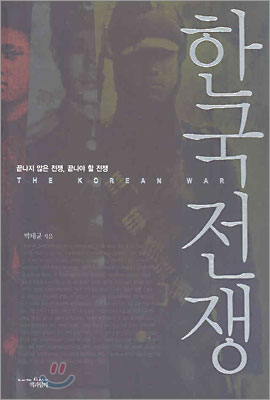 |
Description
Book Introduction
The war that South Korea calls the Korean War Incident is called the "Fatherland Defense War" or the "National Liberation War" in the North, claiming that it was a war to prevent invasion by the United States and the Syngman Rhee government.
The author argues that neither the Korean War nor the Korean Liberation War accurately reflect the fundamental historical facts of the time.
The author gives the meaningless name of the 'Korean War' to the war that lasted from 1950 to 1953, and explains the 'Korean War' objectively, removing ideological bias and making it easy to understand.
It conveys to readers the significance of the events that occurred at that time and shows the impact that the war still has on our society.
The author argues that neither the Korean War nor the Korean Liberation War accurately reflect the fundamental historical facts of the time.
The author gives the meaningless name of the 'Korean War' to the war that lasted from 1950 to 1953, and explains the 'Korean War' objectively, removing ideological bias and making it easy to understand.
It conveys to readers the significance of the events that occurred at that time and shows the impact that the war still has on our society.
- You can preview some of the book's contents.
Preview
index
Preface: The Korean War: A Name Free from Ideological Prejudice
What is war in the history of the prologue?
War as Destroyer/War as New Creation/Why Does War Occur?/How Should We View the Korean War?
Chapter 1: Why did the Korean War happen?
Left-Wing Conflict - Internal Origins Theory
Criticism of internal origins theory
American Responsibility - External Origins Theory
Soviet responsibility
Criticism of the foreign theory and search for alternatives
Chapter 2 Couldn't it have been divided?
Moscow Tripartite Conference Decision
Left-right cooperation movement and North-South joint conference
Chapter 3 Why did the war start in June 1950?
The reverse course policy toward Japan, the Chinese revolution, and the Soviet Union's nuclear development
Why did the US troops in Korea withdraw?
Was South Korea so weak that it had to start a war?
Did Stalin order the invasion of North Korea?
Why June 25, 1950?
Chapter 4: The War Was a Series of Failures
First, North Korea's Failure: Three Days in Seoul
Second, America's failure: the collapse of the defense line.
Third, the respective failures of North Korea and the United States.
Fourth, America's Failure: Advancing North of the 38th Parallel
Conflict over control north of the 38th parallel?
Chapter 5 Why did the war continue for two more years?
How to end the war?
Armistice negotiations continue to face difficulties
Was it right to repatriate prisoners of their own free will?
Chapter 6 The war also raged in the rear.
'Get rid of Syngman Rhee!
Let's receive taxes in kind
Dying civilians - mass murder
Unsolved Suspicions: Park Heon-yeong's Purge and Germ Warfare
Chapter 7 Why Didn't the War End?
Invalidation of the Armistice Agreement
New Look Policy and Northeast Asian Regional Integration Strategy
Conclusion: The Korean War is not over yet.
What is war in the history of the prologue?
War as Destroyer/War as New Creation/Why Does War Occur?/How Should We View the Korean War?
Chapter 1: Why did the Korean War happen?
Left-Wing Conflict - Internal Origins Theory
Criticism of internal origins theory
American Responsibility - External Origins Theory
Soviet responsibility
Criticism of the foreign theory and search for alternatives
Chapter 2 Couldn't it have been divided?
Moscow Tripartite Conference Decision
Left-right cooperation movement and North-South joint conference
Chapter 3 Why did the war start in June 1950?
The reverse course policy toward Japan, the Chinese revolution, and the Soviet Union's nuclear development
Why did the US troops in Korea withdraw?
Was South Korea so weak that it had to start a war?
Did Stalin order the invasion of North Korea?
Why June 25, 1950?
Chapter 4: The War Was a Series of Failures
First, North Korea's Failure: Three Days in Seoul
Second, America's failure: the collapse of the defense line.
Third, the respective failures of North Korea and the United States.
Fourth, America's Failure: Advancing North of the 38th Parallel
Conflict over control north of the 38th parallel?
Chapter 5 Why did the war continue for two more years?
How to end the war?
Armistice negotiations continue to face difficulties
Was it right to repatriate prisoners of their own free will?
Chapter 6 The war also raged in the rear.
'Get rid of Syngman Rhee!
Let's receive taxes in kind
Dying civilians - mass murder
Unsolved Suspicions: Park Heon-yeong's Purge and Germ Warfare
Chapter 7 Why Didn't the War End?
Invalidation of the Armistice Agreement
New Look Policy and Northeast Asian Regional Integration Strategy
Conclusion: The Korean War is not over yet.
Into the book
Cumings views the origins of the Korean War from the perspective of the success of American policy. However, if American policy is considered not just south of the 38th parallel but encompasses the entire Korean Peninsula, can American policy toward Korea truly be considered successful? If American policy was to establish a pro-American regime throughout the Korean Peninsula, would the establishment of a separate government south of the 38th parallel truly be considered a victory for the United States? Can the US military government, which failed to stop Kim Gu and Kim Kyu-sik from heading to North Korea to prevent the establishment of a divided government, truly be considered successful? Was a policy that failed to prevent North Korean invasion truly a successful one? In this sense, Kim Nam-sik's and Song Nam-heon's, despite their data-collection nature, are pioneering studies that focus on internal forces in Korea.
--- p.34 From 'How to View the Korean War'
GOODS SPECIFICS
- Date of issue: June 25, 2005
- Page count, weight, size: 407 pages | 654g | 153*224*30mm
- ISBN13: 9788991221109
- ISBN10: 8991221106
You may also like
카테고리
korean


korean

![GQ KOREA Mark (Monthly): December [2025]](http://librairie.coreenne.fr/cdn/shop/files/8ef265dbbfbf186523ed75ba7319009d.jpg?v=1765340328&width=3840)


