

Geography Log with History
 |
Description
Book Introduction
The Time of Our Country, Explained Geographically
A New Way of Reading the Nation: Connecting Topography, Environment, and History
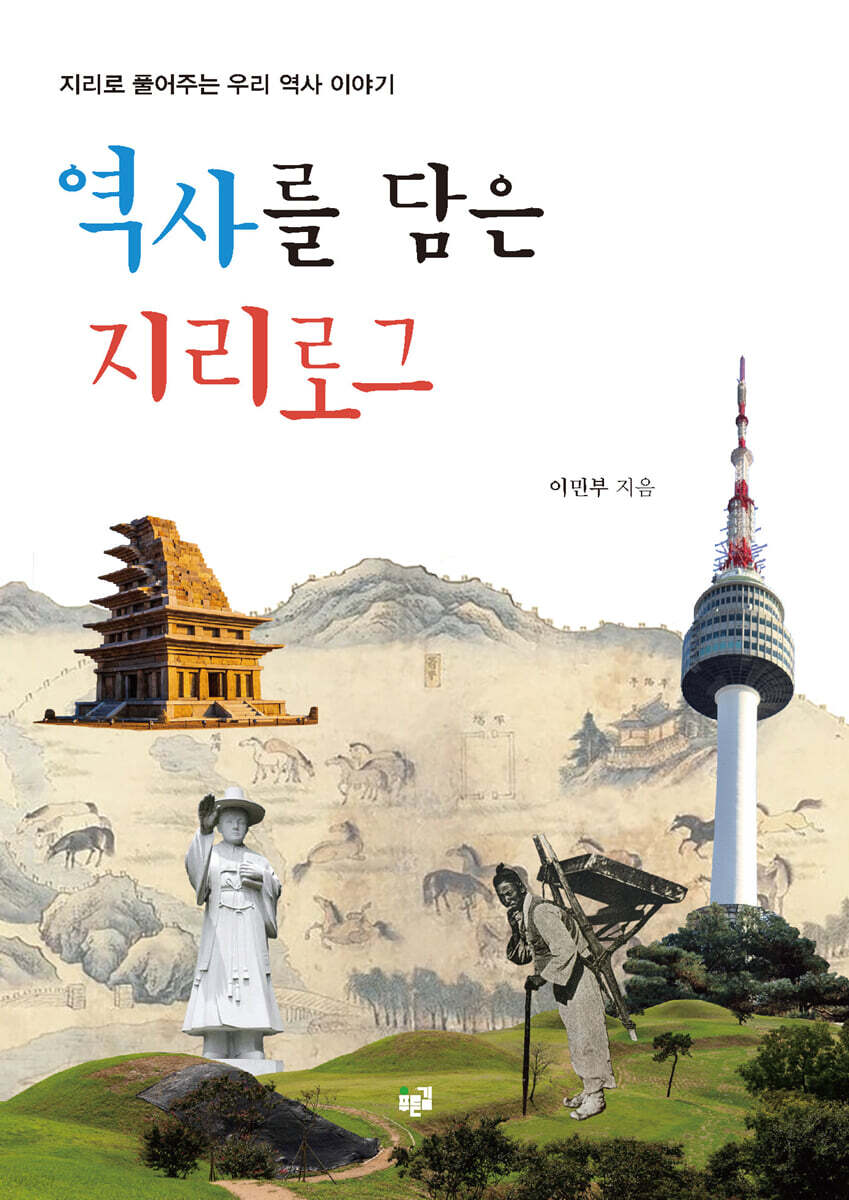
"Geography Log with History" is a book that looks at both physical and human geography to reveal the hidden face of our country.
This is a cultural book that records the history and geographical characteristics of regions and places throughout Korea in the form of a "geographic log," based on articles serialized in the Financial News for 13 months from 2024 to 2025.
The author defines the country as “a product of history that combines physical and human geography,” and introduces the natural environment of each region and the lives and culture of the people who adapted to it in a three-dimensional manner.
In addition to academic research, the author has also been interested in geography textbooks for the general public, introducing geography to the public through books such as “Geography Blog” and “Geography Classroom.”
The author has consistently pursued the task of finding geographical connections, especially physical geographic connections, in history, place names, economy, society, and literature. This book, therefore, can be considered the fruit of the author's long-term research and work, as it has accumulated these experiences and resulted in the creation of a "geographic log" that provides a three-dimensional view of our country.
A New Way of Reading the Nation: Connecting Topography, Environment, and History
"Geography Log with History" is a book that looks at both physical and human geography to reveal the hidden face of our country.
This is a cultural book that records the history and geographical characteristics of regions and places throughout Korea in the form of a "geographic log," based on articles serialized in the Financial News for 13 months from 2024 to 2025.
The author defines the country as “a product of history that combines physical and human geography,” and introduces the natural environment of each region and the lives and culture of the people who adapted to it in a three-dimensional manner.
In addition to academic research, the author has also been interested in geography textbooks for the general public, introducing geography to the public through books such as “Geography Blog” and “Geography Classroom.”
The author has consistently pursued the task of finding geographical connections, especially physical geographic connections, in history, place names, economy, society, and literature. This book, therefore, can be considered the fruit of the author's long-term research and work, as it has accumulated these experiences and resulted in the creation of a "geographic log" that provides a three-dimensional view of our country.
- You can preview some of the book's contents.
Preview
index
preface
Jinhae Bay and the Korean Navy, steeped in the history of Admiral Yi Sun-sin
The winding Namhae Island, a work of seawater from 6,000 years ago
From Hanyang to Namwon: Joseon's Geography in Chunhyangjeon
A 180-year-old map introducing Korean place names to the West
Memories of Namgang and Haman: A Look at Gyeongnam in the 1960s
There was a prisoner of war camp in the middle of Mount Dora.
The history of Busan's growth is evident throughout Yeongdo's place names.
Yeongdeungpo in Geoje and Yeongdeungpo in Seoul
Historical Geography of Korean Ranches
A logistics hub where West Sea salt and Pyeongchang soybeans were traded
Crops specialized for cool, long winter environments
The Honam Plain, a land of abundance, fostered the development of poetry, calligraphy, and painting.
The East Sea is the path of whales
In search of the geography and history of Gyodong Island
Gangwon Province, the land of 200 years of Korean potato history
Naepo, South Chungcheong Province, where even Joseon scholars wanted to live after retirement
In search of our country's asset, yellow soil
The History and Geography of Iksan, One of Korea's Four Great Capitals
Dandy Boy Lee Hyo-seok's Life in Pyongyang
The history of the beautiful island of Geoje
Coexistence of Migratory Birds and Airplanes: A Tour of Korean Airports
In search of Korea's salt producing regions
Chunwon Lee Gwang-su's National Travelogue
In search of Korean pine trees
The historical geography of the Imjin River, the border between South and North Korea
See Namsan again
The historical geography of Gyeryongsan Mountain, a place of faith in feng shui
Where the fairy and the woodcutter meet, the waterfall and the cow
Korean soybeans and their long history
Humanities adapted to the local climate and natural environment
References
Jinhae Bay and the Korean Navy, steeped in the history of Admiral Yi Sun-sin
The winding Namhae Island, a work of seawater from 6,000 years ago
From Hanyang to Namwon: Joseon's Geography in Chunhyangjeon
A 180-year-old map introducing Korean place names to the West
Memories of Namgang and Haman: A Look at Gyeongnam in the 1960s
There was a prisoner of war camp in the middle of Mount Dora.
The history of Busan's growth is evident throughout Yeongdo's place names.
Yeongdeungpo in Geoje and Yeongdeungpo in Seoul
Historical Geography of Korean Ranches
A logistics hub where West Sea salt and Pyeongchang soybeans were traded
Crops specialized for cool, long winter environments
The Honam Plain, a land of abundance, fostered the development of poetry, calligraphy, and painting.
The East Sea is the path of whales
In search of the geography and history of Gyodong Island
Gangwon Province, the land of 200 years of Korean potato history
Naepo, South Chungcheong Province, where even Joseon scholars wanted to live after retirement
In search of our country's asset, yellow soil
The History and Geography of Iksan, One of Korea's Four Great Capitals
Dandy Boy Lee Hyo-seok's Life in Pyongyang
The history of the beautiful island of Geoje
Coexistence of Migratory Birds and Airplanes: A Tour of Korean Airports
In search of Korea's salt producing regions
Chunwon Lee Gwang-su's National Travelogue
In search of Korean pine trees
The historical geography of the Imjin River, the border between South and North Korea
See Namsan again
The historical geography of Gyeryongsan Mountain, a place of faith in feng shui
Where the fairy and the woodcutter meet, the waterfall and the cow
Korean soybeans and their long history
Humanities adapted to the local climate and natural environment
References
Publisher's Review
A national tour following 30 'geographic logs'
This book consists of 30 essays that provide a three-dimensional view of various places in our country, from Jinhae Bay to Namsan, from the Honam Plain to the potato fields of Gangwon, from salt fields to the airport, and from the Imjin River to Gyeryongsan Mountain.
Each chapter focuses on a single location and topic, calmly exploring the region's natural environment, its formation process, and the history, economy, society, and cultural development that unfolded within it.
Readers can gain a new understanding of familiar place names while naturally connecting them to the geographical context that runs through the entire Korean Peninsula.
The title 'Geography Log' originated from the suggestion that instead of just looking at our country on a map, we should walk around the site, read the scenery, and read the time piled up within it.
The author stated that he “wanted to explain the history of some regions of the country from a geographical perspective and record the geographical characteristics of those regions,” and planned this book to lead readers to look at familiar places with a completely new perspective.
I hope that the author's perspective on place and space will help readers understand the world in some small way.
Each chapter of this book is structured as an individual essay, allowing you to select and read the area of interest first.
At the same time, if you read it from beginning to end, you can get a sense of the major flow of natural and historical geography that runs through the entire Korean Peninsula.
In the preface, the author states, “We live in a world overflowing with information and knowledge about our country, but I hope that my perspective on the regions, places, and spaces of our country will be of some help in understanding the world.”
Therefore, I recommend this book to anyone interested in geography, history, and the humanities, including those who want to read the scenery of a travel destination as a "text" rather than a "background," teachers, students, and regional researchers who want to deeply understand the history and place names of a region, practitioners and public sector workers interested in national land planning, urban and regional policies, and environmental issues, and liberal arts readers who enjoy cross-reading by reading history books, maps, and literary works together.
This book consists of 30 essays that provide a three-dimensional view of various places in our country, from Jinhae Bay to Namsan, from the Honam Plain to the potato fields of Gangwon, from salt fields to the airport, and from the Imjin River to Gyeryongsan Mountain.
Each chapter focuses on a single location and topic, calmly exploring the region's natural environment, its formation process, and the history, economy, society, and cultural development that unfolded within it.
Readers can gain a new understanding of familiar place names while naturally connecting them to the geographical context that runs through the entire Korean Peninsula.
The title 'Geography Log' originated from the suggestion that instead of just looking at our country on a map, we should walk around the site, read the scenery, and read the time piled up within it.
The author stated that he “wanted to explain the history of some regions of the country from a geographical perspective and record the geographical characteristics of those regions,” and planned this book to lead readers to look at familiar places with a completely new perspective.
I hope that the author's perspective on place and space will help readers understand the world in some small way.
Each chapter of this book is structured as an individual essay, allowing you to select and read the area of interest first.
At the same time, if you read it from beginning to end, you can get a sense of the major flow of natural and historical geography that runs through the entire Korean Peninsula.
In the preface, the author states, “We live in a world overflowing with information and knowledge about our country, but I hope that my perspective on the regions, places, and spaces of our country will be of some help in understanding the world.”
Therefore, I recommend this book to anyone interested in geography, history, and the humanities, including those who want to read the scenery of a travel destination as a "text" rather than a "background," teachers, students, and regional researchers who want to deeply understand the history and place names of a region, practitioners and public sector workers interested in national land planning, urban and regional policies, and environmental issues, and liberal arts readers who enjoy cross-reading by reading history books, maps, and literary works together.
GOODS SPECIFICS
- Date of issue: December 4, 2025
- Page count, weight, size: 220 pages | 148*210*20mm
- ISBN13: 9791172670665
- ISBN10: 1172670668
You may also like
카테고리
korean


korean

![GQ KOREA Mark (Monthly): December [2025]](http://librairie.coreenne.fr/cdn/shop/files/8ef265dbbfbf186523ed75ba7319009d.jpg?v=1765340328&width=3840)


