

Palestine
 |
Description
Book Introduction
More vivid than the news and more powerful than a novel!
With a pen instead of a gun, with empathy instead of hate.
A depiction of human life in the face of barbaric violence
Best graphic novels
The groundbreaking non-fiction graphic novel "Palestine," which realistically depicts the lives of Palestinians living under Israeli occupation, returns to readers in a new form after 23 years.
When this book was first published in Korea in 2002, it shocked Korean readers by revealing the truth and tragedy of Palestine.
"Palestine" is considered one of the three greatest graphic novels along with "Maus" and "Persepolis," and is considered a pioneering work that pioneered the genre of "comic journalism."
It is also a must-read for understanding the Palestinian-Israeli conflict, recognized and recommended by world-renowned scholar Edward Said.
The republication of this work takes on special significance as the world focuses on the Palestinian issue, with the outbreak of the Israel-Hamas war in 2023 and the subsequent airstrikes on the Gaza Strip.
The reality that Joe Sacco recorded over 30 years ago is unfortunately still ongoing and has actually gotten worse.
This book is not only an important record for understanding the historical background of the Palestinian-Israeli conflict, but also confronts the suffering of Palestinians who live with the scars of conflict in a reality where barbaric violence is the norm, and asks again about the essence of peace and the meaning of solidarity.
With a pen instead of a gun, with empathy instead of hate.
A depiction of human life in the face of barbaric violence
Best graphic novels
The groundbreaking non-fiction graphic novel "Palestine," which realistically depicts the lives of Palestinians living under Israeli occupation, returns to readers in a new form after 23 years.
When this book was first published in Korea in 2002, it shocked Korean readers by revealing the truth and tragedy of Palestine.
"Palestine" is considered one of the three greatest graphic novels along with "Maus" and "Persepolis," and is considered a pioneering work that pioneered the genre of "comic journalism."
It is also a must-read for understanding the Palestinian-Israeli conflict, recognized and recommended by world-renowned scholar Edward Said.
The republication of this work takes on special significance as the world focuses on the Palestinian issue, with the outbreak of the Israel-Hamas war in 2023 and the subsequent airstrikes on the Gaza Strip.
The reality that Joe Sacco recorded over 30 years ago is unfortunately still ongoing and has actually gotten worse.
This book is not only an important record for understanding the historical background of the Palestinian-Israeli conflict, but also confronts the suffering of Palestinians who live with the scars of conflict in a reality where barbaric violence is the norm, and asks again about the essence of peace and the meaning of solidarity.
- You can preview some of the book's contents.
Preview
index
With Respect _Edward Said
Preface · Preface to the Revised Edition _Joe Sacco
CHAPTER 1
Cairo | Blind Date | The Returning | The Midday Spectator | In the Kidron Valley
Chapter 2
Taxi | The Wounded (in Nablus) | Come out, doctor | Hebron | Remember me
CHAPTER 3
A Thousand Words|Tears in a Bucket|Like Brothers Just for Today|Where's Saburo?
Chapter 4
Ansar III Prison | Appropriate Pressure 1 | A Palestinian Joke | The Strong and the Dead | Appropriate Pressure 2
CHAPTER 5
Ramallah | Chicago | Into the Story | Palestinian Women | Hijab | Men Are Always
Chapter 6
Refugee Camp | Single Rooms in a Refugee Camp | For Whom Is the Law? | Black Coffee | Children Under Curfew | Tomatoes | One Shekel in Gaza | Edward Said
Chapter 7
Jabalia | Boys in the Refugee Camp 1 | Boys in the Refugee Camp 2 | Boys in the Refugee Camp 3 | Boys in the Refugee Camp 4 | People with Disabilities | Rewind
CHAPTER 8
Pilgrim's Way
CHAPTER 9
Look with Different Eyes | Tel Aviv | A Lucky Reunion | Sugar-Spiked Tea | Nablus | Roadside Checkpoints | Jenin | A Boy in the Rain
Map of Israeli-occupied Palestine
Notes in the text
Translator's Note _Ham Gyu-jin
Recommended Reading: The Blank Space in Your Hand _Amira Haas
Special Feature Article in the Korean Edition: The History and Solutions of the Palestinian-Israeli Conflict _ Park Hyeon-do
Preface · Preface to the Revised Edition _Joe Sacco
CHAPTER 1
Cairo | Blind Date | The Returning | The Midday Spectator | In the Kidron Valley
Chapter 2
Taxi | The Wounded (in Nablus) | Come out, doctor | Hebron | Remember me
CHAPTER 3
A Thousand Words|Tears in a Bucket|Like Brothers Just for Today|Where's Saburo?
Chapter 4
Ansar III Prison | Appropriate Pressure 1 | A Palestinian Joke | The Strong and the Dead | Appropriate Pressure 2
CHAPTER 5
Ramallah | Chicago | Into the Story | Palestinian Women | Hijab | Men Are Always
Chapter 6
Refugee Camp | Single Rooms in a Refugee Camp | For Whom Is the Law? | Black Coffee | Children Under Curfew | Tomatoes | One Shekel in Gaza | Edward Said
Chapter 7
Jabalia | Boys in the Refugee Camp 1 | Boys in the Refugee Camp 2 | Boys in the Refugee Camp 3 | Boys in the Refugee Camp 4 | People with Disabilities | Rewind
CHAPTER 8
Pilgrim's Way
CHAPTER 9
Look with Different Eyes | Tel Aviv | A Lucky Reunion | Sugar-Spiked Tea | Nablus | Roadside Checkpoints | Jenin | A Boy in the Rain
Map of Israeli-occupied Palestine
Notes in the text
Translator's Note _Ham Gyu-jin
Recommended Reading: The Blank Space in Your Hand _Amira Haas
Special Feature Article in the Korean Edition: The History and Solutions of the Palestinian-Israeli Conflict _ Park Hyeon-do
Detailed image

Into the book
The publication of a revised edition of Palestine at this point is hardly cause for celebration.
… but on the other hand, in the general context, it is sadly appropriate.
It is still relevant because all the aspects of the occupation of Palestine that you will read about here are still ongoing, or rather, are happening more urgently and more violently.
--- p.18 From the “Preface to the Revised Edition”
Now, let's go see the real truth about the Intifada! Where should we go? To the hospital! … What happened to these children? This boy was brought in this morning.
I was at home… and they say a bullet came through the wall.
This girl was hit on the school playground.
Several pieces of shrapnel… one of the children who was with him was killed and the other was injured.
--- p.50~53 From “The Wounded”
They have officially committed no wrongdoing.
But Israel was very suspicious of them.
According to the Jerusalem Post, he is a 'terrorist'.
Not only that, but with four Jewish settlers murdered in the past three months, anyone had to be a scapegoat! … How could a librarian, a father of fourteen, and a worker at a rehabilitation center for the disabled be considered such murders? But anyone had to be a scapegoat! --- p.74 From "A Thousand Words"
Mustafa Akawi… thirty-six years old.
Husband and father of a one-year-old child.
A salesman for a small cosmetics company… but to me, he was just ‘a coffin.’
Israel suspected him of being a Popular Front member, and he became the eighth Palestinian to die during interrogation since the Shin Bet imposed its "moderate pressure" policy.
--- p.121 From “The Strong and the Dead”
“For 50 years, people have been coming and writing our stories… After the Intifada, reporters from all over the world came.
Wherever you go in Palestine, there are journalists.
At first they were so happy.
I showed you everything.
But has it done anything for Palestine? Has anything changed?” --- p.182 From “For Whom Is It a Law?”
“Children can’t play soccer as they please and have no way to vent their frustrations.
So all they know is to sing Intifada songs and fight.
Even at school… and the soldiers, no one just looks at you.
Always stop me and question me.
In every house you go to, there is someone imprisoned, injured, or dead.
Is there such a thing as a childhood? --- p.221 From "Boys of the Refugee Village 3"
A group of Israeli soldiers stopped a boy who looked to be twelve or thirteen years old.
They themselves were raining on the eaves and telling the boy to stand in the rain.
…the boy answered the soldiers' questions while getting drenched in the pouring rain.
What else could he possibly have thought? What was he thinking? That someday, a better world would come, and he would be able to spend time with these soldiers? Or maybe just, someday... someday!
… but on the other hand, in the general context, it is sadly appropriate.
It is still relevant because all the aspects of the occupation of Palestine that you will read about here are still ongoing, or rather, are happening more urgently and more violently.
--- p.18 From the “Preface to the Revised Edition”
Now, let's go see the real truth about the Intifada! Where should we go? To the hospital! … What happened to these children? This boy was brought in this morning.
I was at home… and they say a bullet came through the wall.
This girl was hit on the school playground.
Several pieces of shrapnel… one of the children who was with him was killed and the other was injured.
--- p.50~53 From “The Wounded”
They have officially committed no wrongdoing.
But Israel was very suspicious of them.
According to the Jerusalem Post, he is a 'terrorist'.
Not only that, but with four Jewish settlers murdered in the past three months, anyone had to be a scapegoat! … How could a librarian, a father of fourteen, and a worker at a rehabilitation center for the disabled be considered such murders? But anyone had to be a scapegoat! --- p.74 From "A Thousand Words"
Mustafa Akawi… thirty-six years old.
Husband and father of a one-year-old child.
A salesman for a small cosmetics company… but to me, he was just ‘a coffin.’
Israel suspected him of being a Popular Front member, and he became the eighth Palestinian to die during interrogation since the Shin Bet imposed its "moderate pressure" policy.
--- p.121 From “The Strong and the Dead”
“For 50 years, people have been coming and writing our stories… After the Intifada, reporters from all over the world came.
Wherever you go in Palestine, there are journalists.
At first they were so happy.
I showed you everything.
But has it done anything for Palestine? Has anything changed?” --- p.182 From “For Whom Is It a Law?”
“Children can’t play soccer as they please and have no way to vent their frustrations.
So all they know is to sing Intifada songs and fight.
Even at school… and the soldiers, no one just looks at you.
Always stop me and question me.
In every house you go to, there is someone imprisoned, injured, or dead.
Is there such a thing as a childhood? --- p.221 From "Boys of the Refugee Village 3"
A group of Israeli soldiers stopped a boy who looked to be twelve or thirteen years old.
They themselves were raining on the eaves and telling the boy to stand in the rain.
…the boy answered the soldiers' questions while getting drenched in the pouring rain.
What else could he possibly have thought? What was he thinking? That someday, a better world would come, and he would be able to spend time with these soldiers? Or maybe just, someday... someday!
--- p.302~303 From "The Boy in the Rain"
Publisher's Review
☆ One of the three classic graphic novels, along with "Rat" and "Persepolis"
☆ A pioneering work of 'comic journalism' that combines realistic depiction and objective perspective.
☆ Highly recommended by world-renowned scholar Edward Said
☆ A must-read for understanding the Palestinian-Israeli conflict.
A must-read for our times, this book questions the essence of peace and the ongoing tragedy of Palestine.
―Latest revised edition published after the outbreak of the 2023 Israel-Hamas war.
The groundbreaking non-fiction graphic novel "Palestine," which realistically depicts the lives of Palestinians living under Israeli occupation, returns to readers in a new form after 23 years.
When this book was first published in Korea in 2002, it shocked Korean readers by revealing the truth and tragedy of Palestine.
"Palestine" is considered one of the three greatest graphic novels along with "Maus" and "Persepolis," and is considered a pioneering work that pioneered the genre of "comic journalism."
It is also a must-read for understanding the Palestinian-Israeli conflict, recognized and recommended by world-renowned scholar Edward Said.
The republication of this work takes on special significance as the world focuses on the Palestinian issue, with the outbreak of the Israel-Hamas war in 2023 and the subsequent airstrikes on the Gaza Strip.
The reality that Joe Sacco recorded over 30 years ago is unfortunately still ongoing and has actually gotten worse.
This book is not only an important record for understanding the historical background of the Palestinian-Israeli conflict, but also confronts the suffering of Palestinians who live with the scars of conflict in a reality where barbaric violence is the norm, and asks again about the essence of peace and the meaning of solidarity.
A pioneering work of 'comic journalism' that combines realistic depiction and objective perspective.
―Capturing the true face of the occupied territories not captured in the news
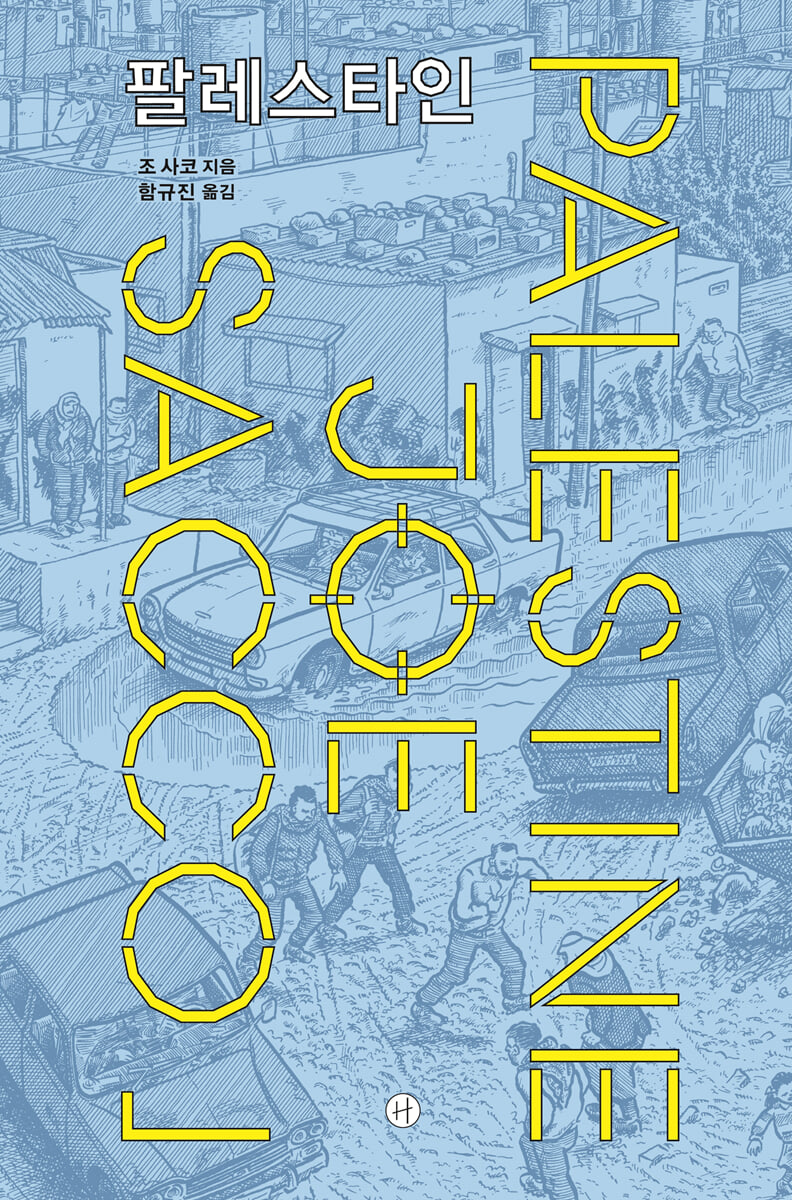
Palestine is based on stories Joe Sacco collected while visiting the West Bank and Gaza Strip in Palestine in 1991 and living with local people for several months.
In a place where gunfire rings out constantly, the faces, expressions, gestures, and voices of people who continue to live amidst the shattered daily lives and oppression are captured in realistic yet powerful images, conveying the raw reality of Palestine as if it were a weighty documentary.
But Joe Sacco doesn't stop at simply conveying the suffering of Palestinians.
Through concrete accounts of the daily humiliation at Israeli checkpoints, the stories of families whose homes were destroyed, and the testimonies of those tortured in prison, the film vividly portrays the reality of occupation, while also highlighting the radiant will of Palestinians to reclaim their history and lives in the face of overwhelming power.
In addition, he expresses solidarity with them through human and sometimes humorous perspectives here and there.
A revised edition with enhanced quality, specially designed for Korean readers.
This revised edition is based on the latest revised edition published in the United States in 2024.
A new preface by Joe Sacco and a recommendation by Israeli journalist Amira Hass have been added, and the quality of the translation has been further improved by translator Professor Ham Gyu-jin of Seoul National University of Education, who diligently reviewed the translation and corrected errors.
In particular, it includes a special Korean-language article by Professor Park Hyeon-do, a Middle East expert, to help Korean readers understand.
It features a new cover design and has increased its collection value with high-quality paper and hardcover binding.
Awards and Recommendations
☆ Winner of the American Book Award
☆ Selected as one of the 100 best comics of the century by The Comics Journal
☆ Winner of the Firecracker Alternative Book Award for Best Graphic Novel
“In Joe Sacco’s world, there is no narrative praising Israel’s success or the excellence of democracy.
Nor does it portray Palestinians as dangerous subversives, rough-and-tumble thugs, or villains who harass peace-loving Israel.
Instead, we experience a completely different world through the eyes of an ordinary-looking young man.
It is a very strange world where barbaric violence runs rampant under military occupation.
“With the exception of one or two novelists and poets, no one has described this terrible situation better than Joe Sacco.” —Edward Said
“A detailed portrayal of occupied life with sensitivity, insight, and a remarkable eye for moral ambiguity.” —Alan Moore
“Joe Sacco is an innovative writer who combines nonfiction and graphic journalism.” —Chris Hedges
“Joe Sacco’s paintings are more memorable than any photograph.” —The New York Times
“Joe Sacco uses the medium of comics to produce some of the most in-depth investigative reporting.
His work is a fascinating blend of journalism, graphic art and storytelling.” —The Guardian
“Sakko has used the comics format to create bold works that would be the envy of any photojournalist.” —The Uton Leader
“If I had to choose one word to describe Palestine, it would be ‘dynamic.’
The author's constantly shifting perspective creates a sense of unease and a sense that there is no peace to be found in this small territory.” ―The Arts STL
☆ A pioneering work of 'comic journalism' that combines realistic depiction and objective perspective.
☆ Highly recommended by world-renowned scholar Edward Said
☆ A must-read for understanding the Palestinian-Israeli conflict.
A must-read for our times, this book questions the essence of peace and the ongoing tragedy of Palestine.
―Latest revised edition published after the outbreak of the 2023 Israel-Hamas war.
The groundbreaking non-fiction graphic novel "Palestine," which realistically depicts the lives of Palestinians living under Israeli occupation, returns to readers in a new form after 23 years.
When this book was first published in Korea in 2002, it shocked Korean readers by revealing the truth and tragedy of Palestine.
"Palestine" is considered one of the three greatest graphic novels along with "Maus" and "Persepolis," and is considered a pioneering work that pioneered the genre of "comic journalism."
It is also a must-read for understanding the Palestinian-Israeli conflict, recognized and recommended by world-renowned scholar Edward Said.
The republication of this work takes on special significance as the world focuses on the Palestinian issue, with the outbreak of the Israel-Hamas war in 2023 and the subsequent airstrikes on the Gaza Strip.
The reality that Joe Sacco recorded over 30 years ago is unfortunately still ongoing and has actually gotten worse.
This book is not only an important record for understanding the historical background of the Palestinian-Israeli conflict, but also confronts the suffering of Palestinians who live with the scars of conflict in a reality where barbaric violence is the norm, and asks again about the essence of peace and the meaning of solidarity.
A pioneering work of 'comic journalism' that combines realistic depiction and objective perspective.
―Capturing the true face of the occupied territories not captured in the news
Palestine is based on stories Joe Sacco collected while visiting the West Bank and Gaza Strip in Palestine in 1991 and living with local people for several months.
In a place where gunfire rings out constantly, the faces, expressions, gestures, and voices of people who continue to live amidst the shattered daily lives and oppression are captured in realistic yet powerful images, conveying the raw reality of Palestine as if it were a weighty documentary.
But Joe Sacco doesn't stop at simply conveying the suffering of Palestinians.
Through concrete accounts of the daily humiliation at Israeli checkpoints, the stories of families whose homes were destroyed, and the testimonies of those tortured in prison, the film vividly portrays the reality of occupation, while also highlighting the radiant will of Palestinians to reclaim their history and lives in the face of overwhelming power.
In addition, he expresses solidarity with them through human and sometimes humorous perspectives here and there.
A revised edition with enhanced quality, specially designed for Korean readers.
This revised edition is based on the latest revised edition published in the United States in 2024.
A new preface by Joe Sacco and a recommendation by Israeli journalist Amira Hass have been added, and the quality of the translation has been further improved by translator Professor Ham Gyu-jin of Seoul National University of Education, who diligently reviewed the translation and corrected errors.
In particular, it includes a special Korean-language article by Professor Park Hyeon-do, a Middle East expert, to help Korean readers understand.
It features a new cover design and has increased its collection value with high-quality paper and hardcover binding.
Awards and Recommendations
☆ Winner of the American Book Award
☆ Selected as one of the 100 best comics of the century by The Comics Journal
☆ Winner of the Firecracker Alternative Book Award for Best Graphic Novel
“In Joe Sacco’s world, there is no narrative praising Israel’s success or the excellence of democracy.
Nor does it portray Palestinians as dangerous subversives, rough-and-tumble thugs, or villains who harass peace-loving Israel.
Instead, we experience a completely different world through the eyes of an ordinary-looking young man.
It is a very strange world where barbaric violence runs rampant under military occupation.
“With the exception of one or two novelists and poets, no one has described this terrible situation better than Joe Sacco.” —Edward Said
“A detailed portrayal of occupied life with sensitivity, insight, and a remarkable eye for moral ambiguity.” —Alan Moore
“Joe Sacco is an innovative writer who combines nonfiction and graphic journalism.” —Chris Hedges
“Joe Sacco’s paintings are more memorable than any photograph.” —The New York Times
“Joe Sacco uses the medium of comics to produce some of the most in-depth investigative reporting.
His work is a fascinating blend of journalism, graphic art and storytelling.” —The Guardian
“Sakko has used the comics format to create bold works that would be the envy of any photojournalist.” —The Uton Leader
“If I had to choose one word to describe Palestine, it would be ‘dynamic.’
The author's constantly shifting perspective creates a sense of unease and a sense that there is no peace to be found in this small territory.” ―The Arts STL
GOODS SPECIFICS
- Date of issue: June 16, 2025
- Format: Hardcover book binding method guide
- Page count, weight, size: 324 pages | 1,272g | 178*264*32mm
- ISBN13: 9791170873426
- ISBN10: 1170873421
You may also like
카테고리
korean


korean

![GQ KOREA Mark (Monthly): December [2025]](http://librairie.coreenne.fr/cdn/shop/files/8ef265dbbfbf186523ed75ba7319009d.jpg?v=1765340328&width=3840)


