

Illustrated History of Taiwan
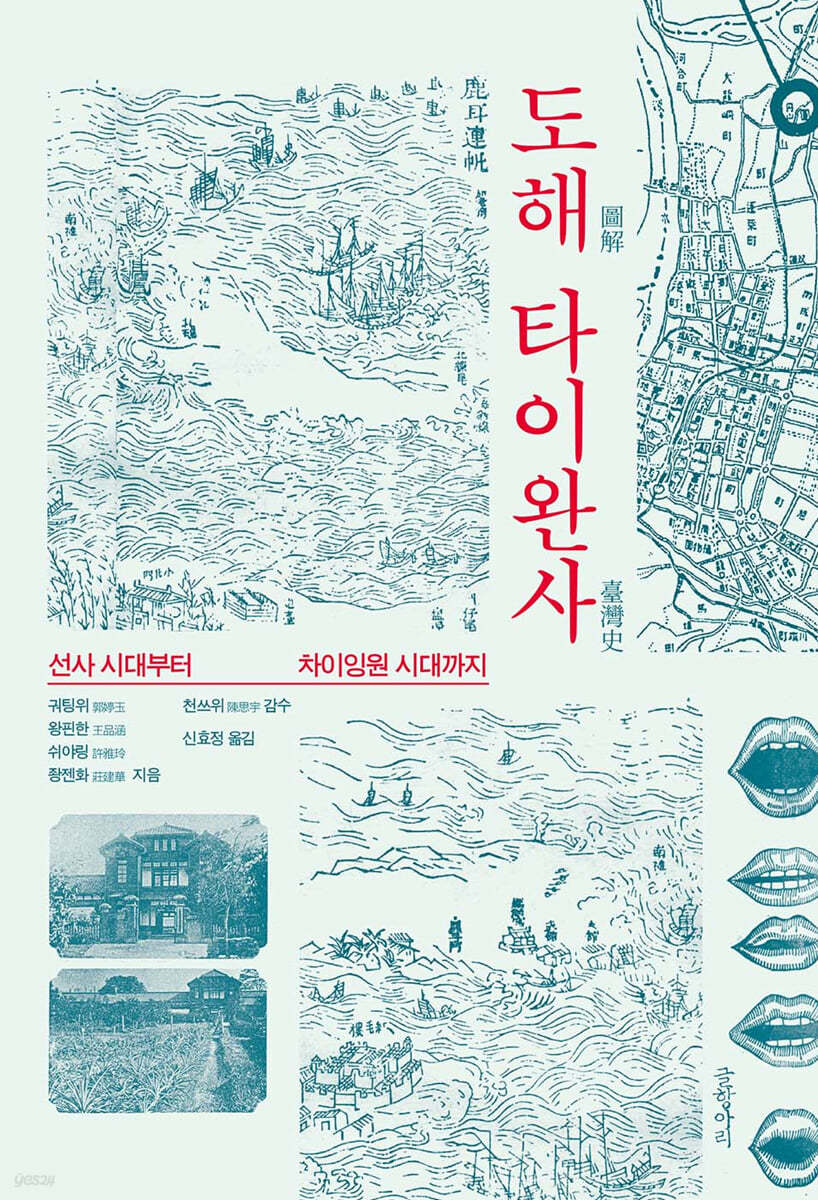 |
Description
Book Introduction
From prehistoric times to the Tsai Ing-wen era
A complete history of Taiwan in one volume
Selected by the Taiwanese Ministry of Culture in 2017 as one of the "39th Outstanding Recommended Books for Elementary, Middle, and High School Students"
A country that is both close and far, a country that was once called "Free China" in contrast to Communist China, a country that has consulates (representative offices) instead of embassies, a country that created a travel boom among young Koreans, a country that combines the vitality of China with the cleanliness of Japan, a small country with beautiful natural scenery, a country that competes with Korea in semiconductors, a country that is creating an international political crisis on the verge of collapse by aligning itself with Xi Jinping's China with the United States as its backer.
It's Taiwan.
Although its population is less than half that of South Korea and its land area is only the size of Gyeongsangnam-do and Gyeongsangbuk-do combined, Taiwan's presence is growing by the day.
Taiwan, the first country in Asia to legalize same-sex marriage, appointed a 30-year-old woman with a hacker background as its digital minister, and where civil democracy is rapidly growing thanks to initiatives like the Sunflower Movement, is increasingly emerging as a litmus test for the US-centered world order as the US-China hegemony competition shifts to the South China Sea.
How much do we know about Taiwan?
Taiwan, which has followed a similar path to Korea in modern history, experienced Japanese colonialism, experienced the tyranny of a dictatorship, and developed a resistant, indigenous democracy.
However, the attitude towards Japan is different from that of Korea, and there are many aspects to compare the two countries.
A book has been published that covers Taiwan's history and reality in one volume.
This is the 『Illustrated History of Taiwan』, written by young Taiwanese historians with abundant illustrations so that it can be read at a glance by both teenagers and adults.
Published in 2016 and selected as an "Outstanding Recommended Book" by the Ministry of Culture of Taiwan, this book lifts the veil on Taiwanese history that has long been obscured by ideology and reveals its true nature without reservation.
2016 is a significant year in Taiwan.
A new era has begun with the departure of Tsai Ing-wen of the Democratic Progressive Party from the long-time Kuomintang rule and the election of her successor, President Tsai Ing-wen.
Published under the headline “A New Taiwan History Lecture for New Youth in a New Era,” “Illustrated Taiwan History” is a history book that truly delves into and interprets Taiwan’s history in a new way to keep pace with the new era.
We have been wary of bias toward a specific ideology, starting with the terminology and concepts we use, and have focused on fairly revealing the context hidden within historical events rather than simply listing them.
This book, recently translated into Korean, can be said to be the first book to broadly and popularly cover Taiwanese history, which has not been covered in depth in Korea until now.
A complete history of Taiwan in one volume
Selected by the Taiwanese Ministry of Culture in 2017 as one of the "39th Outstanding Recommended Books for Elementary, Middle, and High School Students"
A country that is both close and far, a country that was once called "Free China" in contrast to Communist China, a country that has consulates (representative offices) instead of embassies, a country that created a travel boom among young Koreans, a country that combines the vitality of China with the cleanliness of Japan, a small country with beautiful natural scenery, a country that competes with Korea in semiconductors, a country that is creating an international political crisis on the verge of collapse by aligning itself with Xi Jinping's China with the United States as its backer.
It's Taiwan.
Although its population is less than half that of South Korea and its land area is only the size of Gyeongsangnam-do and Gyeongsangbuk-do combined, Taiwan's presence is growing by the day.
Taiwan, the first country in Asia to legalize same-sex marriage, appointed a 30-year-old woman with a hacker background as its digital minister, and where civil democracy is rapidly growing thanks to initiatives like the Sunflower Movement, is increasingly emerging as a litmus test for the US-centered world order as the US-China hegemony competition shifts to the South China Sea.
How much do we know about Taiwan?
Taiwan, which has followed a similar path to Korea in modern history, experienced Japanese colonialism, experienced the tyranny of a dictatorship, and developed a resistant, indigenous democracy.
However, the attitude towards Japan is different from that of Korea, and there are many aspects to compare the two countries.
A book has been published that covers Taiwan's history and reality in one volume.
This is the 『Illustrated History of Taiwan』, written by young Taiwanese historians with abundant illustrations so that it can be read at a glance by both teenagers and adults.
Published in 2016 and selected as an "Outstanding Recommended Book" by the Ministry of Culture of Taiwan, this book lifts the veil on Taiwanese history that has long been obscured by ideology and reveals its true nature without reservation.
2016 is a significant year in Taiwan.
A new era has begun with the departure of Tsai Ing-wen of the Democratic Progressive Party from the long-time Kuomintang rule and the election of her successor, President Tsai Ing-wen.
Published under the headline “A New Taiwan History Lecture for New Youth in a New Era,” “Illustrated Taiwan History” is a history book that truly delves into and interprets Taiwan’s history in a new way to keep pace with the new era.
We have been wary of bias toward a specific ideology, starting with the terminology and concepts we use, and have focused on fairly revealing the context hidden within historical events rather than simply listing them.
This book, recently translated into Korean, can be said to be the first book to broadly and popularly cover Taiwanese history, which has not been covered in depth in Korea until now.
- You can preview some of the book's contents.
Preview
index
Preface 1 Towards a Better Independent State
Introduction 2: At the End of Questions There is History
Introduction 3: Finding Interesting History Outside the Textbook
Chapter 1 Prehistoric Times
What did prehistoric Taiwan look like?
Chapter 2: The Age of Maritime Competition
Why did the Dutch come to Taiwan?
There Was a Pirate King in Taiwan, Too?: The Age of Exploration, the Japanese Pirates, Sea Merchants, and Hamada Yahyoe
Chapter 3: The Qing Dynasty
Was the Qing Dynasty's rule over Taiwan passive and full of civil unrest?
Was the opening of Taiwan in the late Qing Dynasty due to invasion by Western powers?
Taiwan, constantly embroiled in diplomatic disputes
What impact did late Qing modernization have on Taiwanese society?
The Hanification of Taiwan: How Did the Ming and Qing Dynasties "Cultivate" Taiwan?
Chapter 4: The Japanese Era
Why was Taiwan ceded to Japan?
Was Taiwan really democratic?
How was Japan's colonial rule established in Taiwan?
Were Taiwanese people only exploited in the colonial economy?
Was Japanese education enlightening or stupid?
What would Taiwanese society have looked like under the principle of extensionism?
Literature of the Japanese Era: Whose Language Is the 'National Language'?
Japanese Policy on Native Americans: Fairy Tales or Hardline Policies?
The Huangminhua Movement: Have Taiwanese Become Japanese?
Chapter 5: The Postwar Era
Why did the February 8th Incident occur?
Was the Kuomintang government's land reform a 'virtuous policy'?
Is the martial law era worth missing?
Why did the Cold War affect Taiwan?
Is Taiwan's Economic Development a Miracle?: Causes and Reflections on Taiwan's Postwar Economic Development
What was Taiwanese literature like after the war?
Was Chiang Ching-kuo the one who pushed for the lifting of martial law and democratization?
Why did they occupy the Legislative Yuan Plenary Hall?: Democracy and Localization in Taiwan, 1990–2016
Search
Introduction 2: At the End of Questions There is History
Introduction 3: Finding Interesting History Outside the Textbook
Chapter 1 Prehistoric Times
What did prehistoric Taiwan look like?
Chapter 2: The Age of Maritime Competition
Why did the Dutch come to Taiwan?
There Was a Pirate King in Taiwan, Too?: The Age of Exploration, the Japanese Pirates, Sea Merchants, and Hamada Yahyoe
Chapter 3: The Qing Dynasty
Was the Qing Dynasty's rule over Taiwan passive and full of civil unrest?
Was the opening of Taiwan in the late Qing Dynasty due to invasion by Western powers?
Taiwan, constantly embroiled in diplomatic disputes
What impact did late Qing modernization have on Taiwanese society?
The Hanification of Taiwan: How Did the Ming and Qing Dynasties "Cultivate" Taiwan?
Chapter 4: The Japanese Era
Why was Taiwan ceded to Japan?
Was Taiwan really democratic?
How was Japan's colonial rule established in Taiwan?
Were Taiwanese people only exploited in the colonial economy?
Was Japanese education enlightening or stupid?
What would Taiwanese society have looked like under the principle of extensionism?
Literature of the Japanese Era: Whose Language Is the 'National Language'?
Japanese Policy on Native Americans: Fairy Tales or Hardline Policies?
The Huangminhua Movement: Have Taiwanese Become Japanese?
Chapter 5: The Postwar Era
Why did the February 8th Incident occur?
Was the Kuomintang government's land reform a 'virtuous policy'?
Is the martial law era worth missing?
Why did the Cold War affect Taiwan?
Is Taiwan's Economic Development a Miracle?: Causes and Reflections on Taiwan's Postwar Economic Development
What was Taiwanese literature like after the war?
Was Chiang Ching-kuo the one who pushed for the lifting of martial law and democratization?
Why did they occupy the Legislative Yuan Plenary Hall?: Democracy and Localization in Taiwan, 1990–2016
Search
Publisher's Review
I realized that I still have many shortcomings when I found myself hesitating even when answering simple questions from students.
For example, why did the Qing dynasty occupy Taiwan, but not the Ming dynasty? Were there frequent rebellions in Taiwanese society during the Qing dynasty? Were the Taiwanese completely assimilated into the Japanese during the Imperial Reform Movement? Was Chiang Ching-kuo a driving force behind democratization? These simple questions from students reveal profound and complex backgrounds, issues that still impact our lives today.
_Guo Tingyu, Preface 1
Colorful illustrations and easy-to-understand explanations
This book is a syntactic book.
The secret to being able to incorporate thousands of years of history from prehistoric times into a single volume is that historical materials, maps, and pictures were visualized and presented as infographics.
The authors, who are part of the digital generation, have organized Taiwan's history into a comprehensive and detailed account, not only of maps and photographs, but also of key eras, events, people, and locations, categorized by keyword, thereby organically accumulating historical knowledge.
The beautiful island of Formosa
Taiwan was unknown to the world except in the mid-16th century when a Portuguese sailor passing by exclaimed, "Ilha Formosa," meaning "beautiful island."
Around the 15th century, when the Silk Road, a land trade route, became dysfunctional due to the war between the Republic of Venice and the Ottoman Empire, the West had to find an alternative route.
Europe, with its technology for long-distance navigation sufficiently developed, entered the Age of Exploration.
Meanwhile, the Ming Dynasty at the time was capable of long-distance navigation, enough to undertake seven great expeditions.
However, as they had to focus on fighting against the powerful northern enemy, Mongolia, they had no time to pay attention to Taiwan, to the point of issuing a maritime ban.
However, as the Ming Dynasty's government became more lax, the maritime ban policy also became ineffective, and Japanese pirates and merchants began to trade in the southern coastal regions.
Taiwan was not an island that the Ming Dynasty cared for thoughtfully, but at the same time, for that reason, it became an island that many countries could pass through.
Taiwan, once a remote island in the middle of the Pacific Ocean, naturally emerged as a key point between Eastern and Western powers during the era of maritime competition.
The Dutch East India Company ruled Taiwan for 39 years until 1662 to counter Spanish commercial power.
The traces left by the Dutch during their short reign continue to this day.
In particular, rice and sugarcane, which are still cultivated throughout Taiwan, are representative traces of this rule.
A rebellion once every three years, a great uprising once every five years
During the 212 years that the Qing Dynasty ruled Taiwan, 154 large and small rebellions occurred in Taiwan.
It was a time of such chaos that there was a saying that a rebellion occurred once every three years and a great uprising once every five years.
Taiwan was a remote area from Beijing and difficult to access due to rough seas and waves, so it was considered a remote area for the Qing Dynasty.
The rebellion in Taiwan, which was outside the central government's purview, can be divided into two parts: conflict between interest groups and anti-government confrontation.
Some view this as an anti-Qing restoration act by the Han Chinese, but most of the cases involved civil unrest due to dissatisfaction with the government's inappropriate measures, and not all civil unrest was intended to overthrow the Qing regime.
This large-scale civil unrest gave rise to the concept of 'Ui-min (those who helped suppress the civil unrest)'.
The leading figure of the righteous people was the Hakka people (a term referring to Han Chinese who left their homeland and immigrated), but there were also views that the Hakka people were a group that took righteous actions to restore the Qing dynasty, or that they were unrighteous people who helped the Qing government suppress the rebellion.
However, this view is not appropriate, considering that the Hakka people had a smaller population and were institutionally disadvantaged compared to the Minnan people.
This is because they displayed outstanding unity and a strong survival instinct despite unfavorable circumstances both internally and externally.
By silently following the government's call and working hard to the point of being awarded the title of "Uimin" by the government, the perception that "Uimin = Hakka" was established.
The Age of Immigration and the Opening of Ports
Beginning in the late 17th century, rapid population growth in Fujian and Guangdong provinces in southern China led many people there to migrate to Taiwan.
Because Taiwan's climate is suitable for rice farming, immigrants have been farming rice since the 18th century.
At the same time, rice production increased significantly, and the population also grew.
During the Qing Dynasty, Taiwan's farmland was reclaimed and a port transportation network was established, allowing for the formation of a system for exchanging agricultural materials and daily necessities.
In the past, foreign trade was developed, but during the Qing Dynasty, the mainland area of the Qing Dynasty became the main trading target, and the number of cargo ships traveling through the Taiwan Strait increased significantly.
Accordingly, several ports were developed in Taiwan, such as the river ports of Lukang in the central part and Mengjia in the north. In the nearby areas, rice, camphor, and tea leaves were produced, and a port street called 'Ip-erlu Sanmengjia' (1 Fucheng, 2 Lukang, 3 Mengjia) was created.
Following the Qing Dynasty's opening of its ports to trade in 1842, tea, sugar, and camphor (a solid substance obtained by distilling camphor trees and used as a raw material for gunpowder and insect repellent) became Taiwan's main exports.
The greatest tragedy of modern times
This book is divided into three chapters, 'Prehistoric Times', 'The Age of Maritime Conflict', and 'The Qing Dynasty'.
Chapters 4 and 5 then divide the Japanese era after the Treaty of Shimonoseki in 1895 into the post-war era and the Tsai Ing-wen era into separate chapters.
The February 28 Incident in Taiwan, which is sometimes seen as similar to the April 3 Incident in Korea, is the most tragic incident in Taiwan's modern and contemporary history.
Even before Taiwan enjoyed its liberation from Japan in 1945, society in Taiwan was severely corrupted by the tyranny of the Nationalist government.
In fact, there was a popular saying that compared Japan and China to beasts, saying, "A dog passes by, and a pig comes." This means that while a dog may be fierce, it guards the gate, while a pig is lazy and only likes to eat.
The conflict between the foreigners in the Nationalist government and the Taiwanese who originally lived in Taiwan was intense.
With the end of World War II, Taiwan was liberated from Japan.
However, the Chinese civil war did not end, and as a result, the Nationalist government confiscated rice from Taiwan, causing prices in Taiwan to skyrocket.
Taiwan was also a mess, plagued by bureaucratic corruption, poor administrative capabilities, and inherent discrimination against foreigners (people who had immigrated from China to the island of Taiwan).
Ultimately, all these conflicts erupted on February 28, 1947, in the form of the 2?28 Incident.
The violent crackdown on Lin Jiangmai, a woman selling cigarettes in front of the Tianma Tea House on Nanjing West Road in Taipei City on February 27th, was the trigger for the 2/28 Incident.
People were outraged when agents from the Taiwan Provincial Monopoly Bureau not only beat Lin Jiangmai but also shot him, killing a civilian.
The guards opened fire on the citizens' march, which escalated into a larger protest.
This was followed by a violent crackdown by armed troops and police, which resulted in tens of thousands of deaths and became the largest tragedy in modern Taiwanese history.
Those who view Japanese colonial rule positively evaluate this Japanese administration as an achievement and argue that their colonial rule led to Taiwan's modernization.
However, we must not forget that these efforts by Japan were not for the benefit of Taiwan, but were intended to lay the foundation for successful colonial rule, and were a plan to use the resources of the colony for domestic gain.
Page 182
Until now, only fragmentary information about Taiwan's history has been known in Korea.
Before the COVID-19 pandemic, Taiwan was a friendly country, with a travel craze raging. However, the reality is that not much is known about Taiwan's history.
In that sense, 『Illustrated History of Taiwan』 can be said to be the most friendly history book and also the most objective book.
It helps us think beyond the textbook, explaining the mixed views that exist within Taiwan today, even after hundreds or even decades.
For example, why did the Qing dynasty occupy Taiwan, but not the Ming dynasty? Were there frequent rebellions in Taiwanese society during the Qing dynasty? Were the Taiwanese completely assimilated into the Japanese during the Imperial Reform Movement? Was Chiang Ching-kuo a driving force behind democratization? These simple questions from students reveal profound and complex backgrounds, issues that still impact our lives today.
_Guo Tingyu, Preface 1
Colorful illustrations and easy-to-understand explanations
This book is a syntactic book.
The secret to being able to incorporate thousands of years of history from prehistoric times into a single volume is that historical materials, maps, and pictures were visualized and presented as infographics.
The authors, who are part of the digital generation, have organized Taiwan's history into a comprehensive and detailed account, not only of maps and photographs, but also of key eras, events, people, and locations, categorized by keyword, thereby organically accumulating historical knowledge.
The beautiful island of Formosa
Taiwan was unknown to the world except in the mid-16th century when a Portuguese sailor passing by exclaimed, "Ilha Formosa," meaning "beautiful island."
Around the 15th century, when the Silk Road, a land trade route, became dysfunctional due to the war between the Republic of Venice and the Ottoman Empire, the West had to find an alternative route.
Europe, with its technology for long-distance navigation sufficiently developed, entered the Age of Exploration.
Meanwhile, the Ming Dynasty at the time was capable of long-distance navigation, enough to undertake seven great expeditions.
However, as they had to focus on fighting against the powerful northern enemy, Mongolia, they had no time to pay attention to Taiwan, to the point of issuing a maritime ban.
However, as the Ming Dynasty's government became more lax, the maritime ban policy also became ineffective, and Japanese pirates and merchants began to trade in the southern coastal regions.
Taiwan was not an island that the Ming Dynasty cared for thoughtfully, but at the same time, for that reason, it became an island that many countries could pass through.
Taiwan, once a remote island in the middle of the Pacific Ocean, naturally emerged as a key point between Eastern and Western powers during the era of maritime competition.
The Dutch East India Company ruled Taiwan for 39 years until 1662 to counter Spanish commercial power.
The traces left by the Dutch during their short reign continue to this day.
In particular, rice and sugarcane, which are still cultivated throughout Taiwan, are representative traces of this rule.
A rebellion once every three years, a great uprising once every five years
During the 212 years that the Qing Dynasty ruled Taiwan, 154 large and small rebellions occurred in Taiwan.
It was a time of such chaos that there was a saying that a rebellion occurred once every three years and a great uprising once every five years.
Taiwan was a remote area from Beijing and difficult to access due to rough seas and waves, so it was considered a remote area for the Qing Dynasty.
The rebellion in Taiwan, which was outside the central government's purview, can be divided into two parts: conflict between interest groups and anti-government confrontation.
Some view this as an anti-Qing restoration act by the Han Chinese, but most of the cases involved civil unrest due to dissatisfaction with the government's inappropriate measures, and not all civil unrest was intended to overthrow the Qing regime.
This large-scale civil unrest gave rise to the concept of 'Ui-min (those who helped suppress the civil unrest)'.
The leading figure of the righteous people was the Hakka people (a term referring to Han Chinese who left their homeland and immigrated), but there were also views that the Hakka people were a group that took righteous actions to restore the Qing dynasty, or that they were unrighteous people who helped the Qing government suppress the rebellion.
However, this view is not appropriate, considering that the Hakka people had a smaller population and were institutionally disadvantaged compared to the Minnan people.
This is because they displayed outstanding unity and a strong survival instinct despite unfavorable circumstances both internally and externally.
By silently following the government's call and working hard to the point of being awarded the title of "Uimin" by the government, the perception that "Uimin = Hakka" was established.
The Age of Immigration and the Opening of Ports
Beginning in the late 17th century, rapid population growth in Fujian and Guangdong provinces in southern China led many people there to migrate to Taiwan.
Because Taiwan's climate is suitable for rice farming, immigrants have been farming rice since the 18th century.
At the same time, rice production increased significantly, and the population also grew.
During the Qing Dynasty, Taiwan's farmland was reclaimed and a port transportation network was established, allowing for the formation of a system for exchanging agricultural materials and daily necessities.
In the past, foreign trade was developed, but during the Qing Dynasty, the mainland area of the Qing Dynasty became the main trading target, and the number of cargo ships traveling through the Taiwan Strait increased significantly.
Accordingly, several ports were developed in Taiwan, such as the river ports of Lukang in the central part and Mengjia in the north. In the nearby areas, rice, camphor, and tea leaves were produced, and a port street called 'Ip-erlu Sanmengjia' (1 Fucheng, 2 Lukang, 3 Mengjia) was created.
Following the Qing Dynasty's opening of its ports to trade in 1842, tea, sugar, and camphor (a solid substance obtained by distilling camphor trees and used as a raw material for gunpowder and insect repellent) became Taiwan's main exports.
The greatest tragedy of modern times
This book is divided into three chapters, 'Prehistoric Times', 'The Age of Maritime Conflict', and 'The Qing Dynasty'.
Chapters 4 and 5 then divide the Japanese era after the Treaty of Shimonoseki in 1895 into the post-war era and the Tsai Ing-wen era into separate chapters.
The February 28 Incident in Taiwan, which is sometimes seen as similar to the April 3 Incident in Korea, is the most tragic incident in Taiwan's modern and contemporary history.
Even before Taiwan enjoyed its liberation from Japan in 1945, society in Taiwan was severely corrupted by the tyranny of the Nationalist government.
In fact, there was a popular saying that compared Japan and China to beasts, saying, "A dog passes by, and a pig comes." This means that while a dog may be fierce, it guards the gate, while a pig is lazy and only likes to eat.
The conflict between the foreigners in the Nationalist government and the Taiwanese who originally lived in Taiwan was intense.
With the end of World War II, Taiwan was liberated from Japan.
However, the Chinese civil war did not end, and as a result, the Nationalist government confiscated rice from Taiwan, causing prices in Taiwan to skyrocket.
Taiwan was also a mess, plagued by bureaucratic corruption, poor administrative capabilities, and inherent discrimination against foreigners (people who had immigrated from China to the island of Taiwan).
Ultimately, all these conflicts erupted on February 28, 1947, in the form of the 2?28 Incident.
The violent crackdown on Lin Jiangmai, a woman selling cigarettes in front of the Tianma Tea House on Nanjing West Road in Taipei City on February 27th, was the trigger for the 2/28 Incident.
People were outraged when agents from the Taiwan Provincial Monopoly Bureau not only beat Lin Jiangmai but also shot him, killing a civilian.
The guards opened fire on the citizens' march, which escalated into a larger protest.
This was followed by a violent crackdown by armed troops and police, which resulted in tens of thousands of deaths and became the largest tragedy in modern Taiwanese history.
Those who view Japanese colonial rule positively evaluate this Japanese administration as an achievement and argue that their colonial rule led to Taiwan's modernization.
However, we must not forget that these efforts by Japan were not for the benefit of Taiwan, but were intended to lay the foundation for successful colonial rule, and were a plan to use the resources of the colony for domestic gain.
Page 182
Until now, only fragmentary information about Taiwan's history has been known in Korea.
Before the COVID-19 pandemic, Taiwan was a friendly country, with a travel craze raging. However, the reality is that not much is known about Taiwan's history.
In that sense, 『Illustrated History of Taiwan』 can be said to be the most friendly history book and also the most objective book.
It helps us think beyond the textbook, explaining the mixed views that exist within Taiwan today, even after hundreds or even decades.
GOODS SPECIFICS
- Publication date: September 28, 2021
- Page count, weight, size: 400 pages | 698g | 150*220*30mm
- ISBN13: 9788967359461
- ISBN10: 8967359462
You may also like
카테고리
korean


korean

![GQ KOREA Mark (Monthly): December [2025]](http://librairie.coreenne.fr/cdn/shop/files/8ef265dbbfbf186523ed75ba7319009d.jpg?v=1765340328&width=3840)


