

Financial Odyssey
 |
Description
Book Introduction
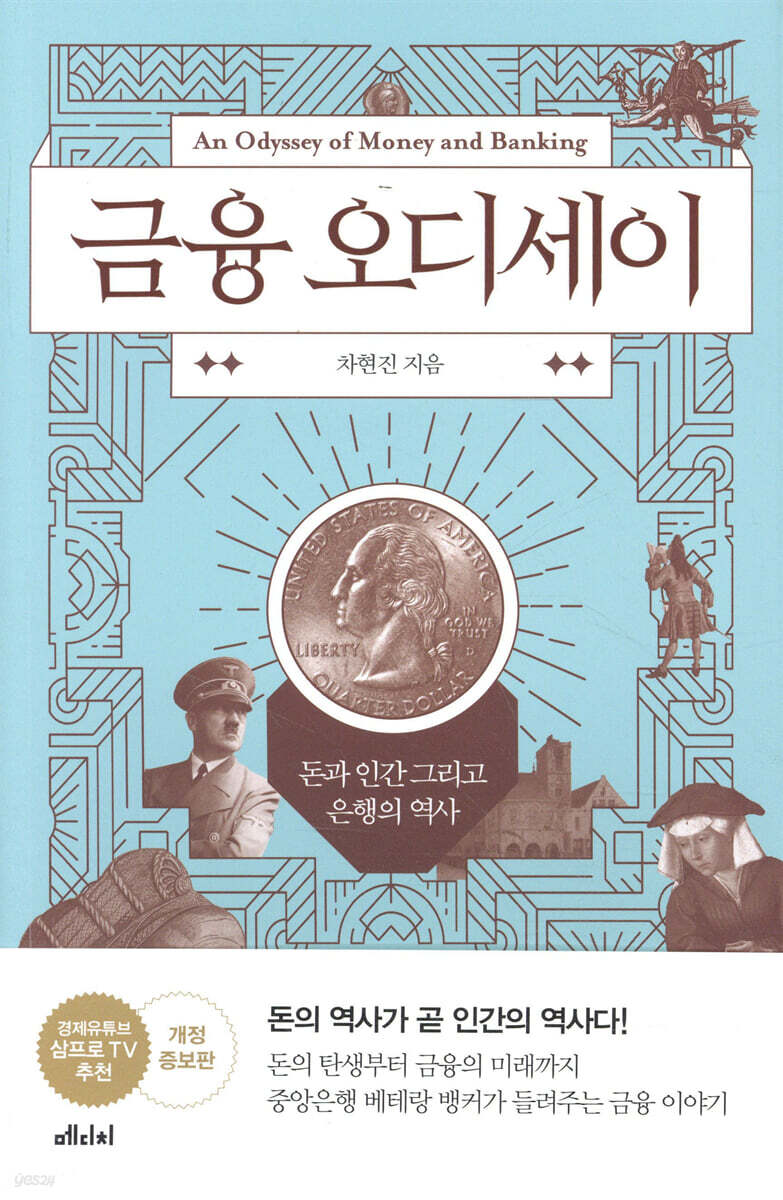
Cha Hyun-jin, author of "Economics Without Numbers," talks about the essence of money and banks. We look beyond economics textbooks to explore the nature and value of money, banking, and the history of human civilization through philosophy and history. In this book, the author argues that concepts that play a crucial role in the modern economy, such as money, banking, and central banks, were refined through a history of intersecting chance and necessity, and that to truly understand economics, we must look beyond economics textbooks and into the history of human civilization, including philosophy and history. It also takes us to the debate about the identity and value of money, which finance deals with, to learn about finance. |
- You can preview some of the book's contents.
Preview
index
Introduction
Part 1 Money
Chapter 1 | Departure: Towards Money and Banks
The Merchant of Venice and the Global Financial Crisis + Moneylending and Anti-Semitism + The Dual Structure of Medieval Moneylending
Early Modern Moneylending and Maritime Trade + How Modern Moneylending Began
Chapter 2 | What is Money?
What Money Does + Three Conditions of Money + The Challenge of the Ming and Electrum
Monetary State Theory and Metallurgy + So What Is Money?
Chapter 3 | Finding the Value of Money
Gold and silver coins + currency value and debasement
Eureka! The Advancement of Navigation and the Price Revolution + How to Maintain the Value of Money
Chapter 4 | Money, My Name
Austrian School and Capitalist Philosophy + Western Money, Currency, and Monarchy Were One
Money in the East: The Struggle Between Currency and Monarchy + The History Engraved in the Names of Money
Chapter 5 | The Money Legacy of the Middle Ages
The Fall of the Empire and the Decline of Religion + The Challenge of Islam, the Crusades, and the Plague
Jewish persecution and blasphemy + marketplaces become the center of a monetary economy
Chapter 6 | When Money and Power Meet
Crusades, armored financiers + merchants and tycoons, financiers in plain clothes
The Holy Roman Empire, which was never sacred, and the Hanseatic League of Free Imperial City Merchants
The collusion and collusion between the emperor and the merchant family + the embodiment of political and business collusion, the legacy of the Fugger family
Chapter 7 | What Money Can't Buy
The Origins of Banking: The Future of Moneylending Transformed by Goldsmiths and Lombard
The Medici Bank Starts a Deposit Business + The Medici Family's Father and Son Who Ruled the World with Money
Even 'Lorenzo the Magnificent' couldn't buy it with money
Second Division Bank
Chapter 8 | Banks Stand Before Humanity
A state within a state, the rise of the Uffizi + the medieval moneylending controversy and the separation of the empire
The first public bank appeared in Venice in the 16th century
Chapter 9 | Banks Become the People's Criminal
The Dutch Tulip Mania: The Beginning of a Speculative Mania + A History of French Banking by John Law
The Royal Bank and Convertible Bond Project + the West India Company created with royal patronage
The real estate and stock market boom that rocked France + the bankruptcy of the Royal Bank and the collapse of the Mississippi Bubble
Chapter 10 | Banks Fall Out of the President's Favor
The birth of Europe's first banknotes, Sweden + British currency laws and the American War of Independence
The First Central Bank of the United States + The Depression and the Launch of the Second Bank of the United States
The banking war between the president and the bank president + the panic brought on by the collapse of the US Bank
Chapter 11 | Banker Saves the World
The South Sea Bubble That Rocked the British Economy + The Lender of Last Resort: The Reason for the Central Bank's Existence
Monopoly tycoon J.
The emergence of P. Morgan + J., who became the king of finance.
P. Morgan
J.
P. Morgan, Saving the World + The God of Finance Became a Public Enemy
Chapter 12 | Return: So What Is a Bank?
Is banking a godsend? + Why are bankers hated?
Modern banking, starting from international finance, plus payments and settlements, and central banks and reserve requirements
What constitutes a deposit + the moral code that central banks must adhere to
Banks, Still There's Hope
Part 3 People
Chapter 13 | John of America and John of Britain - The Identity of Economics
The Boston Tea Party, the Townshend Acts, and the Boston Massacre, which sparked American independence
Young Keynes and Monetary Reform + Keynes's General Theory, and the Great Depression
Adams and Keynes: Differences in Thought + Why Economics Is a Secular Philosophy
Chapter 14 | Greenspan Symphony - The Great Tragedy of Wrong Beliefs
1st movement Joy
Movement 2: Anger | Theme 1: Suffering | Theme 2: Beer Hall Riot | Theme 3: Crystal Night
Movement 3: Joy | Theme 1: Manhattan Boy | Theme 2: The Road to Success | Theme 3: The Hero's Ascension
Movement 4: Sorrow | Theme 1: Death | Theme 2: Shame | Theme 3: Finale
Chapter 15 | The Wreckers and the Cleaners: The Panic of 1825 That Reinvented Central Banking
The Story of Erewhon + The Imaginary Empire of Poyais and Dystopia
The Bank of England's rescue of the British economy and the South American bubble + a budding banker
The Secret Story of the Bank of England's Birth + The Central Bank's Role as Lender of Last Resort
Chapter 16 | A Part-Time Order - The President of a Least Developed Country's Misery toward the United States
Liberation in 1945 and the US Military Government's financial policies + barter system and foreign trade
The Korea-US Agreement, the Chosun Refund Bank, and the President's plan, and the independence of the Bank of Chosun.
Controversy and backlash: The Bank of Joseon's capitalization theory + a war of nerves between the Ministry of Finance and the Bank of Korea
The fate of the president of the poorest country
Chapter 17 | The Money Magician - The Mysterious Banker Who Collaborated with a Dictator for His Country
The Imperial Bank and the Prelude to World War I + The Frustration of a Young Ambitious
The Allied peace agreement that united the German people + war reparations and hyperinflation
The Appearance of Comptroller Schacht + A Bridge Between Chaos and Hope
Schacht's Gamble Out of Control + Hitler's Banker Who Became President of the Economy
Schacht and the Nazi Party: The Difference Between Collaboration and Resistance
References
Search
Part 1 Money
Chapter 1 | Departure: Towards Money and Banks
The Merchant of Venice and the Global Financial Crisis + Moneylending and Anti-Semitism + The Dual Structure of Medieval Moneylending
Early Modern Moneylending and Maritime Trade + How Modern Moneylending Began
Chapter 2 | What is Money?
What Money Does + Three Conditions of Money + The Challenge of the Ming and Electrum
Monetary State Theory and Metallurgy + So What Is Money?
Chapter 3 | Finding the Value of Money
Gold and silver coins + currency value and debasement
Eureka! The Advancement of Navigation and the Price Revolution + How to Maintain the Value of Money
Chapter 4 | Money, My Name
Austrian School and Capitalist Philosophy + Western Money, Currency, and Monarchy Were One
Money in the East: The Struggle Between Currency and Monarchy + The History Engraved in the Names of Money
Chapter 5 | The Money Legacy of the Middle Ages
The Fall of the Empire and the Decline of Religion + The Challenge of Islam, the Crusades, and the Plague
Jewish persecution and blasphemy + marketplaces become the center of a monetary economy
Chapter 6 | When Money and Power Meet
Crusades, armored financiers + merchants and tycoons, financiers in plain clothes
The Holy Roman Empire, which was never sacred, and the Hanseatic League of Free Imperial City Merchants
The collusion and collusion between the emperor and the merchant family + the embodiment of political and business collusion, the legacy of the Fugger family
Chapter 7 | What Money Can't Buy
The Origins of Banking: The Future of Moneylending Transformed by Goldsmiths and Lombard
The Medici Bank Starts a Deposit Business + The Medici Family's Father and Son Who Ruled the World with Money
Even 'Lorenzo the Magnificent' couldn't buy it with money
Second Division Bank
Chapter 8 | Banks Stand Before Humanity
A state within a state, the rise of the Uffizi + the medieval moneylending controversy and the separation of the empire
The first public bank appeared in Venice in the 16th century
Chapter 9 | Banks Become the People's Criminal
The Dutch Tulip Mania: The Beginning of a Speculative Mania + A History of French Banking by John Law
The Royal Bank and Convertible Bond Project + the West India Company created with royal patronage
The real estate and stock market boom that rocked France + the bankruptcy of the Royal Bank and the collapse of the Mississippi Bubble
Chapter 10 | Banks Fall Out of the President's Favor
The birth of Europe's first banknotes, Sweden + British currency laws and the American War of Independence
The First Central Bank of the United States + The Depression and the Launch of the Second Bank of the United States
The banking war between the president and the bank president + the panic brought on by the collapse of the US Bank
Chapter 11 | Banker Saves the World
The South Sea Bubble That Rocked the British Economy + The Lender of Last Resort: The Reason for the Central Bank's Existence
Monopoly tycoon J.
The emergence of P. Morgan + J., who became the king of finance.
P. Morgan
J.
P. Morgan, Saving the World + The God of Finance Became a Public Enemy
Chapter 12 | Return: So What Is a Bank?
Is banking a godsend? + Why are bankers hated?
Modern banking, starting from international finance, plus payments and settlements, and central banks and reserve requirements
What constitutes a deposit + the moral code that central banks must adhere to
Banks, Still There's Hope
Part 3 People
Chapter 13 | John of America and John of Britain - The Identity of Economics
The Boston Tea Party, the Townshend Acts, and the Boston Massacre, which sparked American independence
Young Keynes and Monetary Reform + Keynes's General Theory, and the Great Depression
Adams and Keynes: Differences in Thought + Why Economics Is a Secular Philosophy
Chapter 14 | Greenspan Symphony - The Great Tragedy of Wrong Beliefs
1st movement Joy
Movement 2: Anger | Theme 1: Suffering | Theme 2: Beer Hall Riot | Theme 3: Crystal Night
Movement 3: Joy | Theme 1: Manhattan Boy | Theme 2: The Road to Success | Theme 3: The Hero's Ascension
Movement 4: Sorrow | Theme 1: Death | Theme 2: Shame | Theme 3: Finale
Chapter 15 | The Wreckers and the Cleaners: The Panic of 1825 That Reinvented Central Banking
The Story of Erewhon + The Imaginary Empire of Poyais and Dystopia
The Bank of England's rescue of the British economy and the South American bubble + a budding banker
The Secret Story of the Bank of England's Birth + The Central Bank's Role as Lender of Last Resort
Chapter 16 | A Part-Time Order - The President of a Least Developed Country's Misery toward the United States
Liberation in 1945 and the US Military Government's financial policies + barter system and foreign trade
The Korea-US Agreement, the Chosun Refund Bank, and the President's plan, and the independence of the Bank of Chosun.
Controversy and backlash: The Bank of Joseon's capitalization theory + a war of nerves between the Ministry of Finance and the Bank of Korea
The fate of the president of the poorest country
Chapter 17 | The Money Magician - The Mysterious Banker Who Collaborated with a Dictator for His Country
The Imperial Bank and the Prelude to World War I + The Frustration of a Young Ambitious
The Allied peace agreement that united the German people + war reparations and hyperinflation
The Appearance of Comptroller Schacht + A Bridge Between Chaos and Hope
Schacht's Gamble Out of Control + Hitler's Banker Who Became President of the Economy
Schacht and the Nazi Party: The Difference Between Collaboration and Resistance
References
Search
Detailed image
Into the book
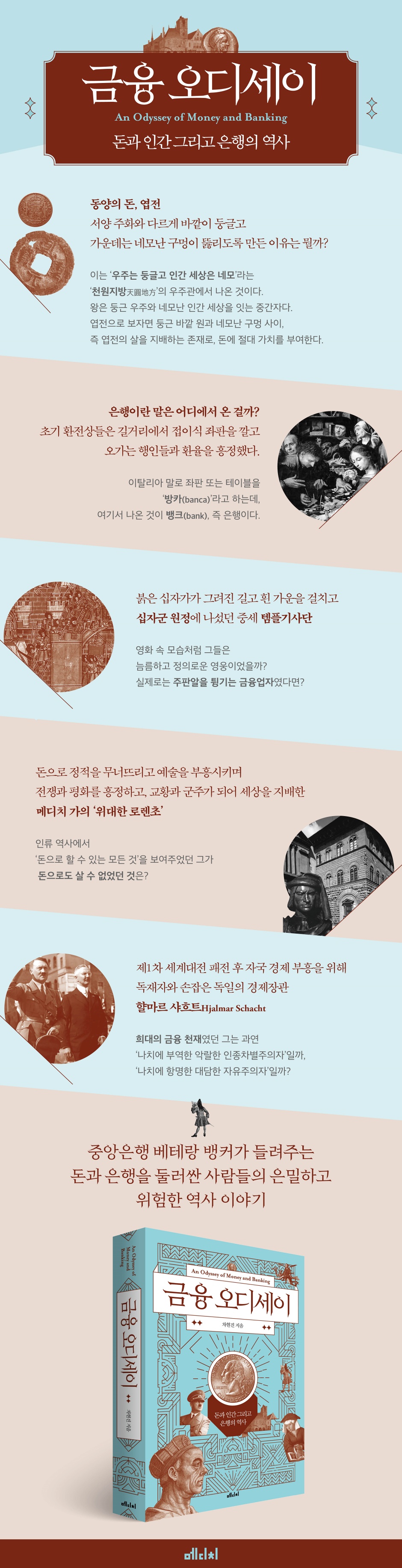
There is still ongoing controversy over the origins of money and its underlying philosophy.
More than 3,000 years have passed since human society transitioned from a barter economy to a monetary economy, yet the mystery surrounding its fundamentals remains unsolved.
The puzzle, in a word, depends on whether you view money as a thing or not.
In the West, money is seen as 'an object that expresses economic value.'
On the other hand, in the East, it is seen as 'a promise made by members of society (or the highest authority) to express the price of other goods.'
Kindleberger, an economic historian, interprets this difference in thinking between the East and the West as a question of 'private goods or public goods.'
If you only see money as a material thing, then there is undoubtedly ownership of all money.
However, if we view money as a social system (e.g., a constitution) created through the agreement of members of society, then money is the common property of everyone.
Money as a material and money as a social system.
Or money as a private good and money as a public good.
These are undoubtedly incompatible concepts.
But the whole mystery begins with the fact that money possesses incompatible properties.
--- p.41-42
How should the value of money be maintained? Should we follow the quantity theory of money or not? Should we follow the path of Alexander the Great or Henry VIII? The answer to these questions ultimately depends on how we view the world and humanity.
Trust in the value of money must be maintained.
However, in unprecedented situations like the Great Depression, the global financial crisis, and the COVID-19 crisis, we also need to be considerate and try to ease the pain and wipe away the tears of those who have lost their jobs and been forced from their homes.
After experiencing both the intended and unintended corruption of money (deviation) over the past several thousand years, humanity has reached a tentative conclusion.
It is a principle that allows experts with a warm and upright philosophy to step away from those in power and discuss the value of money with a long-term perspective.
This wisdom contained in the central banking system is called 'central bank independence.'
--- p.57-58
With the onset of the Renaissance, banking finally entered the institutional system.
But banks remained objects of hatred.
Furthermore, he became the people's arch-villain.
This is because they issued banknotes with no maturity date and then went bankrupt or were mobilized for speculation, completely ruining the economy of a country (John Law's Royal Bank).
There were also instances of misunderstandings as the power grew to the point where the rulers felt threatened (Biddle's Second Bank of the United States).
Then, towards the end of the 19th century, it took on the role of a bank that even the government could not do (the Bank of England).
Looking at this, it seems that banks have both the devil and the angel aspects.
We've looked into this at length, but the identity of the bank is something we still don't know the answer to.
What is a bank? And what is a central bank?
--- p.235-236
The origins of banking are the secretive money lending businesses.
Initially, it was monopolized by Jews, but as it became known that the business was very profitable, ordinary citizens from all countries also entered the moneylending business just before the Renaissance.
An example is the Medici family, who set up tables on the street and solicited customers.
What made the Medici family's business different from that of the Jews before them was that it was international.
The business they initially put forward on the surface was trade and distribution.
Through a vast business network, they maintained trade as their main business, while secretly and cunningly conducting the business of receiving and receiving money as a side business.
The secret was the receipt of discretionary deposits, and the clever was the discounting of foreign currency-denominated dry bills.
The discretionary deposit window was open only to the ruling class, including foreign rulers, nobles, and clergy.
Foreign currency denominated dry bills are designed to pass on the interest owed to borrowers who discount the bills to the exchange rate.
By doing so, it was possible to operate shadow banking without interest on the surface.
--- p.246-247
There is no definitive answer as to what moral code central banks should adhere to.
After the global financial crisis, central banks stepped in to protect the financial system, but the question, “Who will protect the protectors?” is a quote from the ancient Roman poet Juvenal.
It is a lament about a question for which one does not know the answer.
If you dig deep into the financial world, you'll find gaps that could be exploited.
Despite its long history, it is known that humanity knows little about the nature of money and banking.
The global financial crisis and the COVID-19 crisis were the catalysts.
It's hard to say with certainty whether negative interest rates are good for the economy or whether Bitcoin is even a currency.
There are only various claims and speculations running wild.
However, there is no need to despair about the errors and limitations of existing theories.
The important thing is to start from the bottom again.
If you dig deep into the depths, an endless world of unknowns will unfold before you.
We will see the true face of money and banks that we never knew existed, and among them will be solutions to overcome the crisis.
--- p.261-262
Today, opinions on Hjalmar Schacht are sharply divided.
There are two types of evaluations: 'a vicious racist who collaborated with the Nazis' and 'a bold liberal who resisted the Nazis.'
However, everyone agrees that Hjalmar Schacht was a great financial genius.
He was a very creative person.
Schacht was the father of the Bank for International Settlements (BIS). When he founded the BIS, he proposed to the Allies the creation of a new international monetary unit.
At the time, no one understood the idea, but when Keynes of Britain took it over and created the International Monetary Fund (IMF), he proposed the creation of an international currency called the 'Bankor'.
And in 1969, it was finally realized as the 'Special Drawing Right (SDR),' the origin of today's virtual currency, which exists only as a unit of account without a physical entity.
Bankers are often portrayed as clumsy individuals who try to stick to given rules.
Schacht is the one who clearly broke that stereotype.
His thoughts and actions were so unconventional that not only his contemporaries but also his descendants found it difficult to follow him.
But reality did not stray far from Schacht's ideas.
The COVID-19 crisis has caused the world to frantically spend money and increase fiscal deficits.
It's a situation similar to fighting a world war.
In these times of emergency, unprecedented boldness, decisiveness, and action are needed.
More than 3,000 years have passed since human society transitioned from a barter economy to a monetary economy, yet the mystery surrounding its fundamentals remains unsolved.
The puzzle, in a word, depends on whether you view money as a thing or not.
In the West, money is seen as 'an object that expresses economic value.'
On the other hand, in the East, it is seen as 'a promise made by members of society (or the highest authority) to express the price of other goods.'
Kindleberger, an economic historian, interprets this difference in thinking between the East and the West as a question of 'private goods or public goods.'
If you only see money as a material thing, then there is undoubtedly ownership of all money.
However, if we view money as a social system (e.g., a constitution) created through the agreement of members of society, then money is the common property of everyone.
Money as a material and money as a social system.
Or money as a private good and money as a public good.
These are undoubtedly incompatible concepts.
But the whole mystery begins with the fact that money possesses incompatible properties.
--- p.41-42
How should the value of money be maintained? Should we follow the quantity theory of money or not? Should we follow the path of Alexander the Great or Henry VIII? The answer to these questions ultimately depends on how we view the world and humanity.
Trust in the value of money must be maintained.
However, in unprecedented situations like the Great Depression, the global financial crisis, and the COVID-19 crisis, we also need to be considerate and try to ease the pain and wipe away the tears of those who have lost their jobs and been forced from their homes.
After experiencing both the intended and unintended corruption of money (deviation) over the past several thousand years, humanity has reached a tentative conclusion.
It is a principle that allows experts with a warm and upright philosophy to step away from those in power and discuss the value of money with a long-term perspective.
This wisdom contained in the central banking system is called 'central bank independence.'
--- p.57-58
With the onset of the Renaissance, banking finally entered the institutional system.
But banks remained objects of hatred.
Furthermore, he became the people's arch-villain.
This is because they issued banknotes with no maturity date and then went bankrupt or were mobilized for speculation, completely ruining the economy of a country (John Law's Royal Bank).
There were also instances of misunderstandings as the power grew to the point where the rulers felt threatened (Biddle's Second Bank of the United States).
Then, towards the end of the 19th century, it took on the role of a bank that even the government could not do (the Bank of England).
Looking at this, it seems that banks have both the devil and the angel aspects.
We've looked into this at length, but the identity of the bank is something we still don't know the answer to.
What is a bank? And what is a central bank?
--- p.235-236
The origins of banking are the secretive money lending businesses.
Initially, it was monopolized by Jews, but as it became known that the business was very profitable, ordinary citizens from all countries also entered the moneylending business just before the Renaissance.
An example is the Medici family, who set up tables on the street and solicited customers.
What made the Medici family's business different from that of the Jews before them was that it was international.
The business they initially put forward on the surface was trade and distribution.
Through a vast business network, they maintained trade as their main business, while secretly and cunningly conducting the business of receiving and receiving money as a side business.
The secret was the receipt of discretionary deposits, and the clever was the discounting of foreign currency-denominated dry bills.
The discretionary deposit window was open only to the ruling class, including foreign rulers, nobles, and clergy.
Foreign currency denominated dry bills are designed to pass on the interest owed to borrowers who discount the bills to the exchange rate.
By doing so, it was possible to operate shadow banking without interest on the surface.
--- p.246-247
There is no definitive answer as to what moral code central banks should adhere to.
After the global financial crisis, central banks stepped in to protect the financial system, but the question, “Who will protect the protectors?” is a quote from the ancient Roman poet Juvenal.
It is a lament about a question for which one does not know the answer.
If you dig deep into the financial world, you'll find gaps that could be exploited.
Despite its long history, it is known that humanity knows little about the nature of money and banking.
The global financial crisis and the COVID-19 crisis were the catalysts.
It's hard to say with certainty whether negative interest rates are good for the economy or whether Bitcoin is even a currency.
There are only various claims and speculations running wild.
However, there is no need to despair about the errors and limitations of existing theories.
The important thing is to start from the bottom again.
If you dig deep into the depths, an endless world of unknowns will unfold before you.
We will see the true face of money and banks that we never knew existed, and among them will be solutions to overcome the crisis.
--- p.261-262
Today, opinions on Hjalmar Schacht are sharply divided.
There are two types of evaluations: 'a vicious racist who collaborated with the Nazis' and 'a bold liberal who resisted the Nazis.'
However, everyone agrees that Hjalmar Schacht was a great financial genius.
He was a very creative person.
Schacht was the father of the Bank for International Settlements (BIS). When he founded the BIS, he proposed to the Allies the creation of a new international monetary unit.
At the time, no one understood the idea, but when Keynes of Britain took it over and created the International Monetary Fund (IMF), he proposed the creation of an international currency called the 'Bankor'.
And in 1969, it was finally realized as the 'Special Drawing Right (SDR),' the origin of today's virtual currency, which exists only as a unit of account without a physical entity.
Bankers are often portrayed as clumsy individuals who try to stick to given rules.
Schacht is the one who clearly broke that stereotype.
His thoughts and actions were so unconventional that not only his contemporaries but also his descendants found it difficult to follow him.
But reality did not stray far from Schacht's ideas.
The COVID-19 crisis has caused the world to frantically spend money and increase fiscal deficits.
It's a situation similar to fighting a world war.
In these times of emergency, unprecedented boldness, decisiveness, and action are needed.
--- p.410-411
Publisher's Review
The secret and dangerous history of those who tried to rule the world with money.
A Financial Story from a Veteran Central Banker
Since the beginning of history, 'money' has been at the center of all economic activity.
Where and why did the first banks emerge, and how did central banks issue money? To understand what finance is, this book takes us into the debate over the identity and value of money, the very thing finance deals with.
The global financial crisis has significantly changed the way we view financial institutions.
The Occupy Wall Street protests in Manhattan, New York, were a catalyst for people wanting to punish unscrupulous financial institutions.
These days, people want to drive out financial institutions directly through virtual currencies like Bitcoin and the so-called 'decentralized finance (DeFi)' movement.
Are these curses and contempt truly the fate of financial institutions? Are they simply exploiting the common people without contributing to society? What makes finance so special? The author says finding answers to these questions is what motivated him to write this book.
Money and banks weren't created overnight!
The history of money is the story of events and people surrounding money.
There were people who tried to debase the metals (gold and silver) that make money because they were valuable.
People donated to religion, the church deposited the donations, sold indulgences, and used the money to move people.
For convenience, they manipulated the value of money (abolishing the gold standard), and indiscriminately printed money under the pretext of revitalizing the economy, but that money ended up ruining the economy.
Even today, the view of financial institutions and the financial industry remains unfavorable.
So I think it's something that needs to be specifically regulated and monitored more.
Looking back through history, this antipathy toward financial institutions stems from a hatred of Jews that has persisted since the time of Jesus.
How did banking originate? The ancient moneylenders were the original forerunners of banking, but it was refined into what we know today through medieval tax collectors and merchants.
Merchants, in particular, pioneered modern banking by employing ingenious methods of circumventing regulations to avoid Christian doctrines prohibiting the charging of interest.
So how did central banking begin? As commercial transactions increased, the inconvenience of carrying money and the pain of manually checking its value became so severe that, in 1587, the first public bank, specializing solely in payments, emerged in Venice, rather than a private bank.
As we trace the events that unfolded from the creation of money to the invention of banking and the emergence of a central bank at the top of the financial system, we come to realize how much we have been ignorant or misunderstood about finance.
Banks weren't built overnight. Their rise was a process of countless trials and errors. The changing financial environment we face also presents new challenges for economics to address.
Misconceptions and truths about money, events and people surrounding banks
This book presents a challenging perspective on existing economics textbooks.
Economics textbooks explain that central banks, banks, and money are inseparable.
Because we are in a hurry to describe the current financial system.
But money has existed since before there were banks and central banks.
Money was invented to facilitate exchange, and banks are concerned with the accumulation of wealth.
It is generally believed that finance is secular and closely linked to the market.
But as you read the book, the things that appear most frequently in the history of money and banking are blasphemy, moneylending, monarchies, and war.
This means that religion, spirituality, regulation, and crisis, rather than the material, exchange, free market, and equilibrium that economics often talks about, are what flow underneath money and banking.
In this way, the author emphasizes that in order to accurately understand the financial and economic system that has developed through a mixture of chance and necessity, we must first eliminate stereotypes and dogmas and strip away the protoplasm of money, banks, and central banks, one by one. To do so, it is essential to understand the history and philosophy surrounding humans and society, which serve as the background for understanding finance.
This book quickly covers the financial history of Korea, Europe, and the United States, focusing on events and people.
Especially now, with the emergence of virtual currency and the global debate over what constitutes money, Chapter 2, which explores the true nature of money, will serve as a landmark for those seeking answers to that question.
Chapter 12, which sheds light on the identity and future of banking today, when banks are facing fierce challenges from fintech, can also provide valuable hints.
In particular, this revised and expanded edition also introduces Hjalmar Schacht, a figure who struggled to revive the German economy that was in dire straits after the end of World War I.
When he proposed what we know today as the Bank for International Settlements (BIS), Special Drawing Rights (SDRs), and Asset-Backed Securities (ABS), people thought they were outlandish, but now they are taken for granted.
Even if we leave aside the judgment of later generations on his collusion with dictatorship, it emphasizes that in a time of great financial upheaval like the present, unconventional and creative thinking like Schacht's is necessary.
From the birth of money to the global financial crisis and the emergence of virtual currency, let's embark on a journey into the past and future of finance, following the stories of the people and events surrounding banks.
A Financial Story from a Veteran Central Banker
Since the beginning of history, 'money' has been at the center of all economic activity.
Where and why did the first banks emerge, and how did central banks issue money? To understand what finance is, this book takes us into the debate over the identity and value of money, the very thing finance deals with.
The global financial crisis has significantly changed the way we view financial institutions.
The Occupy Wall Street protests in Manhattan, New York, were a catalyst for people wanting to punish unscrupulous financial institutions.
These days, people want to drive out financial institutions directly through virtual currencies like Bitcoin and the so-called 'decentralized finance (DeFi)' movement.
Are these curses and contempt truly the fate of financial institutions? Are they simply exploiting the common people without contributing to society? What makes finance so special? The author says finding answers to these questions is what motivated him to write this book.
Money and banks weren't created overnight!
The history of money is the story of events and people surrounding money.
There were people who tried to debase the metals (gold and silver) that make money because they were valuable.
People donated to religion, the church deposited the donations, sold indulgences, and used the money to move people.
For convenience, they manipulated the value of money (abolishing the gold standard), and indiscriminately printed money under the pretext of revitalizing the economy, but that money ended up ruining the economy.
Even today, the view of financial institutions and the financial industry remains unfavorable.
So I think it's something that needs to be specifically regulated and monitored more.
Looking back through history, this antipathy toward financial institutions stems from a hatred of Jews that has persisted since the time of Jesus.
How did banking originate? The ancient moneylenders were the original forerunners of banking, but it was refined into what we know today through medieval tax collectors and merchants.
Merchants, in particular, pioneered modern banking by employing ingenious methods of circumventing regulations to avoid Christian doctrines prohibiting the charging of interest.
So how did central banking begin? As commercial transactions increased, the inconvenience of carrying money and the pain of manually checking its value became so severe that, in 1587, the first public bank, specializing solely in payments, emerged in Venice, rather than a private bank.
As we trace the events that unfolded from the creation of money to the invention of banking and the emergence of a central bank at the top of the financial system, we come to realize how much we have been ignorant or misunderstood about finance.
Banks weren't built overnight. Their rise was a process of countless trials and errors. The changing financial environment we face also presents new challenges for economics to address.
Misconceptions and truths about money, events and people surrounding banks
This book presents a challenging perspective on existing economics textbooks.
Economics textbooks explain that central banks, banks, and money are inseparable.
Because we are in a hurry to describe the current financial system.
But money has existed since before there were banks and central banks.
Money was invented to facilitate exchange, and banks are concerned with the accumulation of wealth.
It is generally believed that finance is secular and closely linked to the market.
But as you read the book, the things that appear most frequently in the history of money and banking are blasphemy, moneylending, monarchies, and war.
This means that religion, spirituality, regulation, and crisis, rather than the material, exchange, free market, and equilibrium that economics often talks about, are what flow underneath money and banking.
In this way, the author emphasizes that in order to accurately understand the financial and economic system that has developed through a mixture of chance and necessity, we must first eliminate stereotypes and dogmas and strip away the protoplasm of money, banks, and central banks, one by one. To do so, it is essential to understand the history and philosophy surrounding humans and society, which serve as the background for understanding finance.
This book quickly covers the financial history of Korea, Europe, and the United States, focusing on events and people.
Especially now, with the emergence of virtual currency and the global debate over what constitutes money, Chapter 2, which explores the true nature of money, will serve as a landmark for those seeking answers to that question.
Chapter 12, which sheds light on the identity and future of banking today, when banks are facing fierce challenges from fintech, can also provide valuable hints.
In particular, this revised and expanded edition also introduces Hjalmar Schacht, a figure who struggled to revive the German economy that was in dire straits after the end of World War I.
When he proposed what we know today as the Bank for International Settlements (BIS), Special Drawing Rights (SDRs), and Asset-Backed Securities (ABS), people thought they were outlandish, but now they are taken for granted.
Even if we leave aside the judgment of later generations on his collusion with dictatorship, it emphasizes that in a time of great financial upheaval like the present, unconventional and creative thinking like Schacht's is necessary.
From the birth of money to the global financial crisis and the emergence of virtual currency, let's embark on a journey into the past and future of finance, following the stories of the people and events surrounding banks.
GOODS SPECIFICS
- Publication date: August 30, 2021
- Page count, weight, size: 424 pages | 724g | 148*225*30mm
- ISBN13: 9791157068647
- ISBN10: 1157068642
You may also like
카테고리
korean


korean

![GQ KOREA Mark (Monthly): December [2025]](http://librairie.coreenne.fr/cdn/shop/files/8ef265dbbfbf186523ed75ba7319009d.jpg?v=1765340328&width=3840)


