

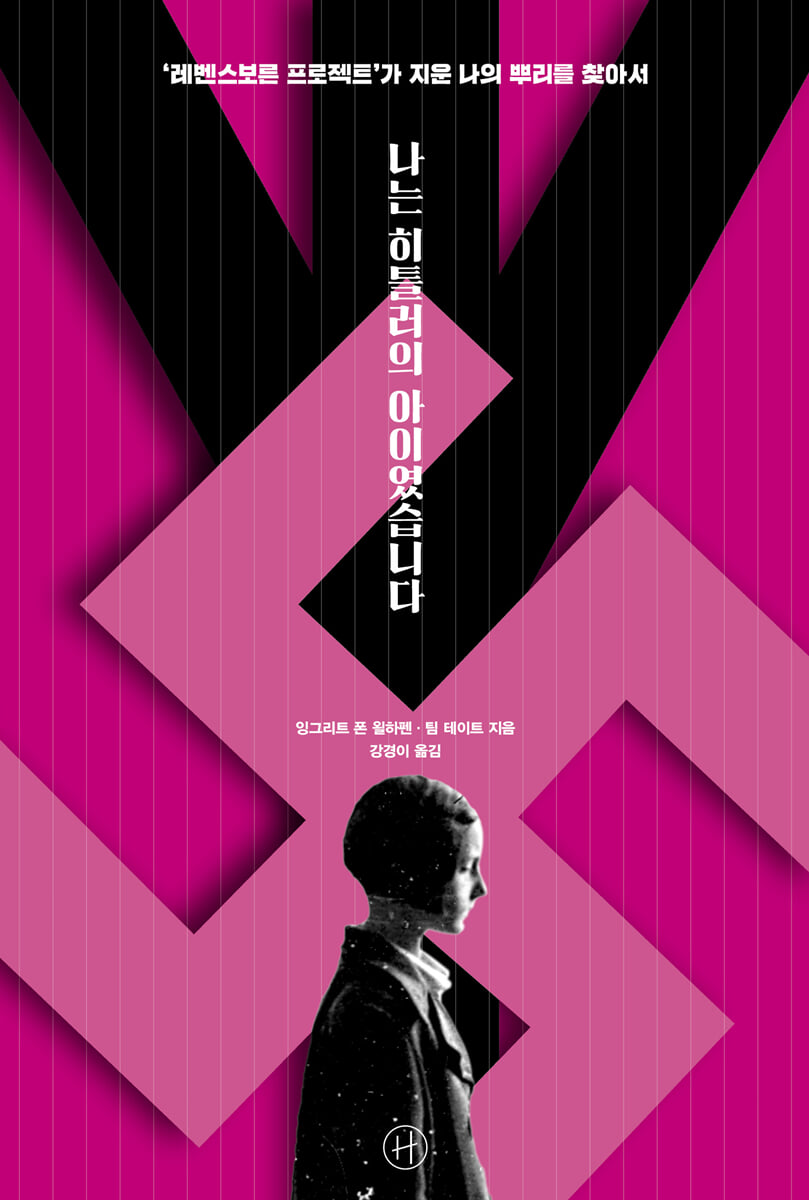
I was Hitler's child
 |
Description
Book Introduction
Preserve the 'good blood' and eliminate the 'bad blood'! The Lebensborn Children, kidnapped for Nazi racial experimentation Finding the 'me' erased by the madness of history The Lebensborn Project, implemented by the Nazis during World War II, aimed to preserve pure Aryan bloodlines and cultivate superior races to establish an Aryan nation. A victim of this horrific racial experiment that inspired Margaret Atwood's novel The Handmaid's Tale, this film tells the story of a woman who lost her identity and embarked on a long and arduous journey to find her roots. Her life and the process of confronting her dark past show how mad nationalism and racism can destroy a person's identity and life, and expose the shocking and destructive war crimes of the Nazis, which have been shrouded in silence and shame. |
- You can preview some of the book's contents.
Preview
index
introduction
Chapter 1 August 1942
Chapter 2 1945: Year 0
Chapter 3 Escape
Chapter 4 House
Chapter 5 Identity
Chapter 6 Barriers
Chapter 7: The Fountain of Life
Chapter 8: Bart Arolzen
Chapter 9 Brotherhood
Chapter 10 Hope
Chapter 11 Traces
Chapter 12 Nuremberg
Chapter 13: Rogashka Slatina
Chapter 14 Blood
Chapter 15: Purity
Chapter 16 Kidnapping
Find Chapter 17
Chapter 18 Peace
Reviews
Acknowledgements
Chapter 1 August 1942
Chapter 2 1945: Year 0
Chapter 3 Escape
Chapter 4 House
Chapter 5 Identity
Chapter 6 Barriers
Chapter 7: The Fountain of Life
Chapter 8: Bart Arolzen
Chapter 9 Brotherhood
Chapter 10 Hope
Chapter 11 Traces
Chapter 12 Nuremberg
Chapter 13: Rogashka Slatina
Chapter 14 Blood
Chapter 15: Purity
Chapter 16 Kidnapping
Find Chapter 17
Chapter 18 Peace
Reviews
Acknowledgements
Detailed image

Publisher's Review
“A heartbreaking and courageous memoir has arrived.
“The small history of Erika and Ingrid, who spent their lives searching for the pieces of a life shattered by the Nazis’ egregious racial arrogance, will serve as a precious mirror for reflecting on this era, where discrimination and hatred permeate deeply into everyday life.”
─ Jo Hae-jin (novelist)
“Blood flows throughout this story.
… … My story is a story of a much more secret past.
It is a warning story about what happens when blood is worshipped as the essence that determines a person's worth, and further, when it is used as a basis for justifying horrific crimes against humanity.
Because I am a child of Lebensborn.”
─ Ingrid von Oelhafen, from the Preface
1.
The Child Offered to Hitler, Summer 1942
─ A German woman's memoir of finding the "self" erased by the madness of history.
“I won’t pretend that this is a simple story.
Reading this story will not be easy either.
It can't be easy.
Still, if you read this, I hope you remember that bringing this story to life wasn't easy."
In August 1942, racial testing was carried out on children who had been forcibly taken from their parents in the Nazi-occupied Yugoslav city of Celje.
Children who displayed physical characteristics of pure Aryan descent, such as white skin, blue eyes, and blond hair, were sent directly to Germany as "Hitler's children."
And they were raised by SS members or German families who passed political and racial screening.
Nine-month-old Erika Matko was also a "child of Lebensborn" at the hands of the Nazis and raised as a German named "Ingrid von Ölhafen."
Growing up in a post-war Germany devastated by war, Ingrid discovers at the age of ten that she has another name, Erika Matko, and that she is a foster child.
However, because so many children were orphaned by the war, he tried to accept his situation, but he never asked anyone about his origins, and no one in his family ever spoke about it.
After a lonely childhood, Ingrid becomes an adult and builds her life by becoming a physical therapist who helps children with disabilities.
Still harboring a curiosity about his own origins… … .
Then, in the fall of 1999, a call from the German Red Cross asking if she wanted to find her biological parents shook Ingrid's life.
It wasn't until she turned sixty that she finally decided to embark on a journey of true self-discovery.
But at that time, he had no idea where he was born or what terrible events were intertwined in his past.
With the help of archives across Germany and governments in various European countries, Ingrid sets out to uncover the truth about Lebensborn, searching for the scattered pieces of her turbulent life from Germany to the lands of the former Yugoslavia.
Ingrid, a victim of Nazi superior race experiments, tells the story of her long and painful journey of finding her lost life and her roots with great sobriety.
But she confesses to her readers that it was never easy for her to accept the life she had lived and her past, intertwined with a mad history.
“I won’t pretend that this is a simple story.
Reading this story will not be easy either.
It can't be easy.
Still, if you read it, I hope you remember that bringing this story to life wasn't easy."
When the doctor called my name, 'Erika Matko,' my father got up and took me to the examination room.
My health insurance card that my father gave me also had 'Erika Matko' written on it.
I wondered why I was being called by a different name.
But I didn't have the courage to ask the doctor or my father.
I was still so scared of my dad.
After the examination, I was prescribed sun lamp treatment and returned home.
… … I never spoke to my father about the other name, ‘Erika Matko,’ but I never forgot it.
─ From Chapter 4, “Home” (page 56)
I've been pushing the question of who I am and where I come from to the back of my mind for too long.
I'd been trying to convince myself that living in the present was more important than dwelling on the past, but I knew that I'd been avoiding the problem out of fear of what I might discover in that past.
So when I got that call, what surprised me more than anything was how excited I was.
I felt like I finally had a chance to find out the truth.
Maybe I was already ready to face the truth.
─ From Chapter 6, “The Barrier” (pp. 81-82)
The survey results have left me on an emotional roller coaster ride all year long.
One moment it soared high, and the next it plummeted.
Was this suffering really worth enduring? Whatever my true identity, I was living a decent life as Ingrid von Oelhafen.
… … Does it really matter whether I was once called Erica Matko or not? … … It had been a year and a half since I put away the file marked ‘Erica Matko.’
… … It was said that the children from Lebensborn were going to gather for the first time.
… … This journey to find my identity was filled with dead ends, false leads, and seemingly insurmountable obstacles.
Do I really want to reopen old wounds from the beginning? Even if the answer is yes, what can I say at that meeting? I pulled out the stack of papers I'd put away.
─ From Chapter 10, “Hope” (pp. 137-138)
Putting together the puzzle of life is not easy.
Even when there are no missing pieces and you can refer to the picture in the puzzle box.
It's much more difficult when there aren't even clear, distinct boundaries to start from.
… … I hoped the answer to that question would be in the cotton swabs and test tubes I had brought.
It was an ironic situation.
The Lebensborn experiment was the foundation of the Nazi belief that blood determines a person's worth.
Himmler's obsession with blood and lineage was the reason I was taken from my Yugoslav family and reborn as a German child.
From that day on, the path of my life changed.
But now I intend to use blood to untangle the tangled threads left behind by Lebensborn.
─ From Chapter 14, “Blood” (page 201)
2.
"Creating" the Future Dominant Race: The Lebensborn Project
─ Revealing the truth about Nazi war crimes, shrouded in silence and shame.
“Racially pure men and women were commanded to have sexual relations and procreate, whether married or not.
“So that we can preserve the ‘good bloodline’ of our people.”
In 1935, Nazi SS chief Heinrich Himmler devised a plan to increase the German population to create a pure Aryan race state.
That is the 'Lebensborn (Fountain of Life) Project'.
The project was established under the pretext of helping unmarried pregnant women give birth and protecting the children and their mothers, but its goal was to produce children of "good blood" by encouraging extramarital relationships between SS members recruited through rigorous racial screening and women of Aryan descent.
Furthermore, to increase the low population growth rate, the Nazis kidnapped children from countries they occupied who displayed superior racial characteristics.
Lebensborn has only been known as an "SS breeding ground" as depicted in sensational Nazi-themed films and books, due to the limited research and lack of information on the area, as related materials were only released in the 2000s.
Moreover, the horrors of Lebensborn remained shrouded in secrecy for a long time because the women who gave birth there and their foster parents were either Nazis or lied or kept silent out of shame and fear of being mistaken for Nazis.
This book vividly portrays the reality of Lebensborn, the model for the Gilead Handmaidens in Margaret Atwood's novels.
It denounces the brutality of state power in controlling the pregnancies and childbirths of women, and the mad nationalism and racism that kidnaps children and destroys their identities based on the bizarre belief in pure blood and superior race.
I started looking for information about this mysterious organization called 'Lebensborn'.
But there was too little publicly available data.
More than 50 years after the end of the war, and the horrific history and crimes of the Third Reich have been analyzed and exposed in detail, yet searching for Lebensborn online yields very few, and even then, largely the same, results.
… … The first clue revealing the truth behind the seemingly innocuous Lebensborn Society was the phrase “racial future.”
The purpose of the Lebensborn maternity home was nominally to ensure confidentiality and safe childbirth for women with unwanted pregnancies, thereby increasing the German population.
But the facility was not open to everyone.
… … I wonder how much of a network of organizations was established to preserve the ‘purity’ of the German race.
I didn't know it was complicated.
During my research, I felt like I was being sucked down a rabbit hole dug by the madness of National Socialism.
─ From Chapter 7, “The Fountain of Life” (pp. 90, 92)
What drove Lebensborn was no longer simply the desire to increase pure Aryan blood within the German people.
By October 1939, Himmler, contemplating the near future, sensed a threat to his plans to create a future master race.
… … So he gives a revolutionary order to the men under his command.
In a 'confidential' statement distributed to all members of the SS and police, SS-General Himmler instructed them, whether married or not, to fulfill their sacred duty to the Reich by having children. ... ... This order did more than just sanction free sexual relations.
In fact, it was demanded.
Racially pure men and women were commanded to have sexual relations and procreate, whether married or not.
So that we can preserve the ‘good bloodline’ of our people.
─ From Chapter 8, “Bat Arolzen” (pp. 114-116)
Himmler also had plans for those members who did not or could not have children.
It was the Lebensborn Project.
In 1936, nine months after creating the organization to carry out his secret plan, he elevated Lebensborn to the status of a direct SS organization.
Himmler stated that childless officers should help find homes for at least some of the children born at the Lebensborn maternity home.
“S.S. officers without children are obliged to adopt children without genetic disorders, of racially valuable children, and to instill in them our spirit.”
─ From Chapter 9, “Brotherhood” (pp. 127, 129)
Rutilt said she and other children were given a naming ceremony that resembled a religious ritual and were dedicated to the SS and Hitler.
This naming ceremony, which featured a swastika flag draped over the altar and a bust or photograph of the Führer prominently displayed, was a distorted version of the traditional Christian baptism.
Before a congregation of Lebensborn staff and SS officers in black uniforms, mothers like Rutild's mother swore to raise their children as excellent National Socialists.
Then he handed the baby over to a guard who recited the 'Blessing Prayer'.
… … Next, an SS officer, holding a dagger over the baby, read the official welcoming speech welcoming him to the SS brotherhood.
─ From Chapter 11, “Traces” (page 146)
3. Does ‘blood’ prove a person’s worth?
─ Seeing the end of mad racism
“In countries once surrounded by the Iron Curtain, politicians are toying with nationalism.
“It fuels hatred based on racial and historical inferiority.”
In the 1920s, the Nazis, based on eugenics, carried out sterilization and even euthanasia on people they considered inferior.
In 1935, the Nuremberg Laws were promulgated, creating racial ancestry certificates and various racial identification documents, which laid the groundwork for the Holocaust.
The flip side of this coin was the Lebensborn Project, which aimed to create a pure-blooded ruling race to lead the Nazi empire.
So, to the so-called Nazi race inspectors who were born in the Lebensborn facility or kidnapped from the occupied countries?
Do children identified as "superior race" truly possess exceptional physical characteristics? The author's stories of the various "Lebensborn children" in this book reveal the obvious truth: they are no different from ordinary people.
Rather, what they were left with was the sadness and frustration of having lost their roots, and the emotional wounds and shame of having been 'children of Lebensborn.'
The reason why these bizarre and shocking crimes of the Nazis cannot simply be dismissed as history is because of the discrimination and hatred between nations, regions, religions, and races that are sprouting up again around the world today.
It makes us reflect on the world today by showing how this brutal history still affects so many people and the consequences of extreme racism.
Eugenics supported the Nazis' illogical belief that Germans were the true descendants of an Aryan superhuman race (sometimes referred to as the Nordic race) and destined to rule the world again.
Hitler had already expressed this idea in Mein Kampf (1925).
“The products of human culture, the achievements of art, science and technology that we encounter today, are almost entirely the creations of the Aryans.
Based on these facts, we can conclude that the Aryans are the progenitors of a superior race and the core of what we call 'human'.
We must fight for the survival and reproduction of our race, for the upbringing of our descendants, and to preserve the purity of our blood.”
─ From Chapter 8, "Bat Arolsen" (page 109)
Only those officially registered as 'German or of German descent' were 'racially tolerated' and could receive the status of Reichsburger.
People of mixed blood were classified as inferior citizens (Staatsangehorige).
From the moment they were classified as Jews, they were stripped of all civil rights, and marriages between Aryans and non-Aryans were illegal.
As the Nazis began to formalize this racial classification, they introduced a series of official documents.
A person holding a document called an 'Aryan Certificate' proved that he was a true member of the Aryan race.
A "Great Aryan Certificate" was awarded to anyone who met the criteria of having "no Jewish or colored ancestors on either the paternal or maternal side" in their racial lineage dating back to 1800.
─ From Chapter 8, “Bat Arolsen” (pp. 111, 113)
I looked around at people who, like me, were part of the Lebensborn Project.
I examined the bodies and faces of these survivors of Himmler's experiments one by one, looking for evidence that they were truly superhuman beings.
Are they taller, stronger, and healthier than other people? Rutilt answered my unspoken question.
She took off her glasses and rubbed her eyes as she spoke.
“We are not perfect.
“We have illnesses and disabilities just like everyone else.”
─ From Chapter 11, “Traces” (page 150)
More than 70 years have passed since the Lebensborn Project collapsed into the rubble of a ruined Europe, but in that time, small-scale regional conflicts have continued to erupt.
At the root of these conflicts are often beliefs like those held by Heinrich Himmler.
Another version of the belief that there are superior and inferior races.
This book is both a personal memoir and an exploration of history.
When I was busy writing the manuscript for this book, the world was being divided by hostility between nations, regions, and religions.
… … Especially in Europe, in countries once surrounded by the Iron Curtain, politicians play with nationalism, fanning hatred based on racial and historical inferiority.
Not since 1945 has Europe, and the world, been so dangerously divided.
The lesson of history is that we have never learned anything from history.
Now is the time to learn.
─ From the “Review” (page 266)
“The small history of Erika and Ingrid, who spent their lives searching for the pieces of a life shattered by the Nazis’ egregious racial arrogance, will serve as a precious mirror for reflecting on this era, where discrimination and hatred permeate deeply into everyday life.”
─ Jo Hae-jin (novelist)
“Blood flows throughout this story.
… … My story is a story of a much more secret past.
It is a warning story about what happens when blood is worshipped as the essence that determines a person's worth, and further, when it is used as a basis for justifying horrific crimes against humanity.
Because I am a child of Lebensborn.”
─ Ingrid von Oelhafen, from the Preface
1.
The Child Offered to Hitler, Summer 1942
─ A German woman's memoir of finding the "self" erased by the madness of history.
“I won’t pretend that this is a simple story.
Reading this story will not be easy either.
It can't be easy.
Still, if you read this, I hope you remember that bringing this story to life wasn't easy."
In August 1942, racial testing was carried out on children who had been forcibly taken from their parents in the Nazi-occupied Yugoslav city of Celje.
Children who displayed physical characteristics of pure Aryan descent, such as white skin, blue eyes, and blond hair, were sent directly to Germany as "Hitler's children."
And they were raised by SS members or German families who passed political and racial screening.
Nine-month-old Erika Matko was also a "child of Lebensborn" at the hands of the Nazis and raised as a German named "Ingrid von Ölhafen."
Growing up in a post-war Germany devastated by war, Ingrid discovers at the age of ten that she has another name, Erika Matko, and that she is a foster child.
However, because so many children were orphaned by the war, he tried to accept his situation, but he never asked anyone about his origins, and no one in his family ever spoke about it.
After a lonely childhood, Ingrid becomes an adult and builds her life by becoming a physical therapist who helps children with disabilities.
Still harboring a curiosity about his own origins… … .
Then, in the fall of 1999, a call from the German Red Cross asking if she wanted to find her biological parents shook Ingrid's life.
It wasn't until she turned sixty that she finally decided to embark on a journey of true self-discovery.
But at that time, he had no idea where he was born or what terrible events were intertwined in his past.
With the help of archives across Germany and governments in various European countries, Ingrid sets out to uncover the truth about Lebensborn, searching for the scattered pieces of her turbulent life from Germany to the lands of the former Yugoslavia.
Ingrid, a victim of Nazi superior race experiments, tells the story of her long and painful journey of finding her lost life and her roots with great sobriety.
But she confesses to her readers that it was never easy for her to accept the life she had lived and her past, intertwined with a mad history.
“I won’t pretend that this is a simple story.
Reading this story will not be easy either.
It can't be easy.
Still, if you read it, I hope you remember that bringing this story to life wasn't easy."
When the doctor called my name, 'Erika Matko,' my father got up and took me to the examination room.
My health insurance card that my father gave me also had 'Erika Matko' written on it.
I wondered why I was being called by a different name.
But I didn't have the courage to ask the doctor or my father.
I was still so scared of my dad.
After the examination, I was prescribed sun lamp treatment and returned home.
… … I never spoke to my father about the other name, ‘Erika Matko,’ but I never forgot it.
─ From Chapter 4, “Home” (page 56)
I've been pushing the question of who I am and where I come from to the back of my mind for too long.
I'd been trying to convince myself that living in the present was more important than dwelling on the past, but I knew that I'd been avoiding the problem out of fear of what I might discover in that past.
So when I got that call, what surprised me more than anything was how excited I was.
I felt like I finally had a chance to find out the truth.
Maybe I was already ready to face the truth.
─ From Chapter 6, “The Barrier” (pp. 81-82)
The survey results have left me on an emotional roller coaster ride all year long.
One moment it soared high, and the next it plummeted.
Was this suffering really worth enduring? Whatever my true identity, I was living a decent life as Ingrid von Oelhafen.
… … Does it really matter whether I was once called Erica Matko or not? … … It had been a year and a half since I put away the file marked ‘Erica Matko.’
… … It was said that the children from Lebensborn were going to gather for the first time.
… … This journey to find my identity was filled with dead ends, false leads, and seemingly insurmountable obstacles.
Do I really want to reopen old wounds from the beginning? Even if the answer is yes, what can I say at that meeting? I pulled out the stack of papers I'd put away.
─ From Chapter 10, “Hope” (pp. 137-138)
Putting together the puzzle of life is not easy.
Even when there are no missing pieces and you can refer to the picture in the puzzle box.
It's much more difficult when there aren't even clear, distinct boundaries to start from.
… … I hoped the answer to that question would be in the cotton swabs and test tubes I had brought.
It was an ironic situation.
The Lebensborn experiment was the foundation of the Nazi belief that blood determines a person's worth.
Himmler's obsession with blood and lineage was the reason I was taken from my Yugoslav family and reborn as a German child.
From that day on, the path of my life changed.
But now I intend to use blood to untangle the tangled threads left behind by Lebensborn.
─ From Chapter 14, “Blood” (page 201)
2.
"Creating" the Future Dominant Race: The Lebensborn Project
─ Revealing the truth about Nazi war crimes, shrouded in silence and shame.
“Racially pure men and women were commanded to have sexual relations and procreate, whether married or not.
“So that we can preserve the ‘good bloodline’ of our people.”
In 1935, Nazi SS chief Heinrich Himmler devised a plan to increase the German population to create a pure Aryan race state.
That is the 'Lebensborn (Fountain of Life) Project'.
The project was established under the pretext of helping unmarried pregnant women give birth and protecting the children and their mothers, but its goal was to produce children of "good blood" by encouraging extramarital relationships between SS members recruited through rigorous racial screening and women of Aryan descent.
Furthermore, to increase the low population growth rate, the Nazis kidnapped children from countries they occupied who displayed superior racial characteristics.
Lebensborn has only been known as an "SS breeding ground" as depicted in sensational Nazi-themed films and books, due to the limited research and lack of information on the area, as related materials were only released in the 2000s.
Moreover, the horrors of Lebensborn remained shrouded in secrecy for a long time because the women who gave birth there and their foster parents were either Nazis or lied or kept silent out of shame and fear of being mistaken for Nazis.
This book vividly portrays the reality of Lebensborn, the model for the Gilead Handmaidens in Margaret Atwood's novels.
It denounces the brutality of state power in controlling the pregnancies and childbirths of women, and the mad nationalism and racism that kidnaps children and destroys their identities based on the bizarre belief in pure blood and superior race.
I started looking for information about this mysterious organization called 'Lebensborn'.
But there was too little publicly available data.
More than 50 years after the end of the war, and the horrific history and crimes of the Third Reich have been analyzed and exposed in detail, yet searching for Lebensborn online yields very few, and even then, largely the same, results.
… … The first clue revealing the truth behind the seemingly innocuous Lebensborn Society was the phrase “racial future.”
The purpose of the Lebensborn maternity home was nominally to ensure confidentiality and safe childbirth for women with unwanted pregnancies, thereby increasing the German population.
But the facility was not open to everyone.
… … I wonder how much of a network of organizations was established to preserve the ‘purity’ of the German race.
I didn't know it was complicated.
During my research, I felt like I was being sucked down a rabbit hole dug by the madness of National Socialism.
─ From Chapter 7, “The Fountain of Life” (pp. 90, 92)
What drove Lebensborn was no longer simply the desire to increase pure Aryan blood within the German people.
By October 1939, Himmler, contemplating the near future, sensed a threat to his plans to create a future master race.
… … So he gives a revolutionary order to the men under his command.
In a 'confidential' statement distributed to all members of the SS and police, SS-General Himmler instructed them, whether married or not, to fulfill their sacred duty to the Reich by having children. ... ... This order did more than just sanction free sexual relations.
In fact, it was demanded.
Racially pure men and women were commanded to have sexual relations and procreate, whether married or not.
So that we can preserve the ‘good bloodline’ of our people.
─ From Chapter 8, “Bat Arolzen” (pp. 114-116)
Himmler also had plans for those members who did not or could not have children.
It was the Lebensborn Project.
In 1936, nine months after creating the organization to carry out his secret plan, he elevated Lebensborn to the status of a direct SS organization.
Himmler stated that childless officers should help find homes for at least some of the children born at the Lebensborn maternity home.
“S.S. officers without children are obliged to adopt children without genetic disorders, of racially valuable children, and to instill in them our spirit.”
─ From Chapter 9, “Brotherhood” (pp. 127, 129)
Rutilt said she and other children were given a naming ceremony that resembled a religious ritual and were dedicated to the SS and Hitler.
This naming ceremony, which featured a swastika flag draped over the altar and a bust or photograph of the Führer prominently displayed, was a distorted version of the traditional Christian baptism.
Before a congregation of Lebensborn staff and SS officers in black uniforms, mothers like Rutild's mother swore to raise their children as excellent National Socialists.
Then he handed the baby over to a guard who recited the 'Blessing Prayer'.
… … Next, an SS officer, holding a dagger over the baby, read the official welcoming speech welcoming him to the SS brotherhood.
─ From Chapter 11, “Traces” (page 146)
3. Does ‘blood’ prove a person’s worth?
─ Seeing the end of mad racism
“In countries once surrounded by the Iron Curtain, politicians are toying with nationalism.
“It fuels hatred based on racial and historical inferiority.”
In the 1920s, the Nazis, based on eugenics, carried out sterilization and even euthanasia on people they considered inferior.
In 1935, the Nuremberg Laws were promulgated, creating racial ancestry certificates and various racial identification documents, which laid the groundwork for the Holocaust.
The flip side of this coin was the Lebensborn Project, which aimed to create a pure-blooded ruling race to lead the Nazi empire.
So, to the so-called Nazi race inspectors who were born in the Lebensborn facility or kidnapped from the occupied countries?
Do children identified as "superior race" truly possess exceptional physical characteristics? The author's stories of the various "Lebensborn children" in this book reveal the obvious truth: they are no different from ordinary people.
Rather, what they were left with was the sadness and frustration of having lost their roots, and the emotional wounds and shame of having been 'children of Lebensborn.'
The reason why these bizarre and shocking crimes of the Nazis cannot simply be dismissed as history is because of the discrimination and hatred between nations, regions, religions, and races that are sprouting up again around the world today.
It makes us reflect on the world today by showing how this brutal history still affects so many people and the consequences of extreme racism.
Eugenics supported the Nazis' illogical belief that Germans were the true descendants of an Aryan superhuman race (sometimes referred to as the Nordic race) and destined to rule the world again.
Hitler had already expressed this idea in Mein Kampf (1925).
“The products of human culture, the achievements of art, science and technology that we encounter today, are almost entirely the creations of the Aryans.
Based on these facts, we can conclude that the Aryans are the progenitors of a superior race and the core of what we call 'human'.
We must fight for the survival and reproduction of our race, for the upbringing of our descendants, and to preserve the purity of our blood.”
─ From Chapter 8, "Bat Arolsen" (page 109)
Only those officially registered as 'German or of German descent' were 'racially tolerated' and could receive the status of Reichsburger.
People of mixed blood were classified as inferior citizens (Staatsangehorige).
From the moment they were classified as Jews, they were stripped of all civil rights, and marriages between Aryans and non-Aryans were illegal.
As the Nazis began to formalize this racial classification, they introduced a series of official documents.
A person holding a document called an 'Aryan Certificate' proved that he was a true member of the Aryan race.
A "Great Aryan Certificate" was awarded to anyone who met the criteria of having "no Jewish or colored ancestors on either the paternal or maternal side" in their racial lineage dating back to 1800.
─ From Chapter 8, “Bat Arolsen” (pp. 111, 113)
I looked around at people who, like me, were part of the Lebensborn Project.
I examined the bodies and faces of these survivors of Himmler's experiments one by one, looking for evidence that they were truly superhuman beings.
Are they taller, stronger, and healthier than other people? Rutilt answered my unspoken question.
She took off her glasses and rubbed her eyes as she spoke.
“We are not perfect.
“We have illnesses and disabilities just like everyone else.”
─ From Chapter 11, “Traces” (page 150)
More than 70 years have passed since the Lebensborn Project collapsed into the rubble of a ruined Europe, but in that time, small-scale regional conflicts have continued to erupt.
At the root of these conflicts are often beliefs like those held by Heinrich Himmler.
Another version of the belief that there are superior and inferior races.
This book is both a personal memoir and an exploration of history.
When I was busy writing the manuscript for this book, the world was being divided by hostility between nations, regions, and religions.
… … Especially in Europe, in countries once surrounded by the Iron Curtain, politicians play with nationalism, fanning hatred based on racial and historical inferiority.
Not since 1945 has Europe, and the world, been so dangerously divided.
The lesson of history is that we have never learned anything from history.
Now is the time to learn.
─ From the “Review” (page 266)
GOODS SPECIFICS
- Date of issue: April 5, 2021
- Page count, weight, size: 272 pages | 324g | 135*200*20mm
- ISBN13: 9791160805345
- ISBN10: 1160805342
You may also like
카테고리
korean


korean

![GQ KOREA Mark (Monthly): December [2025]](http://librairie.coreenne.fr/cdn/shop/files/8ef265dbbfbf186523ed75ba7319009d.jpg?v=1765340328&width=3840)


