

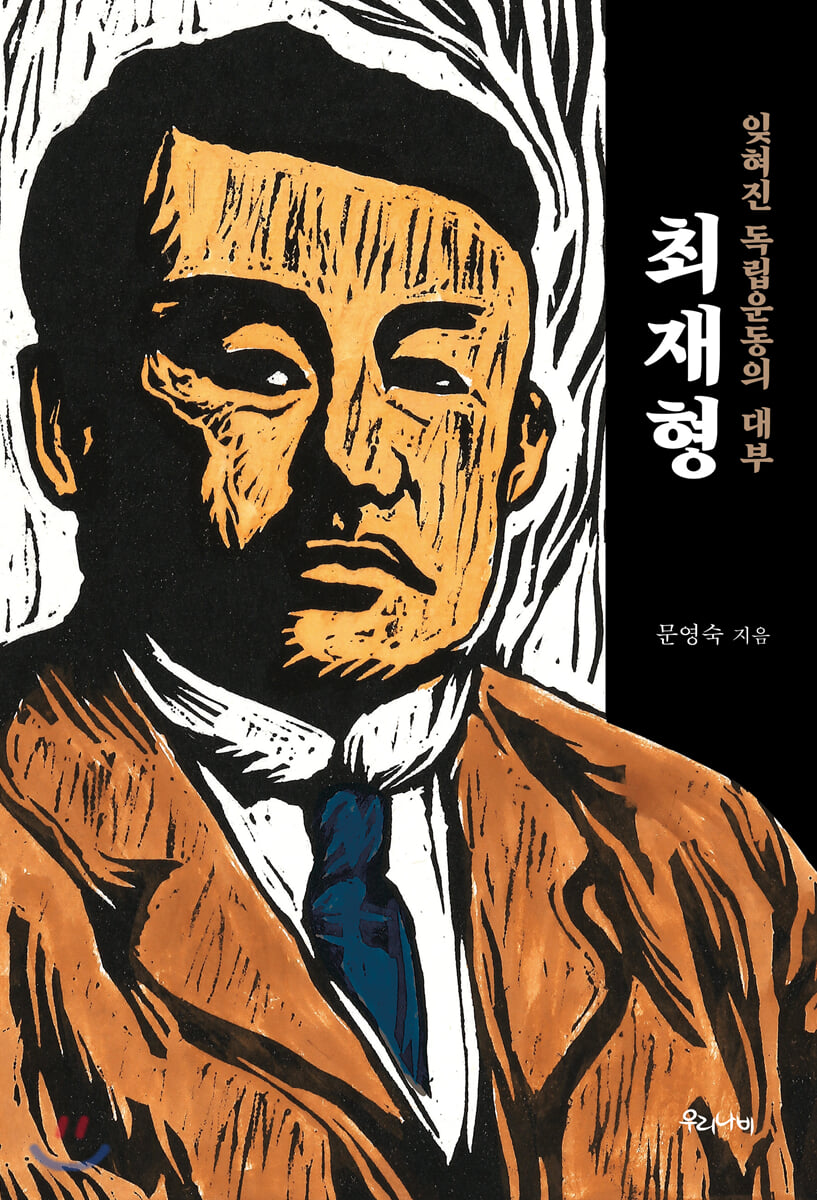
Choi Jae-hyung, the forgotten godfather of the independence movement
 |
Description
Book Introduction
The spirit of noblesse oblige that transcends social status
The eternal pechka of Siberian Koreans
The Life of Choi Jae-hyung, the Godfather of the Russian Anti-Japanese National Movement
2020: The Centennial Anniversary of the Martyrdom of Choi Jae-hyung
The history of the independence movement in the Russian Maritime Province cannot be written without mentioning Choi Jae-hyung, as he had a great influence on the Russian independence movement.
Nevertheless, the reality is that there are very few people among the citizens of the Republic of Korea who truly know him as an independence activist.
This may be due to the fact that research on the history of the independence movement in the Russian region has not been active compared to that in South Korea or China.
Also, during the period of competition between the two systems in a state of confrontation with North Korea, the social atmosphere in which it was difficult to even mention Choi Jae-hyung, a Russian citizen, may have played a role.
However, Choi Jae-hyung and the Koreans living in the Maritime Province risked their lives fighting against Japan, regardless of socialism or communism, solely to reclaim their lost country.
Choi Jae-hyung, who was born a poor slave and received nothing from his motherland, Joseon, but dedicated himself to his country and people by giving everything he had.
Through the new book, “Choi Jae-hyung, the Forgotten Godfather of the Independence Movement,” “Our Butterfly” aims to shed new light on and promote Choi Jae-hyung, a great national leader who practiced the true spirit of noblesse oblige as an entrepreneur, educator, independence activist, and journalist, in addition to the independence activists we are familiar with, such as Kim Won-bong, Kim Gu, and Ahn Chang-ho.
The eternal pechka of Siberian Koreans
The Life of Choi Jae-hyung, the Godfather of the Russian Anti-Japanese National Movement
2020: The Centennial Anniversary of the Martyrdom of Choi Jae-hyung
The history of the independence movement in the Russian Maritime Province cannot be written without mentioning Choi Jae-hyung, as he had a great influence on the Russian independence movement.
Nevertheless, the reality is that there are very few people among the citizens of the Republic of Korea who truly know him as an independence activist.
This may be due to the fact that research on the history of the independence movement in the Russian region has not been active compared to that in South Korea or China.
Also, during the period of competition between the two systems in a state of confrontation with North Korea, the social atmosphere in which it was difficult to even mention Choi Jae-hyung, a Russian citizen, may have played a role.
However, Choi Jae-hyung and the Koreans living in the Maritime Province risked their lives fighting against Japan, regardless of socialism or communism, solely to reclaim their lost country.
Choi Jae-hyung, who was born a poor slave and received nothing from his motherland, Joseon, but dedicated himself to his country and people by giving everything he had.
Through the new book, “Choi Jae-hyung, the Forgotten Godfather of the Independence Movement,” “Our Butterfly” aims to shed new light on and promote Choi Jae-hyung, a great national leader who practiced the true spirit of noblesse oblige as an entrepreneur, educator, independence activist, and journalist, in addition to the independence activists we are familiar with, such as Kim Won-bong, Kim Gu, and Ahn Chang-ho.
- You can preview some of the book's contents.
Preview
index
1 Who is Choi Jae-hyung, the independence activist?
… … … … … … … … … … … … … … … … … … … … … … … … … … … … … … … … … … … … … … … … … … … … … … … … … … … … … … … … … … … … … … … … … … 8
2. Turn your back on your hometown
… … … … … … … … … … … … … … … … … … … … … … … … … … … … … … … … … … … … … … … … … … … … … … … … … … … … … … … … … … … … … … … … … … … 13
3 Strange land, strange sky
… … … … … … … … … … … … … … … … … … … … … … … … … … … … … … … … … … … … … … … … … … … … … … … … … … … … … … … … … … … … … … … 18
4 Becoming the first Korean student at a Russian Orthodox school
… ...
5 Meet the Good Russian Captain
… ...
6 Become a global youth
… ...
7. Return to your family in search of your father.
… ...
8 From the road construction manager to the Koreans' stove
… ...
9. Yan Chi-hye is reborn as Do-heon (county governor)
… ...
Educator who founded 10 32 Korean schools
… … … … … … … … … … … … … … … … … … … … … … … … … … … … … … … … … … … … … … … … … … … … … … … … … … … … … … … … … … … … … … … … … … … … … … … … … … … … … 56
11. Incorporating European culture into Korean villages through the experiences gained while traveling the world.
… ...
12 Supporting the Anti-Japanese Resistance Movement in the East
… ...
13 The Background of the Russo-Japanese War and Japan's Ambition / The Anglo-Japanese Alliance and the Fall of the Baltic Fleet
… … … … … … … … … … … … … … … … … … … … … … … … … … … … … … … … … … … … … … … … … … … … … … … … … … … … … … … … … … … … … … … … … … … 72
14. Stayed in Japan after the Russo-Japanese War, grasped the situation in Northeast Asia, and discerned Japan's ambitions.
… … … … … … … … … … … … … … … … … … … … … … … … … … … … … … … … … … … … … … … … … … … … … … … … … … … … … … … … … … … … … … … … 78
15. Despite feeling the social gap, he actively supported Lee Beom-yun, the representative of the Joseon king.
… … … … … … … … … … … … … … … … … … … … … … … … … … … … … … … … … … … … … … … … … … … … … … … … … … … … … … … … … … … … … 83
Choi Jae-hyung ponders the period of the Righteous Army's struggle / Emperor Gojong dispatches a special envoy to The Hague
… … … … … … … … … … … … … … … … … … … … … … … … … … … … … … … … … … … … … … … … … … … … … … … … … … … … … … … … … … … … 88
17. Emperor Gojong's Dethronement and Disbandment of the Army / Patriots Move to Primorsky Krai in Large Numbers
… … … … … … … … … … … … … … … … … … … … … … … … … … … … … … … … … … … … … … … … … … … … … … … … … … … … … … … … … … … … … … … … … … … … 93
18. Provided food and financial support to the volunteer army, and secretly purchased rifles.
… … … … … … … … … … … … … … … … … … … … … … … … … … … … … … … … … … … … … … … … … … … … … … … … … … … … … … … … … … … … … … … … … 98
Choi Jae-hyung and Lee Beom-yun, who organized the 19th Association, and Ahn Jung-geun, who participated as a promoter
… … … … … … … … … … … … … … … … … … … … … … … … … … … … … … … … … … … … … … … … … … … … … … … … … … … … … … … … … … … … … … … … … … 103
An Jung-geun toured Korean villages, appealing to the unity of human nature.
… … … … … … … … … … … … … … … … … … … … … … … … … … … … … … … … … … … … … … … … … … … … … … … … … … … … … … … … … … … … … … … 107
21 Announcement of the Association's founding document and purpose statement
… … … … … … … … … … … … … … … … … … … … … … … … … … … … … … … … … … … … … … … … … … … … … … … … … … … … … … … … … … … … … … … … … … … 113
22. Support for food, clothing, shelter, and weapons for volunteer soldiers through military supply and rental projects.
… … … … … … … … … … … … … … … … … … … … … … … … … … … … … … … … … … … … … … … … … … … … … … … … … … … … … … … … … … … … … … … … 117
23 Choi Jae-hyung's volunteer army's continuous victories in the domestic offensive operation
… … … … … … … … … … … … … … … … … … … … … … … … … … … … … … … … … … … … … … … … … … … … … … … … … … … … … … … … … … … … … 122
24 Battles of Sinasan and Hongui-dong, a great victory for Ahn Jung-geun, and a crushing defeat in the Battle of Yeongsan
… … … … … … … … … … … … … … … … … … … … … … … … … … … … … … … … … … … … … … … … … … … … … … … … … … … … … … … … … … … … … … 127
25. Intensifying conflict with Lee Beom-yoon / Russia pressuring Choi Jae-hyung at the instigation of Japan
… … … … … … … … … … … … … … … … … … … … … … … … … … … … … … … … … … … … … … … … … … … … … … … … … … … … … … … … … … … … … … … … … … 131
26. Covertly deploying militia activities using camouflage tactics.
… … … … … … … … … … … … … … … … … … … … … … … … … … … … … … … … … … … … … … … … … … … … … … … … … … … … … … … … … … … … … … … … … … … 136
27 The conflict between slaves and royalty surfaces
… … … … … … … … … … … … … … … … … … … … … … … … … … … … … … … … … … … … … … … … … … … … … … … … … … … … … … … … … … … … … … … 141
28. Trade magnate Choi Bong-jun, who published the Haejo Shinmun, fiercely criticized Choi Jae-hyung's volunteer activities.
… … … … … … … … … … … … … … … … … … … … … … … … … … … … … … … … … … … … … … … … … … … … … … … … … … … … … … … … … … … … … … … 146
29. He took over the struggling Daedong Publication and became its president.
… … … … … … … … … … … … … … … … … … … … … … … … … … … … … … … … … … … … … … … … … … … … … … … … … … … … … … … … … … … … … … 151
An Jung-geun practicing the Harbin Uprising at the Daedong Public Relations Office after the 30th Anniversary of the Korean War.
… … … … … … … … … … … … … … … … … … … … … … … … … … … … … … … … … … … … … … … … … … … … … … … … … … … … … … … … … … … … … 156
31 Special Report on Ahn Jung-geun's Harbin Uprising, Caring for His Family After His Death
… … … … … … … … … … … … … … … … … … … … … … … … … … … … … … … … … … … … … … … … … … … … … … … … … … … … … … … … … … … … … … … … … … … 161
32 Escape from the Japanese spy trap and become the founding president of the Kwonuphoe
… … … … … … … … … … … … … … … … … … … … … … … … … … … … … … … … … … … … … … … … … … … … … … … … … … … … … … … … … … … … … 165
As the chairman of the 33rd Kwonyeophoe's founding committee, he played a pivotal role in the two axes of economics and anti-Japanese resistance.
… … … … … … … … … … … … … … … … … … … … … … … … … … … … … … … … … … … … … … … … … … … … … … … … … … … … … … … … … … … … … … 170
34. He took office as the chairman of the stagnant Kwonuphoe and published the Kwonup Newspaper with Shin Chae-ho as editor-in-chief.
… … … … … … … … … … … … … … … … … … … … … … … … … … … … … … … … … … … … … … … … … … … … … … … … … … … … … … … … … … … … … … … … 174
35. Preparations for the 50th Anniversary of Korean Elderly Migration to Russia to Promote Korean National Consciousness
… … … … … … … … … … … … … … … … … … … … … … … … … … … … … … … … … … … … … … … … … … … … … … … … … … … … … … … … … … … … … … 179
36 Efforts to unite the Korean community amid the end of Imperial Russia
… … … … … … … … … … … … … … … … … … … … … … … … … … … … … … … … … … … … … … … … … … … … … … … … … … … … … … … … … … … … … … … 185
37 Status as a leader representing Koreans in Russia
… … … … … … … … … … … … … … … … … … … … … … … … … … … … … … … … … … … … … … … … … … … … … … … … … … … … … … … … … … … … … 190
38 The Background of the Russo-Japanese War and the Anglo-Japanese Alliance / Jacob Schiff, Who Solved Japan's Financial Crisis
… … … … … … … … … … … … … … … … … … … … … … … … … … … … … … … … … … … … … … … … … … … … … … … … … … … … … … … … … … … … … … … … 195
39 Samurai with Swords Explore the Continent and Steal Joseon
… … … … … … … … … … … … … … … … … … … … … … … … … … … … … … … … … … … … … … … … … … … … … … … … … … … … … … … … … … … … … … … … … … … 200
40. Elected as honorary chairman of the Jeonro Hanjok Representative Council along with Lee Dong-hwi.
… ...
41 Purchased rifles from the Czech Legion and armed anti-Japanese volunteers
… … … … … … … … … … … … … … … … … … … … … … … … … … … … … … … … … … … … … … … … … … … … … … … … … … … … … … … … … … … … … … … … … … … … … … … 209
Choi Jae-hyeong, who was elected as a delegate to the Paris Peace Conference but was excluded from the dispatch
… ...
43. In an attempt to sidestep Japan, an unknown figure was sent to the Paris Peace Conference instead of a major figure.
… ...
44 Korean-Russian events to raise national consciousness ahead of the March 1st Movement
… ...
45 Naturalized Elders Gyuhap Appointed as Minister of Foreign Affairs of the National Assembly of the Republic of Korea
… … … … … … … … … … … … … … … … … … … … … … … … … … … … … … … … … … … … … … … … … … … … … … … … … … … … … … … … … … … … … … … … … … … … 228
46. The Manse Demonstration Movement of Koreans in Russia and the Establishment of Provisional Governments in Primorsky Krai, Shanghai, and Seoul
… ...
47. Absent from the Shanghai Provisional Government, imprisoned during Japan's April Offensive
… ...
48 died in battle from Japanese bullets and remain without a grave or tombstone.
… ...
… … … … … … … … … … … … … … … … … … … … … … … … … … … … … … … … … … … … … … … … … … … … … … … … … … … … … … … … … … … … … … … … … … 8
2. Turn your back on your hometown
… … … … … … … … … … … … … … … … … … … … … … … … … … … … … … … … … … … … … … … … … … … … … … … … … … … … … … … … … … … … … … … … … … … 13
3 Strange land, strange sky
… … … … … … … … … … … … … … … … … … … … … … … … … … … … … … … … … … … … … … … … … … … … … … … … … … … … … … … … … … … … … … … 18
4 Becoming the first Korean student at a Russian Orthodox school
… ...
5 Meet the Good Russian Captain
… ...
6 Become a global youth
… ...
7. Return to your family in search of your father.
… ...
8 From the road construction manager to the Koreans' stove
… ...
9. Yan Chi-hye is reborn as Do-heon (county governor)
… ...
Educator who founded 10 32 Korean schools
… … … … … … … … … … … … … … … … … … … … … … … … … … … … … … … … … … … … … … … … … … … … … … … … … … … … … … … … … … … … … … … … … … … … … … … … … … … … … 56
11. Incorporating European culture into Korean villages through the experiences gained while traveling the world.
… ...
12 Supporting the Anti-Japanese Resistance Movement in the East
… ...
13 The Background of the Russo-Japanese War and Japan's Ambition / The Anglo-Japanese Alliance and the Fall of the Baltic Fleet
… … … … … … … … … … … … … … … … … … … … … … … … … … … … … … … … … … … … … … … … … … … … … … … … … … … … … … … … … … … … … … … … … … … 72
14. Stayed in Japan after the Russo-Japanese War, grasped the situation in Northeast Asia, and discerned Japan's ambitions.
… … … … … … … … … … … … … … … … … … … … … … … … … … … … … … … … … … … … … … … … … … … … … … … … … … … … … … … … … … … … … … … … 78
15. Despite feeling the social gap, he actively supported Lee Beom-yun, the representative of the Joseon king.
… … … … … … … … … … … … … … … … … … … … … … … … … … … … … … … … … … … … … … … … … … … … … … … … … … … … … … … … … … … … … 83
Choi Jae-hyung ponders the period of the Righteous Army's struggle / Emperor Gojong dispatches a special envoy to The Hague
… … … … … … … … … … … … … … … … … … … … … … … … … … … … … … … … … … … … … … … … … … … … … … … … … … … … … … … … … … … … 88
17. Emperor Gojong's Dethronement and Disbandment of the Army / Patriots Move to Primorsky Krai in Large Numbers
… … … … … … … … … … … … … … … … … … … … … … … … … … … … … … … … … … … … … … … … … … … … … … … … … … … … … … … … … … … … … … … … … … … … 93
18. Provided food and financial support to the volunteer army, and secretly purchased rifles.
… … … … … … … … … … … … … … … … … … … … … … … … … … … … … … … … … … … … … … … … … … … … … … … … … … … … … … … … … … … … … … … … … 98
Choi Jae-hyung and Lee Beom-yun, who organized the 19th Association, and Ahn Jung-geun, who participated as a promoter
… … … … … … … … … … … … … … … … … … … … … … … … … … … … … … … … … … … … … … … … … … … … … … … … … … … … … … … … … … … … … … … … … … 103
An Jung-geun toured Korean villages, appealing to the unity of human nature.
… … … … … … … … … … … … … … … … … … … … … … … … … … … … … … … … … … … … … … … … … … … … … … … … … … … … … … … … … … … … … … … 107
21 Announcement of the Association's founding document and purpose statement
… … … … … … … … … … … … … … … … … … … … … … … … … … … … … … … … … … … … … … … … … … … … … … … … … … … … … … … … … … … … … … … … … … … 113
22. Support for food, clothing, shelter, and weapons for volunteer soldiers through military supply and rental projects.
… … … … … … … … … … … … … … … … … … … … … … … … … … … … … … … … … … … … … … … … … … … … … … … … … … … … … … … … … … … … … … … … 117
23 Choi Jae-hyung's volunteer army's continuous victories in the domestic offensive operation
… … … … … … … … … … … … … … … … … … … … … … … … … … … … … … … … … … … … … … … … … … … … … … … … … … … … … … … … … … … … … 122
24 Battles of Sinasan and Hongui-dong, a great victory for Ahn Jung-geun, and a crushing defeat in the Battle of Yeongsan
… … … … … … … … … … … … … … … … … … … … … … … … … … … … … … … … … … … … … … … … … … … … … … … … … … … … … … … … … … … … … … 127
25. Intensifying conflict with Lee Beom-yoon / Russia pressuring Choi Jae-hyung at the instigation of Japan
… … … … … … … … … … … … … … … … … … … … … … … … … … … … … … … … … … … … … … … … … … … … … … … … … … … … … … … … … … … … … … … … … … 131
26. Covertly deploying militia activities using camouflage tactics.
… … … … … … … … … … … … … … … … … … … … … … … … … … … … … … … … … … … … … … … … … … … … … … … … … … … … … … … … … … … … … … … … … … … 136
27 The conflict between slaves and royalty surfaces
… … … … … … … … … … … … … … … … … … … … … … … … … … … … … … … … … … … … … … … … … … … … … … … … … … … … … … … … … … … … … … … 141
28. Trade magnate Choi Bong-jun, who published the Haejo Shinmun, fiercely criticized Choi Jae-hyung's volunteer activities.
… … … … … … … … … … … … … … … … … … … … … … … … … … … … … … … … … … … … … … … … … … … … … … … … … … … … … … … … … … … … … … … 146
29. He took over the struggling Daedong Publication and became its president.
… … … … … … … … … … … … … … … … … … … … … … … … … … … … … … … … … … … … … … … … … … … … … … … … … … … … … … … … … … … … … … 151
An Jung-geun practicing the Harbin Uprising at the Daedong Public Relations Office after the 30th Anniversary of the Korean War.
… … … … … … … … … … … … … … … … … … … … … … … … … … … … … … … … … … … … … … … … … … … … … … … … … … … … … … … … … … … … … 156
31 Special Report on Ahn Jung-geun's Harbin Uprising, Caring for His Family After His Death
… … … … … … … … … … … … … … … … … … … … … … … … … … … … … … … … … … … … … … … … … … … … … … … … … … … … … … … … … … … … … … … … … … … 161
32 Escape from the Japanese spy trap and become the founding president of the Kwonuphoe
… … … … … … … … … … … … … … … … … … … … … … … … … … … … … … … … … … … … … … … … … … … … … … … … … … … … … … … … … … … … … 165
As the chairman of the 33rd Kwonyeophoe's founding committee, he played a pivotal role in the two axes of economics and anti-Japanese resistance.
… … … … … … … … … … … … … … … … … … … … … … … … … … … … … … … … … … … … … … … … … … … … … … … … … … … … … … … … … … … … … … 170
34. He took office as the chairman of the stagnant Kwonuphoe and published the Kwonup Newspaper with Shin Chae-ho as editor-in-chief.
… … … … … … … … … … … … … … … … … … … … … … … … … … … … … … … … … … … … … … … … … … … … … … … … … … … … … … … … … … … … … … … … 174
35. Preparations for the 50th Anniversary of Korean Elderly Migration to Russia to Promote Korean National Consciousness
… … … … … … … … … … … … … … … … … … … … … … … … … … … … … … … … … … … … … … … … … … … … … … … … … … … … … … … … … … … … … … 179
36 Efforts to unite the Korean community amid the end of Imperial Russia
… … … … … … … … … … … … … … … … … … … … … … … … … … … … … … … … … … … … … … … … … … … … … … … … … … … … … … … … … … … … … … … 185
37 Status as a leader representing Koreans in Russia
… … … … … … … … … … … … … … … … … … … … … … … … … … … … … … … … … … … … … … … … … … … … … … … … … … … … … … … … … … … … … 190
38 The Background of the Russo-Japanese War and the Anglo-Japanese Alliance / Jacob Schiff, Who Solved Japan's Financial Crisis
… … … … … … … … … … … … … … … … … … … … … … … … … … … … … … … … … … … … … … … … … … … … … … … … … … … … … … … … … … … … … … … … 195
39 Samurai with Swords Explore the Continent and Steal Joseon
… … … … … … … … … … … … … … … … … … … … … … … … … … … … … … … … … … … … … … … … … … … … … … … … … … … … … … … … … … … … … … … … … … … 200
40. Elected as honorary chairman of the Jeonro Hanjok Representative Council along with Lee Dong-hwi.
… ...
41 Purchased rifles from the Czech Legion and armed anti-Japanese volunteers
… … … … … … … … … … … … … … … … … … … … … … … … … … … … … … … … … … … … … … … … … … … … … … … … … … … … … … … … … … … … … … … … … … … … … … … 209
Choi Jae-hyeong, who was elected as a delegate to the Paris Peace Conference but was excluded from the dispatch
… ...
43. In an attempt to sidestep Japan, an unknown figure was sent to the Paris Peace Conference instead of a major figure.
… ...
44 Korean-Russian events to raise national consciousness ahead of the March 1st Movement
… ...
45 Naturalized Elders Gyuhap Appointed as Minister of Foreign Affairs of the National Assembly of the Republic of Korea
… … … … … … … … … … … … … … … … … … … … … … … … … … … … … … … … … … … … … … … … … … … … … … … … … … … … … … … … … … … … … … … … … … … … 228
46. The Manse Demonstration Movement of Koreans in Russia and the Establishment of Provisional Governments in Primorsky Krai, Shanghai, and Seoul
… ...
47. Absent from the Shanghai Provisional Government, imprisoned during Japan's April Offensive
… ...
48 died in battle from Japanese bullets and remain without a grave or tombstone.
… ...
Publisher's Review
Choi Jae-hyeong was born on August 15, 1860 in Gyeongwon, North Hamgyong Province.
His Russian name was Choi Pyotr Semenovic (Цой Пётр Семёнович), his other names were Choi Jae-hyung (崔在衡), Choi Do-heon (崔都憲), and his nicknames were Choi Petka and Choi Bijikae.
Choi Jae-hyung's father was a poor tenant farmer and his mother was a talented and beautiful gisaeng.
Choi Jae-hyung's family left their homeland in 1869 and settled in Jishinheo, the first Korean village in Russia.
Two years after moving to Jisinheo, 11-year-old Choi Jae-hyung runs away from home to escape discrimination and persecution from his sister-in-law.
However, Choi Jae-hyung, exhausted from hunger and fatigue, collapses unconscious on the beach of Posiet, where he is rescued by Russian merchant sailors.
The captain and his wife of the merchant ship took good care of Choi Jae-hyung.
In particular, the captain's wife taught Choi Jae-hyung knowledge of various fields, including Russian and classical Russian literature, and gave Choi Jae-hyung, who had not been able to attend school, a deep understanding and broad perspective.
During his time as a sailor, Choi Jae-hyung made two round trips from Vladivostok to St. Petersburg, gaining valuable experience in coming into contact with advanced civilizations from various countries.
Choi Jae-hyung returned to his family after 10 years of working as a boss for three years.
The family had already left Jisinhe Village and moved to nearby Yanqihe.
There, Choi Jae-hyung participated in the construction of a military road for the Russian government. As the only Korean who could speak Russian fluently at the time, Choi Jae-hyung served as an interpreter and led 300 Koreans to renovate the road between Novy Kievsk and Barabash.
At this time, Choi Jae-hyung acted as a mediator between Russian officials and Koreans, and especially served as a voice and ears for Koreans who could not express their grievances due to their lack of knowledge of Russian.
As a result, Choi Jae-hyung was respected by many people for a long time with the nickname 'Choi Bi-ji-kae' in the Korean community, and was awarded the Silver Medal by the Russian government based on their strong trust.
In 1893, Choi Jae-hyeong was elected as the first provincial governor in Russia, and his leadership was recognized in the Korean community.
He also enjoyed the trust of the Russian government, having attended the coronation of Nicholas II.
As Yeonchu Doheon, Choi Jae-hyung focused on Korean education projects.
He donated 2,000 rubles in scholarships to poor students at the Yenchu Nikolaevskoye Elementary School, a representative Russian-style Korean school established in a Korean village, and founded the Usin School (又新學校) and ran the school as its principal.
He also played a leading role in establishing 32 elementary schools in Korean villages in the Primorsky Krai region.
What made this educational venture possible was that Choi Jae-hyung was a capable businessman and a man of great financial resources.
Choi Jae-hyung became one of the most affluent people in the Primorsky Krai through his business of supplying beef and building materials to the Russian army and through his rental business during the Russo-Japanese War.
Choi Jae-hyung was deeply saddened by the reality that the country he had left behind had become a battlefield in the Russo-Japanese War and its sovereignty was being trampled upon.
After the war ended, he went to Tokyo, Japan and began to directly understand Japan's policy on the Korean Peninsula.
Choi Jae-hyung, who returned to Yeonchu after six months, immediately started organizing a volunteer army to fight against Japan.
He established a headquarters for the volunteer army in Novokievsk with the Gando Administrator Lee Beom-yun and organized a secret society for the purpose of raising funds and recruiting volunteers.
Comrades such as An Jung-geun and Eom In-seop also joined Choi Jae-hyeong's volunteer army headquarters, and Lee Wi-jong, who had been dispatched as a special envoy to The Hague, also came to Novokievsk under the orders of his father, Russian Minister Lee Beom-jin.
In April 1908, Choi Jae-hyung organized the anti-Japanese organization 'Donguihoe' with these people and was elected as its president. The 'Donguihoe Purpose Statement' was published in the 'Haejo Shinmun', the first daily newspaper published in Korean overseas.
Choi Jae-hyung donated 13,000 rubles to the Donguihoe military fund, Lee Wi-jong donated 10,000 rubles, and 6,000 rubles were raised in the Sucheong region, and 100 military guns were collected from various places.
From early July to September 1908, the volunteer army unit under the Donguihoe advanced to the border area of Hamgyeong Province in joint operations with the Hong Beom-do unit and engaged in fierce battles with the Japanese army.
However, Ahn Jung-geun was defeated in the Battle of Yeongsan and had no choice but to retreat in the face of numerical inferiority and superior firepower from the Japanese army.
On the surface, Choi Jae-hyung also seemed to be distancing himself from the righteous army movement and taking a moderate stance.
This is due to complex conflicts of interest, such as changes in Russia's policy due to changes in its relationship with Japan, conflict with Lee Beom-yun, and discord with critics of the Righteous Army movement such as Choi Bong-jun.
However, after the crushing defeat in the Battle of Yeongsan, Choi Jae-hyeong became the president of the Daedong Gongbo (Daedong Gongbo), which had been closed down due to financial difficulties, in January 1909, and worked hard to criticize Japan with fierce arguments and to encourage independence awareness among Koreans.
Patriots often stayed at Choi Jae-hyung's house in Novokievsk, and Ahn Jung-geun also stayed at his house and practiced shooting before leaving for Harbin to assassinate Ito Hirobumi.
In December 1910, Choi Jae-hyung, together with Lee Jong-ho, established the 'National Association' in Yeonchu, took office as its chairman, and provided his house as the headquarters office.
The secretly organized National Assembly's goals were to establish schools, promote education, employ talented individuals, and restore national sovereignty.
In 1910, Japan, which carried out the Japan-Korea Annexation Treaty, had the Russian authorities deport seven people, including Lee Beom-yun, to Irkutsk, and in early 1911, plotted to eliminate Choi Jae-hyeong.
Based on a fabricated document claiming that Choi Jae-hyung was a Japanese spy, he suggested to the military governor of the Maritime Province that Choi Jae-hyung be dismissed from the Yeonchu Doheon and exiled from the military district.
However, Shcherkova, the head of the Ussuriysk Railway Administration's military police, exposed the Japanese plot in a letter to Svechin, the military police chief of Primorsky Krai, and insisted that Choi Jae-hyung was an unquestionable and loyal Russian patriot.
The Posiet District Police Chief also defended Choi Jae-hyung, saying he was a person loved and respected by Russian officials and all residents.
Thus, Choi Jae-hyung was released after being investigated and avoided exile, but had to step down from his position as a provincial governor.
Even after the annexation of Joseon and the closure of the Daedong Gongbo, Koreans continued to work to publish a follow-up newspaper.
Thus, when the publication of Daeyangbo was decided, Choi Jae-hyung was appointed president and agreed to share the costs of publishing the newspaper with Lee Jong-ho.
However, 《Daeyangbo》 was not continuously published due to the loss of the printing press.
In 1911, Choi Jae-hyung founded the 'Kwonuphoe' with the aim of promoting Korean unemployment and education.
In December 1911, at the official founding convention of the Kwonuphoe, held with the official approval of the Russian authorities, Choi Jae-hyung was elected president along with Kim Hak-man and Lee Beom-yun.
Afterwards, Choi Jae-hyung was elected as the chairman at the special general meeting of the Kwonuphoe held in October 1913 and tried to rebuild the Kwonuphoe, which had been in a long period of stagnation due to factional strife.
In addition, Choi Jae-hyung actively tried to lead the Korean community by organizing the '50th Anniversary of Korean Migration to Aeryong' with leaders including Choi Bong-jun in late 1913 and being elected as its chairman.
Even after the Russian Revolution, Choi Jae-hyung continued to actively engage in progressive social activities.
However, in the summer of 1918, after the October Revolution, the Japanese military intervened militarily in response to the Czech uprising, and when the Japanese military landed in Slavyanka, where Choi Jae-hyung's house was located, Choi Jae-hyung had no choice but to stay in Vladivostok.
In June 1918, the 2nd Special 'All-Russian Han Chinese Representative Conference' was held in Nikolsk, Ussuriysk, Primorsky Krai, Russia.
Representatives from various regions and organizations from all over Russia attended the conference, and Choi Jae-hyung was unanimously elected as honorary president along with Lee Dong-hwi.
When World War I ended and the Paris Peace Conference was held, Koreans in Russia also discussed sending representatives to the Paris Peace Conference.
At the time, Koreans in Vladivostok and Nikolsk-Ussuriysk, the two major regions of the Korean community, discussed the issue of sending representatives, and Choi Jae-hyung was included among the preliminary candidates selected by each side.
However, in the end, the final representatives were decided to be Yun Hae and Go Chang-il, and this was because they wanted to exclude well-known figures like Choi Jae-hyung in order to avoid Japanese surveillance.
Choi Jae-hyung was elected as the Minister of Foreign Affairs of the 'Great Korean National Assembly', which was a developmental expansion and reorganization of the Central Association of Koreans in Russia, which was the central organization of Koreans in Russia, around the time of the March 1st Movement.
Choi Jae-hyung was also appointed as the Minister of Finance of the Provisional Government of the Republic of Korea, established in Shanghai in April 1919, but did not take office.
In April 1920, the Japanese army launched surprise attacks on Russian revolutionary forces and Koreans in Vladivostok, Nikolsk, Ussuriysk, Khabarovsk, Spassk, and other places in an attempt to neutralize the Russian revolutionary forces.
The Japanese military's brutal atrocities, known as the "April Massacre," resulted in the murder and torture of over a thousand Russian revolutionary soldiers, partisans, and civilians.
Choi Jae-hyung's wife and daughters, worried about retaliation from the Japanese military, tried to persuade him to escape to the guerrilla unit, but he refused, saying, "If I hide, the Japanese will take cruel revenge on you."
Eventually, the next morning, Choi Jae-hyung was arrested by the Japanese military and executed without trial on Wangbasiljae Hill along with three others, including Eom Ju-pil.
Choi Jae-hyung, who pioneered the Korean community in the Aryeong region and took the lead in promoting national consciousness, and was admired by both Russians and Koreans, met a miserable end while fighting for his country that had lost its sovereignty.
In 1962, Mr. Choi Jae-hyung was awarded the Order of Merit for National Foundation, Independence Medal by the government in recognition of his meritorious service.
This year (2020), the 100th anniversary of Choi Jae-hyung's death, author Moon Young-sook compiled a series of articles she had serialized in the Defense Daily for a year in 2017 into a book titled "Choi Jae-hyung, the Forgotten Godfather of the Independence Movement."
The anti-Japanese fighters who worked in Russia, buried in the blind spot of history and not brought to light, should now be properly evaluated.
I also hope that the great life of Choi Jae-hyung, a patriotic leader who devoted his all to the anti-Japanese movement and the patriotic enlightenment movement, will serve as a driving force to instill pride in readers.
His Russian name was Choi Pyotr Semenovic (Цой Пётр Семёнович), his other names were Choi Jae-hyung (崔在衡), Choi Do-heon (崔都憲), and his nicknames were Choi Petka and Choi Bijikae.
Choi Jae-hyung's father was a poor tenant farmer and his mother was a talented and beautiful gisaeng.
Choi Jae-hyung's family left their homeland in 1869 and settled in Jishinheo, the first Korean village in Russia.
Two years after moving to Jisinheo, 11-year-old Choi Jae-hyung runs away from home to escape discrimination and persecution from his sister-in-law.
However, Choi Jae-hyung, exhausted from hunger and fatigue, collapses unconscious on the beach of Posiet, where he is rescued by Russian merchant sailors.
The captain and his wife of the merchant ship took good care of Choi Jae-hyung.
In particular, the captain's wife taught Choi Jae-hyung knowledge of various fields, including Russian and classical Russian literature, and gave Choi Jae-hyung, who had not been able to attend school, a deep understanding and broad perspective.
During his time as a sailor, Choi Jae-hyung made two round trips from Vladivostok to St. Petersburg, gaining valuable experience in coming into contact with advanced civilizations from various countries.
Choi Jae-hyung returned to his family after 10 years of working as a boss for three years.
The family had already left Jisinhe Village and moved to nearby Yanqihe.
There, Choi Jae-hyung participated in the construction of a military road for the Russian government. As the only Korean who could speak Russian fluently at the time, Choi Jae-hyung served as an interpreter and led 300 Koreans to renovate the road between Novy Kievsk and Barabash.
At this time, Choi Jae-hyung acted as a mediator between Russian officials and Koreans, and especially served as a voice and ears for Koreans who could not express their grievances due to their lack of knowledge of Russian.
As a result, Choi Jae-hyung was respected by many people for a long time with the nickname 'Choi Bi-ji-kae' in the Korean community, and was awarded the Silver Medal by the Russian government based on their strong trust.
In 1893, Choi Jae-hyeong was elected as the first provincial governor in Russia, and his leadership was recognized in the Korean community.
He also enjoyed the trust of the Russian government, having attended the coronation of Nicholas II.
As Yeonchu Doheon, Choi Jae-hyung focused on Korean education projects.
He donated 2,000 rubles in scholarships to poor students at the Yenchu Nikolaevskoye Elementary School, a representative Russian-style Korean school established in a Korean village, and founded the Usin School (又新學校) and ran the school as its principal.
He also played a leading role in establishing 32 elementary schools in Korean villages in the Primorsky Krai region.
What made this educational venture possible was that Choi Jae-hyung was a capable businessman and a man of great financial resources.
Choi Jae-hyung became one of the most affluent people in the Primorsky Krai through his business of supplying beef and building materials to the Russian army and through his rental business during the Russo-Japanese War.
Choi Jae-hyung was deeply saddened by the reality that the country he had left behind had become a battlefield in the Russo-Japanese War and its sovereignty was being trampled upon.
After the war ended, he went to Tokyo, Japan and began to directly understand Japan's policy on the Korean Peninsula.
Choi Jae-hyung, who returned to Yeonchu after six months, immediately started organizing a volunteer army to fight against Japan.
He established a headquarters for the volunteer army in Novokievsk with the Gando Administrator Lee Beom-yun and organized a secret society for the purpose of raising funds and recruiting volunteers.
Comrades such as An Jung-geun and Eom In-seop also joined Choi Jae-hyeong's volunteer army headquarters, and Lee Wi-jong, who had been dispatched as a special envoy to The Hague, also came to Novokievsk under the orders of his father, Russian Minister Lee Beom-jin.
In April 1908, Choi Jae-hyung organized the anti-Japanese organization 'Donguihoe' with these people and was elected as its president. The 'Donguihoe Purpose Statement' was published in the 'Haejo Shinmun', the first daily newspaper published in Korean overseas.
Choi Jae-hyung donated 13,000 rubles to the Donguihoe military fund, Lee Wi-jong donated 10,000 rubles, and 6,000 rubles were raised in the Sucheong region, and 100 military guns were collected from various places.
From early July to September 1908, the volunteer army unit under the Donguihoe advanced to the border area of Hamgyeong Province in joint operations with the Hong Beom-do unit and engaged in fierce battles with the Japanese army.
However, Ahn Jung-geun was defeated in the Battle of Yeongsan and had no choice but to retreat in the face of numerical inferiority and superior firepower from the Japanese army.
On the surface, Choi Jae-hyung also seemed to be distancing himself from the righteous army movement and taking a moderate stance.
This is due to complex conflicts of interest, such as changes in Russia's policy due to changes in its relationship with Japan, conflict with Lee Beom-yun, and discord with critics of the Righteous Army movement such as Choi Bong-jun.
However, after the crushing defeat in the Battle of Yeongsan, Choi Jae-hyeong became the president of the Daedong Gongbo (Daedong Gongbo), which had been closed down due to financial difficulties, in January 1909, and worked hard to criticize Japan with fierce arguments and to encourage independence awareness among Koreans.
Patriots often stayed at Choi Jae-hyung's house in Novokievsk, and Ahn Jung-geun also stayed at his house and practiced shooting before leaving for Harbin to assassinate Ito Hirobumi.
In December 1910, Choi Jae-hyung, together with Lee Jong-ho, established the 'National Association' in Yeonchu, took office as its chairman, and provided his house as the headquarters office.
The secretly organized National Assembly's goals were to establish schools, promote education, employ talented individuals, and restore national sovereignty.
In 1910, Japan, which carried out the Japan-Korea Annexation Treaty, had the Russian authorities deport seven people, including Lee Beom-yun, to Irkutsk, and in early 1911, plotted to eliminate Choi Jae-hyeong.
Based on a fabricated document claiming that Choi Jae-hyung was a Japanese spy, he suggested to the military governor of the Maritime Province that Choi Jae-hyung be dismissed from the Yeonchu Doheon and exiled from the military district.
However, Shcherkova, the head of the Ussuriysk Railway Administration's military police, exposed the Japanese plot in a letter to Svechin, the military police chief of Primorsky Krai, and insisted that Choi Jae-hyung was an unquestionable and loyal Russian patriot.
The Posiet District Police Chief also defended Choi Jae-hyung, saying he was a person loved and respected by Russian officials and all residents.
Thus, Choi Jae-hyung was released after being investigated and avoided exile, but had to step down from his position as a provincial governor.
Even after the annexation of Joseon and the closure of the Daedong Gongbo, Koreans continued to work to publish a follow-up newspaper.
Thus, when the publication of Daeyangbo was decided, Choi Jae-hyung was appointed president and agreed to share the costs of publishing the newspaper with Lee Jong-ho.
However, 《Daeyangbo》 was not continuously published due to the loss of the printing press.
In 1911, Choi Jae-hyung founded the 'Kwonuphoe' with the aim of promoting Korean unemployment and education.
In December 1911, at the official founding convention of the Kwonuphoe, held with the official approval of the Russian authorities, Choi Jae-hyung was elected president along with Kim Hak-man and Lee Beom-yun.
Afterwards, Choi Jae-hyung was elected as the chairman at the special general meeting of the Kwonuphoe held in October 1913 and tried to rebuild the Kwonuphoe, which had been in a long period of stagnation due to factional strife.
In addition, Choi Jae-hyung actively tried to lead the Korean community by organizing the '50th Anniversary of Korean Migration to Aeryong' with leaders including Choi Bong-jun in late 1913 and being elected as its chairman.
Even after the Russian Revolution, Choi Jae-hyung continued to actively engage in progressive social activities.
However, in the summer of 1918, after the October Revolution, the Japanese military intervened militarily in response to the Czech uprising, and when the Japanese military landed in Slavyanka, where Choi Jae-hyung's house was located, Choi Jae-hyung had no choice but to stay in Vladivostok.
In June 1918, the 2nd Special 'All-Russian Han Chinese Representative Conference' was held in Nikolsk, Ussuriysk, Primorsky Krai, Russia.
Representatives from various regions and organizations from all over Russia attended the conference, and Choi Jae-hyung was unanimously elected as honorary president along with Lee Dong-hwi.
When World War I ended and the Paris Peace Conference was held, Koreans in Russia also discussed sending representatives to the Paris Peace Conference.
At the time, Koreans in Vladivostok and Nikolsk-Ussuriysk, the two major regions of the Korean community, discussed the issue of sending representatives, and Choi Jae-hyung was included among the preliminary candidates selected by each side.
However, in the end, the final representatives were decided to be Yun Hae and Go Chang-il, and this was because they wanted to exclude well-known figures like Choi Jae-hyung in order to avoid Japanese surveillance.
Choi Jae-hyung was elected as the Minister of Foreign Affairs of the 'Great Korean National Assembly', which was a developmental expansion and reorganization of the Central Association of Koreans in Russia, which was the central organization of Koreans in Russia, around the time of the March 1st Movement.
Choi Jae-hyung was also appointed as the Minister of Finance of the Provisional Government of the Republic of Korea, established in Shanghai in April 1919, but did not take office.
In April 1920, the Japanese army launched surprise attacks on Russian revolutionary forces and Koreans in Vladivostok, Nikolsk, Ussuriysk, Khabarovsk, Spassk, and other places in an attempt to neutralize the Russian revolutionary forces.
The Japanese military's brutal atrocities, known as the "April Massacre," resulted in the murder and torture of over a thousand Russian revolutionary soldiers, partisans, and civilians.
Choi Jae-hyung's wife and daughters, worried about retaliation from the Japanese military, tried to persuade him to escape to the guerrilla unit, but he refused, saying, "If I hide, the Japanese will take cruel revenge on you."
Eventually, the next morning, Choi Jae-hyung was arrested by the Japanese military and executed without trial on Wangbasiljae Hill along with three others, including Eom Ju-pil.
Choi Jae-hyung, who pioneered the Korean community in the Aryeong region and took the lead in promoting national consciousness, and was admired by both Russians and Koreans, met a miserable end while fighting for his country that had lost its sovereignty.
In 1962, Mr. Choi Jae-hyung was awarded the Order of Merit for National Foundation, Independence Medal by the government in recognition of his meritorious service.
This year (2020), the 100th anniversary of Choi Jae-hyung's death, author Moon Young-sook compiled a series of articles she had serialized in the Defense Daily for a year in 2017 into a book titled "Choi Jae-hyung, the Forgotten Godfather of the Independence Movement."
The anti-Japanese fighters who worked in Russia, buried in the blind spot of history and not brought to light, should now be properly evaluated.
I also hope that the great life of Choi Jae-hyung, a patriotic leader who devoted his all to the anti-Japanese movement and the patriotic enlightenment movement, will serve as a driving force to instill pride in readers.
GOODS SPECIFICS
- Date of issue: August 15, 2020
- Page count, weight, size: 256 pages | 476g | 155*222*15mm
- ISBN13: 9791186843550
- ISBN10: 1186843551
You may also like
카테고리
korean


korean

![GQ KOREA Mark (Monthly): December [2025]](http://librairie.coreenne.fr/cdn/shop/files/8ef265dbbfbf186523ed75ba7319009d.jpg?v=1765340328&width=3840)


