

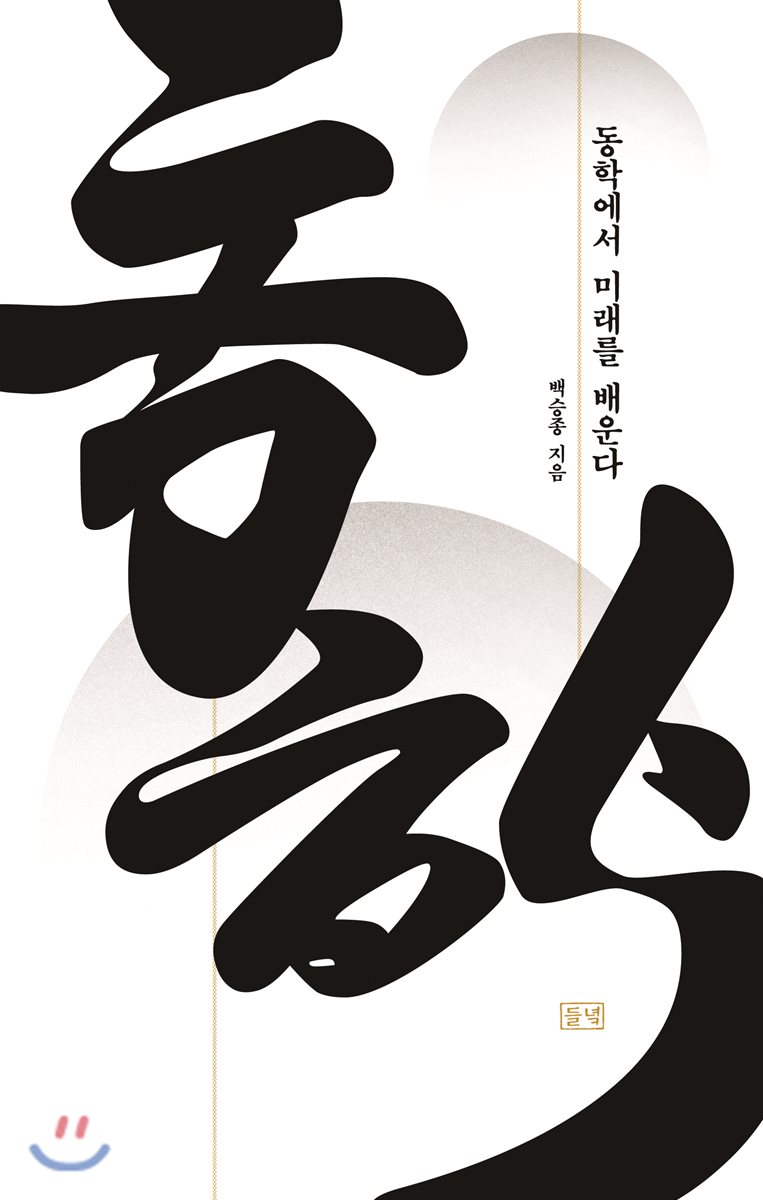
Learning the future from Donghak
 |
Description
Book Introduction
“As East Asia’s response to Western aggression,
“A book that redefines the scope of Donghak”
Professor Baek Seung-jong, the greatest historian of our time, tells us
Four lectures summarizing the essence of Donghak's thought and practice.
May 11th is a commemorative day hosted by the South Korean government to reexamine the historical value and significance of the Donghak Peasant Revolution.
It commemorates the day on May 11, 1894, when the Donghak Peasant Army won a great victory in the Battle of Hwangtohyeon.
Today, 125 years later, what significance does Donghak, born during one of the most turbulent times in our history and continuing as a river of transformation, hold? Professor Baek Seung-jong, a scholar well-versed in both Eastern and Western history and beloved by readers for his unique historical perspective, has published "Learning the Future from Donghak," a book that offers a fresh interpretation of Donghak's modern significance.
A key feature of this book is its focus on interpreting the historical significance of Donghak, explaining its essence as a "qualitative transformation of relationships" and interpreting the purpose of the Donghak Peasant Movement as the construction of a "just community."
A genealogical approach is also noticeable.
He raised the incident originating from the 18th century 『Jeonggamnok (鄭鑑錄)』 to the origin of Donghak, and discovered the ideological origins such as the ‘theory of human nature and the descent of Maitreya’ in Seongrihak and Buddhism, which were known to be in conflict with Donghak.
The perception of 19th century Joseon society is also new.
We examine what "social consensus," known only as a concept of modern politics, meant to the people of Joseon, and reevaluate the roles of small farmers and "common intellectuals," which have been historically ignored.
This book will explore the current significance of the Donghak Movement and provide readers with a starting point for exploring the 'Donghak of the future.'
“A book that redefines the scope of Donghak”
Professor Baek Seung-jong, the greatest historian of our time, tells us
Four lectures summarizing the essence of Donghak's thought and practice.
May 11th is a commemorative day hosted by the South Korean government to reexamine the historical value and significance of the Donghak Peasant Revolution.
It commemorates the day on May 11, 1894, when the Donghak Peasant Army won a great victory in the Battle of Hwangtohyeon.
Today, 125 years later, what significance does Donghak, born during one of the most turbulent times in our history and continuing as a river of transformation, hold? Professor Baek Seung-jong, a scholar well-versed in both Eastern and Western history and beloved by readers for his unique historical perspective, has published "Learning the Future from Donghak," a book that offers a fresh interpretation of Donghak's modern significance.
A key feature of this book is its focus on interpreting the historical significance of Donghak, explaining its essence as a "qualitative transformation of relationships" and interpreting the purpose of the Donghak Peasant Movement as the construction of a "just community."
A genealogical approach is also noticeable.
He raised the incident originating from the 18th century 『Jeonggamnok (鄭鑑錄)』 to the origin of Donghak, and discovered the ideological origins such as the ‘theory of human nature and the descent of Maitreya’ in Seongrihak and Buddhism, which were known to be in conflict with Donghak.
The perception of 19th century Joseon society is also new.
We examine what "social consensus," known only as a concept of modern politics, meant to the people of Joseon, and reevaluate the roles of small farmers and "common intellectuals," which have been historically ignored.
This book will explore the current significance of the Donghak Movement and provide readers with a starting point for exploring the 'Donghak of the future.'
- You can preview some of the book's contents.
Preview
index
Introduction | A Map of the Ideological Journey
Chapter 1: Until the emergence of Donghak.
It all started with 『Jeonggamnok』
History of Secret Societies
Secret societies of the late Joseon Dynasty
The rise of common intellectuals
The collapse of social consensus
Towards a counter-ideology
The alternative was the creation of the post-heavenly world.
?Q&A
Lesson 2: Man is heaven.
The Life and Teachings of Choi Je-woo and Choi Si-hyung
The ideological genealogy of 'nobility'
The boundless, wide, and deep sky of Donghak
Global trends of the 19th century
Convergence also has a cultural context.
Maitreya belief and the opening of the world
A trap that saves foolish people
East Asian style of modernization
?Q&A
Lecture 3: The Gabo Peasant Revolution: Small Farmers at its Center
A just economic community where everyone helps each other
Emperor Gojong's request for foreign assistance in domestic affairs
The Sino-Japanese War and the Donghak Peasant Army's Resolution
Cho Byeong-gap, a 'normal' corrupt official in North Korea
indiscriminate open-door policy
For a society centered on small farmers
Donghak Peasant Revolution's Advance Preparations
?Q&A
Lecture 4: What Does Donghak Mean to Us? Its Current Meaning
Donghak, the dream of common intellectuals
A Qualitative Transformation in Relationships: Donghak's Hope
For a new community of 'Yu-Mu-Sang-Ja'
The banner of independent modernization
The 'Old Future' Taught by Donghak
Escape from the credit economy
Liquidation of representative democracy
A culture of reconciliation, cooperation, and solidarity
?Q&A
References
Chapter 1: Until the emergence of Donghak.
It all started with 『Jeonggamnok』
History of Secret Societies
Secret societies of the late Joseon Dynasty
The rise of common intellectuals
The collapse of social consensus
Towards a counter-ideology
The alternative was the creation of the post-heavenly world.
?Q&A
Lesson 2: Man is heaven.
The Life and Teachings of Choi Je-woo and Choi Si-hyung
The ideological genealogy of 'nobility'
The boundless, wide, and deep sky of Donghak
Global trends of the 19th century
Convergence also has a cultural context.
Maitreya belief and the opening of the world
A trap that saves foolish people
East Asian style of modernization
?Q&A
Lecture 3: The Gabo Peasant Revolution: Small Farmers at its Center
A just economic community where everyone helps each other
Emperor Gojong's request for foreign assistance in domestic affairs
The Sino-Japanese War and the Donghak Peasant Army's Resolution
Cho Byeong-gap, a 'normal' corrupt official in North Korea
indiscriminate open-door policy
For a society centered on small farmers
Donghak Peasant Revolution's Advance Preparations
?Q&A
Lecture 4: What Does Donghak Mean to Us? Its Current Meaning
Donghak, the dream of common intellectuals
A Qualitative Transformation in Relationships: Donghak's Hope
For a new community of 'Yu-Mu-Sang-Ja'
The banner of independent modernization
The 'Old Future' Taught by Donghak
Escape from the credit economy
Liquidation of representative democracy
A culture of reconciliation, cooperation, and solidarity
?Q&A
References
Into the book
During the Donghak Peasant Revolution of 1894, the peasants raised high two banners.
One was ‘Eliminate violence and save the people.’
It is to eliminate the wrongdoings of the cruel politics and cruel ruling class [eliminate violence] and save the people from that crisis [save the people].
Another slogan is one that you are all familiar with: ‘Aid the country and secure the people.’
It is to help the country's declining fate and set it right [輔國] and to make the people's lives comfortable [安民].
That is heaven on earth.
It's an ideal world.
The characteristic of our history is that, rather than believing that an ideal world is a place to be visited alone after death, we sought to change the present world we live in and create the best welfare society.
--- p.109
The fact is that the Donghak Peasant Revolutionary Movement could no longer tolerate the distorted socio-economic structure.
Ignoring such problems, no matter how much you say, “You are the sky.
They clearly knew that saying “I am the sky” would not make the world any better.
Jeon Bong-jun and others started a movement to reform the very conditions of survival that had arbitrarily restricted their lives.
Donghak is a movement that is thoroughly action-oriented.
Donghak does not say whether it believes or not.
Donghak was something that if you did it, you did it, and if you didn't, you didn't do it.
Donghak was a practice.
--- p.162~163
Donghak sought a qualitative transformation in the interrelationships between all living beings, including humans.
Especially when it comes to human society, we pursued 'coexistence of all'.
I think this concept is very important.
Because the goal was to resolve all conflicts and confrontations arising from discrimination and marginalization.
Leaders of new religions that emerged in the late 19th century, including Choi Je-woo, found the characteristic of our society in ‘Gyeolwon (結怨)’, that is, the accumulation of resentment and grudge.
They became enemies who could not forgive each other.
Because the discrimination was severe.
The diagnosis was that the monopoly phenomenon was excessively severe in politics, economy, and culture.
The dominant trend was monopoly and exploitation rather than sharing and coexistence.
It was a sobering critique of the way in which ownership, domination, and coercion weigh heavily on the air of society.
One was ‘Eliminate violence and save the people.’
It is to eliminate the wrongdoings of the cruel politics and cruel ruling class [eliminate violence] and save the people from that crisis [save the people].
Another slogan is one that you are all familiar with: ‘Aid the country and secure the people.’
It is to help the country's declining fate and set it right [輔國] and to make the people's lives comfortable [安民].
That is heaven on earth.
It's an ideal world.
The characteristic of our history is that, rather than believing that an ideal world is a place to be visited alone after death, we sought to change the present world we live in and create the best welfare society.
--- p.109
The fact is that the Donghak Peasant Revolutionary Movement could no longer tolerate the distorted socio-economic structure.
Ignoring such problems, no matter how much you say, “You are the sky.
They clearly knew that saying “I am the sky” would not make the world any better.
Jeon Bong-jun and others started a movement to reform the very conditions of survival that had arbitrarily restricted their lives.
Donghak is a movement that is thoroughly action-oriented.
Donghak does not say whether it believes or not.
Donghak was something that if you did it, you did it, and if you didn't, you didn't do it.
Donghak was a practice.
--- p.162~163
Donghak sought a qualitative transformation in the interrelationships between all living beings, including humans.
Especially when it comes to human society, we pursued 'coexistence of all'.
I think this concept is very important.
Because the goal was to resolve all conflicts and confrontations arising from discrimination and marginalization.
Leaders of new religions that emerged in the late 19th century, including Choi Je-woo, found the characteristic of our society in ‘Gyeolwon (結怨)’, that is, the accumulation of resentment and grudge.
They became enemies who could not forgive each other.
Because the discrimination was severe.
The diagnosis was that the monopoly phenomenon was excessively severe in politics, economy, and culture.
The dominant trend was monopoly and exploitation rather than sharing and coexistence.
It was a sobering critique of the way in which ownership, domination, and coercion weigh heavily on the air of society.
--- p.202
GOODS SPECIFICS
- Date of issue: May 2, 2019
- Page count, weight, size: 232 pages | 393g | 140*220*15mm
- ISBN13: 9791159254079
- ISBN10: 1159254079
You may also like
카테고리
korean


korean

![GQ KOREA Mark (Monthly): December [2025]](http://librairie.coreenne.fr/cdn/shop/files/8ef265dbbfbf186523ed75ba7319009d.jpg?v=1765340328&width=3840)


