

First Encounter with Spain, Part 37
 |
Description
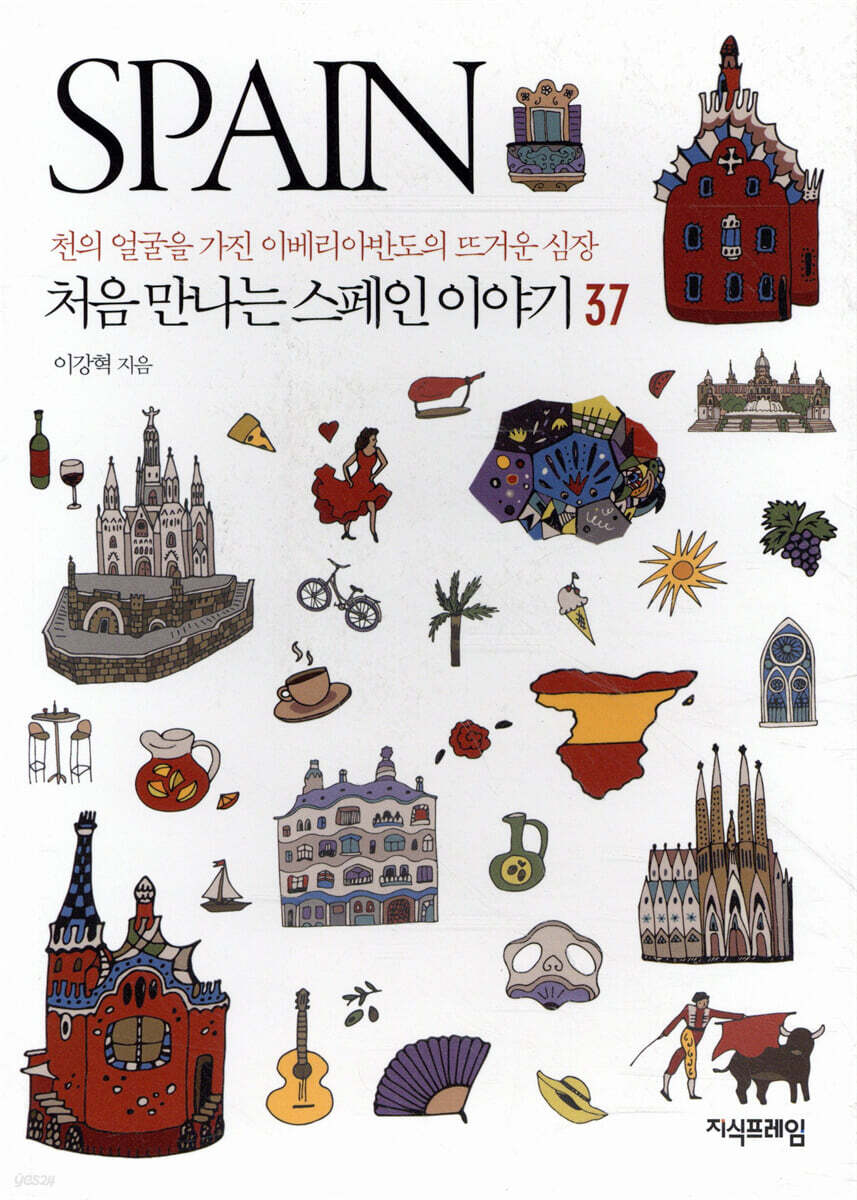
Book Introduction
A country that seems well known, but is not well known
The Real Story of Spain in 37 Keywords
Bullfighting, flamenco, soccer.
It is the representative image of Spain that comes to mind for many people.
You might think of a matador battling a bull under the scorching sun, teetering between life and death, a captivating flamenco of a woman with jet-black hair and sparkling eyes, or a festival where people are crazy about soccer or throwing tomatoes.
But let's get this straight.
Not all Spaniards are Carmen and Don Quixote.
Bullfighting is banned in some Spanish autonomous regions, and not all Spaniards are crazy about football.
This book tells the true story of Spain, focusing on geography, cities, politics, history, architecture, art, society, and culture, and what you may have been curious about or misunderstood about.
Everything you need to know about Spain, explained in 37 keywords, in an easy and fun way.
The Real Story of Spain in 37 Keywords
Bullfighting, flamenco, soccer.
It is the representative image of Spain that comes to mind for many people.
You might think of a matador battling a bull under the scorching sun, teetering between life and death, a captivating flamenco of a woman with jet-black hair and sparkling eyes, or a festival where people are crazy about soccer or throwing tomatoes.
But let's get this straight.
Not all Spaniards are Carmen and Don Quixote.
Bullfighting is banned in some Spanish autonomous regions, and not all Spaniards are crazy about football.
This book tells the true story of Spain, focusing on geography, cities, politics, history, architecture, art, society, and culture, and what you may have been curious about or misunderstood about.
Everything you need to know about Spain, explained in 37 keywords, in an easy and fun way.
- You can preview some of the book's contents.
Preview
index
prolog
Intro Spain at a glance
PART1.
The Hot Heart of the Iberian Peninsula - Geography and Cities
01.
Regionalism _ Are there no Spanish people in Spain?
02.
Catalonia _ Desire for independence
03.
Madrid - the political and economic center of the city
04.
Barcelona - A city of culture and art that captivates travelers
05.
Camino de Santiago _ The Pilgrim's Way
06.
Mallorca - The Island of Ahn Ik-tae and Chopin
07.
Canary Islands - Spain on the Atlantic
08.
Gibraltar_ Another country in Spain
PART2.
Meet the Empire of the Sun _ Politics and History
09.
Roman Empire - Winner of the Mediterranean War of Hegemony
10.
Andalusia's Big Three - The Golden Age of Islam
11.
The Inquisition: The Shackles of Obedience and Oppression
12.
The Land Where the Sun Never Sets - From the Reconquista to Colonial Expansion
13.
The Invincible Armada: The Fall of the Spanish Empire
14.
Spanish Civil War 1 _ Two Spains
15.
Spanish Civil War 2 - Experiencing the Scars of Civil War
16.
Francisco Franco: A dictator responsible only to God and history.
17.
Spanish Royal Family - Juan Carlos I and Felipe VI
PART3.
A Heart-Pounding Feast of Art _ Architecture and Art
18.
Toledo Cathedral - Spain's leading Catholic cathedral
19.
Gaudi _ The god of architecture that resembles nature
20.
The Royal Palace of Spain _ The History of Spain's Prosperity
21.
Altamira Cave Paintings - The Archetype of Spanish Art
22.
Don Quixote _ Self-portrait of 17th-century Spain
23.
Don Juan and Carmen - Icons of Unsettling Love
24.
The Prado Museum's Three Masters - El Greco, Velazquez, and Goya
25.
Modern and Contemporary Art of Spain - Picasso, Dali, Miro
26.
Segovia _ Master of the Classical Guitar
27.
Placido Domingo and Jose Carreras - The most beautiful voices in the world
PART4.
Come on! Spain! _ Society and Culture
28.
Spanish - One country, four languages
29.
El Clásico - A War Without Gunfire
30.
Flamenco - The Sorrow and Pain of the Gypsies
31.
Bullfighting: A Dangerous Art That Risks Death
32.
Tomatina _ A tomato battle reborn as a game
33.
Spanish Style 1 _ Daily Life of Spanish People
34.
Spanish Style 2 - Spanish Food Culture
35.
Sherry - Spain's own wine
36.
Spanish Brands - From Loewe to Chupa Chups
37.
The Land of the Sun - A Leading Contributor to Spain's Tourism Industry
Intro Spain at a glance
PART1.
The Hot Heart of the Iberian Peninsula - Geography and Cities
01.
Regionalism _ Are there no Spanish people in Spain?
02.
Catalonia _ Desire for independence
03.
Madrid - the political and economic center of the city
04.
Barcelona - A city of culture and art that captivates travelers
05.
Camino de Santiago _ The Pilgrim's Way
06.
Mallorca - The Island of Ahn Ik-tae and Chopin
07.
Canary Islands - Spain on the Atlantic
08.
Gibraltar_ Another country in Spain
PART2.
Meet the Empire of the Sun _ Politics and History
09.
Roman Empire - Winner of the Mediterranean War of Hegemony
10.
Andalusia's Big Three - The Golden Age of Islam
11.
The Inquisition: The Shackles of Obedience and Oppression
12.
The Land Where the Sun Never Sets - From the Reconquista to Colonial Expansion
13.
The Invincible Armada: The Fall of the Spanish Empire
14.
Spanish Civil War 1 _ Two Spains
15.
Spanish Civil War 2 - Experiencing the Scars of Civil War
16.
Francisco Franco: A dictator responsible only to God and history.
17.
Spanish Royal Family - Juan Carlos I and Felipe VI
PART3.
A Heart-Pounding Feast of Art _ Architecture and Art
18.
Toledo Cathedral - Spain's leading Catholic cathedral
19.
Gaudi _ The god of architecture that resembles nature
20.
The Royal Palace of Spain _ The History of Spain's Prosperity
21.
Altamira Cave Paintings - The Archetype of Spanish Art
22.
Don Quixote _ Self-portrait of 17th-century Spain
23.
Don Juan and Carmen - Icons of Unsettling Love
24.
The Prado Museum's Three Masters - El Greco, Velazquez, and Goya
25.
Modern and Contemporary Art of Spain - Picasso, Dali, Miro
26.
Segovia _ Master of the Classical Guitar
27.
Placido Domingo and Jose Carreras - The most beautiful voices in the world
PART4.
Come on! Spain! _ Society and Culture
28.
Spanish - One country, four languages
29.
El Clásico - A War Without Gunfire
30.
Flamenco - The Sorrow and Pain of the Gypsies
31.
Bullfighting: A Dangerous Art That Risks Death
32.
Tomatina _ A tomato battle reborn as a game
33.
Spanish Style 1 _ Daily Life of Spanish People
34.
Spanish Style 2 - Spanish Food Culture
35.
Sherry - Spain's own wine
36.
Spanish Brands - From Loewe to Chupa Chups
37.
The Land of the Sun - A Leading Contributor to Spain's Tourism Industry
Into the book
People often define Spain as the 'land of passion' and the 'land of the sun'.
Passion isn't a bad thing, but to define a country in a few words like this is no different than saying that all Spaniards are Carmen and matadors.
We don't know much.
Their attitude towards life and death hidden behind the passion of flamenco, the tolerance of the Spanish system that existed before the irrational Inquisition, their national character that is both proud and easily open to strangers.
--- From [Prologue]
I too stood in front of the Cathedral of Santiago de Compostela just a month after I started walking.
It's a place I've had in my mind all month.
Rather than feeling relieved that I no longer have to walk, the feeling of emptiness that I can no longer walk was greater.
The pilgrims who had been walking together took pictures with the cathedral in the background, laughing together, oblivious to their shabby appearance.
The poses are also varied.
They hug each other, kiss each other on the square floor, and then lie down.
Rather than trying to soothe the regret, it seems like he is trying hard to hide the feeling of emptiness that is creeping in.
I took a break from the noisy atmosphere and went to a corner of the square where I could see the cathedral at a glance.
The Santiago I've longed to visit is right before my eyes, but where is my true "Santiago"? I recall a phrase I once read in a rural albergue.
“Don’t run! You are the one who must go.”
--- [05.
From the Camino de Santiago - Pilgrim's Way
The approximately 20,000 Inquisition judges who operated throughout Spain regularly visited each region and were obsessed with finding heretics.
When they caught a heretic, they gathered the people together and read out loud the heretical acts.
He then encouraged the audience to condemn the heretics.
Those who remained silent in response to this demand were also not spared from punishment.
A person brought before the Inquisition could not know who had accused him.
The Inquisition was a conduit for personal retribution and a place where accusations and snitches were encouraged.
Mutual suspicion has become an obstacle to free academic discussion and research.
It also narrowed the living space of the Spaniards and trapped Spanish society in a cycle of obedience and oppression.
--- [11.
[The Inquisition - The Shackles of Obedience and Oppression]
Don Quixote does not merely depict the miserable frustration of Spanish society, which was unable to escape the medieval Christian order and values and was facing the wave of modernity.
Don Quixote is a mad knight, but he is a man full of free spirit and a sense of justice.
The values of the Middle Ages at that time sought human nature in innate status and providence.
However, Cervantes wanted to go beyond these backward medieval values and show modern humanism that emphasizes human virtue and individual freedom through the character of 'Don Quixote'.
Don Quixote is not a story about gods or humans subservient to gods, but a story about humans living in the human-centered Renaissance era.
--- [22.
Don Quixote - A Self-Portrait in 17th Century Spain]
During the Spanish Civil War (1936–1939), soldiers on Franco's side assassinated Josep Sunyol, a political party leader and owner of FC Barcelona.
This incident became a decisive moment for the people of Barcelona to reflect on their Catalan identity and the meaning of the FC Barcelona football team.
After the Spanish Civil War, dictator Franco, who took power, provided full support to the Castile region, where Madrid was located, while continuing to oppress the Catalonia region, where Barcelona was located.
This is why the match between Real Madrid and FC Barcelona, known as 'El Clásico', became a war without gunfire.
'El Clásico' is not just a soccer match.
It is a battle of political pride between two teams representing nationalism across Spain (Real Madrid) and Catalonia (FC Barcelona).
--- [29.
El Clásico - A War Without Gunfire]
However, cultures are not something that can be judged superior to one another.
To understand different cultures, you must think and look at things from the perspective of the people in that culture.
Bullfighting is a ritual that combines solemnity and excitement, life and death.
The Spanish temperament can be seen in the fact that bullfighting, which is 'always followed by death', is their national sport.
Spanish philosopher Ortega y Gasset said, “It is inconceivable to know Spanish history without considering bullfighting.”
Bullfighting is the life and history of the Spanish people.
Passion isn't a bad thing, but to define a country in a few words like this is no different than saying that all Spaniards are Carmen and matadors.
We don't know much.
Their attitude towards life and death hidden behind the passion of flamenco, the tolerance of the Spanish system that existed before the irrational Inquisition, their national character that is both proud and easily open to strangers.
--- From [Prologue]
I too stood in front of the Cathedral of Santiago de Compostela just a month after I started walking.
It's a place I've had in my mind all month.
Rather than feeling relieved that I no longer have to walk, the feeling of emptiness that I can no longer walk was greater.
The pilgrims who had been walking together took pictures with the cathedral in the background, laughing together, oblivious to their shabby appearance.
The poses are also varied.
They hug each other, kiss each other on the square floor, and then lie down.
Rather than trying to soothe the regret, it seems like he is trying hard to hide the feeling of emptiness that is creeping in.
I took a break from the noisy atmosphere and went to a corner of the square where I could see the cathedral at a glance.
The Santiago I've longed to visit is right before my eyes, but where is my true "Santiago"? I recall a phrase I once read in a rural albergue.
“Don’t run! You are the one who must go.”
--- [05.
From the Camino de Santiago - Pilgrim's Way
The approximately 20,000 Inquisition judges who operated throughout Spain regularly visited each region and were obsessed with finding heretics.
When they caught a heretic, they gathered the people together and read out loud the heretical acts.
He then encouraged the audience to condemn the heretics.
Those who remained silent in response to this demand were also not spared from punishment.
A person brought before the Inquisition could not know who had accused him.
The Inquisition was a conduit for personal retribution and a place where accusations and snitches were encouraged.
Mutual suspicion has become an obstacle to free academic discussion and research.
It also narrowed the living space of the Spaniards and trapped Spanish society in a cycle of obedience and oppression.
--- [11.
[The Inquisition - The Shackles of Obedience and Oppression]
Don Quixote does not merely depict the miserable frustration of Spanish society, which was unable to escape the medieval Christian order and values and was facing the wave of modernity.
Don Quixote is a mad knight, but he is a man full of free spirit and a sense of justice.
The values of the Middle Ages at that time sought human nature in innate status and providence.
However, Cervantes wanted to go beyond these backward medieval values and show modern humanism that emphasizes human virtue and individual freedom through the character of 'Don Quixote'.
Don Quixote is not a story about gods or humans subservient to gods, but a story about humans living in the human-centered Renaissance era.
--- [22.
Don Quixote - A Self-Portrait in 17th Century Spain]
During the Spanish Civil War (1936–1939), soldiers on Franco's side assassinated Josep Sunyol, a political party leader and owner of FC Barcelona.
This incident became a decisive moment for the people of Barcelona to reflect on their Catalan identity and the meaning of the FC Barcelona football team.
After the Spanish Civil War, dictator Franco, who took power, provided full support to the Castile region, where Madrid was located, while continuing to oppress the Catalonia region, where Barcelona was located.
This is why the match between Real Madrid and FC Barcelona, known as 'El Clásico', became a war without gunfire.
'El Clásico' is not just a soccer match.
It is a battle of political pride between two teams representing nationalism across Spain (Real Madrid) and Catalonia (FC Barcelona).
--- [29.
El Clásico - A War Without Gunfire]
However, cultures are not something that can be judged superior to one another.
To understand different cultures, you must think and look at things from the perspective of the people in that culture.
Bullfighting is a ritual that combines solemnity and excitement, life and death.
The Spanish temperament can be seen in the fact that bullfighting, which is 'always followed by death', is their national sport.
Spanish philosopher Ortega y Gasset said, “It is inconceivable to know Spanish history without considering bullfighting.”
Bullfighting is the life and history of the Spanish people.
--- [31.
Bullfighting? A dangerous art that risks death.
Bullfighting? A dangerous art that risks death.
Publisher's Review
There are no Spanish people in Spain?
There is a saying that when you go to Spain, there are no Spaniards, only Castilians, Basques, Catalans, Galicians, and Andalusians.
Spain is a country where each region has a very strong sense of identity.
Although it is one country, there are four official languages used.
Although the Reconquista resulted in the creation of a powerful unified kingdom called Castile, the cultural traditions and languages of the small kingdoms that had formed in each region since the Middle Ages still remain strong.
The author presents the unique characteristics and charms of each Spanish city in an interesting way, including the familiar cities of Madrid and Barcelona, Santiago de Compostela, well-known for its pilgrimage route, as well as Gibraltar, a city with a territorial dispute with Britain, Ceuta and Melilla, Spanish territories in North Africa, and Mallorca and the Canary Islands, which are part of the peninsula.
Spanish history, similar yet different from ours
Spain, located on the Iberian Peninsula at the western end of Europe, has a history of frequent invasions by foreign tribes.
Spain's cultural diversity, which was completed through the mixing of the Christian culture left behind by the Roman Empire with Islamic culture, was destroyed by the harsh Inquisition of Christianity that dominated the Middle Ages, leaving deep-rooted scars of distrust in Spanish society.
Afterwards, Queen Isabella supported Columbus's voyage and pioneered vast colonies, leading to an era of great prosperity, but after the Spanish Armada was defeated by England during the reign of Philip II, the country gradually began to decline.
Spain, which had been reduced to a peripheral country in Europe, suffered extreme social unrest and the tragedy of civil war.
In our country, there was the Korean War, and in Spain, there was the Spanish Civil War.
The civil war, a tragedy of fratricide, spread into an international war, leaving the country in ruins, but Spain, like us, overcame its wounds and rose again.
The dictatorship that seized power through a coup and the process of democratization are strangely similar to our country's history.
Perhaps that's why the more I learn about Spanish history, the more familiar it feels.
A diverse country with a thousand faces
Spain attracts tourists all year round with its natural beauty.
Spain offers a unique blend of architectural genius Gaudí, regional culinary traditions, scorching sun and picturesque beaches, colorful festivals, and the exotic landscapes created by the mystical blend of Catholicism and Islam.
But even without going to Spain, we can encounter Spain in books and on the road.
Zara, a leading fast fashion brand, and Chupa Chups, a candy bar, are representative Spanish brands.
Spain is also one of the world's leading wine producing countries.
In addition to their passionate culture, which is widely known for soccer, bullfighting, and flamenco, they also have their own unique lifestyle, collectively known as the 'Spanish style'.
The literary protagonists Don Quixote, Don Juan, and Carmen transcend time and space and are still called icons of passion, freedom, and romance, serving as a source of inspiration for artists around the world.
There is a saying that when you go to Spain, there are no Spaniards, only Castilians, Basques, Catalans, Galicians, and Andalusians.
Spain is a country where each region has a very strong sense of identity.
Although it is one country, there are four official languages used.
Although the Reconquista resulted in the creation of a powerful unified kingdom called Castile, the cultural traditions and languages of the small kingdoms that had formed in each region since the Middle Ages still remain strong.
The author presents the unique characteristics and charms of each Spanish city in an interesting way, including the familiar cities of Madrid and Barcelona, Santiago de Compostela, well-known for its pilgrimage route, as well as Gibraltar, a city with a territorial dispute with Britain, Ceuta and Melilla, Spanish territories in North Africa, and Mallorca and the Canary Islands, which are part of the peninsula.
Spanish history, similar yet different from ours
Spain, located on the Iberian Peninsula at the western end of Europe, has a history of frequent invasions by foreign tribes.
Spain's cultural diversity, which was completed through the mixing of the Christian culture left behind by the Roman Empire with Islamic culture, was destroyed by the harsh Inquisition of Christianity that dominated the Middle Ages, leaving deep-rooted scars of distrust in Spanish society.
Afterwards, Queen Isabella supported Columbus's voyage and pioneered vast colonies, leading to an era of great prosperity, but after the Spanish Armada was defeated by England during the reign of Philip II, the country gradually began to decline.
Spain, which had been reduced to a peripheral country in Europe, suffered extreme social unrest and the tragedy of civil war.
In our country, there was the Korean War, and in Spain, there was the Spanish Civil War.
The civil war, a tragedy of fratricide, spread into an international war, leaving the country in ruins, but Spain, like us, overcame its wounds and rose again.
The dictatorship that seized power through a coup and the process of democratization are strangely similar to our country's history.
Perhaps that's why the more I learn about Spanish history, the more familiar it feels.
A diverse country with a thousand faces
Spain attracts tourists all year round with its natural beauty.
Spain offers a unique blend of architectural genius Gaudí, regional culinary traditions, scorching sun and picturesque beaches, colorful festivals, and the exotic landscapes created by the mystical blend of Catholicism and Islam.
But even without going to Spain, we can encounter Spain in books and on the road.
Zara, a leading fast fashion brand, and Chupa Chups, a candy bar, are representative Spanish brands.
Spain is also one of the world's leading wine producing countries.
In addition to their passionate culture, which is widely known for soccer, bullfighting, and flamenco, they also have their own unique lifestyle, collectively known as the 'Spanish style'.
The literary protagonists Don Quixote, Don Juan, and Carmen transcend time and space and are still called icons of passion, freedom, and romance, serving as a source of inspiration for artists around the world.
GOODS SPECIFICS
- Date of issue: July 30, 2018
- Page count, weight, size: 352 pages | 512g | 150*210*30mm
- ISBN13: 9788994655659
- ISBN10: 8994655654
You may also like
카테고리
korean


korean

![GQ KOREA Mark (Monthly): December [2025]](http://librairie.coreenne.fr/cdn/shop/files/8ef265dbbfbf186523ed75ba7319009d.jpg?v=1765340328&width=3840)


