

Manhwa Byeongjahoran
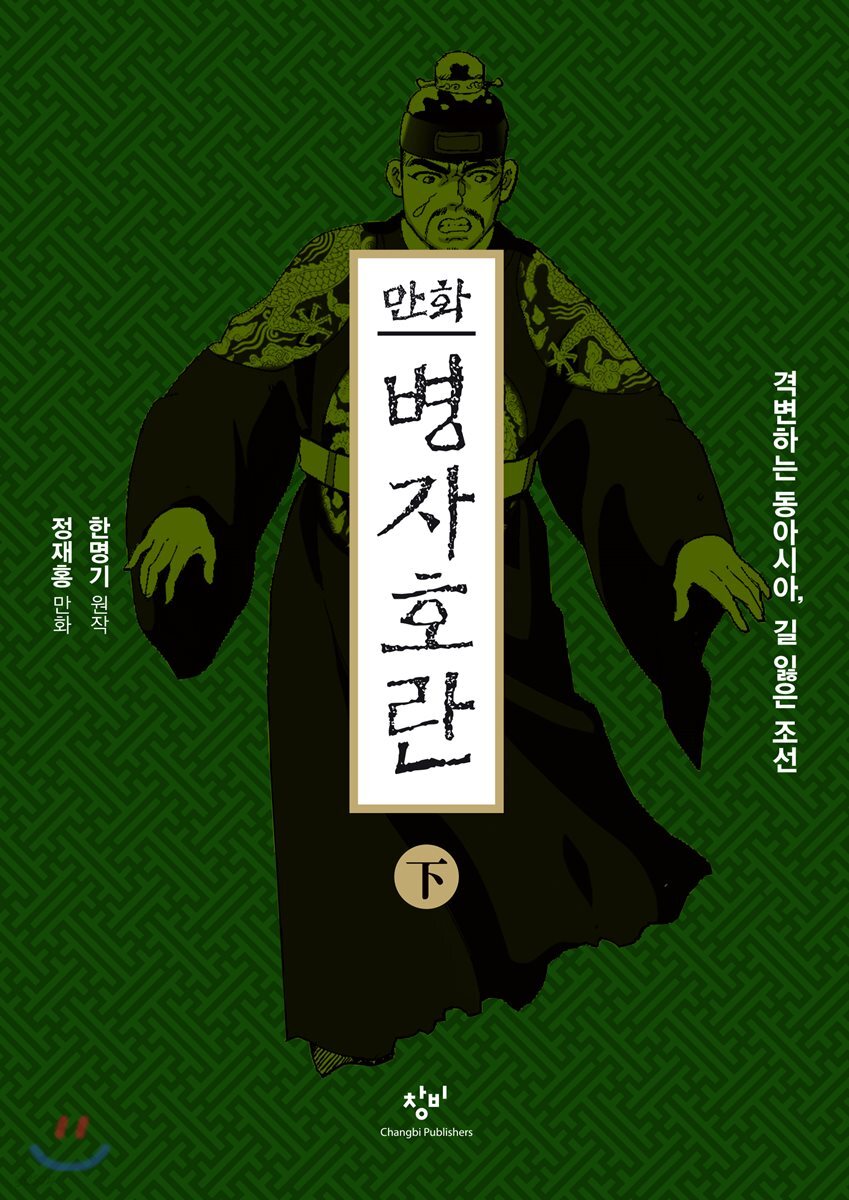 |
Description
Book Introduction
Han Myeong-gi's 『Historical Commentary on the Byeongja Horan』
Meet in comics!
Professor Han Myeong-gi's 『Historical Commentary on the Byeongja Horan』, which became a bestseller and a rare bestseller among professional history books upon its publication in 2013, has been reborn as an educational comic that can be easily enjoyed by people of all ages.
This work, which was highly praised for its expertise verified through thorough research and investigation, its broad perspective that crosses over Chinese and Japanese history, and its captivating storytelling, adds the unique fun and narrative of the comics genre to the original work, maximizing accessibility and interest.
『The Manhwa of Byeongjahoran』 tells the story of Joseon and its surrounding countries around the 17th century, when the East Asian order was fundamentally changing.
Rather than simply discussing the Byeongja Horan as a military confrontation that occurred on the Korean Peninsula in 1636, the book broadens its perspective both temporally and spatially by examining the changes in the continental situation that led to the outbreak of the war, as well as the post-war situation from the Northern Expedition to the Northern Learning Movement.
Through this, readers can properly understand the reality and meaning of the Byeongja Horan, and even understand the context of the history of East Asia as a whole, including Joseon, Ming, Qing, and Japan.
In the early 17th century, Joseon's national power was greatly weakened by the aftereffects of the Imjin War, the Injo Restoration, and the rebellion of Yi Gwal.
At that time, the Ming and the Later Jin (Qing) dynasties, which were competing for hegemony in the Central Plains, forced Joseon to make a choice, and the Injo government, unable to decide between the two countries, wavered and eventually faced the tragedy of the Byeongja Horan.
This history provides many insights into the reality of today's South Korea, which is struggling among surrounding powers such as China, the United States, Russia, and Japan.
This book is especially recommended for those who seek guidance for the future from the history of failure and tragedy.
The artist who drew the cartoon, Jaehong Jeong, is a veteran cartoonist who has been dedicated to historical cartoons for decades, including 『The Man of Fortune, Kim Du-han』, 『The Emperor』, and the 'Reading Our History with Textbooks' series. In this work as well, he demonstrated his outstanding ability to create a tense story and vivid characters.
In particular, the elaborate descriptions that properly capture the characters' personalities and characteristics, the delicate and realistic backgrounds, and the rich colors create a vivid sense of presence.
Thanks to this, the complex intertwining of politics, diplomacy, and war, which could otherwise be difficult to understand, is read without difficulty, and a huge amount of information is clearly imprinted through images.
Meet in comics!
Professor Han Myeong-gi's 『Historical Commentary on the Byeongja Horan』, which became a bestseller and a rare bestseller among professional history books upon its publication in 2013, has been reborn as an educational comic that can be easily enjoyed by people of all ages.
This work, which was highly praised for its expertise verified through thorough research and investigation, its broad perspective that crosses over Chinese and Japanese history, and its captivating storytelling, adds the unique fun and narrative of the comics genre to the original work, maximizing accessibility and interest.
『The Manhwa of Byeongjahoran』 tells the story of Joseon and its surrounding countries around the 17th century, when the East Asian order was fundamentally changing.
Rather than simply discussing the Byeongja Horan as a military confrontation that occurred on the Korean Peninsula in 1636, the book broadens its perspective both temporally and spatially by examining the changes in the continental situation that led to the outbreak of the war, as well as the post-war situation from the Northern Expedition to the Northern Learning Movement.
Through this, readers can properly understand the reality and meaning of the Byeongja Horan, and even understand the context of the history of East Asia as a whole, including Joseon, Ming, Qing, and Japan.
In the early 17th century, Joseon's national power was greatly weakened by the aftereffects of the Imjin War, the Injo Restoration, and the rebellion of Yi Gwal.
At that time, the Ming and the Later Jin (Qing) dynasties, which were competing for hegemony in the Central Plains, forced Joseon to make a choice, and the Injo government, unable to decide between the two countries, wavered and eventually faced the tragedy of the Byeongja Horan.
This history provides many insights into the reality of today's South Korea, which is struggling among surrounding powers such as China, the United States, Russia, and Japan.
This book is especially recommended for those who seek guidance for the future from the history of failure and tragedy.
The artist who drew the cartoon, Jaehong Jeong, is a veteran cartoonist who has been dedicated to historical cartoons for decades, including 『The Man of Fortune, Kim Du-han』, 『The Emperor』, and the 'Reading Our History with Textbooks' series. In this work as well, he demonstrated his outstanding ability to create a tense story and vivid characters.
In particular, the elaborate descriptions that properly capture the characters' personalities and characteristics, the delicate and realistic backgrounds, and the rich colors create a vivid sense of presence.
Thanks to this, the complex intertwining of politics, diplomacy, and war, which could otherwise be difficult to understand, is read without difficulty, and a huge amount of information is clearly imprinted through images.
- You can preview some of the book's contents.
Preview
index
Volume 2; Turbulent East Asia, Lost Joseon
Rebellion against the Qing Empire
Times of life or death
The Byeongja Horan begins
Namhansanseong Fortress, isolated and helpless
Defeats and victories of the royalist forces
Ganghwa Island falls
The disgrace of Samjeondo
The aftermath of war
The tragedy of Crown Prince Sohyeon and Consort Kang
From Enemy to Ally: Japan's Transformation
The war is not over yet
Rebellion against the Qing Empire
Times of life or death
The Byeongja Horan begins
Namhansanseong Fortress, isolated and helpless
Defeats and victories of the royalist forces
Ganghwa Island falls
The disgrace of Samjeondo
The aftermath of war
The tragedy of Crown Prince Sohyeon and Consort Kang
From Enemy to Ally: Japan's Transformation
The war is not over yet
Detailed image
.jpg)
Publisher's Review
From the Qing Emperor to the returning woman
The story of 'people' in the great 'history'
『The Manhwa of the Second Manchu Invasion』 is the story of people who lived during the turbulent times of the transition between the Ming and Qing Dynasties.
While the original story unfolds around major events, this book focuses on the stories of each character.
The stories of people who lived lives as dramatic as the times, such as King Injo, who ascended to the throne through a coup but had to live a miserable life filled with anxiety and self-loathing; Nurhachi, who harbored a deep resentment toward the Ming Dynasty but eventually achieved the great feat of founding the Later Jin Dynasty; Yuan Chonghuan, the Ming Dynasty's last hope who inflicted a humiliating defeat on Nurhachi; and Kang Hongrip, who was forced to point his sword at his homeland, Joseon, to which he had been loyal his entire life, are constantly intertwined, creating a historical drama more exciting than any other drama.
『The Manhwa Byeongjahoran』 focuses on the stories of ordinary people, called commoners or common people, as well as kings, generals, and politicians.
Andan, who set foot on the land of Joseon, her dream homeland, 38 years after being abducted by the Qing army, but was sent back to Qing by Joseon; Jeong Myeong-su, a Joseon man who lived a life of poverty as a slave but caught the eye of the Qing emperor and became an interpreter for the prime minister; and countless returnees who crossed the line of death to return home but were abandoned by their families for betraying their chastity. Through the voices of those who have been marginalized from history until now, we are confronted with the tragic back side of history and presented with another perspective on the Byeongja Horan.
What is the fate of the Korean Peninsula, caught between great powers in a time of upheaval?
See today's Republic of Korea in yesterday's Joseon!
The Korean Peninsula is sandwiched between major powers.
It is a condition that does not change in the past, today, or in the future.
And the Korean Peninsula inevitably faced a crisis whenever there was a change of power in the surrounding area.
The Imjin War, the Byeongja War, the Sino-Japanese War, and the Russo-Japanese War all occurred under these conditions.
As China, with its growing power and ambition, races beyond a regional power to become a superpower, is it unfounded to recall the Qing Dynasty of the 1630s? And caught between the United States and China, can we achieve peace and unification on the Korean Peninsula as we navigate yet another period of upheaval?
― From Han Myeong-gi’s “Publishing a Book”
The cause of the Byeongja Horan is often attributed to the incompetence of the Injeong government and the strong pro-Ming anti-Jin policy of the Cheokhwa faction.
The argument is that King Injo did not continue Gwanghaegun's neutral diplomacy and became hostile to the Later Jin, which caused the war.
But is that really true? In fact, Injo did his best to prevent war.
When there was hope for reconciliation, he supported the peace faction, including Choi Myeong-gil. During the Second Manchu Invasion of Korea, despite the dissuasion of his subjects, he performed a bloodletting ceremony by slaughtering a white horse and a black ox as requested by the Later Jin Dynasty, applying their blood to his lips. He also agreed to send Crown Prince Sohyeon and Prince Bongrim to the Qing Dynasty as hostages.
After the Byeongja Horan, he turned into a pro-Qing faction and even earned the ridicule of his subjects.
In this way, the artificial government attempted to walk a tightrope between the Qing Dynasty, the brother's country, and the Ming Dynasty, the emperor's country, but was ultimately driven to ruin.
The lesson we must learn here is that a weak country caught between great powers will be swayed by its surrounding circumstances no matter how well it tries.
The current situation on the Korean Peninsula is no better than that of Joseon during the Byeongja Horan.
The number of great powers surrounding the Korean Peninsula has actually increased, and the countries that must join forces to respond are divided into two.
So what should we do? This book, which painfully recounts the failure of the Byeongja Horan, will provide the answer.
The story of 'people' in the great 'history'
『The Manhwa of the Second Manchu Invasion』 is the story of people who lived during the turbulent times of the transition between the Ming and Qing Dynasties.
While the original story unfolds around major events, this book focuses on the stories of each character.
The stories of people who lived lives as dramatic as the times, such as King Injo, who ascended to the throne through a coup but had to live a miserable life filled with anxiety and self-loathing; Nurhachi, who harbored a deep resentment toward the Ming Dynasty but eventually achieved the great feat of founding the Later Jin Dynasty; Yuan Chonghuan, the Ming Dynasty's last hope who inflicted a humiliating defeat on Nurhachi; and Kang Hongrip, who was forced to point his sword at his homeland, Joseon, to which he had been loyal his entire life, are constantly intertwined, creating a historical drama more exciting than any other drama.
『The Manhwa Byeongjahoran』 focuses on the stories of ordinary people, called commoners or common people, as well as kings, generals, and politicians.
Andan, who set foot on the land of Joseon, her dream homeland, 38 years after being abducted by the Qing army, but was sent back to Qing by Joseon; Jeong Myeong-su, a Joseon man who lived a life of poverty as a slave but caught the eye of the Qing emperor and became an interpreter for the prime minister; and countless returnees who crossed the line of death to return home but were abandoned by their families for betraying their chastity. Through the voices of those who have been marginalized from history until now, we are confronted with the tragic back side of history and presented with another perspective on the Byeongja Horan.
What is the fate of the Korean Peninsula, caught between great powers in a time of upheaval?
See today's Republic of Korea in yesterday's Joseon!
The Korean Peninsula is sandwiched between major powers.
It is a condition that does not change in the past, today, or in the future.
And the Korean Peninsula inevitably faced a crisis whenever there was a change of power in the surrounding area.
The Imjin War, the Byeongja War, the Sino-Japanese War, and the Russo-Japanese War all occurred under these conditions.
As China, with its growing power and ambition, races beyond a regional power to become a superpower, is it unfounded to recall the Qing Dynasty of the 1630s? And caught between the United States and China, can we achieve peace and unification on the Korean Peninsula as we navigate yet another period of upheaval?
― From Han Myeong-gi’s “Publishing a Book”
The cause of the Byeongja Horan is often attributed to the incompetence of the Injeong government and the strong pro-Ming anti-Jin policy of the Cheokhwa faction.
The argument is that King Injo did not continue Gwanghaegun's neutral diplomacy and became hostile to the Later Jin, which caused the war.
But is that really true? In fact, Injo did his best to prevent war.
When there was hope for reconciliation, he supported the peace faction, including Choi Myeong-gil. During the Second Manchu Invasion of Korea, despite the dissuasion of his subjects, he performed a bloodletting ceremony by slaughtering a white horse and a black ox as requested by the Later Jin Dynasty, applying their blood to his lips. He also agreed to send Crown Prince Sohyeon and Prince Bongrim to the Qing Dynasty as hostages.
After the Byeongja Horan, he turned into a pro-Qing faction and even earned the ridicule of his subjects.
In this way, the artificial government attempted to walk a tightrope between the Qing Dynasty, the brother's country, and the Ming Dynasty, the emperor's country, but was ultimately driven to ruin.
The lesson we must learn here is that a weak country caught between great powers will be swayed by its surrounding circumstances no matter how well it tries.
The current situation on the Korean Peninsula is no better than that of Joseon during the Byeongja Horan.
The number of great powers surrounding the Korean Peninsula has actually increased, and the countries that must join forces to respond are divided into two.
So what should we do? This book, which painfully recounts the failure of the Byeongja Horan, will provide the answer.
GOODS SPECIFICS
- Date of issue: July 20, 2018
- Page count, weight, size: 326 pages | 502g | 145*205*30mm
- ISBN13: 9788936476014
- ISBN10: 8936476017
You may also like
카테고리
korean


korean

![GQ KOREA Mark (Monthly): December [2025]](http://librairie.coreenne.fr/cdn/shop/files/8ef265dbbfbf186523ed75ba7319009d.jpg?v=1765340328&width=3840)


