

Korean medical history
 |
Description
Book Introduction
From prehistoric times to the present
Historical awareness of the changes that Korean medicine has undergone
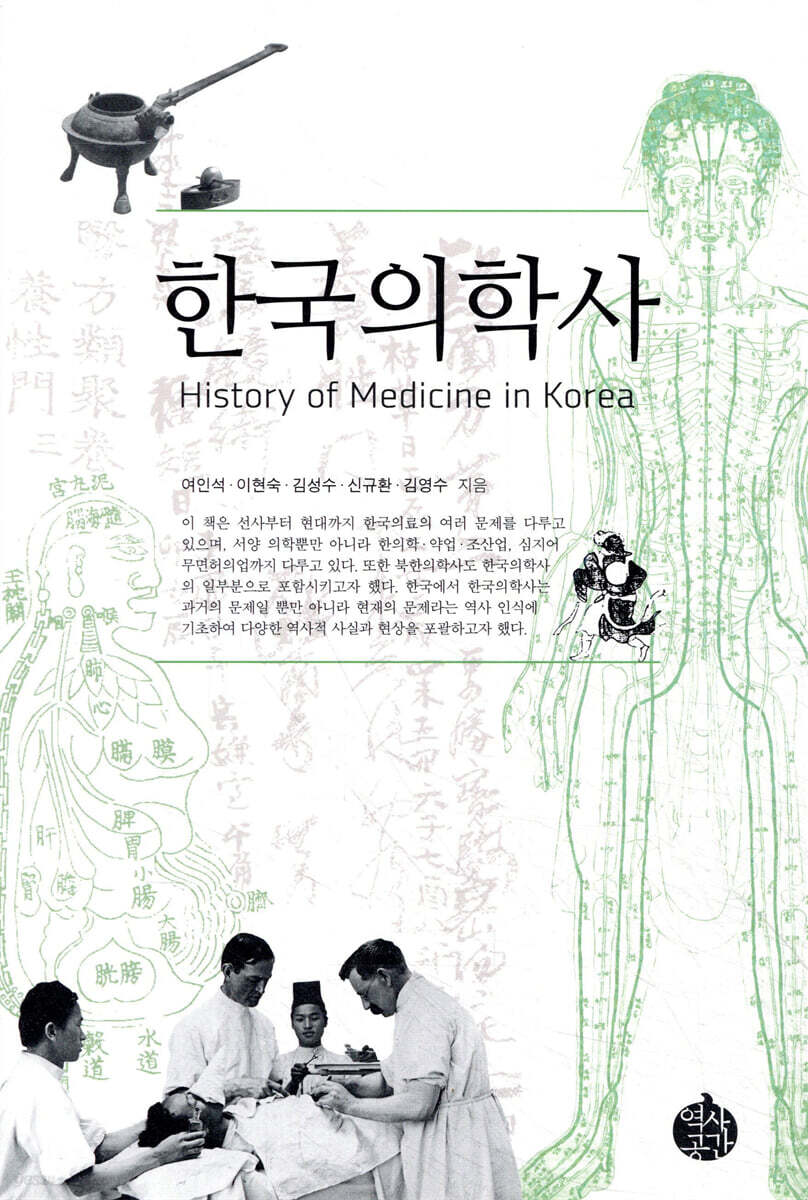
This book covers various issues in Korean medicine from prehistoric times to the present, covering not only Oriental medicine, pharmaceuticals, midwifery, and Western medicine, but also unlicensed medical practice.
Additionally, I wanted to include the history of North Korean medicine as part of the history of Korean medicine.
In addition, based on the historical awareness that the history of Korean medicine is not only a matter of the past but also a matter of the present, we sought to encompass various historical facts and phenomena.
Recently, there has been a growing call for strengthening medical humanities education in medical schools.
This need stems from a reflection on the fact that the current medical school education emphasizes only the scientific aspects of medicine.
In other words, many problems are occurring as medical professionals who have been educated only in the science of medicine engage in social activities without properly recognizing the stark reality that medical care is carried out within the context of human relationships between patients and doctors, and furthermore, within the context of the society surrounding them.
Many of the healthcare issues currently facing Korean society can be resolved by improving the values and systems of society as a whole. However, there are also many areas that can be improved by having medical professionals, who play a key role in healthcare activities, clearly recognize the medical reality of Korean society, the academic identity of medicine, and the professional identity of medical professionals.
This recognition of reality and the establishment of an academic and professional identity cannot be achieved simply by presenting an ideal model and demanding that it be emulated.
To achieve this, a historical understanding of the current medical situation in Korean society and the processes through which the medical professionals working within it have developed to what they are today must be established.
In that sense, the importance of medical education is great.
Of course, it is not that there was no medical history education in medical schools during that time.
Almost all medical schools include a course in the history of medicine in their curriculum, whether it exists as a separate subject called "History of Medicine" or in some other form.
However, most of what is taught in medical schools today is the history of Western medicine, and the history of Korean medicine is limited to the history of the introduction of Western medicine into Korean medicine.
As long as medical history education focuses on the history of Western medicine, there are few opportunities to learn about the history of Korean medicine, which is necessary to address the medical realities facing Korean society.
For example, even regarding the issue of unifying Western and Oriental medicine, it is difficult to obtain a balanced perspective with only the introductory lectures on Oriental medicine currently being offered at some medical schools.
Only when we properly understand the history of traditional medicine, which was the mainstream medicine in our society before the adoption of Western medicine, and the historical transformation it has undergone since the modern era, can we begin to understand the framework within which this issue should be addressed.
Furthermore, without a proper understanding of the historical process of change that Korean medicine has undergone in the turbulent times of Korean society, from the Japanese colonial period and liberation, the Korean War and post-war recovery, through the period of rapid economic growth, and continuing to the present, it will be difficult to understand the root of the medical problems facing Korean society today, nor will it be possible to expect fundamental solutions to them.
This book was written by leading and senior scholars in the medical field.
Professor Yeo In-seok was in charge of the introduction and the history of modern medicine (introduction, chapter 13), Director Lee Hyeon-suk was in charge of the history of prehistoric to Goryeo medicine (chapters 1-3), Professor Kim Seong-su was in charge of the history of Joseon medicine (chapters 4-6), Professor Shin Gyu-hwan was in charge of the history of modern and contemporary medicine (chapters 7-12), and Dr. Kim Yeong-su was in charge of the history of North Korean medicine (chapters 14).
Historical awareness of the changes that Korean medicine has undergone
This book covers various issues in Korean medicine from prehistoric times to the present, covering not only Oriental medicine, pharmaceuticals, midwifery, and Western medicine, but also unlicensed medical practice.
Additionally, I wanted to include the history of North Korean medicine as part of the history of Korean medicine.
In addition, based on the historical awareness that the history of Korean medicine is not only a matter of the past but also a matter of the present, we sought to encompass various historical facts and phenomena.
Recently, there has been a growing call for strengthening medical humanities education in medical schools.
This need stems from a reflection on the fact that the current medical school education emphasizes only the scientific aspects of medicine.
In other words, many problems are occurring as medical professionals who have been educated only in the science of medicine engage in social activities without properly recognizing the stark reality that medical care is carried out within the context of human relationships between patients and doctors, and furthermore, within the context of the society surrounding them.
Many of the healthcare issues currently facing Korean society can be resolved by improving the values and systems of society as a whole. However, there are also many areas that can be improved by having medical professionals, who play a key role in healthcare activities, clearly recognize the medical reality of Korean society, the academic identity of medicine, and the professional identity of medical professionals.
This recognition of reality and the establishment of an academic and professional identity cannot be achieved simply by presenting an ideal model and demanding that it be emulated.
To achieve this, a historical understanding of the current medical situation in Korean society and the processes through which the medical professionals working within it have developed to what they are today must be established.
In that sense, the importance of medical education is great.
Of course, it is not that there was no medical history education in medical schools during that time.
Almost all medical schools include a course in the history of medicine in their curriculum, whether it exists as a separate subject called "History of Medicine" or in some other form.
However, most of what is taught in medical schools today is the history of Western medicine, and the history of Korean medicine is limited to the history of the introduction of Western medicine into Korean medicine.
As long as medical history education focuses on the history of Western medicine, there are few opportunities to learn about the history of Korean medicine, which is necessary to address the medical realities facing Korean society.
For example, even regarding the issue of unifying Western and Oriental medicine, it is difficult to obtain a balanced perspective with only the introductory lectures on Oriental medicine currently being offered at some medical schools.
Only when we properly understand the history of traditional medicine, which was the mainstream medicine in our society before the adoption of Western medicine, and the historical transformation it has undergone since the modern era, can we begin to understand the framework within which this issue should be addressed.
Furthermore, without a proper understanding of the historical process of change that Korean medicine has undergone in the turbulent times of Korean society, from the Japanese colonial period and liberation, the Korean War and post-war recovery, through the period of rapid economic growth, and continuing to the present, it will be difficult to understand the root of the medical problems facing Korean society today, nor will it be possible to expect fundamental solutions to them.
This book was written by leading and senior scholars in the medical field.
Professor Yeo In-seok was in charge of the introduction and the history of modern medicine (introduction, chapter 13), Director Lee Hyeon-suk was in charge of the history of prehistoric to Goryeo medicine (chapters 1-3), Professor Kim Seong-su was in charge of the history of Joseon medicine (chapters 4-6), Professor Shin Gyu-hwan was in charge of the history of modern and contemporary medicine (chapters 7-12), and Dr. Kim Yeong-su was in charge of the history of North Korean medicine (chapters 14).
- You can preview some of the book's contents.
Preview
index
In publishing the book
The concept and necessity of the Western medical history
Korean medical history within the world's medical history
Concepts and Objects of Medical History
The need for medical history
Chapter 1 Prehistoric Medicine
Prehistoric Diseases and Treatments
Medical customs of the Three Kingdoms
Chapter 2 Medicine of the Three Kingdoms and Unified Silla Periods
Medicine of the Three Kingdoms
Epidemics and Countermeasures During the Three Kingdoms Period
The development of Silla medicine
7th Century Unification Wars and Military Medicine
Development of medicine during the Unified Silla period
Chapter 3: Medical System and Medicine in the Goryeo Dynasty
Goryeo Dynasty medical system
Diseases and Treatment
The growth of private medicine in the late Goryeo Dynasty
Chapter 4: Establishment of State-Centered Medicine in the Early Joseon Dynasty
Strengthening the nation's medical function
Encouragement of Hyangyak
Compilation of 『Euibangyuchui』
Doctor training
Development of specialized branches
Chapter 5: The Establishment of Dongui in the Mid-Joseon Period
The confusion of Joseon medicine
The emergence of the Donguibogam
Diversification of treatment techniques
Expansion of folk medicine
The knowledge of the cultured, medicine
Chapter 6: Diversification of Medicine in the Late Joseon Dynasty
Donguibogam, which became the mainstream medical treatment of Joseon
Development of Marginology
Introduction of Western medicine
Diversification of medical theories
Changes in the medical environment and doctors
Chapter 7: Development of Western and Oriental Medicine after the Opening of the Port
Introduction of inoculation and cowpox
The establishment process of Jejungwon
Hospital opening and activities of missionary doctors in Korea
Growth and development of the pharmaceutical industry after the opening of the port
Chapter 8: Building a Modern Medical System during the Korean Empire
The process of establishing quarantine sovereignty and the enactment of statutory infectious diseases
Sanitary administration of the Korean Empire
Establishment and operation of medical schools
Establishment of internal hospitals and public hospitals
Formation of medical associations and the movement for independence of doctors
Chapter 9: The Formation of the Colonial Medical System during the Early Japanese Colonial Period
Organization and activities of the fan club
The establishment of the Korean Medical Association and the colonial medical system
Sanitary police activities
Medical education during the Japanese colonial period
Enactment of Japanese medical laws
Chapter 10: Changes in the Colonial Medical System and Oriental Medicine in the Late Japanese Colonial Period
The "Medical Rules" and the Korean Medicine Policy of the Early Japanese Colonial Period
Changes in Korean medicine policy in the 1930s
The debate over the revival of Korean medicine
Medical policy under wartime conditions
Chapter 11: The Formation of Modern Korean Medicine after Liberation
Liberation and the US military government's health care policies
The Korean War and Medicine
Medical Problems and Solutions in the 1950s
Reconstruction and scientification of Korean medicine after liberation
The prevalence of peddlers and quack doctors
Chapter 12: Economic Development and the Changing Healthcare Environment
Family Planning and Economic Growth
Implementation of health insurance and changes in the medical field
Growth of pharmacists and the pharmaceutical industry
Disappearing medical professionals
Chapter 13: Healthcare and Prospects in Contemporary Korean Society
Social change and changes in the medical environment
Reorganization of medical systems and institutions
Conflicts over direct translation in the medical profession
The rise of ethical issues
Challenges against disease
Outlook and Challenges
Chapter 14: The Formation and Development of North Korea's Healthcare System
The period of establishing the foundation of the socialist medical system (1945–1957)
Establishment of the socialist medical system (1958–1971)
Consolidation of the socialist health care system (1972–1990)
The Decline of the Socialist Health Care System (1991–present)
Chronology of Korean Medical History
Further Reading
Search
Photo source
The concept and necessity of the Western medical history
Korean medical history within the world's medical history
Concepts and Objects of Medical History
The need for medical history
Chapter 1 Prehistoric Medicine
Prehistoric Diseases and Treatments
Medical customs of the Three Kingdoms
Chapter 2 Medicine of the Three Kingdoms and Unified Silla Periods
Medicine of the Three Kingdoms
Epidemics and Countermeasures During the Three Kingdoms Period
The development of Silla medicine
7th Century Unification Wars and Military Medicine
Development of medicine during the Unified Silla period
Chapter 3: Medical System and Medicine in the Goryeo Dynasty
Goryeo Dynasty medical system
Diseases and Treatment
The growth of private medicine in the late Goryeo Dynasty
Chapter 4: Establishment of State-Centered Medicine in the Early Joseon Dynasty
Strengthening the nation's medical function
Encouragement of Hyangyak
Compilation of 『Euibangyuchui』
Doctor training
Development of specialized branches
Chapter 5: The Establishment of Dongui in the Mid-Joseon Period
The confusion of Joseon medicine
The emergence of the Donguibogam
Diversification of treatment techniques
Expansion of folk medicine
The knowledge of the cultured, medicine
Chapter 6: Diversification of Medicine in the Late Joseon Dynasty
Donguibogam, which became the mainstream medical treatment of Joseon
Development of Marginology
Introduction of Western medicine
Diversification of medical theories
Changes in the medical environment and doctors
Chapter 7: Development of Western and Oriental Medicine after the Opening of the Port
Introduction of inoculation and cowpox
The establishment process of Jejungwon
Hospital opening and activities of missionary doctors in Korea
Growth and development of the pharmaceutical industry after the opening of the port
Chapter 8: Building a Modern Medical System during the Korean Empire
The process of establishing quarantine sovereignty and the enactment of statutory infectious diseases
Sanitary administration of the Korean Empire
Establishment and operation of medical schools
Establishment of internal hospitals and public hospitals
Formation of medical associations and the movement for independence of doctors
Chapter 9: The Formation of the Colonial Medical System during the Early Japanese Colonial Period
Organization and activities of the fan club
The establishment of the Korean Medical Association and the colonial medical system
Sanitary police activities
Medical education during the Japanese colonial period
Enactment of Japanese medical laws
Chapter 10: Changes in the Colonial Medical System and Oriental Medicine in the Late Japanese Colonial Period
The "Medical Rules" and the Korean Medicine Policy of the Early Japanese Colonial Period
Changes in Korean medicine policy in the 1930s
The debate over the revival of Korean medicine
Medical policy under wartime conditions
Chapter 11: The Formation of Modern Korean Medicine after Liberation
Liberation and the US military government's health care policies
The Korean War and Medicine
Medical Problems and Solutions in the 1950s
Reconstruction and scientification of Korean medicine after liberation
The prevalence of peddlers and quack doctors
Chapter 12: Economic Development and the Changing Healthcare Environment
Family Planning and Economic Growth
Implementation of health insurance and changes in the medical field
Growth of pharmacists and the pharmaceutical industry
Disappearing medical professionals
Chapter 13: Healthcare and Prospects in Contemporary Korean Society
Social change and changes in the medical environment
Reorganization of medical systems and institutions
Conflicts over direct translation in the medical profession
The rise of ethical issues
Challenges against disease
Outlook and Challenges
Chapter 14: The Formation and Development of North Korea's Healthcare System
The period of establishing the foundation of the socialist medical system (1945–1957)
Establishment of the socialist medical system (1958–1971)
Consolidation of the socialist health care system (1972–1990)
The Decline of the Socialist Health Care System (1991–present)
Chronology of Korean Medical History
Further Reading
Search
Photo source
GOODS SPECIFICS
- Date of issue: June 1, 2018
- Page count, weight, size: 436 pages | 152*225*30mm
- ISBN13: 9791157071630
- ISBN10: 1157071635
You may also like
카테고리
korean


korean

![GQ KOREA Mark (Monthly): December [2025]](http://librairie.coreenne.fr/cdn/shop/files/8ef265dbbfbf186523ed75ba7319009d.jpg?v=1765340328&width=3840)


