

Land of the Prophet
 |
Description
Book Introduction
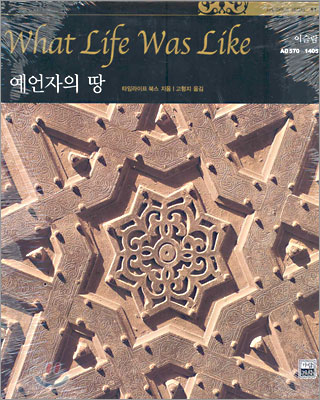
It depicts the history of Islam from the birth of the Prophet Muhammad to the fall of Damascus to the Turkish army led by Timur.
It traces the suffering of Muhammad, who rose from humble merchant to prophet, the footsteps of the Mussulman descendants who spread the Prophet's faith by ruling lands from Andalusia to the subcontinent, the conflicts and growth of each dynasty after the Prophet's death, and the dazzling civilizations they built.
It traces the suffering of Muhammad, who rose from humble merchant to prophet, the footsteps of the Mussulman descendants who spread the Prophet's faith by ruling lands from Andalusia to the subcontinent, the conflicts and growth of each dynasty after the Prophet's death, and the dazzling civilizations they built.
Publisher's Review
This book takes you on a journey through the history of Islam, a vast empire stretching from the sandy deserts of Africa to the Pamir Mountains of Central Asia, from the coast of Sicily to the riverbanks of India's interior. From the birth of Muhammad, the founder of Islam, in 570 AD to the sack of Damascus by the Turks led by Timur in 1401, this book meticulously reconstructs how a nomadic people, once migrating between pastures and oases, emerged from the shadows and emerged as a global force, drawing on relevant historical works, letters, accounts of speech, and religious records from the time.
This book examines the history of Islam, from how Muhammad, who lost his parents at a young age and grew up as a merchant under his uncle, received revelations from God, how the first Islamic community was established in Medina, and how this small community transformed into a vast political empire.
We will also examine the background to the division of Islam into Sunni and Shia, which was permanently entangled in civil war after the Prophet's death, the holy wars waged in the name of Islam, and the impact of Muhammad's message on the daily lives of Andalusians, Moroccans, Egyptians, and those living in other lands of the Prophet.
Chapter 1 examines the history of Muhammad's sufferings and accomplishments as a prophet, beginning with his ordinary birth and upbringing, his marriage to Khadijah, and his receiving of the first revelation from God on Mount Hira.
Another important part of the story is the process by which Arab warriors invaded neighboring countries under the unified banner of Islam after the Prophet's death.
Chapter 2 describes the history of factional strife and conquest among the various dynasties surrounding the caliphate, and their prosperity.
We examine the history of Islam, focusing on major dynasties such as the Abbasid Dynasty, which established a new imperial capital in Baghdad, Iraq, the Umayyad Dynasty, which established another empire in the Muslim territory of Andalusia, and the Fatimid Dynasty, which descended from the Prophet's daughter.
They eventually fell into decline due to a complex web of domestic and international problems, including factional strife, the Christian Crusades, and the Mongol invasions of Genghis Khan.
Chapter 3 examines the commerce, education, and legal systems of the Islamic world, focusing on Cairo, the city that began as the capital of the Fatimid Dynasty and became the center of the Islamic world.
It shows the international and developed appearance of Cairo at the time through characters such as the renowned historian and judge Ibn Khaldun, the surgeon Ibn Ridwan, and the merchant Nihrai ben Nisim.
Also, the fascinating stories of the intellectual woman Umm Hani, the jurist Ibn Battuta who published a travelogue based on her education of women and her 25 years of experience traveling abroad, the development of medieval Islamic printing by a group of urban vagabonds and swindlers called the Banu Sasan, merchants and muezzins, Bedouins and Berbers, marriage systems and concubines, and the cruel ruler Timur of the Turks guide us through the history of that time.
This book examines the history of Islam, from how Muhammad, who lost his parents at a young age and grew up as a merchant under his uncle, received revelations from God, how the first Islamic community was established in Medina, and how this small community transformed into a vast political empire.
We will also examine the background to the division of Islam into Sunni and Shia, which was permanently entangled in civil war after the Prophet's death, the holy wars waged in the name of Islam, and the impact of Muhammad's message on the daily lives of Andalusians, Moroccans, Egyptians, and those living in other lands of the Prophet.
Chapter 1 examines the history of Muhammad's sufferings and accomplishments as a prophet, beginning with his ordinary birth and upbringing, his marriage to Khadijah, and his receiving of the first revelation from God on Mount Hira.
Another important part of the story is the process by which Arab warriors invaded neighboring countries under the unified banner of Islam after the Prophet's death.
Chapter 2 describes the history of factional strife and conquest among the various dynasties surrounding the caliphate, and their prosperity.
We examine the history of Islam, focusing on major dynasties such as the Abbasid Dynasty, which established a new imperial capital in Baghdad, Iraq, the Umayyad Dynasty, which established another empire in the Muslim territory of Andalusia, and the Fatimid Dynasty, which descended from the Prophet's daughter.
They eventually fell into decline due to a complex web of domestic and international problems, including factional strife, the Christian Crusades, and the Mongol invasions of Genghis Khan.
Chapter 3 examines the commerce, education, and legal systems of the Islamic world, focusing on Cairo, the city that began as the capital of the Fatimid Dynasty and became the center of the Islamic world.
It shows the international and developed appearance of Cairo at the time through characters such as the renowned historian and judge Ibn Khaldun, the surgeon Ibn Ridwan, and the merchant Nihrai ben Nisim.
Also, the fascinating stories of the intellectual woman Umm Hani, the jurist Ibn Battuta who published a travelogue based on her education of women and her 25 years of experience traveling abroad, the development of medieval Islamic printing by a group of urban vagabonds and swindlers called the Banu Sasan, merchants and muezzins, Bedouins and Berbers, marriage systems and concubines, and the cruel ruler Timur of the Turks guide us through the history of that time.
GOODS SPECIFICS
- Date of issue: December 10, 2004
- Format: Hardcover book binding method guide
- Page count, weight, size: 182 pages | 942g | 222*250*20mm
- ISBN13: 9788984351837
- ISBN10: 8984351830
You may also like
카테고리
korean


korean

![GQ KOREA Mark (Monthly): December [2025]](http://librairie.coreenne.fr/cdn/shop/files/8ef265dbbfbf186523ed75ba7319009d.jpg?v=1765340328&width=3840)


