

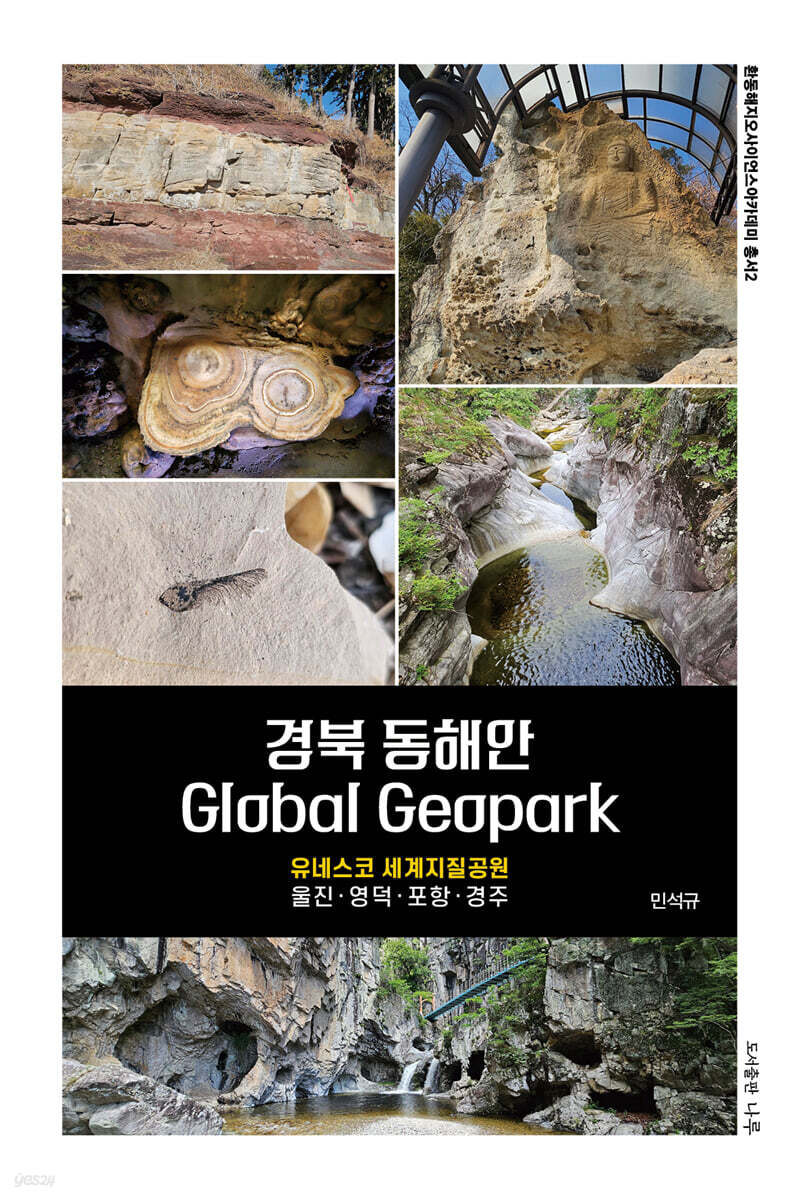
Gyeongbuk East Coast Global Geopark
 |
Description
Book Introduction
UNESCO Global Geopark, featuring the East Coast of Gyeongbuk
Publication of "Gyeongbuk East Coast Global Geopark"
-The history of the Earth and the story of people written by nature
A book encompassing the geology, topography, and culture of the Gyeongbuk East Coast, titled "Gyeongbuk East Coast Global Geopark" (author Min Seok-gyu, Naru Publishing), has been published. This book focuses on the geological and topographical heritage and geosites of the Gyeongbuk East Coast Global Geopark, a UNESCO Global Geopark, and tells the story of the East Coast, where time and human life intertwine, from a field-oriented perspective.
The author, Dr. Min Seok-gyu, holds a doctorate in education and majored in structural geomorphology. He is currently working as a specialist investigator in the geomorphology field of the National Institute of Ecology's National Natural Environment Survey.
As a research fellow at the Pohang Regional Studies Association, I have spent several years exploring the Gyeongbuk East Coast region, focusing on Pohang, and interpreting the scientific value and cultural significance of geological and topographical heritage from the perspective of local residents.
"Gyeongbuk East Coast Global Geopark" goes beyond geological and topographical descriptions to illuminate how the East Coast's natural landscape has embraced human history and culture. It weaves together vivid photographs and commentary to illustrate the formation of geological and topographical landmarks along the magnificent coastline stretching from Uljin to Pohang and Gyeongju, as well as the traces of the people who lived within them.
Publication of "Gyeongbuk East Coast Global Geopark"
-The history of the Earth and the story of people written by nature
A book encompassing the geology, topography, and culture of the Gyeongbuk East Coast, titled "Gyeongbuk East Coast Global Geopark" (author Min Seok-gyu, Naru Publishing), has been published. This book focuses on the geological and topographical heritage and geosites of the Gyeongbuk East Coast Global Geopark, a UNESCO Global Geopark, and tells the story of the East Coast, where time and human life intertwine, from a field-oriented perspective.
The author, Dr. Min Seok-gyu, holds a doctorate in education and majored in structural geomorphology. He is currently working as a specialist investigator in the geomorphology field of the National Institute of Ecology's National Natural Environment Survey.
As a research fellow at the Pohang Regional Studies Association, I have spent several years exploring the Gyeongbuk East Coast region, focusing on Pohang, and interpreting the scientific value and cultural significance of geological and topographical heritage from the perspective of local residents.
"Gyeongbuk East Coast Global Geopark" goes beyond geological and topographical descriptions to illuminate how the East Coast's natural landscape has embraced human history and culture. It weaves together vivid photographs and commentary to illustrate the formation of geological and topographical landmarks along the magnificent coastline stretching from Uljin to Pohang and Gyeongju, as well as the traces of the people who lived within them.
index
Header · 4
Chapter 1: Uljin East Coast World Geopark
1.
Deokgu Valley 14 with natural hot springs
2.
Wangpicheon Stream, which snakes through the deep valleys of the Taebaek Mountains, 30
3.
Limestone Underground Palace Seongryugul 47
4.
Gwangpum Falls and Sand Dune Wetlands of Namdaecheon in Pyeonghae 75
5.
Giseong Port Granite Gneiss 85
6.
Geum-eum-ri diorite 90
Chapter 2: Yeongdeok East Coast World Geopark
1.
Yeonghae Fortress and Goraebul Coast 98
2.
Cenozoic fossil site, Cheoramsan Cauldron Rock 120
3.
Daejinri Gneiss and Yeongdeok Daebujeong 124
4.
Chuksan Port and Jukdo Mountain Yukgae Island 135
5.
Gyeongjeong-ri Mesozoic Sedimentary Rocks and Trace Fossils 141
6.
Granite diorite and Promise Rock of Changpo-ri 152
7.
Traces of the cutting of Osipcheon's grain, Yongchu Falls 163
8.
Woncheok-ri Paleozoic granite 169
9.
Yongdeok-ri Mesozoic mixed rock 173
Chapter 3: Pohang East Coast World Geopark
1.
Bunokjeong and Hornfels 180
2.
Daljeon-ri Columnar Joint 185
3.
Yeonam-dong Fossil Site 189
4.
Naeyeonsan 191, a place that preserves memories of volcanic activity during the Cretaceous period of the Mesozoic era.
5.
Hindi tile and natural concrete sun rock 216
6.
Guryongso 222, where the legend of a dragon ascending to heaven is told
7.
Homigot coastal terrace 227, the largest in the country
8.
Natural Monument: Odo-ri Columnar Joints, Heunghae-eup, Tree Fossil 238
9.
Tafoni Exhibition Hall Igari Coast 252
Chapter 4: Gyeongju East Coast World Geopark
1.
Yangnam Columnar Joint 264
2.
King Munmu's underwater tomb, Daewangam 279
3.
Tafoni's Exhibition Hall, Golgulsa Temple 290
4.
Gyeongju Namsan 299, an open-air museum of Buddhist cultural heritage
Chapter 1: Uljin East Coast World Geopark
1.
Deokgu Valley 14 with natural hot springs
2.
Wangpicheon Stream, which snakes through the deep valleys of the Taebaek Mountains, 30
3.
Limestone Underground Palace Seongryugul 47
4.
Gwangpum Falls and Sand Dune Wetlands of Namdaecheon in Pyeonghae 75
5.
Giseong Port Granite Gneiss 85
6.
Geum-eum-ri diorite 90
Chapter 2: Yeongdeok East Coast World Geopark
1.
Yeonghae Fortress and Goraebul Coast 98
2.
Cenozoic fossil site, Cheoramsan Cauldron Rock 120
3.
Daejinri Gneiss and Yeongdeok Daebujeong 124
4.
Chuksan Port and Jukdo Mountain Yukgae Island 135
5.
Gyeongjeong-ri Mesozoic Sedimentary Rocks and Trace Fossils 141
6.
Granite diorite and Promise Rock of Changpo-ri 152
7.
Traces of the cutting of Osipcheon's grain, Yongchu Falls 163
8.
Woncheok-ri Paleozoic granite 169
9.
Yongdeok-ri Mesozoic mixed rock 173
Chapter 3: Pohang East Coast World Geopark
1.
Bunokjeong and Hornfels 180
2.
Daljeon-ri Columnar Joint 185
3.
Yeonam-dong Fossil Site 189
4.
Naeyeonsan 191, a place that preserves memories of volcanic activity during the Cretaceous period of the Mesozoic era.
5.
Hindi tile and natural concrete sun rock 216
6.
Guryongso 222, where the legend of a dragon ascending to heaven is told
7.
Homigot coastal terrace 227, the largest in the country
8.
Natural Monument: Odo-ri Columnar Joints, Heunghae-eup, Tree Fossil 238
9.
Tafoni Exhibition Hall Igari Coast 252
Chapter 4: Gyeongju East Coast World Geopark
1.
Yangnam Columnar Joint 264
2.
King Munmu's underwater tomb, Daewangam 279
3.
Tafoni's Exhibition Hall, Golgulsa Temple 290
4.
Gyeongju Namsan 299, an open-air museum of Buddhist cultural heritage
Into the book
The east coast of Gyeongbuk is more than just a scenic spot; it is a geological and topographical treasure trove, bearing the imprint of Earth's long history.
The geological and topographical heritage, shaped by hundreds of millions of years of earthquakes, faults, volcanoes, wave and wind erosion, still remains throughout the Gyeongbuk East Coast Global Geopark, and people have made their homes and continued their lives within it.
Each stone, each bend in the coastline, tells the story of natural evolution and humankind.
This combination of valuable geological and topographical resources and local culture led to the official registration of the Gyeongbuk East Coast Geopark as a UNESCO Global Geopark in 2025.
This signifies that our region's natural heritage has been recognized globally for its scientific, educational, and cultural value, while also demonstrating that the community is maturing towards a quality of life and sustainable development that meets global standards.
The geological and topographical heritage, shaped by hundreds of millions of years of earthquakes, faults, volcanoes, wave and wind erosion, still remains throughout the Gyeongbuk East Coast Global Geopark, and people have made their homes and continued their lives within it.
Each stone, each bend in the coastline, tells the story of natural evolution and humankind.
This combination of valuable geological and topographical resources and local culture led to the official registration of the Gyeongbuk East Coast Geopark as a UNESCO Global Geopark in 2025.
This signifies that our region's natural heritage has been recognized globally for its scientific, educational, and cultural value, while also demonstrating that the community is maturing towards a quality of life and sustainable development that meets global standards.
--- From the text
Publisher's Review
ㆍ Uljin Geopark is the only geopark on the East Coast that is home to Seongryu Cave, a karst landform, and contains a mysterious underground world created by groundwater dissolving limestone.
ㆍ Yeongdeok Geopark is a 'geological museum' where various rocks are distributed from the Precambrian to the latest geological era, the Cenozoic, and is an area that shows the entire process of tectonic changes on the Korean Peninsula at a glance.
ㆍ Pohang Geopark is a young land from the Cenozoic Era. Its diverse fossils formed by sedimentary processes and coastal terraces formed by sea erosion and ground uplift show the tectonic changes experienced by the eastern coast of Gyeongbuk during the Cenozoic Era.
ㆍ Gyeongju Geopark is a place where history, geology, and topography come together, and it is an area where the thousand-year cultural heritage of Silla and natural heritage such as Namsan granite and Yangnam columnar joints coexist.
Dr. Min says in the preface to the book:
"Through the footsteps of the Gyeongbuk East Coast, where nature and humans have lived together, I hope readers will learn about nature's time, understand human wisdom, and envision a better tomorrow as we walk together on the geopark path."
This book aims to easily convey the meaning of UNESCO Global Geoparks to the general reader and to widely publicize the value of the world-class geological heritage of the East Coast of Gyeongbuk.
The east coast of Gyeongbuk, stretching from Uljin to Yeongdeok, Pohang, and Gyeongju, is a precious space where traces of the Earth's history spanning billions of years and cultural heritage accumulated over five thousand years coexist.
In recognition of this special value, the Gyeongbuk East Coast was officially designated as a UNESCO Global Geopark in April 2025.
The newly published 『Gyeongbuk East Coast Global Geopark』 is a meaningful achievement that balances the geological and topographical heritage and cultural assets of our region from the perspectives of science and the humanities.
From the valleys and pine trees of Uljin, the coast and fishing villages of Yeongdeok, the coastal terraces and industries of Pohang, and the history and culture of Gyeongju, you can experience the stories of nature and people on the east coast of Gyeongbuk at a glance.
Pohang City is making various efforts to become a "sustainable eco-tourism city" following its designation as a World Geopark.
In addition to preserving geological and topographical heritage and improving accessibility, we are also exploring geological content that captures the region's history and culture. We are also preparing the Pohang National Science Museum, which is scheduled for completion in 2028.
This will be a valuable asset for our children and future generations to learn about and enjoy the Gyeongbuk East Coast.
We hope this book will serve as a special guide that will tell citizens a story of their proud hometown and inspire visitors to return to the east coast of Gyeongbuk.
Furthermore, I hope that our region's nature and culture will serve as a strong guide in communicating with the world and creating new values.
We express our deepest gratitude to author Min Seok-gyu for his brilliant portrayal of the beautiful East Coast of Gyeongbuk. We hope that all who read this book will find warmth, inspiration, and pride in its stories of nature, history, and humanity.
Pohang Mayor Lee Kang-deok
ㆍ Yeongdeok Geopark is a 'geological museum' where various rocks are distributed from the Precambrian to the latest geological era, the Cenozoic, and is an area that shows the entire process of tectonic changes on the Korean Peninsula at a glance.
ㆍ Pohang Geopark is a young land from the Cenozoic Era. Its diverse fossils formed by sedimentary processes and coastal terraces formed by sea erosion and ground uplift show the tectonic changes experienced by the eastern coast of Gyeongbuk during the Cenozoic Era.
ㆍ Gyeongju Geopark is a place where history, geology, and topography come together, and it is an area where the thousand-year cultural heritage of Silla and natural heritage such as Namsan granite and Yangnam columnar joints coexist.
Dr. Min says in the preface to the book:
"Through the footsteps of the Gyeongbuk East Coast, where nature and humans have lived together, I hope readers will learn about nature's time, understand human wisdom, and envision a better tomorrow as we walk together on the geopark path."
This book aims to easily convey the meaning of UNESCO Global Geoparks to the general reader and to widely publicize the value of the world-class geological heritage of the East Coast of Gyeongbuk.
The east coast of Gyeongbuk, stretching from Uljin to Yeongdeok, Pohang, and Gyeongju, is a precious space where traces of the Earth's history spanning billions of years and cultural heritage accumulated over five thousand years coexist.
In recognition of this special value, the Gyeongbuk East Coast was officially designated as a UNESCO Global Geopark in April 2025.
The newly published 『Gyeongbuk East Coast Global Geopark』 is a meaningful achievement that balances the geological and topographical heritage and cultural assets of our region from the perspectives of science and the humanities.
From the valleys and pine trees of Uljin, the coast and fishing villages of Yeongdeok, the coastal terraces and industries of Pohang, and the history and culture of Gyeongju, you can experience the stories of nature and people on the east coast of Gyeongbuk at a glance.
Pohang City is making various efforts to become a "sustainable eco-tourism city" following its designation as a World Geopark.
In addition to preserving geological and topographical heritage and improving accessibility, we are also exploring geological content that captures the region's history and culture. We are also preparing the Pohang National Science Museum, which is scheduled for completion in 2028.
This will be a valuable asset for our children and future generations to learn about and enjoy the Gyeongbuk East Coast.
We hope this book will serve as a special guide that will tell citizens a story of their proud hometown and inspire visitors to return to the east coast of Gyeongbuk.
Furthermore, I hope that our region's nature and culture will serve as a strong guide in communicating with the world and creating new values.
We express our deepest gratitude to author Min Seok-gyu for his brilliant portrayal of the beautiful East Coast of Gyeongbuk. We hope that all who read this book will find warmth, inspiration, and pride in its stories of nature, history, and humanity.
Pohang Mayor Lee Kang-deok
GOODS SPECIFICS
- Date of issue: October 10, 2025
- Page count, weight, size: 320 pages | 150*225*30mm
- ISBN13: 9791194139027
- ISBN10: 1194139027
You may also like
카테고리
korean


korean

![GQ KOREA Mark (Monthly): December [2025]](http://librairie.coreenne.fr/cdn/shop/files/8ef265dbbfbf186523ed75ba7319009d.jpg?v=1765340328&width=3840)


