

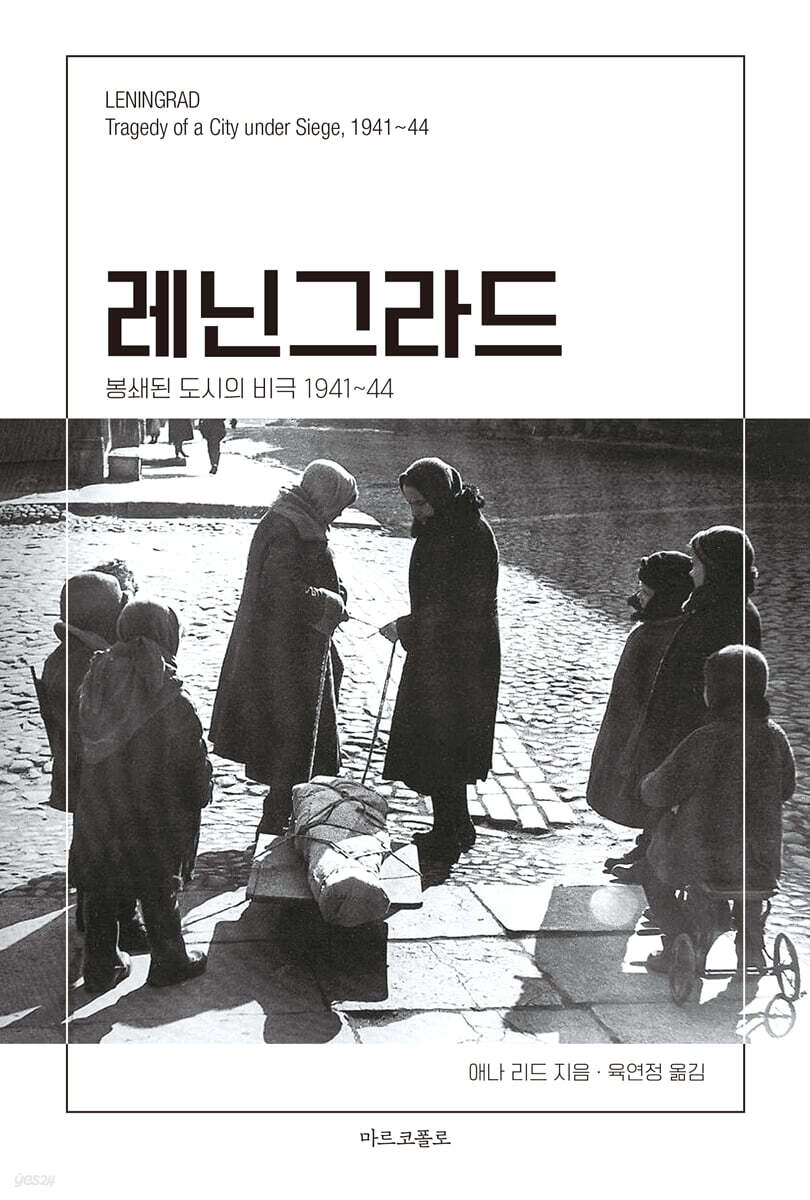
Leningrad
 |
Description
Book Introduction
New York Times Book of the Year | New Yorker Book of the Year | The Times Book of the Year | Guardian Book of the Year | Kirkus Reviews Recommended Book | Foreign Affairs Recommended Book
The moment you close this book, you will find yourself unable to use the word 'civilization' lightly.
"Leningrad" does not embellish tragedy or exaggerate dignity.
Instead, we save people with records and preserve memories with sentences.
In that very sense, this book is both a history book and an essay, a memorial and an open-ended look toward the future.
Now it's time to translate those memories into Korean.
In the city of lockdown, we will learn the last light of humanity.
The moment you close this book, you will find yourself unable to use the word 'civilization' lightly.
"Leningrad" does not embellish tragedy or exaggerate dignity.
Instead, we save people with records and preserve memories with sentences.
In that very sense, this book is both a history book and an essay, a memorial and an open-ended look toward the future.
Now it's time to translate those memories into Korean.
In the city of lockdown, we will learn the last light of humanity.
- You can preview some of the book's contents.
Preview
index
Preface to the Korean edition
Preface to the English edition
Part 1
1.
June 22, 1941
2.
Barbarossa
3.
We are winning, but the Germans are advancing.
4.
Opolchenye (People's Militia)
5.
Caught in a mousetrap
Part 2
6.
stupor
7.
Until our last heartbeat
8.
125 grams
9.
Fall down the funnel
Part 3
10.
Ice Road
11.
Sled and pupa (cocoon)
12.
We were like stones
13.
Svyazi (connections)
14.
Robinson Crusoe was a lucky man.
15.
corpse cannibalism and cannibalism
16.
Anton Ivanovich was angry.
17.
Big House
Part 4
18.
Myasnoy Bor
19.
The gentle joy of living and breathing
20.
Leningrad Symphony
21.
last year
Part 5
22.
home
23.
Vault of memories
Translator's Note
Preface to the English edition
Part 1
1.
June 22, 1941
2.
Barbarossa
3.
We are winning, but the Germans are advancing.
4.
Opolchenye (People's Militia)
5.
Caught in a mousetrap
Part 2
6.
stupor
7.
Until our last heartbeat
8.
125 grams
9.
Fall down the funnel
Part 3
10.
Ice Road
11.
Sled and pupa (cocoon)
12.
We were like stones
13.
Svyazi (connections)
14.
Robinson Crusoe was a lucky man.
15.
corpse cannibalism and cannibalism
16.
Anton Ivanovich was angry.
17.
Big House
Part 4
18.
Myasnoy Bor
19.
The gentle joy of living and breathing
20.
Leningrad Symphony
21.
last year
Part 5
22.
home
23.
Vault of memories
Translator's Note
Detailed image

Publisher's Review
The winter air is sharp and the silence is heavy.
As the city freezes, people slow down and borrow warmth from each other.
The word "lockdown" might seem like a historical term, but after reading Anna Reed's book, the word takes on a concrete image.
The weight of hunger, the memory of the smell of bread, even the yellowed pages of an old diary are felt with the tips of my fingers.
"Leningrad" does not reduce the war to numbers and maps.
The loneliness and solidarity, cowardice and courage, faith and exhaustion in the heart of the city are restored through the voices of living people.
That voice is not unfamiliar to today's readers.
In times of extreme hardship, the question, “How do we maintain our humanity?” comes to us directly, transcending time and borders.
The blockade of Leningrad lasted 872 days, from 1941 to 1944.
The Germans chose death over occupation, and the civilians relied on the 'Road of Life' crossing the frozen Lake Ladoga.
The fact that hundreds of thousands of civilians died of hunger and extreme cold during the blockade has been repeated time and again in the dry prose of historians, but Reed brings it back to the human story.
Her book follows a thread of diaries, memoirs, and oral testimony.
Thus, the reader reads the body temperature of a ‘person’ along with historical facts.
The virtue of this book lies in the intricate weaving of two knots.
One is rigor in the material, and the other is literary sensibility.
In addition to official sources such as military records, the author meticulously weaves together personal diaries, family letters, and interviews with survivors from inside and outside the city.
The rhythm of the editing is solid, and the sentences are plain.
Bloomsbury describes the book as “an immersive history that takes the diary of life in a cloistered city as its central narrative axis.”
This introduction is not an exaggeration.
The reader passes through a 'day', not an 'event'.
As each page is turned, the city loses its seasons, its people lose their body heat, and in the midst of all this, the face of the dignity of the community becomes clearer.
What makes Leningrad important is the way it evokes events.
The value of a glass of warm water changes, the texture of an old wool coat becomes visible, and the texture of a bread coupon becomes thicker.
It is not just a technique of reproduction.
It is an ethical form that asks how the word 'humanity' becomes an empty shell at the moment when the community collapses, or how it is preserved until the end.
The point Reed is aiming for is not a heroic tale.
If there is any dignity or beauty in ordinary citizens, it is that.
So, even as the reader is immersed in the city before his eyes, he is repeatedly reminded of the present.
How fragile are the supply chains for basic necessities? Who are hit harder by cold waves and power outages? How does culture serve as a shield in times of despair?
These questions never remain in the past tense.
Reed's narrative calmly traces the heroic narrative of the blockade and the exaggerations of propaganda, attempting to 'demyth-defy' it.
When the lockdown is packaged as a grand narrative of "national victory," the individual suffering that disappears, the suffering that policy failure conceals, is reclaimed through the language of records.
Now, it's time to turn our attention to questions directed at Korean readers.
Why this book now?
First, Leningrad gives the word “resilience” a human face.
It reminds us of what sustains cities and communities in times of disaster, war, pandemic, and climate crisis, and how solidarity between government and citizens must intertwine.
Second, this book intervenes in the politics of memory.
It asks whose voices occupy the main text of history and whose voices are relegated to the footnotes, what suffering remains as monuments and what disappears.
Third, it shows where individual conscience and community ethics meet.
The question, “Have I shared my share of bread?” may be the sentence that most accurately reveals the ethical economy of an era.
This book also presents an example of 'reading history literary'.
The history of war is often summarized in tactics, troops, and commanders' decisions, but "Leningrad" turns this around into a story of life.
A night in a house without heat, fingers sewing a coat button, how mourning changes in a city where someone's funeral has disappeared - such scenes rewrite the threads of history.
While reading, the reader 'experiences' a history book.
The experience lasts longer than the statistics.
For Korean readers, “Leningrad” offers several reasons to read it.
First, the perspective on cities and citizens changes.
Citizens are both objects of protection and subjects, and their subjectivity is born from everyday language (diaries, notes, memos).
Second, ethical imagination expands.
In times of disaster, 'fairness' and 'distribution' are not slogans but closer to the actual objects of bread crumbs.
Third, rediscover the power of culture.
Through moments when reading, music, faith, and education become the final bastions of humanity, we are forced to reconsider the cultural infrastructure of our society and the meaning of the arts of daily life.
Fourth, learn the language of memory.
How to honor pain without consuming it, how to welcome someone's wounds with my ethics, etc.
Finally, I would like to talk about the timeliness of the translation publication.
We have been overly taught the language of disaster and uncertainty over the past few years.
That language sometimes breeds fatigue, and sometimes cynicism.
"Leningrad" returns that language to a human face.
It transforms the numbers of anxiety and fear into human relationships, and shows the dignity of the community in a tangible way.
The moment of publication is also an invitation to reading.
Through this book, we learn how dignity can shine even in the midst of despair.
That learning is the most classic way to prepare for the future.
As the city freezes, people slow down and borrow warmth from each other.
The word "lockdown" might seem like a historical term, but after reading Anna Reed's book, the word takes on a concrete image.
The weight of hunger, the memory of the smell of bread, even the yellowed pages of an old diary are felt with the tips of my fingers.
"Leningrad" does not reduce the war to numbers and maps.
The loneliness and solidarity, cowardice and courage, faith and exhaustion in the heart of the city are restored through the voices of living people.
That voice is not unfamiliar to today's readers.
In times of extreme hardship, the question, “How do we maintain our humanity?” comes to us directly, transcending time and borders.
The blockade of Leningrad lasted 872 days, from 1941 to 1944.
The Germans chose death over occupation, and the civilians relied on the 'Road of Life' crossing the frozen Lake Ladoga.
The fact that hundreds of thousands of civilians died of hunger and extreme cold during the blockade has been repeated time and again in the dry prose of historians, but Reed brings it back to the human story.
Her book follows a thread of diaries, memoirs, and oral testimony.
Thus, the reader reads the body temperature of a ‘person’ along with historical facts.
The virtue of this book lies in the intricate weaving of two knots.
One is rigor in the material, and the other is literary sensibility.
In addition to official sources such as military records, the author meticulously weaves together personal diaries, family letters, and interviews with survivors from inside and outside the city.
The rhythm of the editing is solid, and the sentences are plain.
Bloomsbury describes the book as “an immersive history that takes the diary of life in a cloistered city as its central narrative axis.”
This introduction is not an exaggeration.
The reader passes through a 'day', not an 'event'.
As each page is turned, the city loses its seasons, its people lose their body heat, and in the midst of all this, the face of the dignity of the community becomes clearer.
What makes Leningrad important is the way it evokes events.
The value of a glass of warm water changes, the texture of an old wool coat becomes visible, and the texture of a bread coupon becomes thicker.
It is not just a technique of reproduction.
It is an ethical form that asks how the word 'humanity' becomes an empty shell at the moment when the community collapses, or how it is preserved until the end.
The point Reed is aiming for is not a heroic tale.
If there is any dignity or beauty in ordinary citizens, it is that.
So, even as the reader is immersed in the city before his eyes, he is repeatedly reminded of the present.
How fragile are the supply chains for basic necessities? Who are hit harder by cold waves and power outages? How does culture serve as a shield in times of despair?
These questions never remain in the past tense.
Reed's narrative calmly traces the heroic narrative of the blockade and the exaggerations of propaganda, attempting to 'demyth-defy' it.
When the lockdown is packaged as a grand narrative of "national victory," the individual suffering that disappears, the suffering that policy failure conceals, is reclaimed through the language of records.
Now, it's time to turn our attention to questions directed at Korean readers.
Why this book now?
First, Leningrad gives the word “resilience” a human face.
It reminds us of what sustains cities and communities in times of disaster, war, pandemic, and climate crisis, and how solidarity between government and citizens must intertwine.
Second, this book intervenes in the politics of memory.
It asks whose voices occupy the main text of history and whose voices are relegated to the footnotes, what suffering remains as monuments and what disappears.
Third, it shows where individual conscience and community ethics meet.
The question, “Have I shared my share of bread?” may be the sentence that most accurately reveals the ethical economy of an era.
This book also presents an example of 'reading history literary'.
The history of war is often summarized in tactics, troops, and commanders' decisions, but "Leningrad" turns this around into a story of life.
A night in a house without heat, fingers sewing a coat button, how mourning changes in a city where someone's funeral has disappeared - such scenes rewrite the threads of history.
While reading, the reader 'experiences' a history book.
The experience lasts longer than the statistics.
For Korean readers, “Leningrad” offers several reasons to read it.
First, the perspective on cities and citizens changes.
Citizens are both objects of protection and subjects, and their subjectivity is born from everyday language (diaries, notes, memos).
Second, ethical imagination expands.
In times of disaster, 'fairness' and 'distribution' are not slogans but closer to the actual objects of bread crumbs.
Third, rediscover the power of culture.
Through moments when reading, music, faith, and education become the final bastions of humanity, we are forced to reconsider the cultural infrastructure of our society and the meaning of the arts of daily life.
Fourth, learn the language of memory.
How to honor pain without consuming it, how to welcome someone's wounds with my ethics, etc.
Finally, I would like to talk about the timeliness of the translation publication.
We have been overly taught the language of disaster and uncertainty over the past few years.
That language sometimes breeds fatigue, and sometimes cynicism.
"Leningrad" returns that language to a human face.
It transforms the numbers of anxiety and fear into human relationships, and shows the dignity of the community in a tangible way.
The moment of publication is also an invitation to reading.
Through this book, we learn how dignity can shine even in the midst of despair.
That learning is the most classic way to prepare for the future.
GOODS SPECIFICS
- Date of issue: September 25, 2025
- Page count, weight, size: 350 pages | 522g | 152*225*17mm
- ISBN13: 9791192667980
- ISBN10: 1192667980
You may also like
카테고리
korean


korean

![GQ KOREA Mark (Monthly): December [2025]](http://librairie.coreenne.fr/cdn/shop/files/8ef265dbbfbf186523ed75ba7319009d.jpg?v=1765340328&width=3840)


