

Buddhism in Vietnam
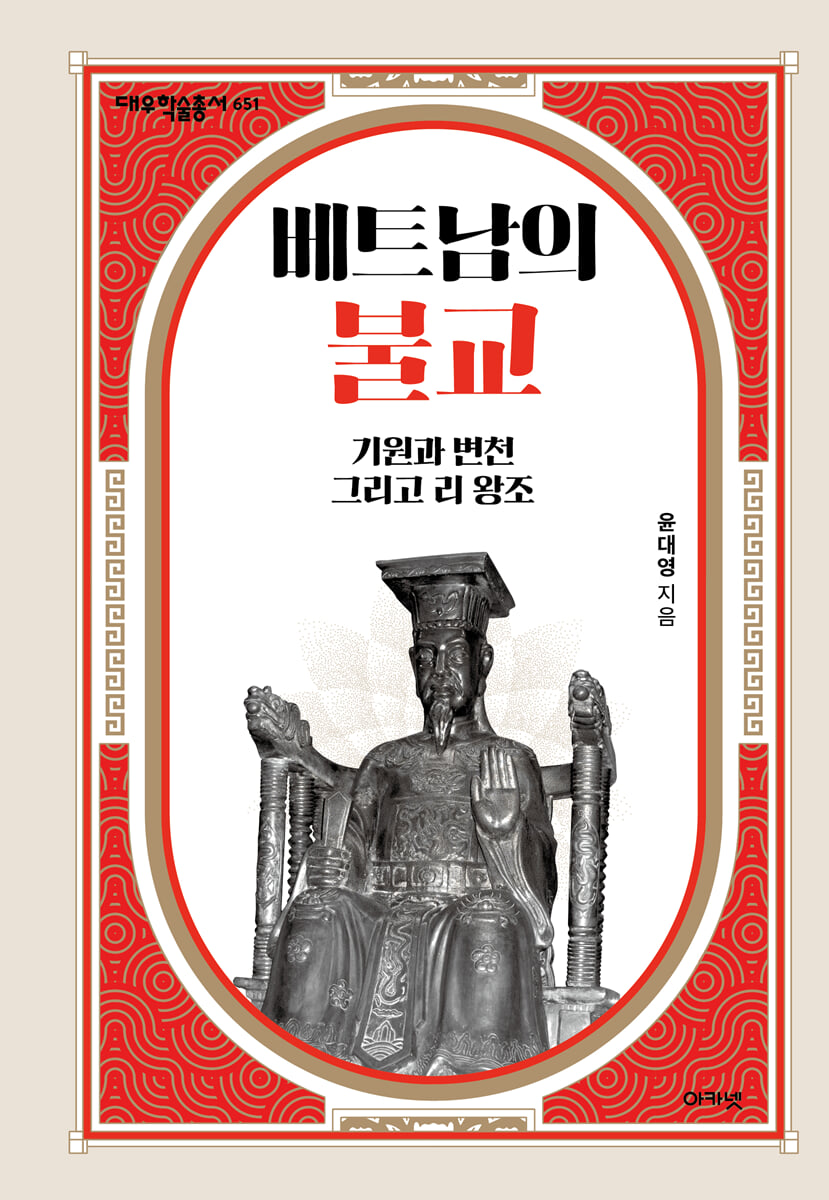 |
Description
Book Introduction
'Wriggling' during the period of full-fledged national establishment
The origin and evolution of Vietnamese Buddhism
A look through political, social, and cultural lenses!
The first full-scale work on traditional Vietnamese Buddhism.
How did Buddhism spread to Vietnam? Formed under the influence of India and China, how did Buddhism become established in Vietnam? During the Northern Subjugation period, when Vietnam was under Chinese rule, and then through independence, Buddhism served as the dominant ideology during the Lý Dynasty (1009-1225). Under what circumstances did it emerge and confront the new foreign ideology, Confucianism? Vietnam, which experienced four dynasties during the Goryeo Dynasty, experienced what processes after independence, leading to its golden age?
This book focuses on the origins, growth, and evolution of traditional Vietnamese Buddhism from a historical perspective, and outlines the zeitgeist of the time.
Focusing on Buddhism, another foreign religion whose origins predate Islam, we will examine the historical and regional aspects of Vietnam's diverse historical developments, and approach it from a comparative historical perspective with the history of Buddhism in Northeast Asia, especially Korean Buddhism, to find a basis for understanding the phenomenon of Buddhism that was still "flutter" in Vietnam, the "Confucian country."
It also delves into Vietnamese Buddhism, which has developed in line with the times, exerting political, social, and cultural influence even amid the gradual rise of Confucianism, from the early spread of Buddhism to the Ly Dynasty.
The origin and evolution of Vietnamese Buddhism
A look through political, social, and cultural lenses!
The first full-scale work on traditional Vietnamese Buddhism.
How did Buddhism spread to Vietnam? Formed under the influence of India and China, how did Buddhism become established in Vietnam? During the Northern Subjugation period, when Vietnam was under Chinese rule, and then through independence, Buddhism served as the dominant ideology during the Lý Dynasty (1009-1225). Under what circumstances did it emerge and confront the new foreign ideology, Confucianism? Vietnam, which experienced four dynasties during the Goryeo Dynasty, experienced what processes after independence, leading to its golden age?
This book focuses on the origins, growth, and evolution of traditional Vietnamese Buddhism from a historical perspective, and outlines the zeitgeist of the time.
Focusing on Buddhism, another foreign religion whose origins predate Islam, we will examine the historical and regional aspects of Vietnam's diverse historical developments, and approach it from a comparative historical perspective with the history of Buddhism in Northeast Asia, especially Korean Buddhism, to find a basis for understanding the phenomenon of Buddhism that was still "flutter" in Vietnam, the "Confucian country."
It also delves into Vietnamese Buddhism, which has developed in line with the times, exerting political, social, and cultural influence even amid the gradual rise of Confucianism, from the early spread of Buddhism to the Ly Dynasty.
- You can preview some of the book's contents.
Preview
index
preface
Part 1: The Origins of Vietnamese Buddhism and Asia
Chapter 1: The Advent of Buddhism: The Northern Period (1st–6th centuries)
Chapter 2: The Expansion of Buddhism: Seeking Dharma and Zen Buddhism (6th–9th Centuries)
Chapter 3: The Advance of Buddhism: The Early Years After Independence (10th Century)
Part 2: The Role and Development of Buddhism in the Early Li Dynasty
Chapter 4: A State Built on Buddhism: The Founding of the Ly Dynasty and the Ly Thai To Period (1009–1028)
Chapter 5: The Presiding Officers of Buddhism: The Li Thai Tong Period (1028–1054)
Chapter 6: The Succession of Buddhist Policies: The Retin Dung Period (1054–1072)
Part 3: The Cracks and Decline of Buddhism in the Mid- to Late Li Dynasty
Chapter 7: Support and Rebellion: The Li Niandong Period (1072–1128)
Chapter 8: The Monk Reincarnated as Emperor: The Return of the Emperor (1128–1138)
Chapter 9: Holding of the National Defense Assembly: The Riaintong Period (1138–1175)
Chapter 10: The Decay of the Monks and the Fall of the Ly Dynasty: The Li Kao Tong Period (1175–1210)
Chapter 11: Emperors Who Became Monks: The Ly Hue Tong Period (1210–1224) and the Ly Trieu Hoang Period (1224–1225)
Conclusion
Author's Note
supplement
annotation
References
Search
Part 1: The Origins of Vietnamese Buddhism and Asia
Chapter 1: The Advent of Buddhism: The Northern Period (1st–6th centuries)
Chapter 2: The Expansion of Buddhism: Seeking Dharma and Zen Buddhism (6th–9th Centuries)
Chapter 3: The Advance of Buddhism: The Early Years After Independence (10th Century)
Part 2: The Role and Development of Buddhism in the Early Li Dynasty
Chapter 4: A State Built on Buddhism: The Founding of the Ly Dynasty and the Ly Thai To Period (1009–1028)
Chapter 5: The Presiding Officers of Buddhism: The Li Thai Tong Period (1028–1054)
Chapter 6: The Succession of Buddhist Policies: The Retin Dung Period (1054–1072)
Part 3: The Cracks and Decline of Buddhism in the Mid- to Late Li Dynasty
Chapter 7: Support and Rebellion: The Li Niandong Period (1072–1128)
Chapter 8: The Monk Reincarnated as Emperor: The Return of the Emperor (1128–1138)
Chapter 9: Holding of the National Defense Assembly: The Riaintong Period (1138–1175)
Chapter 10: The Decay of the Monks and the Fall of the Ly Dynasty: The Li Kao Tong Period (1175–1210)
Chapter 11: Emperors Who Became Monks: The Ly Hue Tong Period (1210–1224) and the Ly Trieu Hoang Period (1224–1225)
Conclusion
Author's Note
supplement
annotation
References
Search
Into the book
The people who ruled Yanlu County and the surrounding areas, originally from northern China, usually held Confucian and Taoist views, and often disdained local folk beliefs with their hegemonic and racist ideologies.
However, some of these rulers or those who migrated to escape the political situation in China valued the merits of Buddhism, which offered a path to freedom from human misery and Nirvana, more highly than Confucianism and Taoism.
Yeonlu, a meeting point for diverse cultures, was also a complex space where the Buddhist cultures of South Asia and Central Asia came into contact with the Confucian and Taoist cultures of China.
---From "Chapter 1: The Arrival of Buddhism"
New currents of Buddhism entered Vietnam via northern routes, including various Chinese Zen sects.
And through the inscriptions left behind as a legacy of the Sui and Tang Dynasties, we were able to confirm the development of Buddhism in Gujin County and the present-day Ha Tay Province.
Then, what process did the Seon Buddhism of the Vinidadariujipa and the Muteontongpa, which arrived during this process, go through to emerge in a new form as Vietnam achieved independence?
---From "Chapter 2: The Expansion of Buddhism"
During the Dinh and Tien Le dynasties, new Buddhist centers emerged in the capital Hoa Lu, in addition to Bac Ninh and Dai La.
Emperors of both dynasties respected Buddhism and built or sponsored temples.
To lay the foundations of the state and establish social order, Dinbo Lin relied heavily on monks who were trusted by the people of the time.
At that time, monks with outstanding intellectual abilities served as advisors to the emperor and were given the title of monk.
During this period, Yeongneungsa Temple, Amseonsa Temple, Baung O Temple, and Iljusa Temple were founded.
---From "Chapter 3: The Advancement of Buddhism"
Born and raised in a Buddhist environment, Ly Cong Uan experienced Ngoa Trieu's misrule and the atmosphere of the court that ridiculed the monks.
After the fall of the Tien Le Dynasty, Ly Thai To ascended to the throne and moved the capital from Hoa Lu to Thang Long. After resolving the investiture issue with the Song Dynasty, he actively supported Buddhism while focusing on internal affairs.
As various anecdotes show, during his reign he enjoyed the support of two influential Buddhist leaders: the monk Banhain of the Vinidaruji sect and the monk Davao of the Muteontong sect.
---From "Chapter 4: A State Built on Buddhism"
Li Thai Tong, who wanted to claim himself as the leader of Buddhism, also built a kind of monastery (Jasihuibokwon) for nuns in addition to many temples.
Through the Iljusa Temple established during this process and the rituals of this temple, we can confirm the existence of Buddhist events at the time and the state-sponsored Guanyin faith.
After the colorful Buddhist festival, a great amnesty was implemented and a repository for Buddhist scriptures was established.
---From "Chapter 5: The Master of Buddhism"
Ritain Ddong, who excelled in scriptures, music, and strategy, inherited his ancestors' policy of promoting Buddhism.
Buddhism continued to play a dominant role as the ruling ideology and dominated politics, and Buddhist festivals such as the Nahanhoe continued.
It can be seen that not only the emperor but also his wife, Lady Iran, who was called 'Guanyin Girl', had an influence on the continued growth of Buddhism.
Although the first Temple of Literature was built in Vietnam, the spread of Confucianism was still in its infancy, and the country and society remained predominantly Buddhist.
---From “Chapter 6: Succession of Buddhist Policy”
Li Niandong, who ascended to the throne at the age of eight as the son of an Iranian woman, pursued Confucianism policies in more diverse ways than his father, Li Niandong.
However, the legacy of Buddhism continued not only through the Chopil Festival, the Gicheong Festival, and the Jungwon Festival, but also through cases such as the Kodou State Master, which shows that powerful leaders of the Buddhist community supported the emperor.
At this time, there was resistance from Confucian officials such as Levantine, but this only encouraged the acceleration of Buddhist policies.
The monks were still mainly active in the Muteontongpa and Binidaryujipa factions.
---From "Chapter 7: Support and Rebellion"
The 『Daevilsaryak』 and 『Daevilsarya Complete Book』 record that the son of the Marquis of Sơnhơn and his wife, Lady Do, Duong Hoan, was the “incarnation of the monk Dao Ha-in” and the future Ly “Tun Tong [神宗].”
In the royal family of the Li Dynasty, which supported Buddhism and monks, a reincarnation of a monk, Litton, has now appeared.
In the midst of the conflict with Jinrap, a kind of national Buddhism emerged.
The monks' judgment was also an important criterion for elevating the emperor's personal taste to the rank of "sage."
---From "Chapter 8: The Monk Reincarnated as the Emperor"
The Buddhist patriotism of the Return Dung developed into the Inwanghoe of the Riain Dung.
Monk Truong Nguyen of the Muteong sect was of Chinese descent, and Van Thich of the Binh Nieu Tribe sect, like Gieu Nhon, valued both Don-o and Jeom-o.
The Empress Dowager, in accordance with the late Emperor's will, repeatedly bestowed generous rewards on Vientiane Thong and entrusted him with various positions.
---From “Chapter 9: Holding the National Defense Ceremony”
The corruption of the impure monks in the final days of the Li Kao Tong Dynasty foreshadowed the downfall of the Li Dynasty, which had been founded and developed with the support of Buddhist forces.
In fact, in January 1210, an earthquake cracked the ground of Seung Yen Pagoda outside Thang Long Citadel, and in October of the same year, Li Cao Tong passed away.
Then, what was the situation of Buddhism during the Hue Tong and Trieu Hoang periods when the Ly Dynasty was on the verge of collapse?
---From "Chapter 10: The Corruption of the Monks and the Fall of the Li Dynasty"
The civil war situation at the end of the Li Kao-tong period continued until the Li Hue-tong period.
Li Huetong tried to timidly resist power by mentioning the issue of 'seonyang' in front of the Buddha statue.
From 1216, when the Tran clan officially emerged on the political stage of the court, Ly Huang-sang, who had handed over the throne to his youngest daughter in 1224, became a monk and moved to the Jinjiao Temple in Thang Long Province, becoming the ambassador of Hue Quang.
This is the first case of a Vietnamese emperor becoming a monk.
However, some of these rulers or those who migrated to escape the political situation in China valued the merits of Buddhism, which offered a path to freedom from human misery and Nirvana, more highly than Confucianism and Taoism.
Yeonlu, a meeting point for diverse cultures, was also a complex space where the Buddhist cultures of South Asia and Central Asia came into contact with the Confucian and Taoist cultures of China.
---From "Chapter 1: The Arrival of Buddhism"
New currents of Buddhism entered Vietnam via northern routes, including various Chinese Zen sects.
And through the inscriptions left behind as a legacy of the Sui and Tang Dynasties, we were able to confirm the development of Buddhism in Gujin County and the present-day Ha Tay Province.
Then, what process did the Seon Buddhism of the Vinidadariujipa and the Muteontongpa, which arrived during this process, go through to emerge in a new form as Vietnam achieved independence?
---From "Chapter 2: The Expansion of Buddhism"
During the Dinh and Tien Le dynasties, new Buddhist centers emerged in the capital Hoa Lu, in addition to Bac Ninh and Dai La.
Emperors of both dynasties respected Buddhism and built or sponsored temples.
To lay the foundations of the state and establish social order, Dinbo Lin relied heavily on monks who were trusted by the people of the time.
At that time, monks with outstanding intellectual abilities served as advisors to the emperor and were given the title of monk.
During this period, Yeongneungsa Temple, Amseonsa Temple, Baung O Temple, and Iljusa Temple were founded.
---From "Chapter 3: The Advancement of Buddhism"
Born and raised in a Buddhist environment, Ly Cong Uan experienced Ngoa Trieu's misrule and the atmosphere of the court that ridiculed the monks.
After the fall of the Tien Le Dynasty, Ly Thai To ascended to the throne and moved the capital from Hoa Lu to Thang Long. After resolving the investiture issue with the Song Dynasty, he actively supported Buddhism while focusing on internal affairs.
As various anecdotes show, during his reign he enjoyed the support of two influential Buddhist leaders: the monk Banhain of the Vinidaruji sect and the monk Davao of the Muteontong sect.
---From "Chapter 4: A State Built on Buddhism"
Li Thai Tong, who wanted to claim himself as the leader of Buddhism, also built a kind of monastery (Jasihuibokwon) for nuns in addition to many temples.
Through the Iljusa Temple established during this process and the rituals of this temple, we can confirm the existence of Buddhist events at the time and the state-sponsored Guanyin faith.
After the colorful Buddhist festival, a great amnesty was implemented and a repository for Buddhist scriptures was established.
---From "Chapter 5: The Master of Buddhism"
Ritain Ddong, who excelled in scriptures, music, and strategy, inherited his ancestors' policy of promoting Buddhism.
Buddhism continued to play a dominant role as the ruling ideology and dominated politics, and Buddhist festivals such as the Nahanhoe continued.
It can be seen that not only the emperor but also his wife, Lady Iran, who was called 'Guanyin Girl', had an influence on the continued growth of Buddhism.
Although the first Temple of Literature was built in Vietnam, the spread of Confucianism was still in its infancy, and the country and society remained predominantly Buddhist.
---From “Chapter 6: Succession of Buddhist Policy”
Li Niandong, who ascended to the throne at the age of eight as the son of an Iranian woman, pursued Confucianism policies in more diverse ways than his father, Li Niandong.
However, the legacy of Buddhism continued not only through the Chopil Festival, the Gicheong Festival, and the Jungwon Festival, but also through cases such as the Kodou State Master, which shows that powerful leaders of the Buddhist community supported the emperor.
At this time, there was resistance from Confucian officials such as Levantine, but this only encouraged the acceleration of Buddhist policies.
The monks were still mainly active in the Muteontongpa and Binidaryujipa factions.
---From "Chapter 7: Support and Rebellion"
The 『Daevilsaryak』 and 『Daevilsarya Complete Book』 record that the son of the Marquis of Sơnhơn and his wife, Lady Do, Duong Hoan, was the “incarnation of the monk Dao Ha-in” and the future Ly “Tun Tong [神宗].”
In the royal family of the Li Dynasty, which supported Buddhism and monks, a reincarnation of a monk, Litton, has now appeared.
In the midst of the conflict with Jinrap, a kind of national Buddhism emerged.
The monks' judgment was also an important criterion for elevating the emperor's personal taste to the rank of "sage."
---From "Chapter 8: The Monk Reincarnated as the Emperor"
The Buddhist patriotism of the Return Dung developed into the Inwanghoe of the Riain Dung.
Monk Truong Nguyen of the Muteong sect was of Chinese descent, and Van Thich of the Binh Nieu Tribe sect, like Gieu Nhon, valued both Don-o and Jeom-o.
The Empress Dowager, in accordance with the late Emperor's will, repeatedly bestowed generous rewards on Vientiane Thong and entrusted him with various positions.
---From “Chapter 9: Holding the National Defense Ceremony”
The corruption of the impure monks in the final days of the Li Kao Tong Dynasty foreshadowed the downfall of the Li Dynasty, which had been founded and developed with the support of Buddhist forces.
In fact, in January 1210, an earthquake cracked the ground of Seung Yen Pagoda outside Thang Long Citadel, and in October of the same year, Li Cao Tong passed away.
Then, what was the situation of Buddhism during the Hue Tong and Trieu Hoang periods when the Ly Dynasty was on the verge of collapse?
---From "Chapter 10: The Corruption of the Monks and the Fall of the Li Dynasty"
The civil war situation at the end of the Li Kao-tong period continued until the Li Hue-tong period.
Li Huetong tried to timidly resist power by mentioning the issue of 'seonyang' in front of the Buddha statue.
From 1216, when the Tran clan officially emerged on the political stage of the court, Ly Huang-sang, who had handed over the throne to his youngest daughter in 1224, became a monk and moved to the Jinjiao Temple in Thang Long Province, becoming the ambassador of Hue Quang.
This is the first case of a Vietnamese emperor becoming a monk.
---From "Chapter 11: The Emperor Who Became a Monk"
Publisher's Review
Vietnamese Buddhism Connects Asia!
Exchange of Buddhist scriptures and practices with Chinese characters in Asia…
Part of the Asian Buddhist mosaic
From early times, the area of present-day Vietnam actively interacted with India, Central Asia, Southeast Asia, and surrounding Northeast Asia.
In particular, the northern Ruirou (Yanlu) region was a center of early Buddhist exchange, and Buddhist relics that showed mutual influence with both India and China remain.
Vietnamese Buddhism not only influenced southern China, but was also influenced by Chinese Southern Chan Buddhism.
In particular, during the Ly Dynasty, Buddhist culture developed in relation to the Song Dynasty of China, and Vietnamese Buddhism, which was strongly influenced by Zen Buddhism, continued to be influenced by Chinese Buddhism and contributed to the formation of the Asian Buddhist sphere through personal practice and social practice.
In the 10th century, Vietnam achieved independence from Chinese rule, and under the Ly Dynasty, Buddhism finally became the central ideology of the state, playing a crucial role in achieving social integration.
The Vietnamese royal family actively utilized Buddhism as a means of external activities, strengthening international relations and establishing relations with China through the exchange of Buddhist scriptures and diplomatic missions.
In this process, Vietnamese Buddhism became established as part of the Asian Buddhist mosaic.
Vietnamese Buddhism.
Achieve social integration!
The royal family led the revival of Buddhism, and the monks who strengthened the bond between the common people… The birth of a Buddhist nation.
In 1009, when Ly Thai To (reigned 1009-1028), the first emperor of the Ly Dynasty, ascended to the throne with the support of the monk Van Ha Ninh, Vietnam was reborn as a Buddhist country.
Numerous temples and pagodas were built in and around the capital city of Hanoi, and as Buddhism became central to national governance, monks played an important role in assisting state affairs and educating the people.
The emperor, the royal family, and officials believed in and encouraged Buddhism.
Moreover, the emperor personally presided over Buddhist ceremonies, imported Buddhist scriptures, and supported the education of monks.
In addition, he actively supported the major Buddhist sects, Chodangpa and Muteontongpa, and led the development of Buddhist thought.
In Vietnamese history, Buddhism has been used as a tool for social integration beyond mere religion.
The construction of Buddhist temples and statues led to the establishment of Vietnam's 'traditional' culture, and large-scale Buddhist ceremonies and festivals became national events, strengthening the unity of the people of the Ly Dynasty.
Temples became centers for learning and practicing Buddhist scriptures as educational institutions, and some of the monks served as advisors to the imperial family and contributed to policymaking.
And Buddhism, combined with the spirit of the times that emphasized independence and national defense, gradually solidified its position as the nation's representative religion.
Vietnamese Buddhism is making a comeback in Vietnam!
Amid the rise of Confucianism, its influence has waned… but its tangible and intangible heritage remains vital.
The background of the Ly Dynasty's relatively long existence compared to the short-lived Ngo, Dinh, and Thien Le Dynasties between the 10th and early 11th centuries was Buddhism.
However, under the reigns of Emperors Ly Thai Tong (reigned 1028-1054), Li Thien Tong (reigned 1054-1072), Ly Nhan Tong (reigned 1072-1128), and Li Ying Tong (reigned 1138-1175), Buddhism in Vietnam developed in various forms.
Buddhism, which had flourished, gradually lost its influence in the latter half of the Li Dynasty due to the policy of fusion of Confucianism and Buddhism and the corruption of monks.
In 1225, the Tran Dynasty was established, the Ly Dynasty disappeared into history, and the influence of Buddhism also appeared in a new form.
Buddhism was once a symbol of national development in Vietnam until the Tran Dynasty, but it was difficult to maintain its former influence with the emergence of the Le Dynasty, a 'Confucian state'.
Although Buddhism's political influence in Vietnam has declined, it still plays an important role in social and cultural aspects and remains a religion deeply rooted in everyday life.
Today, Vietnam's Buddhist relics play an important role as national cultural heritage and are closely linked to the tourism industry.
* This book was selected for the Daewoo Foundation's Academic Research Support Project's thesis category and received research and publication support.
Exchange of Buddhist scriptures and practices with Chinese characters in Asia…
Part of the Asian Buddhist mosaic
From early times, the area of present-day Vietnam actively interacted with India, Central Asia, Southeast Asia, and surrounding Northeast Asia.
In particular, the northern Ruirou (Yanlu) region was a center of early Buddhist exchange, and Buddhist relics that showed mutual influence with both India and China remain.
Vietnamese Buddhism not only influenced southern China, but was also influenced by Chinese Southern Chan Buddhism.
In particular, during the Ly Dynasty, Buddhist culture developed in relation to the Song Dynasty of China, and Vietnamese Buddhism, which was strongly influenced by Zen Buddhism, continued to be influenced by Chinese Buddhism and contributed to the formation of the Asian Buddhist sphere through personal practice and social practice.
In the 10th century, Vietnam achieved independence from Chinese rule, and under the Ly Dynasty, Buddhism finally became the central ideology of the state, playing a crucial role in achieving social integration.
The Vietnamese royal family actively utilized Buddhism as a means of external activities, strengthening international relations and establishing relations with China through the exchange of Buddhist scriptures and diplomatic missions.
In this process, Vietnamese Buddhism became established as part of the Asian Buddhist mosaic.
Vietnamese Buddhism.
Achieve social integration!
The royal family led the revival of Buddhism, and the monks who strengthened the bond between the common people… The birth of a Buddhist nation.
In 1009, when Ly Thai To (reigned 1009-1028), the first emperor of the Ly Dynasty, ascended to the throne with the support of the monk Van Ha Ninh, Vietnam was reborn as a Buddhist country.
Numerous temples and pagodas were built in and around the capital city of Hanoi, and as Buddhism became central to national governance, monks played an important role in assisting state affairs and educating the people.
The emperor, the royal family, and officials believed in and encouraged Buddhism.
Moreover, the emperor personally presided over Buddhist ceremonies, imported Buddhist scriptures, and supported the education of monks.
In addition, he actively supported the major Buddhist sects, Chodangpa and Muteontongpa, and led the development of Buddhist thought.
In Vietnamese history, Buddhism has been used as a tool for social integration beyond mere religion.
The construction of Buddhist temples and statues led to the establishment of Vietnam's 'traditional' culture, and large-scale Buddhist ceremonies and festivals became national events, strengthening the unity of the people of the Ly Dynasty.
Temples became centers for learning and practicing Buddhist scriptures as educational institutions, and some of the monks served as advisors to the imperial family and contributed to policymaking.
And Buddhism, combined with the spirit of the times that emphasized independence and national defense, gradually solidified its position as the nation's representative religion.
Vietnamese Buddhism is making a comeback in Vietnam!
Amid the rise of Confucianism, its influence has waned… but its tangible and intangible heritage remains vital.
The background of the Ly Dynasty's relatively long existence compared to the short-lived Ngo, Dinh, and Thien Le Dynasties between the 10th and early 11th centuries was Buddhism.
However, under the reigns of Emperors Ly Thai Tong (reigned 1028-1054), Li Thien Tong (reigned 1054-1072), Ly Nhan Tong (reigned 1072-1128), and Li Ying Tong (reigned 1138-1175), Buddhism in Vietnam developed in various forms.
Buddhism, which had flourished, gradually lost its influence in the latter half of the Li Dynasty due to the policy of fusion of Confucianism and Buddhism and the corruption of monks.
In 1225, the Tran Dynasty was established, the Ly Dynasty disappeared into history, and the influence of Buddhism also appeared in a new form.
Buddhism was once a symbol of national development in Vietnam until the Tran Dynasty, but it was difficult to maintain its former influence with the emergence of the Le Dynasty, a 'Confucian state'.
Although Buddhism's political influence in Vietnam has declined, it still plays an important role in social and cultural aspects and remains a religion deeply rooted in everyday life.
Today, Vietnam's Buddhist relics play an important role as national cultural heritage and are closely linked to the tourism industry.
* This book was selected for the Daewoo Foundation's Academic Research Support Project's thesis category and received research and publication support.
GOODS SPECIFICS
- Date of issue: February 21, 2025
- Format: Hardcover book binding method guide
- Page count, weight, size: 464 pages | 152*224*30mm
- ISBN13: 9788957339657
- ISBN10: 8957339655
You may also like
카테고리
korean


korean

![GQ KOREA Mark (Monthly): December [2025]](http://librairie.coreenne.fr/cdn/shop/files/8ef265dbbfbf186523ed75ba7319009d.jpg?v=1765340328&width=3840)


