

Shanghai, the planned utopia
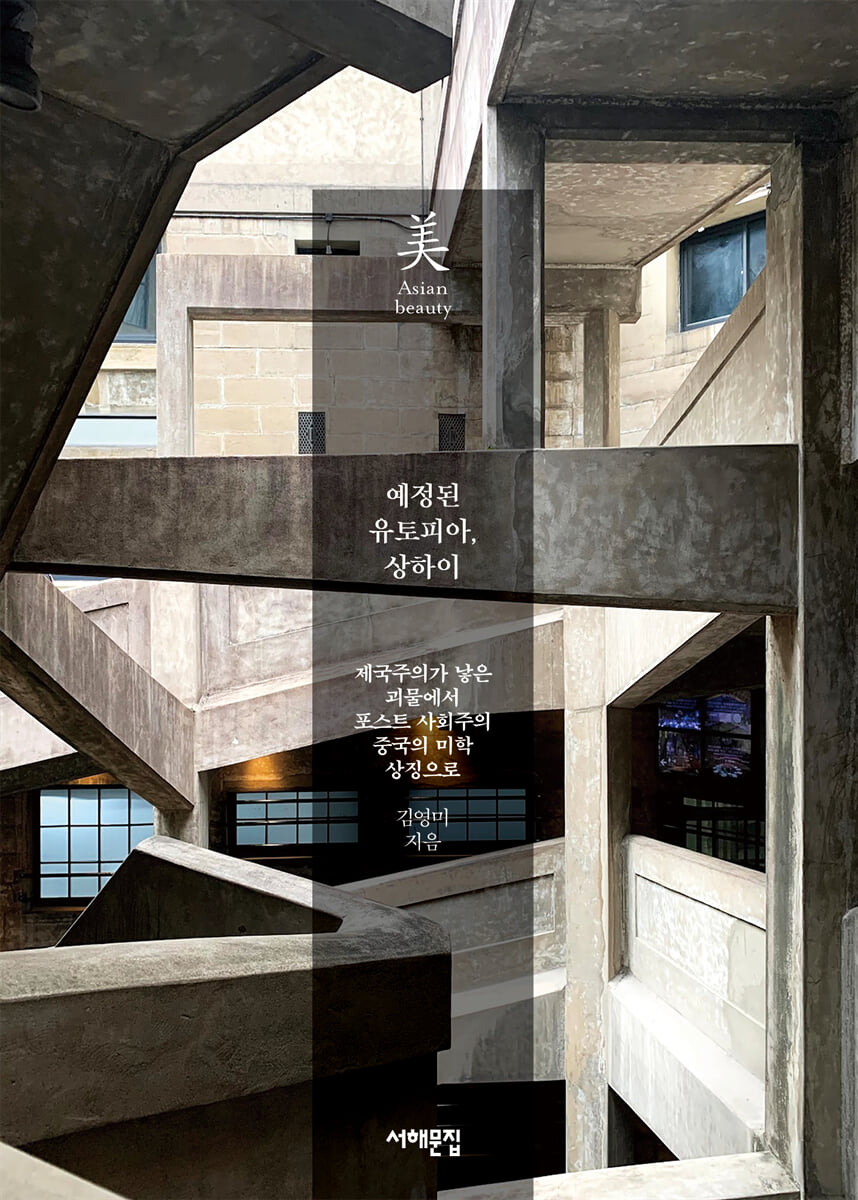 |
Description
Book Introduction
In a city born from imperialism
Transformed into a post-socialist symbol,
Shanghai, a dappled metropolis
This book tells the story of Shanghai, China's representative metropolis, from its birth to the present.
This film shows how Shanghai, once a modern urban city described as a "monster born of imperialism," transformed into an "aesthetic symbol of post-socialist China" through stories intertwined with various locations.
At the 19th National Congress of the Communist Party of China in 2017, Xi Jinping's government declared that socialism with Chinese characteristics had entered a "new era."
The new era that Xi Jinping speaks of refers to a state in which the material problems faced by all people have been resolved to some extent, that is, a “moderately prosperous society.”
Furthermore, the 'Chinese Dream' proposed by Xi Jinping along with the new era signifies a time and space that transcends reality, and although it seems to have a futuristic quality, it exists in another dimension of presentness experienced in reality.
Therefore, the time setting of the new era is a special time concept of a "present yet unrealistic situation" that connects the present reality of a moderately prosperous society with the unreality of the Chinese dream, allowing reality and unreality to cross over and the present and future to blend without boundaries.
This dual time layer is not a linear time concept such as 'past-present-future', but a completely new concept of time in which the past and future are together with the present, and the time zone is viewed as one mass without boundaries.
For this special concept of time to be applied, economic revival is necessary, and to achieve this, the Chinese government is adopting an approach called 'state neoliberalism'.
In other words, by allowing capitalism to continue without officially abandoning socialism, a 'speckled capitalism' is being formed.
Transformed into a post-socialist symbol,
Shanghai, a dappled metropolis
This book tells the story of Shanghai, China's representative metropolis, from its birth to the present.
This film shows how Shanghai, once a modern urban city described as a "monster born of imperialism," transformed into an "aesthetic symbol of post-socialist China" through stories intertwined with various locations.
At the 19th National Congress of the Communist Party of China in 2017, Xi Jinping's government declared that socialism with Chinese characteristics had entered a "new era."
The new era that Xi Jinping speaks of refers to a state in which the material problems faced by all people have been resolved to some extent, that is, a “moderately prosperous society.”
Furthermore, the 'Chinese Dream' proposed by Xi Jinping along with the new era signifies a time and space that transcends reality, and although it seems to have a futuristic quality, it exists in another dimension of presentness experienced in reality.
Therefore, the time setting of the new era is a special time concept of a "present yet unrealistic situation" that connects the present reality of a moderately prosperous society with the unreality of the Chinese dream, allowing reality and unreality to cross over and the present and future to blend without boundaries.
This dual time layer is not a linear time concept such as 'past-present-future', but a completely new concept of time in which the past and future are together with the present, and the time zone is viewed as one mass without boundaries.
For this special concept of time to be applied, economic revival is necessary, and to achieve this, the Chinese government is adopting an approach called 'state neoliberalism'.
In other words, by allowing capitalism to continue without officially abandoning socialism, a 'speckled capitalism' is being formed.
- You can preview some of the book's contents.
Preview
index
Prologue
1 China Dream, Chinese Dream
2 Set as a time of revival
Shanghai as a space that must be filled with new time
Monsters Born from the 3rd Empire
4 Heritage
Why Call It Heritage | The Ghosts Who Erased China | Gates and Numbers
5 Modern
Republic of China, The Rise of the Han Chinese | The Chinese Order, Confucianism | Modern Girl, Shanghai Gunyang
6 Spotty Socialism
Socialist Gentrification | Combining Two Legacies: Imperialism and Socialism | The People, the People | The Factories Left Behind
7 Chinese Stylish
Contemporary Chinese Style | Chinese Retro Modern and Chinese Simulation | Fake Nostalgia
8 Utopia
The Space of 'Light' | What is 'Beauty'?
epilogue
main
References
1 China Dream, Chinese Dream
2 Set as a time of revival
Shanghai as a space that must be filled with new time
Monsters Born from the 3rd Empire
4 Heritage
Why Call It Heritage | The Ghosts Who Erased China | Gates and Numbers
5 Modern
Republic of China, The Rise of the Han Chinese | The Chinese Order, Confucianism | Modern Girl, Shanghai Gunyang
6 Spotty Socialism
Socialist Gentrification | Combining Two Legacies: Imperialism and Socialism | The People, the People | The Factories Left Behind
7 Chinese Stylish
Contemporary Chinese Style | Chinese Retro Modern and Chinese Simulation | Fake Nostalgia
8 Utopia
The Space of 'Light' | What is 'Beauty'?
epilogue
main
References
Publisher's Review
The moderately prosperous society and the Chinese dream of the new era,
A present yet unrealistic space-time
Since actively embracing state neoliberalism, China's major cities have had no choice but to transform themselves.
These changes first manifested themselves as national projects to connect Shanghai to other regions or to renovate the physical infrastructure for a new transportation system within Shanghai, but ultimately they were perceived as new forms of capitalist consumer culture.
The consumer culture that was rejected during the New China period has been transformed into a positive image as we enter the post-socialist era.
Here, a dramatic spatial transformation takes place, where the point of production becomes the point of consumption, and this creates a unique consumer culture unique to the city of Shanghai.
From the reform and opening up in 1978 until the introduction of state neoliberalism in 2000, Shanghai continued to divide and reorganize new spaces of production and consumption.
This is where Shanghai's 'emotional spaces' came into being.
Moreover, Shanghai has transformed the lives of the Chinese people through a new contemporary spatial transformation more than any other city in China.
From the beginning, Shanghai did not create emotional spaces under the direct planning of the Chinese government.
These changes began purely with the capital gains of foreign capitalists who had invaded from outside Shanghai, and the Chinese government actively absorbed these personal and capitalist gains as national gains, organizing and activating emotional spaces in a more systematic way.
What remains now is the successful combination of economic gains and cultural and emotional spaces that Shanghai can create under Chinese state capitalism.
To put it in Chinese terms, the Chinese dream is achieved right here.
The Chinese people, who left for the United States with the 'American Dream' in their hearts, are now completing the 'China Dream' in Shanghai.
Shanghai is a place where the state has established a state-led cultural industry system based on a special post-socialist orientation of new era and state neoliberalism, and is the first place where the future is realized in the present.
Shanghai will also become a concrete city that 'realizes the great dream of national revival.'
Expectations remain high as to whether the 20th-century monsters born from 19th-century imperialism can become another aesthetic standard in the future of the 21st century.
Of course, the 21st century has already begun.
Shanghai is a stepping stone for China to open up and move forward into the 21st century.
And this is the starting point for a spatial transformation in post-socialist China, which is trying to reorganize this time.
A present yet unrealistic space-time
Since actively embracing state neoliberalism, China's major cities have had no choice but to transform themselves.
These changes first manifested themselves as national projects to connect Shanghai to other regions or to renovate the physical infrastructure for a new transportation system within Shanghai, but ultimately they were perceived as new forms of capitalist consumer culture.
The consumer culture that was rejected during the New China period has been transformed into a positive image as we enter the post-socialist era.
Here, a dramatic spatial transformation takes place, where the point of production becomes the point of consumption, and this creates a unique consumer culture unique to the city of Shanghai.
From the reform and opening up in 1978 until the introduction of state neoliberalism in 2000, Shanghai continued to divide and reorganize new spaces of production and consumption.
This is where Shanghai's 'emotional spaces' came into being.
Moreover, Shanghai has transformed the lives of the Chinese people through a new contemporary spatial transformation more than any other city in China.
From the beginning, Shanghai did not create emotional spaces under the direct planning of the Chinese government.
These changes began purely with the capital gains of foreign capitalists who had invaded from outside Shanghai, and the Chinese government actively absorbed these personal and capitalist gains as national gains, organizing and activating emotional spaces in a more systematic way.
What remains now is the successful combination of economic gains and cultural and emotional spaces that Shanghai can create under Chinese state capitalism.
To put it in Chinese terms, the Chinese dream is achieved right here.
The Chinese people, who left for the United States with the 'American Dream' in their hearts, are now completing the 'China Dream' in Shanghai.
Shanghai is a place where the state has established a state-led cultural industry system based on a special post-socialist orientation of new era and state neoliberalism, and is the first place where the future is realized in the present.
Shanghai will also become a concrete city that 'realizes the great dream of national revival.'
Expectations remain high as to whether the 20th-century monsters born from 19th-century imperialism can become another aesthetic standard in the future of the 21st century.
Of course, the 21st century has already begun.
Shanghai is a stepping stone for China to open up and move forward into the 21st century.
And this is the starting point for a spatial transformation in post-socialist China, which is trying to reorganize this time.
GOODS SPECIFICS
- Date of issue: November 20, 2024
- Page count, weight, size: 328 pages | 136*190*19mm
- ISBN13: 9791194413035
You may also like
카테고리
korean


korean

![GQ KOREA Mark (Monthly): December [2025]](http://librairie.coreenne.fr/cdn/shop/files/8ef265dbbfbf186523ed75ba7319009d.jpg?v=1765340328&width=3840)


