

The Korean War in Secret Documents
 |
Description
Book Introduction
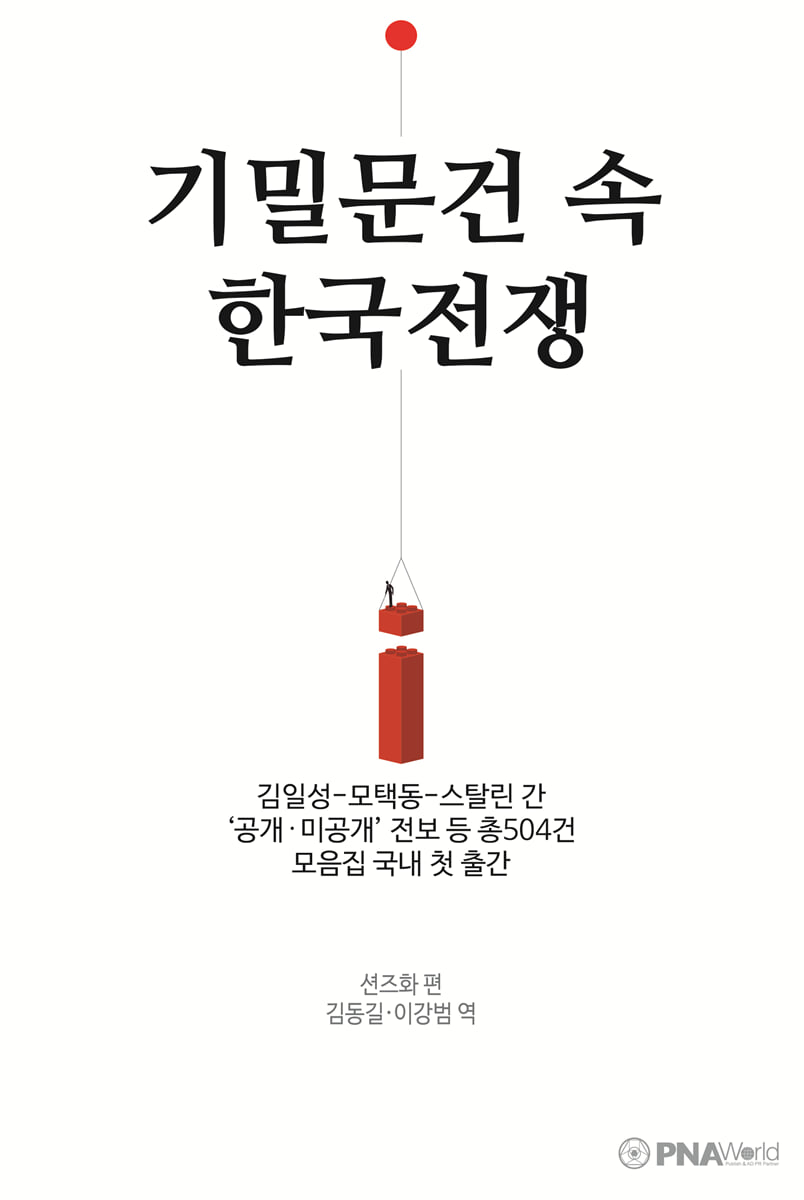
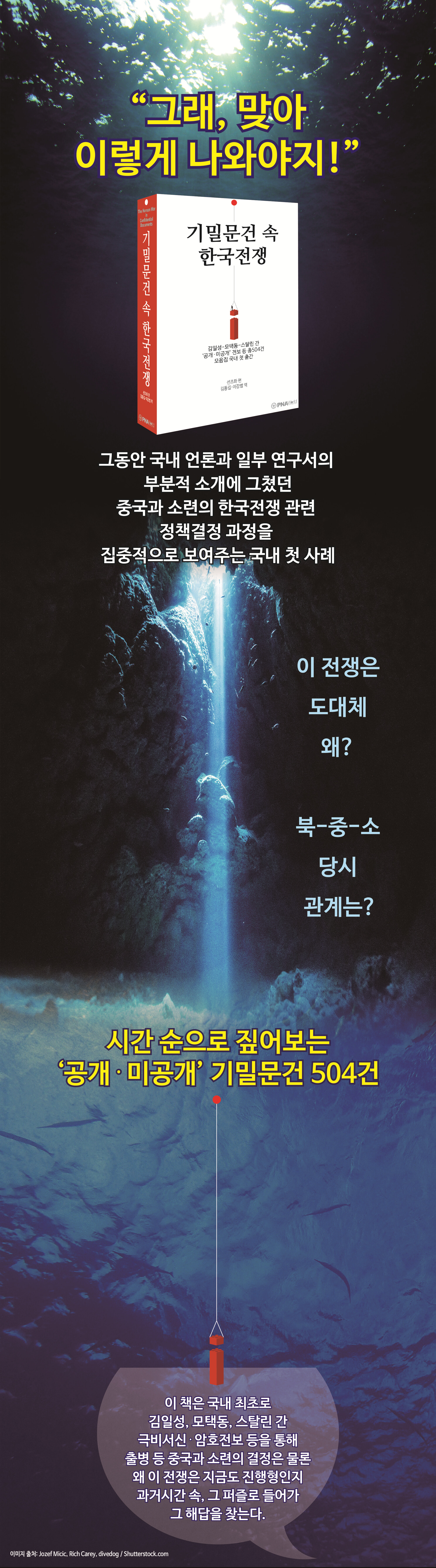
A collection of 504 public and privately published telegrams and top secret letters exchanged between Kim Il-sung, Mao Zedong, and Stalin during the Korean War, from the eve of the war and the outbreak of the war to the signing of the armistice, has been published in chronological order for the first time in Korea.
What were Stalin's intentions when he decided to dispatch troops to 'resist American aggression' and allowed Mao Zedong and Kim Il-sung to cross the Yalu River and invade?
Through confidential documents exchanged between these three policymakers during the Korean War, this paper provides an opportunity to examine in detail the policy decision-making process and details of the Korean War in China and the Soviet Union, which had previously been only intermittently disclosed to the public.
Why on earth does the Korean War still continue? This book, the culmination of years of effort, explores documents unearthed from Soviet archives and Chinese literature, edited by Professor Shen Zhihua, a world-renowned authority on the Korean War, and translated by Professor Kim Dong-gil of Peking University and Professor Lee Kang-beom of Chung-Ang University.
What were Stalin's intentions when he decided to dispatch troops to 'resist American aggression' and allowed Mao Zedong and Kim Il-sung to cross the Yalu River and invade?
Through confidential documents exchanged between these three policymakers during the Korean War, this paper provides an opportunity to examine in detail the policy decision-making process and details of the Korean War in China and the Soviet Union, which had previously been only intermittently disclosed to the public.
Why on earth does the Korean War still continue? This book, the culmination of years of effort, explores documents unearthed from Soviet archives and Chinese literature, edited by Professor Shen Zhihua, a world-renowned authority on the Korean War, and translated by Professor Kim Dong-gil of Peking University and Professor Lee Kang-beom of Chung-Ang University.
- You can preview some of the book's contents.
Preview
index
China's Decision to Intervene in the Korean War in Place of a Preface
Editor's Preface
Translator's Preface (1)
Translator's Preface (2)
Ch.Ⅰ The Three Powers (North Korea, China, and the Soviet Union) on the Eve of War
(1949.
5. 15 ~ 1950.
6. 20)
#001 Telegram from Shtikov to Vyshinsky: (Top Secret)
Kim Il-sung's report on the situation at the North Pyongyang Summit (May 15, 1949)
#002 Telegram from Kovalev to Stalin: (Top Secret)
Mao Zedong reports on the status of his talks with Kim Il (May 18, 1949)
#003 Telegram from Shtikov to Vyshinsky:
Regarding the Plan for the Peaceful Unification of Korea (June 5, 1949)
#004 Telegram from Shtikov to Vyshinsky: (Top Secret)
Information on the South's advance toward the North (July 13, 1949)
#005 Telegram from Vyshinsky to Shtikov:
Urgent Notice Request Regarding the 38th Parallel Situation (August 3, 1949)
#006 Telegram from Tunkin to Vishinsky: (Top Secret)
Kim Il-sung prepares to seize the Ongjin Peninsula (September 3, 1949)
#007 Telegram from Vishinsky to Tunkin: (Top Secret)
The military power of both North and South Korea must be quickly assessed (September 11, 1949)
#008 Telegram from Tunkin to Vyshinsky: (Top Secret)
Kim Il-sung's plan for advancing into South Korea (September 14, 1949)
"syncopation"
#032 Telegram from Stalin to Shtikov:
The issue of attacking South Korea was kept strictly secret (February 2, 1950)
#033 Vyshinsky's report to Stalin:
Meeting with Zhou Enlai (February 3, 1950)
#034 Telegram from Shtikov to Vyshinsky:
Kim Il-sung requests creation of three new infantry divisions (February 7, 1950)
#035 Telegram from Vyshinsky to Shtikov: (Top Secret)
Agreeing to each of Kim Il-sung's demands (February 9, 1950)
#036 Telegram from Vyshinsky to Shtikov:
North Korea agrees to advance use of Soviet loans (March 12, 1950)
#037 Telegram from Shtikov to Vyshinsky: Korea is in need
We hope that the military equipment will be delivered as soon as possible (March 16, 1950)
#038 Telegram from Stalin to Shtikov:
Agree to provide necessary equipment to the People's Army (March 18, 1950)
#039 Telegram from Shtikov to Vyshinsky:
Kim Il-sung hopes to meet with Stalin (March 21, 1950)
#040 List of Issues for which Kim Il-sung Requested Soviet Help
(March 23, 1950)
#041 Telegram from Shtikov to Vyshinsky:
Kim Il-sung's itinerary for his visit to the Soviet Union (March 24, 1950)
#042 Record of the meeting between Stalin, Kim Il-sung, and Pak Hon-yong
(April 10, 1950)
#043 Telegram from Ignatiev to Vyshinsky:
Mao Zedong's meeting with Li Zhuyan (April 10, 1950)
#044 Telegram from Zhou Enlai to Bulganin:
Urging the dispatch of military supplies ordered from the Soviet Union (April 13, 1950)
#045 Mao Zedong's telegram to Stalin:
Regarding the purchase of Air Force equipment and materials (April 13, 1950)
#046 Telegram from the central government to Lee Bu-chun and others:
Regarding military supplies orders and other issues (April 14, 1950)
#047 Telegram from Stalin to Mao Zedong:
Kim Il-sung's announcement of his visit to the Soviet Union (May 3, 1950)
#048 Telegram from Zhou Enlai to Wang Jiaxiang:
Ordering military supplies and inviting Air Force advisors (May 6, 1950)
#049 Telegram from Shtikov to Vyshinsky:
Kim Il-sung announces plans to visit China (May 12, 1950)
#050 Telegram from Zhou Enlai to Bulganin:
Urging the dispatch of military supplies ordered from the Soviet Union (May 13, 1950)
"syncopation"
Chapter Ⅱ Invasion, US Military Entry into the War, and Deployment of Chinese Support Forces
(1950.
June 26 ~ 1950.
12.
31)
#060 Telegram from Shtikov to Gromyko:
Notification to the North Korean Ministry of Foreign Affairs (June 26, 1950)
#061 Telegram from Trygv Liga to the Soviet Ministry of Foreign Affairs:
Notification of the Security Council Resolution (June 26, 1950)
#062 Telegram from Shtikov to Zakharov:
The smooth advance of the Korean People's Army (June 26, 1950)
#063 Mao Zedong, Speech at the 8th Session of the Central People's Government:
War Preparations (June 28, 1950)
#064 Telegram from Stalin to Shtikov:
North Korea must continue to attack resolutely (July 1, 1950)
#065 Shtikov's telegram to Stalin:
Political sentiment in North Korea after the US intervention (July 1, 1950)
#066 Report of the Operations Management Directorate of the General Staff of the Soviet Armed Forces:
Korean People's Army casualties (July 3, 1950)
#067 Telegram from Stalin to Rosin:
The Soviet Union will provide air cover for Chinese forces (July 5, 1950)
#068 Telegram from Stalin to Shtikov:
Regarding the issue of providing weapons to North Korea (July 6, 1950)
#069 Telegram from Shtikov to Stalin:
North Korean Leaders and Military Situation (July 7, 1950)
#070 Shtikov's telegram to Stalin:
Kim Il-sung requests dispatch of Soviet advisers to the front (July 8, 1950)
"syncopation"
#203 Letter from Zhou Enlai to Mao Zedong:
Suggestion to postpone the advance on Seoul (December 9, 1950)
#204 Mao Zedong's telegram to Peng Dehuai:
The support forces must fight across the 38th parallel (December 13, 1950)
#205 Telegram from Zhou Enlai to Wu Shuquan and others:
China's Attitude to the Armistice Negotiations (December 13, 1950)
#206 Telegram from Razubayev to Vasilevsky:
Kim Il-sung is dissatisfied with China (December 13, 1950)
#207 Resolution of the Central Political Bureau of the Communist Party of the Soviet Union: (Top Secret)
Instructions on the Armistice Issue (December 14, 1950)
#208 Telegram from Zhou Enlai to Wu Shuquan and others:
The UN's principles on the armistice issue (December 16, 1950)
#209 Telegram from Peng Dehuai to the Central Military Commission:
The Korean War is still quite protracted (December 19, 1950)
#210 Telegram from Mao Zedong to Peng Dehuai:
The Korean War Must Be Planned Long-Term (December 21, 1950)
#211 Regarding the passage of UN General Assembly resolution 99) on the issue of armistice
Mao Zedong's Revision to the Chinese Statement (December 22, 1950)
#212 Telegram from Mao Zedong to Peng Dehuai and others: After the Third War
Withdrawal of all troops to the rear and rest and refit (December 26, 1950)
#213 Telegram from Mao Zedong to Peng Dehuai:
Preparations for the Spring Offensive after rest and reorganization (December 29, 1950)
#214 Telegram from Razubayev to Moscow:
North Korea is dissatisfied with China's operational plan (December 30, 1950)
#215 Telegram from Razubayev to Vasilevsky:
Kim Il-sung speaks of an attack across the 38th parallel (December 31, 1950)
Chapter III: South Korean and US forces advance northward, armistice talks amidst battle
(1951.
1. 2 ~ 1951.
12.
28)
#216 Letter from Zhou Enlai to Mao Zedong and Jiang Qing:
Mo An-yeong's Sacrifice Report (January 2, 1951)
#217 Mao Zedong's telegram to Stalin:
Progress in the Third Campaign (January 4, 1951)
#218 Mao Zedong's telegram to Stalin:
Operational Plan after the Occupation of Seoul (January 7, 1951)
#219 Memorandum from the Chinese government to the Soviet government:
Issues Concerning Armistice Negotiations (January 11, 1951)
#220 Telegram from Stalin to Zhou Enlai:
Agreeing to the Chinese government's proposal for a ceasefire (January 13, 1951)
#221 UN Secretary-General Trygve Lie to Zhou Enlai
Telegram: UN Plan for the Korean Armistice (January 13, 1951)
"syncopation"
#319 Telegram from Gromyko to Razubayev (draft):
The Issue of North Korea's Appeal for a Truce (November 20, 1951)
#320 Telegram from Mao Zedong to Li Keqiang: We are better than our enemies.
Don't show any signs of urgency (November 20, 1951)
#321 Mao Zedong's handwritten remarks:
There is a very high possibility of a power outage before Christmas (November 20, 1951)
#322 Telegram from Gromyko to Razubayev:
The issue of demanding that the US military withdraw from the 38th parallel (November 21, 1951)
#323 Telegram from Mao Zedong to Li Keqiang and others:
Amendment to the Seven Principles of the Armistice Agreement (December 13, 1951)
#324 Telegram from Mao Zedong to Li Keqiang and others:
Negotiation Plan for the Repatriation of Prisoners of War (December 23, 1951)
#325 Gromyko's report to Stalin:
Regarding the Armistice Negotiation Statement (December 25, 1951)
#326 Telegram from Mao Zedong to Li Keqiang and others:
Need to prepare for another relatively long delay (December 28, 1951)
Chapter Ⅳ The Stalemate in the Armistice Talks and the Exposure of Germ Warfare?
(1952.
1. 2 ~ 1952.
12.
30)
"syncopation"
#335 Mao Zedong's handwritten comments on Nie Yingzhen's report:
Beware of enemy bacterial insect droppings (February 19, 1952)
#336 Mao Zedong's telegram to Stalin:
US use of germ weapons in the Korean War (February 21, 1952)
#337 Telegram from Stalin to Mao Zedong:
We Must Respond to American Germ Warfare (February 23, 1952)
#338 Letter from Zhou Enlai to Mao Zedong:
Comments on the Outline of Bacteriological Warfare Defense (February 23, 1952)
#339 Telegram from Mao Zedong to Li Keqiang and others:
The issue of repatriation of resources will be resolved first (March 1, 1952)
#340 Gromyko's report to Stalin:
Kim Il-sung's press conference with the Tass News Agency (March 5, 1952)
#341 Resolution of the Politburo of the Central Committee of the Communist Party of the Soviet Union:
Regarding Kim Il-sung's Q&A with reporters (March 7, 1952)
#342 Telegram from Zhou Enlai to Stalin:
Request to send bacteriological experts to the Soviet Union (March 7, 1952)
#343 Telegram from Gromyko to Rosin: To the American soldiers
On the question of taking military action (March 8, 1952)
#344 Telegram from Zhou Enlai to Li Ke Nong:
Expose the enemy's germ warfare activities (March 9, 1952)
#345 Mao Zedong's telegram to Stalin:
Interpretation of the Problem of Local Combat Progress (March 10, 1952)
#346 Telegram from Zhou Enlai to Stalin:
Request for anti-epidemic drugs from the Soviet Union (March 10, 1952)
#347 Mao Zedong's telegram to Stalin:
Request for one additional air force division from the Soviet Union (March 11, 1952)
#348 Telegram from Stalin to Zhou Enlai:
Soviet experts and vaccines provided to China (March 14, 1952)
"syncopation"
Chapter V: The 'Prisoner of War' Issue Resolved, Finally, the 'Armistice' Signed
(1953.
1. 17 ~ 1970.
10.
10)
#385 Report submitted to Stalin by Vasilevsky et al.:
The issue of recalling military advisors from the support forces (January 17, 1953)
#386 Letter from the Chinese Peace Preservation Committee to the Soviet Committee:
Exposure of the US germ warfare crimes (January 18, 1953)
#387 Report submitted by Vasilevskiy et al. to Bulganin:
The situation in Korea (January 21, 1953)
#388 Mao Zedong's speech at the Chinese People's Political Consultative Conference:
Anti-American aid must continue to be strengthened (February 7, 1953)
#389 Telegram from Zhou Enlai to Kim Il-sung:
Broadcast confession of a US POW regarding germ warfare (February 18, 1953)
#390 Telegram from Razubayev to Moscow:
Clark's letter regarding the exchange of wounded prisoners (March 14, 1953)
#391 Report of the First Far Eastern Department of the Ministry of Foreign Affairs of the USSR:
UN Discussion on the Korean Issue (March 14, 1953)
#392 Resolution of the Council of Ministers of the USSR:
Instructions on the Repatriation of Prisoners of War (March 19, 1953)
#393 Telegram from Zhou Enlai to Mao Zedong:
Proposal for a ceasefire by the Central Committee of the Communist Party of the Soviet Union (March 21, 1953)
#394 Telegram from Zhou Enlai to Mao Zedong:
The Soviet Union is ready to compromise on the prisoner-of-war issue (March 21, 1953)
#395 Telegram from Mao Zedong to Zhou Enlai:
Agreed on the proposed prisoner-of-war exchange policy (March 22, 1953)
#396 Telegram from Mao Zedong to Zheng Guoyu:
Agreement on priority exchange of wounded prisoners of war (March 23, 1953)
#397 Telegram from Kuznetsov et al. to Molotov:
North Korea's Position on the Armistice Issue (March 29, 1953)
#398 Document submitted by Molotov to the Presidium of the Council of Ministers of the USSR:
Statement on the Korean Question (March 31, 1953)
#399 Letter from Glukhov to Beria:
The issue of the United States' use of biological weapons (April 13, 1953)
#400 Letter from Selivanov to Beria:
Statement on the Bacteriological Warfare Issue (April 14, 1953)
"syncopation"
#424 Decision of the Presidium of the Central Committee of the Communist Party of the Soviet Union:
Suggestion on the signing of the Armistice Agreement (July 24, 1953)
#425 Telegram from Malenkov to Kim Il-sung:
Celebrating the signing of the Armistice Agreement (July 27, 1953)
#426 Kuznetsov's telegram to the USSR Ministry of Foreign Affairs:
Mao Zedong's remarks on the armistice issue (July 29, 1953)
#427 Telegram from Yudin to Moscow (summary):
Mao Zedong's remarks on the outbreak of the Korean War (April 20, 1956)
#428 Soviet Foreign Ministry Report on the Background of the Korean War (Top Secret)
(August 9, 1966)
#429 Dialogue between Mao Zedong and Kim Il-sung: A Memoir of the Chinese Expedition
(October 10, 1970)
Biographical Index
Editor's Preface
Translator's Preface (1)
Translator's Preface (2)
Ch.Ⅰ The Three Powers (North Korea, China, and the Soviet Union) on the Eve of War
(1949.
5. 15 ~ 1950.
6. 20)
#001 Telegram from Shtikov to Vyshinsky: (Top Secret)
Kim Il-sung's report on the situation at the North Pyongyang Summit (May 15, 1949)
#002 Telegram from Kovalev to Stalin: (Top Secret)
Mao Zedong reports on the status of his talks with Kim Il (May 18, 1949)
#003 Telegram from Shtikov to Vyshinsky:
Regarding the Plan for the Peaceful Unification of Korea (June 5, 1949)
#004 Telegram from Shtikov to Vyshinsky: (Top Secret)
Information on the South's advance toward the North (July 13, 1949)
#005 Telegram from Vyshinsky to Shtikov:
Urgent Notice Request Regarding the 38th Parallel Situation (August 3, 1949)
#006 Telegram from Tunkin to Vishinsky: (Top Secret)
Kim Il-sung prepares to seize the Ongjin Peninsula (September 3, 1949)
#007 Telegram from Vishinsky to Tunkin: (Top Secret)
The military power of both North and South Korea must be quickly assessed (September 11, 1949)
#008 Telegram from Tunkin to Vyshinsky: (Top Secret)
Kim Il-sung's plan for advancing into South Korea (September 14, 1949)
"syncopation"
#032 Telegram from Stalin to Shtikov:
The issue of attacking South Korea was kept strictly secret (February 2, 1950)
#033 Vyshinsky's report to Stalin:
Meeting with Zhou Enlai (February 3, 1950)
#034 Telegram from Shtikov to Vyshinsky:
Kim Il-sung requests creation of three new infantry divisions (February 7, 1950)
#035 Telegram from Vyshinsky to Shtikov: (Top Secret)
Agreeing to each of Kim Il-sung's demands (February 9, 1950)
#036 Telegram from Vyshinsky to Shtikov:
North Korea agrees to advance use of Soviet loans (March 12, 1950)
#037 Telegram from Shtikov to Vyshinsky: Korea is in need
We hope that the military equipment will be delivered as soon as possible (March 16, 1950)
#038 Telegram from Stalin to Shtikov:
Agree to provide necessary equipment to the People's Army (March 18, 1950)
#039 Telegram from Shtikov to Vyshinsky:
Kim Il-sung hopes to meet with Stalin (March 21, 1950)
#040 List of Issues for which Kim Il-sung Requested Soviet Help
(March 23, 1950)
#041 Telegram from Shtikov to Vyshinsky:
Kim Il-sung's itinerary for his visit to the Soviet Union (March 24, 1950)
#042 Record of the meeting between Stalin, Kim Il-sung, and Pak Hon-yong
(April 10, 1950)
#043 Telegram from Ignatiev to Vyshinsky:
Mao Zedong's meeting with Li Zhuyan (April 10, 1950)
#044 Telegram from Zhou Enlai to Bulganin:
Urging the dispatch of military supplies ordered from the Soviet Union (April 13, 1950)
#045 Mao Zedong's telegram to Stalin:
Regarding the purchase of Air Force equipment and materials (April 13, 1950)
#046 Telegram from the central government to Lee Bu-chun and others:
Regarding military supplies orders and other issues (April 14, 1950)
#047 Telegram from Stalin to Mao Zedong:
Kim Il-sung's announcement of his visit to the Soviet Union (May 3, 1950)
#048 Telegram from Zhou Enlai to Wang Jiaxiang:
Ordering military supplies and inviting Air Force advisors (May 6, 1950)
#049 Telegram from Shtikov to Vyshinsky:
Kim Il-sung announces plans to visit China (May 12, 1950)
#050 Telegram from Zhou Enlai to Bulganin:
Urging the dispatch of military supplies ordered from the Soviet Union (May 13, 1950)
"syncopation"
Chapter Ⅱ Invasion, US Military Entry into the War, and Deployment of Chinese Support Forces
(1950.
June 26 ~ 1950.
12.
31)
#060 Telegram from Shtikov to Gromyko:
Notification to the North Korean Ministry of Foreign Affairs (June 26, 1950)
#061 Telegram from Trygv Liga to the Soviet Ministry of Foreign Affairs:
Notification of the Security Council Resolution (June 26, 1950)
#062 Telegram from Shtikov to Zakharov:
The smooth advance of the Korean People's Army (June 26, 1950)
#063 Mao Zedong, Speech at the 8th Session of the Central People's Government:
War Preparations (June 28, 1950)
#064 Telegram from Stalin to Shtikov:
North Korea must continue to attack resolutely (July 1, 1950)
#065 Shtikov's telegram to Stalin:
Political sentiment in North Korea after the US intervention (July 1, 1950)
#066 Report of the Operations Management Directorate of the General Staff of the Soviet Armed Forces:
Korean People's Army casualties (July 3, 1950)
#067 Telegram from Stalin to Rosin:
The Soviet Union will provide air cover for Chinese forces (July 5, 1950)
#068 Telegram from Stalin to Shtikov:
Regarding the issue of providing weapons to North Korea (July 6, 1950)
#069 Telegram from Shtikov to Stalin:
North Korean Leaders and Military Situation (July 7, 1950)
#070 Shtikov's telegram to Stalin:
Kim Il-sung requests dispatch of Soviet advisers to the front (July 8, 1950)
"syncopation"
#203 Letter from Zhou Enlai to Mao Zedong:
Suggestion to postpone the advance on Seoul (December 9, 1950)
#204 Mao Zedong's telegram to Peng Dehuai:
The support forces must fight across the 38th parallel (December 13, 1950)
#205 Telegram from Zhou Enlai to Wu Shuquan and others:
China's Attitude to the Armistice Negotiations (December 13, 1950)
#206 Telegram from Razubayev to Vasilevsky:
Kim Il-sung is dissatisfied with China (December 13, 1950)
#207 Resolution of the Central Political Bureau of the Communist Party of the Soviet Union: (Top Secret)
Instructions on the Armistice Issue (December 14, 1950)
#208 Telegram from Zhou Enlai to Wu Shuquan and others:
The UN's principles on the armistice issue (December 16, 1950)
#209 Telegram from Peng Dehuai to the Central Military Commission:
The Korean War is still quite protracted (December 19, 1950)
#210 Telegram from Mao Zedong to Peng Dehuai:
The Korean War Must Be Planned Long-Term (December 21, 1950)
#211 Regarding the passage of UN General Assembly resolution 99) on the issue of armistice
Mao Zedong's Revision to the Chinese Statement (December 22, 1950)
#212 Telegram from Mao Zedong to Peng Dehuai and others: After the Third War
Withdrawal of all troops to the rear and rest and refit (December 26, 1950)
#213 Telegram from Mao Zedong to Peng Dehuai:
Preparations for the Spring Offensive after rest and reorganization (December 29, 1950)
#214 Telegram from Razubayev to Moscow:
North Korea is dissatisfied with China's operational plan (December 30, 1950)
#215 Telegram from Razubayev to Vasilevsky:
Kim Il-sung speaks of an attack across the 38th parallel (December 31, 1950)
Chapter III: South Korean and US forces advance northward, armistice talks amidst battle
(1951.
1. 2 ~ 1951.
12.
28)
#216 Letter from Zhou Enlai to Mao Zedong and Jiang Qing:
Mo An-yeong's Sacrifice Report (January 2, 1951)
#217 Mao Zedong's telegram to Stalin:
Progress in the Third Campaign (January 4, 1951)
#218 Mao Zedong's telegram to Stalin:
Operational Plan after the Occupation of Seoul (January 7, 1951)
#219 Memorandum from the Chinese government to the Soviet government:
Issues Concerning Armistice Negotiations (January 11, 1951)
#220 Telegram from Stalin to Zhou Enlai:
Agreeing to the Chinese government's proposal for a ceasefire (January 13, 1951)
#221 UN Secretary-General Trygve Lie to Zhou Enlai
Telegram: UN Plan for the Korean Armistice (January 13, 1951)
"syncopation"
#319 Telegram from Gromyko to Razubayev (draft):
The Issue of North Korea's Appeal for a Truce (November 20, 1951)
#320 Telegram from Mao Zedong to Li Keqiang: We are better than our enemies.
Don't show any signs of urgency (November 20, 1951)
#321 Mao Zedong's handwritten remarks:
There is a very high possibility of a power outage before Christmas (November 20, 1951)
#322 Telegram from Gromyko to Razubayev:
The issue of demanding that the US military withdraw from the 38th parallel (November 21, 1951)
#323 Telegram from Mao Zedong to Li Keqiang and others:
Amendment to the Seven Principles of the Armistice Agreement (December 13, 1951)
#324 Telegram from Mao Zedong to Li Keqiang and others:
Negotiation Plan for the Repatriation of Prisoners of War (December 23, 1951)
#325 Gromyko's report to Stalin:
Regarding the Armistice Negotiation Statement (December 25, 1951)
#326 Telegram from Mao Zedong to Li Keqiang and others:
Need to prepare for another relatively long delay (December 28, 1951)
Chapter Ⅳ The Stalemate in the Armistice Talks and the Exposure of Germ Warfare?
(1952.
1. 2 ~ 1952.
12.
30)
"syncopation"
#335 Mao Zedong's handwritten comments on Nie Yingzhen's report:
Beware of enemy bacterial insect droppings (February 19, 1952)
#336 Mao Zedong's telegram to Stalin:
US use of germ weapons in the Korean War (February 21, 1952)
#337 Telegram from Stalin to Mao Zedong:
We Must Respond to American Germ Warfare (February 23, 1952)
#338 Letter from Zhou Enlai to Mao Zedong:
Comments on the Outline of Bacteriological Warfare Defense (February 23, 1952)
#339 Telegram from Mao Zedong to Li Keqiang and others:
The issue of repatriation of resources will be resolved first (March 1, 1952)
#340 Gromyko's report to Stalin:
Kim Il-sung's press conference with the Tass News Agency (March 5, 1952)
#341 Resolution of the Politburo of the Central Committee of the Communist Party of the Soviet Union:
Regarding Kim Il-sung's Q&A with reporters (March 7, 1952)
#342 Telegram from Zhou Enlai to Stalin:
Request to send bacteriological experts to the Soviet Union (March 7, 1952)
#343 Telegram from Gromyko to Rosin: To the American soldiers
On the question of taking military action (March 8, 1952)
#344 Telegram from Zhou Enlai to Li Ke Nong:
Expose the enemy's germ warfare activities (March 9, 1952)
#345 Mao Zedong's telegram to Stalin:
Interpretation of the Problem of Local Combat Progress (March 10, 1952)
#346 Telegram from Zhou Enlai to Stalin:
Request for anti-epidemic drugs from the Soviet Union (March 10, 1952)
#347 Mao Zedong's telegram to Stalin:
Request for one additional air force division from the Soviet Union (March 11, 1952)
#348 Telegram from Stalin to Zhou Enlai:
Soviet experts and vaccines provided to China (March 14, 1952)
"syncopation"
Chapter V: The 'Prisoner of War' Issue Resolved, Finally, the 'Armistice' Signed
(1953.
1. 17 ~ 1970.
10.
10)
#385 Report submitted to Stalin by Vasilevsky et al.:
The issue of recalling military advisors from the support forces (January 17, 1953)
#386 Letter from the Chinese Peace Preservation Committee to the Soviet Committee:
Exposure of the US germ warfare crimes (January 18, 1953)
#387 Report submitted by Vasilevskiy et al. to Bulganin:
The situation in Korea (January 21, 1953)
#388 Mao Zedong's speech at the Chinese People's Political Consultative Conference:
Anti-American aid must continue to be strengthened (February 7, 1953)
#389 Telegram from Zhou Enlai to Kim Il-sung:
Broadcast confession of a US POW regarding germ warfare (February 18, 1953)
#390 Telegram from Razubayev to Moscow:
Clark's letter regarding the exchange of wounded prisoners (March 14, 1953)
#391 Report of the First Far Eastern Department of the Ministry of Foreign Affairs of the USSR:
UN Discussion on the Korean Issue (March 14, 1953)
#392 Resolution of the Council of Ministers of the USSR:
Instructions on the Repatriation of Prisoners of War (March 19, 1953)
#393 Telegram from Zhou Enlai to Mao Zedong:
Proposal for a ceasefire by the Central Committee of the Communist Party of the Soviet Union (March 21, 1953)
#394 Telegram from Zhou Enlai to Mao Zedong:
The Soviet Union is ready to compromise on the prisoner-of-war issue (March 21, 1953)
#395 Telegram from Mao Zedong to Zhou Enlai:
Agreed on the proposed prisoner-of-war exchange policy (March 22, 1953)
#396 Telegram from Mao Zedong to Zheng Guoyu:
Agreement on priority exchange of wounded prisoners of war (March 23, 1953)
#397 Telegram from Kuznetsov et al. to Molotov:
North Korea's Position on the Armistice Issue (March 29, 1953)
#398 Document submitted by Molotov to the Presidium of the Council of Ministers of the USSR:
Statement on the Korean Question (March 31, 1953)
#399 Letter from Glukhov to Beria:
The issue of the United States' use of biological weapons (April 13, 1953)
#400 Letter from Selivanov to Beria:
Statement on the Bacteriological Warfare Issue (April 14, 1953)
"syncopation"
#424 Decision of the Presidium of the Central Committee of the Communist Party of the Soviet Union:
Suggestion on the signing of the Armistice Agreement (July 24, 1953)
#425 Telegram from Malenkov to Kim Il-sung:
Celebrating the signing of the Armistice Agreement (July 27, 1953)
#426 Kuznetsov's telegram to the USSR Ministry of Foreign Affairs:
Mao Zedong's remarks on the armistice issue (July 29, 1953)
#427 Telegram from Yudin to Moscow (summary):
Mao Zedong's remarks on the outbreak of the Korean War (April 20, 1956)
#428 Soviet Foreign Ministry Report on the Background of the Korean War (Top Secret)
(August 9, 1966)
#429 Dialogue between Mao Zedong and Kim Il-sung: A Memoir of the Chinese Expedition
(October 10, 1970)
Biographical Index
Detailed image
Into the book
As historical facts prove, in the issue of starting a war, Korea, along with the Soviet Union, took China hostage, and Mao Zedong accepted what became a fait accompli, something he was very reluctant to do.
As Mao Zedong later said, “I have said many times that we must not attack (the South) and that we must expect imperialist intervention.
However, Kim Il-sung said, 'I have already decided to strike,' and Stalin agreed.
“Since both countries had already agreed, I was resolutely opposed, but it was also impossible.”
---From "Instead of a Preface..."
On January 28, Stalin agreed to China's demands, and on January 30, he sent a telegram to Kim Il-sung expressing his agreement to Kim Il-sung's demand for an armed invasion.
Furthermore, on February 2, he instructed the Chinese to keep secret his agreement with Kim Il-sung's plan to invade the South.
This shows that there was a close relationship between the process of concluding the Sino-Soviet Treaty of Friendship, Alliance, and Mutual Aid and Stalin's consent to the Korean War. The materials showing this situation have not yet been introduced in their full text to the Korean academic community, and are being introduced for the first time in this book.
---From "Translator's Preface ①"
This book introduces to Korea for the first time documents that clearly show the policy-making process regarding the armistice among the Soviet Union, China, the United States, the United Nations, and India, which unfolded breathlessly from December 1950 until China's final rejection of the UN proposal in mid-January 1951.
---From "Translator's Preface ①"
I long for the swift end of this gigantic and brutal experiment, one that has probably never been attempted in human history, and one that will probably never be attempted again: dividing tens of millions of people of a nearly perfect homogeneous ethnic group, sharing the same bloodline, traditions, culture, and history, into complete divisions, preventing any contact or communication, and treating each other with absolute evil to see how they change over 70 years.
---From "Translator's Preface ②"
Kim Il-sung informed that the weapons and ammunition he had requested while in Moscow had already been delivered in principle, and that the weapons would be divided among the newly formed divisions and delivered to the soldiers by June 1.
Kim Il-sung then visited these newly organized divisions and inspected their military training, and informed them that he expected these divisions to be combat-ready by the end of June.
---From "#056 Shtikov's Telegram to Vyshinsky: (Top Secret) Kim Il-sung Stated the Date of the Attack (May 30, 1950)"
Four armies and three artillery divisions have decided to enter Joseon and participate in the war according to the scheduled plan, and will begin crossing the Yalu River at the Andong-Ji'an line tomorrow evening (the 19th). To strictly maintain secrecy, the crossing units will begin crossing at dusk every day and stop at 4:00 a.m. the following day. They will also complete concealment and conduct thorough inspections before 5:00 a.m.
To gain experience, two or three divisions will prepare to cross the river on the first night (the evening of the 19th), and the number will be increased or decreased again on the evening of the second day. After considering the situation again, the rest will be reported face-to-face by Gao Gang and Peng Dehui.
---From "#161 Telegram from Mao Zedong to Deng Hua and others: Reinforcements to leave the country tomorrow evening, decided to participate in the war (October 18, 1950)"
The United States is now desperately seeking an exit from its failure in North Korea, with the best option being an "honorable ceasefire," or else a "limited war."
But the former is something we cannot tolerate, and the latter is something that Britain, France, India, and the Arab world fear.
---From "#224 A Memorandum from the Chinese Government to the Korean Government: Matters Concerning the Korean Armistice Negotiations (January 14, 1951)"
If the enemy does not make concessions or [negotiations] break down, we must resolve to continue the war with the enemy and resolve during the war what we could not resolve.
I will telegraph Comrade Filippov to ask his opinion on the appropriateness of these calculations and policies, and will notify him when I receive his reply.
---From "#366 Mao Zedong's Telegram to Kim Il-sung: We Cannot Accept the Enemy's Plan to Repatriate Prisoners (July 15, 1952)"
Mao Zedong pointed out the military contradictions of the imperialist camp and the significant role of world public opinion opposing the Korean War as political reasons why the enemy had no choice but to propose a ceasefire.
For economic reasons, Mao Zedong believed that during the first two years of the war, American monopolies made enormous profits from ordering and delivering military supplies.
However, as armistice negotiations stalled and the Korean War ceasefire movement intensified, their interests began to decline rapidly, Mao Zedong explained.
As Mao Zedong later said, “I have said many times that we must not attack (the South) and that we must expect imperialist intervention.
However, Kim Il-sung said, 'I have already decided to strike,' and Stalin agreed.
“Since both countries had already agreed, I was resolutely opposed, but it was also impossible.”
---From "Instead of a Preface..."
On January 28, Stalin agreed to China's demands, and on January 30, he sent a telegram to Kim Il-sung expressing his agreement to Kim Il-sung's demand for an armed invasion.
Furthermore, on February 2, he instructed the Chinese to keep secret his agreement with Kim Il-sung's plan to invade the South.
This shows that there was a close relationship between the process of concluding the Sino-Soviet Treaty of Friendship, Alliance, and Mutual Aid and Stalin's consent to the Korean War. The materials showing this situation have not yet been introduced in their full text to the Korean academic community, and are being introduced for the first time in this book.
---From "Translator's Preface ①"
This book introduces to Korea for the first time documents that clearly show the policy-making process regarding the armistice among the Soviet Union, China, the United States, the United Nations, and India, which unfolded breathlessly from December 1950 until China's final rejection of the UN proposal in mid-January 1951.
---From "Translator's Preface ①"
I long for the swift end of this gigantic and brutal experiment, one that has probably never been attempted in human history, and one that will probably never be attempted again: dividing tens of millions of people of a nearly perfect homogeneous ethnic group, sharing the same bloodline, traditions, culture, and history, into complete divisions, preventing any contact or communication, and treating each other with absolute evil to see how they change over 70 years.
---From "Translator's Preface ②"
Kim Il-sung informed that the weapons and ammunition he had requested while in Moscow had already been delivered in principle, and that the weapons would be divided among the newly formed divisions and delivered to the soldiers by June 1.
Kim Il-sung then visited these newly organized divisions and inspected their military training, and informed them that he expected these divisions to be combat-ready by the end of June.
---From "#056 Shtikov's Telegram to Vyshinsky: (Top Secret) Kim Il-sung Stated the Date of the Attack (May 30, 1950)"
Four armies and three artillery divisions have decided to enter Joseon and participate in the war according to the scheduled plan, and will begin crossing the Yalu River at the Andong-Ji'an line tomorrow evening (the 19th). To strictly maintain secrecy, the crossing units will begin crossing at dusk every day and stop at 4:00 a.m. the following day. They will also complete concealment and conduct thorough inspections before 5:00 a.m.
To gain experience, two or three divisions will prepare to cross the river on the first night (the evening of the 19th), and the number will be increased or decreased again on the evening of the second day. After considering the situation again, the rest will be reported face-to-face by Gao Gang and Peng Dehui.
---From "#161 Telegram from Mao Zedong to Deng Hua and others: Reinforcements to leave the country tomorrow evening, decided to participate in the war (October 18, 1950)"
The United States is now desperately seeking an exit from its failure in North Korea, with the best option being an "honorable ceasefire," or else a "limited war."
But the former is something we cannot tolerate, and the latter is something that Britain, France, India, and the Arab world fear.
---From "#224 A Memorandum from the Chinese Government to the Korean Government: Matters Concerning the Korean Armistice Negotiations (January 14, 1951)"
If the enemy does not make concessions or [negotiations] break down, we must resolve to continue the war with the enemy and resolve during the war what we could not resolve.
I will telegraph Comrade Filippov to ask his opinion on the appropriateness of these calculations and policies, and will notify him when I receive his reply.
---From "#366 Mao Zedong's Telegram to Kim Il-sung: We Cannot Accept the Enemy's Plan to Repatriate Prisoners (July 15, 1952)"
Mao Zedong pointed out the military contradictions of the imperialist camp and the significant role of world public opinion opposing the Korean War as political reasons why the enemy had no choice but to propose a ceasefire.
For economic reasons, Mao Zedong believed that during the first two years of the war, American monopolies made enormous profits from ordering and delivering military supplies.
However, as armistice negotiations stalled and the Korean War ceasefire movement intensified, their interests began to decline rapidly, Mao Zedong explained.
---From "#426 Kuznetsov's Telegram to the Soviet Ministry of Foreign Affairs: Mao Zedong's Remarks on the Armistice Issue (July 29, 1953)"
Publisher's Review
The Korean War, which broke out in 1950 and lasted until the armistice in 1953, was a series of bloody and brutal scenes of civil war, intertwined with the international situation at the time, including Kim Il-sung's invasion of the South, the Incheon Landing Operation, China's entry into the war, the advance of South Korean and US forces northward, and the breakdown and resumption of armistice talks.
What was the intention of MacArthur of the United States when he dispatched troops at the outbreak of the Korean War and pushed north to the Yalu River, right before China's border?
Although there is a wealth of empirical data and academic opinions, this is an area where more research and disclosure of data are needed.
In comparison, Mao Zedong and Stalin must have been busy calculating in their heads at the time, and research into their thoughts and intentions is just as important as that of the United States.
This book opened a window into the inner workings of the Korean War, within the framework of a tripartite structure involving Mao Zedong, Stalin, and, of course, Kim Il-sung.
Until now, there has been no Korean-language book that intensively shows the major policy decision-making process and its inner workings in China (hereinafter referred to as Mao Zedong's China) and the Soviet Union regarding the Korean War, which had been intermittently introduced in domestic media and research papers, through Russian archives and Chinese literature and materials, and this book is the first such example.
This book, a compilation of 504 coded telegrams and top-secret correspondence exchanged between Kim Il-sung, Mao Zedong, and Stalin, arranged in chronological order by topic, hopes that readers will give weight to the academic value of this previously unpublished material, which is being introduced to Korea for the first time.
For example, while agreeing to Kim Il-sung's request for an armed invasion, Stalin instructed that it be kept secret from China. This shows that there was a close relationship between the process of concluding the Sino-Soviet Treaty of Friendship, Alliance, and Mutual Aid, which met China's persistent demands, and Stalin's agreement to the Korean War.
However, the original texts that can interpret this situation have not yet been introduced to the Korean academic world.
The fact that this is being introduced for the first time also adds to the significance of the publication of this book.
Another noteworthy example is the introduction to Korea of documents that clearly show the breathless policy-making process regarding the ceasefire among the Soviet Union, China, the United States, the United Nations, and India (December 1950 to mid-January 1951) until China finally rejected the UN's 'ceasefire' proposal.
What kind of relationships existed between North Korea, China, and the Soviet Union during the Korean War, and what roles they played in the outbreak and progress of the Korean War? We delve into classified documents and the past to examine the historical reality of China's dispatch of troops under the banner of "Resist American Aggression" and the Soviet Union's support of weapons under the guise of tolerating the invasion.
What was the intention of MacArthur of the United States when he dispatched troops at the outbreak of the Korean War and pushed north to the Yalu River, right before China's border?
Although there is a wealth of empirical data and academic opinions, this is an area where more research and disclosure of data are needed.
In comparison, Mao Zedong and Stalin must have been busy calculating in their heads at the time, and research into their thoughts and intentions is just as important as that of the United States.
This book opened a window into the inner workings of the Korean War, within the framework of a tripartite structure involving Mao Zedong, Stalin, and, of course, Kim Il-sung.
Until now, there has been no Korean-language book that intensively shows the major policy decision-making process and its inner workings in China (hereinafter referred to as Mao Zedong's China) and the Soviet Union regarding the Korean War, which had been intermittently introduced in domestic media and research papers, through Russian archives and Chinese literature and materials, and this book is the first such example.
This book, a compilation of 504 coded telegrams and top-secret correspondence exchanged between Kim Il-sung, Mao Zedong, and Stalin, arranged in chronological order by topic, hopes that readers will give weight to the academic value of this previously unpublished material, which is being introduced to Korea for the first time.
For example, while agreeing to Kim Il-sung's request for an armed invasion, Stalin instructed that it be kept secret from China. This shows that there was a close relationship between the process of concluding the Sino-Soviet Treaty of Friendship, Alliance, and Mutual Aid, which met China's persistent demands, and Stalin's agreement to the Korean War.
However, the original texts that can interpret this situation have not yet been introduced to the Korean academic world.
The fact that this is being introduced for the first time also adds to the significance of the publication of this book.
Another noteworthy example is the introduction to Korea of documents that clearly show the breathless policy-making process regarding the ceasefire among the Soviet Union, China, the United States, the United Nations, and India (December 1950 to mid-January 1951) until China finally rejected the UN's 'ceasefire' proposal.
What kind of relationships existed between North Korea, China, and the Soviet Union during the Korean War, and what roles they played in the outbreak and progress of the Korean War? We delve into classified documents and the past to examine the historical reality of China's dispatch of troops under the banner of "Resist American Aggression" and the Soviet Union's support of weapons under the guise of tolerating the invasion.
GOODS SPECIFICS
- Date of issue: July 15, 2024
- Page count, weight, size: 832 pages | 1,214g | 152*225*40mm
- ISBN13: 9791191691054
- ISBN10: 1191691055
You may also like
카테고리
korean


korean

![GQ KOREA Mark (Monthly): December [2025]](http://librairie.coreenne.fr/cdn/shop/files/8ef265dbbfbf186523ed75ba7319009d.jpg?v=1765340328&width=3840)


