

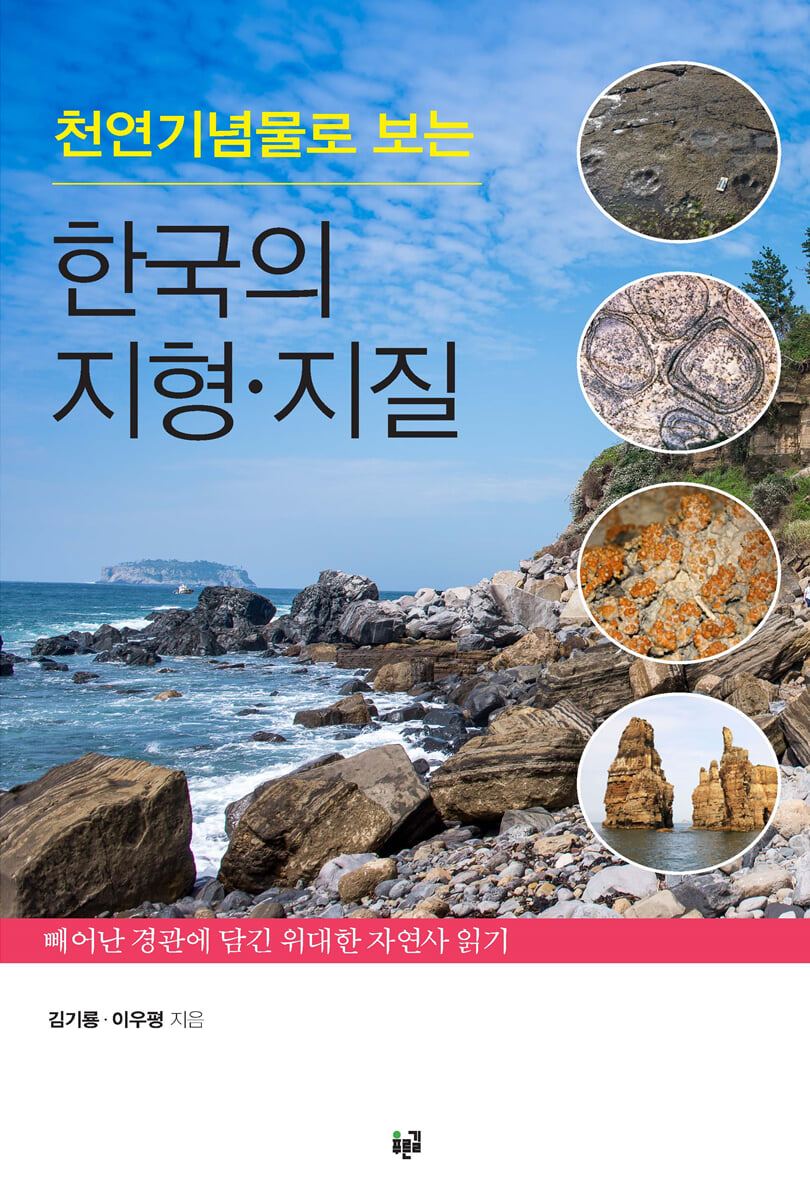
Korea's topography and geology as seen through natural monuments
 |
Description
Book Introduction
This book comprehensively covers Korea's topography and geology, examining fossil sites, rock minerals, geomorphological features, natural caves, and natural conservation areas among Korea's natural monuments, and recommending natural heritage sites that could become natural monuments in the future.
- You can preview some of the book's contents.
Preview
index
preface
1.
Fossil site designated as a natural monument
01 Chilgok Geummubong fossil fern site | 02 Jeju Seogwipo Formation shellfish fossil site | 03 Haman Yongsan-ri Cretaceous bird footprint fossil site | 04 Uiseong Jeoori dinosaur footprint fossil site | 05 Jinju Yusu-ri Cretaceous fluvial sedimentary layer | 06 Haenam Uhang-ri dinosaur, pterosaur, and bird footprint fossil site | 07 Jinju Gajin-ri bird footprint and dinosaur footprint fossil site | 08 Goseong Deokmyeong-ri dinosaur footprint and bird footprint fossil site | 09 Hwaseong Gojeong-ri dinosaur egg fossil site | 10 Taebaek Jangseong Ordovician fossil site | 11 Boseong Bibong-ri dinosaur egg fossil site | 12 Yeosu Nangdo-ri dinosaur footprint fossil site | 13 Jeju human and animal footprint fossil site | 14 Sacheon Adu Island dinosaur fossil site | 15 Hadong Jungpyeong-ri Janggu Island Cretaceous Fossil Site | 16 Hwasun Seoyuri Dinosaur Footprint Fossil Site | 17 Namhae Gain-ri Fossil Site | 18 Ongjin Socheongdo Precambrian Stromatolites and Bunbawi Rock | 19 Gyeongsan Daegu Catholic University Cretaceous Stromatolite | 20 Jinju Chungmugong-dong Pterosaur, Bird, and Dinosaur Footprint Fossil Site | 21 Sinan Aphae-do Theropod Dinosaur Egg Nest Fossil | 22 Gunsan Sanbuk-dong Dinosaur and Pterosaur Footprint Fossil Site | 23 Sacheon Seonjeon-ri Cretaceous Tree Branch Cover Site | 24 Jinju Jeongchon-myeon Cretaceous Dinosaur and Pterosaur Footprint Fossil Site | 25 Hwaseong Horned Dinosaur (Koreaceratops hwaseongensis) Skeletal Fossil | 26 Pohang Geumgwang-ri Cenozoic Tree Fossil | 27 Pohang Geumgwangdong Formation Cenozoic Fossil Site
2.
Rocks and minerals designated as natural monuments
01 Sangju Unpyeong-ri Spheroidal Granite | 02 Muju Osan-ri Spheroidal Granite Gneiss | 03 Busan Jeonpo-dong Spheroidal Gabbro | 04 Ongjin Baekryeongdo Jinchon-ri Mantle Xenolith Distribution Area | 05 Jindo Donggeochado Rhyolite Nodules | 06 Pohang Noeseongsan Noeroksanji | 07 Jeongseon Bongyang-ri Jurassic Conglomerate
3.
Topography and geology designated as natural monuments
01 Uiryeong Seodong-ri Cretaceous Raindrop Traces | 02 Miryang Nammyeong-ri Ice Valley | 03 Jeju Sangumburi Crater | 04 Ongjin Baengnyeongdo Sagot Sand Dunes | 05 Ongjin Baengnyeongdo Nampo-ri Kongdol Coast | 06 Yeongwol Mungok-ri Dry Crack Structures and Stromatolites | 07 Pohang Daljeon-ri Columnar Joints | 08 Taebaek Gumunso Ordovician Strata and Quaternary Eroded Topography | 09 Taean Sinduri Coastal Sand Dunes | 10 Dalseong Biseulsan Rock Massif | 11 Hantangang Daegyocheon Basalt Canyon | 12 Gangneung Jeongdongjin Coastal Terraces | 13 Jeju Udo Red Algae Nodules Beach | 14 Jeju Biyangdo Honito | 15 Jeongseon Baekbokryeong Karst Zone | 16 Jeju Jungmun·Daepo Coast Columnar Joints | 17 Jeju Seonheul-ri Geomun Oreum | 18 Mudeungsan Columnar Joints | 19 Goseong Gyesyeosa Cretaceous Sedimentary Structure | 20 Mokpo Gatbawi Weathering Hole | 21 Gunsan Maldo Fold Structure | 22 Ongjin Baengnyeongdo Nampo-ri Fold Structure | 23 Taean Naepasudo Coastal Gravel Top | 24 Jeju Suwolbong Pyroclastic Layer | 25 Shinan Small Daeseom Tuff and Volcanic Structure | 26 Jeju Sagyeri Yongmeori Pyroclastic Layer | 27 Uiseong Binggyeri Ice Valley | 28 Miryang Maneosan Rock Flow | 29 Yangyang Osaek-ri Osaek Mineral Spring | 30 Hongcheon Gwangwon-ri Sambong Mineral Spring | 31 Inje Misan-ri Private Mineral Spring | 32 Gyeongju Yangnam Columnar Joints | 33 Pocheon Hantangang Basalt Canyon and Pigeon Rock Falls | 34 Pocheon Auraji Pillow Lava | 35 Yeongwol Mureung-ri Yoseonam Dolgae Hole | 36 Pohang Odori Columnar Joints | 37 Buan Wido Jinri Daewol Fold
4.
Natural cave designated as a natural monument
01 Jeju Gimnyeonggul and Manjanggul Cave | 02 Uljin Seongryugul Cave | 03 Iksan Cheonho Cave | 04 Samcheok Daeiri Cave Area | 05 Yeongwol Gossi Cave | 06 Samcheok Chodang Cave | 07 Jeju Hallim Lava Tube Area (Socheongul Cave, Hwanggeumgul Cave, Hyeopjaegul Cave) | 08 Danyang Gosu Cave | 09 Pyeongchang Baekryong Cave | 10 Danyang Ondal Cave | 11 Danyang Nodong Cave | 12 Jeju Eoeumri Billemot Cave | 13 Jeju Dangcheomul Cave | 14 Jeju Yongcheon Cave | 15 Jeju Susan Cave | 16 Jeju Seonheulri Bengdwigul Cave | 17 Jeongseon Sanho Cave | 18 Pyeongchang Seopdonggul Cave | 19 Jeongseon Yongso Cave | 20 Geomunoreum Lava Tube System Upper Caves (Utsanjeongul Cave, Bukoreumgul Cave, Daerimgul Cave) | 21. Jeongseon Hwaam Cave | 22. Yeongwol Bundeokjae Cave
5.
Natural monument designated natural conservation area
01 Hongdo Natural Reserve | 02 Seoraksan Natural Reserve | 03 Hallasan Natural Reserve | 04 Daeamsan and Daewoosan Natural Reserve | 05 Hyangnobong and Geonbongsan Natural Reserve | 06 Dokdo Natural Reserve | 07 Seongsan Ilchulbong Natural Reserve | 08 Munseom and Beomseom Natural Reserve | 09 Chagwido Natural Reserve | 10 Marado Natural Reserve | 11 Changnyeong Upo Marsh Natural Reserve
6.
Recommended Natural Monuments
01 Jangbongdo Jangbong Schist, Ongjin | 02 Sogulupdo Seawall, Ongjin | 03 Daeijakdo Puldeung, Ongjin | 04 Unbongsan Columnar Joint Taylors, Goseong | 05 Jeongbang Falls, Seogwipo, Jeju | 06 Chaeseokgang Pepperlight, Buan | 07 Elephant Rock, Hwanggeumsan, Seosan | 08 Hwalgae Rock, Guamri, Goheung | 09 Hwaam Columnar Joints, Gangdong, Ulsan | 10 Maisan Tafoni, Jinan | 11 Gombo Rock, Neungpadae, Goseong | 12 Daeijakdo, Ongjin, Oldest Rock | 13 Jaein Falls, Yeoncheon | 14 Biyangdo Volcanic Carbonate, Jeju | 15 Neungdong Gravel Yard and Camel Rock, Ongjin | 16 Buan Chaeseokgang, Synchronous Sedimentary Folds | 17 Okjukdong Coastal Sand Dunes, Daecheongdo, Ongjin
[Appendix] What is the Natural Monument System?
1.
Fossil site designated as a natural monument
01 Chilgok Geummubong fossil fern site | 02 Jeju Seogwipo Formation shellfish fossil site | 03 Haman Yongsan-ri Cretaceous bird footprint fossil site | 04 Uiseong Jeoori dinosaur footprint fossil site | 05 Jinju Yusu-ri Cretaceous fluvial sedimentary layer | 06 Haenam Uhang-ri dinosaur, pterosaur, and bird footprint fossil site | 07 Jinju Gajin-ri bird footprint and dinosaur footprint fossil site | 08 Goseong Deokmyeong-ri dinosaur footprint and bird footprint fossil site | 09 Hwaseong Gojeong-ri dinosaur egg fossil site | 10 Taebaek Jangseong Ordovician fossil site | 11 Boseong Bibong-ri dinosaur egg fossil site | 12 Yeosu Nangdo-ri dinosaur footprint fossil site | 13 Jeju human and animal footprint fossil site | 14 Sacheon Adu Island dinosaur fossil site | 15 Hadong Jungpyeong-ri Janggu Island Cretaceous Fossil Site | 16 Hwasun Seoyuri Dinosaur Footprint Fossil Site | 17 Namhae Gain-ri Fossil Site | 18 Ongjin Socheongdo Precambrian Stromatolites and Bunbawi Rock | 19 Gyeongsan Daegu Catholic University Cretaceous Stromatolite | 20 Jinju Chungmugong-dong Pterosaur, Bird, and Dinosaur Footprint Fossil Site | 21 Sinan Aphae-do Theropod Dinosaur Egg Nest Fossil | 22 Gunsan Sanbuk-dong Dinosaur and Pterosaur Footprint Fossil Site | 23 Sacheon Seonjeon-ri Cretaceous Tree Branch Cover Site | 24 Jinju Jeongchon-myeon Cretaceous Dinosaur and Pterosaur Footprint Fossil Site | 25 Hwaseong Horned Dinosaur (Koreaceratops hwaseongensis) Skeletal Fossil | 26 Pohang Geumgwang-ri Cenozoic Tree Fossil | 27 Pohang Geumgwangdong Formation Cenozoic Fossil Site
2.
Rocks and minerals designated as natural monuments
01 Sangju Unpyeong-ri Spheroidal Granite | 02 Muju Osan-ri Spheroidal Granite Gneiss | 03 Busan Jeonpo-dong Spheroidal Gabbro | 04 Ongjin Baekryeongdo Jinchon-ri Mantle Xenolith Distribution Area | 05 Jindo Donggeochado Rhyolite Nodules | 06 Pohang Noeseongsan Noeroksanji | 07 Jeongseon Bongyang-ri Jurassic Conglomerate
3.
Topography and geology designated as natural monuments
01 Uiryeong Seodong-ri Cretaceous Raindrop Traces | 02 Miryang Nammyeong-ri Ice Valley | 03 Jeju Sangumburi Crater | 04 Ongjin Baengnyeongdo Sagot Sand Dunes | 05 Ongjin Baengnyeongdo Nampo-ri Kongdol Coast | 06 Yeongwol Mungok-ri Dry Crack Structures and Stromatolites | 07 Pohang Daljeon-ri Columnar Joints | 08 Taebaek Gumunso Ordovician Strata and Quaternary Eroded Topography | 09 Taean Sinduri Coastal Sand Dunes | 10 Dalseong Biseulsan Rock Massif | 11 Hantangang Daegyocheon Basalt Canyon | 12 Gangneung Jeongdongjin Coastal Terraces | 13 Jeju Udo Red Algae Nodules Beach | 14 Jeju Biyangdo Honito | 15 Jeongseon Baekbokryeong Karst Zone | 16 Jeju Jungmun·Daepo Coast Columnar Joints | 17 Jeju Seonheul-ri Geomun Oreum | 18 Mudeungsan Columnar Joints | 19 Goseong Gyesyeosa Cretaceous Sedimentary Structure | 20 Mokpo Gatbawi Weathering Hole | 21 Gunsan Maldo Fold Structure | 22 Ongjin Baengnyeongdo Nampo-ri Fold Structure | 23 Taean Naepasudo Coastal Gravel Top | 24 Jeju Suwolbong Pyroclastic Layer | 25 Shinan Small Daeseom Tuff and Volcanic Structure | 26 Jeju Sagyeri Yongmeori Pyroclastic Layer | 27 Uiseong Binggyeri Ice Valley | 28 Miryang Maneosan Rock Flow | 29 Yangyang Osaek-ri Osaek Mineral Spring | 30 Hongcheon Gwangwon-ri Sambong Mineral Spring | 31 Inje Misan-ri Private Mineral Spring | 32 Gyeongju Yangnam Columnar Joints | 33 Pocheon Hantangang Basalt Canyon and Pigeon Rock Falls | 34 Pocheon Auraji Pillow Lava | 35 Yeongwol Mureung-ri Yoseonam Dolgae Hole | 36 Pohang Odori Columnar Joints | 37 Buan Wido Jinri Daewol Fold
4.
Natural cave designated as a natural monument
01 Jeju Gimnyeonggul and Manjanggul Cave | 02 Uljin Seongryugul Cave | 03 Iksan Cheonho Cave | 04 Samcheok Daeiri Cave Area | 05 Yeongwol Gossi Cave | 06 Samcheok Chodang Cave | 07 Jeju Hallim Lava Tube Area (Socheongul Cave, Hwanggeumgul Cave, Hyeopjaegul Cave) | 08 Danyang Gosu Cave | 09 Pyeongchang Baekryong Cave | 10 Danyang Ondal Cave | 11 Danyang Nodong Cave | 12 Jeju Eoeumri Billemot Cave | 13 Jeju Dangcheomul Cave | 14 Jeju Yongcheon Cave | 15 Jeju Susan Cave | 16 Jeju Seonheulri Bengdwigul Cave | 17 Jeongseon Sanho Cave | 18 Pyeongchang Seopdonggul Cave | 19 Jeongseon Yongso Cave | 20 Geomunoreum Lava Tube System Upper Caves (Utsanjeongul Cave, Bukoreumgul Cave, Daerimgul Cave) | 21. Jeongseon Hwaam Cave | 22. Yeongwol Bundeokjae Cave
5.
Natural monument designated natural conservation area
01 Hongdo Natural Reserve | 02 Seoraksan Natural Reserve | 03 Hallasan Natural Reserve | 04 Daeamsan and Daewoosan Natural Reserve | 05 Hyangnobong and Geonbongsan Natural Reserve | 06 Dokdo Natural Reserve | 07 Seongsan Ilchulbong Natural Reserve | 08 Munseom and Beomseom Natural Reserve | 09 Chagwido Natural Reserve | 10 Marado Natural Reserve | 11 Changnyeong Upo Marsh Natural Reserve
6.
Recommended Natural Monuments
01 Jangbongdo Jangbong Schist, Ongjin | 02 Sogulupdo Seawall, Ongjin | 03 Daeijakdo Puldeung, Ongjin | 04 Unbongsan Columnar Joint Taylors, Goseong | 05 Jeongbang Falls, Seogwipo, Jeju | 06 Chaeseokgang Pepperlight, Buan | 07 Elephant Rock, Hwanggeumsan, Seosan | 08 Hwalgae Rock, Guamri, Goheung | 09 Hwaam Columnar Joints, Gangdong, Ulsan | 10 Maisan Tafoni, Jinan | 11 Gombo Rock, Neungpadae, Goseong | 12 Daeijakdo, Ongjin, Oldest Rock | 13 Jaein Falls, Yeoncheon | 14 Biyangdo Volcanic Carbonate, Jeju | 15 Neungdong Gravel Yard and Camel Rock, Ongjin | 16 Buan Chaeseokgang, Synchronous Sedimentary Folds | 17 Okjukdong Coastal Sand Dunes, Daecheongdo, Ongjin
[Appendix] What is the Natural Monument System?
Publisher's Review
Natural history of the Korean Peninsula captured in the landscape
Natural monuments are natural heritage sites designated by the state and protected by law.
There are five types of natural monuments: animals, plants, geomorphology, natural reserves, and natural phenomena.
In "Korean Topography and Geology as Seen through Natural Monuments," we take a leisurely look at fossil sites, rock minerals, geomorphological features, natural caves, and natural conservation areas, among the natural monuments left by nature, and recommend natural heritage sites that are worthy of becoming natural monuments in the future.
The subtitles of each chapter, organized by type, are the actual names of the current natural monuments.
Each is composed independently, so there is no difficulty in understanding our country's natural monuments even if you read them part by part to find the necessary content.
Natural monuments are natural landforms that are related to the formation of the Korean Peninsula's crust, or are representative rocks, structures, or distribution sites of geology, or are important fossils and their locations related to the interpretation of geological eras and the history of life, or are important structures or rocks for interpreting the geological phenomena of the Korean Peninsula, or are natural landforms with great academic value.
Although our country does not have a large land area, various landforms and geological structures have developed throughout the country through numerous tectonic shifts over a long geological period of approximately 2.5 billion years.
The wave-like folded structures developed in the sedimentary rock layers of mountains and coasts, the various fossils of trilobites and dinosaurs hidden throughout the rock layers, the steep sea cliffs and caves, the numerous limestone caves and lava tubes developed underground, the rock mountains filled with huge granite blocks, and the rivers and waterfalls flowing through the remote mountain valleys like a ridge are all not only beautiful in scenery but also contain outstanding natural historical value.
We can understand the Earth's environment in which life existed at that time through fossils such as bones and footprints of ancient creatures found in sedimentary layers from various geological periods.
If we properly understand the processes through which the topographical and geological natural monuments of the Korean Peninsula were formed and the natural historical value they hold, we will be able to understand and gain insight into our natural landscapes with a more scientific perspective and insight.
Natural monuments are natural heritage sites designated by the state and protected by law.
There are five types of natural monuments: animals, plants, geomorphology, natural reserves, and natural phenomena.
In "Korean Topography and Geology as Seen through Natural Monuments," we take a leisurely look at fossil sites, rock minerals, geomorphological features, natural caves, and natural conservation areas, among the natural monuments left by nature, and recommend natural heritage sites that are worthy of becoming natural monuments in the future.
The subtitles of each chapter, organized by type, are the actual names of the current natural monuments.
Each is composed independently, so there is no difficulty in understanding our country's natural monuments even if you read them part by part to find the necessary content.
Natural monuments are natural landforms that are related to the formation of the Korean Peninsula's crust, or are representative rocks, structures, or distribution sites of geology, or are important fossils and their locations related to the interpretation of geological eras and the history of life, or are important structures or rocks for interpreting the geological phenomena of the Korean Peninsula, or are natural landforms with great academic value.
Although our country does not have a large land area, various landforms and geological structures have developed throughout the country through numerous tectonic shifts over a long geological period of approximately 2.5 billion years.
The wave-like folded structures developed in the sedimentary rock layers of mountains and coasts, the various fossils of trilobites and dinosaurs hidden throughout the rock layers, the steep sea cliffs and caves, the numerous limestone caves and lava tubes developed underground, the rock mountains filled with huge granite blocks, and the rivers and waterfalls flowing through the remote mountain valleys like a ridge are all not only beautiful in scenery but also contain outstanding natural historical value.
We can understand the Earth's environment in which life existed at that time through fossils such as bones and footprints of ancient creatures found in sedimentary layers from various geological periods.
If we properly understand the processes through which the topographical and geological natural monuments of the Korean Peninsula were formed and the natural historical value they hold, we will be able to understand and gain insight into our natural landscapes with a more scientific perspective and insight.
GOODS SPECIFICS
- Date of issue: February 17, 2025
- Page count, weight, size: 304 pages | 152*225*30mm
- ISBN13: 9791172670375
- ISBN10: 1172670374
You may also like
카테고리
korean


korean

![GQ KOREA Mark (Monthly): December [2025]](http://librairie.coreenne.fr/cdn/shop/files/8ef265dbbfbf186523ed75ba7319009d.jpg?v=1765340328&width=3840)


