

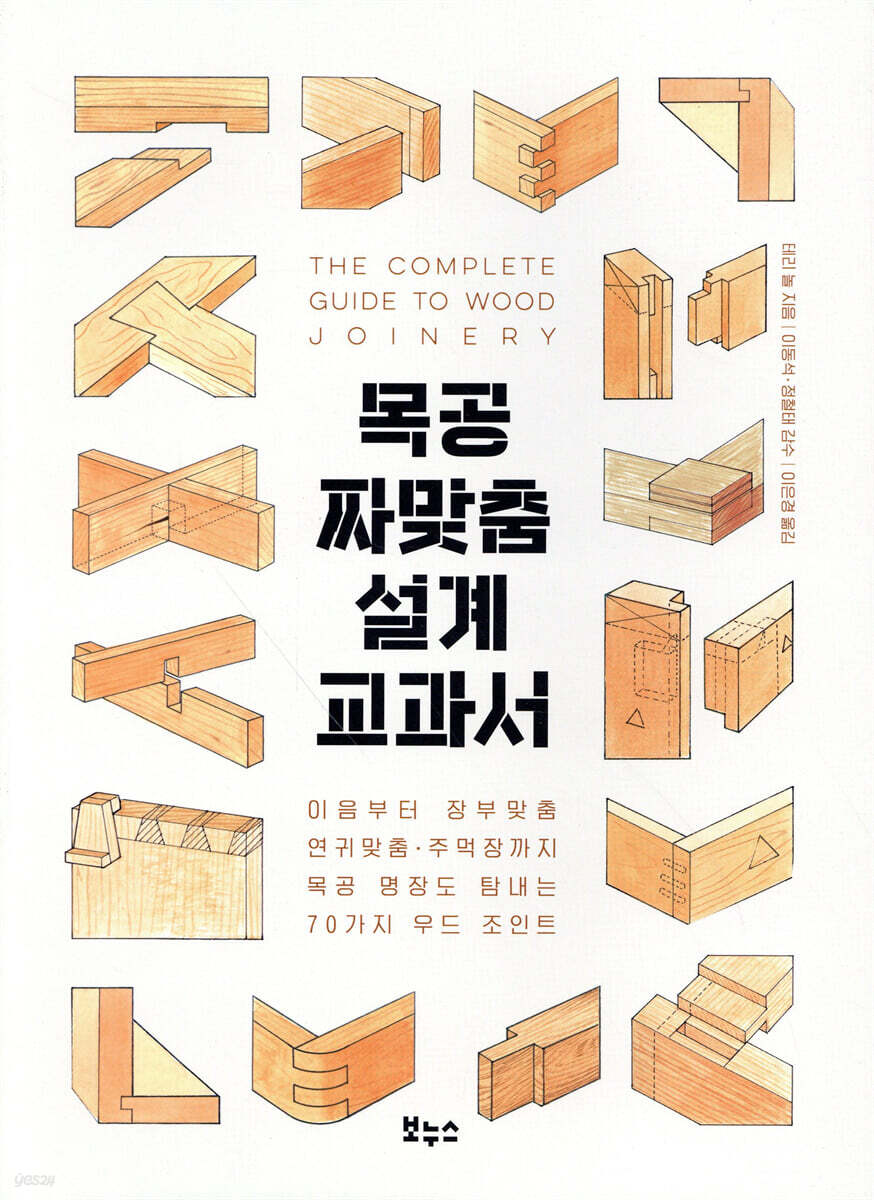
Woodworking Fitting Design Textbook
 |
Description
Book Introduction
"Woodworking Fitting Design Textbook" introduces the basic techniques for making wooden furniture, such as mortises and tenons, dowels, and miter joints, and provides detailed step-by-step instructions for modification methods.
Additionally, we have organized the work techniques using hand and power tools and the utilization of various easy-to-make jigs into easy-to-understand 3D illustrations.
It doesn't stop there, but it clearly explains how the properties and characteristics of wood affect furniture making and design.
It shows how the fitting technique can be used as a design element beyond practicality, helping you apply it in real-world woodworking.
Additionally, we have organized the work techniques using hand and power tools and the utilization of various easy-to-make jigs into easy-to-understand 3D illustrations.
It doesn't stop there, but it clearly explains how the properties and characteristics of wood affect furniture making and design.
It shows how the fitting technique can be used as a design element beyond practicality, helping you apply it in real-world woodworking.
- You can preview some of the book's contents.
Preview
index
Reviewer's Note
How to use this book
Select a fit
Chapter 1: Auxiliary Tools: Accurate Assembly and Sequence
Marking measurement and work lines
Right angle and angle
Assemble and tighten correctly
Chapter 2: Designing a Fit: Choosing Wood Materials and Fitting Design
Example of connecting wooden members
Elements of fit
Wood materials and custom design
Select a fit
Working with adhesives
Chapter 3: Joining and Weaving: Increasing the Length of the Absence
About side joints
Making a butt joint using adhesive
Ttantonguijokmae
Tongue-tie
About the rain joint
Comb joint with a combination of maguri and maguri sides
Diagonally cut comb joint
Ottopsis joint
Chapter 4 Lap Joints and Hidden Joints: Joining in the Cross Direction
About overlap joints
Auxiliary device for making lap joints
Making a half-tuck at the end of the board
Creating a half-tuck in the center of the board
Angled T-shaped half-tuck
Making a sill fit using a jig
Making a saddle joint using a table saw
About hidden joints
Hand-made full housing joint method
Full housing joining method using a table saw
Routed hidden labet
Fixed-router processed hidden labet
Chapter 5 Mortise and Tenon: The Old Right Angle Joint
About mortises and tenons
Choosing and Using Mortise and Tenon Joints
Basic mortise and tenon
Making an Open Slot Mortise Using a Radial Arm Saw
Making a through-hole by hand
Angled mortises and tenons
Penetrating wedge tenon
Joining tenons using a wooden core
Angled shoulders and chin
Ledgers cut with room to spare
Tenon with reinforcing shoulder
Tenon with inclined reinforcing shoulder
Mortise and tenon with panel home
Ravetted mortises and tenons
Mortise and tenon with machined frame
Chapter 6 Miter and Diagonal Joints: Structures That Add Smooth Seams
About miter joints and diagonal joints
Making a mitre by hand
Making a Tongue-Eyed Reamer Using a Radial Arm Saw
Semi-miter fit
Creating a diagonal joint structure using a miter saw
Miter point fitting for reinforcement (silver point miter point fitting)
Waterfall joint (used for high-load diagonal joint work)
Creating a diagonal joint structure using rabbet
Making complex diagonal joint structures using machines
Making a complex diagonal joint structure by hand
Chapter 7: The Fist of the Strongest Fit
Select and use the fist pattern
Penetrating fist
Hidden fist
Hidden fist of the lotus
Making a Tapered Hand-Stabilized Fist
Making a custom drawer with a sliding drawer
fist key
Silver plate
Take the fist
Chapter 8: Cores and Biscuits: Reinforcing Absences Simply
About the wood core
Using a wood core
Reinforcing a miter joint using a wood core
Creating a skeleton joint using wood core on a decorated finish
Making a frame using a wooden core
About biscuit binding
Horizontal joint
T-direction joining method using biscuits
L-joint with step
Chapter 9 Screw-Based Fasteners, Hardware, and Heavy-Duty Reinforcement: Modern Practices for Resisting Heavy Members
Using wood screws
Assembly fixtures and reinforcements
Grasshopper ledger
wedge-shaped fist
List of related tools
Glossary
Search
How to use this book
Select a fit
Chapter 1: Auxiliary Tools: Accurate Assembly and Sequence
Marking measurement and work lines
Right angle and angle
Assemble and tighten correctly
Chapter 2: Designing a Fit: Choosing Wood Materials and Fitting Design
Example of connecting wooden members
Elements of fit
Wood materials and custom design
Select a fit
Working with adhesives
Chapter 3: Joining and Weaving: Increasing the Length of the Absence
About side joints
Making a butt joint using adhesive
Ttantonguijokmae
Tongue-tie
About the rain joint
Comb joint with a combination of maguri and maguri sides
Diagonally cut comb joint
Ottopsis joint
Chapter 4 Lap Joints and Hidden Joints: Joining in the Cross Direction
About overlap joints
Auxiliary device for making lap joints
Making a half-tuck at the end of the board
Creating a half-tuck in the center of the board
Angled T-shaped half-tuck
Making a sill fit using a jig
Making a saddle joint using a table saw
About hidden joints
Hand-made full housing joint method
Full housing joining method using a table saw
Routed hidden labet
Fixed-router processed hidden labet
Chapter 5 Mortise and Tenon: The Old Right Angle Joint
About mortises and tenons
Choosing and Using Mortise and Tenon Joints
Basic mortise and tenon
Making an Open Slot Mortise Using a Radial Arm Saw
Making a through-hole by hand
Angled mortises and tenons
Penetrating wedge tenon
Joining tenons using a wooden core
Angled shoulders and chin
Ledgers cut with room to spare
Tenon with reinforcing shoulder
Tenon with inclined reinforcing shoulder
Mortise and tenon with panel home
Ravetted mortises and tenons
Mortise and tenon with machined frame
Chapter 6 Miter and Diagonal Joints: Structures That Add Smooth Seams
About miter joints and diagonal joints
Making a mitre by hand
Making a Tongue-Eyed Reamer Using a Radial Arm Saw
Semi-miter fit
Creating a diagonal joint structure using a miter saw
Miter point fitting for reinforcement (silver point miter point fitting)
Waterfall joint (used for high-load diagonal joint work)
Creating a diagonal joint structure using rabbet
Making complex diagonal joint structures using machines
Making a complex diagonal joint structure by hand
Chapter 7: The Fist of the Strongest Fit
Select and use the fist pattern
Penetrating fist
Hidden fist
Hidden fist of the lotus
Making a Tapered Hand-Stabilized Fist
Making a custom drawer with a sliding drawer
fist key
Silver plate
Take the fist
Chapter 8: Cores and Biscuits: Reinforcing Absences Simply
About the wood core
Using a wood core
Reinforcing a miter joint using a wood core
Creating a skeleton joint using wood core on a decorated finish
Making a frame using a wooden core
About biscuit binding
Horizontal joint
T-direction joining method using biscuits
L-joint with step
Chapter 9 Screw-Based Fasteners, Hardware, and Heavy-Duty Reinforcement: Modern Practices for Resisting Heavy Members
Using wood screws
Assembly fixtures and reinforcements
Grasshopper ledger
wedge-shaped fist
List of related tools
Glossary
Search
Detailed image
.jpg)
Publisher's Review
The Essentials of Custom Design for Professional Woodworkers
From the selection and design of the right fit to the exact work sequence, know-how, and transformation methods.
Many modern people enjoy woodworking as a hobby and work on small furniture and household items for their homes.
The joy of woodworking is transferring the design in your head to a drawing and watching that design become a real thing.
When doing woodworking, no matter how hard or large the wood is, if you are not technically skilled, stability cannot be guaranteed.
This means that precise and meticulous techniques are absolutely necessary to create sturdy wooden products.
Especially in woodworking, shrinkage and expansion are inevitable factors.
If a nail is inserted here, the moment it contracts and expands, the nail will come out and the wood will warp.
At this time, if you use a 'fitting' method instead of screws or nails, it actually increases the bond strength by pulling the joint strongly.
So, custom-made furniture shows durability and aesthetics that are on a different level from the furniture we know.
Fitting is a high-intensity job that requires not only physical strength but also skill and experience.
《Woodworking Joinery Design Textbook》 introduces over 70 joining techniques that can be used when joining wood to make joinery furniture.
A selection of essential techniques that can be widely applied to all woodworking tasks.
It includes detailed and professional explanations and 3D illustrations to help woodworkers further enhance their furniture-making skills.
By applying various joining techniques, you can create sturdy and beautiful wooden furniture that looks like it was made by a master carpenter.
Using the right tools and processes will improve the quality of your fit.
Practical Woodworking Knowledge for the Strongest Fit
Marking measuring and working lines in woodworking is a simple but important procedure.
The book teaches you how to accurately mark your work lines within fine tolerances using only basic tools like a pencil, awl, or scribe.
We provide detailed information on which tape measure and ruler to choose, as well as the types and features of gauges and angle tools.
In addition, it also teaches you how to use and utilize mechanical devices such as hand tools, jigs, and table saws.
A list of various tools suitable for domestic circumstances is included as an appendix, which can be used conveniently for work.
This book explains in detail over 70 different piecing techniques, from seams to weaving and fitting, and systematically and three-dimensionally shows the entire process.
The advantage of 3D illustration composition is that you can see the back or cross-section without any obstruction, which would not be visible in an actual photograph.
The cutting angle and direction, blade direction, etc. are clearly marked, which will help you work without difficulty.
The fitting developed by changing the direction and angle or modifying existing techniques based on the basic method to meet the characteristics, structure, and aesthetic requirements of the absence.
Therefore, to efficiently carry out the work, you must know the structure and purpose of various joining methods and select the right fit.
This book first explains the method and purpose of arranging joints according to the direction of the wood grain.
Because no wood is stable, it is important to predict shrinkage and expansion and design the fit accordingly.
The design strategies presented in this book can help you properly prepare for specific types of stress and reduce the risk of component failure.
A custom-made manual coveted even by master woodworkers.
Useful craftsman tips and various transformation methods and ideas you shouldn't miss
This book provides additional helpful craftsman tips, modifications, new ideas, and reinforcement methods that will help you in your actual work.
All guidelines for making wooden furniture using joinery are clearly presented, so you can learn the techniques in the book and immediately apply them to your work.
Additionally, the explanations of terminology and tools were refined by comparing the differences in woodworking techniques and techniques used by each country and incorporating the experience of the reviewer who studied woodworking.
It will help you understand the techniques and terms commonly used and understood in Korea and take your woodworking skills to the next level.
《Woodworking Fitting Design Textbook》 shows you a variety of ways to achieve the same result.
You can apply the techniques introduced in the book one by one and find a working method that suits you.
By understanding and working with the principles of fitting like this, you can become a professional woodworker who can create sophisticated yet sturdy wooden furniture.
From the selection and design of the right fit to the exact work sequence, know-how, and transformation methods.
Many modern people enjoy woodworking as a hobby and work on small furniture and household items for their homes.
The joy of woodworking is transferring the design in your head to a drawing and watching that design become a real thing.
When doing woodworking, no matter how hard or large the wood is, if you are not technically skilled, stability cannot be guaranteed.
This means that precise and meticulous techniques are absolutely necessary to create sturdy wooden products.
Especially in woodworking, shrinkage and expansion are inevitable factors.
If a nail is inserted here, the moment it contracts and expands, the nail will come out and the wood will warp.
At this time, if you use a 'fitting' method instead of screws or nails, it actually increases the bond strength by pulling the joint strongly.
So, custom-made furniture shows durability and aesthetics that are on a different level from the furniture we know.
Fitting is a high-intensity job that requires not only physical strength but also skill and experience.
《Woodworking Joinery Design Textbook》 introduces over 70 joining techniques that can be used when joining wood to make joinery furniture.
A selection of essential techniques that can be widely applied to all woodworking tasks.
It includes detailed and professional explanations and 3D illustrations to help woodworkers further enhance their furniture-making skills.
By applying various joining techniques, you can create sturdy and beautiful wooden furniture that looks like it was made by a master carpenter.
Using the right tools and processes will improve the quality of your fit.
Practical Woodworking Knowledge for the Strongest Fit
Marking measuring and working lines in woodworking is a simple but important procedure.
The book teaches you how to accurately mark your work lines within fine tolerances using only basic tools like a pencil, awl, or scribe.
We provide detailed information on which tape measure and ruler to choose, as well as the types and features of gauges and angle tools.
In addition, it also teaches you how to use and utilize mechanical devices such as hand tools, jigs, and table saws.
A list of various tools suitable for domestic circumstances is included as an appendix, which can be used conveniently for work.
This book explains in detail over 70 different piecing techniques, from seams to weaving and fitting, and systematically and three-dimensionally shows the entire process.
The advantage of 3D illustration composition is that you can see the back or cross-section without any obstruction, which would not be visible in an actual photograph.
The cutting angle and direction, blade direction, etc. are clearly marked, which will help you work without difficulty.
The fitting developed by changing the direction and angle or modifying existing techniques based on the basic method to meet the characteristics, structure, and aesthetic requirements of the absence.
Therefore, to efficiently carry out the work, you must know the structure and purpose of various joining methods and select the right fit.
This book first explains the method and purpose of arranging joints according to the direction of the wood grain.
Because no wood is stable, it is important to predict shrinkage and expansion and design the fit accordingly.
The design strategies presented in this book can help you properly prepare for specific types of stress and reduce the risk of component failure.
A custom-made manual coveted even by master woodworkers.
Useful craftsman tips and various transformation methods and ideas you shouldn't miss
This book provides additional helpful craftsman tips, modifications, new ideas, and reinforcement methods that will help you in your actual work.
All guidelines for making wooden furniture using joinery are clearly presented, so you can learn the techniques in the book and immediately apply them to your work.
Additionally, the explanations of terminology and tools were refined by comparing the differences in woodworking techniques and techniques used by each country and incorporating the experience of the reviewer who studied woodworking.
It will help you understand the techniques and terms commonly used and understood in Korea and take your woodworking skills to the next level.
《Woodworking Fitting Design Textbook》 shows you a variety of ways to achieve the same result.
You can apply the techniques introduced in the book one by one and find a working method that suits you.
By understanding and working with the principles of fitting like this, you can become a professional woodworker who can create sophisticated yet sturdy wooden furniture.
GOODS SPECIFICS
- Publication date: July 15, 2022
- Page count, weight, size: 224 pages | 700g | 188*257*16mm
- ISBN13: 9788964945629
- ISBN10: 896494562X
You may also like
카테고리
korean


korean

![GQ KOREA Mark (Monthly): December [2025]](http://librairie.coreenne.fr/cdn/shop/files/8ef265dbbfbf186523ed75ba7319009d.jpg?v=1765340328&width=3840)


