

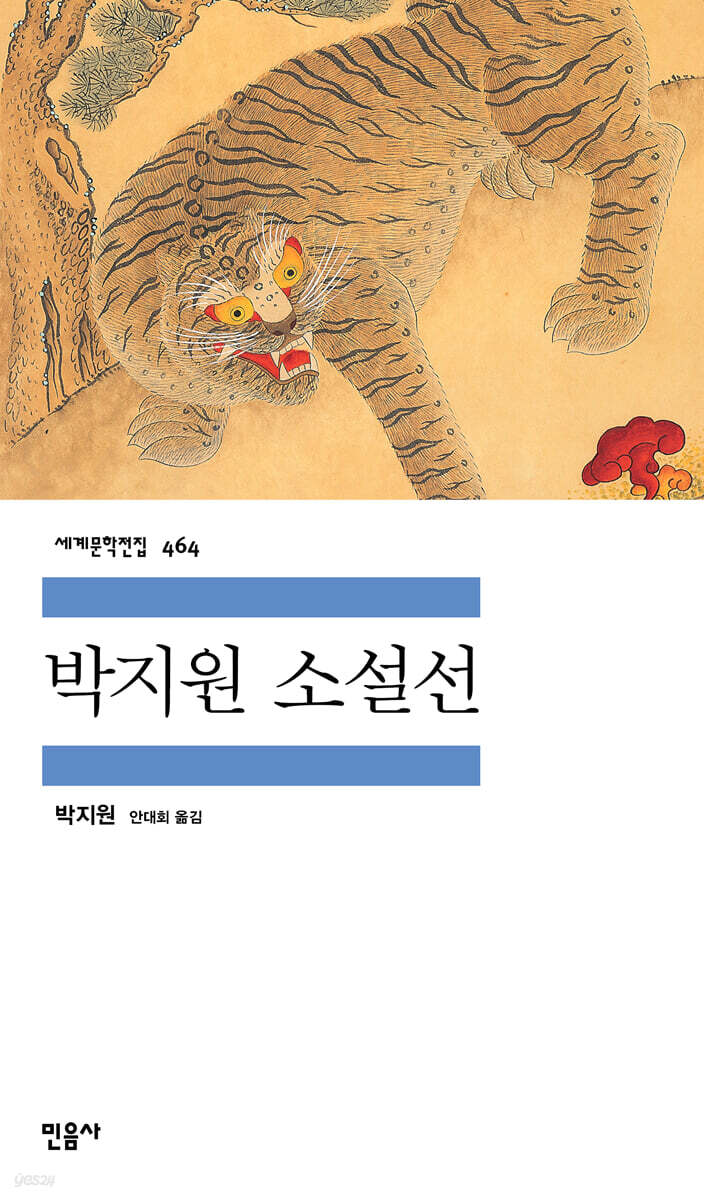
Park Ji-won's novel collection
 |
Description
Book Introduction
“People gather around a virtuous person.
“Should I worry about not having virtue or not having people?”
He was an outstanding writer representing the Joseon Dynasty.
Park Ji-won, a pioneer representing Silhak
Imitate the old and create a new style
The spirit of legal innovation that upholds the values of the common people
A comprehensive collection of novels that reinterpret major manuscripts and present a new interpretation of "Balseungamgi"
『Park Ji-won Novel Collection』, a collection of eleven novels by Yeonam Park Ji-won, has been published in Minumsa's World Literature Collection.
In academic circles, Park Ji-won's novels have been considered to be ten since Kim Tae-jun's 『History of Joseon Novels』(1933), but in this book, Professor Ahn Dae-hoe of the Department of Chinese Literature at Sungkyunkwan University, the translator, added one novel, "Balsungamgi," to present eleven.
The significance of creating a new list was placed on the judgment that “Balseungamgi” was comparable to Yeonam’s other novels.
The original text was presented by exchanging the original manuscript of the Yeonminmungo and other major copies close to the original manuscript to create a definitive version.
The content of the exchange was revealed in the original text, and the important changes were reflected in the translation and annotations, allowing for a rich and accurate understanding of Park Ji-won's novel world.
The 18th century great writer Yeonam Park Ji-won (1737-1805) is an outstanding writer who represents not only the late Joseon Dynasty but also the entire Joseon Dynasty.
Yeonam is considered a leading thinker of his time as a novelist, prose writer, poet, and a pioneering Silhak scholar.
His sentences were full of wit and were excellent in rhetoric and ideas, and he was praised for saying, “With one stroke of the brush, a thousand lines of sentences flow out in an instant.”
Yeonam defined his creative direction as “beopgochangsin” (法古創新), which means “learning from the old and creating something new.”
He inherited the traditions of ancient literature while also reflecting the social conditions of 18th-century Joseon, creating literature rich in individuality.
In particular, his sentences break free from the stereotypical and boring, and use unfamiliar and vivid colloquial expressions. He mixes humor and jokes, and inserts dialogue that captures the true nature of the characters, maximizing the sense of presence and dynamism.
This unique writing style, which captivated readers without giving them a moment to get bored, was called Yeonam style and was widely read in the capital city of Hanyang.
Although he gave up the civil service examination in his mid-thirties, he built a reputation as an excellent writer and continued his prolific creative work while serving as a local official after the age of fifty.
“Should I worry about not having virtue or not having people?”
He was an outstanding writer representing the Joseon Dynasty.
Park Ji-won, a pioneer representing Silhak
Imitate the old and create a new style
The spirit of legal innovation that upholds the values of the common people
A comprehensive collection of novels that reinterpret major manuscripts and present a new interpretation of "Balseungamgi"
『Park Ji-won Novel Collection』, a collection of eleven novels by Yeonam Park Ji-won, has been published in Minumsa's World Literature Collection.
In academic circles, Park Ji-won's novels have been considered to be ten since Kim Tae-jun's 『History of Joseon Novels』(1933), but in this book, Professor Ahn Dae-hoe of the Department of Chinese Literature at Sungkyunkwan University, the translator, added one novel, "Balsungamgi," to present eleven.
The significance of creating a new list was placed on the judgment that “Balseungamgi” was comparable to Yeonam’s other novels.
The original text was presented by exchanging the original manuscript of the Yeonminmungo and other major copies close to the original manuscript to create a definitive version.
The content of the exchange was revealed in the original text, and the important changes were reflected in the translation and annotations, allowing for a rich and accurate understanding of Park Ji-won's novel world.
The 18th century great writer Yeonam Park Ji-won (1737-1805) is an outstanding writer who represents not only the late Joseon Dynasty but also the entire Joseon Dynasty.
Yeonam is considered a leading thinker of his time as a novelist, prose writer, poet, and a pioneering Silhak scholar.
His sentences were full of wit and were excellent in rhetoric and ideas, and he was praised for saying, “With one stroke of the brush, a thousand lines of sentences flow out in an instant.”
Yeonam defined his creative direction as “beopgochangsin” (法古創新), which means “learning from the old and creating something new.”
He inherited the traditions of ancient literature while also reflecting the social conditions of 18th-century Joseon, creating literature rich in individuality.
In particular, his sentences break free from the stereotypical and boring, and use unfamiliar and vivid colloquial expressions. He mixes humor and jokes, and inserts dialogue that captures the true nature of the characters, maximizing the sense of presence and dynamism.
This unique writing style, which captivated readers without giving them a moment to get bored, was called Yeonam style and was widely read in the capital city of Hanyang.
Although he gave up the civil service examination in his mid-thirties, he built a reputation as an excellent writer and continued his prolific creative work while serving as a local official after the age of fifty.
- You can preview some of the book's contents.
Preview
index
Part 1: The novel 『Banggyeonggak Waejeon (放?閣外傳)』
1 Horsemanship Story 9
2 Biography of Teacher Yedeok 21
3 Minongjeon (閔翁傳) 29
4 Biography of the Broad Writer 43
5 Yangbanjeon (兩班傳) 55
6 Kim Shin Seonjeon (金神仙傳) 62
7 Idol History 73
[Lost Novel] The Great Challenge of I Ching (Book of Changes) 93
[Lost Novel] The Story of a Phoenix Scholar, Vol. 96
Part 2: The novel 『Yeolha Diary (熱河日記)』
1 Tiger Cry 101
2 Heo Saeng (許生) 121
Part 3: Novel of 『Yeonsanggakseonbon (煙湘閣選本)』
1 Balseungamgi (髮僧菴記) 161
2. Biography of the Chaste Woman, Hamyang Park Clan (烈女咸陽朴氏傳) 169
Original text 179
Commentary on the work 232
Author's Chronology 254
1 Horsemanship Story 9
2 Biography of Teacher Yedeok 21
3 Minongjeon (閔翁傳) 29
4 Biography of the Broad Writer 43
5 Yangbanjeon (兩班傳) 55
6 Kim Shin Seonjeon (金神仙傳) 62
7 Idol History 73
[Lost Novel] The Great Challenge of I Ching (Book of Changes) 93
[Lost Novel] The Story of a Phoenix Scholar, Vol. 96
Part 2: The novel 『Yeolha Diary (熱河日記)』
1 Tiger Cry 101
2 Heo Saeng (許生) 121
Part 3: Novel of 『Yeonsanggakseonbon (煙湘閣選本)』
1 Balseungamgi (髮僧菴記) 161
2. Biography of the Chaste Woman, Hamyang Park Clan (烈女咸陽朴氏傳) 169
Original text 179
Commentary on the work 232
Author's Chronology 254
Detailed image

Into the book
So, there is a skill to be had in behaving among friends.
If you want to praise someone, you must first criticize them openly, and if you want to express friendliness, you must first express anger.
If you want to become friendly with someone, stand still and stare at them, then turn around as if embarrassed.
If you want people to believe you, first make them doubt you, and then wait.
--- p.14 From “The Horse Race”
“Everyone likes a beautiful appearance.
But it's not just men, women are the same.
So what woman would want to decorate her face if she were as ugly as me?
--- p.47 From "The Dictionary of Gwangmunja"
The earrings of the ornately decorated parasite lie scattered in the room, and the seedlings of the crane she raises are scattered in the yard.
Even if you live in the countryside as a scholar who has not achieved success, you can still wield power to your heart's content.
I bring my neighbor's ox to plow my field first, and then I bring the villagers to weed my field.
Yet, who dares to defy me? If you disobey, I will pour lye down your nose.
Even if you grab my topknot and shake it or pull out my beard, I don't dare complain...
--- p.61 From “Yangbanjeon”
If you have virtue but no talent, your virtue becomes like an empty vessel, and if you have talent but no virtue, you become like a vessel without a container to contain your talent.
Even if there is a bowl, if it is too shallow, the contents inside will easily overflow.
--- p.86 From “Idol Story”
Sentences are the greatest treasure in the world.
The writer brings out profound truths from the Creator's cave, and by digging into hidden secrets that have not yet been revealed, he reveals the mysteries of yin and yang, so the ghosts are angry and resentful toward him.
--- p.87 From “Idol Story”
Isn't the nature of a tiger better than that of a human? Tigers don't eat grass or trees, nor do they eat insects or fish.
They do not enjoy things that are contrary to morality and disturb the mind, such as alcohol, and they do not dare to touch pregnant animals, mothers with eggs, or small and insignificant animals.
When they enter the mountains, they hunt roe deer and deer, and in the fields, they hunt horses and cattle.
However, I have never once seen anyone being mean or fighting over food to fill their stomachs.
Isn't the tiger's way bright and upright?
--- p.111 From "Hojil"
“People gather around a virtuous person.
“Should I worry about not having virtue or not having people?”
--- p.135 From "Heosaeng"
Young daughters-in-law in rural farmhouses and young widows in urban alleyways are not forced by their parents to remarry, nor is there any shameful incident of their children being denied official positions.
However, they often feel that it is not enough to remain a widow, and they wish to end their lives, which are as dim as a candle in broad daylight, and follow their husbands into a grave as dark as night.
Whether she drowns, burns, drinks poison, or hangs herself, she gives up her life as if she were walking the path to paradise. Isn't that too much for a virtuous woman to do?
If you want to praise someone, you must first criticize them openly, and if you want to express friendliness, you must first express anger.
If you want to become friendly with someone, stand still and stare at them, then turn around as if embarrassed.
If you want people to believe you, first make them doubt you, and then wait.
--- p.14 From “The Horse Race”
“Everyone likes a beautiful appearance.
But it's not just men, women are the same.
So what woman would want to decorate her face if she were as ugly as me?
--- p.47 From "The Dictionary of Gwangmunja"
The earrings of the ornately decorated parasite lie scattered in the room, and the seedlings of the crane she raises are scattered in the yard.
Even if you live in the countryside as a scholar who has not achieved success, you can still wield power to your heart's content.
I bring my neighbor's ox to plow my field first, and then I bring the villagers to weed my field.
Yet, who dares to defy me? If you disobey, I will pour lye down your nose.
Even if you grab my topknot and shake it or pull out my beard, I don't dare complain...
--- p.61 From “Yangbanjeon”
If you have virtue but no talent, your virtue becomes like an empty vessel, and if you have talent but no virtue, you become like a vessel without a container to contain your talent.
Even if there is a bowl, if it is too shallow, the contents inside will easily overflow.
--- p.86 From “Idol Story”
Sentences are the greatest treasure in the world.
The writer brings out profound truths from the Creator's cave, and by digging into hidden secrets that have not yet been revealed, he reveals the mysteries of yin and yang, so the ghosts are angry and resentful toward him.
--- p.87 From “Idol Story”
Isn't the nature of a tiger better than that of a human? Tigers don't eat grass or trees, nor do they eat insects or fish.
They do not enjoy things that are contrary to morality and disturb the mind, such as alcohol, and they do not dare to touch pregnant animals, mothers with eggs, or small and insignificant animals.
When they enter the mountains, they hunt roe deer and deer, and in the fields, they hunt horses and cattle.
However, I have never once seen anyone being mean or fighting over food to fill their stomachs.
Isn't the tiger's way bright and upright?
--- p.111 From "Hojil"
“People gather around a virtuous person.
“Should I worry about not having virtue or not having people?”
--- p.135 From "Heosaeng"
Young daughters-in-law in rural farmhouses and young widows in urban alleyways are not forced by their parents to remarry, nor is there any shameful incident of their children being denied official positions.
However, they often feel that it is not enough to remain a widow, and they wish to end their lives, which are as dim as a candle in broad daylight, and follow their husbands into a grave as dark as night.
Whether she drowns, burns, drinks poison, or hangs herself, she gives up her life as if she were walking the path to paradise. Isn't that too much for a virtuous woman to do?
--- pp.170-171 From “The Tale of Chaste Woman Hamyang Park”
Publisher's Review
A Call to Action - "Yangbanjeon," "Hojil," "Heosaeng"
Yeonam's novel world developed through three stages: youth, middle age, and old age.
In 『Banggyeonggak Oejeon』, written in his teens, he shows a groundbreaking approach by featuring urban lower-class people as protagonists, such as Gwangmun, a beggar from Jongno, and Eom Haengsu, a toilet cleaner, which is not found in traditional literature.
He discovers the most fragrant and righteous human values and dignity in the lives of these humble and lowly commoners, and presents a new type of human being who praises them.
On the other hand, the upper class nobles and scholars are portrayed as incompetent or hypocritical people and become the objects of satire and ridicule.
"Yangbanjeon" is a satirical novel that satirizes the falsity and economic incompetence of the Yangban class system through the process of a fallen yangban selling his status to pay off his debts.
The contents of the certificate proving the nobleman's status expose the deceptive behavior of the noble class, giving readers both refreshing laughter and enlightenment.
『Yeolha Diary』, which is considered the essence of literature of middle age, is a book of thought that reflects the theory of Northern Learning (北學論) that advocates for actively accepting advanced foreign civilization, the theory of utilization and welfare (利用厚生論) that seeks to improve living standards by utilizing the benefits of civilization, and the theory of statecraft (經世論) that focuses on governing the country and diplomacy.
It contains two masterpieces, “Hojil” and “Heosaeng.”
"Hojil" is a fable in which a personified animal named Beom scolds the greatest Confucian scholar of the time, Mr. Bukgwak.
The author parodies Confucian classics and uses exaggerated expressions to expose the hypocrisy of Confucian scholars and chaste women, and furthermore, he criticizes human-centrism and the cruelty of civilization itself, demonstrating the significance of criticizing civilization.
This novel is full of humor and wit that will make readers burst into laughter.
"Heosaeng" is the story of Heosaeng, a man of exceptional business acumen and national management skills.
Heo Saeng shows off his magical power to captivate readers with his heroic spirit as he takes control of Joseon's economy and expands international trade.
It is a masterpiece that criticizes the incompetence, hypocrisy, and pretense of the Joseon Dynasty's aristocracy, especially those in power who were plotting a northern expedition, and reveals the statecraft awareness of intellectuals who were concerned about the country to the utmost extent.
His later work, "The Tale of Chaste Woman Hamyang Park," is based on the suicide of a young widow that occurred while he was serving as magistrate of An.
Two different widows appear in the introduction and main text.
There are virtuous women who committed suicide and virtuous women who did not commit suicide.
The contrast between the two widows eloquently demonstrates how much pain is involved in living without committing suicide.
By placing the two chaste women side by side, the reader can empathize with their suffering and feel pity for them.
Yeonam regards this death as a social murder, and sharply criticizes the unreasonable system and inhumanity of Joseon society that drives women to death by confining them in the name of chaste woman.
Human loneliness and compassion, a timeless literary peak
Since its publication, Park Ji-won's novels have received sharply divided opinions from readers due to their subject matter and style.
The noblemen who read “Hojil” and “Heosaeng” expressed their displeasure at the scene where Master Bukgwak and Captain Lee Wan were severely scolded, feeling that their authority and self-esteem had been destroyed.
In fact, conservative scholars avoided Yeonam's writings, saying they were "strange and wild."
However, Yeonam's novels were widely distributed in manuscript form, receiving positive reviews for having "a hidden meaning that mocks the world" and "the power to move readers."
Later scholars analyzed his novels as a sublimated result of anger at the harsh discrimination and chronic ills of Joseon society.
The author himself said that his anger at the absurdity of Joseon society was a literary expression of his authorial conscience, and he did not hide his anger toward the times, to the point of saying, "Others publish obituaries saying 'passing away from a chronic illness', but mine should be published saying 'passing away from a chronic indignation'."
Ultimately, Yeonam's novels simultaneously contain a critical awareness of reality that delves into the depths of structural contradictions, ridiculing the powerful with wit and humor, and empathizing with the socially disadvantaged, along with warm humanity and compassion that empathize with human misfortune.
Yeonam's conscience, expressed in his works, transcends time and space, creating a sense of empathy that reaches contemporary readers, and has contributed greatly to his novels being evaluated as a great peak of Korean literature.
Yeonam's novel world developed through three stages: youth, middle age, and old age.
In 『Banggyeonggak Oejeon』, written in his teens, he shows a groundbreaking approach by featuring urban lower-class people as protagonists, such as Gwangmun, a beggar from Jongno, and Eom Haengsu, a toilet cleaner, which is not found in traditional literature.
He discovers the most fragrant and righteous human values and dignity in the lives of these humble and lowly commoners, and presents a new type of human being who praises them.
On the other hand, the upper class nobles and scholars are portrayed as incompetent or hypocritical people and become the objects of satire and ridicule.
"Yangbanjeon" is a satirical novel that satirizes the falsity and economic incompetence of the Yangban class system through the process of a fallen yangban selling his status to pay off his debts.
The contents of the certificate proving the nobleman's status expose the deceptive behavior of the noble class, giving readers both refreshing laughter and enlightenment.
『Yeolha Diary』, which is considered the essence of literature of middle age, is a book of thought that reflects the theory of Northern Learning (北學論) that advocates for actively accepting advanced foreign civilization, the theory of utilization and welfare (利用厚生論) that seeks to improve living standards by utilizing the benefits of civilization, and the theory of statecraft (經世論) that focuses on governing the country and diplomacy.
It contains two masterpieces, “Hojil” and “Heosaeng.”
"Hojil" is a fable in which a personified animal named Beom scolds the greatest Confucian scholar of the time, Mr. Bukgwak.
The author parodies Confucian classics and uses exaggerated expressions to expose the hypocrisy of Confucian scholars and chaste women, and furthermore, he criticizes human-centrism and the cruelty of civilization itself, demonstrating the significance of criticizing civilization.
This novel is full of humor and wit that will make readers burst into laughter.
"Heosaeng" is the story of Heosaeng, a man of exceptional business acumen and national management skills.
Heo Saeng shows off his magical power to captivate readers with his heroic spirit as he takes control of Joseon's economy and expands international trade.
It is a masterpiece that criticizes the incompetence, hypocrisy, and pretense of the Joseon Dynasty's aristocracy, especially those in power who were plotting a northern expedition, and reveals the statecraft awareness of intellectuals who were concerned about the country to the utmost extent.
His later work, "The Tale of Chaste Woman Hamyang Park," is based on the suicide of a young widow that occurred while he was serving as magistrate of An.
Two different widows appear in the introduction and main text.
There are virtuous women who committed suicide and virtuous women who did not commit suicide.
The contrast between the two widows eloquently demonstrates how much pain is involved in living without committing suicide.
By placing the two chaste women side by side, the reader can empathize with their suffering and feel pity for them.
Yeonam regards this death as a social murder, and sharply criticizes the unreasonable system and inhumanity of Joseon society that drives women to death by confining them in the name of chaste woman.
Human loneliness and compassion, a timeless literary peak
Since its publication, Park Ji-won's novels have received sharply divided opinions from readers due to their subject matter and style.
The noblemen who read “Hojil” and “Heosaeng” expressed their displeasure at the scene where Master Bukgwak and Captain Lee Wan were severely scolded, feeling that their authority and self-esteem had been destroyed.
In fact, conservative scholars avoided Yeonam's writings, saying they were "strange and wild."
However, Yeonam's novels were widely distributed in manuscript form, receiving positive reviews for having "a hidden meaning that mocks the world" and "the power to move readers."
Later scholars analyzed his novels as a sublimated result of anger at the harsh discrimination and chronic ills of Joseon society.
The author himself said that his anger at the absurdity of Joseon society was a literary expression of his authorial conscience, and he did not hide his anger toward the times, to the point of saying, "Others publish obituaries saying 'passing away from a chronic illness', but mine should be published saying 'passing away from a chronic indignation'."
Ultimately, Yeonam's novels simultaneously contain a critical awareness of reality that delves into the depths of structural contradictions, ridiculing the powerful with wit and humor, and empathizing with the socially disadvantaged, along with warm humanity and compassion that empathize with human misfortune.
Yeonam's conscience, expressed in his works, transcends time and space, creating a sense of empathy that reaches contemporary readers, and has contributed greatly to his novels being evaluated as a great peak of Korean literature.
GOODS SPECIFICS
- Date of issue: September 30, 2025
- Page count, weight, size: 264 pages | 362g | 132*225*15mm
- ISBN13: 9788937464645
- ISBN10: 8937464640
You may also like
카테고리
korean


korean

![ELLE 엘르 스페셜 에디션 A형 : 12월 [2025]](http://librairie.coreenne.fr/cdn/shop/files/b8e27a3de6c9538896439686c6b0e8fb.jpg?v=1766436872&width=3840)


