

Sputnik's Lover
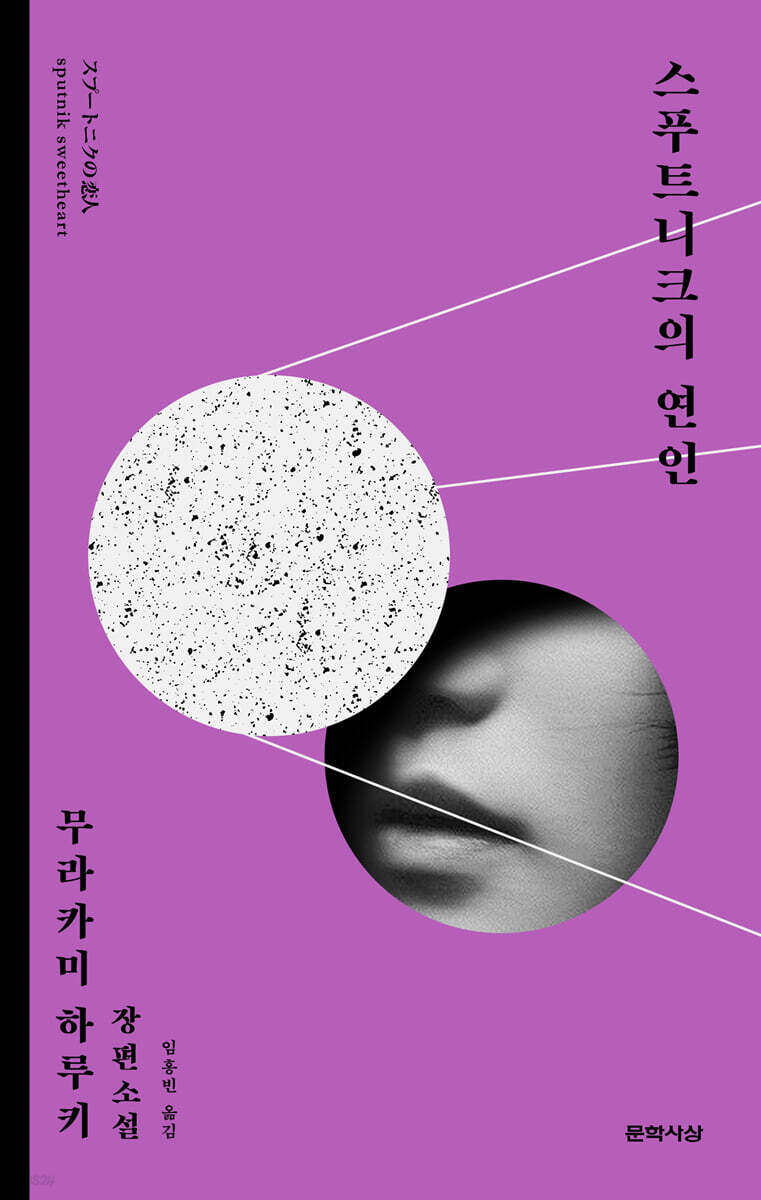 |
Description
Book Introduction
Following 『The Age of Loss』 and 『South of the Border, West of the Sun』
The final installment in Haruki Murakami's romance novel trilogy
Haruki Murakami's first Korean protagonist and the story unfolding between two men and women
A lonely yet beautiful fateful love triangle
“Haruki is unrivaled in transforming psychological metaphors into chilling narratives.
“He has an unparalleled talent.” (New York Times)
The final installment in Haruki Murakami's trilogy of romance novels, following "A Time to Lost," which created a worldwide sensation by depicting the pure and unrealistic love of youth, and "South of the Border, West of the Sun," which finds salvation at the end of a mysterious love.
It depicts a love triangle between a man and two women that unfolds in a stormy and ever-changing manner, symbolized by the artificial satellite 'Sputnik', which was the first satellite on Earth to carry a living creature (a dog) into space.
It is said to evoke a similar atmosphere to 『South of the Border, West of the Sun』 and is also said to be a variation of 『The Age of Loss』.
Haruki Murakami said that he wrote this novel based on a short sketch he had scribbled down on about three pages of manuscript paper one day, when an idea suddenly came to him without any purpose.
When he started writing, he had no idea what kind of story it would unfold, but he enjoyed writing it more than any other novel and has praised it as a work that “mobilized all the alpha and omega of his imagination.”
In fact, the introduction to Chapter 1 is famous for being one of the most unique and densely beautiful passages in Haruki Murakami's works.
Since its publication, "Sputnik Lovers" has enjoyed worldwide popularity, comparable to that of "The Age of Lost," and has had a profound impact on popular culture.
In the film Paris, starring Juliette Binoche and Natalie Portman, a husband reads the book to his wife who has leukemia, and a passage from the book was featured in the British TV drama Almost Famous.
Additionally, pop bands Project Orange and Weather Day have named songs after the novel.
The final installment in Haruki Murakami's romance novel trilogy
Haruki Murakami's first Korean protagonist and the story unfolding between two men and women
A lonely yet beautiful fateful love triangle
“Haruki is unrivaled in transforming psychological metaphors into chilling narratives.
“He has an unparalleled talent.” (New York Times)
The final installment in Haruki Murakami's trilogy of romance novels, following "A Time to Lost," which created a worldwide sensation by depicting the pure and unrealistic love of youth, and "South of the Border, West of the Sun," which finds salvation at the end of a mysterious love.
It depicts a love triangle between a man and two women that unfolds in a stormy and ever-changing manner, symbolized by the artificial satellite 'Sputnik', which was the first satellite on Earth to carry a living creature (a dog) into space.
It is said to evoke a similar atmosphere to 『South of the Border, West of the Sun』 and is also said to be a variation of 『The Age of Loss』.
Haruki Murakami said that he wrote this novel based on a short sketch he had scribbled down on about three pages of manuscript paper one day, when an idea suddenly came to him without any purpose.
When he started writing, he had no idea what kind of story it would unfold, but he enjoyed writing it more than any other novel and has praised it as a work that “mobilized all the alpha and omega of his imagination.”
In fact, the introduction to Chapter 1 is famous for being one of the most unique and densely beautiful passages in Haruki Murakami's works.
Since its publication, "Sputnik Lovers" has enjoyed worldwide popularity, comparable to that of "The Age of Lost," and has had a profound impact on popular culture.
In the film Paris, starring Juliette Binoche and Natalie Portman, a husband reads the book to his wife who has leukemia, and a passage from the book was featured in the British TV drama Almost Famous.
Additionally, pop bands Project Orange and Weather Day have named songs after the novel.
- You can preview some of the book's contents.
Preview
index
Sputnik's Lover
Translator's Note
Translator's Note
Into the book
The moment Myu touched her hair, Sumire fell in love almost reflexively.
As if I was suddenly struck by lightning while crossing a wide field.
It must have been something close to an artistic revelation.
That's why the fact that the other person happened to be a woman didn't matter to Sumire at all at that point.
--- p.16
When I reread the printed content the next day, it seemed as if every single sentence should be perfect, and in some cases, it seemed as if it was okay to omit every single sentence.
There were times when I was so overcome with despair that I tore up every manuscript in front of me.
If it had been a winter night and there had been a fireplace in the room, it would have been quite warm, like in Puccini's opera "La Bohème," but of course there was no fireplace in her single room.
There wasn't even a telephone, let alone a stove.
No, there was no mirror to see one's own body.
--- pp.23-24
“Are you sure that what you feel for Mu is sexual desire?”
“I think it’s 100% true.
When I stand in front of her, the bone in my ear rattles and makes a sound.
Like a landscape made of thin seashells.
And I want to hug her tightly.
“I feel like I want to give it all up, and if that’s not sexual desire, then it’s tomato juice flowing through my veins.”
--- p.85
That's when I understood.
We are on a wonderful journey together, but ultimately we are just lonely lumps of metal, each drawing its own path.
From a distance, we look as beautiful as meteors, but in reality, we are all just prisoners, each trapped within a frame, unable to go anywhere.
When the orbits of two satellites coincide, we can look each other in the eye and perhaps even unravel our hearts.
But that's only for a moment, and the next moment you're back in absolute solitude.
Until one day it completely burns down to zero.
--- pp.188-189
But I loved and wanted Sumire more than anyone else.
I couldn't just give up on that feeling just because I couldn't get anywhere.
Because there is nothing to exchange it for.
--- p.285
There are special events that each person can only experience at a certain age.
It's like a very small spark.
A careful and fortunate person can cherish it and grow it into a great torch that illuminates his life.
But if you lose that spark even just once, you can never get it back.
It wasn't just Sumire that I lost.
With her, I even lost my precious spark.
As if I was suddenly struck by lightning while crossing a wide field.
It must have been something close to an artistic revelation.
That's why the fact that the other person happened to be a woman didn't matter to Sumire at all at that point.
--- p.16
When I reread the printed content the next day, it seemed as if every single sentence should be perfect, and in some cases, it seemed as if it was okay to omit every single sentence.
There were times when I was so overcome with despair that I tore up every manuscript in front of me.
If it had been a winter night and there had been a fireplace in the room, it would have been quite warm, like in Puccini's opera "La Bohème," but of course there was no fireplace in her single room.
There wasn't even a telephone, let alone a stove.
No, there was no mirror to see one's own body.
--- pp.23-24
“Are you sure that what you feel for Mu is sexual desire?”
“I think it’s 100% true.
When I stand in front of her, the bone in my ear rattles and makes a sound.
Like a landscape made of thin seashells.
And I want to hug her tightly.
“I feel like I want to give it all up, and if that’s not sexual desire, then it’s tomato juice flowing through my veins.”
--- p.85
That's when I understood.
We are on a wonderful journey together, but ultimately we are just lonely lumps of metal, each drawing its own path.
From a distance, we look as beautiful as meteors, but in reality, we are all just prisoners, each trapped within a frame, unable to go anywhere.
When the orbits of two satellites coincide, we can look each other in the eye and perhaps even unravel our hearts.
But that's only for a moment, and the next moment you're back in absolute solitude.
Until one day it completely burns down to zero.
--- pp.188-189
But I loved and wanted Sumire more than anyone else.
I couldn't just give up on that feeling just because I couldn't get anywhere.
Because there is nothing to exchange it for.
--- p.285
There are special events that each person can only experience at a certain age.
It's like a very small spark.
A careful and fortunate person can cherish it and grow it into a great torch that illuminates his life.
But if you lose that spark even just once, you can never get it back.
It wasn't just Sumire that I lost.
With her, I even lost my precious spark.
--- p.286
Publisher's Review
“Unless an experience is so utterly defiant that it defies easy verbalization, it cannot be called a real experience.”
The stylistic experiments and setting shifts that shaped Haruki Murakami's world
"Sputnik Lovers" is an important work that showcases Murakami Haruki's unique fantasy and deep emotional descriptions, and also shows a decisive change from his early works.
After the Aum Shinrikyo cult carried out a subway sarin attack targeting an unspecified number of citizens in Japan in 1995, Japanese society was gripped by fear.
Haruki Murakami, who was also deeply shocked, published a collection of reports and interviews with the victims and their families.
This experience led him to realize that “any experience that is not sufficient to reject easy verbalization cannot be considered a real experience,” and he attempted to transform the rhetorical metaphor-centered descriptions he had been using as weapons into more concise, more neutral, more reusable, and more universal sentences.
The novel's dynamism was developed by moving from a past that valued detachment to a stage where commitment was considered.
Through this process of reasoning, Haruki's works became deeper and more mature than before.
“One thing I firmly decided while writing ‘Sputnik Lovers’ was that I wanted to break away from a certain kind of writing style that I had been using (and using as a weapon) until then.
To be specific, what I was trying to break away from might have been something like the 'overflow of metaphors' that I attempted at the beginning of this work.
I decided that in "Sputnik Lovers," I should try to avoid showing some of the rhetorical features of my sentences.
(…) I needed to first remove and discard the ‘protruding’ parts in my writing style.
In the long run, I had to transform my sentences to be simpler, more neutral, more reusable, and more universal.
In other words, it became necessary to gradually shift the dynamism of the novel from the level of style to the level of story.”
Moreover, he broke away from the habit of portraying protagonists of a similar age and with relatively free-spirited occupations, and for the first time in this novel, he featured an ordinary young elementary school teacher as the protagonist.
K, the first-person narrator of the work, was 24 years old, and Haruki was 50 years old at the time.
From his debut work, "Hear the Wind Sing" to "South of the Border, West of the Sun," whenever he wrote in the first-person perspective, he mainly used characters of a similar age to the author or looked back on his past self. However, starting with this work, the protagonist's age gradually became younger, reaching 15 in "Kafka on the Shore."
"Sputnik Lovers" can be seen as a pivotal moment of change and transformation that further developed Haruki Murakami's literary world.
What is particularly interesting in 『Sputnik Lovers』 is that a Korean woman, ‘Mu’, appears as the second female protagonist, seventeen years older than the female protagonist, ‘Sumire’.
There are very few examples of foreigners appearing as protagonists in Haruki Murakami's novels, so it is quite exceptional that he chose to set the protagonist as a Korean woman 17 years older than him.
Is this perhaps a fan service for Korean readers?
Parallel trajectories that circle each other, unable to become one, in the middle of the endless universe.
“Why do we have to be so lonely?
For what reason?
“Is this planet spinning, nourished by the loneliness of its people?”
'Sputnik' is the name of the world's first artificial satellite launched by Russia in October 1957.
Russia, which opened the era of space exploration one step ahead of the United States, also succeeded in sending the first living creature into space a month later by sending the dog Laika aboard Sputnik 2.
Despite its name, which means 'travel companion' in Russian, Laika, who was inside, died alone and lonely in the darkness of space without even knowing English.
The motifs of loneliness, loss, and disconnection that have frequently appeared in Haruki Murakami's works have been expanded into the realm of space in "Sputnik Lovers."
The love between people who meet by chance, share their feelings, and spend time together, but ultimately fail to last, is like the orbit of a satellite.
Haruki Murakami says that solitude is an inevitable process for a person to mature, and that the process of wandering within a closed circuit is the essence of life.
A letter from Sumire arrives for K, who was on summer vacation.
The story is about traveling around Europe accompanying Mu on a business trip.
After finishing their work in Italy and France, the two head to a small Greek island where there is a villa owned by an Englishman they met by chance.
While reading a letter from Sumire, who is in love with him, K feels suffocated and in pain. One day, he receives a call from Myu asking him to come to the island as soon as possible at 1 a.m.
Upon arrival in Greece, a landscape unfolds: the irregular curves of boats bobbing on cobalt blue seas, and the white walls of buildings bathed in bright summer sunlight.
However, what greets him on the secluded island is the news that Sumire has disappeared.
K feels some kind of death on the quiet beach.
As Myu leaves the island to go to the consulate, he is left alone in the villa and discovers a common image in Sumire's writing.
Dreams and divisions, unrealistic yet vivid events, doggedly follow Sumire and Myu.
14 years ago, in a strange incident, Myu lost half of her true self, and Sumire disappeared without a trace from the here and now.
Where did half of Myu and all of Sumire's existence go?
Humans are “descendants of Sputnik, who continues to orbit the sky with the Earth’s gravity as their only string.”
However, the author says that just as the Earth and its satellite are connected by a gravitational force, we can overcome loneliness and isolation through love for one another.
The pilgrimage and quest theme of loneliness, isolation, alienation, and despair, which, after a long period of suffering, leads to the great salvation of love and recovery, is skillfully woven into the warp and weft of various episodes, creating a variety of variations that evoke great emotion.
The stylistic experiments and setting shifts that shaped Haruki Murakami's world
"Sputnik Lovers" is an important work that showcases Murakami Haruki's unique fantasy and deep emotional descriptions, and also shows a decisive change from his early works.
After the Aum Shinrikyo cult carried out a subway sarin attack targeting an unspecified number of citizens in Japan in 1995, Japanese society was gripped by fear.
Haruki Murakami, who was also deeply shocked, published a collection of reports and interviews with the victims and their families.
This experience led him to realize that “any experience that is not sufficient to reject easy verbalization cannot be considered a real experience,” and he attempted to transform the rhetorical metaphor-centered descriptions he had been using as weapons into more concise, more neutral, more reusable, and more universal sentences.
The novel's dynamism was developed by moving from a past that valued detachment to a stage where commitment was considered.
Through this process of reasoning, Haruki's works became deeper and more mature than before.
“One thing I firmly decided while writing ‘Sputnik Lovers’ was that I wanted to break away from a certain kind of writing style that I had been using (and using as a weapon) until then.
To be specific, what I was trying to break away from might have been something like the 'overflow of metaphors' that I attempted at the beginning of this work.
I decided that in "Sputnik Lovers," I should try to avoid showing some of the rhetorical features of my sentences.
(…) I needed to first remove and discard the ‘protruding’ parts in my writing style.
In the long run, I had to transform my sentences to be simpler, more neutral, more reusable, and more universal.
In other words, it became necessary to gradually shift the dynamism of the novel from the level of style to the level of story.”
Moreover, he broke away from the habit of portraying protagonists of a similar age and with relatively free-spirited occupations, and for the first time in this novel, he featured an ordinary young elementary school teacher as the protagonist.
K, the first-person narrator of the work, was 24 years old, and Haruki was 50 years old at the time.
From his debut work, "Hear the Wind Sing" to "South of the Border, West of the Sun," whenever he wrote in the first-person perspective, he mainly used characters of a similar age to the author or looked back on his past self. However, starting with this work, the protagonist's age gradually became younger, reaching 15 in "Kafka on the Shore."
"Sputnik Lovers" can be seen as a pivotal moment of change and transformation that further developed Haruki Murakami's literary world.
What is particularly interesting in 『Sputnik Lovers』 is that a Korean woman, ‘Mu’, appears as the second female protagonist, seventeen years older than the female protagonist, ‘Sumire’.
There are very few examples of foreigners appearing as protagonists in Haruki Murakami's novels, so it is quite exceptional that he chose to set the protagonist as a Korean woman 17 years older than him.
Is this perhaps a fan service for Korean readers?
Parallel trajectories that circle each other, unable to become one, in the middle of the endless universe.
“Why do we have to be so lonely?
For what reason?
“Is this planet spinning, nourished by the loneliness of its people?”
'Sputnik' is the name of the world's first artificial satellite launched by Russia in October 1957.
Russia, which opened the era of space exploration one step ahead of the United States, also succeeded in sending the first living creature into space a month later by sending the dog Laika aboard Sputnik 2.
Despite its name, which means 'travel companion' in Russian, Laika, who was inside, died alone and lonely in the darkness of space without even knowing English.
The motifs of loneliness, loss, and disconnection that have frequently appeared in Haruki Murakami's works have been expanded into the realm of space in "Sputnik Lovers."
The love between people who meet by chance, share their feelings, and spend time together, but ultimately fail to last, is like the orbit of a satellite.
Haruki Murakami says that solitude is an inevitable process for a person to mature, and that the process of wandering within a closed circuit is the essence of life.
A letter from Sumire arrives for K, who was on summer vacation.
The story is about traveling around Europe accompanying Mu on a business trip.
After finishing their work in Italy and France, the two head to a small Greek island where there is a villa owned by an Englishman they met by chance.
While reading a letter from Sumire, who is in love with him, K feels suffocated and in pain. One day, he receives a call from Myu asking him to come to the island as soon as possible at 1 a.m.
Upon arrival in Greece, a landscape unfolds: the irregular curves of boats bobbing on cobalt blue seas, and the white walls of buildings bathed in bright summer sunlight.
However, what greets him on the secluded island is the news that Sumire has disappeared.
K feels some kind of death on the quiet beach.
As Myu leaves the island to go to the consulate, he is left alone in the villa and discovers a common image in Sumire's writing.
Dreams and divisions, unrealistic yet vivid events, doggedly follow Sumire and Myu.
14 years ago, in a strange incident, Myu lost half of her true self, and Sumire disappeared without a trace from the here and now.
Where did half of Myu and all of Sumire's existence go?
Humans are “descendants of Sputnik, who continues to orbit the sky with the Earth’s gravity as their only string.”
However, the author says that just as the Earth and its satellite are connected by a gravitational force, we can overcome loneliness and isolation through love for one another.
The pilgrimage and quest theme of loneliness, isolation, alienation, and despair, which, after a long period of suffering, leads to the great salvation of love and recovery, is skillfully woven into the warp and weft of various episodes, creating a variety of variations that evoke great emotion.
GOODS SPECIFICS
- Date of issue: July 30, 2024
- Format: Hardcover book binding method guide
- Page count, weight, size: 348 pages | 120*188*30mm
- ISBN13: 9788970120935
- ISBN10: 8970120939
You may also like
카테고리
korean


korean

![ELLE 엘르 스페셜 에디션 A형 : 12월 [2025]](http://librairie.coreenne.fr/cdn/shop/files/b8e27a3de6c9538896439686c6b0e8fb.jpg?v=1766436872&width=3840)


