

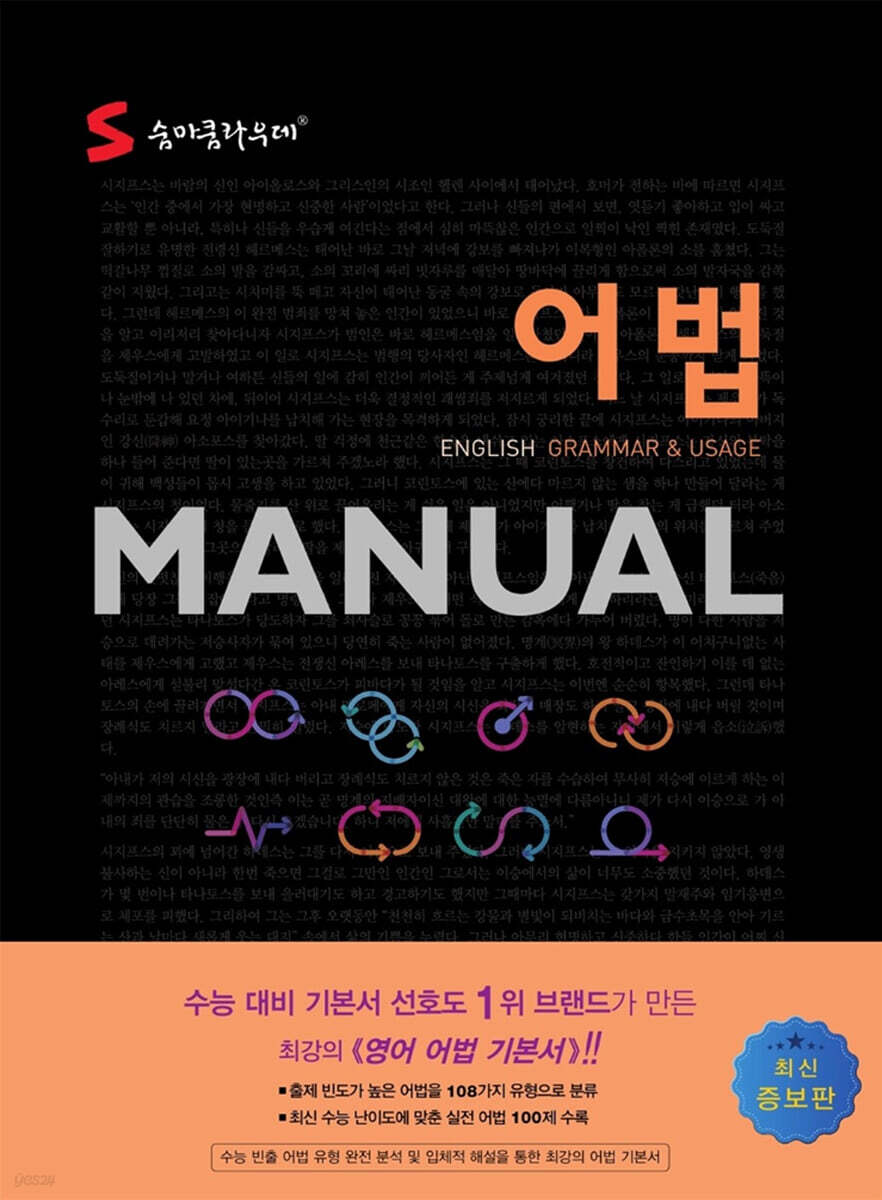
Summa cum laude grammar manual
 |
Description
Book Introduction
The theoretical aspects of English grammar are organized systematically and easily so that you can easily understand English even without any basic knowledge of English grammar.
For each chapter, we analyzed the types of grammar that frequently appear in the CSAT and various mock exams, and presented a three-dimensional problem-solving strategy so that you can easily approach similar types of problems.
Additionally, the frequency of each type of test is displayed to make it easier to identify important issues.
Here are some additional grammar points you should know in relation to learning types.
By focusing on solving high-quality problems that apply the learning types of each chapter, you can effectively prepare for grammar problems.
Additionally, each problem is marked with a three-level difficulty (high, medium, low) so that you can know the level of difficulty of the problem you got wrong and help you evaluate your own skills.
By solving real-life problems, you can thoroughly learn the types of grammar problems you learned before.
You can get a feel for the actual exam and test your skills at the same time by learning questions with passage lengths and difficulty levels that reflect the latest college entrance exam trends.
This guide provides detailed explanations of passages, detailed explanations of correct answers, error checks, vocabulary, and idioms. Structural analysis and explanations of key phrases used in the passages are included to aid self-study. We encourage you to make effective use of the SUB NOTES to maximize your learning experience.
For each chapter, we analyzed the types of grammar that frequently appear in the CSAT and various mock exams, and presented a three-dimensional problem-solving strategy so that you can easily approach similar types of problems.
Additionally, the frequency of each type of test is displayed to make it easier to identify important issues.
Here are some additional grammar points you should know in relation to learning types.
By focusing on solving high-quality problems that apply the learning types of each chapter, you can effectively prepare for grammar problems.
Additionally, each problem is marked with a three-level difficulty (high, medium, low) so that you can know the level of difficulty of the problem you got wrong and help you evaluate your own skills.
By solving real-life problems, you can thoroughly learn the types of grammar problems you learned before.
You can get a feel for the actual exam and test your skills at the same time by learning questions with passage lengths and difficulty levels that reflect the latest college entrance exam trends.
This guide provides detailed explanations of passages, detailed explanations of correct answers, error checks, vocabulary, and idioms. Structural analysis and explanations of key phrases used in the passages are included to aid self-study. We encourage you to make effective use of the SUB NOTES to maximize your learning experience.
- You can preview some of the book's contents.
Preview
index
▣ PART 1 Core CSAT Grammar
CHAPTER 01 Subject-Verb Agreement
ㆍBasic form of subject-verb combination
ㆍSubject always followed by a singular verb
ㆍSubjects always followed by plural verbs
ㆍSubject-verb number agreement to be careful of
CHAPTER 02 Intransitive and Transitive Verbs
ㆍIntransitive verb ㆍTransitive verb
ㆍConfusing intransitive and transitive verbs
CHAPTER 03 Passive Voice
ㆍPassive voice transition and tense
ㆍPassive voice forms according to sentence structure
ㆍPassive voice of verb phrases
ㆍIdiomatic expression of passive voice using prepositions other than by
Verbs that do not use the passive voice
CHAPTER 04 5-Format Sentence Structure
ㆍS+V+O+OC[noun]
ㆍS+V+O+OC[adjective]
ㆍPerceptual verbs ㆍCausative verbs
ㆍS+V[regular verb]+O+to-infinitive
ㆍS+V+O+~ing/pp
ㆍSubject
CHAPTER 05 Tense/Auxiliary Verbs
1.
tense
ㆍBasic tense ㆍPerfect tense ㆍProgressive tense
2.
auxiliary verb
ㆍBasic types of auxiliary verbs
ㆍAuxiliary verb + have pp
ㆍshould, which indicates 'necessity'
ㆍIdiomatic expressions of auxiliary verbs
CHAPTER 06 Infinitives
ㆍCommon usage of infinitives
ㆍInfinitive used as an object
ㆍSubject of the meaning of the infinitive
ㆍTense and voice of infinitive
ㆍSubject/true subject and object/true object
ㆍNegation of infinitives ㆍIdiomatic expressions of infinitives
CHAPTER 07 Gerunds
ㆍCommon usage of gerunds
ㆍThe semantic subject of a gerund
ㆍTense and voice of gerunds
Negation of gerunds
ㆍExpressions using the preposition to and gerunds
ㆍIdiomatic expressions of gerunds
CHAPTER 08 Participles/Participle Phrases
1.
jet
ㆍThe meaning of participles changes depending on the intransitive and transitive verbs
ㆍThe role of participles
ㆍCombination with adjectives or adverbs
ㆍCombination with nouns
2.
Participle phrase
How to create a participle phrase
ㆍTense and voice of participle phrases
ㆍTypes of participle phrases
CHAPTER 09 Pronouns
ㆍTypes of pronouns
ㆍForms to be careful of when receiving a noun (phrase/clause) written in front
CHAPTER 10 Relative Pronouns/Relative Adverbs
1.
Basic roles and cases of relative pronouns
ㆍBasic role of relative pronouns ㆍCase declension
2.
Distinction between relative pronoun that/conjunction that/relative pronoun what
ㆍRelative pronoun that ㆍConjunction that ㆍRelative pronoun what
3.
Usage of relative pronouns/Omission of relative pronouns
ㆍUsage of relative pronouns ㆍOmission of relative pronouns
4.
Relative adverb/complex relative pronoun
ㆍRelative adverbs ㆍCompound relative pronouns
CHAPTER 11 Adjectives, Adverbs, and Comparative Expressions
1.
Adjectives and adverbs
ㆍAdjective ㆍAdverb
2.
comparative expressions
ㆍComparative expressions using the original grade
ㆍComparative expressions using comparative degrees
ㆍHighest level of diverse expressions
ㆍEmphasis on comparative and superlative degrees
ㆍIdiomatic expressions using the primary, comparative, and superlative degrees
Comparative and superlative degrees that change form depending on meaning
CHAPTER 12 CONSUMPTIONAL MOVEMENT
ㆍBasic form of family law
ㆍOther forms of conditional sentences that replace If
ㆍOmission of if in family law
ㆍI wish subjunctive and as if 〔as though〕 subjunctive
ㆍOther conditional sentences
ㆍConjunctions used instead of if to indicate conditions
CHAPTER 13 Parallelism/Inversion/Word Order
1.
Parallel structure
ㆍGeneral form of parallel structure
ㆍParallel structure between specific elements
ㆍCorrelative conjunction
2.
Dochi
ㆍAdverbial phrases of place and direction ㆍNegative words (phrases, clauses)
ㆍInversion after so, nor, neither
ㆍonly adverbial phrase〔adverbial clause〕
ㆍOther inverted forms
3.
Word order
ㆍWord order of so and such
ㆍIndirect questions
▣ PART 2 100 Practical Grammar Questions II
ACTUAL TEST 01 ~ 10 times
▣ [Book within a Book] R Subnote (Answers and Explanations)
CHAPTER 01 Subject-Verb Agreement
ㆍBasic form of subject-verb combination
ㆍSubject always followed by a singular verb
ㆍSubjects always followed by plural verbs
ㆍSubject-verb number agreement to be careful of
CHAPTER 02 Intransitive and Transitive Verbs
ㆍIntransitive verb ㆍTransitive verb
ㆍConfusing intransitive and transitive verbs
CHAPTER 03 Passive Voice
ㆍPassive voice transition and tense
ㆍPassive voice forms according to sentence structure
ㆍPassive voice of verb phrases
ㆍIdiomatic expression of passive voice using prepositions other than by
Verbs that do not use the passive voice
CHAPTER 04 5-Format Sentence Structure
ㆍS+V+O+OC[noun]
ㆍS+V+O+OC[adjective]
ㆍPerceptual verbs ㆍCausative verbs
ㆍS+V[regular verb]+O+to-infinitive
ㆍS+V+O+~ing/pp
ㆍSubject
CHAPTER 05 Tense/Auxiliary Verbs
1.
tense
ㆍBasic tense ㆍPerfect tense ㆍProgressive tense
2.
auxiliary verb
ㆍBasic types of auxiliary verbs
ㆍAuxiliary verb + have pp
ㆍshould, which indicates 'necessity'
ㆍIdiomatic expressions of auxiliary verbs
CHAPTER 06 Infinitives
ㆍCommon usage of infinitives
ㆍInfinitive used as an object
ㆍSubject of the meaning of the infinitive
ㆍTense and voice of infinitive
ㆍSubject/true subject and object/true object
ㆍNegation of infinitives ㆍIdiomatic expressions of infinitives
CHAPTER 07 Gerunds
ㆍCommon usage of gerunds
ㆍThe semantic subject of a gerund
ㆍTense and voice of gerunds
Negation of gerunds
ㆍExpressions using the preposition to and gerunds
ㆍIdiomatic expressions of gerunds
CHAPTER 08 Participles/Participle Phrases
1.
jet
ㆍThe meaning of participles changes depending on the intransitive and transitive verbs
ㆍThe role of participles
ㆍCombination with adjectives or adverbs
ㆍCombination with nouns
2.
Participle phrase
How to create a participle phrase
ㆍTense and voice of participle phrases
ㆍTypes of participle phrases
CHAPTER 09 Pronouns
ㆍTypes of pronouns
ㆍForms to be careful of when receiving a noun (phrase/clause) written in front
CHAPTER 10 Relative Pronouns/Relative Adverbs
1.
Basic roles and cases of relative pronouns
ㆍBasic role of relative pronouns ㆍCase declension
2.
Distinction between relative pronoun that/conjunction that/relative pronoun what
ㆍRelative pronoun that ㆍConjunction that ㆍRelative pronoun what
3.
Usage of relative pronouns/Omission of relative pronouns
ㆍUsage of relative pronouns ㆍOmission of relative pronouns
4.
Relative adverb/complex relative pronoun
ㆍRelative adverbs ㆍCompound relative pronouns
CHAPTER 11 Adjectives, Adverbs, and Comparative Expressions
1.
Adjectives and adverbs
ㆍAdjective ㆍAdverb
2.
comparative expressions
ㆍComparative expressions using the original grade
ㆍComparative expressions using comparative degrees
ㆍHighest level of diverse expressions
ㆍEmphasis on comparative and superlative degrees
ㆍIdiomatic expressions using the primary, comparative, and superlative degrees
Comparative and superlative degrees that change form depending on meaning
CHAPTER 12 CONSUMPTIONAL MOVEMENT
ㆍBasic form of family law
ㆍOther forms of conditional sentences that replace If
ㆍOmission of if in family law
ㆍI wish subjunctive and as if 〔as though〕 subjunctive
ㆍOther conditional sentences
ㆍConjunctions used instead of if to indicate conditions
CHAPTER 13 Parallelism/Inversion/Word Order
1.
Parallel structure
ㆍGeneral form of parallel structure
ㆍParallel structure between specific elements
ㆍCorrelative conjunction
2.
Dochi
ㆍAdverbial phrases of place and direction ㆍNegative words (phrases, clauses)
ㆍInversion after so, nor, neither
ㆍonly adverbial phrase〔adverbial clause〕
ㆍOther inverted forms
3.
Word order
ㆍWord order of so and such
ㆍIndirect questions
▣ PART 2 100 Practical Grammar Questions II
ACTUAL TEST 01 ~ 10 times
▣ [Book within a Book] R Subnote (Answers and Explanations)
GOODS SPECIFICS
- Date of issue: November 20, 2015
- Page count, weight, size: 338 pages | 659g | 190*260*14mm
- ISBN13: 9788959903092
- ISBN10: 8959903094
You may also like
카테고리
korean


korean

![GQ KOREA Mark (Monthly): December [2025]](http://librairie.coreenne.fr/cdn/shop/files/8ef265dbbfbf186523ed75ba7319009d.jpg?v=1765340328&width=3840)


