

My Struggle
 |
Description
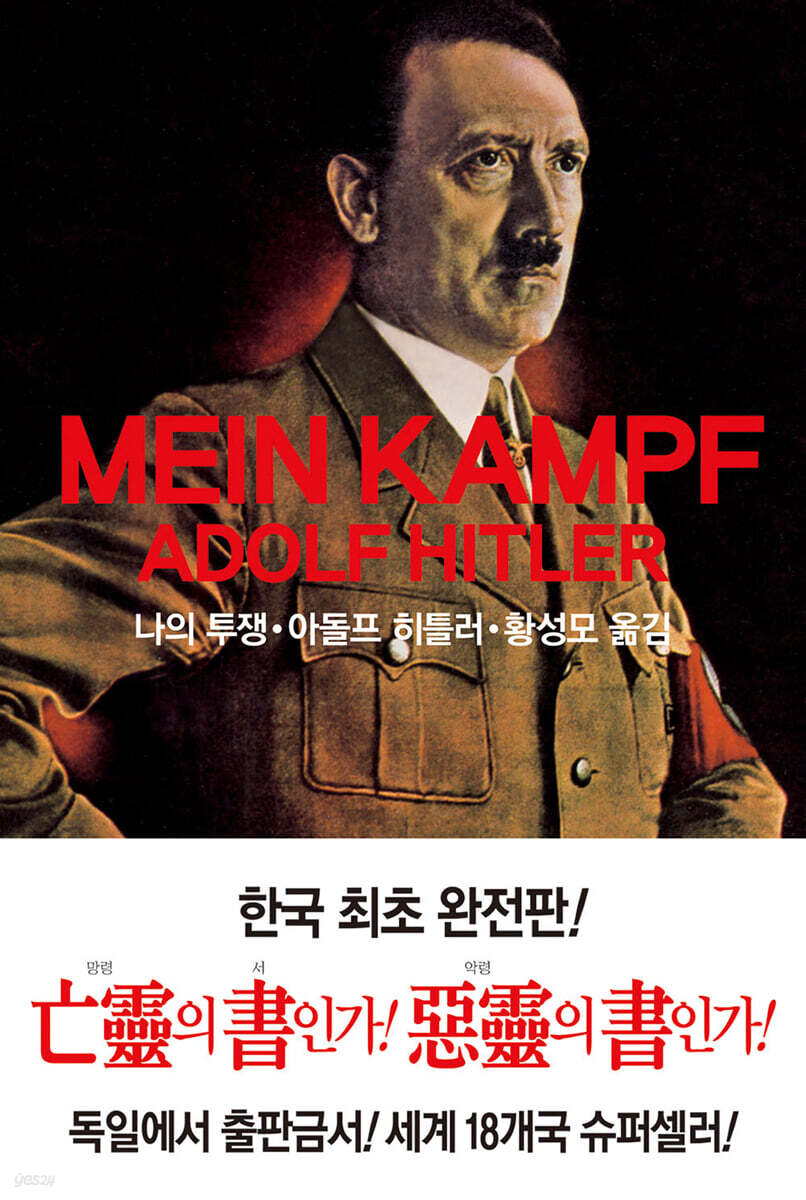
Book Introduction
The first public recording of Hitler's secret suicide note, written just before his death in a bunker! The 1923 Munich Putsch failed, and Hitler was convicted and imprisoned in Landsberg Prison.
Rather than letting this period pass by, he devoted himself to writing and produced many works.
This is My Struggle.
He entrusted his fate to the book he had written with such passion.
In Mein Kampf, Hitler laid out in detail everything he intended to do.
Rather than running away with vague or abstruse words, it contained everything: the program of reign of terror, the plan to implement racism and totalitarianism, and the ambition of world conquest.
Hitler's ambition, which had an extraordinary ability to manipulate the masses and shape public opinion through oratory, is clearly revealed in his words in Mein Kampf: "I know that speech is more effective in persuading people than writing, and that great movements are made not by great writers but by great orators."
Rather than letting this period pass by, he devoted himself to writing and produced many works.
This is My Struggle.
He entrusted his fate to the book he had written with such passion.
In Mein Kampf, Hitler laid out in detail everything he intended to do.
Rather than running away with vague or abstruse words, it contained everything: the program of reign of terror, the plan to implement racism and totalitarianism, and the ambition of world conquest.
Hitler's ambition, which had an extraordinary ability to manipulate the masses and shape public opinion through oratory, is clearly revealed in his words in Mein Kampf: "I know that speech is more effective in persuading people than writing, and that great movements are made not by great writers but by great orators."
- You can preview some of the book's contents.
Preview
index
Color pictorial (16 pages)
Hitler's life and works
Hitler: Who is he? - Sebastian Hafner
1. Wandering
2 Performance
3 successes
4 errors
5 failures
6 crimes
7 Betrayal
What is "My Struggle"? - Antoine Vitquine
Limitations of issuance bans
Who is responsible for the war? The Germans and Mein Kampf
Hitler's life and works
About Mein Kampf I
About Mein Kampf II
Mein Kampf I
Header
Part 1: Nationalistic Worldview
Chapter 1: Taking Your First Steps into This World
Chapter 2: Lessons and Hardships of the Empty Years
Chapter 3: General and Political Reflections on My Empty Years
Chapter 4 Munich
Chapter 5 World War
Chapter 6: Propaganda in Wartime
Chapter 7 Revolution
Chapter 8: The Beginning of My Political Activities
Chapter 9 German Workers' Party
Chapter 10: Causes of Collapse
Chapter 11: Ethnicity and Race
Chapter 12: The First Era of Development of the National Socialist German Workers' Party
Part 2: The National Socialist Movement
Chapter 1: Worldview and the Party
Chapter 2 The State
Chapter 3 Nationality Holders and Citizens of the State
Chapter 4: Personality and the Idea of a National State
Chapter 5: Worldview and Organization
Chapter 6: The Early Struggle: The Importance of Speech
Chapter 7: The Battle with the Red Front
Chapter 8: The Strong Are Strongest Alone
Chapter 9: Fundamental Thoughts on the Meaning and Organization of the Assault Brigade
Chapter 10: The Mask of Federalism
Chapter 11 Propaganda and Organization
Chapter 12: Trade Union Matters
Chapter 13: Postwar German Alliance Policy
Chapter 14: The Eastern Route vs. the Eastern Policy
Chapter 15 Self-Defense as a Right
Conclusion
Mein Kampf II
Header
Chapter 1: The Struggle for Survival and the Peaceful Economic War
Chapter 2: Reasons for and Measures to Secure the Right to Survival
Chapter 3: National Values and Pacifist Democracy
Chapter 4: Criticism of German Foreign Policy and Concrete Proposals
Chapter 5: Domestic and Foreign Policy of the National Socialist German Workers' Party
Chapter 6: German Unification and the Territorial Shortage Problem
Chapter 7: Bismarck's Diplomatic Goals and Subsequent Foreign Policy
Chapter 8: Germany's Resurrection and False Neutrality
Chapter 9: The Purpose of Germany's Territorial Policy
Chapter 10: Basic Principles of German Diplomacy
Chapter 11: Germany's Territorial Policy: Securing the Right to Survive in the East
Chapter 12: National Values and Political Goals
Chapter 13: Commonalities of German and Italian Understanding
Chapter 14: The Essence of the South Tyrol Question and the Shame of German Diplomacy
Chapter 15: Alliance with Italy
Chapter 16: Healthy Blood and Flesh of the Nation
Chapter 17: The Struggle with the Jews
Hitler's political will
The President's Last Words at the Basement Bunker Headquarters
About Hitler's bunker records
Hitler's will
Hitler's chronology
Hitler's life and works
Hitler: Who is he? - Sebastian Hafner
1. Wandering
2 Performance
3 successes
4 errors
5 failures
6 crimes
7 Betrayal
What is "My Struggle"? - Antoine Vitquine
Limitations of issuance bans
Who is responsible for the war? The Germans and Mein Kampf
Hitler's life and works
About Mein Kampf I
About Mein Kampf II
Mein Kampf I
Header
Part 1: Nationalistic Worldview
Chapter 1: Taking Your First Steps into This World
Chapter 2: Lessons and Hardships of the Empty Years
Chapter 3: General and Political Reflections on My Empty Years
Chapter 4 Munich
Chapter 5 World War
Chapter 6: Propaganda in Wartime
Chapter 7 Revolution
Chapter 8: The Beginning of My Political Activities
Chapter 9 German Workers' Party
Chapter 10: Causes of Collapse
Chapter 11: Ethnicity and Race
Chapter 12: The First Era of Development of the National Socialist German Workers' Party
Part 2: The National Socialist Movement
Chapter 1: Worldview and the Party
Chapter 2 The State
Chapter 3 Nationality Holders and Citizens of the State
Chapter 4: Personality and the Idea of a National State
Chapter 5: Worldview and Organization
Chapter 6: The Early Struggle: The Importance of Speech
Chapter 7: The Battle with the Red Front
Chapter 8: The Strong Are Strongest Alone
Chapter 9: Fundamental Thoughts on the Meaning and Organization of the Assault Brigade
Chapter 10: The Mask of Federalism
Chapter 11 Propaganda and Organization
Chapter 12: Trade Union Matters
Chapter 13: Postwar German Alliance Policy
Chapter 14: The Eastern Route vs. the Eastern Policy
Chapter 15 Self-Defense as a Right
Conclusion
Mein Kampf II
Header
Chapter 1: The Struggle for Survival and the Peaceful Economic War
Chapter 2: Reasons for and Measures to Secure the Right to Survival
Chapter 3: National Values and Pacifist Democracy
Chapter 4: Criticism of German Foreign Policy and Concrete Proposals
Chapter 5: Domestic and Foreign Policy of the National Socialist German Workers' Party
Chapter 6: German Unification and the Territorial Shortage Problem
Chapter 7: Bismarck's Diplomatic Goals and Subsequent Foreign Policy
Chapter 8: Germany's Resurrection and False Neutrality
Chapter 9: The Purpose of Germany's Territorial Policy
Chapter 10: Basic Principles of German Diplomacy
Chapter 11: Germany's Territorial Policy: Securing the Right to Survive in the East
Chapter 12: National Values and Political Goals
Chapter 13: Commonalities of German and Italian Understanding
Chapter 14: The Essence of the South Tyrol Question and the Shame of German Diplomacy
Chapter 15: Alliance with Italy
Chapter 16: Healthy Blood and Flesh of the Nation
Chapter 17: The Struggle with the Jews
Hitler's political will
The President's Last Words at the Basement Bunker Headquarters
About Hitler's bunker records
Hitler's will
Hitler's chronology
Publisher's Review
A great politician who captivated the public with his outstanding oratory skills!
'Sir, Hitler.
Name, Adolf.
Occupation, writer'
Nazi leader Hitler wrote this about his occupation to the German tax office in 1925:
This document is still kept by the German tax authorities.
Adolf Hitler is a writer, that's surprising.
You won't find any image of a literary figure in this man who was called a nationalist, a racist, a violent and aggressive rabble-rouser, a frustrated aspiring artist, and eventually a dictator.
The Munich Putsch of 1923 was an unsuccessful attempt, and Hitler was convicted and imprisoned in Landsberg Prison.
Rather than letting this period pass by, he devoted himself to writing and produced many works.
This is My Struggle.
He entrusted his fate to the book he had written with such passion.
In Mein Kampf, Hitler laid out in detail everything he intended to do.
Rather than running away with vague or abstruse words, it contained everything: the program of reign of terror, the plan to implement racism and totalitarianism, and the ambition of world conquest.
Hitler's ambition, which had an extraordinary ability to manipulate the masses and shape public opinion through oratory, is clearly revealed in his words in Mein Kampf: "I know that speech is more effective in persuading people than writing, and that great movements are made not by great writers but by great orators."
The largest-circulation political management book ever!
When Mein Kampf was published in 1925, Hitler reportedly didn't care how well the book was selling.
For him, this book was merely a means of expressing his personal will.
However, Mein Kampf continues to be a top-selling political book even today.
By the time Hitler came to power in 1933, 100,000 copies had already been sold.
In the Third Reich, Mein Kampf sold an astonishing 15 million copies and became a symbol of the Nazi regime.
This book, which was practically the Nazi bible, was often used as a gift for newlyweds and as a textbook for children, and was used in various promotional campaigns using cutting-edge technology.
To make it accessible to more people, a summary and comic book version, as well as a Braille version, were published.
By the 1930s, it had already been translated into over 20 languages and had captivated countless people. During World War II, in France, not only was there a fight against the German army, but there was also a dispute over the copyright of the book.
Even after Hitler's death in 1945 and the end of World War II, Mein Kampf remained an international bestseller.
Outside Germany, millions of copies were sold as research material for the Nazi regime, and according to the American magazine Cabinet, the English edition alone still sells over 100,000 copies a year.
It is showing record sales in many countries around the world, including Europe and the United States, as well as Russia, India, Turkey, Korea, China, Japan, Indonesia, Egypt, and Lebanon.
Even now, more than 80 years after it was written in Hitler's prisons and 60 years after the Auschwitz Holocaust was exposed, Mein Kampf continues to have a tremendous impact on people.
The first complete edition of Dongseo Culture Publishing's "My Struggle"!
《Mein Kampf》Ⅰ is a complete translation of 《Mein Kampf》 written by Adolf Hitler.
The original Part 1 was first published in 1925, and Part 2 in 1927.
The book was later combined into one volume, but here Part 1 is from the second edition published in 1926, and Part 2 is from the first edition published the following year (both Verlag Franz Eher Nachfolger G.
mb
213./217 of the 1936 issue, referring to H., published in Munich.
Ausgabe (Zwei Bande in einem Band, Ungekurzte Ausgabe.
Zentralverlag der NSDAP.
Frz.
(published by Eher Nachf., Munich).
The content remains largely unchanged, but the 'subheadings' have changed slightly.
Mein Kampf II is a complete translation of the 324-page unedited manuscript (original title HITLER MANUSCRIPT) contained on microfilm (file number 105/40) of Adolf Hitler among the German materials in the World War II Record Division of the National Archives in Washington, D.C.
Although it does not contain any more prominent views than the previous volume, it has some material value in terms of content.
A more honest account would reveal much more clearly Hitler's political views and the specificity of his ideas.
To name a few, firstly, it clearly describes not only the relationship between Germany and the United States, but also the relationship between Britain and the United States, especially the conflict between the two countries over economic issues, and also addresses the Jewish question in more detail.
Secondly, it clearly states that Germany's only path forward is to secure the 'right to survive' in the East and to solve its overpopulation problem by acquiring Russian territory.
Is "Mein Kampf" really just a "harmful substance"?
The Allies considered the book a nuisance and attempted to ban its publication permanently after World War II ended.
Germany continues to strongly oppose the publication of this book today, fearing that such ideas, which could lead to war, will spread again.
After the war, the German government took several measures to prevent Franz Eyre from continuing to publish Mein Kampf.
The copyright passed to Bavaria, which banned the book's publication until 2015, 70 years after Hitler's death.
On June 25, 2014 (local time), the justice ministers of Germany's 16 states and the federal government agreed to continue banning Mein Kampf even after its copyright expires in 2016.
However, it was left open that academic books with critical annotations could be published, but even these were subject to a court ruling to determine whether the content was free of errors.
But is this book really that dangerous?
Is it really worth nothing more than being considered a mere 'harmful substance'?
Mein Kampf and the Hitler legend!
Do the ideas contained in “Mein Kampf” still remain today?
Why is this book still selling today?
To understand the fundamental ideology of Hitler, who started World War II, plunged the European continent into war, and persecuted countless ethnic groups, committing mass murder in Auschwitz and other forced labor camps, it is necessary to read Mein Kampf, which was the bible of the Nazi movement.
Of course, the idea cannot be said to be normal or rational, but the argument presented in Mein Kampf is consistent in its own way.
Hitler's insight into mass psychology was remarkable, and his views on propaganda and manipulation of public opinion are also noteworthy.
Hitler's most fundamental ideology is, first of all, the supremacy of the Aryan race (German people) based on his so-called biological viewpoint.
He said that all of humanity can be divided into cultural creators, cultural supporters, and cultural destroyers, and that only the Aryan race is the cultural creator, and other non-Aryan races are at best cultural supporters.
And he said that the people who should be hated the most as destroyers of culture are the Jews.
The Jews, the 'enemies of human culture,' were only destined for extermination.
Hitler wanted to gather supporters before revealing his ideas throughout Germany.
To this end, he calls out his ambitions and gathers his comrades at the end of Mein Kampf.
“In this age when the blood of the people is being polluted, the nation that does its best to preserve its most superior race will surely one day become the ruler of the world.
“We must never forget this fact, even if we feel anxious about the possibility of success in preserving the superior race, comparing it with the sacrifices the Party demands.”
What will humanity learn from Mein Kampf?
As the history of Mein Kampf provides us with valuable lessons, it is only natural that ethical and political issues, as well as historical perspectives, should be addressed.
It is a matter of profound significance that a single dictator, a demagogue, has succeeded in subduing the reason of a nation and leading the masses to a mad crusade that has reshaped the world map by invoking his own prejudices.
Therefore, we must carefully examine Mein Kampf as a crucial resource for a more accurate and deeper understanding of the causes of World War II, one of the greatest tragedies of the 20th century.
Listen to the lessons of the 21st century "Mein Kampf"!
First, we must not underestimate and deal with political plans that are so violent and manipulative that they are absurd and unreliable.
Second, the German people at that time did not have enough political awareness to realize the danger that Hitler and the Nazis would bring.
It is most important for the people to have a true sense of political consciousness.
Third, we must never forget that even in the most mature democratic countries, barbaric acts can occur.
Fourth, this book is a warning about the disastrous consequences of anti-Semitism and racism.
Fifth, the first thing the Nazis took from the Jews was not their lives, but their “freedom of thought.”
Everyone must recognize this as their own problem.
Finally, rather than banning Mein Kampf, it is better to accept it as a chapter in history that teaches us lessons from irreversible events.
What Koreans who desire peace and cherish democracy must bear in mind above all else is the responsibility of the people who entrusted the fate of their nation to Hitler alone, and the foolishness of the people who failed to see through Hitler's veiled true face.
'Sir, Hitler.
Name, Adolf.
Occupation, writer'
Nazi leader Hitler wrote this about his occupation to the German tax office in 1925:
This document is still kept by the German tax authorities.
Adolf Hitler is a writer, that's surprising.
You won't find any image of a literary figure in this man who was called a nationalist, a racist, a violent and aggressive rabble-rouser, a frustrated aspiring artist, and eventually a dictator.
The Munich Putsch of 1923 was an unsuccessful attempt, and Hitler was convicted and imprisoned in Landsberg Prison.
Rather than letting this period pass by, he devoted himself to writing and produced many works.
This is My Struggle.
He entrusted his fate to the book he had written with such passion.
In Mein Kampf, Hitler laid out in detail everything he intended to do.
Rather than running away with vague or abstruse words, it contained everything: the program of reign of terror, the plan to implement racism and totalitarianism, and the ambition of world conquest.
Hitler's ambition, which had an extraordinary ability to manipulate the masses and shape public opinion through oratory, is clearly revealed in his words in Mein Kampf: "I know that speech is more effective in persuading people than writing, and that great movements are made not by great writers but by great orators."
The largest-circulation political management book ever!
When Mein Kampf was published in 1925, Hitler reportedly didn't care how well the book was selling.
For him, this book was merely a means of expressing his personal will.
However, Mein Kampf continues to be a top-selling political book even today.
By the time Hitler came to power in 1933, 100,000 copies had already been sold.
In the Third Reich, Mein Kampf sold an astonishing 15 million copies and became a symbol of the Nazi regime.
This book, which was practically the Nazi bible, was often used as a gift for newlyweds and as a textbook for children, and was used in various promotional campaigns using cutting-edge technology.
To make it accessible to more people, a summary and comic book version, as well as a Braille version, were published.
By the 1930s, it had already been translated into over 20 languages and had captivated countless people. During World War II, in France, not only was there a fight against the German army, but there was also a dispute over the copyright of the book.
Even after Hitler's death in 1945 and the end of World War II, Mein Kampf remained an international bestseller.
Outside Germany, millions of copies were sold as research material for the Nazi regime, and according to the American magazine Cabinet, the English edition alone still sells over 100,000 copies a year.
It is showing record sales in many countries around the world, including Europe and the United States, as well as Russia, India, Turkey, Korea, China, Japan, Indonesia, Egypt, and Lebanon.
Even now, more than 80 years after it was written in Hitler's prisons and 60 years after the Auschwitz Holocaust was exposed, Mein Kampf continues to have a tremendous impact on people.
The first complete edition of Dongseo Culture Publishing's "My Struggle"!
《Mein Kampf》Ⅰ is a complete translation of 《Mein Kampf》 written by Adolf Hitler.
The original Part 1 was first published in 1925, and Part 2 in 1927.
The book was later combined into one volume, but here Part 1 is from the second edition published in 1926, and Part 2 is from the first edition published the following year (both Verlag Franz Eher Nachfolger G.
mb
213./217 of the 1936 issue, referring to H., published in Munich.
Ausgabe (Zwei Bande in einem Band, Ungekurzte Ausgabe.
Zentralverlag der NSDAP.
Frz.
(published by Eher Nachf., Munich).
The content remains largely unchanged, but the 'subheadings' have changed slightly.
Mein Kampf II is a complete translation of the 324-page unedited manuscript (original title HITLER MANUSCRIPT) contained on microfilm (file number 105/40) of Adolf Hitler among the German materials in the World War II Record Division of the National Archives in Washington, D.C.
Although it does not contain any more prominent views than the previous volume, it has some material value in terms of content.
A more honest account would reveal much more clearly Hitler's political views and the specificity of his ideas.
To name a few, firstly, it clearly describes not only the relationship between Germany and the United States, but also the relationship between Britain and the United States, especially the conflict between the two countries over economic issues, and also addresses the Jewish question in more detail.
Secondly, it clearly states that Germany's only path forward is to secure the 'right to survive' in the East and to solve its overpopulation problem by acquiring Russian territory.
Is "Mein Kampf" really just a "harmful substance"?
The Allies considered the book a nuisance and attempted to ban its publication permanently after World War II ended.
Germany continues to strongly oppose the publication of this book today, fearing that such ideas, which could lead to war, will spread again.
After the war, the German government took several measures to prevent Franz Eyre from continuing to publish Mein Kampf.
The copyright passed to Bavaria, which banned the book's publication until 2015, 70 years after Hitler's death.
On June 25, 2014 (local time), the justice ministers of Germany's 16 states and the federal government agreed to continue banning Mein Kampf even after its copyright expires in 2016.
However, it was left open that academic books with critical annotations could be published, but even these were subject to a court ruling to determine whether the content was free of errors.
But is this book really that dangerous?
Is it really worth nothing more than being considered a mere 'harmful substance'?
Mein Kampf and the Hitler legend!
Do the ideas contained in “Mein Kampf” still remain today?
Why is this book still selling today?
To understand the fundamental ideology of Hitler, who started World War II, plunged the European continent into war, and persecuted countless ethnic groups, committing mass murder in Auschwitz and other forced labor camps, it is necessary to read Mein Kampf, which was the bible of the Nazi movement.
Of course, the idea cannot be said to be normal or rational, but the argument presented in Mein Kampf is consistent in its own way.
Hitler's insight into mass psychology was remarkable, and his views on propaganda and manipulation of public opinion are also noteworthy.
Hitler's most fundamental ideology is, first of all, the supremacy of the Aryan race (German people) based on his so-called biological viewpoint.
He said that all of humanity can be divided into cultural creators, cultural supporters, and cultural destroyers, and that only the Aryan race is the cultural creator, and other non-Aryan races are at best cultural supporters.
And he said that the people who should be hated the most as destroyers of culture are the Jews.
The Jews, the 'enemies of human culture,' were only destined for extermination.
Hitler wanted to gather supporters before revealing his ideas throughout Germany.
To this end, he calls out his ambitions and gathers his comrades at the end of Mein Kampf.
“In this age when the blood of the people is being polluted, the nation that does its best to preserve its most superior race will surely one day become the ruler of the world.
“We must never forget this fact, even if we feel anxious about the possibility of success in preserving the superior race, comparing it with the sacrifices the Party demands.”
What will humanity learn from Mein Kampf?
As the history of Mein Kampf provides us with valuable lessons, it is only natural that ethical and political issues, as well as historical perspectives, should be addressed.
It is a matter of profound significance that a single dictator, a demagogue, has succeeded in subduing the reason of a nation and leading the masses to a mad crusade that has reshaped the world map by invoking his own prejudices.
Therefore, we must carefully examine Mein Kampf as a crucial resource for a more accurate and deeper understanding of the causes of World War II, one of the greatest tragedies of the 20th century.
Listen to the lessons of the 21st century "Mein Kampf"!
First, we must not underestimate and deal with political plans that are so violent and manipulative that they are absurd and unreliable.
Second, the German people at that time did not have enough political awareness to realize the danger that Hitler and the Nazis would bring.
It is most important for the people to have a true sense of political consciousness.
Third, we must never forget that even in the most mature democratic countries, barbaric acts can occur.
Fourth, this book is a warning about the disastrous consequences of anti-Semitism and racism.
Fifth, the first thing the Nazis took from the Jews was not their lives, but their “freedom of thought.”
Everyone must recognize this as their own problem.
Finally, rather than banning Mein Kampf, it is better to accept it as a chapter in history that teaches us lessons from irreversible events.
What Koreans who desire peace and cherish democracy must bear in mind above all else is the responsibility of the people who entrusted the fate of their nation to Hitler alone, and the foolishness of the people who failed to see through Hitler's veiled true face.
GOODS SPECIFICS
- Date of issue: September 1, 2014
- Format: Hardcover book binding method guide
- Page count, weight, size: 1,148 pages | 153*224*60mm
- ISBN13: 9788949708850
- ISBN10: 894970885X
You may also like
카테고리
korean


korean

![GQ KOREA Mark (Monthly): December [2025]](http://librairie.coreenne.fr/cdn/shop/files/8ef265dbbfbf186523ed75ba7319009d.jpg?v=1765340328&width=3840)


