

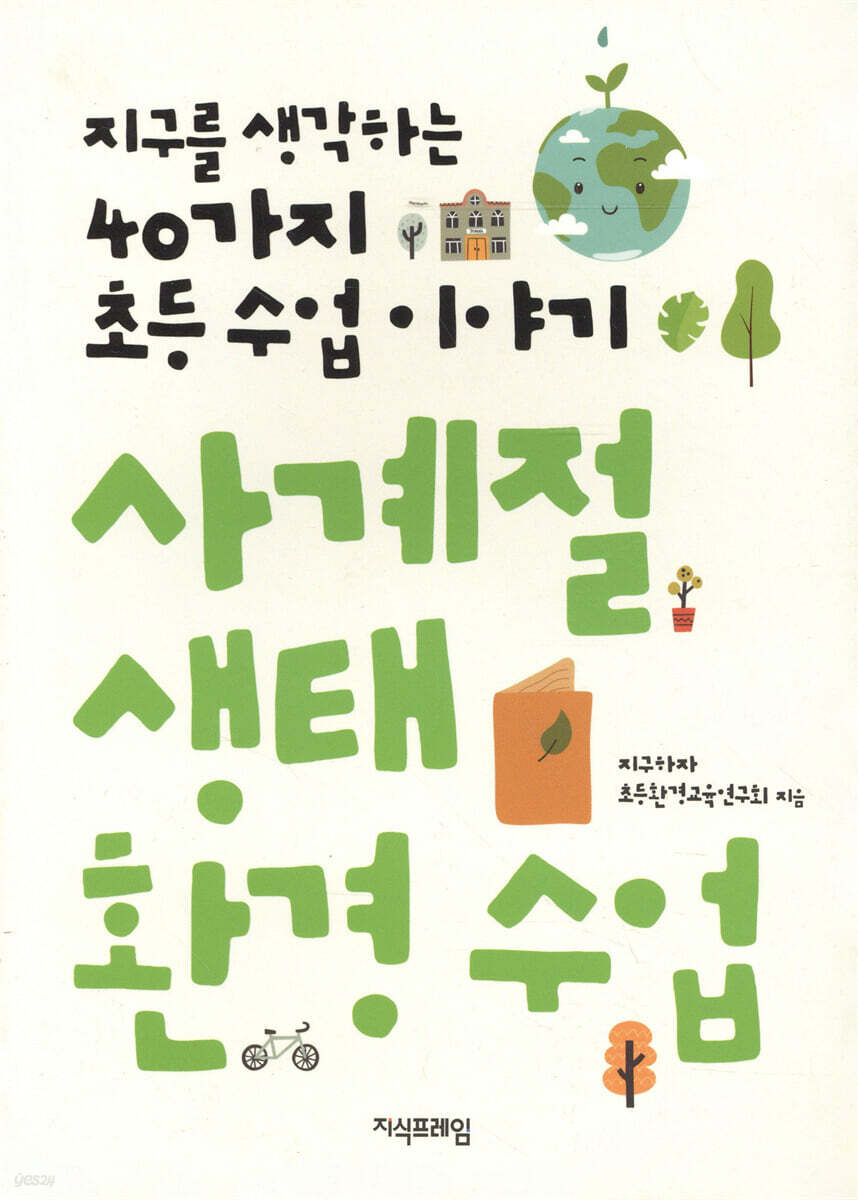
Four Seasons Ecology Environment Class
 |
Description
Book Introduction
40 Easy and Fun Ecology Lessons
In response to the climate crisis, a global problem, our country will also make ecological environmental education mandatory starting in 2023.
However, interest in environmental education and practical examples of classes are still lacking.
Even if teachers are aware of environmental issues, if they cannot teach classes that change children's lives, it is nothing more than empty words.
It's easy to think that the story of a polar bear heard while enjoying the cool air conditioning in the classroom may cause a momentary emotional stir, but it has nothing to do with me right now.
This book contains 40 ecological lessons that can be used in each season.
It covers a variety of issues related to the environment, including various types of waste, endangered animals, microplastics, eco-friendly energy, plants and insects, animal welfare, climate refugees, ESG, carbon neutrality, and resource circulation. Each class is filled with diverse activities that change children's thoughts and attitudes toward the environment, such as role-playing, interviews, plogging, can crushing, making seed bombs, and writing letters to companies.
Teachers who hope to raise children who respect life and live with eco-friendly attitudes and behaviors to protect a sustainable Earth will be able to begin environmental classes that are both meaningful and fun through this book.
In response to the climate crisis, a global problem, our country will also make ecological environmental education mandatory starting in 2023.
However, interest in environmental education and practical examples of classes are still lacking.
Even if teachers are aware of environmental issues, if they cannot teach classes that change children's lives, it is nothing more than empty words.
It's easy to think that the story of a polar bear heard while enjoying the cool air conditioning in the classroom may cause a momentary emotional stir, but it has nothing to do with me right now.
This book contains 40 ecological lessons that can be used in each season.
It covers a variety of issues related to the environment, including various types of waste, endangered animals, microplastics, eco-friendly energy, plants and insects, animal welfare, climate refugees, ESG, carbon neutrality, and resource circulation. Each class is filled with diverse activities that change children's thoughts and attitudes toward the environment, such as role-playing, interviews, plogging, can crushing, making seed bombs, and writing letters to companies.
Teachers who hope to raise children who respect life and live with eco-friendly attitudes and behaviors to protect a sustainable Earth will be able to begin environmental classes that are both meaningful and fun through this book.
- You can preview some of the book's contents.
Preview
index
prolog
Part 1.
Spring
01.
Earth Day to Save the Earth
02.
Paperless Arbor Day
03.
Establishing environmentally conscious classroom rules
04.
The correct way to dispose of trash
05.
Making a school plant guide
06.
Life-saving seed bomb
07.
Making eco-friendly insect repellent
08.
What if bees disappeared from the world?
09.
Protect endangered animals!
10.
Today is a day without fine dust
Part 2.
Summer
11.
World Environment Day - Cancrush
12.
Plastic bags are plastic?
13.
Reducing our water footprint
14.
My friend, green energy
15.
An eco-friendly energy city that saves the planet
16.
Sea covered with trash
17.
Emergency! Strange weather
18.
Write letters to companies to reduce waste
19.
On the move! Our neighborhood trash investigation team
20.
destination of garbage
Part 3.
Autumn
21.
Creating a Protocol to Protect the Ozone Layer
22.
Finding the Rights of Farm Animals
23.
Stop the hype!
24.
What happens after we eat?
25.
Environmentally conscious food consumers
26.
No animal testing!
27.
Youth Climate Action Campaign
28.
The environment and society are happy together.
29.
The story of plants we didn't know
30.
Picking up trash around schools - plogging
Part 4.
Winter
31.
Create your own wetland travel itinerary
32.
Protect the soil!
33.
A hot Earth is dangerous!
34.
Carbon Footprint Life Game
35.
Keep the temperature at 1.5℃! Operation Carbon Neutrality
36.
Climate Refugees, Climate Justice Class
37.
Share your environmental activities from the past year
38.
Learn about hazardous chemicals in everyday life
39.
Environmental Career Education - Green Jobs
40.
Resource Circulation in the Classroom - Upcycling
Part 1.
Spring
01.
Earth Day to Save the Earth
02.
Paperless Arbor Day
03.
Establishing environmentally conscious classroom rules
04.
The correct way to dispose of trash
05.
Making a school plant guide
06.
Life-saving seed bomb
07.
Making eco-friendly insect repellent
08.
What if bees disappeared from the world?
09.
Protect endangered animals!
10.
Today is a day without fine dust
Part 2.
Summer
11.
World Environment Day - Cancrush
12.
Plastic bags are plastic?
13.
Reducing our water footprint
14.
My friend, green energy
15.
An eco-friendly energy city that saves the planet
16.
Sea covered with trash
17.
Emergency! Strange weather
18.
Write letters to companies to reduce waste
19.
On the move! Our neighborhood trash investigation team
20.
destination of garbage
Part 3.
Autumn
21.
Creating a Protocol to Protect the Ozone Layer
22.
Finding the Rights of Farm Animals
23.
Stop the hype!
24.
What happens after we eat?
25.
Environmentally conscious food consumers
26.
No animal testing!
27.
Youth Climate Action Campaign
28.
The environment and society are happy together.
29.
The story of plants we didn't know
30.
Picking up trash around schools - plogging
Part 4.
Winter
31.
Create your own wetland travel itinerary
32.
Protect the soil!
33.
A hot Earth is dangerous!
34.
Carbon Footprint Life Game
35.
Keep the temperature at 1.5℃! Operation Carbon Neutrality
36.
Climate Refugees, Climate Justice Class
37.
Share your environmental activities from the past year
38.
Learn about hazardous chemicals in everyday life
39.
Environmental Career Education - Green Jobs
40.
Resource Circulation in the Classroom - Upcycling
Into the book
Children scream in excitement at the slightest bug in the classroom.
Even if the bug is a bee, the problem becomes unmanageable.
Bees are a scary sight to children, but what would happen if bees disappeared from the world? Physicist Albert Einstein once said, "If bees become extinct, humanity will disappear within four years."
What is the connection between honeybee extinction and humanity? The answer lies in biodiversity.
This lesson focuses on biodiversity and how all living things play a role in an ecosystem.
Students will naturally come to understand why we must respect biodiversity by looking at animals they might normally overlook through their favorite cartoons, conducting interviews with animals about their stories, and creating a quiz book to share with their partners.
---「PART 1.
Spring - 08.
From "What if bees disappeared from the world?"
Because 70% of the Earth is water, many people believe that water resources are abundant and limitless.
But the water we have available is very limited.
And we need to think about the 'water footprint', which represents the amount of water used throughout the entire process from raw materials, manufacturing, distribution, use, and disposal of a product, not just when using 'water' itself.
How long will we be able to use water resources without inconvenience? In some parts of the world, people already spend significant amounts of time each day securing the water resources necessary for sustaining life.
This time, we'll learn about World Water Day and examine our water usage habits.
Let's learn about our water footprint and practical ways to reduce water consumption in our daily lives, and realize the importance of water resources.
---「PART 2.
Summer - 13.
From “Reducing Water Footprint”
Perhaps the most enjoyable time during a child's school life is lunch time.
Checking the daily menu and sharing which menu items are the most delicious and which day of the week's meals are their favorite is an important part of children's daily routine.
However, there are many cases where people receive additional side dishes that suit their tastes and then throw them away.
Through this lesson, children learned that in addition to the moral principle of not throwing away food waste, much of what we throw away as food waste cannot be recycled and that such discarded waste emits carbon.
If we continue this practice with a class that fosters the habit of not leaving food behind, so that these thoughts can be put into practice, we can internalize and even make the practice of reducing food waste a habit.
---「PART 3.
Fall - 24.
After we eat?
What actions can students take to protect the soil? Examples include not littering, not leaving food scraps behind, properly separating and disposing of waste medicines and batteries, and eating produce labeled as organic or pesticide-free.
By setting these activities as weekly missions for each class and putting them into practice, I can feel that my small and insignificant actions are connected to the health of the earth.
After class, as a follow-up activity, I introduced organic and pesticide-free marks and gave the students the mission of 'finding marks at home or at the supermarket throughout the day'. That afternoon, some students visited the supermarket and stamped organic marks and sent them in, while others found rice or vegetables at home and stamped pesticide-free marks and sent them in.
It only takes 3 seconds to check the mark, but this choice can keep the land healthy for 30 years.
I believe that through this class, you will have grown a little more in your appreciation for the soil, which is both close and distant.
Even if the bug is a bee, the problem becomes unmanageable.
Bees are a scary sight to children, but what would happen if bees disappeared from the world? Physicist Albert Einstein once said, "If bees become extinct, humanity will disappear within four years."
What is the connection between honeybee extinction and humanity? The answer lies in biodiversity.
This lesson focuses on biodiversity and how all living things play a role in an ecosystem.
Students will naturally come to understand why we must respect biodiversity by looking at animals they might normally overlook through their favorite cartoons, conducting interviews with animals about their stories, and creating a quiz book to share with their partners.
---「PART 1.
Spring - 08.
From "What if bees disappeared from the world?"
Because 70% of the Earth is water, many people believe that water resources are abundant and limitless.
But the water we have available is very limited.
And we need to think about the 'water footprint', which represents the amount of water used throughout the entire process from raw materials, manufacturing, distribution, use, and disposal of a product, not just when using 'water' itself.
How long will we be able to use water resources without inconvenience? In some parts of the world, people already spend significant amounts of time each day securing the water resources necessary for sustaining life.
This time, we'll learn about World Water Day and examine our water usage habits.
Let's learn about our water footprint and practical ways to reduce water consumption in our daily lives, and realize the importance of water resources.
---「PART 2.
Summer - 13.
From “Reducing Water Footprint”
Perhaps the most enjoyable time during a child's school life is lunch time.
Checking the daily menu and sharing which menu items are the most delicious and which day of the week's meals are their favorite is an important part of children's daily routine.
However, there are many cases where people receive additional side dishes that suit their tastes and then throw them away.
Through this lesson, children learned that in addition to the moral principle of not throwing away food waste, much of what we throw away as food waste cannot be recycled and that such discarded waste emits carbon.
If we continue this practice with a class that fosters the habit of not leaving food behind, so that these thoughts can be put into practice, we can internalize and even make the practice of reducing food waste a habit.
---「PART 3.
Fall - 24.
After we eat?
What actions can students take to protect the soil? Examples include not littering, not leaving food scraps behind, properly separating and disposing of waste medicines and batteries, and eating produce labeled as organic or pesticide-free.
By setting these activities as weekly missions for each class and putting them into practice, I can feel that my small and insignificant actions are connected to the health of the earth.
After class, as a follow-up activity, I introduced organic and pesticide-free marks and gave the students the mission of 'finding marks at home or at the supermarket throughout the day'. That afternoon, some students visited the supermarket and stamped organic marks and sent them in, while others found rice or vegetables at home and stamped pesticide-free marks and sent them in.
It only takes 3 seconds to check the mark, but this choice can keep the land healthy for 30 years.
I believe that through this class, you will have grown a little more in your appreciation for the soil, which is both close and distant.
---「PART 4.
Winter - 32.
From "Protect the Soil!"
Winter - 32.
From "Protect the Soil!"
Publisher's Review
Environmental education that starts easily in the classroom
Even if a teacher decides to teach environmental education, it takes considerable effort and time to decide which subject to teach, what goals to achieve, and what activities to include.
This book provides learning objectives, subject achievement standards, lesson flow, and assessment plans for each environmental class, and explains in detail the order and methods of activities.
Additionally, the various tips and vivid class reviews that will enrich your classes will help break down the barriers felt by teachers who want to start teaching environmental classes.
This book covers a variety of environmental issues appropriate for each season, making it possible to practice environmental classes whenever necessary during the semester.
By using the Earth Society's environmental instrument educational materials, videos, PPTs, and activity sheets provided as QR codes along with the 'Good to Know' content at the end of the text, you can convey accurate information to children and conduct interesting activities.
Environmental education that begins in my life and expands into global action.
Even if you have a strong desire to solve environmental problems, it's easy to become frustrated when faced with a macro issue like the climate crisis, feeling like you can't solve it on your own.
So, it's a good idea to start with a small part of your daily life and gradually expand the scope.
The goal is to help children develop an interest in the environment and awareness of its issues through activities they can practice in their daily lives, such as not leaving any leftover food, picking up trash, separating waste, and wrapping gifts with recycled paper.
This book presents a variety of environmental activities that children can easily follow in their daily lives.
This includes finding out what kind of environmental pollution the side dishes I leave behind during lunch time cause, creating campaign art using beverage cans, investigating where and how much trash polluting our neighborhood comes from, and playing the Carbon Footprint Life Game to reflect on my choices so far and learn what eco-friendly choices are.
By becoming interested in the environment surrounding us in this way, we come to realize that we must protect the Earth's environment, and ultimately, we can become interested in macro-level environmental issues.
Environmental education that fosters children with a sense of self-reliance and citizenship.
By following the environmental lessons presented in this book, you can help children gradually grow into active citizens who can voice their opinions on environmental issues.
They learn about animal welfare through the treatment of farm animals and the uncomfortable truth about animal testing, write letters to companies asking them to reduce unnecessary plastic in their products, and consider how to exercise their rights as consumers by choosing local foods with a lower carbon footprint.
By designing and building an eco-friendly energy city, students can think about energy production and power generation, experience the regional conflicts and inequalities surrounding waste through a landfill site selection game, and realize that their actions can change the world by raising awareness of environmental issues not only in their schools but also in their local communities through climate crisis campaigns.
The authors of this book say that "even inconsistent and small actions are definitely better than doing nothing," and that although the future is still uncertain due to the climate crisis, the world is changing little by little thanks to the efforts of many people, and that we must instill that small hope in our children.
The massive environmental problem of the climate crisis cannot be solved through individual efforts alone.
Therefore, teachers need to make more efforts to guide children to become democratic citizens who can speak up and unite.
This book will help you take those small but powerful steps.
Even if a teacher decides to teach environmental education, it takes considerable effort and time to decide which subject to teach, what goals to achieve, and what activities to include.
This book provides learning objectives, subject achievement standards, lesson flow, and assessment plans for each environmental class, and explains in detail the order and methods of activities.
Additionally, the various tips and vivid class reviews that will enrich your classes will help break down the barriers felt by teachers who want to start teaching environmental classes.
This book covers a variety of environmental issues appropriate for each season, making it possible to practice environmental classes whenever necessary during the semester.
By using the Earth Society's environmental instrument educational materials, videos, PPTs, and activity sheets provided as QR codes along with the 'Good to Know' content at the end of the text, you can convey accurate information to children and conduct interesting activities.
Environmental education that begins in my life and expands into global action.
Even if you have a strong desire to solve environmental problems, it's easy to become frustrated when faced with a macro issue like the climate crisis, feeling like you can't solve it on your own.
So, it's a good idea to start with a small part of your daily life and gradually expand the scope.
The goal is to help children develop an interest in the environment and awareness of its issues through activities they can practice in their daily lives, such as not leaving any leftover food, picking up trash, separating waste, and wrapping gifts with recycled paper.
This book presents a variety of environmental activities that children can easily follow in their daily lives.
This includes finding out what kind of environmental pollution the side dishes I leave behind during lunch time cause, creating campaign art using beverage cans, investigating where and how much trash polluting our neighborhood comes from, and playing the Carbon Footprint Life Game to reflect on my choices so far and learn what eco-friendly choices are.
By becoming interested in the environment surrounding us in this way, we come to realize that we must protect the Earth's environment, and ultimately, we can become interested in macro-level environmental issues.
Environmental education that fosters children with a sense of self-reliance and citizenship.
By following the environmental lessons presented in this book, you can help children gradually grow into active citizens who can voice their opinions on environmental issues.
They learn about animal welfare through the treatment of farm animals and the uncomfortable truth about animal testing, write letters to companies asking them to reduce unnecessary plastic in their products, and consider how to exercise their rights as consumers by choosing local foods with a lower carbon footprint.
By designing and building an eco-friendly energy city, students can think about energy production and power generation, experience the regional conflicts and inequalities surrounding waste through a landfill site selection game, and realize that their actions can change the world by raising awareness of environmental issues not only in their schools but also in their local communities through climate crisis campaigns.
The authors of this book say that "even inconsistent and small actions are definitely better than doing nothing," and that although the future is still uncertain due to the climate crisis, the world is changing little by little thanks to the efforts of many people, and that we must instill that small hope in our children.
The massive environmental problem of the climate crisis cannot be solved through individual efforts alone.
Therefore, teachers need to make more efforts to guide children to become democratic citizens who can speak up and unite.
This book will help you take those small but powerful steps.
GOODS SPECIFICS
- Publication date: November 20, 2022
- Page count, weight, size: 296 pages | 482g | 150*210*18mm
- ISBN13: 9788994655079
- ISBN 10: 8994655077
You may also like
카테고리
korean


korean

![GQ KOREA Mark (Monthly): December [2025]](http://librairie.coreenne.fr/cdn/shop/files/8ef265dbbfbf186523ed75ba7319009d.jpg?v=1765340328&width=3840)


