

Sociality of Slow Learners
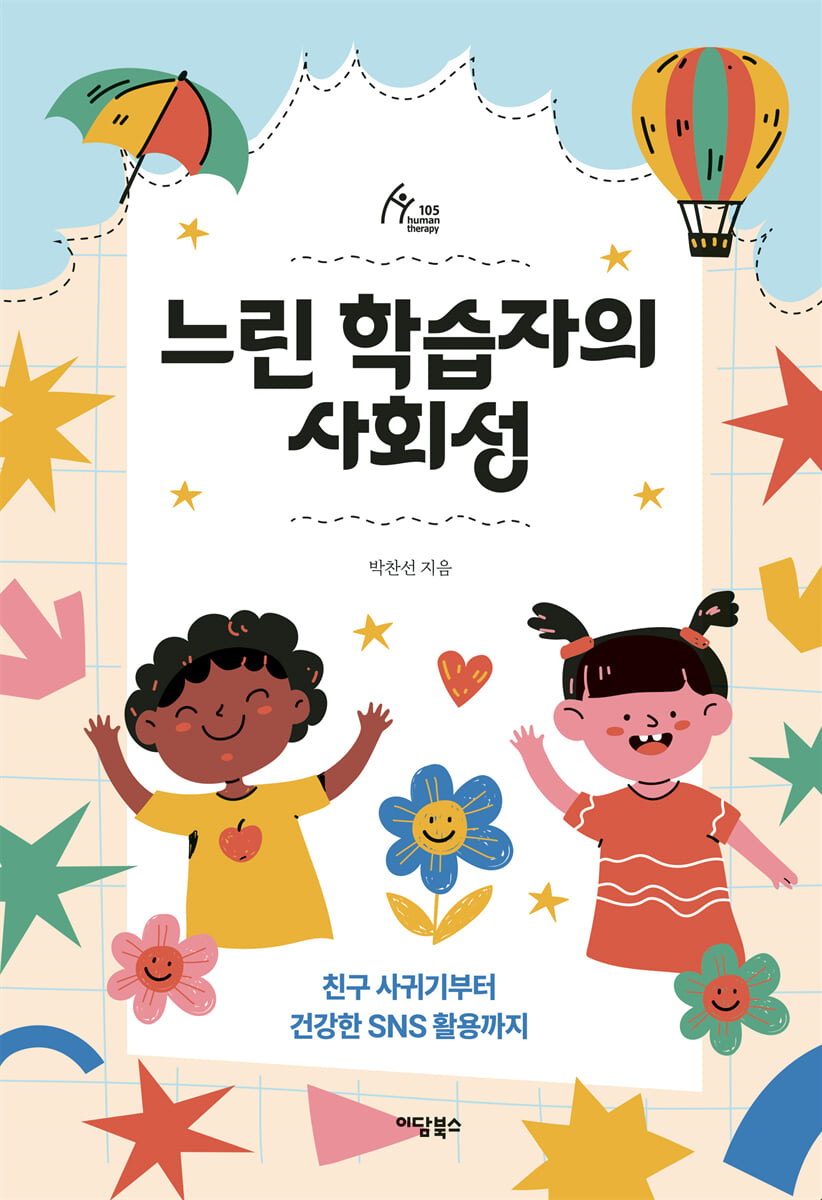 |
Description
Book Introduction
A new book has been published by Chan-seon Park, who has received much attention for his books for slow learners and their primary caregivers, including “Children with Borderline Intelligence,” “Borderline Intelligence and Parents,” and “Studying for Slow Learners.”
The author, who has been sparing no effort in providing continuous support to help slow learners take care of the details, has now turned to the topic of 'sociality'.
As we navigate a period of isolation and separation from others due to the COVID-19 virus and the spread of AI, which has led to the establishment of a more individualistic culture, many are talking about sociality.
However, in the same situation, the worries of slow learners are bound to be deeper.
This book explores how countless children with borderline intelligence and learning disabilities can reconcile themselves with the world around them.
You can learn about specific examples, from how to get along with peers to how to use social media in a healthy way.
The author, who has been sparing no effort in providing continuous support to help slow learners take care of the details, has now turned to the topic of 'sociality'.
As we navigate a period of isolation and separation from others due to the COVID-19 virus and the spread of AI, which has led to the establishment of a more individualistic culture, many are talking about sociality.
However, in the same situation, the worries of slow learners are bound to be deeper.
This book explores how countless children with borderline intelligence and learning disabilities can reconcile themselves with the world around them.
You can learn about specific examples, from how to get along with peers to how to use social media in a healthy way.
- You can preview some of the book's contents.
Preview
index
Prologue | Sociality in a Changing Age
Part 1.
Slow Learners: How to Start Social Development
Chapter 1.
Why is it hard to make friends?
Who are slow learners?
Sociality of Slow Learners
Reasons for lack of social skills
Social Development Assessment and Checklist
Chapter 2.
The first step toward social development
The importance of understanding myself
Development of self-understanding
How to Increase Self-Understanding
Part 2.
The best way to develop social skills
Chapter 3.
The Key to Discovering Your Child's Social Skills
Teaching from experience
Courageous support from parents
Four Social Guiding Principles
Chapter 4.
Best social skills and core experiences
The experience of 'play', the first step in starting a relationship
The experience of 'working' to learn the ability to regulate
The experience of 'gaming' to learn healthy competitiveness
The experience of 'speaking' to clearly express one's thoughts
Experience of 'problem solving' that develops conflict resolution skills
The experience of 'planning' that develops execution skills
Part 3.
The social network era and sociality
Chapter 5.
Strategies for leveraging social networks
Leveraging the power of the digital environment
Things to Teach When Using the Internet
How to Help You Post Carefully on Social Media
Understanding the other person's thoughts in Messenger
Problems with unhealthy information and contact with inappropriate people
Teaching standards for proper sexual behavior
Teaching Smart Digital Communication
Chapter 6. Helping Slow Learners Who Experience Social Media Bullying
Psychological difficulties faced by slow learners
Main types of SNS group bullying
Helping children who are being bullied
How to respond immediately when bullying occurs
Part 4.
Social Difficulties Map
Chapter 7.
Examples of social difficulties in the classroom
Why are you only focusing on that child? - Peers' backlash, feeling discriminated against
A child who stands out in everything - an action taken to attract attention
A child who wanders alone - when he or she cannot get along with peers
A child who rebels against the teacher - when emotions are difficult to control
Children who refuse group activities - have difficulty cooperating
Children who frequently fight with their peers - when maintaining relationships is difficult
Chapter 8.
Guiding Social Difficulties at Home
A child who refuses guidance from his school teacher
A child who is absorbed in games all day long
A child asking his younger sibling for help
A child who has difficulty maintaining a regular routine
A child who refuses to go to school
References and Further Reading
A Parent's Self-Checklist for Guiding Social Skills in Slow Learners
Epilogue
Part 1.
Slow Learners: How to Start Social Development
Chapter 1.
Why is it hard to make friends?
Who are slow learners?
Sociality of Slow Learners
Reasons for lack of social skills
Social Development Assessment and Checklist
Chapter 2.
The first step toward social development
The importance of understanding myself
Development of self-understanding
How to Increase Self-Understanding
Part 2.
The best way to develop social skills
Chapter 3.
The Key to Discovering Your Child's Social Skills
Teaching from experience
Courageous support from parents
Four Social Guiding Principles
Chapter 4.
Best social skills and core experiences
The experience of 'play', the first step in starting a relationship
The experience of 'working' to learn the ability to regulate
The experience of 'gaming' to learn healthy competitiveness
The experience of 'speaking' to clearly express one's thoughts
Experience of 'problem solving' that develops conflict resolution skills
The experience of 'planning' that develops execution skills
Part 3.
The social network era and sociality
Chapter 5.
Strategies for leveraging social networks
Leveraging the power of the digital environment
Things to Teach When Using the Internet
How to Help You Post Carefully on Social Media
Understanding the other person's thoughts in Messenger
Problems with unhealthy information and contact with inappropriate people
Teaching standards for proper sexual behavior
Teaching Smart Digital Communication
Chapter 6. Helping Slow Learners Who Experience Social Media Bullying
Psychological difficulties faced by slow learners
Main types of SNS group bullying
Helping children who are being bullied
How to respond immediately when bullying occurs
Part 4.
Social Difficulties Map
Chapter 7.
Examples of social difficulties in the classroom
Why are you only focusing on that child? - Peers' backlash, feeling discriminated against
A child who stands out in everything - an action taken to attract attention
A child who wanders alone - when he or she cannot get along with peers
A child who rebels against the teacher - when emotions are difficult to control
Children who refuse group activities - have difficulty cooperating
Children who frequently fight with their peers - when maintaining relationships is difficult
Chapter 8.
Guiding Social Difficulties at Home
A child who refuses guidance from his school teacher
A child who is absorbed in games all day long
A child asking his younger sibling for help
A child who has difficulty maintaining a regular routine
A child who refuses to go to school
References and Further Reading
A Parent's Self-Checklist for Guiding Social Skills in Slow Learners
Epilogue
Detailed image

Into the book
So, does social skills simply mean the ability to conform to others' standards? Is there a way for slow learners to take charge and build relationships? Can't they be truly wonderful just the way they are? Can't they develop social skills without the pressure of conforming to others? Slow learners struggle with interacting with their peers.
It's hard to accurately understand your friend's intentions, and you may feel left out of conversations because you don't know what to say and when.
You want to participate in the game, but you hesitate because you don't know how to start, and you end up being left alone.
Every time I see this, I find myself pondering more deeply, "What should social skills be for slow learners?"
--- p.4
Slow learners often have difficulty accomplishing things on their own in everyday life.
From basic self-care to learning and relationships with friends, children experience trial and error in many areas, and naturally require help from parents or teachers.
For example, even when children their age are able to dress themselves and pack their bags, slow learners often struggle and are unable to complete their preparations without parental assistance.
As this situation repeats itself, parents end up taking care of their children so that they do not experience any discomfort, and the children gradually develop the habit of relying on their parents rather than solving problems on their own.
The experience of doing things on your own is decreasing.
If this kind of parent-child relationship continues, slow learners will begin to feel that even the things they need to do and are capable of doing are difficult without parental help.
--- p.29
Self-understanding also plays an important role in our relationships with others.
The better a child knows himself, the more likely he is to express his emotions appropriately and to have empathy for others.
Additionally, knowing what you like and what you're good at makes it easier to find common ground with your peers, which helps you make friends naturally.
Conversely, children who lack self-understanding may have difficulty expressing their emotions or reading the emotions of others, leading to withdrawal in social interactions.
Therefore, self-understanding can be considered the first step in social development that helps children build confidence and form healthy relationships with others.
--- p.42
To cultivate something through experience and enhance social skills, it must not stop at just experiencing it.
We must go through the process of looking back on our failures, improving, and trying again.
I've simplified this process into the FTR process. The FTR process is the process of Fail → Think → Retry.
It is a process of growth where you learn from failure, receive feedback, improve, and try again.
--- p.74
In today's world where digital devices have become a part of our daily lives, significant changes are also taking place in children's social development.
While opportunities to communicate in new ways through online games, social media, and video content have increased, the ability to communicate face-to-face in the real world is also decreasing.
For some slow learners, the digital world can be a haven for friendship and relief from loneliness, but it can also make it difficult to develop social skills in the real world.
--- p.123
In the age of social networks, parents often worry about this.
“Is my child feeling left out because he or she can’t keep up with the conversations of his or her friends?”
“Wouldn’t my child’s friends feel frustrated if they can’t respond appropriately in the rapidly changing online conversations?”
Slow learners process language more slowly than their peers and need more contextual understanding.
So, when friends are chatting quickly in group chats or on social media, there is a possibility that responses may be delayed and this may lead to feelings of alienation.
But if we look at this issue from another perspective, social networking environments aren't necessarily bad for slow learners.
One of the greatest things about the online environment is that it doesn't force an immediate response.
--- p.126
The most important thing parents and teachers can do is to understand the emotions and difficulties hidden behind a child's behavior.
Behind every child's behavior lies some desire or wish that the child may not even be aware of.
Children don't intentionally cause trouble.
You are in the process of learning how to express and control your desires, feelings, and wishes appropriately to the situation.
To prevent children from becoming frustrated or giving up, parents and teachers should warmly look upon and encourage their children's small changes and efforts.
--- p.211
Social skills are not abilities that can be developed in a short period of time, such as a few months or a year.
It is a slow process of growth over a long period of time, a journey in which the child learns one by one through various experiences.
Therefore, it is most important to put aside your impatience and walk together with constant interest and warm encouragement.
--- p.236
As time went by, I also had this thought.
Many people say they lack social skills, but when I see them living well with good social skills, I think, 'You can live well even if your social skills aren't perfect.'
Sociality is the realization that not everyone lives in a perfect state.
That's why I don't think we slow learners need to worry in advance even if we lack social skills.
If you are lacking, you can learn little by little as you go.
I mean, thinking for yourself through experience.
In a word, sociability means the ability to get along comfortably and enjoyably with other people.
It's hard to accurately understand your friend's intentions, and you may feel left out of conversations because you don't know what to say and when.
You want to participate in the game, but you hesitate because you don't know how to start, and you end up being left alone.
Every time I see this, I find myself pondering more deeply, "What should social skills be for slow learners?"
--- p.4
Slow learners often have difficulty accomplishing things on their own in everyday life.
From basic self-care to learning and relationships with friends, children experience trial and error in many areas, and naturally require help from parents or teachers.
For example, even when children their age are able to dress themselves and pack their bags, slow learners often struggle and are unable to complete their preparations without parental assistance.
As this situation repeats itself, parents end up taking care of their children so that they do not experience any discomfort, and the children gradually develop the habit of relying on their parents rather than solving problems on their own.
The experience of doing things on your own is decreasing.
If this kind of parent-child relationship continues, slow learners will begin to feel that even the things they need to do and are capable of doing are difficult without parental help.
--- p.29
Self-understanding also plays an important role in our relationships with others.
The better a child knows himself, the more likely he is to express his emotions appropriately and to have empathy for others.
Additionally, knowing what you like and what you're good at makes it easier to find common ground with your peers, which helps you make friends naturally.
Conversely, children who lack self-understanding may have difficulty expressing their emotions or reading the emotions of others, leading to withdrawal in social interactions.
Therefore, self-understanding can be considered the first step in social development that helps children build confidence and form healthy relationships with others.
--- p.42
To cultivate something through experience and enhance social skills, it must not stop at just experiencing it.
We must go through the process of looking back on our failures, improving, and trying again.
I've simplified this process into the FTR process. The FTR process is the process of Fail → Think → Retry.
It is a process of growth where you learn from failure, receive feedback, improve, and try again.
--- p.74
In today's world where digital devices have become a part of our daily lives, significant changes are also taking place in children's social development.
While opportunities to communicate in new ways through online games, social media, and video content have increased, the ability to communicate face-to-face in the real world is also decreasing.
For some slow learners, the digital world can be a haven for friendship and relief from loneliness, but it can also make it difficult to develop social skills in the real world.
--- p.123
In the age of social networks, parents often worry about this.
“Is my child feeling left out because he or she can’t keep up with the conversations of his or her friends?”
“Wouldn’t my child’s friends feel frustrated if they can’t respond appropriately in the rapidly changing online conversations?”
Slow learners process language more slowly than their peers and need more contextual understanding.
So, when friends are chatting quickly in group chats or on social media, there is a possibility that responses may be delayed and this may lead to feelings of alienation.
But if we look at this issue from another perspective, social networking environments aren't necessarily bad for slow learners.
One of the greatest things about the online environment is that it doesn't force an immediate response.
--- p.126
The most important thing parents and teachers can do is to understand the emotions and difficulties hidden behind a child's behavior.
Behind every child's behavior lies some desire or wish that the child may not even be aware of.
Children don't intentionally cause trouble.
You are in the process of learning how to express and control your desires, feelings, and wishes appropriately to the situation.
To prevent children from becoming frustrated or giving up, parents and teachers should warmly look upon and encourage their children's small changes and efforts.
--- p.211
Social skills are not abilities that can be developed in a short period of time, such as a few months or a year.
It is a slow process of growth over a long period of time, a journey in which the child learns one by one through various experiences.
Therefore, it is most important to put aside your impatience and walk together with constant interest and warm encouragement.
--- p.236
As time went by, I also had this thought.
Many people say they lack social skills, but when I see them living well with good social skills, I think, 'You can live well even if your social skills aren't perfect.'
Sociality is the realization that not everyone lives in a perfect state.
That's why I don't think we slow learners need to worry in advance even if we lack social skills.
If you are lacking, you can learn little by little as you go.
I mean, thinking for yourself through experience.
In a word, sociability means the ability to get along comfortably and enjoyably with other people.
--- p.247
Publisher's Review
“I wish my child had more awareness.”
Is sociality the ability to act according to the standards of others?
For a healthy relationship, you must first understand yourself!
The author has long pondered what sociality is.
And as I began writing this book, I came to my own conclusion.
'Sociality must begin with understanding myself.' This is an important truth that applies to everyone, not just slow learners.
Rather than acting or making choices based on other people's expectations, we must train ourselves to focus on ourselves and understand who we are.
In "The Sociality of Slow Learners," the author says that how I interpret and reflect on my experiences shapes me.
Sociality is not fixed; it is something that can change and grow, and it's okay if it's not perfect.
If you can spend time comfortably and without being left out in activities with others, interacting appropriately, you can be said to have sufficient social skills.
This book details specific situations that require social skills and how to respond appropriately to them.
Anyone struggling with social issues will find help.
If you find it difficult to make friends, think again.
Contains everything your child needs for social development.
A slow learner is someone who takes longer than their peers to pay attention, process information, and solve problems.
They also struggle with relational aspects compared to normal cases.
They may not know how to approach first, or they may not be able to read the other person's emotions, which can lead to misunderstandings.
It can be broadly categorized into cognitive ability assessment and experience assessment, and a checklist for assessing social development has been included in the book so that readers can easily check it first.
Even if you don't think there's a problem, understanding and carefully considering the characteristics of slow learners will help you raise your child.
Slow learners may lose confidence and become withdrawn or avoidant when things go wrong in social situations.
However, if there is an adult who knows your condition and actively helps you, you can learn and grow appropriately.
The most important thing for slow learners at this time is experience.
Because we learn by understanding other people's situations and feelings through real-life experiences.
If you explain that what you experienced can be felt by others, they will understand.
Like everyone else, slow learners grow by making mistakes.
This process obviously takes time.
In this book, the author provides a total of six curricula: play, work, games, speaking, problem solving, and planning.
You can see how to practice in each situation and fill in the gaps.
If these exercises work well, we've also included detailed instructions for activities and game rules that will help develop social skills so your child can try them with other children in the classroom or at home.
We also introduced reference books and recommended books that teachers and parents can read along with this book.
In what situations is sociality necessary?
As times change, adults must learn as well.
Children who have been exposed to smartphones and AI since birth live in a society different from that of their guardians.
Since social media and online communities are no longer separate from reality, adults must learn together how children utilize social skills in certain environments.
For example, if you only communicate via text without meeting in person or seeing each other's faces, you need to practice discerning the nuances of what the other person is saying when they reply vaguely or use emoticons.
Parental intervention is needed to help children understand the context and practice understanding without misunderstanding, and to read slowly.
Additionally, we need to explain to children that when communicating through social media, they should not indiscriminately reveal personal information or upload photos or videos of their bodies.
Because the internet is different from reality, even if you delete or withdraw the original, the information may already be spread elsewhere.
Meanwhile, slow learners may have difficulty controlling their emotions or acting sensitively in real life.
This book is full of examples of how to work collaboratively with others in group activities and how to deal with real-life problems.
By examining these cases, caregivers can also see the world from a new perspective.
"The Sociality of Slow Learners" not only provides guidelines for safe social media use, but also provides a manual with specific actions, such as when slow learners should create social media accounts.
Furthermore, it details where and how to get help if you are being bullied or are at risk on social media.
The best approach is to prevent these situations from occurring and develop the social skills of slow learners in the long term.
If you are a parent or caregiver of a slow learner who is unsure of how to begin their journey, I encourage you to read this book first and then continue your exploration.
Is sociality the ability to act according to the standards of others?
For a healthy relationship, you must first understand yourself!
The author has long pondered what sociality is.
And as I began writing this book, I came to my own conclusion.
'Sociality must begin with understanding myself.' This is an important truth that applies to everyone, not just slow learners.
Rather than acting or making choices based on other people's expectations, we must train ourselves to focus on ourselves and understand who we are.
In "The Sociality of Slow Learners," the author says that how I interpret and reflect on my experiences shapes me.
Sociality is not fixed; it is something that can change and grow, and it's okay if it's not perfect.
If you can spend time comfortably and without being left out in activities with others, interacting appropriately, you can be said to have sufficient social skills.
This book details specific situations that require social skills and how to respond appropriately to them.
Anyone struggling with social issues will find help.
If you find it difficult to make friends, think again.
Contains everything your child needs for social development.
A slow learner is someone who takes longer than their peers to pay attention, process information, and solve problems.
They also struggle with relational aspects compared to normal cases.
They may not know how to approach first, or they may not be able to read the other person's emotions, which can lead to misunderstandings.
It can be broadly categorized into cognitive ability assessment and experience assessment, and a checklist for assessing social development has been included in the book so that readers can easily check it first.
Even if you don't think there's a problem, understanding and carefully considering the characteristics of slow learners will help you raise your child.
Slow learners may lose confidence and become withdrawn or avoidant when things go wrong in social situations.
However, if there is an adult who knows your condition and actively helps you, you can learn and grow appropriately.
The most important thing for slow learners at this time is experience.
Because we learn by understanding other people's situations and feelings through real-life experiences.
If you explain that what you experienced can be felt by others, they will understand.
Like everyone else, slow learners grow by making mistakes.
This process obviously takes time.
In this book, the author provides a total of six curricula: play, work, games, speaking, problem solving, and planning.
You can see how to practice in each situation and fill in the gaps.
If these exercises work well, we've also included detailed instructions for activities and game rules that will help develop social skills so your child can try them with other children in the classroom or at home.
We also introduced reference books and recommended books that teachers and parents can read along with this book.
In what situations is sociality necessary?
As times change, adults must learn as well.
Children who have been exposed to smartphones and AI since birth live in a society different from that of their guardians.
Since social media and online communities are no longer separate from reality, adults must learn together how children utilize social skills in certain environments.
For example, if you only communicate via text without meeting in person or seeing each other's faces, you need to practice discerning the nuances of what the other person is saying when they reply vaguely or use emoticons.
Parental intervention is needed to help children understand the context and practice understanding without misunderstanding, and to read slowly.
Additionally, we need to explain to children that when communicating through social media, they should not indiscriminately reveal personal information or upload photos or videos of their bodies.
Because the internet is different from reality, even if you delete or withdraw the original, the information may already be spread elsewhere.
Meanwhile, slow learners may have difficulty controlling their emotions or acting sensitively in real life.
This book is full of examples of how to work collaboratively with others in group activities and how to deal with real-life problems.
By examining these cases, caregivers can also see the world from a new perspective.
"The Sociality of Slow Learners" not only provides guidelines for safe social media use, but also provides a manual with specific actions, such as when slow learners should create social media accounts.
Furthermore, it details where and how to get help if you are being bullied or are at risk on social media.
The best approach is to prevent these situations from occurring and develop the social skills of slow learners in the long term.
If you are a parent or caregiver of a slow learner who is unsure of how to begin their journey, I encourage you to read this book first and then continue your exploration.
GOODS SPECIFICS
- Date of issue: July 31, 2025
- Page count, weight, size: 252 pages | 148*210*14mm
- ISBN13: 9791173184369
You may also like
카테고리
korean


korean

![GQ KOREA Mark (Monthly): December [2025]](http://librairie.coreenne.fr/cdn/shop/files/8ef265dbbfbf186523ed75ba7319009d.jpg?v=1765340328&width=3840)


