

social emotional learning
 |
Description
Book Introduction
Awakening how to communicate with consideration and empathy
Happy School Project: Social and Emotional Learning
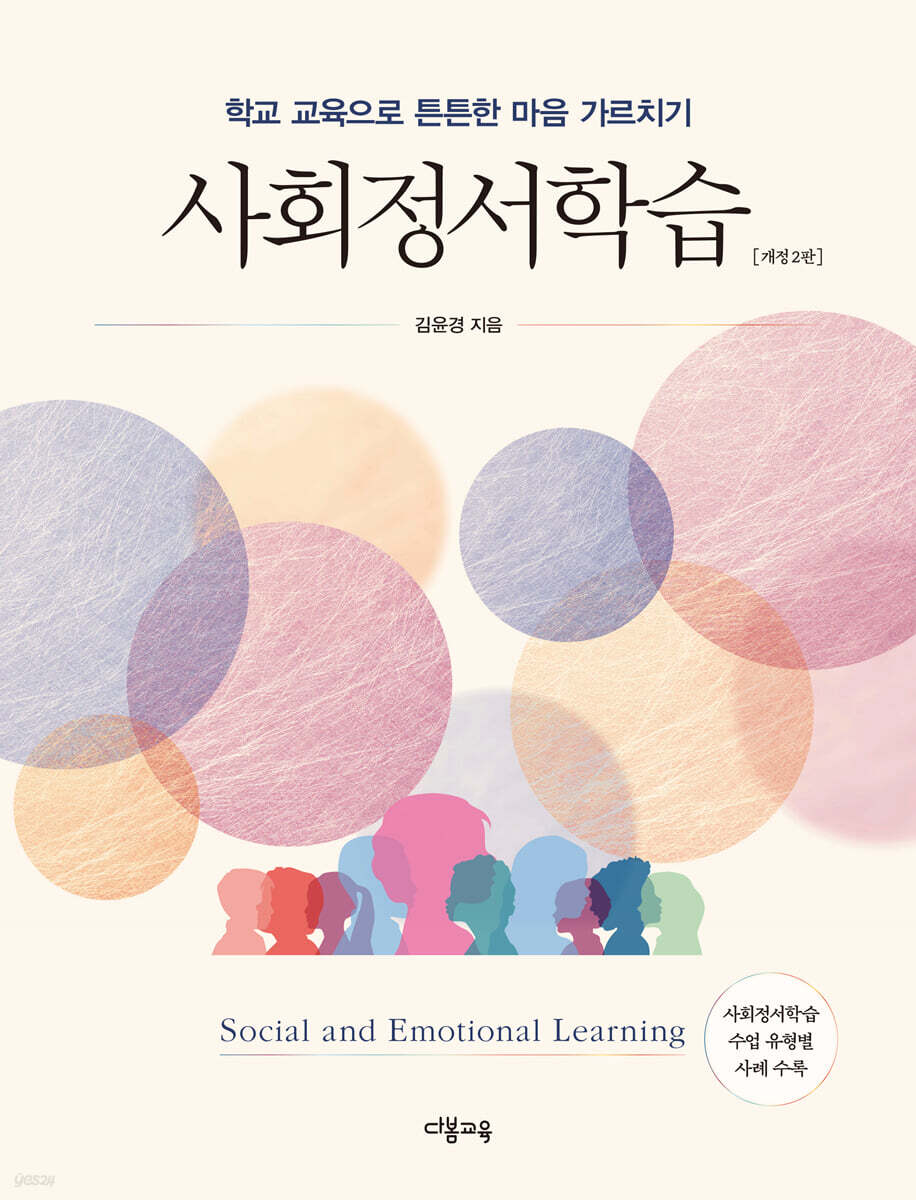
This is a revised edition of an introductory book on social emotional learning that details the concept and origin of social emotional learning, its theoretical foundation, and examples of foreign countries implementing social emotional learning and various types of classes.
Since the first publication of this book in 2020, it has included updated content on social and emotional learning to reflect the changing demands on schools and education amid the COVID-19 pandemic.
Social-emotional learning is often described as the “missing puzzle piece.”
Because it's important, but it's easy to miss and not well implemented.
The question of what and how teachers should teach is a long-standing one for humanity, and teachers who encounter children every moment are still grappling with this question today.
Teachers should teach children not only subject knowledge but also life skills that will help them live happily.
In particular, we must teach children who have experienced disruption during crucial developmental periods due to the pandemic how to relate to others and self-regulate, and how to lead self-directed lives amidst the uncertainty and infinite competition brought about by the fast-approaching Fourth Industrial Revolution.
In a world where there are many suggestions and prescriptions surrounding schools, but no clear solutions in sight, "Social Emotional Learning" will offer new insights.
Happy School Project: Social and Emotional Learning
This is a revised edition of an introductory book on social emotional learning that details the concept and origin of social emotional learning, its theoretical foundation, and examples of foreign countries implementing social emotional learning and various types of classes.
Since the first publication of this book in 2020, it has included updated content on social and emotional learning to reflect the changing demands on schools and education amid the COVID-19 pandemic.
Social-emotional learning is often described as the “missing puzzle piece.”
Because it's important, but it's easy to miss and not well implemented.
The question of what and how teachers should teach is a long-standing one for humanity, and teachers who encounter children every moment are still grappling with this question today.
Teachers should teach children not only subject knowledge but also life skills that will help them live happily.
In particular, we must teach children who have experienced disruption during crucial developmental periods due to the pandemic how to relate to others and self-regulate, and how to lead self-directed lives amidst the uncertainty and infinite competition brought about by the fast-approaching Fourth Industrial Revolution.
In a world where there are many suggestions and prescriptions surrounding schools, but no clear solutions in sight, "Social Emotional Learning" will offer new insights.
- You can preview some of the book's contents.
Preview
index
Part 1: About Social and Emotional Learning
Chapter 1 | Encountering Social and Emotional Learning
What is social emotional learning?
The Background and History of Social-Emotional Learning
Current status of social emotional learning implementation
Background on the spread of social-emotional learning
Chapter 2 | Theoretical Background of Social-Emotional Learning
Theories supporting the educational philosophy of social-emotional learning
Major teaching and learning theories
Chapter 3 | Why is social emotional learning necessary?
Why Social and Emotional Learning is Necessary in Korean Education
Current status of social and emotional learning in Korea
The effects of social emotional learning
Chapter 4 | Social and Emotional Learning in Other Countries
The case of Illinois, USA
The case of Australia
The case of Singapore
Chapter 5 | Social-Emotional Learning and Character Education
Social-Emotional Learning and Character Education
Can this be applied to character education in our country?
Social-Emotional Learning and Democratic Citizenship Education
Chapter 6 | Representative Social and Emotional Learning Programs
Ruler
Second step
pass
Social Decision Making/Social Problem Solving
Facing History and Ourselves
Mind Up
Part 2: Implementing Social and Emotional Learning
Chapter 7: Implementing Social and Emotional Learning Throughout the School
Social-Emotional Learning and Whole-School Approaches
Social-Emotional Learning Implementation Process
Using Rubrics
Chapter 8 | Integrating Various Supports
Chapter 9 | Explicit Learning
Planning your class schedule
Planning a lesson
Chapter 10 | Linking with Curriculum
Why should we link curriculum?
Creating curriculum-linked lessons
Communicating across subjects
Chapter 11 | Linking Life Guidance
The importance of linking with life guidance
How to link with life guidance
Running a Classroom in Connection with Social and Emotional Learning
Creating Spaces for Social-Emotional Skills Training
Chapter 12 | Connecting Families
Is family connection really necessary?
Home linkage method
Part 3: Social and Emotional Learning Class Practice 1
Chapter 13 | Emotional Literacy Classes
Chapter 14 | Communication Skills Class
Chapter 15 | Resilience Class
Chapter 16 | Managing Anger
Chapter 17 | Service Learning
Part 4: Social and Emotional Learning Class Practice 2
_Developing socio-emotional competencies through mindfulness
Chapter 18 | Practicing Self-Awareness through Mindfulness
Listen and breathe mindfully
Eating mindfully
Be aware of the senses
Become aware of your thoughts
Stay here now
Chapter 19 | Achieving a Positive Mind Through Mindfulness
Recognize negative thinking habits
Dealing with Depression
Wishing for happiness while being mindful
Chapter 20 | Making Responsible Decisions Through Mindfulness
Avoiding Emotional Mistakes Through Mindfulness
Chapter 1 | Encountering Social and Emotional Learning
What is social emotional learning?
The Background and History of Social-Emotional Learning
Current status of social emotional learning implementation
Background on the spread of social-emotional learning
Chapter 2 | Theoretical Background of Social-Emotional Learning
Theories supporting the educational philosophy of social-emotional learning
Major teaching and learning theories
Chapter 3 | Why is social emotional learning necessary?
Why Social and Emotional Learning is Necessary in Korean Education
Current status of social and emotional learning in Korea
The effects of social emotional learning
Chapter 4 | Social and Emotional Learning in Other Countries
The case of Illinois, USA
The case of Australia
The case of Singapore
Chapter 5 | Social-Emotional Learning and Character Education
Social-Emotional Learning and Character Education
Can this be applied to character education in our country?
Social-Emotional Learning and Democratic Citizenship Education
Chapter 6 | Representative Social and Emotional Learning Programs
Ruler
Second step
pass
Social Decision Making/Social Problem Solving
Facing History and Ourselves
Mind Up
Part 2: Implementing Social and Emotional Learning
Chapter 7: Implementing Social and Emotional Learning Throughout the School
Social-Emotional Learning and Whole-School Approaches
Social-Emotional Learning Implementation Process
Using Rubrics
Chapter 8 | Integrating Various Supports
Chapter 9 | Explicit Learning
Planning your class schedule
Planning a lesson
Chapter 10 | Linking with Curriculum
Why should we link curriculum?
Creating curriculum-linked lessons
Communicating across subjects
Chapter 11 | Linking Life Guidance
The importance of linking with life guidance
How to link with life guidance
Running a Classroom in Connection with Social and Emotional Learning
Creating Spaces for Social-Emotional Skills Training
Chapter 12 | Connecting Families
Is family connection really necessary?
Home linkage method
Part 3: Social and Emotional Learning Class Practice 1
Chapter 13 | Emotional Literacy Classes
Chapter 14 | Communication Skills Class
Chapter 15 | Resilience Class
Chapter 16 | Managing Anger
Chapter 17 | Service Learning
Part 4: Social and Emotional Learning Class Practice 2
_Developing socio-emotional competencies through mindfulness
Chapter 18 | Practicing Self-Awareness through Mindfulness
Listen and breathe mindfully
Eating mindfully
Be aware of the senses
Become aware of your thoughts
Stay here now
Chapter 19 | Achieving a Positive Mind Through Mindfulness
Recognize negative thinking habits
Dealing with Depression
Wishing for happiness while being mindful
Chapter 20 | Making Responsible Decisions Through Mindfulness
Avoiding Emotional Mistakes Through Mindfulness
Publisher's Review
From the beginning of ‘social emotional learning’,
Covering theoretical foundations, foreign cases, and classroom applications.
It is not easy to define ‘social and emotional learning (SEL)’ in one word.
Because it includes the words 'society' and 'emotion,' it is vaguely understood as an emotion-centered education movement that teaches social relationships and emotions, or it is accepted as an educational plan that develops a school support system, or a specific program.
This is because social emotional learning is closer to a school reform movement than a theory with clear causal relationships, and although it is similar to subject learning or character education, it has slightly different characteristics.
Social-emotional learning can be defined as a process of teaching the knowledge, attitudes, and skills necessary to develop ① the ability to understand and manage emotions, ② the ability to set and achieve positive goals, ③ the ability to be considerate and empathetic toward others, ④ the ability to form and maintain positive relationships, and ⑤ the ability to make responsible decisions.
Social-emotional learning first emerged and developed in the United States.
It all started in 1994 when educators and others working for children's rights came together to coin the term "social-emotional learning" and establish the Kassel CASE (Association for Academic and Social-Emotional Learning), an organization that provides advice and research on the implementation and evaluation of social-emotional learning.
Kassel played a key role in disseminating and expanding high-quality and diverse programs by selecting excellent or promising programs through systematic evaluation.
Since then, as emotional intelligence (EQ) has been recognized as a core concept that has changed the paradigm of almost all academic fields, including psychology, education, and management, advanced educational countries around the world have actively adopted emotional intelligence education (SEL) programs, which has become an opportunity for social-emotional learning to become widely known.
This book provides a detailed introduction to the birth of social emotional learning, the various theories that support it, examples of foreign countries implementing social emotional learning at the national level, and examples of each type of social emotional learning class.
Approaching social and emotional learning as an effective character education method.
Mental health problems among children and adolescents are becoming more serious every year.
Although schools are implementing various educational programs and activities to prevent school violence, smoking cessation, drug prevention, and human rights, various preventive and guidance education programs are not connected to the real lives of children and are superficial, and it is not easy to come up with a sharp solution in the domestic education culture that is centered on entrance exams.
However, voices calling for the urgent need for education in socio-emotional competencies (competencies for successfully living life) in character education are growing louder day by day, and teachers are also most likely to point to 'emotional education such as self-regulation' as the direction of character education suitable for modern society.
Many schools in advanced countries facing similar challenges have utilized social-emotional learning, resulting in significant reductions in behavioral and mental health problems among children and adolescents, increased academic achievement, and improved capacity for successful life.
In Korea, as character education became legally enforced, attention began to be paid to social and emotional learning as an effective method of character education, and interest in the social and emotional aspects as a way to restore students' character grew.
In reality, the social and emotional abilities of children and adolescents in Korea are very poor.
In particular, they are said to have low abilities to manage their own lives, such as 'self-understanding, self-respect, and self-regulation', and low abilities to be considerate of, empathize with, understand, and communicate with others.
This book introduces a variety of effective social and emotional learning programs that can be utilized in character education.
Domestic school character education has often been criticized for being limited to superficial events, but social-emotional learning has the advantage of systematically supporting social and emotional development throughout all educational activities, making it an effective character education program.
When I see teenagers expressing their harsh emotions and unable to control their anger regardless of time, place, or who is watching, I think that school education must fundamentally change.
The change must be through a systematic system that introduces rational and evidence-based methods, verifies their effectiveness, and provides feedback. This is social-emotional learning.
Presenting various social and emotional learning programs and class examples
This book introduces various overseas programs that can provide ideas for how to apply social and emotional learning to domestic education.
These include 'RULUR', which uses an emotion checkerboard to improve students' emotional literacy (the ability to clearly recognize, understand, and express emotions) and thereby foster the ability to regulate their own emotions; 'Second Step', which focuses on developing socio-emotional competencies with the main goal of preventing problem behaviors and making schools safe; 'Social Decision Making/Social Problem Solving (SDM/SPS)', which mainly teaches self-management, social awareness, and social decision-making, focusing on social problem-solving skills; 'Facing History and Ourselves', which aims to foster qualities as democratic citizens and socio-emotional competencies through historical events (racial discrimination, war and the destruction of humanity, immigrant issues, etc.) or literary works; and 'MindUp', which cultivates socio-emotional competencies through 'mindfulness' meditation.
In addition, to help plan and implement social-emotional learning classes, we provide case studies of classes on 'emotional literacy, communication skills, resilience, anger management, service learning, and mindfulness' by type.
The lesson examples by type provide key social-emotional competencies and skills, lesson content, related achievement standards, related activities, curriculum and life guidance, and examples of home-community linkage activities, which will help systematically implement social-emotional learning in the classroom.
Covering theoretical foundations, foreign cases, and classroom applications.
It is not easy to define ‘social and emotional learning (SEL)’ in one word.
Because it includes the words 'society' and 'emotion,' it is vaguely understood as an emotion-centered education movement that teaches social relationships and emotions, or it is accepted as an educational plan that develops a school support system, or a specific program.
This is because social emotional learning is closer to a school reform movement than a theory with clear causal relationships, and although it is similar to subject learning or character education, it has slightly different characteristics.
Social-emotional learning can be defined as a process of teaching the knowledge, attitudes, and skills necessary to develop ① the ability to understand and manage emotions, ② the ability to set and achieve positive goals, ③ the ability to be considerate and empathetic toward others, ④ the ability to form and maintain positive relationships, and ⑤ the ability to make responsible decisions.
Social-emotional learning first emerged and developed in the United States.
It all started in 1994 when educators and others working for children's rights came together to coin the term "social-emotional learning" and establish the Kassel CASE (Association for Academic and Social-Emotional Learning), an organization that provides advice and research on the implementation and evaluation of social-emotional learning.
Kassel played a key role in disseminating and expanding high-quality and diverse programs by selecting excellent or promising programs through systematic evaluation.
Since then, as emotional intelligence (EQ) has been recognized as a core concept that has changed the paradigm of almost all academic fields, including psychology, education, and management, advanced educational countries around the world have actively adopted emotional intelligence education (SEL) programs, which has become an opportunity for social-emotional learning to become widely known.
This book provides a detailed introduction to the birth of social emotional learning, the various theories that support it, examples of foreign countries implementing social emotional learning at the national level, and examples of each type of social emotional learning class.
Approaching social and emotional learning as an effective character education method.
Mental health problems among children and adolescents are becoming more serious every year.
Although schools are implementing various educational programs and activities to prevent school violence, smoking cessation, drug prevention, and human rights, various preventive and guidance education programs are not connected to the real lives of children and are superficial, and it is not easy to come up with a sharp solution in the domestic education culture that is centered on entrance exams.
However, voices calling for the urgent need for education in socio-emotional competencies (competencies for successfully living life) in character education are growing louder day by day, and teachers are also most likely to point to 'emotional education such as self-regulation' as the direction of character education suitable for modern society.
Many schools in advanced countries facing similar challenges have utilized social-emotional learning, resulting in significant reductions in behavioral and mental health problems among children and adolescents, increased academic achievement, and improved capacity for successful life.
In Korea, as character education became legally enforced, attention began to be paid to social and emotional learning as an effective method of character education, and interest in the social and emotional aspects as a way to restore students' character grew.
In reality, the social and emotional abilities of children and adolescents in Korea are very poor.
In particular, they are said to have low abilities to manage their own lives, such as 'self-understanding, self-respect, and self-regulation', and low abilities to be considerate of, empathize with, understand, and communicate with others.
This book introduces a variety of effective social and emotional learning programs that can be utilized in character education.
Domestic school character education has often been criticized for being limited to superficial events, but social-emotional learning has the advantage of systematically supporting social and emotional development throughout all educational activities, making it an effective character education program.
When I see teenagers expressing their harsh emotions and unable to control their anger regardless of time, place, or who is watching, I think that school education must fundamentally change.
The change must be through a systematic system that introduces rational and evidence-based methods, verifies their effectiveness, and provides feedback. This is social-emotional learning.
Presenting various social and emotional learning programs and class examples
This book introduces various overseas programs that can provide ideas for how to apply social and emotional learning to domestic education.
These include 'RULUR', which uses an emotion checkerboard to improve students' emotional literacy (the ability to clearly recognize, understand, and express emotions) and thereby foster the ability to regulate their own emotions; 'Second Step', which focuses on developing socio-emotional competencies with the main goal of preventing problem behaviors and making schools safe; 'Social Decision Making/Social Problem Solving (SDM/SPS)', which mainly teaches self-management, social awareness, and social decision-making, focusing on social problem-solving skills; 'Facing History and Ourselves', which aims to foster qualities as democratic citizens and socio-emotional competencies through historical events (racial discrimination, war and the destruction of humanity, immigrant issues, etc.) or literary works; and 'MindUp', which cultivates socio-emotional competencies through 'mindfulness' meditation.
In addition, to help plan and implement social-emotional learning classes, we provide case studies of classes on 'emotional literacy, communication skills, resilience, anger management, service learning, and mindfulness' by type.
The lesson examples by type provide key social-emotional competencies and skills, lesson content, related achievement standards, related activities, curriculum and life guidance, and examples of home-community linkage activities, which will help systematically implement social-emotional learning in the classroom.
GOODS SPECIFICS
- Date of issue: August 24, 2023
- Page count, weight, size: 280 pages | 175*225*20mm
- ISBN13: 9791192148724
- ISBN10: 119214872X
You may also like
카테고리
korean


korean

![GQ KOREA Mark (Monthly): December [2025]](http://librairie.coreenne.fr/cdn/shop/files/8ef265dbbfbf186523ed75ba7319009d.jpg?v=1765340328&width=3840)


