

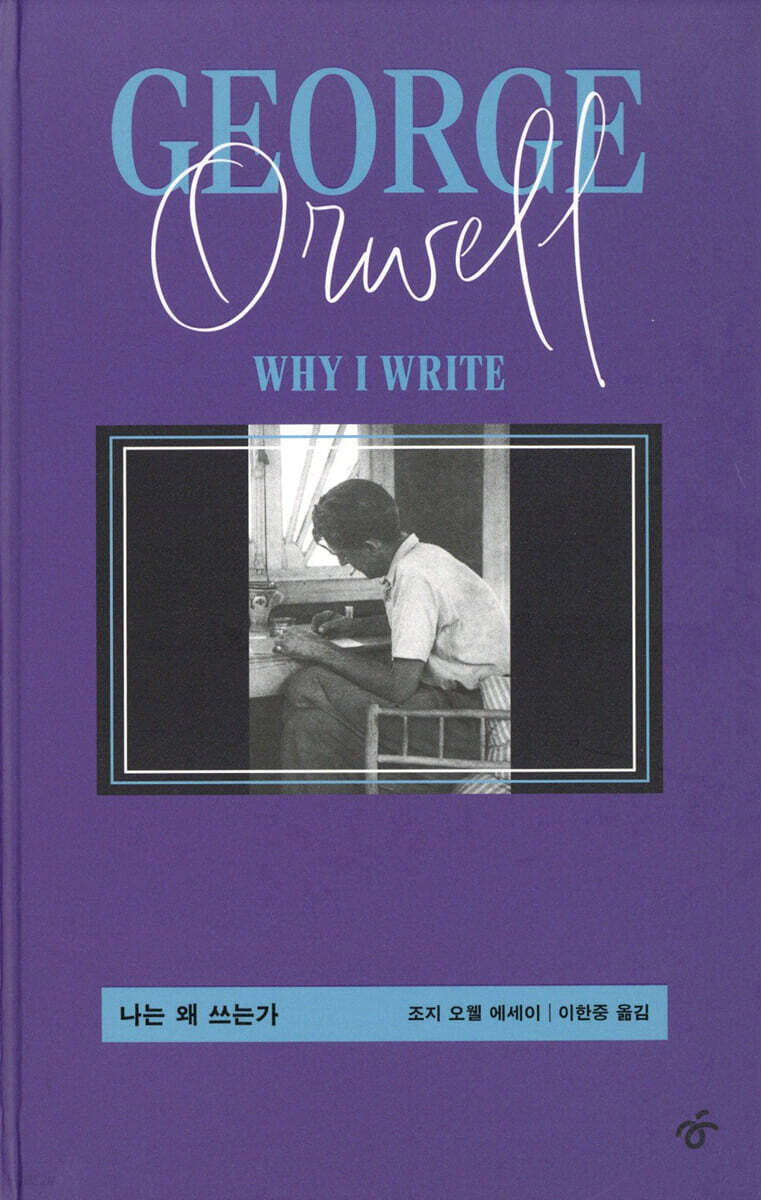
Why do I write?
 |
Description
Book Introduction
An intellectual without falsehood, a journalist without fear,
George Orwell, the most brilliant writer of 20th century English literature!
Two new Korean translations added to the first edition, which has been consistently loved for 15 years.
31 of the most outstanding essays in a new edition
George Orwell's essay, "Why I Write," which has been widely loved by readers who love it since its publication in 2010, has been reborn as a revised and expanded edition.
The first edition, which contained 29 essays containing the essence of his life and thoughts, was supplemented with two first-time domestic translations ("A Word for Father Bray" and "The Writer's Income").
Orwell is best known for his masterpieces, the novels Animal Farm and Nineteen Eighty-Four, but he also made a living as a writer and journalist for many years, writing a vast number of essays, columns, and book reviews.
"Why I Write" is a must-read for anyone seeking a close and three-dimensional look at Orwell as a human being, including his various aspects of life, political stance, and attitude as a writer facing reality. It has received a deep and consistent response, no less than his two representative works.
His entire autobiographical story is densely packed, from the moment he became an author who had no hesitation in declaring that “the very idea that art should be independent of politics is a political stance.”
Around the age of ten, he entered a preparatory boarding school for wealthy children on scholarship, but experienced severe discrimination. He graduated from the prestigious Eton School, but instead of becoming a university student, he became a police officer in colonial Burma. He returned to Europe, crushed by guilt, and lived as a vagabond, wandering between London and Paris. Throughout his life, we can see all the turning points in Orwell's life, as he always made choices that deviated slightly and betrayed the expectations of others.
“I can’t say for sure which of my motivations for writing is the strongest.
But I know which one is most worth following.
“Looking back on my work, whenever I wrote dull books, or was dazzled by flashy phrases, meaningless sentences, decorative adjectives, or nonsense, it was always a time when I lacked a ‘political’ purpose.” _From “Why I Write”
George Orwell, the most brilliant writer of 20th century English literature!
Two new Korean translations added to the first edition, which has been consistently loved for 15 years.
31 of the most outstanding essays in a new edition
George Orwell's essay, "Why I Write," which has been widely loved by readers who love it since its publication in 2010, has been reborn as a revised and expanded edition.
The first edition, which contained 29 essays containing the essence of his life and thoughts, was supplemented with two first-time domestic translations ("A Word for Father Bray" and "The Writer's Income").
Orwell is best known for his masterpieces, the novels Animal Farm and Nineteen Eighty-Four, but he also made a living as a writer and journalist for many years, writing a vast number of essays, columns, and book reviews.
"Why I Write" is a must-read for anyone seeking a close and three-dimensional look at Orwell as a human being, including his various aspects of life, political stance, and attitude as a writer facing reality. It has received a deep and consistent response, no less than his two representative works.
His entire autobiographical story is densely packed, from the moment he became an author who had no hesitation in declaring that “the very idea that art should be independent of politics is a political stance.”
Around the age of ten, he entered a preparatory boarding school for wealthy children on scholarship, but experienced severe discrimination. He graduated from the prestigious Eton School, but instead of becoming a university student, he became a police officer in colonial Burma. He returned to Europe, crushed by guilt, and lived as a vagabond, wandering between London and Paris. Throughout his life, we can see all the turning points in Orwell's life, as he always made choices that deviated slightly and betrayed the expectations of others.
“I can’t say for sure which of my motivations for writing is the strongest.
But I know which one is most worth following.
“Looking back on my work, whenever I wrote dull books, or was dazzled by flashy phrases, meaningless sentences, decorative adjectives, or nonsense, it was always a time when I lacked a ‘political’ purpose.” _From “Why I Write”
index
spike
hanging
shoot an elephant
Memories of a Bookstore
Spoiling Spain's Secrets
Why I Joined the Independent Labour Party
Marrakech
My country, left or right
Britain, your Britain
Wells, Hitler, and the World State
Looking back on the Spanish Civil War
Poetry and Mike
As I like
Nationalist Memoir
You and the atomic bomb
What is science?
Literary prevention
pleasure resort
Moon in the Water
Politics and English
Toad Thoughts
A Word for Father Bray
A reviewer's confession
Why do I write?
Author's income
Politics vs. Literature: On Gulliver's Travels
How the poor die
Lear, Tolstoy, and the Fool
It was really, really good
The Author and Leviathan
Opinions on Gandhi
George Orwell Chronology
Translator's Note
hanging
shoot an elephant
Memories of a Bookstore
Spoiling Spain's Secrets
Why I Joined the Independent Labour Party
Marrakech
My country, left or right
Britain, your Britain
Wells, Hitler, and the World State
Looking back on the Spanish Civil War
Poetry and Mike
As I like
Nationalist Memoir
You and the atomic bomb
What is science?
Literary prevention
pleasure resort
Moon in the Water
Politics and English
Toad Thoughts
A Word for Father Bray
A reviewer's confession
Why do I write?
Author's income
Politics vs. Literature: On Gulliver's Travels
How the poor die
Lear, Tolstoy, and the Fool
It was really, really good
The Author and Leviathan
Opinions on Gandhi
George Orwell Chronology
Translator's Note
Detailed image

Into the book
I told him about the food waste that was thrown away in the workhouse kitchen and told him what I thought.
At my words, his tone immediately changed.
I knew I had stirred the master spirit that lies dormant in every British worker.
Although he had been starving with other homeless people, he knew right away why food should not be given to homeless people but thrown away.
He spoke to me quite sternly, as if scolding me.
“That’s what it has to be,” he said.
“If you make a place like this too nice, all the trash from the whole country will flock there.
To get rid of that kind of garbage, the food has to be bad.
These bums here are too lazy to do any work.
That's why everyone ends up like that.
There's no need to encourage those people.
“Because it’s all trash.”
--- p.17
At that time, I was already thinking that imperialism was evil, so the sooner I quit my job and get away from it, the better.
Therefore, in theory, I was entirely on the side of the Burmese and entirely hostile to their oppressors, the British.
I hated what I was doing more than I can explain.
Doing such work allows you to see the empire's ugly deeds up close.
Poor prisoners crammed into stinking iron bars, the terrified faces of long-term inmates, the torn buttocks of those beaten with bamboo sticks.
All of this weighed on me with an unbearable guilt.
--- p.31~32
In a city like London, there are always a lot of lunatics out on the streets who don't necessarily need hospitalization, and they often end up in the bookstores.
Because bookstores are one of the few places where you can hang around for a long time without spending any money.
As you work, you will be able to recognize such people almost immediately.
No matter how much they talk grandly, they still have an anachronistic and superficial side.
When we dealt with an obviously paranoid patient, we would often set aside the book he asked for and then put it back on the shelf as soon as he left.
I knew that none of them wanted to take the book without paying for it.
All they had to do was order.
I think it gave them the illusion that they were really spending money.
--- p.44
I had noticed from a very young age that no event could be accurately reported in the newspapers, and it was only when I went to Spain that I first saw newspapers reporting things that had nothing to do with the facts.
They were reports that had not even the slightest relevance, which is often implicit in everyday lies.
I have seen reports of great battles when no fighting had taken place, and I have seen complete silence when hundreds of people were killed.
I have seen soldiers who fought bravely being branded cowards and traitors, and I have seen those who never heard a single shot being hailed as heroes for achieving imaginary victories.
I also saw London newspapers reprinting such lies verbatim, and I saw zealous intellectuals embellishing events that never happened with emotional intensity.
--- p.152~153
By 'nationalism' I mean any habit that believes that humanity can be divided like insects and that millions or tens of millions of people can be lumped together and labeled as good or bad.
Secondly, and this is much more important, it means the habit of identifying oneself with a single nation or group, regarding it as transcendent of good and evil, and considering that promoting its interests is all that matters.
And nationalism should not be confused with patriotism.
Both words are often used so vaguely that any definition could be attempted, but there is a distinct difference between them.
(…) In contrast, nationalism cannot be separated from the desire for power.
The constant aim of every nationalist is to secure more power and prestige, not for himself, but for the country or some other group he has chosen to serve, at the cost of suppressing his individuality.
--- p.189~190
Part of us believes that humans are noble creatures and that life is worth living.
In contrast, there is a kind of inner self that is at least occasionally astonished by the horror of existence.
Oddly enough, pleasure and disgust are interconnected.
The human body is beautiful.
The human body is both disgusting and ridiculous, a fact that can be confirmed by visiting any swimming pool.
The human genitals are both objects of desire and disgust; for example, in many, if not all, languages, the very name for the genitals is used as a curse word.
(…) Even after they pass through infancy, children still see the world with new eyes, and their hearts are moved by disgust as much as by wonder.
For example, I am also greatly attracted to the disgust that comes from booger and spit, dog feces on the street, a dying toad full of maggots, the smell of adult sweat, and the ugly appearance of a balding old man with a fist.
--- p.360~361
The scholarship class children had to be filled with learning, like a Christmas goose's stomach being filled with roast goose.
And that education! It's a shame, at best, to let a talented boy's future be determined by a highly competitive exam at the age of twelve or thirteen. Yet, it seems there are still preparatory schools that send their students on scholarship to places like Eton or Winchester without even teaching them all the subjects and courses listed on their report cards.
In the case of St. Cyprian, frankly, the whole thing was a setup for some kind of credit scam.
Our job was to learn only what would give the judges the impression that we knew more than we actually did, and to avoid, as much as possible, things that would tax our brains.
Subjects like geography, which were not well-tested, were almost completely ignored, and in the case of 'classical' subjects, even mathematics was ignored.
Science was not taught in any way (the atmosphere was one of contempt, to the point where even the slightest interest in natural history was met with embarrassment), and the books we were told to read in our free time were only those that would appear on the 'Korean language test.'
--- p.419
In this day and age, there is no one who can or does truly distance themselves from politics.
I simply want to draw a clearer line between political loyalty and literary loyalty.
And just because you're willing to do something that's unpleasant but must be done doesn't mean you're obligated to blindly accept the beliefs that go along with it.
When a writer gets involved in politics, he should do so as an ordinary citizen, as a human being, not as a writer.
I don't think a writer has the right to avoid the messy business of politics just because he's sensitive.
Like anyone else, he must be prepared to speak in drafty halls, write on the pavement with chalk, appeal for votes, hand out leaflets, and even participate in civil wars if necessary.
However, you may do anything else as a service to your party, but you must not write for the party.
At my words, his tone immediately changed.
I knew I had stirred the master spirit that lies dormant in every British worker.
Although he had been starving with other homeless people, he knew right away why food should not be given to homeless people but thrown away.
He spoke to me quite sternly, as if scolding me.
“That’s what it has to be,” he said.
“If you make a place like this too nice, all the trash from the whole country will flock there.
To get rid of that kind of garbage, the food has to be bad.
These bums here are too lazy to do any work.
That's why everyone ends up like that.
There's no need to encourage those people.
“Because it’s all trash.”
--- p.17
At that time, I was already thinking that imperialism was evil, so the sooner I quit my job and get away from it, the better.
Therefore, in theory, I was entirely on the side of the Burmese and entirely hostile to their oppressors, the British.
I hated what I was doing more than I can explain.
Doing such work allows you to see the empire's ugly deeds up close.
Poor prisoners crammed into stinking iron bars, the terrified faces of long-term inmates, the torn buttocks of those beaten with bamboo sticks.
All of this weighed on me with an unbearable guilt.
--- p.31~32
In a city like London, there are always a lot of lunatics out on the streets who don't necessarily need hospitalization, and they often end up in the bookstores.
Because bookstores are one of the few places where you can hang around for a long time without spending any money.
As you work, you will be able to recognize such people almost immediately.
No matter how much they talk grandly, they still have an anachronistic and superficial side.
When we dealt with an obviously paranoid patient, we would often set aside the book he asked for and then put it back on the shelf as soon as he left.
I knew that none of them wanted to take the book without paying for it.
All they had to do was order.
I think it gave them the illusion that they were really spending money.
--- p.44
I had noticed from a very young age that no event could be accurately reported in the newspapers, and it was only when I went to Spain that I first saw newspapers reporting things that had nothing to do with the facts.
They were reports that had not even the slightest relevance, which is often implicit in everyday lies.
I have seen reports of great battles when no fighting had taken place, and I have seen complete silence when hundreds of people were killed.
I have seen soldiers who fought bravely being branded cowards and traitors, and I have seen those who never heard a single shot being hailed as heroes for achieving imaginary victories.
I also saw London newspapers reprinting such lies verbatim, and I saw zealous intellectuals embellishing events that never happened with emotional intensity.
--- p.152~153
By 'nationalism' I mean any habit that believes that humanity can be divided like insects and that millions or tens of millions of people can be lumped together and labeled as good or bad.
Secondly, and this is much more important, it means the habit of identifying oneself with a single nation or group, regarding it as transcendent of good and evil, and considering that promoting its interests is all that matters.
And nationalism should not be confused with patriotism.
Both words are often used so vaguely that any definition could be attempted, but there is a distinct difference between them.
(…) In contrast, nationalism cannot be separated from the desire for power.
The constant aim of every nationalist is to secure more power and prestige, not for himself, but for the country or some other group he has chosen to serve, at the cost of suppressing his individuality.
--- p.189~190
Part of us believes that humans are noble creatures and that life is worth living.
In contrast, there is a kind of inner self that is at least occasionally astonished by the horror of existence.
Oddly enough, pleasure and disgust are interconnected.
The human body is beautiful.
The human body is both disgusting and ridiculous, a fact that can be confirmed by visiting any swimming pool.
The human genitals are both objects of desire and disgust; for example, in many, if not all, languages, the very name for the genitals is used as a curse word.
(…) Even after they pass through infancy, children still see the world with new eyes, and their hearts are moved by disgust as much as by wonder.
For example, I am also greatly attracted to the disgust that comes from booger and spit, dog feces on the street, a dying toad full of maggots, the smell of adult sweat, and the ugly appearance of a balding old man with a fist.
--- p.360~361
The scholarship class children had to be filled with learning, like a Christmas goose's stomach being filled with roast goose.
And that education! It's a shame, at best, to let a talented boy's future be determined by a highly competitive exam at the age of twelve or thirteen. Yet, it seems there are still preparatory schools that send their students on scholarship to places like Eton or Winchester without even teaching them all the subjects and courses listed on their report cards.
In the case of St. Cyprian, frankly, the whole thing was a setup for some kind of credit scam.
Our job was to learn only what would give the judges the impression that we knew more than we actually did, and to avoid, as much as possible, things that would tax our brains.
Subjects like geography, which were not well-tested, were almost completely ignored, and in the case of 'classical' subjects, even mathematics was ignored.
Science was not taught in any way (the atmosphere was one of contempt, to the point where even the slightest interest in natural history was met with embarrassment), and the books we were told to read in our free time were only those that would appear on the 'Korean language test.'
--- p.419
In this day and age, there is no one who can or does truly distance themselves from politics.
I simply want to draw a clearer line between political loyalty and literary loyalty.
And just because you're willing to do something that's unpleasant but must be done doesn't mean you're obligated to blindly accept the beliefs that go along with it.
When a writer gets involved in politics, he should do so as an ordinary citizen, as a human being, not as a writer.
I don't think a writer has the right to avoid the messy business of politics just because he's sensitive.
Like anyone else, he must be prepared to speak in drafty halls, write on the pavement with chalk, appeal for votes, hand out leaflets, and even participate in civil wars if necessary.
However, you may do anything else as a service to your party, but you must not write for the party.
--- p.484~485
Publisher's Review
Gaining different perspectives by taking a different path
A great understander of human nature
"Why I Write" is a compilation of George Orwell's writings in chronological order, from his first published work, "Spike," an account of his experiences living as a vagabond, to his last manuscript, "Reflections on Gandhi."
As translator Lee Han-jung described him as “a writer who rejected patterns and conventions through his own history,” Orwell developed a special perspective that allowed him to see the world in a different way by taking unexpected paths at important junctures in his life.
His writing was not produced at a desk, but was obtained through his body's direct passage through the world.
His life at the bottom, his extreme war experiences, and his innate intelligence contrasted with his life's hardships, gave him a unique insight into humanity and human nature.
Many of the essays in this anthology contain autobiographical elements, depicting events that Orwell himself described as turning points in his life, events that he experienced in extreme situations and gained extraordinary insight into humanity.
He realized the duality of human nature early on through his childhood ("It Was Really, Really Good"), when he hated the headmaster and his wife of a prep school who discriminated against him harshly, yet desperately wanted their approval and favor. He also realized the evils of the hierarchy between nations and races and the system that solidified it during his life as a colonial police officer ("The Hanging," "Shooting an Elephant").
Regardless of class, I came to realize that pretense, hypocrisy, vanity, and vulgarity are the inescapable fate of human beings ("Britain, Your Britain," "Nationalist Memoir," "Politics and the English Language," etc.).
Instead of feeling frustrated or disillusioned by the contradictory and irrational behavior of humans, he acknowledged and faced it head on, thereby expressing such human figures in the characters of his works.
Even though he lived as a socialist until his death, he never stopped harshly criticizing the left because he assumed that humans and the world are never flat or simple.
At the time Orwell was active, many leftists held the naive belief that “socialism will come if we just overthrow capitalism,” or that “persecution will naturally retreat when the truth is known,” or that “humans are inherently good and are only corrupted by external circumstances,” and Orwell could not stand by and watch.
"How could the rich, powerful, sophisticated, stylish, and influential kids be wrong? It was their world, and the rules they created couldn't be wrong.
But I knew from a very young age that I could never 'voluntarily' adapt to that kind of reality.
“There was always an inner self in the center of my mind that seemed to be awake, pointing out the difference between moral duty and psychological ‘reality.’” _From “It Was Really, Really Good”
Moments of beauty hidden even in the darkest writings
A combination of thorough realism and artistic lyricism
Poet Jin Eun-young, who sent a recommendation for this revised and expanded edition, called George Orwell's writing "beautiful yet thoroughly realistic," and said that such a talent, which "is both a blessing and a curse," is extremely rare.
In “Why I Write,” which is also the title piece of this book, Orwell clearly states his position that “no book can be truly free from political bias” and that “the very idea that art should have nothing to do with politics is a political attitude.”
But this pointed rebuke to the position that insists on the purity of literature and art was by no means an attempt to write literary works that serve political beliefs.
In the same piece, he declares, “What I’ve wanted to do most over the past decade has been to make political writing into art.”
Orwell took a position “against all forms of domination by man over man” and argued that his version of socialism was to side with the oppressed.
And he expressed in writing the emotions of the oppressed that he experienced.
Although he once participated in the war to help the Spanish Revolution against fascism, he ultimately chose art, namely writing and literature.
He opposed all forms of totalitarianism (Nazi fascism, Stalinist communism, and capitalism), but he fought against totalitarianism not as a revolutionary, but by expressing the evils of totalitarianism through literature.
And even now, 75 years later, readers around the world continue to recall Orwell by nodding to the 'realism' of his reflections within the 'literary' world he created.
As Rebecca Solnit made well known, Orwell was a writer who loved roses and gardening, and who did not let go of the beauty and joy of the earth as much as he denounced the injustice of society.
In this book, Orwell also imagines the ideal pub for the 'perfect' stout through "The Moon in the Water", and in "Thoughts on a Toad", he describes the gentle yet dynamic change of seasons and asks, "Is it politically reprehensible to say that while we are all groaning, or ought to be groaning, under the chains of the capitalist system, there are quite a few times when life is better because of the song of the starling, or the yellowing of the elm leaves in October?"
In fact, "A Word for Father Bray," which was first translated in this revised and expanded edition, is also the writing that inspired Rebecca Solnit's book, "Orwell's Rose."
“I am not arguing that by privately undertaking forest restoration projects one can absolve oneself of all personal responsibility to society.
Still, it might not be a bad idea to write down every time you commit an antisocial act in a diary and then bury an acorn in the ground at the appropriate time.
So, if even one of those twenty seeds grows properly, even if we cause considerable harm during our lifetime, we may end up as people who are of public benefit, like Father Bray.” _「A Word for Father Bray」
A great understander of human nature
"Why I Write" is a compilation of George Orwell's writings in chronological order, from his first published work, "Spike," an account of his experiences living as a vagabond, to his last manuscript, "Reflections on Gandhi."
As translator Lee Han-jung described him as “a writer who rejected patterns and conventions through his own history,” Orwell developed a special perspective that allowed him to see the world in a different way by taking unexpected paths at important junctures in his life.
His writing was not produced at a desk, but was obtained through his body's direct passage through the world.
His life at the bottom, his extreme war experiences, and his innate intelligence contrasted with his life's hardships, gave him a unique insight into humanity and human nature.
Many of the essays in this anthology contain autobiographical elements, depicting events that Orwell himself described as turning points in his life, events that he experienced in extreme situations and gained extraordinary insight into humanity.
He realized the duality of human nature early on through his childhood ("It Was Really, Really Good"), when he hated the headmaster and his wife of a prep school who discriminated against him harshly, yet desperately wanted their approval and favor. He also realized the evils of the hierarchy between nations and races and the system that solidified it during his life as a colonial police officer ("The Hanging," "Shooting an Elephant").
Regardless of class, I came to realize that pretense, hypocrisy, vanity, and vulgarity are the inescapable fate of human beings ("Britain, Your Britain," "Nationalist Memoir," "Politics and the English Language," etc.).
Instead of feeling frustrated or disillusioned by the contradictory and irrational behavior of humans, he acknowledged and faced it head on, thereby expressing such human figures in the characters of his works.
Even though he lived as a socialist until his death, he never stopped harshly criticizing the left because he assumed that humans and the world are never flat or simple.
At the time Orwell was active, many leftists held the naive belief that “socialism will come if we just overthrow capitalism,” or that “persecution will naturally retreat when the truth is known,” or that “humans are inherently good and are only corrupted by external circumstances,” and Orwell could not stand by and watch.
"How could the rich, powerful, sophisticated, stylish, and influential kids be wrong? It was their world, and the rules they created couldn't be wrong.
But I knew from a very young age that I could never 'voluntarily' adapt to that kind of reality.
“There was always an inner self in the center of my mind that seemed to be awake, pointing out the difference between moral duty and psychological ‘reality.’” _From “It Was Really, Really Good”
Moments of beauty hidden even in the darkest writings
A combination of thorough realism and artistic lyricism
Poet Jin Eun-young, who sent a recommendation for this revised and expanded edition, called George Orwell's writing "beautiful yet thoroughly realistic," and said that such a talent, which "is both a blessing and a curse," is extremely rare.
In “Why I Write,” which is also the title piece of this book, Orwell clearly states his position that “no book can be truly free from political bias” and that “the very idea that art should have nothing to do with politics is a political attitude.”
But this pointed rebuke to the position that insists on the purity of literature and art was by no means an attempt to write literary works that serve political beliefs.
In the same piece, he declares, “What I’ve wanted to do most over the past decade has been to make political writing into art.”
Orwell took a position “against all forms of domination by man over man” and argued that his version of socialism was to side with the oppressed.
And he expressed in writing the emotions of the oppressed that he experienced.
Although he once participated in the war to help the Spanish Revolution against fascism, he ultimately chose art, namely writing and literature.
He opposed all forms of totalitarianism (Nazi fascism, Stalinist communism, and capitalism), but he fought against totalitarianism not as a revolutionary, but by expressing the evils of totalitarianism through literature.
And even now, 75 years later, readers around the world continue to recall Orwell by nodding to the 'realism' of his reflections within the 'literary' world he created.
As Rebecca Solnit made well known, Orwell was a writer who loved roses and gardening, and who did not let go of the beauty and joy of the earth as much as he denounced the injustice of society.
In this book, Orwell also imagines the ideal pub for the 'perfect' stout through "The Moon in the Water", and in "Thoughts on a Toad", he describes the gentle yet dynamic change of seasons and asks, "Is it politically reprehensible to say that while we are all groaning, or ought to be groaning, under the chains of the capitalist system, there are quite a few times when life is better because of the song of the starling, or the yellowing of the elm leaves in October?"
In fact, "A Word for Father Bray," which was first translated in this revised and expanded edition, is also the writing that inspired Rebecca Solnit's book, "Orwell's Rose."
“I am not arguing that by privately undertaking forest restoration projects one can absolve oneself of all personal responsibility to society.
Still, it might not be a bad idea to write down every time you commit an antisocial act in a diary and then bury an acorn in the ground at the appropriate time.
So, if even one of those twenty seeds grows properly, even if we cause considerable harm during our lifetime, we may end up as people who are of public benefit, like Father Bray.” _「A Word for Father Bray」
GOODS SPECIFICS
- Date of issue: May 1, 2025
- Format: Hardcover book binding method guide
- Page count, weight, size: 520 pages | 760g | 153*224*30mm
- ISBN13: 9791172132392
- ISBN10: 1172132399
You may also like
카테고리
korean


korean

![GQ KOREA Mark (Monthly): December [2025]](http://librairie.coreenne.fr/cdn/shop/files/8ef265dbbfbf186523ed75ba7319009d.jpg?v=1765340328&width=3840)


