

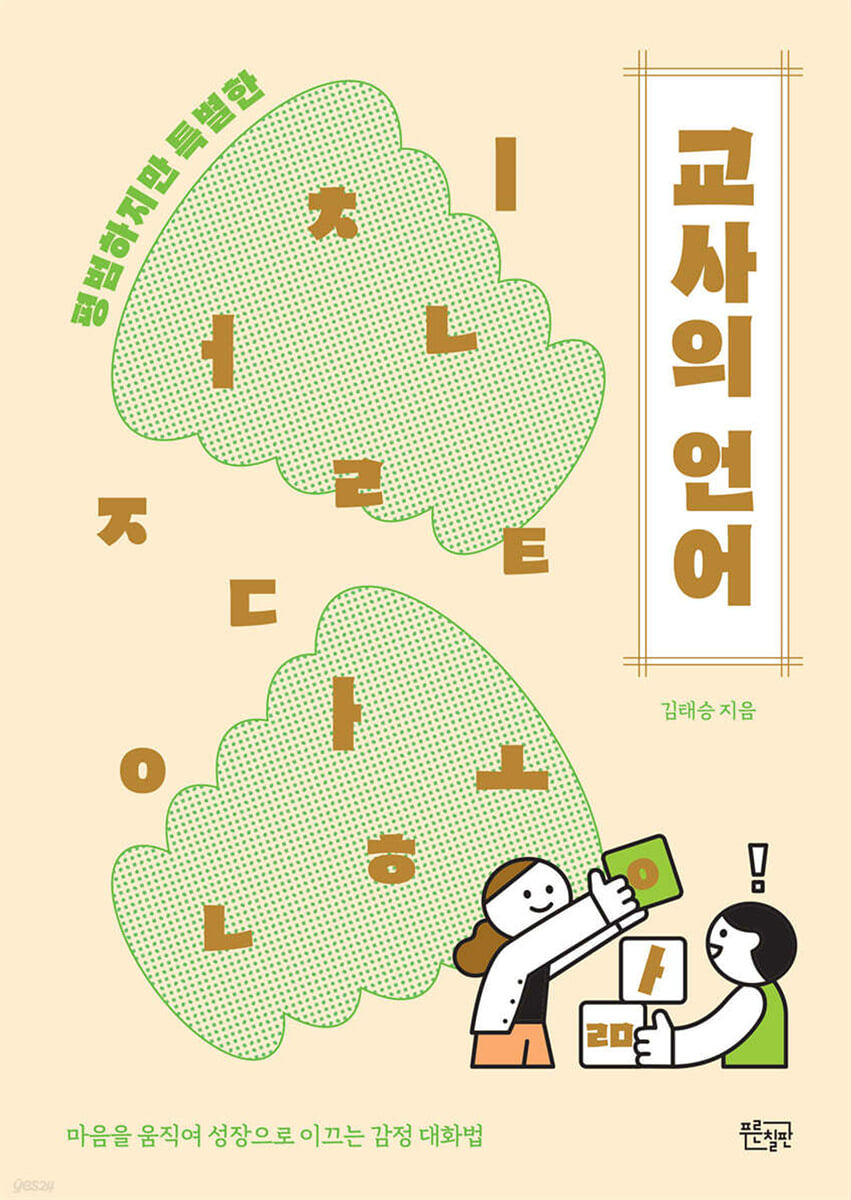
The language of an ordinary yet special teacher
 |
Description
Book Introduction
Warm yet solid everyday language leads children to change and grow!
As a new school year begins, teachers imagine the new children and classes they will encounter.
We plan and prepare various educational activities, including a well-organized classroom management framework and fun, meaningful, and enjoyable classes.
As a teacher, there is no greater joy than watching your students change and grow.
But reality doesn't always go as expected or planned.
No matter how well you prepare for class management and lessons, it's easy to panic when problems suddenly arise, and if these situations aren't properly managed, the class you worked so hard to build can be shaken.
Even in a classroom that was maintained peacefully, there are times when unexpected incidents occur: a child who is gentle but suddenly expresses anger, subtle and petty wars of nerves and factional conflicts between children, children who repeatedly fight and make up, a child who wanders due to family problems, a child who is full of desire to do well but explodes in disappointment when things don't go their way, etc.
This book, written by an author with extensive experience in counseling, offers concrete assistance to teachers in effective life education, counseling, guidance, instruction, and discipline. It guides students through various communication strategies and proven counseling techniques, along with real-life examples, to promote inner growth and behavioral change in students.
All the cases presented in this book are recorded, with little distortion, from the author's actual conversations with students.
Many books on 'counseling and conversation' often omit lines because they emphasize conversation and techniques, which can sometimes lead readers to misunderstand the speaker's exact intentions or strategies. However, this book has almost no omitted lines.
In addition, while conducting life education and counseling, I carefully observed the students' state of mind, feelings, desires, and beliefs, and presented the basis and results of my judgment.
The author does not aim for teachers to simply follow the conversation methods introduced in this book. Instead, he presents criteria for selection and introduces the basis for judgment so that teachers who read this book can select conversation strategies that fit their classroom situations and personal styles.
Ultimately, the core message of this book is to 'have confidence in our hearts.'
Most conflicts are resolved when we recognize and share our true selves with others.
In a world overflowing with criticism and evaluation, we live lives where warmth and sincerity are not expressed. This book contains the small but steady changes and growth we experience through the quiet experience of hearts connecting in the educational field.
If you master the context, situations, and flow of conversation in this book, you will be able to develop your own "teacher's language" optimized for many teachers.
As a new school year begins, teachers imagine the new children and classes they will encounter.
We plan and prepare various educational activities, including a well-organized classroom management framework and fun, meaningful, and enjoyable classes.
As a teacher, there is no greater joy than watching your students change and grow.
But reality doesn't always go as expected or planned.
No matter how well you prepare for class management and lessons, it's easy to panic when problems suddenly arise, and if these situations aren't properly managed, the class you worked so hard to build can be shaken.
Even in a classroom that was maintained peacefully, there are times when unexpected incidents occur: a child who is gentle but suddenly expresses anger, subtle and petty wars of nerves and factional conflicts between children, children who repeatedly fight and make up, a child who wanders due to family problems, a child who is full of desire to do well but explodes in disappointment when things don't go their way, etc.
This book, written by an author with extensive experience in counseling, offers concrete assistance to teachers in effective life education, counseling, guidance, instruction, and discipline. It guides students through various communication strategies and proven counseling techniques, along with real-life examples, to promote inner growth and behavioral change in students.
All the cases presented in this book are recorded, with little distortion, from the author's actual conversations with students.
Many books on 'counseling and conversation' often omit lines because they emphasize conversation and techniques, which can sometimes lead readers to misunderstand the speaker's exact intentions or strategies. However, this book has almost no omitted lines.
In addition, while conducting life education and counseling, I carefully observed the students' state of mind, feelings, desires, and beliefs, and presented the basis and results of my judgment.
The author does not aim for teachers to simply follow the conversation methods introduced in this book. Instead, he presents criteria for selection and introduces the basis for judgment so that teachers who read this book can select conversation strategies that fit their classroom situations and personal styles.
Ultimately, the core message of this book is to 'have confidence in our hearts.'
Most conflicts are resolved when we recognize and share our true selves with others.
In a world overflowing with criticism and evaluation, we live lives where warmth and sincerity are not expressed. This book contains the small but steady changes and growth we experience through the quiet experience of hearts connecting in the educational field.
If you master the context, situations, and flow of conversation in this book, you will be able to develop your own "teacher's language" optimized for many teachers.
index
prolog
Note
PART 1.
Teacher's Language for Building Healthy Relationships
It's also important to have the heart to accept an apology.
What do you feel when you look into your friend's eyes?
Apologizing is when you feel sorry in your heart.
An apology is not something you throw like a ball.
Let's listen to our friend's heart with a stethoscope.
The teacher was really upset and angry
Let's definitely keep an eye on that one from now on
Forgiving also takes courage
I didn't do it on purpose, but I was upset because my friend told me to.
I'll wait until you can tell me
Did you want to make your friend cry as a joke?
Even if it's not on purpose, your friend will be sad
I think your friends don't like you.
How sorry are you out of 10?
Advice should be given with a heart that cares for the friend.
Let's find a solution to our friend's problem together.
Didn't the two make up?
Do you like talking while crying and getting angry?
* [Conversation Skills for Education Professionals]
Handle student resistance and hesitation effectively. Use metacognition for effective communication. Empathic reflection and confrontation can help students grow.
PART 2.
The language of teachers that helps the mind grow
When you feel angry, try breathing like this.
Just one success and it's yours
How about telling me honestly how you feel?
What can I say to comfort the teacher?
The standard for doing well should be 'me', not others.
Do you agree with that?
I want to praise your sincerity
In what ways do you feel more confident?
I thought there must be a reason why it was different from usual
Even close friends can't have the same feelings
I guess being oblivious means being free.
Could you do it twice as slow as you are now?
The teacher wants to help
I hope you cherish this time
Should I convey my feelings through a letter?
* [Conversation Skills for Education Professionals]
Listening is difficult for everyone, and it requires practice. · Use case conceptualization to develop strategies for life education and counseling.
PART 3.
The language of teachers who make everyone happy through genuine encounters
It is important to know the meaning of words and use them correctly.
I sincerely apologize to you, teacher.
Just like you, teachers get hurt too
Don't bother the teacher
The teacher wants to believe in you
There is a difference between wanting to work hard and working hard.
It's okay to say you don't know if you don't know
Your growth is thanks to your efforts and practice.
* [Conversation Skills for Education Professionals]
Create a conversation routine with these nine strategies for life education and student growth. Stimulate your child's reasoning, emotions, and behaviors equally during conversations.
Search
Note
PART 1.
Teacher's Language for Building Healthy Relationships
It's also important to have the heart to accept an apology.
What do you feel when you look into your friend's eyes?
Apologizing is when you feel sorry in your heart.
An apology is not something you throw like a ball.
Let's listen to our friend's heart with a stethoscope.
The teacher was really upset and angry
Let's definitely keep an eye on that one from now on
Forgiving also takes courage
I didn't do it on purpose, but I was upset because my friend told me to.
I'll wait until you can tell me
Did you want to make your friend cry as a joke?
Even if it's not on purpose, your friend will be sad
I think your friends don't like you.
How sorry are you out of 10?
Advice should be given with a heart that cares for the friend.
Let's find a solution to our friend's problem together.
Didn't the two make up?
Do you like talking while crying and getting angry?
* [Conversation Skills for Education Professionals]
Handle student resistance and hesitation effectively. Use metacognition for effective communication. Empathic reflection and confrontation can help students grow.
PART 2.
The language of teachers that helps the mind grow
When you feel angry, try breathing like this.
Just one success and it's yours
How about telling me honestly how you feel?
What can I say to comfort the teacher?
The standard for doing well should be 'me', not others.
Do you agree with that?
I want to praise your sincerity
In what ways do you feel more confident?
I thought there must be a reason why it was different from usual
Even close friends can't have the same feelings
I guess being oblivious means being free.
Could you do it twice as slow as you are now?
The teacher wants to help
I hope you cherish this time
Should I convey my feelings through a letter?
* [Conversation Skills for Education Professionals]
Listening is difficult for everyone, and it requires practice. · Use case conceptualization to develop strategies for life education and counseling.
PART 3.
The language of teachers who make everyone happy through genuine encounters
It is important to know the meaning of words and use them correctly.
I sincerely apologize to you, teacher.
Just like you, teachers get hurt too
Don't bother the teacher
The teacher wants to believe in you
There is a difference between wanting to work hard and working hard.
It's okay to say you don't know if you don't know
Your growth is thanks to your efforts and practice.
* [Conversation Skills for Education Professionals]
Create a conversation routine with these nine strategies for life education and student growth. Stimulate your child's reasoning, emotions, and behaviors equally during conversations.
Search
Into the book
It is not easy for a child to quietly explore his or her own mind.
Therefore, the teacher's various exploratory questions and confirmations are important, and the teacher should speak in the form of suggesting opinions.
Most people in an excited state perceive other people's instructions as criticism of themselves and take an aggressive or defensive attitude.
In such a situation, the teacher ultimately has to put in more energy.
Unless it's an issue that requires a lot of debate, let's focus on allowing the child to explore what he or she truly desires.
---「PART 1.
- From “The Language of Teachers that Creates Healthy Relationships”
Rather than a less effective rational approach, we need an approach that elicits change in children by providing emotional and sentimental signals.
This method lasts longer because it is perceived as a very new stimulus for children.
When you talk to your child in a way that reads their emotions and conveys your own, it can be a little slow, but it can last a long time.
The pursuit of both kindness and firmness, which are conflicting feelings, is in the same vein.
It is about conducting educational activities in a comfortable and receptive emotional state, and then speaking decisively and logically.
---「PART 1.
- From “The Language of Teachers that Creates Healthy Relationships”
For students who are crying sadly, it is effective to give them time to cry, even if it is just for a little while.
Because, unless you're crying out of surprise, it's usually a moment where pent-up emotions are expressed.
By resolving the emotions on the surface, teachers can easily communicate with students and increase the effectiveness of life education.
When a student cries a lot, don't panic. If you wait a little while and find and read three or more emotions that the student feels, it will be easier to have a conversation when the student stops crying.
From the student's perspective, they can talk in a psychologically comfortable state because they have received empathy.
Students often find it difficult to express uncomfortable feelings, so they suppress them.
This is because we intuitively know that revealing uncomfortable feelings will make our friends and teachers uncomfortable.
In times like these, it is best to accept the child's uncomfortable feelings as they are.
---「PART 1.
- From “The Language of Teachers that Creates Healthy Relationships”
It would be better not to call a student who has trouble controlling his or her anger "anger management disorder."
There is no other reason.
However, the moment we call it anger management disorder, teachers unconsciously assume that guidance will be ineffective.
Anger is not easily controlled.
However, you can control your angry behavior only when you notice the moment of anger and make an effort to control it.
The method used at this time is the ‘relaxation method’.
It is about controlling your reaction to anger by applying strong force to your whole body and then slowly releasing that force along with your breathing.
---「PART 2.
- From “The Language of a Teacher That Helps the Mind Grow”
When you feel sadness, you must feel the weight of that emotion and face it without hastily avoiding it, so that you can process it in your heart.
When the person has emotionally processed the feeling of sadness to some extent, it is more effective to say, "It's okay."
If a meaningful adult (guardian, teacher) tells a child, "It's okay," before the child has faced the emotion yet, the child may misunderstand that the emotion he or she is feeling is wrong, and this may lower the child's self-esteem.
So, we need to look at what comfort the child needs and wants right now and ask the child about it.
---「PART 2.
- From “The Language of a Teacher That Helps the Mind Grow”
When I see a child crossing the line, being mean, or telling an obvious lie, I feel more than just anger; I feel another level of discomfort.
The discomfort is probably one that feels like a challenge to the teacher's character or authority.
At this time, the teacher said, 'I know what you're really thinking.
I also feel like confronting him, saying, 'Stop fooling me so clumsily!'
However, it is very dangerous to use confrontation without a warm heart for the other person.
If used incorrectly, confrontation can be humiliating and cause students to feel shame.
The important thing here is not to shame the student, but to allow the student to feel shame on his own.
Shame is something that others give me, while embarrassment is something that I realize and reflect on myself.
---「PART 3.
- From “The Language of a Teacher Who Makes Everyone Happy Through True Encounters”
Among the older students, there are some who try to manipulate the teacher.
These students often pretend not to know what the teacher is trying to say even though they know what the teacher is trying to say, or they often point out the teacher's minor mistakes and talk about them loudly.
This is either a deliberate attempt to embarrass the teacher, or more often than not, it is more of a mere attempt to get the teacher's attention.
Meanwhile, this kind of stimulation causes more serious internal damage to teachers than expected.
It is true that most teachers lose interest in their students when faced with this situation.
If the teacher treats them appropriately, some students will go further as if they were being treated with medicine, and if the teacher treats them coldly, some students will behave appropriately and no longer need to be taught.
How should teachers teach students who shame, traumatize, and stress them out?
Therefore, the teacher's various exploratory questions and confirmations are important, and the teacher should speak in the form of suggesting opinions.
Most people in an excited state perceive other people's instructions as criticism of themselves and take an aggressive or defensive attitude.
In such a situation, the teacher ultimately has to put in more energy.
Unless it's an issue that requires a lot of debate, let's focus on allowing the child to explore what he or she truly desires.
---「PART 1.
- From “The Language of Teachers that Creates Healthy Relationships”
Rather than a less effective rational approach, we need an approach that elicits change in children by providing emotional and sentimental signals.
This method lasts longer because it is perceived as a very new stimulus for children.
When you talk to your child in a way that reads their emotions and conveys your own, it can be a little slow, but it can last a long time.
The pursuit of both kindness and firmness, which are conflicting feelings, is in the same vein.
It is about conducting educational activities in a comfortable and receptive emotional state, and then speaking decisively and logically.
---「PART 1.
- From “The Language of Teachers that Creates Healthy Relationships”
For students who are crying sadly, it is effective to give them time to cry, even if it is just for a little while.
Because, unless you're crying out of surprise, it's usually a moment where pent-up emotions are expressed.
By resolving the emotions on the surface, teachers can easily communicate with students and increase the effectiveness of life education.
When a student cries a lot, don't panic. If you wait a little while and find and read three or more emotions that the student feels, it will be easier to have a conversation when the student stops crying.
From the student's perspective, they can talk in a psychologically comfortable state because they have received empathy.
Students often find it difficult to express uncomfortable feelings, so they suppress them.
This is because we intuitively know that revealing uncomfortable feelings will make our friends and teachers uncomfortable.
In times like these, it is best to accept the child's uncomfortable feelings as they are.
---「PART 1.
- From “The Language of Teachers that Creates Healthy Relationships”
It would be better not to call a student who has trouble controlling his or her anger "anger management disorder."
There is no other reason.
However, the moment we call it anger management disorder, teachers unconsciously assume that guidance will be ineffective.
Anger is not easily controlled.
However, you can control your angry behavior only when you notice the moment of anger and make an effort to control it.
The method used at this time is the ‘relaxation method’.
It is about controlling your reaction to anger by applying strong force to your whole body and then slowly releasing that force along with your breathing.
---「PART 2.
- From “The Language of a Teacher That Helps the Mind Grow”
When you feel sadness, you must feel the weight of that emotion and face it without hastily avoiding it, so that you can process it in your heart.
When the person has emotionally processed the feeling of sadness to some extent, it is more effective to say, "It's okay."
If a meaningful adult (guardian, teacher) tells a child, "It's okay," before the child has faced the emotion yet, the child may misunderstand that the emotion he or she is feeling is wrong, and this may lower the child's self-esteem.
So, we need to look at what comfort the child needs and wants right now and ask the child about it.
---「PART 2.
- From “The Language of a Teacher That Helps the Mind Grow”
When I see a child crossing the line, being mean, or telling an obvious lie, I feel more than just anger; I feel another level of discomfort.
The discomfort is probably one that feels like a challenge to the teacher's character or authority.
At this time, the teacher said, 'I know what you're really thinking.
I also feel like confronting him, saying, 'Stop fooling me so clumsily!'
However, it is very dangerous to use confrontation without a warm heart for the other person.
If used incorrectly, confrontation can be humiliating and cause students to feel shame.
The important thing here is not to shame the student, but to allow the student to feel shame on his own.
Shame is something that others give me, while embarrassment is something that I realize and reflect on myself.
---「PART 3.
- From “The Language of a Teacher Who Makes Everyone Happy Through True Encounters”
Among the older students, there are some who try to manipulate the teacher.
These students often pretend not to know what the teacher is trying to say even though they know what the teacher is trying to say, or they often point out the teacher's minor mistakes and talk about them loudly.
This is either a deliberate attempt to embarrass the teacher, or more often than not, it is more of a mere attempt to get the teacher's attention.
Meanwhile, this kind of stimulation causes more serious internal damage to teachers than expected.
It is true that most teachers lose interest in their students when faced with this situation.
If the teacher treats them appropriately, some students will go further as if they were being treated with medicine, and if the teacher treats them coldly, some students will behave appropriately and no longer need to be taught.
How should teachers teach students who shame, traumatize, and stress them out?
---「PART 3.
- From “The Language of a Teacher Who Makes Everyone Happy Through True Encounters”
- From “The Language of a Teacher Who Makes Everyone Happy Through True Encounters”
Publisher's Review
Easy, step-by-step, concrete, and vivid communication skills from an educational expert
This book provides practical examples of essential communication skills and strategies for effective life education, counseling, and discipline.
The skills and processes required for inner change and growth are explained in a conversational manner so that even non-experts can easily follow them.
At first glance, this may seem like an ordinary conversation, but a closer look reveals a clear purpose embedded in the conversation and its language: to promote student change and growth.
Even the language we use in our daily lives can be very powerful when it serves the purpose of ‘growth and change.’
The purpose of this book is to examine the process of everyday classroom conversations, to elicit students' true feelings, and to help them learn and practice conversation skills that enable growth and change based on these feelings.
Therefore, the teacher's words are highlighted in color and conversation techniques are indicated in parentheses.
For each case, it describes how to intervene first in a conflict situation between students, how to initiate a dialogue, and details what behaviors to observe in the student, how to interpret them, why to choose to confront the student's words, and how to confront them.
At the end of each case, we've included a brief summary of key takeaways, common misses, and tips for using "teacher language" more effectively.
The "Conversation Skills for Education Professionals" section at the end of each chapter will be of interest to those who want to develop their own conversation strategies for life education and counseling, as well as those who are just learning counseling.
This book is an easy-to-understand explanation of counseling psychology, but depending on the reader's preference, it may feel like an essay or a professional book.
Either way, the more you repeat and savor it, the more you will definitely feel it.
By studying and comparing the situation in the teachers' classrooms through extensive reading and close reading, you will develop your own 'teacher's language' that will help your educational activities shine.
This book provides practical examples of essential communication skills and strategies for effective life education, counseling, and discipline.
The skills and processes required for inner change and growth are explained in a conversational manner so that even non-experts can easily follow them.
At first glance, this may seem like an ordinary conversation, but a closer look reveals a clear purpose embedded in the conversation and its language: to promote student change and growth.
Even the language we use in our daily lives can be very powerful when it serves the purpose of ‘growth and change.’
The purpose of this book is to examine the process of everyday classroom conversations, to elicit students' true feelings, and to help them learn and practice conversation skills that enable growth and change based on these feelings.
Therefore, the teacher's words are highlighted in color and conversation techniques are indicated in parentheses.
For each case, it describes how to intervene first in a conflict situation between students, how to initiate a dialogue, and details what behaviors to observe in the student, how to interpret them, why to choose to confront the student's words, and how to confront them.
At the end of each case, we've included a brief summary of key takeaways, common misses, and tips for using "teacher language" more effectively.
The "Conversation Skills for Education Professionals" section at the end of each chapter will be of interest to those who want to develop their own conversation strategies for life education and counseling, as well as those who are just learning counseling.
This book is an easy-to-understand explanation of counseling psychology, but depending on the reader's preference, it may feel like an essay or a professional book.
Either way, the more you repeat and savor it, the more you will definitely feel it.
By studying and comparing the situation in the teachers' classrooms through extensive reading and close reading, you will develop your own 'teacher's language' that will help your educational activities shine.
GOODS SPECIFICS
- Date of issue: May 30, 2024
- Page count, weight, size: 324 pages | 440g | 148*210*16mm
- ISBN13: 9791191638219
- ISBN10: 1191638219
You may also like
카테고리
korean


korean

![GQ KOREA Mark (Monthly): December [2025]](http://librairie.coreenne.fr/cdn/shop/files/8ef265dbbfbf186523ed75ba7319009d.jpg?v=1765340328&width=3840)


