

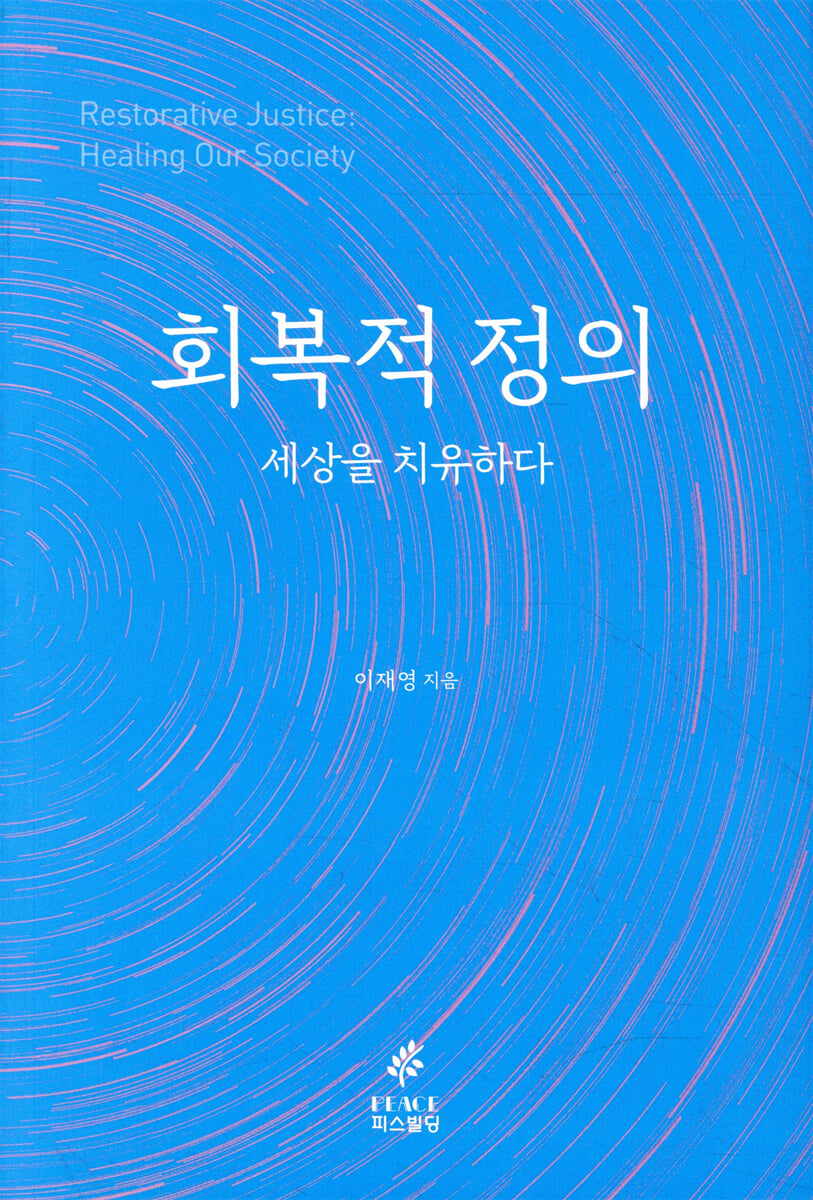
Restorative Justice: Healing the World
 |
Description
Book Introduction
What is restorative justice?
Finally, a comprehensive humanities book on restorative justice has been published in Korea, introducing a comprehensive understanding of restorative justice and its practical applications.
Since 2000, recommendations to expand restorative justice for safe and peaceful social communities have been growing worldwide, including at the UN.
In Korea, too, voices have been growing louder in the judiciary, schools, and even workplaces, calling for the adoption of a restorative justice approach to overcome the limitations of the existing retributive justice approach, which deals with conflicts and disputes between people solely through punishment.
Nevertheless, it was regrettable that there was no comprehensive data showing the philosophical background, development history, and domestic and international trends of what restorative justice means.
Recently, Peace Building Publishing, run by a restorative justice specialist organization, published a new book titled “Restorative Justice, Healing the World.”
This book vividly captures the theoretical background of the restorative justice paradigm, its expansion overseas, and the author's long-standing domestic practice of restorative justice.
From restorative schools and restorative justice to restorative organizations, restorative justice practices that have been attempted in many areas of society experiencing everyday conflict are introduced, persuasively demonstrating to readers why restorative justice approaches must be expanded in our society.
It introduces unique experiments that are not easily found in other countries, such as restorative families that apply the restorative justice paradigm to families, stories of restorative hospitals that are being implemented in hospitals, and stories of restorative apartments that are trying to transform apartment complexes, which have been the sites of numerous conflicts in Korea, into restorative apartment communities.
Finally, a comprehensive humanities book on restorative justice has been published in Korea, introducing a comprehensive understanding of restorative justice and its practical applications.
Since 2000, recommendations to expand restorative justice for safe and peaceful social communities have been growing worldwide, including at the UN.
In Korea, too, voices have been growing louder in the judiciary, schools, and even workplaces, calling for the adoption of a restorative justice approach to overcome the limitations of the existing retributive justice approach, which deals with conflicts and disputes between people solely through punishment.
Nevertheless, it was regrettable that there was no comprehensive data showing the philosophical background, development history, and domestic and international trends of what restorative justice means.
Recently, Peace Building Publishing, run by a restorative justice specialist organization, published a new book titled “Restorative Justice, Healing the World.”
This book vividly captures the theoretical background of the restorative justice paradigm, its expansion overseas, and the author's long-standing domestic practice of restorative justice.
From restorative schools and restorative justice to restorative organizations, restorative justice practices that have been attempted in many areas of society experiencing everyday conflict are introduced, persuasively demonstrating to readers why restorative justice approaches must be expanded in our society.
It introduces unique experiments that are not easily found in other countries, such as restorative families that apply the restorative justice paradigm to families, stories of restorative hospitals that are being implemented in hospitals, and stories of restorative apartments that are trying to transform apartment complexes, which have been the sites of numerous conflicts in Korea, into restorative apartment communities.
index
Recommendation
In publishing the book
Introducing the Peace Building people!
Glossary of Terms
Entering
Memories of a heavy summer day
The question of justice
Chapter 1 | Retributive Justice
incident and
Justice Needs
What's the problem?
Chapter 2 | Restorative Justice
Breaking old common sense
What is restorative justice?
Criticized Restorative Justice
Chapter 3 | The Path of the Restorative Justice Movement
First attempt
The spread of the restorative justice movement
Restorative Justice Practice Program
The Roots of Restorative Justice
Chapter 4 | Restorative Justice Meets Schools
Schools that have been legalized
How to Understand Restorative Life Education
How to Implement Restorative Living Education
Schools at a crossroads once again
Chapter 5 | Experiencing Restorative Justice
Victim's Story
Why do victims choose to meet with their abusers?
The perpetrator's story
Learn the power of confrontation and true responsibility!
Small miracles encountered in everyday life
The Power of Class Circles to Restore Community Relationships
From victim to guardian
Chapter 6 | Restorative Justice: Healing the World
Restorative Justice Movement in Korea
restorative family
Restorative Schools: A Three-Year Experiment at an Elementary School
Restorative organizations - hospitals, churches, apartment complexes
Restorative Justice - Police, Prosecutors, Courts, and Corrections
Restorative History - Survivors of the May 18th Junam Village Massacre Meet Martial Law Forces
Restorative Cities - Korea's Restorative City Attempts
Chapter 7 | Join the Restorative Justice Movement
Justice for Healing and Reconciliation
Why restorative justice?
restorative imagination
The Future of Restorative Justice
References
Appendix: Introduction to the Peace Building Community
Guide to Restorative Justice Training and Private Certification
About the Restorative Justice Civil Society Network
In publishing the book
Introducing the Peace Building people!
Glossary of Terms
Entering
Memories of a heavy summer day
The question of justice
Chapter 1 | Retributive Justice
incident and
Justice Needs
What's the problem?
Chapter 2 | Restorative Justice
Breaking old common sense
What is restorative justice?
Criticized Restorative Justice
Chapter 3 | The Path of the Restorative Justice Movement
First attempt
The spread of the restorative justice movement
Restorative Justice Practice Program
The Roots of Restorative Justice
Chapter 4 | Restorative Justice Meets Schools
Schools that have been legalized
How to Understand Restorative Life Education
How to Implement Restorative Living Education
Schools at a crossroads once again
Chapter 5 | Experiencing Restorative Justice
Victim's Story
Why do victims choose to meet with their abusers?
The perpetrator's story
Learn the power of confrontation and true responsibility!
Small miracles encountered in everyday life
The Power of Class Circles to Restore Community Relationships
From victim to guardian
Chapter 6 | Restorative Justice: Healing the World
Restorative Justice Movement in Korea
restorative family
Restorative Schools: A Three-Year Experiment at an Elementary School
Restorative organizations - hospitals, churches, apartment complexes
Restorative Justice - Police, Prosecutors, Courts, and Corrections
Restorative History - Survivors of the May 18th Junam Village Massacre Meet Martial Law Forces
Restorative Cities - Korea's Restorative City Attempts
Chapter 7 | Join the Restorative Justice Movement
Justice for Healing and Reconciliation
Why restorative justice?
restorative imagination
The Future of Restorative Justice
References
Appendix: Introduction to the Peace Building Community
Guide to Restorative Justice Training and Private Certification
About the Restorative Justice Civil Society Network
Publisher's Review
Restorative justice: a new justice paradigm that fundamentally changes the concept of justice.
What is missed in the definitional proposition that 'wrongdoing leads to punishment' is the damage to the victim and the healing of the community.
The need for justice created by a crime or wrongdoing cannot be fully satisfied by simply pouring blame and retributive punishment on the perpetrator.
The problems of our society produce many social needs that cannot be solved with the monocular lens of retributive justice alone.
To move toward a more balanced and safer society, we need a justice paradigm that focuses on the recovery of victims, voluntary accountability of perpetrators, and healing of the community.
Restorative justice is a justice paradigm that fundamentally views crime from a different perspective.
Crime is seen as an act that damages relationships rather than breaking the law.
Therefore, I believe that responsibility should be geared towards restoring the relationships and damages that have been damaged by oneself.
Considering that all responsibility is assumed by receiving mandatory punishment unrelated to direct damage recovery can easily lead to a distortion of responsibility.
Restorative justice states that 'a wrong produces harm before it produces punishment.
And it teaches that 'repairing that damage is the true responsibility.'
More and more people are listening to the challenges posed by restorative justice, and now we need to have an in-depth discussion about how to apply restorative justice in our society.
In this sense, the new book, "Restorative Justice, Healing the World," will provide necessary information to both those unfamiliar with restorative justice and those striving to implement it, offering ample insight into why restorative justice is necessary.
What is missed in the definitional proposition that 'wrongdoing leads to punishment' is the damage to the victim and the healing of the community.
The need for justice created by a crime or wrongdoing cannot be fully satisfied by simply pouring blame and retributive punishment on the perpetrator.
The problems of our society produce many social needs that cannot be solved with the monocular lens of retributive justice alone.
To move toward a more balanced and safer society, we need a justice paradigm that focuses on the recovery of victims, voluntary accountability of perpetrators, and healing of the community.
Restorative justice is a justice paradigm that fundamentally views crime from a different perspective.
Crime is seen as an act that damages relationships rather than breaking the law.
Therefore, I believe that responsibility should be geared towards restoring the relationships and damages that have been damaged by oneself.
Considering that all responsibility is assumed by receiving mandatory punishment unrelated to direct damage recovery can easily lead to a distortion of responsibility.
Restorative justice states that 'a wrong produces harm before it produces punishment.
And it teaches that 'repairing that damage is the true responsibility.'
More and more people are listening to the challenges posed by restorative justice, and now we need to have an in-depth discussion about how to apply restorative justice in our society.
In this sense, the new book, "Restorative Justice, Healing the World," will provide necessary information to both those unfamiliar with restorative justice and those striving to implement it, offering ample insight into why restorative justice is necessary.
GOODS SPECIFICS
- Publication date: November 12, 2020
- Page count, weight, size: 460 pages | 152*225*30mm
- ISBN13: 9791195732111
- ISBN10: 1195732112
You may also like
카테고리
korean


korean

![GQ KOREA Mark (Monthly): December [2025]](http://librairie.coreenne.fr/cdn/shop/files/8ef265dbbfbf186523ed75ba7319009d.jpg?v=1765340328&width=3840)


