

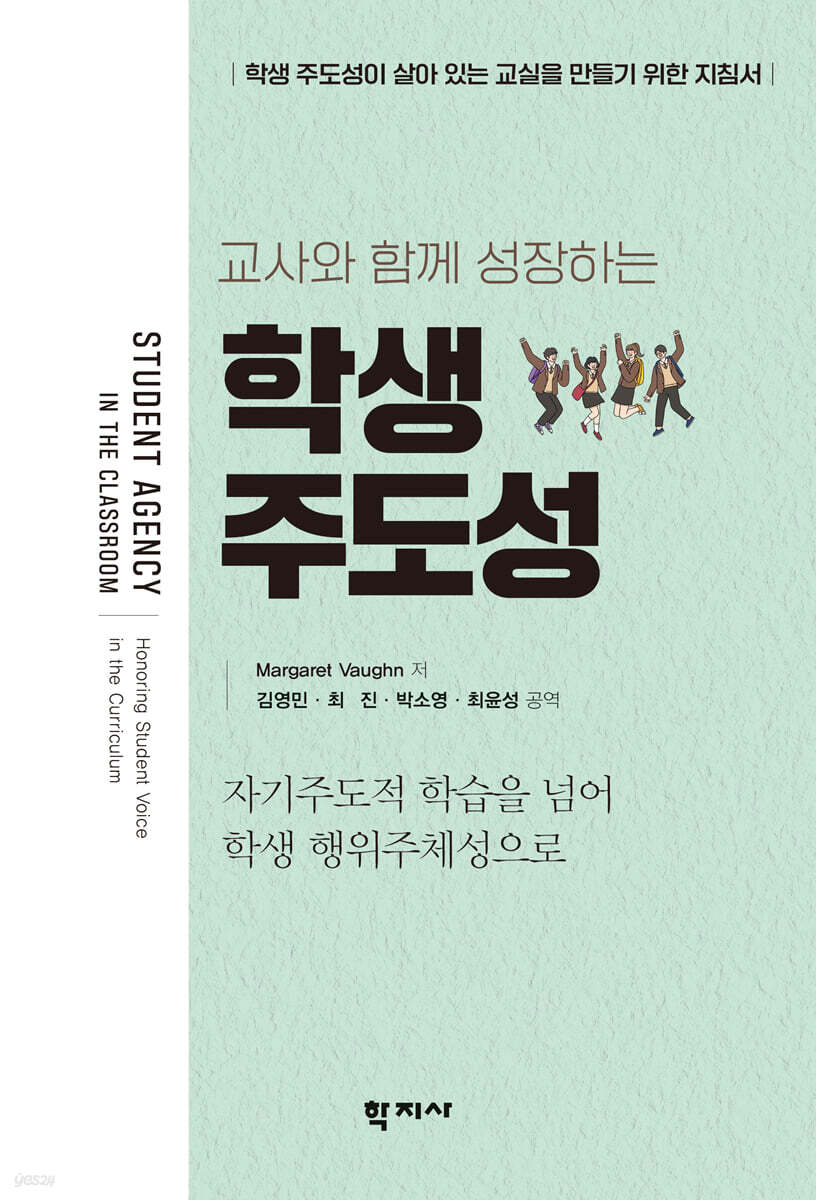
Student initiative
 |
Description
Book Introduction
In this book, author Margaret Bourne vividly illustrates the multifaceted aspects of student leadership through her rich experience as a teacher and researcher, providing real-world examples.
It also vividly illustrates how teachers across elementary, middle, and high schools take diverse and unique approaches to developing and supporting student initiative, enhancing students' academic and socio-emotional learning.
This book will provide essential assistance to all educators, including teachers, administrators, educational professionals, and policymakers at provincial and national institutions, in creating the educational environment our students deserve.
It also vividly illustrates how teachers across elementary, middle, and high schools take diverse and unique approaches to developing and supporting student initiative, enhancing students' academic and socio-emotional learning.
This book will provide essential assistance to all educators, including teachers, administrators, educational professionals, and policymakers at provincial and national institutions, in creating the educational environment our students deserve.
index
Recommendation
Translator's Preface
introduction
Entering
Part 1: What is Student Leadership?
Chapter 1: Exploring Student Leadership
Let's think together
Queen's Case
Chapter 2 Purpose and Direction
purpose
Directionality
Tool Use: Self-Directed Symbolization and Improvisation
Let's think together
Chapter 3 Perception and Perseverance
perception
tenacity
Let's think together
Chapter 4: Interaction and Negotiation
Interaction
negotiation
Let's think together
Part 2: How to Foster Student Initiative
Chapter 5: How Students Experience and Talk About Leadership
What Students Have to Say About Leadership
Voice and Choice
Let's think together
Chapter 6: How Teachers Practice and Communicate Student Leadership
Opportunity for voice and choice
The need for initiative
Flexibility and support
Let's think together
Chapter 7: Lessons for Student Leadership
How is student leadership observed in the classroom?
Practice of the class
Let's think together
Chapter 8: Cultivating a Culture of Leadership
Homeroom teacher
student
headmaster
Developing Core Beliefs
Run
Interaction and Relationship Building
Reflection and proactive action
Let's think together
Chapter 9: Outlook for the Future
Where should I go?
conclusion
Key Terms
References
Search
Translator's Preface
introduction
Entering
Part 1: What is Student Leadership?
Chapter 1: Exploring Student Leadership
Let's think together
Queen's Case
Chapter 2 Purpose and Direction
purpose
Directionality
Tool Use: Self-Directed Symbolization and Improvisation
Let's think together
Chapter 3 Perception and Perseverance
perception
tenacity
Let's think together
Chapter 4: Interaction and Negotiation
Interaction
negotiation
Let's think together
Part 2: How to Foster Student Initiative
Chapter 5: How Students Experience and Talk About Leadership
What Students Have to Say About Leadership
Voice and Choice
Let's think together
Chapter 6: How Teachers Practice and Communicate Student Leadership
Opportunity for voice and choice
The need for initiative
Flexibility and support
Let's think together
Chapter 7: Lessons for Student Leadership
How is student leadership observed in the classroom?
Practice of the class
Let's think together
Chapter 8: Cultivating a Culture of Leadership
Homeroom teacher
student
headmaster
Developing Core Beliefs
Run
Interaction and Relationship Building
Reflection and proactive action
Let's think together
Chapter 9: Outlook for the Future
Where should I go?
conclusion
Key Terms
References
Search
Publisher's Review
Beyond self-directed learning to student agency!
A Guide to Creating a Student-Driven Classroom
A commonly used educational term for initiative is ‘self-directed learning.’
At this time, self-directed learning is usually understood as a concept in which students take the initiative in their own learning, rather than being passive, by setting their own goals, selecting tasks, and organizing them.
But according to the newly discovered aspect of initiative, this idea is half right and half wrong.
This is because initiative cannot be expressed in an isolated individual, but can only begin in a 'relationship' with the people and context surrounding oneself.
In this book, author Margaret Vaughn vividly illustrates the multifaceted aspects of student leadership through her rich experience as a teacher and researcher, providing real-world examples.
It also vividly illustrates how teachers across elementary, middle, and high schools take diverse and unique approaches to developing and supporting student initiative, enhancing students' academic and socio-emotional learning.
This book will provide essential assistance to all educators, including teachers, administrators, educational professionals, and policymakers at provincial and national institutions, in creating the educational environment our students deserve.
She knows in principle that all students' voices should be respected in the classroom, but she directly questions whether it is only the "smart" students who are acknowledged as "voices to be heard."
In fact, looking back, we must seriously consider whether 'intelligence' or 'academic achievement' may not have been a somewhat single and artificial standard that still shapes some people's subjective senses in the educational field we have experienced so far and in the field of education today.
Another point repeatedly emphasized throughout the book is that teachers must go beyond providing passive assistance and instead structure and plan lessons in a way that is responsive to students' realities and interests.
This does not mean that separate classes should be conducted outside the national curriculum, but rather it poses a weighty question of how the curriculum should be reconstructed based on the students that teachers encounter 'here and now' and the spatiotemporal context.
Through this book, the author helps readers gain clear and useful knowledge about student leadership, and is inspired.
While reading the book, we can think about how important student initiative is in learning.
I want to continue to look at students who are proactive and talk about student initiative, responsive teachers, and the importance of this book.
After reading this book, you will gain the insight that teachers' beliefs and roles are essential for students to develop a sense of ownership and provide such opportunities.
A Guide to Creating a Student-Driven Classroom
A commonly used educational term for initiative is ‘self-directed learning.’
At this time, self-directed learning is usually understood as a concept in which students take the initiative in their own learning, rather than being passive, by setting their own goals, selecting tasks, and organizing them.
But according to the newly discovered aspect of initiative, this idea is half right and half wrong.
This is because initiative cannot be expressed in an isolated individual, but can only begin in a 'relationship' with the people and context surrounding oneself.
In this book, author Margaret Vaughn vividly illustrates the multifaceted aspects of student leadership through her rich experience as a teacher and researcher, providing real-world examples.
It also vividly illustrates how teachers across elementary, middle, and high schools take diverse and unique approaches to developing and supporting student initiative, enhancing students' academic and socio-emotional learning.
This book will provide essential assistance to all educators, including teachers, administrators, educational professionals, and policymakers at provincial and national institutions, in creating the educational environment our students deserve.
She knows in principle that all students' voices should be respected in the classroom, but she directly questions whether it is only the "smart" students who are acknowledged as "voices to be heard."
In fact, looking back, we must seriously consider whether 'intelligence' or 'academic achievement' may not have been a somewhat single and artificial standard that still shapes some people's subjective senses in the educational field we have experienced so far and in the field of education today.
Another point repeatedly emphasized throughout the book is that teachers must go beyond providing passive assistance and instead structure and plan lessons in a way that is responsive to students' realities and interests.
This does not mean that separate classes should be conducted outside the national curriculum, but rather it poses a weighty question of how the curriculum should be reconstructed based on the students that teachers encounter 'here and now' and the spatiotemporal context.
Through this book, the author helps readers gain clear and useful knowledge about student leadership, and is inspired.
While reading the book, we can think about how important student initiative is in learning.
I want to continue to look at students who are proactive and talk about student initiative, responsive teachers, and the importance of this book.
After reading this book, you will gain the insight that teachers' beliefs and roles are essential for students to develop a sense of ownership and provide such opportunities.
GOODS SPECIFICS
- Date of issue: January 20, 2023
- Page count, weight, size: 240 pages | 372g | 188*257*15mm
- ISBN13: 9788999728051
- ISBN10: 8999728056
You may also like
카테고리
korean


korean

![GQ KOREA Mark (Monthly): December [2025]](http://librairie.coreenne.fr/cdn/shop/files/8ef265dbbfbf186523ed75ba7319009d.jpg?v=1765340328&width=3840)


