

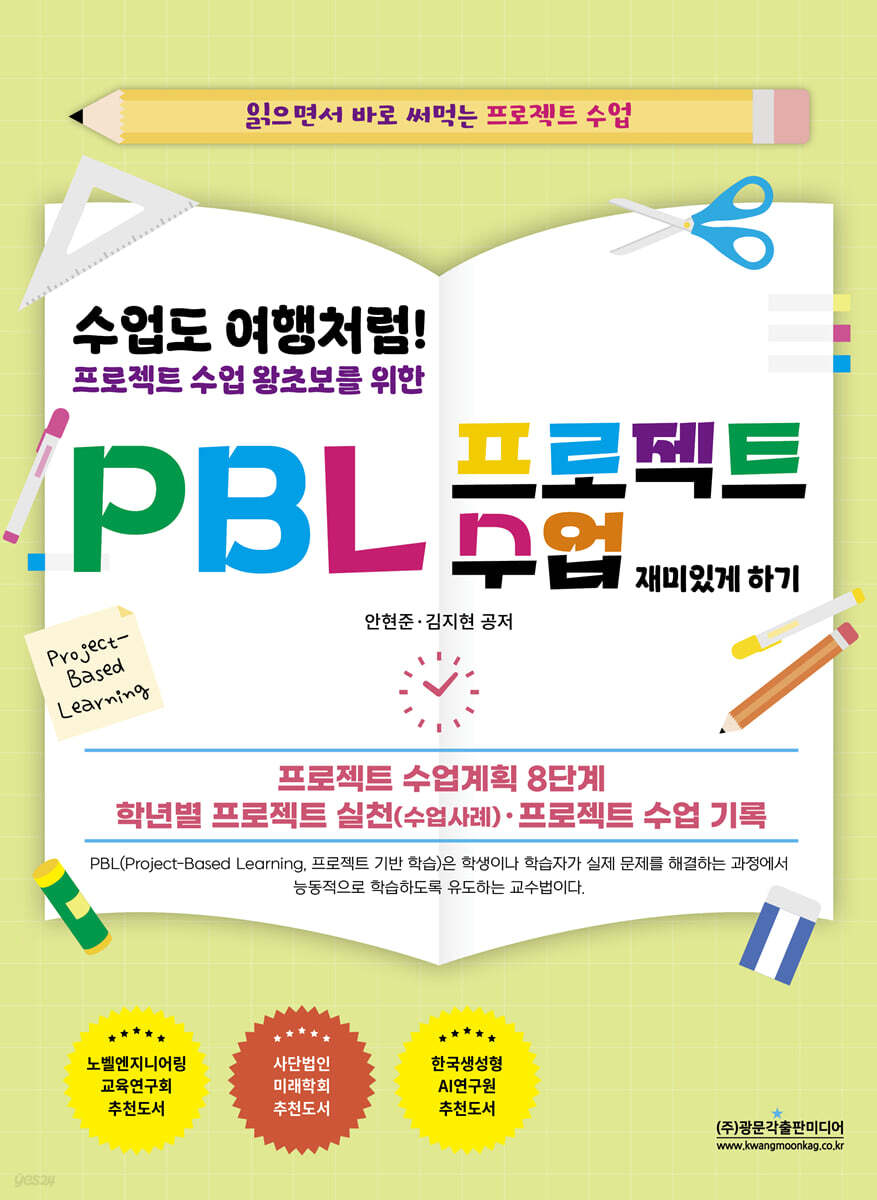
Make class like a trip! Make project-based learning (PBL) fun for absolute beginners.
 |
Description
Book Introduction
This is a book for beginners in project management.
In other words, it is a book written about the basics of project-based classes.
It contains everything from project planning to specific implementation.
Part 1 introduces the eight steps of project planning.
Part 2 introduces specific examples and operational methods for implementing project classes.
Part 3 provides guidance on how to record the project lessons you have practiced so that you can use them effectively in the future.
In other words, it is a book written about the basics of project-based classes.
It contains everything from project planning to specific implementation.
Part 1 introduces the eight steps of project planning.
Part 2 introduces specific examples and operational methods for implementing project classes.
Part 3 provides guidance on how to record the project lessons you have practiced so that you can use them effectively in the future.
index
Prologue - Classes are like a journey
PBL Project Planning Methods You Can Use Right Away While Reading Part 1
Chapter 1: What is a Project-Based Lesson?
Chapter 2: 2022 Revised Curriculum and Project-Based Learning
Chapter 3: Why I Started Project-Based Classes
Chapter 4: Why Project-Based Learning Feels Difficult
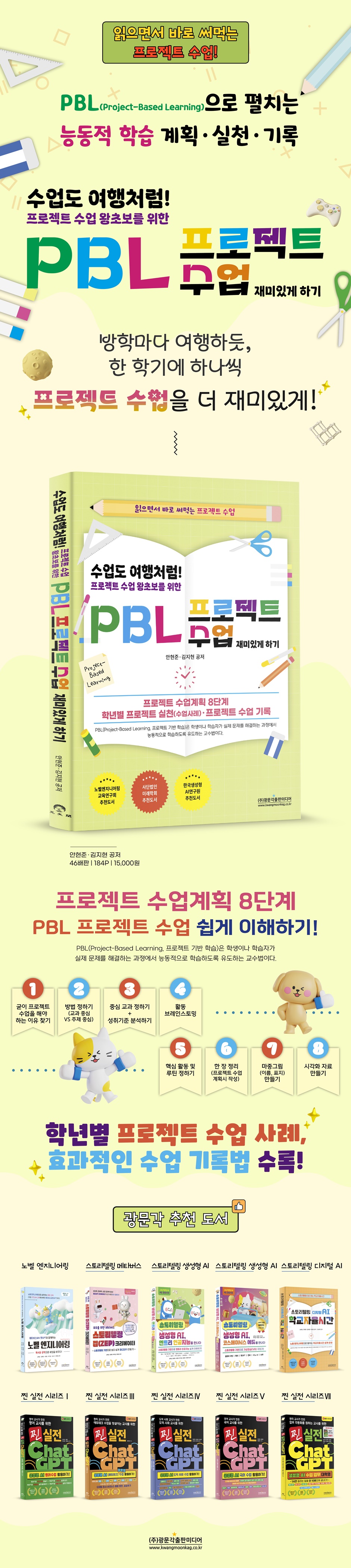
Chapter 5: 8 Steps to Planning a Project Lesson
1) Find a reason to take a project class (find a reason to go on a trip)
2) Decide on a method (subject-centered project class vs. topic-centered project class)
3) Determine the core subject and analyze the achievement standards.
4) Activity Brainstorming
5) Establish core activities and routines
6) One-page summary (writing a project lesson plan)
7) Create a greeting card (name, cover)
8) Creating visualizations
Chapter 6: Project-Based Learning is Building Blocks
Chapter 7: Are you still doing project classes alone?
Chapter 8: Project Class This is a must
PBL Project Practice Methods You Can Put into Practice Right Away While Reading Part 2
Chapter 1: Project Lessons for Grades 1 and 2
1) Smurf Family Love Project
“With Family Month coming up every year, are there any easy and touching projects?”
2) Green Earth Project Together
“How can we connect environmental protection projects with the school curriculum?”
3) October is our National Foundation Day project
"How to kill two birds with one stone, from educational activities to fun activities, before the holidays?"
4) October is our national holiday Hangeul Day Grand Festival Project
“How can we make the same old, yearly training more meaningful and fun?”
Chapter 2: Project Lessons for Grades 3 and 4
1) Our hometown project
“How can students take the initiative, engage with their communities, and create change?”
2) Dokdo Day Project
"If you're bored with projects only for your class, a student-wide project isn't difficult."
3) Curiosity Heaven 15-Minute Lecture Project
“At the end of the semester, when the class progress is over, students are giving lectures themselves?”
4) Little Writer Project
“Children’s writing materials collected over the year, put into books, not trash cans!”
Chapter 3: Project Lessons for Grades 5 and 6
1) Tiger Belly Button Project
“Teacher, society is so difficult.
“How can I easily learn geographic information about my area?”
2) Little Historian Project
"5,000 years of history in just 51 lessons? Killing two birds with one stone: history lessons and textbook progress!"
3) The Zero Project of the Cucumbers
“The environmental issue exploration project starts in our class’ trash can?”
4) Maker Project with My Hands
"If you make something alone, it ends alone? What's the point of a project that we create together and share together?"
5) Walk into the World Project
“What if we could combine world cultures, which are repeated in various subjects, into one basket?”
PBL Project Recording Methods You Can Use Right Away While Reading Part 3
Chapter 1: How to Record Online
Chapter 2: How to Record Offline
Chapter 3: Teaching and Creating Study Groups
Chapter 4: The Importance of Records
Epilogue - Completing the Book Writing Project
PBL Project Planning Methods You Can Use Right Away While Reading Part 1
Chapter 1: What is a Project-Based Lesson?
Chapter 2: 2022 Revised Curriculum and Project-Based Learning
Chapter 3: Why I Started Project-Based Classes
Chapter 4: Why Project-Based Learning Feels Difficult
Chapter 5: 8 Steps to Planning a Project Lesson
1) Find a reason to take a project class (find a reason to go on a trip)
2) Decide on a method (subject-centered project class vs. topic-centered project class)
3) Determine the core subject and analyze the achievement standards.
4) Activity Brainstorming
5) Establish core activities and routines
6) One-page summary (writing a project lesson plan)
7) Create a greeting card (name, cover)
8) Creating visualizations
Chapter 6: Project-Based Learning is Building Blocks
Chapter 7: Are you still doing project classes alone?
Chapter 8: Project Class This is a must
PBL Project Practice Methods You Can Put into Practice Right Away While Reading Part 2
Chapter 1: Project Lessons for Grades 1 and 2
1) Smurf Family Love Project
“With Family Month coming up every year, are there any easy and touching projects?”
2) Green Earth Project Together
“How can we connect environmental protection projects with the school curriculum?”
3) October is our National Foundation Day project
"How to kill two birds with one stone, from educational activities to fun activities, before the holidays?"
4) October is our national holiday Hangeul Day Grand Festival Project
“How can we make the same old, yearly training more meaningful and fun?”
Chapter 2: Project Lessons for Grades 3 and 4
1) Our hometown project
“How can students take the initiative, engage with their communities, and create change?”
2) Dokdo Day Project
"If you're bored with projects only for your class, a student-wide project isn't difficult."
3) Curiosity Heaven 15-Minute Lecture Project
“At the end of the semester, when the class progress is over, students are giving lectures themselves?”
4) Little Writer Project
“Children’s writing materials collected over the year, put into books, not trash cans!”
Chapter 3: Project Lessons for Grades 5 and 6
1) Tiger Belly Button Project
“Teacher, society is so difficult.
“How can I easily learn geographic information about my area?”
2) Little Historian Project
"5,000 years of history in just 51 lessons? Killing two birds with one stone: history lessons and textbook progress!"
3) The Zero Project of the Cucumbers
“The environmental issue exploration project starts in our class’ trash can?”
4) Maker Project with My Hands
"If you make something alone, it ends alone? What's the point of a project that we create together and share together?"
5) Walk into the World Project
“What if we could combine world cultures, which are repeated in various subjects, into one basket?”
PBL Project Recording Methods You Can Use Right Away While Reading Part 3
Chapter 1: How to Record Online
Chapter 2: How to Record Offline
Chapter 3: Teaching and Creating Study Groups
Chapter 4: The Importance of Records
Epilogue - Completing the Book Writing Project
Detailed image
Publisher's Review
Classes are like a trip
'One trip per semester, like every vacation.'
We've already heard a lot about project-based learning.
However, there is not much experience in planning and implementing project classes on one's own.
There are many times when we feel lost and don't know how to plan or how to put it into practice.
There are many examples of brilliant project-based classes, but none provide detailed information about the process of designing and planning these classes, or how they were successfully implemented.
This book is for 'project beginners'.
In other words, this is a book written about the basics of project-based classes.
It contains everything from project planning to specific implementation.
Part 1 introduces the eight steps of project planning.
Part 2 introduces specific examples and operational methods for implementing project classes.
Part 3 provides guidance on how to record your project lessons so that you can use them effectively in the future.
If you read this book and plan one project class per semester, you will be able to accumulate two project classes in one year, six in three years, and ten in five years.
These accumulated project classes become my own teacher training curriculum, and existing project classes are connected and linked to each other, leading to new projects.
Just as a successful trip gives you the confidence to take on new trips, a successful project class gives you the confidence to take on new project classes.
Just as traveling a lot will help you develop your own travel style, taking a lot of project classes will help you develop your own teacher training curriculum.
With so many project classes piling up, even if you just do one a month, the year will be over.
It will be a year filled with happy worries and worries about the many things you have to do.
Just as you might prepare for a trip with excitement by reading a travel book, why not prepare for your project class with the same excitement as you would for a trip by reading this book? Are you ready to embark on a journey together? This book will serve as a guide for your project class journey.
- Authors: Ahn Hyun-jun, Kim Ji-hyun
'One trip per semester, like every vacation.'
We've already heard a lot about project-based learning.
However, there is not much experience in planning and implementing project classes on one's own.
There are many times when we feel lost and don't know how to plan or how to put it into practice.
There are many examples of brilliant project-based classes, but none provide detailed information about the process of designing and planning these classes, or how they were successfully implemented.
This book is for 'project beginners'.
In other words, this is a book written about the basics of project-based classes.
It contains everything from project planning to specific implementation.
Part 1 introduces the eight steps of project planning.
Part 2 introduces specific examples and operational methods for implementing project classes.
Part 3 provides guidance on how to record your project lessons so that you can use them effectively in the future.
If you read this book and plan one project class per semester, you will be able to accumulate two project classes in one year, six in three years, and ten in five years.
These accumulated project classes become my own teacher training curriculum, and existing project classes are connected and linked to each other, leading to new projects.
Just as a successful trip gives you the confidence to take on new trips, a successful project class gives you the confidence to take on new project classes.
Just as traveling a lot will help you develop your own travel style, taking a lot of project classes will help you develop your own teacher training curriculum.
With so many project classes piling up, even if you just do one a month, the year will be over.
It will be a year filled with happy worries and worries about the many things you have to do.
Just as you might prepare for a trip with excitement by reading a travel book, why not prepare for your project class with the same excitement as you would for a trip by reading this book? Are you ready to embark on a journey together? This book will serve as a guide for your project class journey.
- Authors: Ahn Hyun-jun, Kim Ji-hyun
GOODS SPECIFICS
- Date of issue: April 5, 2025
- Page count, weight, size: 184 pages | 502g | 174*246*12mm
- ISBN13: 9791193205549
- ISBN10: 1193205549
You may also like
카테고리
korean


korean

![GQ KOREA Mark (Monthly): December [2025]](http://librairie.coreenne.fr/cdn/shop/files/8ef265dbbfbf186523ed75ba7319009d.jpg?v=1765340328&width=3840)


