

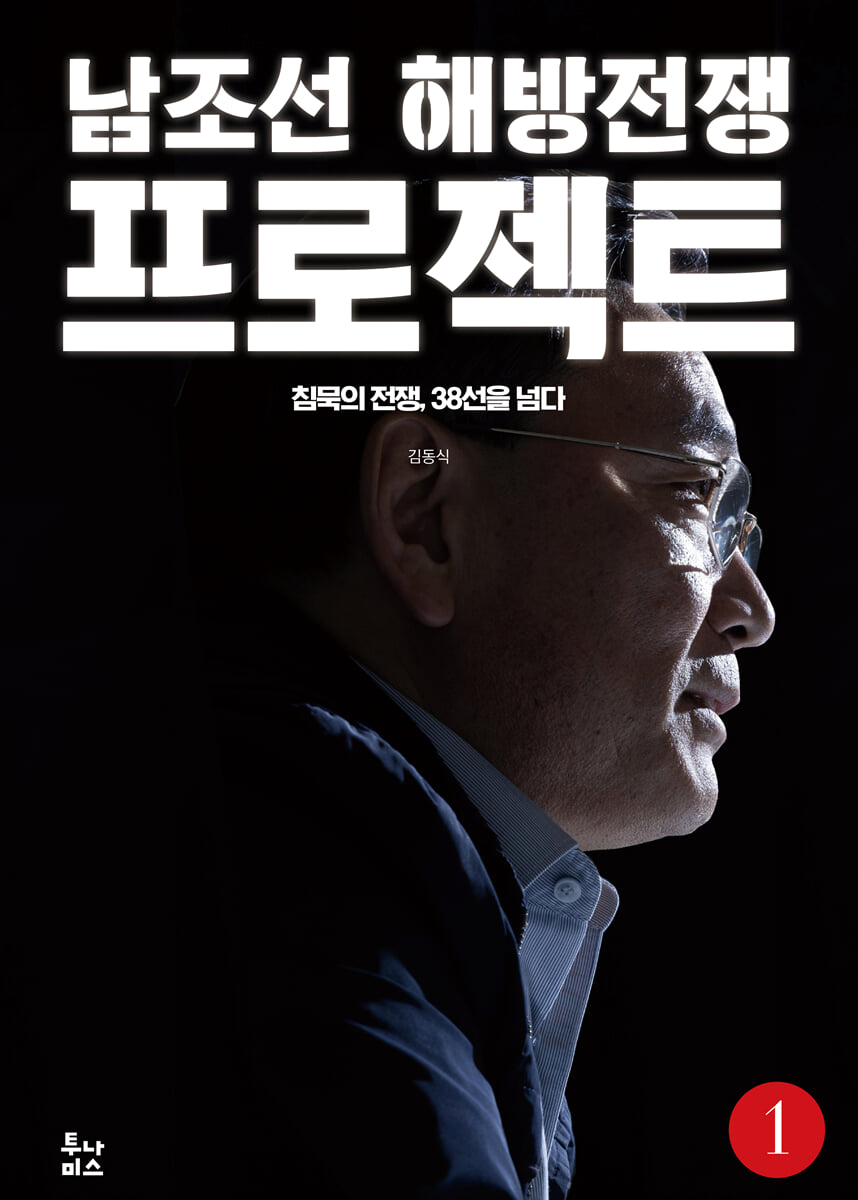
South Korea Liberation War Project 1
 |
Description
Book Introduction
Uncovering the spy Seong Si-baek's every move
Awarded the title of Hero of the Republic and the Order of National Flag, 1st Class, and the North Korean anti-South Korean espionage history embodied by Dr. Kim Dong-sik
『South Korean Liberation War Project 1 (Crossing the 38th Parallel: The Silent War)』 is a systematic record of the entirety of North Korea's reckless operations against South Korea from the liberation period until the 1960s.
Drawing on extensive data and testimony, the author reveals in detail the true nature of the organized work, propaganda, and special operations carried out under the Kim Il-sung regime.
As we vividly encounter major cases such as the Seong Si-baek case, the female spy Kim Su-im case, the National Assembly spy case, the Gangdong Political Academy, and the political operation unit during the Korean War, we are confronted with the uncomfortable truth that North Korean operations are no exception even today.
This book goes beyond a simple list of events; it corrects distorted history and allows readers to foresee the present and future for themselves.
Awarded the title of Hero of the Republic and the Order of National Flag, 1st Class, and the North Korean anti-South Korean espionage history embodied by Dr. Kim Dong-sik
『South Korean Liberation War Project 1 (Crossing the 38th Parallel: The Silent War)』 is a systematic record of the entirety of North Korea's reckless operations against South Korea from the liberation period until the 1960s.
Drawing on extensive data and testimony, the author reveals in detail the true nature of the organized work, propaganda, and special operations carried out under the Kim Il-sung regime.
As we vividly encounter major cases such as the Seong Si-baek case, the female spy Kim Su-im case, the National Assembly spy case, the Gangdong Political Academy, and the political operation unit during the Korean War, we are confronted with the uncomfortable truth that North Korean operations are no exception even today.
This book goes beyond a simple list of events; it corrects distorted history and allows readers to foresee the present and future for themselves.
- You can preview some of the book's contents.
Preview
index
Chapter 1: Shadow of Liberation
The liberation situation and the creation of the anti-South Korean operations organization
The emergence of Seong Si-baek and the prelude to the operation against the South
Seong Si-baek becomes a member of the Chinese Communist Party
Kim Il-sung recruited Seong Si-baek as an agent
Seong Si-baek enters Seoul
A meaningful meeting between Seong Si-baek and Kim Il-sung
Invite South Korean right-wing leaders to the inter-Korean summit.
Kim Il-sung established a spy network separate from the South Korean Workers' Party through Song Si-baek.
Seong Si-baek begins full-scale operations.
Unite the forces opposing the single-line system
Establishment of the Gangdong Political Academy and the work to dismantle the South Korean Workers' Party
Gangdong Political Academy and Guerrilla Activities
Seong Si-baek's military and intelligence gathering operations
National Assembly spy operations and Seong Si-baek
The circumstances and full story of the incident involving the Special Political Committee of the Northern Labor Party in the Southern Region
The ongoing 'female spy Kim Soo-im case'
Frustrated anti-South intelligence gathering operation
Chapter 2 6/25 and the War of Reconnaissance
Operations against South Korea in the early stages of the war
Lee In-mo is not a war correspondent, but a political operative.
Implementation of land reform in occupied territories
plunder of human and material resources
The People's Army's retreat and the resolution of chaos
The Creation of the South Korean People's Guerrilla Army and Lee Hyun-sang
Earth Party Reorganization and Guerrilla Weakening
Reorganization of the South Korean Operations Department and Support for South Korean Guerrilla Forces
Purge of the South Korean Workers' Party leadership and destruction of the guerrilla forces
Underground reconstruction and intelligence gathering operations
Chapter 3: Armistice, the Unfinished War
Reorganization and expansion of the anti-South Korean operations organization
Jirisan Guerrilla Training Operation
North Korea's operation that led to the destruction of the Jirisan Guerrilla Force
Working in conjunction with party organizations and members remaining in urban and rural areas
Simultaneously, work is being done to build a new organization.
Operations against remaining members of the North-South negotiation faction
Letter Works
Big-time spy Park Jeong-ho and the Progressive Party
Park Jeong-ho appears in former Soviet diplomatic documents
Pak Jeong-ho's handwritten letter to Kim Il-sung
Double agents Yang Myeong-san and Jo Bong-am
Chapter 4: Turbulent Times and Underground Organizations
Expansion of the April 19 Revolution and Anti-South Operations Guidance Organization
Family and relatives as spies
Choi Baek-geun, a South Korean spy disguised as a democratic martyr
Choi Baek-geun's plan to create a legal political party
Choi Baek-geun, who returned after receiving a warm welcome from Kim Il-sung and was executed
The creation of an innovative political party using the Guidance Liaison Operation Team
Minjok Ilbo and Jo Yong-su
Kim Il-sung panicked over the May 16 military coup
Headquarters of North Korea's anti-South Korean operations - Building No. 3
The May 16 Coup and North Korea's Perception of the Situation
Evaluation of the May 16th Movement's leading forces
Four 'Hwang Tae-seong'
Hwang Tae-seong, the first to be dispatched to the South
The unfulfilled principles of the work and the Immijeong
Hwang Tae-seong, who 'claimed' to be the arrester
The continued failure of operations with the fearful No. 2 'Hwang Tae-seong' Kim
Operation to recruit Republican Party Chairman Jeong Gu-yeong
Relentless Jung Gu-young's approach
Kim Seong-gon and Lee Hyo-sang's letter delivery method
Success in winning over National Assembly member Kim Kyu-nam
Win over the upper echelons of the Korean military
The attempted recruitment of Army Vice Chief of Staff Lieutenant General Kim Jong-oh
Build a Marxist-Leninist Party in Korea
The Central Party's anti-South Korean operations organization has been significantly expanded and strengthened.
Expansion of education and training institutions for anti-South Korean operations
The founding of the Tonghyeokdang began by chance
Choi Young-do treated his agent nephew as a rookie
Send a big shot to Choi Young-do
The utmost hospitality to Choi Young-do
Diluting the North Korean leadership's suspicions about Jeong Tae-muk
The creation of the Tonghyeokdang, which led to the recruitment of Kim Jong-tae
Ilta Ssangpi
Welcome and training for Kim Jong-tae
Baekdu 1 - Kim Jong-tae
Peacock Tiger and Link Number
Meeting Kim Il-sung for the third time since entering North Korea
Unification Revolutionary Party Organization Expansion Project
Jeong Tae-muk returns to the Labor Party
Jeong Tae-muk, back as a warrior for the Labor Party
Choi Young-do, recognized for his achievements
The Revolutionary Party is a subordinate organization of the Workers' Party in South Korea.
The plan to build a revolutionary party ended in failure
Continued work to establish the Revolutionary Party
The Jeju Island-born Yang Gun-ok spy case
The case of the high-ranking female spy Yoo Wi-ha
Yoo Jeong-suk was promoted to deputy director of the Unification Front Department after successfully reorganizing the Tonghyeokdang.
The work to establish the Revolutionary Party continues…
The purge of Lee Hyo-sun and the expansion and reorganization of the anti-South Korean operations organization.
January 21st Incident
The Blue House raid was a pretext for an armed invasion.
Lessons from the January 21st failure for North Korea
North Korea's massive provocations triggered by the deployment of troops to the Vietnam War
Uljin-Samcheok Armed Propaganda Unit Infiltration Incident
The Gwangju Incident That Forced North Korea to Forget Its Folly to Send an Armed Propaganda Unit to the South
Kidnapping and conspiracy of fishermen
A fisherman from Hamgyeong Province who volunteered to join the group
A fisherman from South Korea is also a North Korean agent.
North Korean operation base established in East Berlin
Yoon I-sang's private car and Jo Myeong-hun
Im Seok-jin and Lee Ki-yang
Yun I-sang and the Korean student who went to Pyongyang
What is the truth about the East Berlin (Dongbaekrim) spy ring incident?
North Korea's overseas operations are also being carried out in the UK.
A foreign student turned spy turned congressman and professor
The liberation situation and the creation of the anti-South Korean operations organization
The emergence of Seong Si-baek and the prelude to the operation against the South
Seong Si-baek becomes a member of the Chinese Communist Party
Kim Il-sung recruited Seong Si-baek as an agent
Seong Si-baek enters Seoul
A meaningful meeting between Seong Si-baek and Kim Il-sung
Invite South Korean right-wing leaders to the inter-Korean summit.
Kim Il-sung established a spy network separate from the South Korean Workers' Party through Song Si-baek.
Seong Si-baek begins full-scale operations.
Unite the forces opposing the single-line system
Establishment of the Gangdong Political Academy and the work to dismantle the South Korean Workers' Party
Gangdong Political Academy and Guerrilla Activities
Seong Si-baek's military and intelligence gathering operations
National Assembly spy operations and Seong Si-baek
The circumstances and full story of the incident involving the Special Political Committee of the Northern Labor Party in the Southern Region
The ongoing 'female spy Kim Soo-im case'
Frustrated anti-South intelligence gathering operation
Chapter 2 6/25 and the War of Reconnaissance
Operations against South Korea in the early stages of the war
Lee In-mo is not a war correspondent, but a political operative.
Implementation of land reform in occupied territories
plunder of human and material resources
The People's Army's retreat and the resolution of chaos
The Creation of the South Korean People's Guerrilla Army and Lee Hyun-sang
Earth Party Reorganization and Guerrilla Weakening
Reorganization of the South Korean Operations Department and Support for South Korean Guerrilla Forces
Purge of the South Korean Workers' Party leadership and destruction of the guerrilla forces
Underground reconstruction and intelligence gathering operations
Chapter 3: Armistice, the Unfinished War
Reorganization and expansion of the anti-South Korean operations organization
Jirisan Guerrilla Training Operation
North Korea's operation that led to the destruction of the Jirisan Guerrilla Force
Working in conjunction with party organizations and members remaining in urban and rural areas
Simultaneously, work is being done to build a new organization.
Operations against remaining members of the North-South negotiation faction
Letter Works
Big-time spy Park Jeong-ho and the Progressive Party
Park Jeong-ho appears in former Soviet diplomatic documents
Pak Jeong-ho's handwritten letter to Kim Il-sung
Double agents Yang Myeong-san and Jo Bong-am
Chapter 4: Turbulent Times and Underground Organizations
Expansion of the April 19 Revolution and Anti-South Operations Guidance Organization
Family and relatives as spies
Choi Baek-geun, a South Korean spy disguised as a democratic martyr
Choi Baek-geun's plan to create a legal political party
Choi Baek-geun, who returned after receiving a warm welcome from Kim Il-sung and was executed
The creation of an innovative political party using the Guidance Liaison Operation Team
Minjok Ilbo and Jo Yong-su
Kim Il-sung panicked over the May 16 military coup
Headquarters of North Korea's anti-South Korean operations - Building No. 3
The May 16 Coup and North Korea's Perception of the Situation
Evaluation of the May 16th Movement's leading forces
Four 'Hwang Tae-seong'
Hwang Tae-seong, the first to be dispatched to the South
The unfulfilled principles of the work and the Immijeong
Hwang Tae-seong, who 'claimed' to be the arrester
The continued failure of operations with the fearful No. 2 'Hwang Tae-seong' Kim
Operation to recruit Republican Party Chairman Jeong Gu-yeong
Relentless Jung Gu-young's approach
Kim Seong-gon and Lee Hyo-sang's letter delivery method
Success in winning over National Assembly member Kim Kyu-nam
Win over the upper echelons of the Korean military
The attempted recruitment of Army Vice Chief of Staff Lieutenant General Kim Jong-oh
Build a Marxist-Leninist Party in Korea
The Central Party's anti-South Korean operations organization has been significantly expanded and strengthened.
Expansion of education and training institutions for anti-South Korean operations
The founding of the Tonghyeokdang began by chance
Choi Young-do treated his agent nephew as a rookie
Send a big shot to Choi Young-do
The utmost hospitality to Choi Young-do
Diluting the North Korean leadership's suspicions about Jeong Tae-muk
The creation of the Tonghyeokdang, which led to the recruitment of Kim Jong-tae
Ilta Ssangpi
Welcome and training for Kim Jong-tae
Baekdu 1 - Kim Jong-tae
Peacock Tiger and Link Number
Meeting Kim Il-sung for the third time since entering North Korea
Unification Revolutionary Party Organization Expansion Project
Jeong Tae-muk returns to the Labor Party
Jeong Tae-muk, back as a warrior for the Labor Party
Choi Young-do, recognized for his achievements
The Revolutionary Party is a subordinate organization of the Workers' Party in South Korea.
The plan to build a revolutionary party ended in failure
Continued work to establish the Revolutionary Party
The Jeju Island-born Yang Gun-ok spy case
The case of the high-ranking female spy Yoo Wi-ha
Yoo Jeong-suk was promoted to deputy director of the Unification Front Department after successfully reorganizing the Tonghyeokdang.
The work to establish the Revolutionary Party continues…
The purge of Lee Hyo-sun and the expansion and reorganization of the anti-South Korean operations organization.
January 21st Incident
The Blue House raid was a pretext for an armed invasion.
Lessons from the January 21st failure for North Korea
North Korea's massive provocations triggered by the deployment of troops to the Vietnam War
Uljin-Samcheok Armed Propaganda Unit Infiltration Incident
The Gwangju Incident That Forced North Korea to Forget Its Folly to Send an Armed Propaganda Unit to the South
Kidnapping and conspiracy of fishermen
A fisherman from Hamgyeong Province who volunteered to join the group
A fisherman from South Korea is also a North Korean agent.
North Korean operation base established in East Berlin
Yoon I-sang's private car and Jo Myeong-hun
Im Seok-jin and Lee Ki-yang
Yun I-sang and the Korean student who went to Pyongyang
What is the truth about the East Berlin (Dongbaekrim) spy ring incident?
North Korea's overseas operations are also being carried out in the UK.
A foreign student turned spy turned congressman and professor
Detailed image
Into the book
In fact, Seong Si-baek had already gone to Pyongyang for the first time in late 1946 and, upon returning to Seoul, had organized the “North Korean Communist Party Southern Special Political Committee,” a separate organization dedicated to operations against the South, composed of Kim Chol, Choi Sang-yeol, and others who had been dispatched directly to the South, under the instructions of Kim Il-sung and the North Korean leadership.
Therefore, after returning to Seoul after going to Pyongyang for the second time and having a meaningful meeting with Kim Il-sung, he began full-scale operations based on the human and material base he had prepared in advance as instructed by Kim Il-sung.
To this end, Seong Si-baek began by contacting people from the provisional government system he knew from his past underground activities in China, as well as people he had been introduced to by them or met upon returning to Seoul, and making them people of potential recruits into his organization.
During this process, Jeong Guk-eun, who worked under General Lee Beom-seok, Kwon Tae-yang, who was an important figure in Kim Kyu-sik's office, Park Geon-ung, who was an executive of the National Independence League under Kim Kyu-sik, and Seo Wan-seok, Go Jun-seok, Kang Jin, Yu Hyeok, and Seo Jung-seok, who were expelled from the Korean Communist Party after taking a stance in favor of convening a convention, were also connected to Seong Si-baek.
Among them, Park Geon-woong, who was originally a member of the Chinese Communist Party, seems to have known Seong Si-baek since his time in Chongqing, so they were connected immediately when Seong Si-baek entered Seoul.
An Woo-saeng, Kim Gu's personal secretary and the son of An Gong-geun, Ahn Jung-geun's younger brother, was also a member of Seong Si-baek's organization.
An Woo-saeng had been a close friend of Seong Si-baek since his time in China, and he played a decisive role in having Kim Gu participate in the North-South Joint Conference held in Pyongyang in April 1948.
An Woo-saeng entered Pyongyang during the Korean War and worked as a North Korean overseas agent in Hong Kong. After returning to Korea, he worked as a foreign language instructor in the Workers' Party's Department for South Korean Affairs. He died in February 1991 and is buried in the Patriotic Martyrs' Cemetery in Sinmi-ri, Hyungjesan District, Pyongyang.
Jo So-ang's secretary, Kim Heung-kwon, was in contact with Kang Byeong-chan, who was a member of Seong Si-baek's organization.
After being pushed out of the South Korean Labor Party, Kang Byeong-chan became associated with Seong Si-baek and later became active in Hong Myung-hee's Democratic Independence Party and the Korean Independence Party.
Choi Baek-geun, who was from the Baek Nam-un lineage, and Kim Chan-do, who was from the Provisional Government lineage, were key figures in the Seong Si-baek lineage.
Eom Hang-seop, who was famous for his role in the provisional government, also frequently met with Seong Si-baek in secret.
In addition, there were quite a lot of people with various careers and occupations communicating on the Seongsibaek Line.
Therefore, after returning to Seoul after going to Pyongyang for the second time and having a meaningful meeting with Kim Il-sung, he began full-scale operations based on the human and material base he had prepared in advance as instructed by Kim Il-sung.
To this end, Seong Si-baek began by contacting people from the provisional government system he knew from his past underground activities in China, as well as people he had been introduced to by them or met upon returning to Seoul, and making them people of potential recruits into his organization.
During this process, Jeong Guk-eun, who worked under General Lee Beom-seok, Kwon Tae-yang, who was an important figure in Kim Kyu-sik's office, Park Geon-ung, who was an executive of the National Independence League under Kim Kyu-sik, and Seo Wan-seok, Go Jun-seok, Kang Jin, Yu Hyeok, and Seo Jung-seok, who were expelled from the Korean Communist Party after taking a stance in favor of convening a convention, were also connected to Seong Si-baek.
Among them, Park Geon-woong, who was originally a member of the Chinese Communist Party, seems to have known Seong Si-baek since his time in Chongqing, so they were connected immediately when Seong Si-baek entered Seoul.
An Woo-saeng, Kim Gu's personal secretary and the son of An Gong-geun, Ahn Jung-geun's younger brother, was also a member of Seong Si-baek's organization.
An Woo-saeng had been a close friend of Seong Si-baek since his time in China, and he played a decisive role in having Kim Gu participate in the North-South Joint Conference held in Pyongyang in April 1948.
An Woo-saeng entered Pyongyang during the Korean War and worked as a North Korean overseas agent in Hong Kong. After returning to Korea, he worked as a foreign language instructor in the Workers' Party's Department for South Korean Affairs. He died in February 1991 and is buried in the Patriotic Martyrs' Cemetery in Sinmi-ri, Hyungjesan District, Pyongyang.
Jo So-ang's secretary, Kim Heung-kwon, was in contact with Kang Byeong-chan, who was a member of Seong Si-baek's organization.
After being pushed out of the South Korean Labor Party, Kang Byeong-chan became associated with Seong Si-baek and later became active in Hong Myung-hee's Democratic Independence Party and the Korean Independence Party.
Choi Baek-geun, who was from the Baek Nam-un lineage, and Kim Chan-do, who was from the Provisional Government lineage, were key figures in the Seong Si-baek lineage.
Eom Hang-seop, who was famous for his role in the provisional government, also frequently met with Seong Si-baek in secret.
In addition, there were quite a lot of people with various careers and occupations communicating on the Seongsibaek Line.
--- p.52
Publisher's Review
The 80 years of division have been a history of conflict and war, as well as a history of invisible manipulation.
Since liberation, the modern history of the Korean Peninsula has been stained by an “invisible war” as intricate as the war itself.
『South Korean Liberation War Project 1 (Silent War, Crossing the 38th Parallel)』 examines North Korea's anti-South operations as a continuous flow.
This book traces North Korea's operations against South Korea from immediately after liberation to the 1960s based on historical events, and comprehensively covers events that shook modern Korean history, such as the Seong Si-baek Organization Incident, the National Assembly spy incident, and the female spy Kim Su-im incident.
The author describes this as a “department store-style operation,” and provides a three-dimensional analysis of the process by which North Korea has shaken South Korea in all aspects of politics, military, and society.
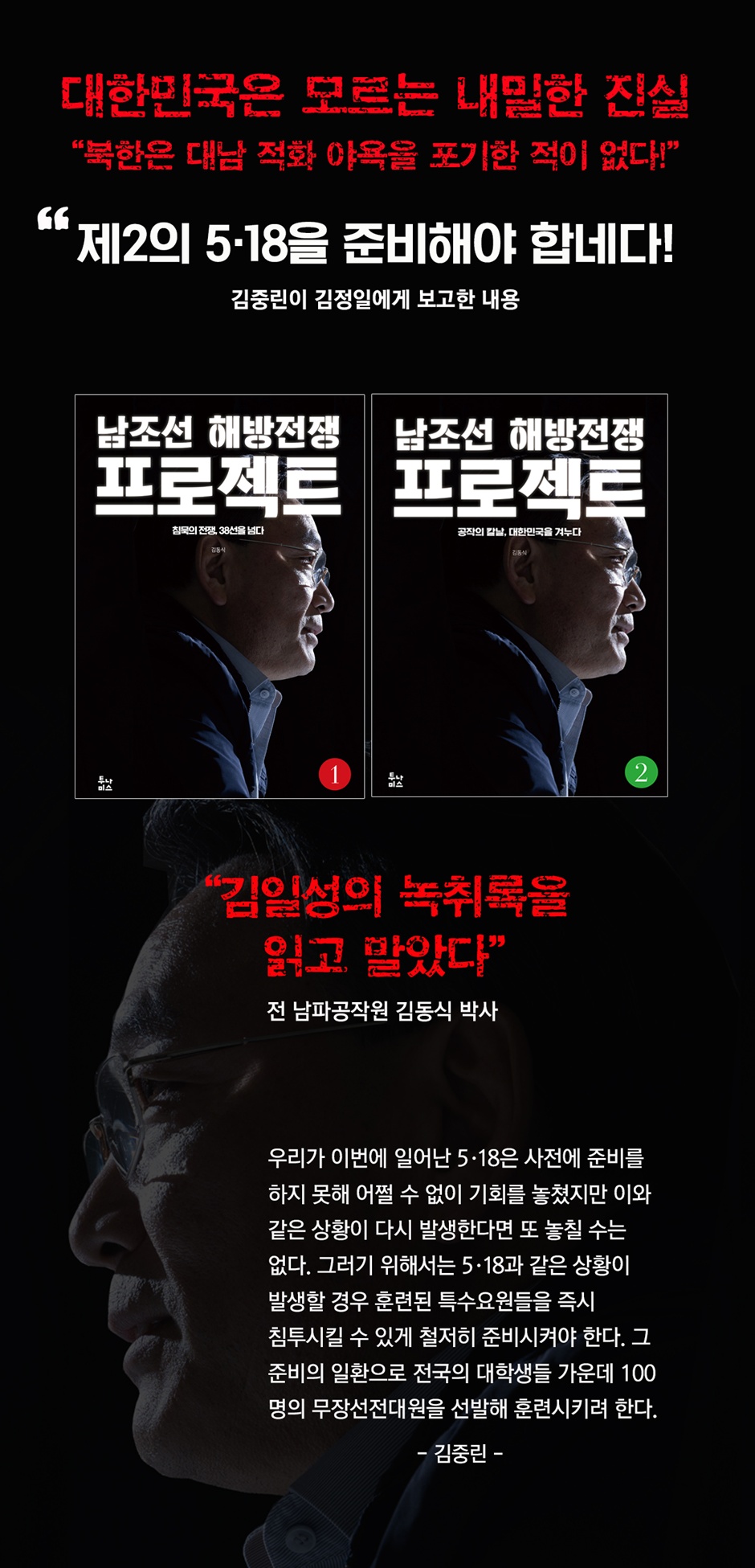
To this end, he cross-checked the cases as much as possible by making full use of confidential materials such as primary sources, investigation records, defector statements, overseas secret documents, and especially Kim Il-sung recordings seen in North Korea, and emphasized that “North Korea’s strategy toward the South and its communist ambitions have never changed.”
This book is an analysis of security, but it can also be seen as a social record that allows for a sober reflection on the tragedies of modern history.
The publisher described it as “the first attempt to comprehensively compile the true nature of North Korea’s operations against South Korea, going beyond previous research and reporting.”
Readers will recall memories of hostility and division, and through this record, ponder the question, "What pitfalls in inter-Korean relations should we be wary of going forward?" This will provide an opportunity to gain a deeper understanding of the history of division and contemplate the future of the Korean Peninsula.
Since liberation, the modern history of the Korean Peninsula has been stained by an “invisible war” as intricate as the war itself.
『South Korean Liberation War Project 1 (Silent War, Crossing the 38th Parallel)』 examines North Korea's anti-South operations as a continuous flow.
This book traces North Korea's operations against South Korea from immediately after liberation to the 1960s based on historical events, and comprehensively covers events that shook modern Korean history, such as the Seong Si-baek Organization Incident, the National Assembly spy incident, and the female spy Kim Su-im incident.
The author describes this as a “department store-style operation,” and provides a three-dimensional analysis of the process by which North Korea has shaken South Korea in all aspects of politics, military, and society.
To this end, he cross-checked the cases as much as possible by making full use of confidential materials such as primary sources, investigation records, defector statements, overseas secret documents, and especially Kim Il-sung recordings seen in North Korea, and emphasized that “North Korea’s strategy toward the South and its communist ambitions have never changed.”
This book is an analysis of security, but it can also be seen as a social record that allows for a sober reflection on the tragedies of modern history.
The publisher described it as “the first attempt to comprehensively compile the true nature of North Korea’s operations against South Korea, going beyond previous research and reporting.”
Readers will recall memories of hostility and division, and through this record, ponder the question, "What pitfalls in inter-Korean relations should we be wary of going forward?" This will provide an opportunity to gain a deeper understanding of the history of division and contemplate the future of the Korean Peninsula.
GOODS SPECIFICS
- Date of issue: September 30, 2025
- Page count, weight, size: 368 pages | 150*210*17mm
- ISBN13: 9791194005391
- ISBN10: 119400539X
You may also like
카테고리
korean


korean

![GQ KOREA Mark (Monthly): December [2025]](http://librairie.coreenne.fr/cdn/shop/files/8ef265dbbfbf186523ed75ba7319009d.jpg?v=1765340328&width=3840)


