

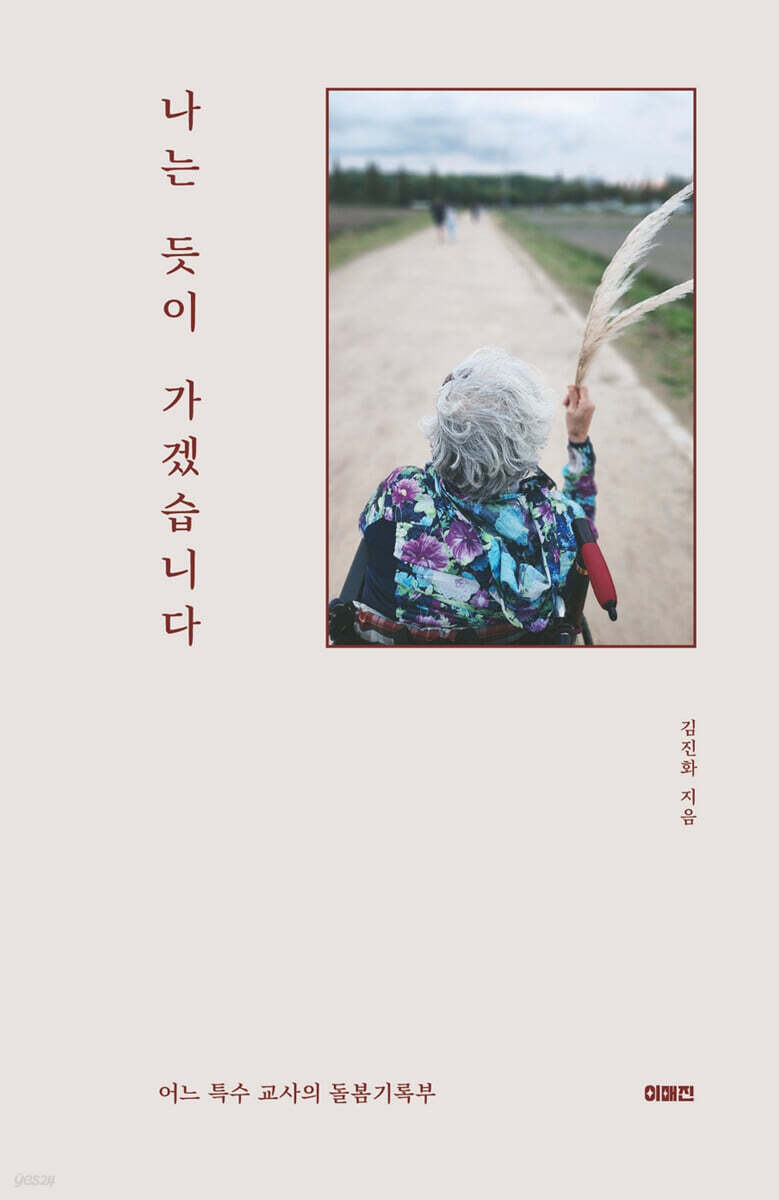
I will go as I please
 |
Description
Book Introduction
You deserve to be cared for.
I became a single caregiver without any preparation.
Despite the isolation and broken daily life of care,
I will run, read, and write as if I am flying.
21 years of special education teacher vs. 10 years of caregiver,
Recording and reflecting on the daily life of caregiving
On December 23, 2024, South Korea entered a super-aged society, with the proportion of the population aged 65 and over exceeding 20 percent.
The problem of caregiving is becoming more serious due to the increase in single-person and elderly households, low birth rates, and the trend toward nuclear families.
As one or two children take on the responsibility of caring for their parents, the physical, mental, and financial burden on the caregivers only increases.
Care is now a hot topic.
In "I Will Go As I Am," Kim Jin-hwa, a special education teacher with 21 years of experience, documents her daily life caring for her mother, who has a brain injury, for 10 years and reflects on the essence of care.
Beyond a simple caregiving journal, it adds a professional perspective and honestly conveys the realistic challenges and emotional journeys experienced during the caregiving process.
While sharing the fragmented and disappearing caregiving experience, we also provide comfort and empathy to isolated caregivers and emphasize the need for institutional support and social attention.
I became a single caregiver without any preparation.
Despite the isolation and broken daily life of care,
I will run, read, and write as if I am flying.
21 years of special education teacher vs. 10 years of caregiver,
Recording and reflecting on the daily life of caregiving
On December 23, 2024, South Korea entered a super-aged society, with the proportion of the population aged 65 and over exceeding 20 percent.
The problem of caregiving is becoming more serious due to the increase in single-person and elderly households, low birth rates, and the trend toward nuclear families.
As one or two children take on the responsibility of caring for their parents, the physical, mental, and financial burden on the caregivers only increases.
Care is now a hot topic.
In "I Will Go As I Am," Kim Jin-hwa, a special education teacher with 21 years of experience, documents her daily life caring for her mother, who has a brain injury, for 10 years and reflects on the essence of care.
Beyond a simple caregiving journal, it adds a professional perspective and honestly conveys the realistic challenges and emotional journeys experienced during the caregiving process.
While sharing the fragmented and disappearing caregiving experience, we also provide comfort and empathy to isolated caregivers and emphasize the need for institutional support and social attention.
- You can preview some of the book's contents.
Preview
index
Prologue: Care, the Door to a New World
Part 1: Into the Unseen World
Chapter 1: Mom, Cerebral Hemorrhage
Run into the past | Blood pressure diary that stopped recording | What no one tells you
Chapter 2: Beginning Rehabilitation
Like Sunwoo's Mom | Taking a Leave of Absence to Stay by Mom's Side | This is My First Time at a Rehabilitation Hospital | The Unseen World
Chapter 3: Into the World
Smart Hospital Life, The Power of a Solid Routine|“I’m a minority.
“Would you like to hear my story?”|Love is everywhere|The sincerity conveyed with my left hand|The one person who fully supported me|Seoul in a wheelchair
Part 2: Our Sparkling Daily Life, Even Without Much
Chapter 4: We Must Move Forward Even in the Darkness
Bombshell Declaration | Why It's Hard, But It's Still Hard | Cheers to Those Who Know How to Do It
Chapter 5: Beyond the Everyday
A Mother-Daughter Backpacking Trip | A Mother Wishes to Be a Mother Forever | The Small but Essential Things That Protect Us | Following Mom's Longing
Part 3: Take care of me and go together
Chapter 6 While Care Penetrates Me
The heart to save someone|Not being affectionate, but not cold|The right to self-determination|The common compliment of being a filial daughter|A father's life as reflected in the hospital room on the day of the college entrance exam|Why disability becomes a disability|The experience of a caregiver|Childcare vs. nursing, marriage vs. being single
Chapter 7: Into the World of Running, Reading, and Writing
8 years of care, starting to run|Step by step into a life of reading and writing|Small things that elevate our lives|A request close to the world, a thank you light in the world|I was a small stream heading to a wide river|Sometimes like a recovery run, sometimes like a marathon
I'll go as if I'm going to the epilogue
Part 1: Into the Unseen World
Chapter 1: Mom, Cerebral Hemorrhage
Run into the past | Blood pressure diary that stopped recording | What no one tells you
Chapter 2: Beginning Rehabilitation
Like Sunwoo's Mom | Taking a Leave of Absence to Stay by Mom's Side | This is My First Time at a Rehabilitation Hospital | The Unseen World
Chapter 3: Into the World
Smart Hospital Life, The Power of a Solid Routine|“I’m a minority.
“Would you like to hear my story?”|Love is everywhere|The sincerity conveyed with my left hand|The one person who fully supported me|Seoul in a wheelchair
Part 2: Our Sparkling Daily Life, Even Without Much
Chapter 4: We Must Move Forward Even in the Darkness
Bombshell Declaration | Why It's Hard, But It's Still Hard | Cheers to Those Who Know How to Do It
Chapter 5: Beyond the Everyday
A Mother-Daughter Backpacking Trip | A Mother Wishes to Be a Mother Forever | The Small but Essential Things That Protect Us | Following Mom's Longing
Part 3: Take care of me and go together
Chapter 6 While Care Penetrates Me
The heart to save someone|Not being affectionate, but not cold|The right to self-determination|The common compliment of being a filial daughter|A father's life as reflected in the hospital room on the day of the college entrance exam|Why disability becomes a disability|The experience of a caregiver|Childcare vs. nursing, marriage vs. being single
Chapter 7: Into the World of Running, Reading, and Writing
8 years of care, starting to run|Step by step into a life of reading and writing|Small things that elevate our lives|A request close to the world, a thank you light in the world|I was a small stream heading to a wide river|Sometimes like a recovery run, sometimes like a marathon
I'll go as if I'm going to the epilogue
Detailed image
.jpg)
Into the book
Did you think it was too trivial?
Arriving at the hospital later than the ambulance that departed from Daegu, I hurried into the emergency room while listening to my aunt's torrent of complaints.
The cold, noisy air, a sense of suspended anxiety, came over me.
The place where I expected my mother to be was drawn to me without anyone telling me, so I quickly headed there.
My father's eyes were shaking anxiously as if he had lost his mind, and my uncle was looking down at my mother with a hardened face and his arms wrapped around her.
My mother was lying among the completely unfamiliar faces of familiar people.
--- p.28
Nothing could take precedence over Mom.
It was a good decision to put everything aside and stay with my mom.
Now I decided to focus all my energy on my mom and figure out what to do and how to do it.
--- p.50
The people in the hospital room were surprised and delighted, and the mother, who had not expected to see her son at all, was so happy that she cried.
The event was a huge success.
The excited ward residents cleaned up their breakfast trays and had a big party.
As the aunt by the window led the singing with a red ladle, the patients in the ward took turns singing.
Some people even got up and danced.
Mom also stood up and shook her butt and her arms from side to side.
I was there to support my mother so she wouldn't lose her balance and I rocked back and forth.
--- p.78
My mother, who silently believed in me and waited for me in every special moment of my life, giving me the opportunity to reflect on myself.
My mom, who helped me hold my head up proudly while I tried to pretend nothing happened in front of the college entrance exam results that I wanted to hide.
That mother kept lowering her head on the street.
A paralyzed body, slightly distorted eyes and mouth, and a constant stammer of speech.
I am no longer ashamed of that mother, but my mother, sitting in a wheelchair, was ashamed of herself as she faced the world again in a way she had never imagined in her life.
--- p.89
On exhausting nights when I came home from doing what I had to do, I would retreat into my own little space and quickly close the door.
The endless task of being a mother's happiness, the endless self-doubt and self-reproach of a failed life, flew at me like arrows, but the moment I closed the thick front door and stepped inside, the arrows, having lost their target, fell helplessly.
--- p.126
The headache that lasted for three days, which only I witnessed, was a warning symptom.
I didn't notice any warning signs at all.
At best, she was a daughter who cooked me some poor porridge with a worried look on her face.
At a point when my mother's life, and the fate of our family, was hurtling toward the edge of a cliff, and perhaps I was desperately rooting for my future self to realize it, I was unable to stop the train that was hurtling towards the end.
--- p.160
The accumulated experience of family caregivers is invaluable.
Such experiences do not diminish or undermine the position of the expert.
In care, safety and convenience based on the individuality of the person receiving care are of utmost importance.
The individuality of care is only fulfilled when the experience of family caregivers is added to the expertise of care professionals and medical staff.
The individuality provided makes the person receiving care feel comfortable and safe, and the caregiver feels that he or she can be trusted.
The qualitative improvement in care that we have been longing for is just beginning.
--- p.210
I still wonder why the care I voluntarily chose, the most valuable and beautiful thing, has so isolated me.
Through my struggle to move forward, even as I falter and stumble, I want to ask the question: should this struggle be solely the responsibility of the individual? Can our society be so insensitive to the suffering of caregivers?
Arriving at the hospital later than the ambulance that departed from Daegu, I hurried into the emergency room while listening to my aunt's torrent of complaints.
The cold, noisy air, a sense of suspended anxiety, came over me.
The place where I expected my mother to be was drawn to me without anyone telling me, so I quickly headed there.
My father's eyes were shaking anxiously as if he had lost his mind, and my uncle was looking down at my mother with a hardened face and his arms wrapped around her.
My mother was lying among the completely unfamiliar faces of familiar people.
--- p.28
Nothing could take precedence over Mom.
It was a good decision to put everything aside and stay with my mom.
Now I decided to focus all my energy on my mom and figure out what to do and how to do it.
--- p.50
The people in the hospital room were surprised and delighted, and the mother, who had not expected to see her son at all, was so happy that she cried.
The event was a huge success.
The excited ward residents cleaned up their breakfast trays and had a big party.
As the aunt by the window led the singing with a red ladle, the patients in the ward took turns singing.
Some people even got up and danced.
Mom also stood up and shook her butt and her arms from side to side.
I was there to support my mother so she wouldn't lose her balance and I rocked back and forth.
--- p.78
My mother, who silently believed in me and waited for me in every special moment of my life, giving me the opportunity to reflect on myself.
My mom, who helped me hold my head up proudly while I tried to pretend nothing happened in front of the college entrance exam results that I wanted to hide.
That mother kept lowering her head on the street.
A paralyzed body, slightly distorted eyes and mouth, and a constant stammer of speech.
I am no longer ashamed of that mother, but my mother, sitting in a wheelchair, was ashamed of herself as she faced the world again in a way she had never imagined in her life.
--- p.89
On exhausting nights when I came home from doing what I had to do, I would retreat into my own little space and quickly close the door.
The endless task of being a mother's happiness, the endless self-doubt and self-reproach of a failed life, flew at me like arrows, but the moment I closed the thick front door and stepped inside, the arrows, having lost their target, fell helplessly.
--- p.126
The headache that lasted for three days, which only I witnessed, was a warning symptom.
I didn't notice any warning signs at all.
At best, she was a daughter who cooked me some poor porridge with a worried look on her face.
At a point when my mother's life, and the fate of our family, was hurtling toward the edge of a cliff, and perhaps I was desperately rooting for my future self to realize it, I was unable to stop the train that was hurtling towards the end.
--- p.160
The accumulated experience of family caregivers is invaluable.
Such experiences do not diminish or undermine the position of the expert.
In care, safety and convenience based on the individuality of the person receiving care are of utmost importance.
The individuality of care is only fulfilled when the experience of family caregivers is added to the expertise of care professionals and medical staff.
The individuality provided makes the person receiving care feel comfortable and safe, and the caregiver feels that he or she can be trusted.
The qualitative improvement in care that we have been longing for is just beginning.
--- p.210
I still wonder why the care I voluntarily chose, the most valuable and beautiful thing, has so isolated me.
Through my struggle to move forward, even as I falter and stumble, I want to ask the question: should this struggle be solely the responsibility of the individual? Can our society be so insensitive to the suffering of caregivers?
--- p.262
Publisher's Review
Care that disrupts daily life versus care that restores daily life,
Beyond care isolation, to care that changes me
After completing a 26-night, 27-day backpacking trip in New Zealand, the author was about to meet up with friends for a long-awaited affogato when he suddenly came face to face with his mother lying down.
Without even having time to recover from the shock, he volunteered to take care of her alone.
Care changed my life like that.
The life I had enjoyed as a single person, with a solid job, traveling to 45 countries, and enjoying culture and leisure while gaining diverse knowledge, was reduced to a caregiver's bed.
When I started, I thought I would be able to return to my daily life quickly, but it took me a full 10 years to take care of it.
Just as her mother helped her daughter overcome her childhood weaknesses and grow into a wholesome person, the daughter pledged to give her mother, who has illness and disabilities, a happy life for the rest of her life.
It was heartbreaking to see my mother embarrassed by her paralyzed body and slurred speech, but thanks to my job as a special education teacher, I was able to use my expertise to help my mother live with her disability.
By consistently practicing speech therapy or self-exercise, maintaining appropriate stimulation, and having the necessary equipment for daily life, they were able to recover more than people who suffered from the same disease.
Rather than rehabilitation for the sake of rehabilitation, we tried to connect various daily activities such as viewing exhibitions, traveling, bathing in hot springs, and hiking to rehabilitation.
It was a process of practicing the true value of care while protecting the dignity that mothers deserve as human beings and ensuring that their lives are not marginalized.
I also ran into limitations.
This is because care is both a personal issue and a social task.
Kim Jin-hwa had to experience firsthand the reality of the medical community, welfare system, and social perception that fell far short of her personal will to provide good care.
Even though it is the same care, childcare is welcomed as a great thing, but nursing is looked down upon as a foolish choice.
The idea that I, as a single woman, should naturally take on all the caregiving duties was deeply hurtful.
It was a moment when my abilities as a special education teacher and my right to live my own life as a human being were denied.
I ended up feeling deeply depressed because I didn't know if I was doing well or not, and I didn't even know where the end was.
self-care,
I am moving forward as if I am flying towards true care.
Looking back at himself, physically and emotionally exhausted, Jin-hwa Kim realizes that care must go beyond caring for others and become self-care.
Let go of the burden of providing perfect care and you will become a person who shares his experiences and asks for help from those around him.
We realize that care is not simply an act of helping someone, but rather an opportunity for self-reflection and growth for the caregiver as well.
So, a person who is tired of caring takes up running and writing.
Running is always difficult, but it's an experience that teaches me that I'm the only one who can control my running. It's a moment to become aware of my mind, and it's an opportunity to gain positive thinking and healthy self-love.
Although he is tired of family conflicts, friends who ignore him, and an indifferent society, he eventually becomes a person who proudly says, "The decision to stay with my mother was the best decision I ever made."
Writing is a means to help those who are self-employed or forced to provide care in a world that is often indifferent to caregivers to affirm the value of care.
Above all, we need a system that ensures fair care for everyone and a structure that properly recognizes care work.
This is because care that relies on sacrificial caregivers inevitably increases inequality and conflict and places a burden on society as a whole.
After ten years of caring, running, and writing, Jin-Hwa Kim has come to the realization that true caring is self-care. With this book out in the world, she continues to fly towards a "caring society" where everyone cares for everyone else.
Beyond care isolation, to care that changes me
After completing a 26-night, 27-day backpacking trip in New Zealand, the author was about to meet up with friends for a long-awaited affogato when he suddenly came face to face with his mother lying down.
Without even having time to recover from the shock, he volunteered to take care of her alone.
Care changed my life like that.
The life I had enjoyed as a single person, with a solid job, traveling to 45 countries, and enjoying culture and leisure while gaining diverse knowledge, was reduced to a caregiver's bed.
When I started, I thought I would be able to return to my daily life quickly, but it took me a full 10 years to take care of it.
Just as her mother helped her daughter overcome her childhood weaknesses and grow into a wholesome person, the daughter pledged to give her mother, who has illness and disabilities, a happy life for the rest of her life.
It was heartbreaking to see my mother embarrassed by her paralyzed body and slurred speech, but thanks to my job as a special education teacher, I was able to use my expertise to help my mother live with her disability.
By consistently practicing speech therapy or self-exercise, maintaining appropriate stimulation, and having the necessary equipment for daily life, they were able to recover more than people who suffered from the same disease.
Rather than rehabilitation for the sake of rehabilitation, we tried to connect various daily activities such as viewing exhibitions, traveling, bathing in hot springs, and hiking to rehabilitation.
It was a process of practicing the true value of care while protecting the dignity that mothers deserve as human beings and ensuring that their lives are not marginalized.
I also ran into limitations.
This is because care is both a personal issue and a social task.
Kim Jin-hwa had to experience firsthand the reality of the medical community, welfare system, and social perception that fell far short of her personal will to provide good care.
Even though it is the same care, childcare is welcomed as a great thing, but nursing is looked down upon as a foolish choice.
The idea that I, as a single woman, should naturally take on all the caregiving duties was deeply hurtful.
It was a moment when my abilities as a special education teacher and my right to live my own life as a human being were denied.
I ended up feeling deeply depressed because I didn't know if I was doing well or not, and I didn't even know where the end was.
self-care,
I am moving forward as if I am flying towards true care.
Looking back at himself, physically and emotionally exhausted, Jin-hwa Kim realizes that care must go beyond caring for others and become self-care.
Let go of the burden of providing perfect care and you will become a person who shares his experiences and asks for help from those around him.
We realize that care is not simply an act of helping someone, but rather an opportunity for self-reflection and growth for the caregiver as well.
So, a person who is tired of caring takes up running and writing.
Running is always difficult, but it's an experience that teaches me that I'm the only one who can control my running. It's a moment to become aware of my mind, and it's an opportunity to gain positive thinking and healthy self-love.
Although he is tired of family conflicts, friends who ignore him, and an indifferent society, he eventually becomes a person who proudly says, "The decision to stay with my mother was the best decision I ever made."
Writing is a means to help those who are self-employed or forced to provide care in a world that is often indifferent to caregivers to affirm the value of care.
Above all, we need a system that ensures fair care for everyone and a structure that properly recognizes care work.
This is because care that relies on sacrificial caregivers inevitably increases inequality and conflict and places a burden on society as a whole.
After ten years of caring, running, and writing, Jin-Hwa Kim has come to the realization that true caring is self-care. With this book out in the world, she continues to fly towards a "caring society" where everyone cares for everyone else.
GOODS SPECIFICS
- Date of issue: March 22, 2025
- Page count, weight, size: 264 pages | 240g | 122*188*15mm
- ISBN13: 9791155311509
- ISBN10: 1155311507
You may also like
카테고리
korean


korean

![GQ KOREA Mark (Monthly): December [2025]](http://librairie.coreenne.fr/cdn/shop/files/8ef265dbbfbf186523ed75ba7319009d.jpg?v=1765340328&width=3840)


