

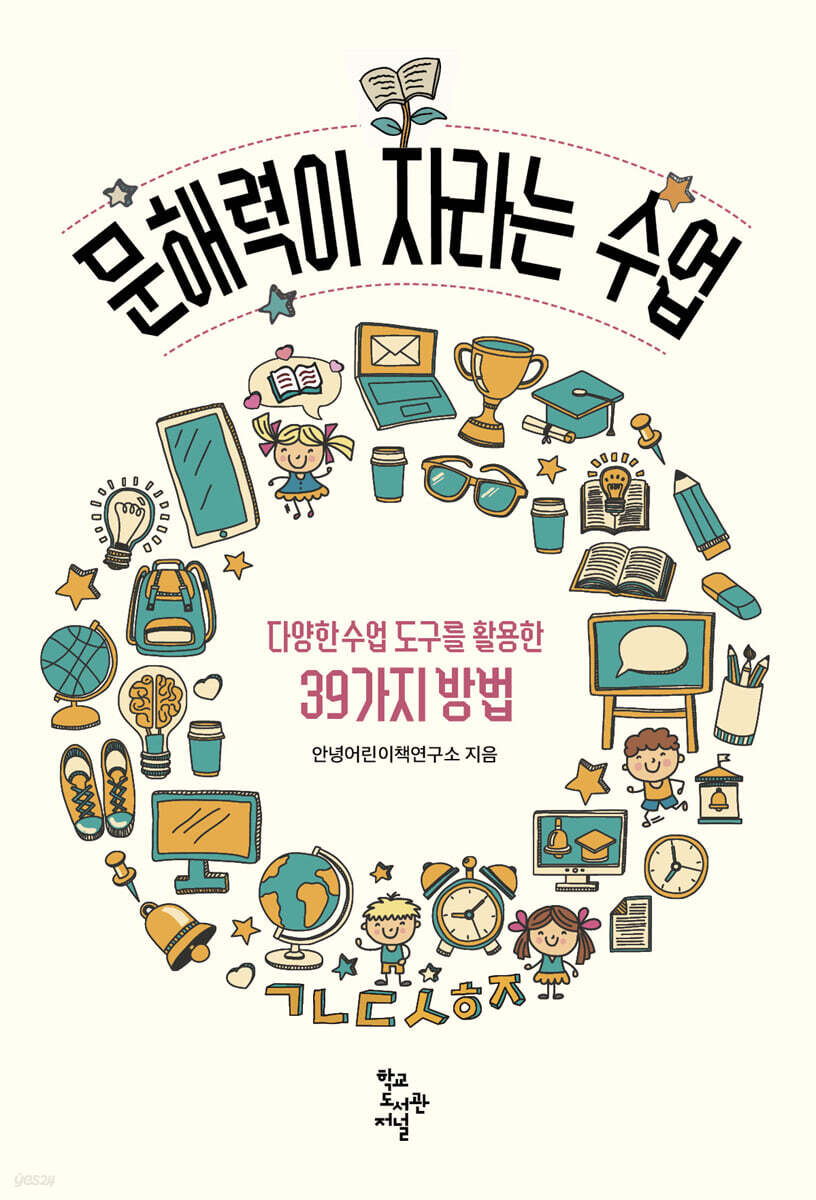
Classes that develop literacy skills
 |
Description
Book Introduction
A book that guides students on how to improve their literacy skills while having fun in the classroom.
Seven librarians introduce literacy lessons using a variety of reading materials and unique teaching tools that will engage and engage students.
We provide diverse classes utilizing selected fairy tales and picture books tailored to the students' level, as well as reference books such as picture guides, periodicals, and Korean dictionaries, board games, graphic organizers, digital media, and edutech.
It is organized so that anyone can easily understand and use it, including an introduction to each class tool, how to use it, class curriculum, activity examples, and activity sheets.
It contains a wealth of helpful material for any teacher concerned about their students' literacy skills.
Any adult interested in children's literacy will find a variety of literacy activity ideas to engage with their children.
Seven librarians introduce literacy lessons using a variety of reading materials and unique teaching tools that will engage and engage students.
We provide diverse classes utilizing selected fairy tales and picture books tailored to the students' level, as well as reference books such as picture guides, periodicals, and Korean dictionaries, board games, graphic organizers, digital media, and edutech.
It is organized so that anyone can easily understand and use it, including an introduction to each class tool, how to use it, class curriculum, activity examples, and activity sheets.
It contains a wealth of helpful material for any teacher concerned about their students' literacy skills.
Any adult interested in children's literacy will find a variety of literacy activity ideas to engage with their children.
index
Opening remarks
Part 1: Nurturing the Seeds of Literacy
Chapter 1: Literacy Education Using Books
Nurturing the Seeds of Literacy with Storybooks
Becoming a Wordless Picture Book Author
Pictorial literacy, which involves reading text and expressing it through drawings
Developing speaking and writing literacy using proverb books
What books do you read every day? Create a book calendar together.
Chapter 2: Literacy Education Using Reference Books
Developing Information Literacy with Newspaper Articles
Create a word cloud by reading a periodical article
A Korean dictionary made from words in books, Book Dictionary
Class play using the Korean dictionary
Classes utilizing illustrated books
Chapter 3: Emotional Literacy Education
Learn about different emotions by making emotion cards.
Empathizing with emotions through a heart prescription
Developing Emotional Literacy Using the MBTI
Developing Emotional Literacy with the Heart Bell Game
Cultivating emotional literacy through empathy and respect
Part 2: Nurturing Literacy Buds
Chapter 4: Literacy Education Using Various Teaching Tools
Boost your reading interest with book curation
Read picture books and discuss the vertical line of values
Understanding People Through Post-it Interview Discussions
Reading literacy through fairy tale reading dramas
Make reading information books easier by creating reading quizzes
Rolling paper to improve reading and writing skills
Develop literacy and have fun with reading board games
Chapter 5: Literacy Education Using Graphic Organizers
Predicting the content of a text with the Causal Structure Graphic Organizer
Summarize informative text with infographic organizers
Summarizing a story with the Six W's and One W's graphic organizer
Understand and express characters' emotions with the Emotion Graph graphic organizer.
Reading and Expressing Picture Books with a 4-Cut Comic Graphic Organizer
Expressing Your Senses with the Five Senses Graphic Organizer
Part 3: Blossoming Literacy
Chapter 6: Literacy Education Using Digital Media
Developing Summary Literacy Using Digital Video Materials
Developing Spatial Literacy with Google Earth
Develop vocabulary literacy by analyzing keywords with SomeTrend.
Developing vocabulary literacy using book fruit
Creating news using Clova Dubbing
Chapter 7: Literacy Education Using EdTech
Creating a Book Trailer Webtoon Using Tuning
Create a book recommendation poster using Miricanvas
Create an author profile using Littlely
Animal welfare campaign using ChatterPix
Making Music with Chrome Music Lab Song Maker
An 8-Week Book Writing Project Using Storyplotter
References
Part 1: Nurturing the Seeds of Literacy
Chapter 1: Literacy Education Using Books
Nurturing the Seeds of Literacy with Storybooks
Becoming a Wordless Picture Book Author
Pictorial literacy, which involves reading text and expressing it through drawings
Developing speaking and writing literacy using proverb books
What books do you read every day? Create a book calendar together.
Chapter 2: Literacy Education Using Reference Books
Developing Information Literacy with Newspaper Articles
Create a word cloud by reading a periodical article
A Korean dictionary made from words in books, Book Dictionary
Class play using the Korean dictionary
Classes utilizing illustrated books
Chapter 3: Emotional Literacy Education
Learn about different emotions by making emotion cards.
Empathizing with emotions through a heart prescription
Developing Emotional Literacy Using the MBTI
Developing Emotional Literacy with the Heart Bell Game
Cultivating emotional literacy through empathy and respect
Part 2: Nurturing Literacy Buds
Chapter 4: Literacy Education Using Various Teaching Tools
Boost your reading interest with book curation
Read picture books and discuss the vertical line of values
Understanding People Through Post-it Interview Discussions
Reading literacy through fairy tale reading dramas
Make reading information books easier by creating reading quizzes
Rolling paper to improve reading and writing skills
Develop literacy and have fun with reading board games
Chapter 5: Literacy Education Using Graphic Organizers
Predicting the content of a text with the Causal Structure Graphic Organizer
Summarize informative text with infographic organizers
Summarizing a story with the Six W's and One W's graphic organizer
Understand and express characters' emotions with the Emotion Graph graphic organizer.
Reading and Expressing Picture Books with a 4-Cut Comic Graphic Organizer
Expressing Your Senses with the Five Senses Graphic Organizer
Part 3: Blossoming Literacy
Chapter 6: Literacy Education Using Digital Media
Developing Summary Literacy Using Digital Video Materials
Developing Spatial Literacy with Google Earth
Develop vocabulary literacy by analyzing keywords with SomeTrend.
Developing vocabulary literacy using book fruit
Creating news using Clova Dubbing
Chapter 7: Literacy Education Using EdTech
Creating a Book Trailer Webtoon Using Tuning
Create a book recommendation poster using Miricanvas
Create an author profile using Littlely
Animal welfare campaign using ChatterPix
Making Music with Chrome Music Lab Song Maker
An 8-Week Book Writing Project Using Storyplotter
References
Detailed image

Into the book
When students view the school library not only as a place to quietly read books, but also as a space for communication where they can fully explore books and discuss them with friends, the school library becomes a more friendly place for students.
--- From "A Korean dictionary made from words in books, Book Dictionary"
Because each child has a different level, if you don't provide careful guidance, some children will give up halfway.
Each child has a different starting point, so individualized instruction is necessary to develop their literacy skills.
--- From "Reading Periodical Articles and Creating Word Clouds"
This is because children learn about unfamiliar emotions through emotional picture books and can understand and empathize with the emotions of others.
--- From "Learning about various emotions by making emotion cards"
In today's rapidly developing digital technology, digital literacy is a concept that encompasses a variety of capabilities beyond simple technical skills, including critical thinking and creative problem-solving skills.
Classes utilizing a variety of digital media will help children navigate the digital world more actively and autonomously.
--- From "A Korean dictionary made from words in books, Book Dictionary"
Because each child has a different level, if you don't provide careful guidance, some children will give up halfway.
Each child has a different starting point, so individualized instruction is necessary to develop their literacy skills.
--- From "Reading Periodical Articles and Creating Word Clouds"
This is because children learn about unfamiliar emotions through emotional picture books and can understand and empathize with the emotions of others.
--- From "Learning about various emotions by making emotion cards"
In today's rapidly developing digital technology, digital literacy is a concept that encompasses a variety of capabilities beyond simple technical skills, including critical thinking and creative problem-solving skills.
Classes utilizing a variety of digital media will help children navigate the digital world more actively and autonomously.
--- From "Literacy Education Using Digital Media"
Publisher's Review
A variety of literacy activities that make classes fun
Although it is now a common and obvious word, 'literacy' is always important, and there is still a shortage of literacy classes that "students can enjoy and immerse themselves in," so the authors explored diverse class ideas.
So, we read books together that children can enjoy or relate to, and we also tried out different activities such as drawing, board games, quizzes, reading plays, and interviews.
Additionally, for children interested in digital media, we also conducted classes using YouTube videos, Google Earth, Sometrend, and Clova Dubbing.
We have collected examples of classes where students developed their literacy skills through reading, writing, and thinking while having fun participating.
Implementing even one or two of these teaching methods will provide students with a meaningful educational experience.
Smart class tips for situation-specific book curation and digital literacy
To create engaging classes, it's just as important to present materials that are relevant to students' level as it is to plan innovative activities.
As teacher-librarians, the authors draw on their expertise and experience to select and provide books that can be used as primary materials or as additional references in each class.
In addition, we introduce digital media and edutech that can be used as tools for digital literacy education, which is being emphasized these days.
In particular, classes where students create their own content using Tuning, Littlely, ChatterPix, Chrome Music Lab, and Storyplotter will provide an opportunity for students to actively and proactively participate in class while developing digital literacy skills.
Teaching know-how that only teachers who have thought about and researched teaching can impart.
The authors came together to create a tool that would provide practical assistance to teachers in the field when conducting literacy classes.
Seven teachers taught classes at their respective schools, organized the content, and then gathered together to review the content and change the class or content.
As a result, the book contains teaching know-how that teachers who are hesitant about teaching literacy can easily try.
We tried to concisely introduce only the key points of the class, but we organized it so that the overall process of the class could be easily understood.
It introduces various class examples, but carefully guides the teacher's role in each class process.
Additionally, we provided traces of our thoughts during class and tips that can be used in different situations so that you can refer to them when actually teaching.
Vivid activity sheets that can be used right away in class
As we present various teaching tools, it can be daunting to use unfamiliar teaching tools in class.
With this in mind, the authors have selected and introduced only those courses that can be fully utilized in the classroom.
The course curriculum is explained in an easy-to-understand manner, and the materials used in each class are provided as is.
In particular, since the activity sheets and student examples used in actual classes are specific, you will be able to design classes by referring to these materials.
If you modify it appropriately to suit the class situation or target audience, you will be able to complete literacy classes in no time.
Although it is now a common and obvious word, 'literacy' is always important, and there is still a shortage of literacy classes that "students can enjoy and immerse themselves in," so the authors explored diverse class ideas.
So, we read books together that children can enjoy or relate to, and we also tried out different activities such as drawing, board games, quizzes, reading plays, and interviews.
Additionally, for children interested in digital media, we also conducted classes using YouTube videos, Google Earth, Sometrend, and Clova Dubbing.
We have collected examples of classes where students developed their literacy skills through reading, writing, and thinking while having fun participating.
Implementing even one or two of these teaching methods will provide students with a meaningful educational experience.
Smart class tips for situation-specific book curation and digital literacy
To create engaging classes, it's just as important to present materials that are relevant to students' level as it is to plan innovative activities.
As teacher-librarians, the authors draw on their expertise and experience to select and provide books that can be used as primary materials or as additional references in each class.
In addition, we introduce digital media and edutech that can be used as tools for digital literacy education, which is being emphasized these days.
In particular, classes where students create their own content using Tuning, Littlely, ChatterPix, Chrome Music Lab, and Storyplotter will provide an opportunity for students to actively and proactively participate in class while developing digital literacy skills.
Teaching know-how that only teachers who have thought about and researched teaching can impart.
The authors came together to create a tool that would provide practical assistance to teachers in the field when conducting literacy classes.
Seven teachers taught classes at their respective schools, organized the content, and then gathered together to review the content and change the class or content.
As a result, the book contains teaching know-how that teachers who are hesitant about teaching literacy can easily try.
We tried to concisely introduce only the key points of the class, but we organized it so that the overall process of the class could be easily understood.
It introduces various class examples, but carefully guides the teacher's role in each class process.
Additionally, we provided traces of our thoughts during class and tips that can be used in different situations so that you can refer to them when actually teaching.
Vivid activity sheets that can be used right away in class
As we present various teaching tools, it can be daunting to use unfamiliar teaching tools in class.
With this in mind, the authors have selected and introduced only those courses that can be fully utilized in the classroom.
The course curriculum is explained in an easy-to-understand manner, and the materials used in each class are provided as is.
In particular, since the activity sheets and student examples used in actual classes are specific, you will be able to design classes by referring to these materials.
If you modify it appropriately to suit the class situation or target audience, you will be able to complete literacy classes in no time.
GOODS SPECIFICS
- Date of issue: October 15, 2024
- Page count, weight, size: 292 pages | 153*225*20mm
- ISBN13: 9788969151742
- ISBN10: 8969151745
You may also like
카테고리
korean


korean

![GQ KOREA Mark (Monthly): December [2025]](http://librairie.coreenne.fr/cdn/shop/files/8ef265dbbfbf186523ed75ba7319009d.jpg?v=1765340328&width=3840)


