

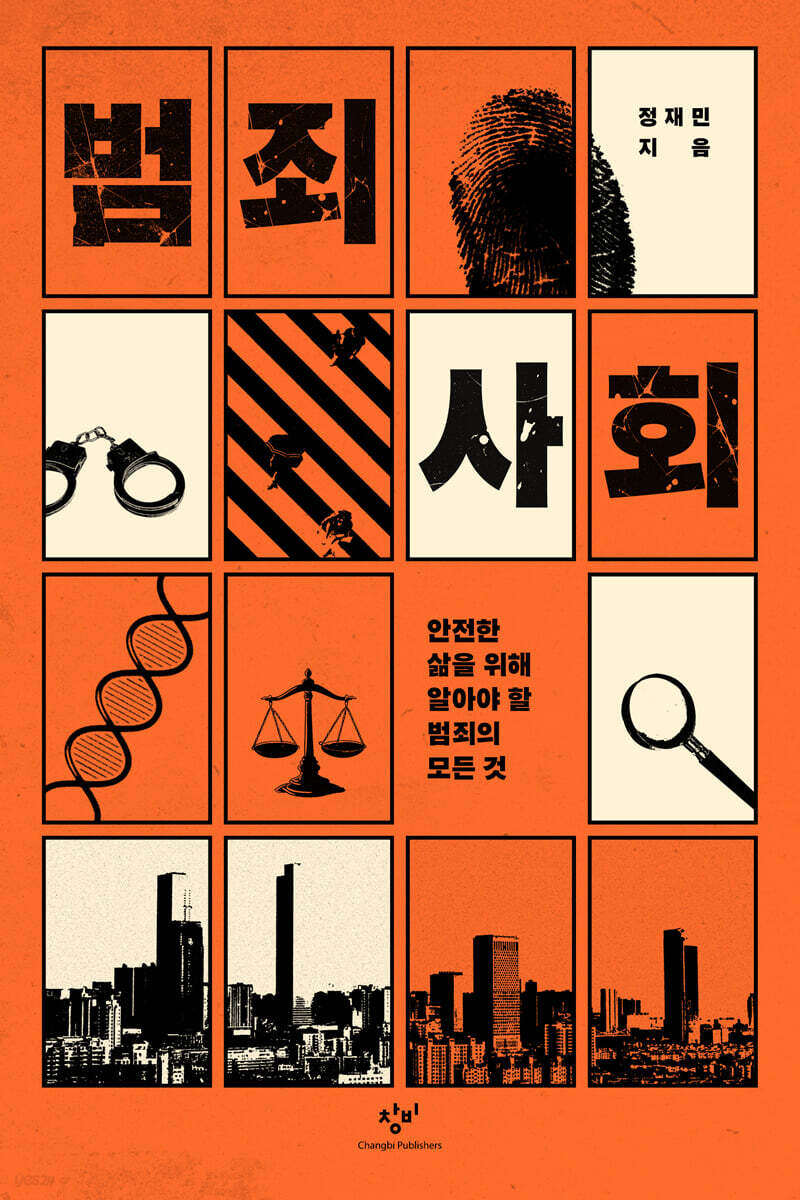
criminal society
 |
Description
Book Introduction
"Society's problems are revealed through the wounds of crime." How did South Korea, a 'security powerhouse', become a 'crime republic'? Diagnosing Korean Society through Crime Recently, we have been hearing a lot of scary news in Korean society, such as random murders in broad daylight in busy streets and large-scale online murders. How did South Korea, once considered the safest nation in the world, become a "criminal republic"? Will South Korea ever feel safe again? Although people's anxiety about crime is increasing day by day, the number of crimes such as murder, robbery, violence, and theft has actually been gradually decreasing over the past decade, from 1.93 million cases in 2012 to 1.53 million cases in 2021. The most important reason for the growing anxiety among citizens despite the absolute decrease in crime is the 'indiscriminateness' of recent crimes. Unlike traditional crimes, which usually occurred between people who knew each other, the possibility of being victimized by strangers anytime, anywhere is increasing, so citizens' anxiety is bound to increase. In this book, Jeong Jae-min analyzes how Korean society has devolved into one where indiscriminate violent crime threatens peaceful daily life. He addresses public questions and misunderstandings surrounding the issue of violent crime and the current criminal justice system, and goes so far as to propose institutional changes for a just and safe future. This book, which combines vivid experiences and expertise as a legal professional, is the most necessary crime commentary in Korean society today, and could only have been written by author Jaemin Jeong, who has served as a judge, military prosecutor, doctor of law, and judicial examiner and has stood in every field related to 'crime'. |
- You can preview some of the book's contents.
Preview
index
Prologue: Crime, a Story of Our Society
Chapter 1: How Far Has Scientific Investigation Developed?
Chapter 2: Why Are Judges' Sentences So Light?
Chapter 3: Prison is not a prison
Chapter 4: What Causes Crime?
Chapter 5: Can the crime prevention system in "Minority Report" become a reality?
Chapter 6 Legislation for a Life as if Living
Epilogue
Chapter 1: How Far Has Scientific Investigation Developed?
Chapter 2: Why Are Judges' Sentences So Light?
Chapter 3: Prison is not a prison
Chapter 4: What Causes Crime?
Chapter 5: Can the crime prevention system in "Minority Report" become a reality?
Chapter 6 Legislation for a Life as if Living
Epilogue
Detailed image

Publisher's Review
He served as a judge, a judge at the Ministry of Justice, and a researcher at the International War Crimes Tribunal.
All-rounder Jeong Jae-min dissects South Korean crime.
Jeong Jae-min graduated from Seoul National University Law School and worked as a civil servant for 23 years, but his career is so diverse that it's hard to believe it's just one person's life.
After passing the bar exam and working as a judge, he suddenly quit his job and became a team leader at the Defense Acquisition Program Administration.
Because I didn't want to do just one thing in my life.
At the Defense Acquisition Program Administration, he was not a member of the legal team, but he was in charge of verifying various weapon systems, overseeing defense exports and warship production, and also worked as a military prosecutor and researcher at the International War Crimes Tribunal.
In 2020, he was appointed as the first judge-turned-legal examiner, and as the longest-serving examiner, he drafted approximately 20 bills. From 2023, he was appointed as a litigation examiner, overseeing civil and administrative litigation nationwide involving the government as a party.
Since the spring of 2024, he has been working as the representative attorney at the law firm Yemunjeong & Partners.
He, who seems to refuse to settle down in one place, travels tirelessly through new worlds: from the sea where warships are being built, to the Netherlands where the International Court of Justice is located, to the Ministry of Justice where new laws are being created. He has returned to us as the author of "Criminal Society."
『Criminal Society』 comprehensively contains Jeong Jae-min's experience as a judge in charge of criminal trials, his experience working at the Ministry of Justice, which develops measures against crime in our society, and what he realized while communicating with the public through TV programs such as tvN's "Knowing Bros."
He said that while working as a judge, he had no choice but to focus solely on trying individual defendants' specific cases, but after working at the Ministry of Justice, he became interested in the overall crime trends in our society and the design of crime response systems.
We think that when a crime occurs, the case is closed when the criminal is sentenced and sent to prison.
It is easy to overlook the fact that criminals are people who will eventually return to our society.
However, even for a very small crime, many systems in our society overlap, and each system is implemented in stages.
When a crime occurs, the police investigate, the prosecutors indict, and the courts hold a trial.
After that, the prison is responsible for correction, and the probation office is responsible for crime prevention.
Most citizens can only pay attention to a few of these numerous stages, particularly the investigation and prosecution stages, which are covered with much fanfare by the media.
Such concerns easily boil over into collective anger, but they do not coalesce into the wisdom that builds social systems.
Based on these regrets experienced during his public service, Jeong Jae-min wrote this book with the belief that public safety can only be properly established when the various functions of the state surrounding crime are balanced. He proposes that readers consider together our society's crime response system.
Why are judges' sentences so lenient? Should the death penalty be maintained?
How much should prison conditions be improved?
Responding to the Sharp Debate Surrounding Crime
This book sequentially examines the various systems surrounding crime, reflecting citizens' curiosity about each system and raising important topics in each field to find answers.
The questions raised in each chapter are sharp and controversial, and as readers follow the author's logic as he dissects each system, they too will be able to refine their own thoughts on the subject.
Chapter 1 covers investigations, examining how scientific investigations, including fingerprints, DNA, and digital forensics, have developed and which areas need further development in the future.
Chapter 2 deals with trials and carefully examines why the sentences judges impose are often lower than what ordinary citizens expect.
Citing examples of sentences that appear absurdly low when viewed in light of the public's legal sentiment, such as the Cho Doo-soon case and the Son Jeong-woo case from Welcome to Video, he analyzes that sentencing is not a matter of individual judgement, but rather a systemic problem intertwined with the entire criminal trial.
In addition, we propose how the sentencing system should develop to align the level of punishment that ordinary citizens consider appropriate with the level of punishment that judges impose.
Chapter 3 examines corrections and whether our country's prison system is sufficiently effective in preventing recidivism among released prisoners.
Recently, the prison's "Emperor's Diet" has drawn public outrage from netizens, and the debate is on whether prisons should remain a place of suffering or become educational spaces for life after release.
It also provides a sharp perspective on the death penalty, which exists as an institution but is rarely carried out in practice.
Chapter 4 examines one by one the various factors that are identified as causes of crime.
Chapter 5 examines whether systems such as electronic ankle bracelets and chemical castration are actually effective in preventing crime.
Chapter 6 addresses the realm of legislation, drawing on his experience as a judicial officer at the Ministry of Justice, emphasizing the need to reform the law itself in order to effectively prevent crime.
When we examine the legislation the author promoted to prevent crime, we can truly feel his sincerity for a better society.
The other side of the incident that shook South Korea,
A crime story as exciting as a novel
Rather than approaching the problems of the institutions and systems surrounding crime from a theoretical perspective, this book discusses incidents that have caused a stir in South Korea, delving into the blind spots of each system and public misunderstandings, thereby stimulating readers' interest and attention.
As you follow the vivid stories that the author vividly unfolds, from widely known cases such as the Hwaseong serial murders, the Seo-hyeon Station "random stabbing" incident, and the Jeon Cheong-jo fraud case, to cases in which he was directly involved in the investigation or trial, you will realize once again that he is an excellent storyteller who is already active as a novelist.
By incorporating not only actual events but also movies and dramas with crime themes such as "Memories of Murder," "Batman Begins," "The Shawshank Redemption," and "Prison Playbook" into the discussion, it broadens our perspective on crime.
Until now, when a crime occurs, we have focused excessively on the narrative and psychology of the individual criminal.
This was likely due to the media's provocative and sensational reporting and the comments of experts who focused on the psychology and narrative of individual criminals.
Jeong Jae-min argues that we must bring these incidents back into the discussion, focusing on the systems surrounding crime and the underlying social structures, so that we can overcome these incidents and move toward a more just society.
From those who enjoy thrilling crime stories to those who feel anxious about the daily crime news, this is a must-read for anyone who wants to understand Korean society through the lens of crime.
All-rounder Jeong Jae-min dissects South Korean crime.
Jeong Jae-min graduated from Seoul National University Law School and worked as a civil servant for 23 years, but his career is so diverse that it's hard to believe it's just one person's life.
After passing the bar exam and working as a judge, he suddenly quit his job and became a team leader at the Defense Acquisition Program Administration.
Because I didn't want to do just one thing in my life.
At the Defense Acquisition Program Administration, he was not a member of the legal team, but he was in charge of verifying various weapon systems, overseeing defense exports and warship production, and also worked as a military prosecutor and researcher at the International War Crimes Tribunal.
In 2020, he was appointed as the first judge-turned-legal examiner, and as the longest-serving examiner, he drafted approximately 20 bills. From 2023, he was appointed as a litigation examiner, overseeing civil and administrative litigation nationwide involving the government as a party.
Since the spring of 2024, he has been working as the representative attorney at the law firm Yemunjeong & Partners.
He, who seems to refuse to settle down in one place, travels tirelessly through new worlds: from the sea where warships are being built, to the Netherlands where the International Court of Justice is located, to the Ministry of Justice where new laws are being created. He has returned to us as the author of "Criminal Society."
『Criminal Society』 comprehensively contains Jeong Jae-min's experience as a judge in charge of criminal trials, his experience working at the Ministry of Justice, which develops measures against crime in our society, and what he realized while communicating with the public through TV programs such as tvN's "Knowing Bros."
He said that while working as a judge, he had no choice but to focus solely on trying individual defendants' specific cases, but after working at the Ministry of Justice, he became interested in the overall crime trends in our society and the design of crime response systems.
We think that when a crime occurs, the case is closed when the criminal is sentenced and sent to prison.
It is easy to overlook the fact that criminals are people who will eventually return to our society.
However, even for a very small crime, many systems in our society overlap, and each system is implemented in stages.
When a crime occurs, the police investigate, the prosecutors indict, and the courts hold a trial.
After that, the prison is responsible for correction, and the probation office is responsible for crime prevention.
Most citizens can only pay attention to a few of these numerous stages, particularly the investigation and prosecution stages, which are covered with much fanfare by the media.
Such concerns easily boil over into collective anger, but they do not coalesce into the wisdom that builds social systems.
Based on these regrets experienced during his public service, Jeong Jae-min wrote this book with the belief that public safety can only be properly established when the various functions of the state surrounding crime are balanced. He proposes that readers consider together our society's crime response system.
Why are judges' sentences so lenient? Should the death penalty be maintained?
How much should prison conditions be improved?
Responding to the Sharp Debate Surrounding Crime
This book sequentially examines the various systems surrounding crime, reflecting citizens' curiosity about each system and raising important topics in each field to find answers.
The questions raised in each chapter are sharp and controversial, and as readers follow the author's logic as he dissects each system, they too will be able to refine their own thoughts on the subject.
Chapter 1 covers investigations, examining how scientific investigations, including fingerprints, DNA, and digital forensics, have developed and which areas need further development in the future.
Chapter 2 deals with trials and carefully examines why the sentences judges impose are often lower than what ordinary citizens expect.
Citing examples of sentences that appear absurdly low when viewed in light of the public's legal sentiment, such as the Cho Doo-soon case and the Son Jeong-woo case from Welcome to Video, he analyzes that sentencing is not a matter of individual judgement, but rather a systemic problem intertwined with the entire criminal trial.
In addition, we propose how the sentencing system should develop to align the level of punishment that ordinary citizens consider appropriate with the level of punishment that judges impose.
Chapter 3 examines corrections and whether our country's prison system is sufficiently effective in preventing recidivism among released prisoners.
Recently, the prison's "Emperor's Diet" has drawn public outrage from netizens, and the debate is on whether prisons should remain a place of suffering or become educational spaces for life after release.
It also provides a sharp perspective on the death penalty, which exists as an institution but is rarely carried out in practice.
Chapter 4 examines one by one the various factors that are identified as causes of crime.
Chapter 5 examines whether systems such as electronic ankle bracelets and chemical castration are actually effective in preventing crime.
Chapter 6 addresses the realm of legislation, drawing on his experience as a judicial officer at the Ministry of Justice, emphasizing the need to reform the law itself in order to effectively prevent crime.
When we examine the legislation the author promoted to prevent crime, we can truly feel his sincerity for a better society.
The other side of the incident that shook South Korea,
A crime story as exciting as a novel
Rather than approaching the problems of the institutions and systems surrounding crime from a theoretical perspective, this book discusses incidents that have caused a stir in South Korea, delving into the blind spots of each system and public misunderstandings, thereby stimulating readers' interest and attention.
As you follow the vivid stories that the author vividly unfolds, from widely known cases such as the Hwaseong serial murders, the Seo-hyeon Station "random stabbing" incident, and the Jeon Cheong-jo fraud case, to cases in which he was directly involved in the investigation or trial, you will realize once again that he is an excellent storyteller who is already active as a novelist.
By incorporating not only actual events but also movies and dramas with crime themes such as "Memories of Murder," "Batman Begins," "The Shawshank Redemption," and "Prison Playbook" into the discussion, it broadens our perspective on crime.
Until now, when a crime occurs, we have focused excessively on the narrative and psychology of the individual criminal.
This was likely due to the media's provocative and sensational reporting and the comments of experts who focused on the psychology and narrative of individual criminals.
Jeong Jae-min argues that we must bring these incidents back into the discussion, focusing on the systems surrounding crime and the underlying social structures, so that we can overcome these incidents and move toward a more just society.
From those who enjoy thrilling crime stories to those who feel anxious about the daily crime news, this is a must-read for anyone who wants to understand Korean society through the lens of crime.
GOODS SPECIFICS
- Date of issue: February 26, 2024
- Page count, weight, size: 300 pages | 436g | 142*210*20mm
- ISBN13: 9788936480172
- ISBN10: 8936480170
You may also like
카테고리
korean


korean

![GQ KOREA Mark (Monthly): December [2025]](http://librairie.coreenne.fr/cdn/shop/files/8ef265dbbfbf186523ed75ba7319009d.jpg?v=1765340328&width=3840)


