

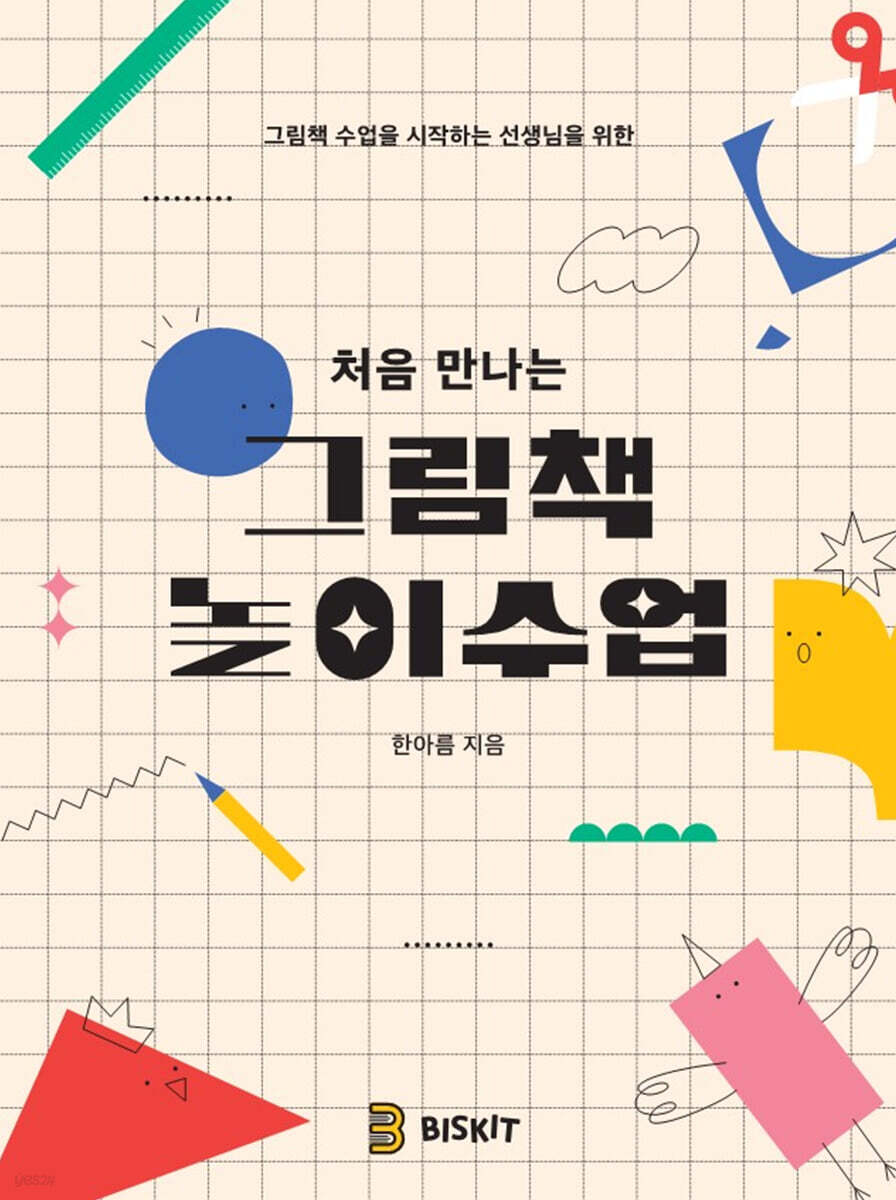
First picture book play class
 |
Description
Book Introduction
This book is a guide for those who want to conduct picture book play classes at home or in educational institutions. This is a play-based reading education program developed by the author, and is a play class that all students can participate in without being left out of the classroom, using everyday materials and games. This book contains theories you need to know before starting a play class with picture books, as well as simple and easy activities that can be applied immediately in real life based on those theories. |
- You can preview some of the book's contents.
Preview
index
Opening Remarks - A Guide to Playful Classes with Picture Books: A Book for Everyone
Chapter 1: Preparing for Picture Book Play Classes
What is a picture book play class?
Question game
Book play
Word play
wordplay
Chapter 2: Practice! Picture Book Play Class
What's the sound of my heart I want to hear? "Candy"
Can Routine Help You Live? "Rosie's Walk"
The Beginning of the Play on Words, "A Jujube"
Find your own secret weapon! "Daughter-in-law's Fart"
Upcycling an Old Coat 『Joseph's Small, Old Overcoat…?』
Where is your place? Finding Your Place
Picture Book: Out into the World: "Tunnel"
A refined variation on the old tale, "Yeon-i and the Willow Boy"
Animal Welfare: Asking the Way: "The Pig Story"
Questioning Parenting Styles in "Red Wolf"
An adventure fairy tale featuring a living child, "Where the Monsters Live"
Can a wolf and a goat become friends? "On a Stormy Night"
Soothing the wounded childlike heart with "Because of Me"
Chapter 3: Becoming a Picture Book Play Class Instructor
Q&A on Picture Book Play Classes: Still Curious
A sneak peek at the plan
Activity sheets that can be used with any picture book
Chapter 1: Preparing for Picture Book Play Classes
What is a picture book play class?
Question game
Book play
Word play
wordplay
Chapter 2: Practice! Picture Book Play Class
What's the sound of my heart I want to hear? "Candy"
Can Routine Help You Live? "Rosie's Walk"
The Beginning of the Play on Words, "A Jujube"
Find your own secret weapon! "Daughter-in-law's Fart"
Upcycling an Old Coat 『Joseph's Small, Old Overcoat…?』
Where is your place? Finding Your Place
Picture Book: Out into the World: "Tunnel"
A refined variation on the old tale, "Yeon-i and the Willow Boy"
Animal Welfare: Asking the Way: "The Pig Story"
Questioning Parenting Styles in "Red Wolf"
An adventure fairy tale featuring a living child, "Where the Monsters Live"
Can a wolf and a goat become friends? "On a Stormy Night"
Soothing the wounded childlike heart with "Because of Me"
Chapter 3: Becoming a Picture Book Play Class Instructor
Q&A on Picture Book Play Classes: Still Curious
A sneak peek at the plan
Activity sheets that can be used with any picture book
Detailed image
.jpg)
Into the book
Picture book play class is a reading education in the form of play based on picture books.
Includes activities before, during, and after reading a book.
It is an activity that encompasses all the activities we commonly do, such as reading, playing with books, writing, and reading discussions.
This is a reading education method that incorporates 'play' so that all students can engage in self-directed activities without being left out in the classroom.
--- p.12
The cover is the paper that connects the cover to the main text.
There are front and back pages, just like the cover.
I can tell the quality of a picture book just by looking at the pages.
It's easy to get disappointed when it's just plain colors.
It expresses the mood of the work, or the method of expression, material, spatial background of the work, and characters.
Sometimes illustrations are drawn that are reminiscent of prologues and epilogues.
In such cases, there is continuity between the front and back pages, so the front page builds anticipation for the story, and the back page leaves a long aftertaste.
--- p.13
There are several ways to create questions.
You can stop reading at key scenes and ask questions about the main character's words and actions, the situation the main character is in, the events, the conflict, the main character's choices, emotions, and what the story will be like next.
--- p.89
Picture books are easy, fun, and cover a variety of topics, making them a great fit for any subject.
However, I do not recommend taking classes that combine fields you are not familiar with from the beginning.
I recommend combining the class with your (your mother's) specialty.
Choose a picture book that matches your experiences, hobbies, major, career, and interests.
Try to successfully integrate familiar content with related picture books to create a fusion education.
Includes activities before, during, and after reading a book.
It is an activity that encompasses all the activities we commonly do, such as reading, playing with books, writing, and reading discussions.
This is a reading education method that incorporates 'play' so that all students can engage in self-directed activities without being left out in the classroom.
--- p.12
The cover is the paper that connects the cover to the main text.
There are front and back pages, just like the cover.
I can tell the quality of a picture book just by looking at the pages.
It's easy to get disappointed when it's just plain colors.
It expresses the mood of the work, or the method of expression, material, spatial background of the work, and characters.
Sometimes illustrations are drawn that are reminiscent of prologues and epilogues.
In such cases, there is continuity between the front and back pages, so the front page builds anticipation for the story, and the back page leaves a long aftertaste.
--- p.13
There are several ways to create questions.
You can stop reading at key scenes and ask questions about the main character's words and actions, the situation the main character is in, the events, the conflict, the main character's choices, emotions, and what the story will be like next.
--- p.89
Picture books are easy, fun, and cover a variety of topics, making them a great fit for any subject.
However, I do not recommend taking classes that combine fields you are not familiar with from the beginning.
I recommend combining the class with your (your mother's) specialty.
Choose a picture book that matches your experiences, hobbies, major, career, and interests.
Try to successfully integrate familiar content with related picture books to create a fusion education.
--- p.172
Publisher's Review
Everything about picture book play classes from a picture book play planner
It contains the author's know-how in conducting play classes using picture books in reading education settings.
Picture book play classes are activities that encompass all the book play, writing, and reading discussions that we usually do while reading books.
Books on teaching methods using existing picture books mainly deal with discussions and book play.
However, this book covers four areas in one picture book: question play, book play, writing play, and word play (reading discussion).
We've compiled a selection of methods that can be applied immediately in practice, covering all activities before, during, and after reading.
In addition, it includes Q&A on picture book play classes, reference lesson plans, and follow-up activity sheets that can be applied to any picture book.
This book contains the author's experience and know-how in conducting play classes using picture books for children and adults at various educational institutions, making it a helpful guide for readers who want to begin picture book classes.
From specific and friendly theories about picture book play classes
Packed with detailed play lessons across four areas!
Chapter 1 introduces things you need to know before conducting play classes using picture books.
Picture books don't have a lot of text, so there are many activities that can be done while reading together.
You can look at the cover and composition of the picture book and play with questions, books, words, and words.
We've organized the teaching methods for these four areas into an easy-to-understand format.
Chapter 2 divides picture book lessons into four areas and contains detailed play lessons.
For each picture book, the activities proceed in the following order: cover exploration - reading together - question play - book play - word play - word play, but the activities are adjusted according to the characteristics of each picture book.
You can change the order flexibly and proceed only to the areas you need.
For example, if you are conducting a book play class, reading together and book play activities are sufficient.
Additionally, if it is a reading discussion class, it can be enriched with question play and word play activities.
If you are feeling overwhelmed with picture book classes or planning a new class, you can always take it out and refer to it, and apply it in practice.
Chapter 3 contains questions received during the picture book play class, a reference lesson plan, and activity sheets that can be applied to any picture book.
I hope this book will serve as a friendly introduction for those who are hesitant about teaching picture books.
Why Picture Book Play Classes Are Necessary
Picture book play classes are reading education that incorporates play so that all students can engage in self-directed activities without being left out in the classroom.
Children discover new worlds and grow through play.
So learning itself should be fun.
If it is in the form of play, children can become curious and actively participate in reading education.
Accumulating happy play experiences can lead to lifelong reading.
This is why playful reading education is necessary.
Target audience
- Elementary and middle school teachers who want to run their classes using picture books
-Library program managers and librarians
-Elementary after-school reading and writing instructor
- Elementary and secondary reading education (reading discussion, writing, career classes) instructor
-Parents who want to take a mom-style book play class
-Teachers of various subjects who want to incorporate picture books into their classes
-Aspiring teachers who dream of becoming reading education instructors
-General public interested in picture book analysis and activities
-To all who love picture books
Picture Book Play Class Q&A
Q.
What criteria do you use to select picture books?
Look at the composition and story of the picture book.
First of all, the book must have a cover and title that arouses curiosity.
It would be better if the endpaper that comes off the cover had a well-designed design rather than a plain color.
The same goes for the cover page before entering the main text.
If the story's atmosphere, main subject matter, characters, and space are depicted, you start to look forward to the work, and those expectations are not disappointing.
Above all, the story must be interesting and fun.
It would be even better if the protagonist were of a similar age to the readers of the book.
It would be best if you could read a book that follows the main character's emotional line.
Since we read the works for the picture book play class together with children, we choose books that are of interest to children or that deal with current issues.
Although they prefer stories with a clear introduction, development, climax, and conclusion, children also enjoy books that raise a variety of questions, have unfamiliar expressions, or have engaging protagonists.
Q.
Is there an order to the picture book play class?
There is no right answer, but there is a more effective order for picture book play classes.
The process is as follows: Browse the front and back covers → Check the front and back pages → Read the author and illustrator's introduction → Inside cover → Read the main text.
Q.
The question is, is it better to do this intermittently while reading the book, or all at once after reading?
Both are good.
But when you read, you often get more diverse ideas.
Before turning the next page, it's important to take a moment to pause.
Give children 'thinking time' to anticipate and imagine.
You can encounter ideas that are several times more valuable than quickly learning the content.
Students who participated in the play class naturally asked questions in between, and questions poured in before they even finished reading the book.
In the process, you gain the power to ask questions.
You also develop the ability to distinguish between good questions and bad questions.
Of course, asking and answering questions after reading the entire book also has the advantage of allowing you to reflect on the structure and content of the story.
For books that make you curious about the story that follows, you can ask questions at key scenes while reading, and for books that provide knowledge or information, you can ask questions after reading.
Choose a method that suits your picture book.
Q.
How many questions is appropriate to ask while reading?
Questions are mainly asked in key scenes, moments where the protagonist makes a decisive choice, climaxes, and scenes related to the theme.
3 to 5 questions is appropriate, and if time is limited, we usually ask 3 questions.
Q.
It's difficult to read picture books without words.
If you find wordless picture books difficult, don't think of them as books.
Imagine a collection of pretty picture cards.
These are carefully selected picture cards that connect the story.
Now, look at each of these picture cards and create a story based on what you feel.
Because there are no words, it is easy to create a story, but it is also open to the emotions of the characters, their expressions, their actions, the energy felt, the atmosphere of the space, etc.
There will be more questions.
A great way to start a student-centered, rather than teacher-centered, class is with wordless picture books.
It contains the author's know-how in conducting play classes using picture books in reading education settings.
Picture book play classes are activities that encompass all the book play, writing, and reading discussions that we usually do while reading books.
Books on teaching methods using existing picture books mainly deal with discussions and book play.
However, this book covers four areas in one picture book: question play, book play, writing play, and word play (reading discussion).
We've compiled a selection of methods that can be applied immediately in practice, covering all activities before, during, and after reading.
In addition, it includes Q&A on picture book play classes, reference lesson plans, and follow-up activity sheets that can be applied to any picture book.
This book contains the author's experience and know-how in conducting play classes using picture books for children and adults at various educational institutions, making it a helpful guide for readers who want to begin picture book classes.
From specific and friendly theories about picture book play classes
Packed with detailed play lessons across four areas!
Chapter 1 introduces things you need to know before conducting play classes using picture books.
Picture books don't have a lot of text, so there are many activities that can be done while reading together.
You can look at the cover and composition of the picture book and play with questions, books, words, and words.
We've organized the teaching methods for these four areas into an easy-to-understand format.
Chapter 2 divides picture book lessons into four areas and contains detailed play lessons.
For each picture book, the activities proceed in the following order: cover exploration - reading together - question play - book play - word play - word play, but the activities are adjusted according to the characteristics of each picture book.
You can change the order flexibly and proceed only to the areas you need.
For example, if you are conducting a book play class, reading together and book play activities are sufficient.
Additionally, if it is a reading discussion class, it can be enriched with question play and word play activities.
If you are feeling overwhelmed with picture book classes or planning a new class, you can always take it out and refer to it, and apply it in practice.
Chapter 3 contains questions received during the picture book play class, a reference lesson plan, and activity sheets that can be applied to any picture book.
I hope this book will serve as a friendly introduction for those who are hesitant about teaching picture books.
Why Picture Book Play Classes Are Necessary
Picture book play classes are reading education that incorporates play so that all students can engage in self-directed activities without being left out in the classroom.
Children discover new worlds and grow through play.
So learning itself should be fun.
If it is in the form of play, children can become curious and actively participate in reading education.
Accumulating happy play experiences can lead to lifelong reading.
This is why playful reading education is necessary.
Target audience
- Elementary and middle school teachers who want to run their classes using picture books
-Library program managers and librarians
-Elementary after-school reading and writing instructor
- Elementary and secondary reading education (reading discussion, writing, career classes) instructor
-Parents who want to take a mom-style book play class
-Teachers of various subjects who want to incorporate picture books into their classes
-Aspiring teachers who dream of becoming reading education instructors
-General public interested in picture book analysis and activities
-To all who love picture books
Picture Book Play Class Q&A
Q.
What criteria do you use to select picture books?
Look at the composition and story of the picture book.
First of all, the book must have a cover and title that arouses curiosity.
It would be better if the endpaper that comes off the cover had a well-designed design rather than a plain color.
The same goes for the cover page before entering the main text.
If the story's atmosphere, main subject matter, characters, and space are depicted, you start to look forward to the work, and those expectations are not disappointing.
Above all, the story must be interesting and fun.
It would be even better if the protagonist were of a similar age to the readers of the book.
It would be best if you could read a book that follows the main character's emotional line.
Since we read the works for the picture book play class together with children, we choose books that are of interest to children or that deal with current issues.
Although they prefer stories with a clear introduction, development, climax, and conclusion, children also enjoy books that raise a variety of questions, have unfamiliar expressions, or have engaging protagonists.
Q.
Is there an order to the picture book play class?
There is no right answer, but there is a more effective order for picture book play classes.
The process is as follows: Browse the front and back covers → Check the front and back pages → Read the author and illustrator's introduction → Inside cover → Read the main text.
Q.
The question is, is it better to do this intermittently while reading the book, or all at once after reading?
Both are good.
But when you read, you often get more diverse ideas.
Before turning the next page, it's important to take a moment to pause.
Give children 'thinking time' to anticipate and imagine.
You can encounter ideas that are several times more valuable than quickly learning the content.
Students who participated in the play class naturally asked questions in between, and questions poured in before they even finished reading the book.
In the process, you gain the power to ask questions.
You also develop the ability to distinguish between good questions and bad questions.
Of course, asking and answering questions after reading the entire book also has the advantage of allowing you to reflect on the structure and content of the story.
For books that make you curious about the story that follows, you can ask questions at key scenes while reading, and for books that provide knowledge or information, you can ask questions after reading.
Choose a method that suits your picture book.
Q.
How many questions is appropriate to ask while reading?
Questions are mainly asked in key scenes, moments where the protagonist makes a decisive choice, climaxes, and scenes related to the theme.
3 to 5 questions is appropriate, and if time is limited, we usually ask 3 questions.
Q.
It's difficult to read picture books without words.
If you find wordless picture books difficult, don't think of them as books.
Imagine a collection of pretty picture cards.
These are carefully selected picture cards that connect the story.
Now, look at each of these picture cards and create a story based on what you feel.
Because there are no words, it is easy to create a story, but it is also open to the emotions of the characters, their expressions, their actions, the energy felt, the atmosphere of the space, etc.
There will be more questions.
A great way to start a student-centered, rather than teacher-centered, class is with wordless picture books.
GOODS SPECIFICS
- Date of issue: February 20, 2024
- Page count, weight, size: 204 pages | 480g | 175*230*20mm
- ISBN13: 9791198604200
- ISBN10: 1198604204
You may also like
카테고리
korean


korean

![GQ KOREA Mark (Monthly): December [2025]](http://librairie.coreenne.fr/cdn/shop/files/8ef265dbbfbf186523ed75ba7319009d.jpg?v=1765340328&width=3840)


