

scrupulosity
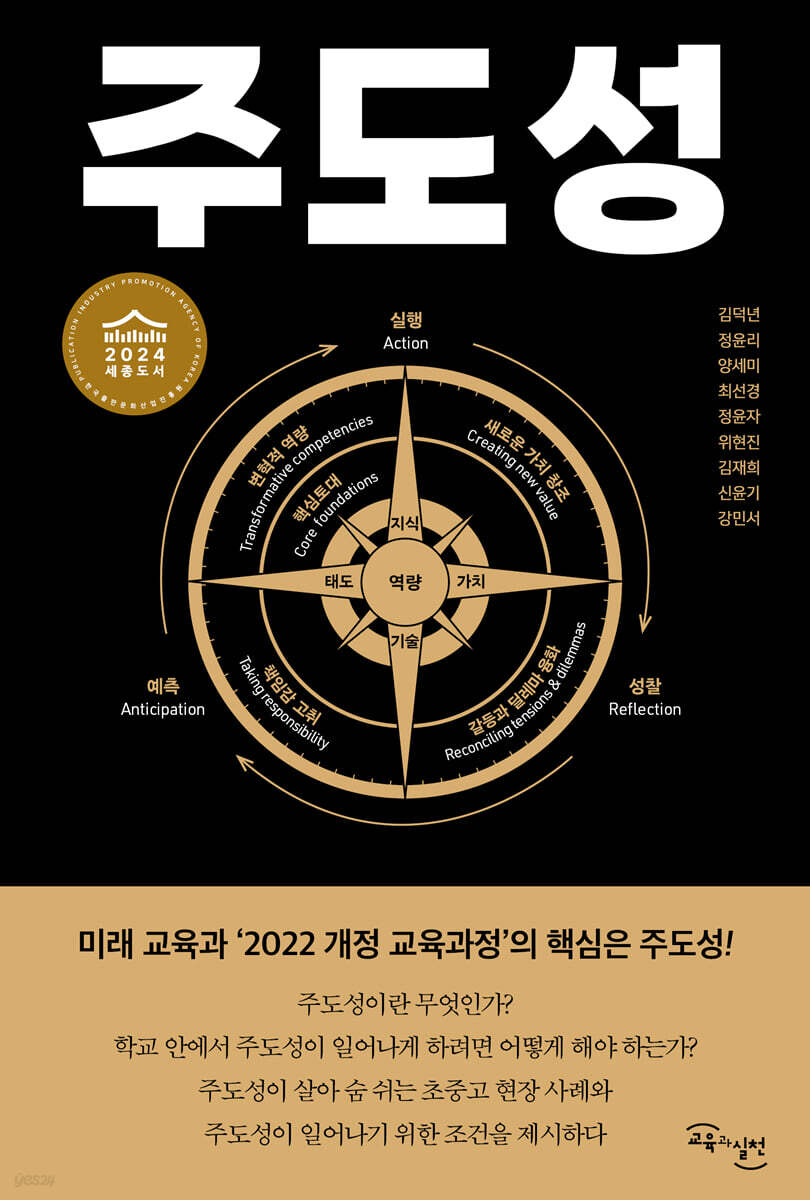 |
Description
Book Introduction
What is initiative?
The answers to your concerns are vividly conveyed through voices from the field.
Even though it wasn't necessarily in the book, 'initiative' was being used widely.
The concept is incorporated into not only daily life but also the national curriculum.
That's not all.
In future education, which we all memorized like a spell, it is considered the most basic competency.
In other words, there is a certain degree of common denominator in the meaning among those who use this word.
Still, we had our doubts.
Is this correct? Is it appropriate to use it in this range?
The question began with the words 'student agency'.
Is this word the beginning of a question? Indeed. Despite its use in the OECD and even in our own curriculum, our doubts have grown.
This question arose more strongly when confronted with the reality of our education.
It has blossomed even more strongly in a climate where students choose, teachers support, and schools must accommodate.
'Ⅰ. What is initiative?' is the result of resolving the question I initially had.
It was solved by focusing on the ‘initiative’ itself.
'Ⅱ.
In 'Leadership and School Curriculum', we saw that the framework of the school curriculum was important in order to demonstrate leadership within the school.
Teacher and student reactions can appear within the school curriculum.
In particular, it was mentioned that teachers take the initiative in developing lessons through classes, and students take the initiative in class.
'Ⅲ.
'A live case study of leadership' is the part that our authors have put special effort into.
No matter how well you define the concept of leadership, it is empty without clinical practice.
Examples were presented of various manifestations of leadership in elementary and middle school classes and school culture.
We examined several situations in which teachers can take initiative within the teacher culture.
'Ⅳ.
Public education supporting initiative within schools' and 'Ⅴ.
'Conditions for Demonstrating Initiative' examines how to support teachers and students to take initiative and schools to demonstrate autonomy in the educational reality of South Korea, where schools cannot exist independently.
The answers to your concerns are vividly conveyed through voices from the field.
Even though it wasn't necessarily in the book, 'initiative' was being used widely.
The concept is incorporated into not only daily life but also the national curriculum.
That's not all.
In future education, which we all memorized like a spell, it is considered the most basic competency.
In other words, there is a certain degree of common denominator in the meaning among those who use this word.
Still, we had our doubts.
Is this correct? Is it appropriate to use it in this range?
The question began with the words 'student agency'.
Is this word the beginning of a question? Indeed. Despite its use in the OECD and even in our own curriculum, our doubts have grown.
This question arose more strongly when confronted with the reality of our education.
It has blossomed even more strongly in a climate where students choose, teachers support, and schools must accommodate.
'Ⅰ. What is initiative?' is the result of resolving the question I initially had.
It was solved by focusing on the ‘initiative’ itself.
'Ⅱ.
In 'Leadership and School Curriculum', we saw that the framework of the school curriculum was important in order to demonstrate leadership within the school.
Teacher and student reactions can appear within the school curriculum.
In particular, it was mentioned that teachers take the initiative in developing lessons through classes, and students take the initiative in class.
'Ⅲ.
'A live case study of leadership' is the part that our authors have put special effort into.
No matter how well you define the concept of leadership, it is empty without clinical practice.
Examples were presented of various manifestations of leadership in elementary and middle school classes and school culture.
We examined several situations in which teachers can take initiative within the teacher culture.
'Ⅳ.
Public education supporting initiative within schools' and 'Ⅴ.
'Conditions for Demonstrating Initiative' examines how to support teachers and students to take initiative and schools to demonstrate autonomy in the educational reality of South Korea, where schools cannot exist independently.
- You can preview some of the book's contents.
Preview
index
Opening remarks
Ⅰ.
What is initiative?
1.
I want to have a special graduation ceremony
Is A a proactive student?
What is 'initiative'?
2.
How do we think about leadership?
3.
Does leadership change?
Is leadership a fixed and unchangeable thing?
All children have the seed of initiative.
It all comes down to context
4.
What characteristics does initiative exhibit?
It's only customizable when you can adjust it yourself.
Customized means 'frozen yogurt'
Only voluntary choices can lead to initiative.
Effective support is essential for initiative.
Initiative is demonstrated through interaction
5.
Moving and Moving Things
6.
What it means to be proactive in school
Understanding each other
What school principals think leadership means and how to support it
Students taking the initiative
For teachers to take the lead
7.
Devices for Demonstrating Initiative: Vision and Autonomy
8.
A groundbreaking shift is needed to incorporate initiative into evaluations.
How should I evaluate it?
How to record?
Ⅱ.
Leadership and school curriculum
1.
It means that initiative is exercised in school education.
2.
Let's focus on teacher agency.
2022 Revised Curriculum and Student Initiatives
Teacher-led and student-led
Teacher leadership and teacher education curriculum
Let's focus on teacher leadership
3.
Demonstrating leadership in class
Teacher-led development of lessons
Student initiative demonstrated in class
4.
How is initiative demonstrated?
Aspects of initiative according to individual tendencies
Source of Initiative: Successful Experiences
The Art of Leadership: Self-Knowledge
How is initiative demonstrated?
Ⅲ.
A lively and breathing example of initiative
Chapter 1.
Elementary Schools Open the Door to Student Leadership
1.
Students are also afraid
2.
What does the student council do?
A limited budget creates a path
Who Should Be Responsible?: The Case of the Student Council
Should We Give Up When Budgets Are Low?: The Case of Class Councils
3.
Creating an Open Classroom Small Museum
School trip to the classroom
If you leave the space design to students,
Building success through trial and error
4.
The serendipity that allows students to take initiative
The leadership brought by the new nest
Growth brought about by the rules of play
Finding new paths within boundaries
5.
Keyword for elementary school student leadership: teacher leadership
Chapter 2.
Student-led secondary project classes
1.
The Power of Public Results: A Local Introduction Project
“Oh, teacher! If I had known you could make it like this, I would have worked harder.”
“I wish it was broadcast live on TED.”
The Teacher's Role in Facilitating Student Initiatives
Students' self-management skills are also important.
2.
Empathy and Contribution, Refugee Project
“I think it would be so hard to become a refugee!”
“We will donate the proceeds to a refugee organization.”
There are no failed projects!
Teacher collaboration is also important.
3.
The Power of Interaction: The 1001 Story Project
If books made by students could change the world
Student-teacher interaction
Student-to-student interaction
4.
Problem Discovery and Execution, Ah! Ventures Project
“I realized that my actions could change the world.”
Results driven by student-teacher interaction, teacher collaboration, and principal support
5.
Where does the strength to continue project-based classes come from?
Chapter 3.
A culture of student-led classes and respect
1.
Teacher support and care are the foundation for student initiative.
2.
Devices that promote student initiative in the classroom
The first step to manifesting initiative: connecting it to your own life.
The Second Device for Empowering Leadership: Creating an Environment That Builds Resilience
The third device for demonstrating initiative: Actively utilizing sharing tools.
3.
Student-Led Lab: Academic Theme Integration Project
4.
A school culture that respects and supports student autonomy
Student Government Culture and Activities
Teachers who support student government activities and school culture
The role of student government teachers
Chapter 4.
High school students shine even when faced with career and academic challenges.
1.
A classroom created by 'me', 'you', and 'us' together
Class life where we walk together and find our own paths
A homeroom teacher who discovers each student's uniqueness and grows together with them
Students who take the initiative and shine with their own unique colors
2.
A life of self-chosen and self-created life: Seungchan's college entrance exam challenge.
Self-determination and responsibility
Self-Identity and Advice
The power to believe in yourself, self-efficacy
Understanding 'Myself' and Setting Goals
Students and supporters growing into the 'absolute beings' of life
3.
A life of dreaming of one's own world, Seunghee's self-identity
Counseling that connects the hearts of students and teachers
Jultakdongsi, a challenge to grow together
Classmates, companions in growth
A school where students practice flying to their own destinations
Student-led growth in a spiral
4.
Seoul National University is not the end, but the beginning: Seonyeong's great challenge.
Self-directed learning ability and student initiative
Grit, perseverance combined with passion
The result of a challenge is also a process of growth.
Intrinsic goals, social well-being
I am connected to the world, I am a part of the world
Chapter 5.
Methods and culture to increase teacher leadership
1.
Teacher-led and student-led
The conclusion of the teacher-led club activity
Teacher culture fosters student and teacher growth.
2.
A community of teachers working together
Creating a teacher community where openness and autonomy are alive and well
Circle activities that foster community through empathy and dialogue
3.
horizontal consultation culture
Would you like to talk openly about your concerns about class?
What should we do about the class sharing council?
4.
Records that anyone can freely write and share
How are you doing in class these days?
What activities do you do during teacher community time?
Ⅳ.
Public education that supports initiative within schools
1.
Students' future lives and initiative
The Relationship Between Student Initiative and Career Paths
Competencies required of teachers at each school level
The Relationship Between Student Initiative and Life Path
Case 1.
Choi, who wanted to major in economics
Case 2.
The initiative of maladjusted students comes alive
Case 3.
Career paths and initiative of agricultural students in specialized high schools
Case 4.
Community-based student leadership
2.
Public education that supports student initiative and life
What is well-being?
The Role of Public Education and Teachers in Well-Being (Holistic Living)
The Purpose of School Education and Student Initiative
Education is about instilling righteousness.
Valuing student initiative
Public education functions for student initiative
3.
100 initiatives, 100 happiness
Creating an environment for each individual's career path and advancement
A variety of paths without discrimination
100 paths, 100 initiatives, 100 happinesses
V.
Conditions for demonstrating initiative
1.
A school culture that supports challenging teachers
A teacher's desire to experience new things with children
Support for educational activities is not administratively complex.
Creating a school culture where each teacher's educational development is desirable.
2.
School is a student-led place
A school that respects diversity and supports students to pursue what they love.
A school where learning is happy, and education that fosters the power of thinking.
A leader demonstrates through actions, not words.
3.
Parental involvement and support that makes teachers dance
A school built together with parents
Parents' positive view of and active participation in school
4.
Teacher leadership and curriculum autonomy
School principals who prioritize curriculum operation
Diversity and autonomy in curriculum operation
Trust in teachers and professional learning communities
5.
Suggestions for a better educational environment
Connecting Education Policy with Practice
A virtuous cycle of training, implementation, and feedback
Appendix | Some Questions for Schools Where Leadership Occurs
Ⅰ.
What is initiative?
1.
I want to have a special graduation ceremony
Is A a proactive student?
What is 'initiative'?
2.
How do we think about leadership?
3.
Does leadership change?
Is leadership a fixed and unchangeable thing?
All children have the seed of initiative.
It all comes down to context
4.
What characteristics does initiative exhibit?
It's only customizable when you can adjust it yourself.
Customized means 'frozen yogurt'
Only voluntary choices can lead to initiative.
Effective support is essential for initiative.
Initiative is demonstrated through interaction
5.
Moving and Moving Things
6.
What it means to be proactive in school
Understanding each other
What school principals think leadership means and how to support it
Students taking the initiative
For teachers to take the lead
7.
Devices for Demonstrating Initiative: Vision and Autonomy
8.
A groundbreaking shift is needed to incorporate initiative into evaluations.
How should I evaluate it?
How to record?
Ⅱ.
Leadership and school curriculum
1.
It means that initiative is exercised in school education.
2.
Let's focus on teacher agency.
2022 Revised Curriculum and Student Initiatives
Teacher-led and student-led
Teacher leadership and teacher education curriculum
Let's focus on teacher leadership
3.
Demonstrating leadership in class
Teacher-led development of lessons
Student initiative demonstrated in class
4.
How is initiative demonstrated?
Aspects of initiative according to individual tendencies
Source of Initiative: Successful Experiences
The Art of Leadership: Self-Knowledge
How is initiative demonstrated?
Ⅲ.
A lively and breathing example of initiative
Chapter 1.
Elementary Schools Open the Door to Student Leadership
1.
Students are also afraid
2.
What does the student council do?
A limited budget creates a path
Who Should Be Responsible?: The Case of the Student Council
Should We Give Up When Budgets Are Low?: The Case of Class Councils
3.
Creating an Open Classroom Small Museum
School trip to the classroom
If you leave the space design to students,
Building success through trial and error
4.
The serendipity that allows students to take initiative
The leadership brought by the new nest
Growth brought about by the rules of play
Finding new paths within boundaries
5.
Keyword for elementary school student leadership: teacher leadership
Chapter 2.
Student-led secondary project classes
1.
The Power of Public Results: A Local Introduction Project
“Oh, teacher! If I had known you could make it like this, I would have worked harder.”
“I wish it was broadcast live on TED.”
The Teacher's Role in Facilitating Student Initiatives
Students' self-management skills are also important.
2.
Empathy and Contribution, Refugee Project
“I think it would be so hard to become a refugee!”
“We will donate the proceeds to a refugee organization.”
There are no failed projects!
Teacher collaboration is also important.
3.
The Power of Interaction: The 1001 Story Project
If books made by students could change the world
Student-teacher interaction
Student-to-student interaction
4.
Problem Discovery and Execution, Ah! Ventures Project
“I realized that my actions could change the world.”
Results driven by student-teacher interaction, teacher collaboration, and principal support
5.
Where does the strength to continue project-based classes come from?
Chapter 3.
A culture of student-led classes and respect
1.
Teacher support and care are the foundation for student initiative.
2.
Devices that promote student initiative in the classroom
The first step to manifesting initiative: connecting it to your own life.
The Second Device for Empowering Leadership: Creating an Environment That Builds Resilience
The third device for demonstrating initiative: Actively utilizing sharing tools.
3.
Student-Led Lab: Academic Theme Integration Project
4.
A school culture that respects and supports student autonomy
Student Government Culture and Activities
Teachers who support student government activities and school culture
The role of student government teachers
Chapter 4.
High school students shine even when faced with career and academic challenges.
1.
A classroom created by 'me', 'you', and 'us' together
Class life where we walk together and find our own paths
A homeroom teacher who discovers each student's uniqueness and grows together with them
Students who take the initiative and shine with their own unique colors
2.
A life of self-chosen and self-created life: Seungchan's college entrance exam challenge.
Self-determination and responsibility
Self-Identity and Advice
The power to believe in yourself, self-efficacy
Understanding 'Myself' and Setting Goals
Students and supporters growing into the 'absolute beings' of life
3.
A life of dreaming of one's own world, Seunghee's self-identity
Counseling that connects the hearts of students and teachers
Jultakdongsi, a challenge to grow together
Classmates, companions in growth
A school where students practice flying to their own destinations
Student-led growth in a spiral
4.
Seoul National University is not the end, but the beginning: Seonyeong's great challenge.
Self-directed learning ability and student initiative
Grit, perseverance combined with passion
The result of a challenge is also a process of growth.
Intrinsic goals, social well-being
I am connected to the world, I am a part of the world
Chapter 5.
Methods and culture to increase teacher leadership
1.
Teacher-led and student-led
The conclusion of the teacher-led club activity
Teacher culture fosters student and teacher growth.
2.
A community of teachers working together
Creating a teacher community where openness and autonomy are alive and well
Circle activities that foster community through empathy and dialogue
3.
horizontal consultation culture
Would you like to talk openly about your concerns about class?
What should we do about the class sharing council?
4.
Records that anyone can freely write and share
How are you doing in class these days?
What activities do you do during teacher community time?
Ⅳ.
Public education that supports initiative within schools
1.
Students' future lives and initiative
The Relationship Between Student Initiative and Career Paths
Competencies required of teachers at each school level
The Relationship Between Student Initiative and Life Path
Case 1.
Choi, who wanted to major in economics
Case 2.
The initiative of maladjusted students comes alive
Case 3.
Career paths and initiative of agricultural students in specialized high schools
Case 4.
Community-based student leadership
2.
Public education that supports student initiative and life
What is well-being?
The Role of Public Education and Teachers in Well-Being (Holistic Living)
The Purpose of School Education and Student Initiative
Education is about instilling righteousness.
Valuing student initiative
Public education functions for student initiative
3.
100 initiatives, 100 happiness
Creating an environment for each individual's career path and advancement
A variety of paths without discrimination
100 paths, 100 initiatives, 100 happinesses
V.
Conditions for demonstrating initiative
1.
A school culture that supports challenging teachers
A teacher's desire to experience new things with children
Support for educational activities is not administratively complex.
Creating a school culture where each teacher's educational development is desirable.
2.
School is a student-led place
A school that respects diversity and supports students to pursue what they love.
A school where learning is happy, and education that fosters the power of thinking.
A leader demonstrates through actions, not words.
3.
Parental involvement and support that makes teachers dance
A school built together with parents
Parents' positive view of and active participation in school
4.
Teacher leadership and curriculum autonomy
School principals who prioritize curriculum operation
Diversity and autonomy in curriculum operation
Trust in teachers and professional learning communities
5.
Suggestions for a better educational environment
Connecting Education Policy with Practice
A virtuous cycle of training, implementation, and feedback
Appendix | Some Questions for Schools Where Leadership Occurs
Detailed image

Publisher's Review
★ The key to future education and the '2022 Revised Curriculum' is leadership! ★
How can we answer the questions below?
1.
What is initiative?
2.
As a teacher and administrator, am I proactive?
3.
How do we foster leadership in the classroom?
4.
Does our school have a live, breathing example of leadership?
To answer these questions, we present the definition, curriculum, examples, and conditions of initiative.
Our education is shaken.
Education policies emphasizing future education and edutech, like Zhao Yun's sword, have been handed down through official documents every day.
They talk about autonomy and self-governance, but the autonomy of schools and teachers has been gradually diminished.
The college entrance exam, a powerful black hole, has shaken the foundation of public education to its core.
The things teachers were eager to do were put on hold for trivial reasons.
The crisis that started in the classroom soon spread throughout the school.
The school environment became increasingly intimidating, leading to apathy.
Apathy and lethargy began to spread among all the teachers.
The reason to be passionate has disappeared.
On top of the lost passion, we were crushed by a huge amount of administrative work.
Malicious complaints were like adding fuel to the fire.
If a teacher encounters even a 'problem parent' or a 'old-fashioned manager', their life will fall apart.
In this situation, the term 'student initiative' was a very easy excuse to be abused.
“Do it yourself.”
This has changed to mean that students are expected to solve problems on their own and take responsibility for them.
The hidden meaning there is 'the teacher has nothing to do with it.'
Even if we emphasize that it is a core competency in education policy, national curriculum, and future education in a state where its meaning has been damaged, it does not move.
What is initiative?
Even though it wasn't necessarily in the book, 'initiative' was being used widely.
The concept is incorporated into not only daily life but also the national curriculum.
That's not all.
In future education, which we all memorized like a spell, it is considered the most basic competency.
In other words, there is a certain degree of common denominator in the meaning among those who use this word.
Still, we had our doubts.
Is this correct? Is it appropriate to use it in this range?
The question began with the words 'student agency'.
Is this word the beginning of a question? Indeed. Despite its use in the OECD and even in our own curriculum, our doubts have grown.
This question arose more strongly when confronted with the reality of our education.
It has blossomed even more strongly in a climate where students choose, teachers support, and schools must accommodate.
The answers to your concerns are vividly conveyed through voices from the field.
'Ⅰ. What is initiative?' is the result of resolving the question I initially had.
It was solved by focusing on the ‘initiative’ itself.
'Ⅱ.
In 'Leadership and School Curriculum', we saw that the framework of the school curriculum was important in order to demonstrate leadership within the school.
Teacher and student reactions can appear within the school curriculum.
In particular, it was mentioned that teachers take the initiative in developing lessons through classes, and students take the initiative in class.
'Ⅲ.
'A live case study of leadership' is the part that our authors have put special effort into.
No matter how well you define the concept of leadership, it is empty without clinical practice.
Examples were presented of various manifestations of leadership in elementary and middle school classes and school culture.
We examined several situations in which teachers can take initiative within the teacher culture.
'Ⅳ.
Public education supporting initiative within schools' and 'Ⅴ.
'Conditions for Demonstrating Initiative' examines how to support teachers and students to take initiative and schools to demonstrate autonomy in the educational reality of South Korea, where schools cannot exist independently.
How can we answer the questions below?
1.
What is initiative?
2.
As a teacher and administrator, am I proactive?
3.
How do we foster leadership in the classroom?
4.
Does our school have a live, breathing example of leadership?
To answer these questions, we present the definition, curriculum, examples, and conditions of initiative.
Our education is shaken.
Education policies emphasizing future education and edutech, like Zhao Yun's sword, have been handed down through official documents every day.
They talk about autonomy and self-governance, but the autonomy of schools and teachers has been gradually diminished.
The college entrance exam, a powerful black hole, has shaken the foundation of public education to its core.
The things teachers were eager to do were put on hold for trivial reasons.
The crisis that started in the classroom soon spread throughout the school.
The school environment became increasingly intimidating, leading to apathy.
Apathy and lethargy began to spread among all the teachers.
The reason to be passionate has disappeared.
On top of the lost passion, we were crushed by a huge amount of administrative work.
Malicious complaints were like adding fuel to the fire.
If a teacher encounters even a 'problem parent' or a 'old-fashioned manager', their life will fall apart.
In this situation, the term 'student initiative' was a very easy excuse to be abused.
“Do it yourself.”
This has changed to mean that students are expected to solve problems on their own and take responsibility for them.
The hidden meaning there is 'the teacher has nothing to do with it.'
Even if we emphasize that it is a core competency in education policy, national curriculum, and future education in a state where its meaning has been damaged, it does not move.
What is initiative?
Even though it wasn't necessarily in the book, 'initiative' was being used widely.
The concept is incorporated into not only daily life but also the national curriculum.
That's not all.
In future education, which we all memorized like a spell, it is considered the most basic competency.
In other words, there is a certain degree of common denominator in the meaning among those who use this word.
Still, we had our doubts.
Is this correct? Is it appropriate to use it in this range?
The question began with the words 'student agency'.
Is this word the beginning of a question? Indeed. Despite its use in the OECD and even in our own curriculum, our doubts have grown.
This question arose more strongly when confronted with the reality of our education.
It has blossomed even more strongly in a climate where students choose, teachers support, and schools must accommodate.
The answers to your concerns are vividly conveyed through voices from the field.
'Ⅰ. What is initiative?' is the result of resolving the question I initially had.
It was solved by focusing on the ‘initiative’ itself.
'Ⅱ.
In 'Leadership and School Curriculum', we saw that the framework of the school curriculum was important in order to demonstrate leadership within the school.
Teacher and student reactions can appear within the school curriculum.
In particular, it was mentioned that teachers take the initiative in developing lessons through classes, and students take the initiative in class.
'Ⅲ.
'A live case study of leadership' is the part that our authors have put special effort into.
No matter how well you define the concept of leadership, it is empty without clinical practice.
Examples were presented of various manifestations of leadership in elementary and middle school classes and school culture.
We examined several situations in which teachers can take initiative within the teacher culture.
'Ⅳ.
Public education supporting initiative within schools' and 'Ⅴ.
'Conditions for Demonstrating Initiative' examines how to support teachers and students to take initiative and schools to demonstrate autonomy in the educational reality of South Korea, where schools cannot exist independently.
GOODS SPECIFICS
- Date of issue: November 30, 2023
- Page count, weight, size: 400 pages | 152*225*30mm
- ISBN13: 9791191724448
- ISBN10: 1191724441
You may also like
카테고리
korean


korean

![GQ KOREA Mark (Monthly): December [2025]](http://librairie.coreenne.fr/cdn/shop/files/8ef265dbbfbf186523ed75ba7319009d.jpg?v=1765340328&width=3840)


