

Picture book drama class
 |
Description
Book Introduction
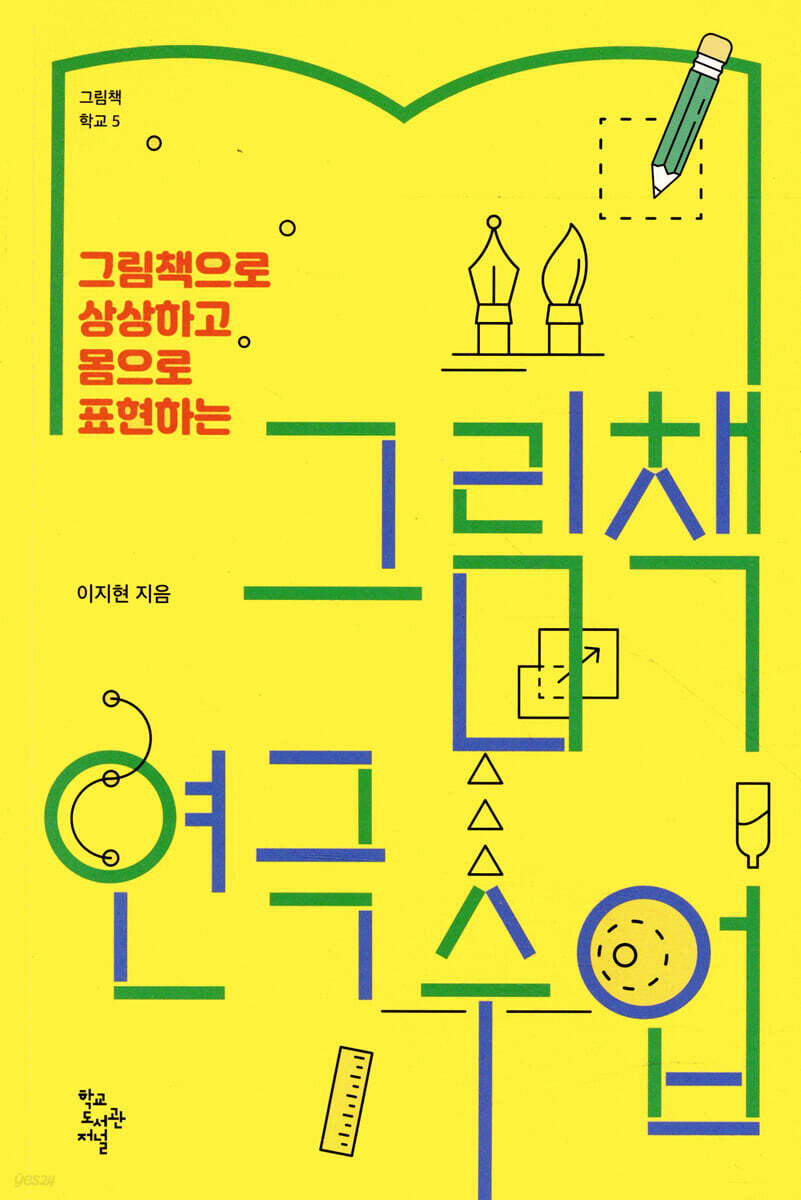
Picture Book School Series Volume 5.
A book that contains a method of teaching drama through reading picture books together in the classroom and freely expressing oneself.
The author, who is a theater actor and a theater arts instructor at schools and institutions, teaches fun ways to learn unfamiliar theater techniques such as pantomime, tableau, gibberish, and flashback through picture books.
It contains a variety of educational theater teaching methods that can be easily applied not only in the theater unit included in the revised curriculum, but also by parents and picture book activists.
A book that contains a method of teaching drama through reading picture books together in the classroom and freely expressing oneself.
The author, who is a theater actor and a theater arts instructor at schools and institutions, teaches fun ways to learn unfamiliar theater techniques such as pantomime, tableau, gibberish, and flashback through picture books.
It contains a variety of educational theater teaching methods that can be easily applied not only in the theater unit included in the revised curriculum, but also by parents and picture book activists.
- You can preview some of the book's contents.
Preview
index
Chapter 1: Starting a Drama Class with a Picture Book
Picture books and theater classes meet
Theater Starting with Picture Books / Theater Education and Educational Theater / Picture Book Theater Classes that Promote Free Imagination and Expression
Starting a Picture Book Drama Class
Sharing the stage center / Remembering the entrance and exit routes / Maintaining basics as an actor and audience member / Organizing things before class / Conducting classes in blocks
Characteristics of picture book drama classes
Presentation Method / Presenter Selection / Group Formation / Class Closing and Closing Remarks
To make picture book theater classes more fun
Naturally Acquire Theatre Terminology / Flexible Lesson Design
Chapter 2: Time to Become Actors and Audience in the Classroom
Use your imagination to transform activities_『Sweet Potato』and transformation
Expressing and Communicating Emotions_『The Pictureless Book』and Giblish
Creating Diverse Dialogues_『If I Were a Pencil Sharpener?』 and Monologue
Presenting an improvisational play_『I Shouldn't Have Taken Off My Clothes』and an improvisational play
Expressing through facial expressions and gestures_『How to Wipe a Superhero's Poop』 and pantomime
Expressing with a pause_『3-second dive』and Tablo
Creating a story that doesn't exist in the world_『I am a story』and playwriting
Creating Your Own Ending_『To Be or Not to Be?』 and the Climax
Laying the foundation of expression_『What Happened on Hat Island』and pronunciation and vocalization
Exploring a Moment in Time_『Start Next』and Flashback
Character Exploration_『Who Are You?』 and Characters
Creating Your Own Artwork_『If Van Gogh Painted a Snowman』 and Imaginary Paintings
Chapter 3: Drama Classes that Develop Imagination and Self-Esteem
Online drama classes
First greetings and closings are important / Utilizing everyday objects / Creating an avatar that represents me / Utilizing while protecting copyright / Disappearing or stopping to enhance concentration / Sharing vividness by maintaining timeliness / Setting the mood by wearing a role
How to Deal with Unexpected Situations During Picture Book Drama Classes
When a student sheds tears during class / When there is a risk of safety accident due to passionate expression / When touching the teacher's belongings without permission / When spoiling important parts of a picture book
Drama Classes That Bring Change
[Student Edition] The Transformation of a Female Student Who Was Acting Uncontrollably / A Shy Male Student Becomes Kim Bae-woo
[Teacher's Edition] A teacher who participates in class at the student's eye level / A teacher who records and encourages every moment
[Student Reviews]
[Teacher's Review]
Appendix - Recommended Picture Books for Situational Drama Classes
When taking a fun Korean expression class
When teaching a class on smartphones
When teaching a class that encourages creative thinking
When teaching a class on the topic of lying
When teaching classes that encourage natural body movement
When teaching classes to help understand different types of families
When teaching a class that introduces the culture or differences of other countries
When teaching a class that teaches the importance of nature
When teaching a class using a parody story
When we teach classes that teach about our old lifestyle culture
When taking classes to build relationships with friends
Picture books and theater classes meet
Theater Starting with Picture Books / Theater Education and Educational Theater / Picture Book Theater Classes that Promote Free Imagination and Expression
Starting a Picture Book Drama Class
Sharing the stage center / Remembering the entrance and exit routes / Maintaining basics as an actor and audience member / Organizing things before class / Conducting classes in blocks
Characteristics of picture book drama classes
Presentation Method / Presenter Selection / Group Formation / Class Closing and Closing Remarks
To make picture book theater classes more fun
Naturally Acquire Theatre Terminology / Flexible Lesson Design
Chapter 2: Time to Become Actors and Audience in the Classroom
Use your imagination to transform activities_『Sweet Potato』and transformation
Expressing and Communicating Emotions_『The Pictureless Book』and Giblish
Creating Diverse Dialogues_『If I Were a Pencil Sharpener?』 and Monologue
Presenting an improvisational play_『I Shouldn't Have Taken Off My Clothes』and an improvisational play
Expressing through facial expressions and gestures_『How to Wipe a Superhero's Poop』 and pantomime
Expressing with a pause_『3-second dive』and Tablo
Creating a story that doesn't exist in the world_『I am a story』and playwriting
Creating Your Own Ending_『To Be or Not to Be?』 and the Climax
Laying the foundation of expression_『What Happened on Hat Island』and pronunciation and vocalization
Exploring a Moment in Time_『Start Next』and Flashback
Character Exploration_『Who Are You?』 and Characters
Creating Your Own Artwork_『If Van Gogh Painted a Snowman』 and Imaginary Paintings
Chapter 3: Drama Classes that Develop Imagination and Self-Esteem
Online drama classes
First greetings and closings are important / Utilizing everyday objects / Creating an avatar that represents me / Utilizing while protecting copyright / Disappearing or stopping to enhance concentration / Sharing vividness by maintaining timeliness / Setting the mood by wearing a role
How to Deal with Unexpected Situations During Picture Book Drama Classes
When a student sheds tears during class / When there is a risk of safety accident due to passionate expression / When touching the teacher's belongings without permission / When spoiling important parts of a picture book
Drama Classes That Bring Change
[Student Edition] The Transformation of a Female Student Who Was Acting Uncontrollably / A Shy Male Student Becomes Kim Bae-woo
[Teacher's Edition] A teacher who participates in class at the student's eye level / A teacher who records and encourages every moment
[Student Reviews]
[Teacher's Review]
Appendix - Recommended Picture Books for Situational Drama Classes
When taking a fun Korean expression class
When teaching a class on smartphones
When teaching a class that encourages creative thinking
When teaching a class on the topic of lying
When teaching classes that encourage natural body movement
When teaching classes to help understand different types of families
When teaching a class that introduces the culture or differences of other countries
When teaching a class that teaches the importance of nature
When teaching a class using a parody story
When we teach classes that teach about our old lifestyle culture
When taking classes to build relationships with friends
Detailed image

Into the book
Transformation provides students with an opportunity to look at everyday objects and familiar figures from a different perspective.
It is to catch hold of things that would otherwise be overlooked and to see and realize their different aspects.
Because we use everyday props, some students may seem indifferent at the beginning of the class, but as the class progresses, we see them participating more actively.
One of the most enjoyable parts of learning the theater term "transformation" for students is seeing their friends' new transformations.
“Wow, I never thought of that!” he says, his eyes sparkling even brighter.
--- From "Using your imagination to transform_『Sweet Potato』and transformation"
Let's try writing Giblish freely, recalling the meaningless and meaningless words in the picture book 『The Book Without Pictures』.
Be sure to explain the rule that if there are words that make sense when read, they cannot be used.
Once you have completed the Giblish, the teacher's skit begins.
The situational setting can be anything as long as it is a 'situation where a serious and solemn announcement is made'.
Throughout the skit, the teacher acts as the host with a serious attitude, expression, and tone of voice.
The host introduces the students in a serious manner, setting up situations such as a press conference, a wedding hall, or a school.
--- From "Expressing and Communicating Emotions_『The Pictureless Book』and Giblish"
There are things that I think everyone knows, but has never really learned.
This is the 'how to wipe poop'.
The picture book 『How to Wipe a Superhero's Poop』 contains an absurd but truly intriguing story and features a cheerful protagonist with a unique imagination.
This picture book is excellent for fostering imagination and creativity in children of all ages, from preschoolers to elementary school students and even high school students.
This is because it contains unique stories and materials related to 'poop' that we have never thought about in our daily lives.
“How many squares of toilet paper should I use when wiping?”
“I wiped my poop with one hand, so why are you washing the other hand too?”
--- From "Expressing with facial expressions and gestures_『How to Wipe a Superhero's Poop』 and Pantomime"
When you open the picture book "3 Second Diving," which contains the message that winning is not important, you can almost hear the protagonist's self-deprecating voice saying, "I'm not good at anything."
If you look at it through the eyes of adults who want to be number one and the best, you might always see a lack of confidence and an unpalatable passive attitude, but when you get to know the heart of the main character in the picture book, you will be moved to see that it is not a lack of confidence, but a lack of desire to win for the fear that someone might get hurt, and that it is not a passive but a consideration for others.
It is to catch hold of things that would otherwise be overlooked and to see and realize their different aspects.
Because we use everyday props, some students may seem indifferent at the beginning of the class, but as the class progresses, we see them participating more actively.
One of the most enjoyable parts of learning the theater term "transformation" for students is seeing their friends' new transformations.
“Wow, I never thought of that!” he says, his eyes sparkling even brighter.
--- From "Using your imagination to transform_『Sweet Potato』and transformation"
Let's try writing Giblish freely, recalling the meaningless and meaningless words in the picture book 『The Book Without Pictures』.
Be sure to explain the rule that if there are words that make sense when read, they cannot be used.
Once you have completed the Giblish, the teacher's skit begins.
The situational setting can be anything as long as it is a 'situation where a serious and solemn announcement is made'.
Throughout the skit, the teacher acts as the host with a serious attitude, expression, and tone of voice.
The host introduces the students in a serious manner, setting up situations such as a press conference, a wedding hall, or a school.
--- From "Expressing and Communicating Emotions_『The Pictureless Book』and Giblish"
There are things that I think everyone knows, but has never really learned.
This is the 'how to wipe poop'.
The picture book 『How to Wipe a Superhero's Poop』 contains an absurd but truly intriguing story and features a cheerful protagonist with a unique imagination.
This picture book is excellent for fostering imagination and creativity in children of all ages, from preschoolers to elementary school students and even high school students.
This is because it contains unique stories and materials related to 'poop' that we have never thought about in our daily lives.
“How many squares of toilet paper should I use when wiping?”
“I wiped my poop with one hand, so why are you washing the other hand too?”
--- From "Expressing with facial expressions and gestures_『How to Wipe a Superhero's Poop』 and Pantomime"
When you open the picture book "3 Second Diving," which contains the message that winning is not important, you can almost hear the protagonist's self-deprecating voice saying, "I'm not good at anything."
If you look at it through the eyes of adults who want to be number one and the best, you might always see a lack of confidence and an unpalatable passive attitude, but when you get to know the heart of the main character in the picture book, you will be moved to see that it is not a lack of confidence, but a lack of desire to win for the fear that someone might get hurt, and that it is not a passive but a consideration for others.
--- From "Expressing with a Stop Motion_『3-Second Dive』and Tablo"
Publisher's Review
How should we teach the 'Theater Unit' included in the revised curriculum?
A variety of art classes for teachers, parents, and picture book activists!
The 2015 revised curriculum included a ‘theater unit.’
The main goal of the drama group is to develop character by understanding oneself and others through theatrical activities.
In elementary and middle schools, experiential theater groups were included in the Korean language curriculum, and in high schools, a theater subject was newly established in the arts field of general elective subjects.
When you think of 'acting', you might think of a theater stage and learning how to memorize lines and act in front of people.
However, theater classes can be divided into theater education and educational theater.
If theater education is about practicing and presenting a play, educational theater is a class that emphasizes subjective methods of expression.
This teaching method fosters imagination and values autonomy through short role-plays or improvisations, leading to creative expression, and places greater importance on the enjoyment of the process rather than the outcome.
Picture books are excellent teaching materials for drama classes because they are short but stimulate a wide range of imagination.
Through drama classes using picture books, students can learn how to create stories that never existed before and how to enjoyably express and share questions that have no right answers.
You can create your own answers, learn about differences through sharing rather than comparing yourself to others, and freely express yourself through communication and support rather than competition with friends.
Class time without textbooks or answers
As you laugh and have fun, your imagination and self-esteem will increase!
There are many post-reading activities that focus on discussion classes or crafts using picture books, but there are not many books that cover active and dynamic activities.
『Picture Book Theater Class』 is a teaching method that emphasizes expression that can be utilized by a theater arts instructor with 14 years of experience in theater groups, and can also be utilized by parents and picture book activists.
Theatrical terms like giblish, tableau, flashback, and pantomime may sound unfamiliar, but they can be expressed differently as ‘expressing emotions without words,’ ‘expressing situations with still movements,’ and ‘expressing spontaneously on stage.’
These activities demonstrate the endless possibilities of using picture books.
"Picture Book Theater Class" introduces the basic principles and elements of theater for theater classes, and presents lesson plans that can be applied immediately in class by linking picture books and theater techniques that capture students' interest.
It is also highly useful as it includes activity photos that show the class process, another activity picture book, and recommended picture books for each situation.
Students will learn on their own by acting in a designated space on stage, without having to learn how to act from teachers.
They will also develop their imagination and self-esteem by expressing and sharing their unrefined emotions, big and small, through drama classes.
A variety of art classes for teachers, parents, and picture book activists!
The 2015 revised curriculum included a ‘theater unit.’
The main goal of the drama group is to develop character by understanding oneself and others through theatrical activities.
In elementary and middle schools, experiential theater groups were included in the Korean language curriculum, and in high schools, a theater subject was newly established in the arts field of general elective subjects.
When you think of 'acting', you might think of a theater stage and learning how to memorize lines and act in front of people.
However, theater classes can be divided into theater education and educational theater.
If theater education is about practicing and presenting a play, educational theater is a class that emphasizes subjective methods of expression.
This teaching method fosters imagination and values autonomy through short role-plays or improvisations, leading to creative expression, and places greater importance on the enjoyment of the process rather than the outcome.
Picture books are excellent teaching materials for drama classes because they are short but stimulate a wide range of imagination.
Through drama classes using picture books, students can learn how to create stories that never existed before and how to enjoyably express and share questions that have no right answers.
You can create your own answers, learn about differences through sharing rather than comparing yourself to others, and freely express yourself through communication and support rather than competition with friends.
Class time without textbooks or answers
As you laugh and have fun, your imagination and self-esteem will increase!
There are many post-reading activities that focus on discussion classes or crafts using picture books, but there are not many books that cover active and dynamic activities.
『Picture Book Theater Class』 is a teaching method that emphasizes expression that can be utilized by a theater arts instructor with 14 years of experience in theater groups, and can also be utilized by parents and picture book activists.
Theatrical terms like giblish, tableau, flashback, and pantomime may sound unfamiliar, but they can be expressed differently as ‘expressing emotions without words,’ ‘expressing situations with still movements,’ and ‘expressing spontaneously on stage.’
These activities demonstrate the endless possibilities of using picture books.
"Picture Book Theater Class" introduces the basic principles and elements of theater for theater classes, and presents lesson plans that can be applied immediately in class by linking picture books and theater techniques that capture students' interest.
It is also highly useful as it includes activity photos that show the class process, another activity picture book, and recommended picture books for each situation.
Students will learn on their own by acting in a designated space on stage, without having to learn how to act from teachers.
They will also develop their imagination and self-esteem by expressing and sharing their unrefined emotions, big and small, through drama classes.
GOODS SPECIFICS
- Date of issue: January 5, 2021
- Page count, weight, size: 256 pages | 148*220*20mm
- ISBN13: 9788969150912
- ISBN10: 8969150919
You may also like
카테고리
korean


korean

![GQ KOREA Mark (Monthly): December [2025]](http://librairie.coreenne.fr/cdn/shop/files/8ef265dbbfbf186523ed75ba7319009d.jpg?v=1765340328&width=3840)


