

50 Must-Read Books in World Philosophy
 |
Description
Book Introduction
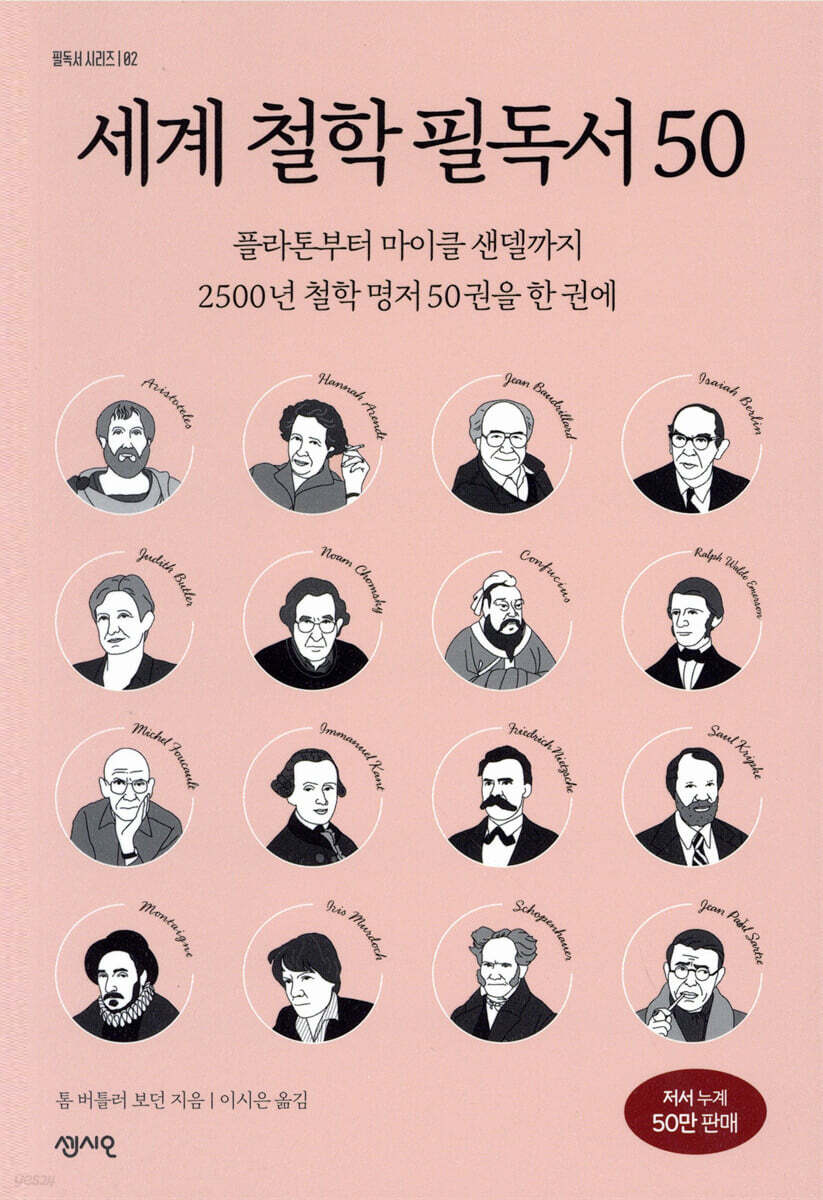
50 masterpieces that changed the landscape of 2,500 years of world philosophy, all in one volume! A book has been published that contains 50 famous works that changed the landscape of world philosophy, from ancient Plato to modern Michael Sandel. This book carefully selects 50 philosophers from the 2,500-year history of philosophy and organizes their core ideas and representative works into an easy-to-read book that can be read in just 10 minutes. It's also the most cost-effective option, as you can read books by philosophers who have been verified by numerous experts and have had a significant impact on all aspects of our lives for just 500 won each. Philosophy is a very practical discipline that addresses fundamental issues that arise in human and social life. But we unconsciously cringe at the word philosophy. Even when you actually try to read, it is difficult to decide which books to read among the numerous philosophers, and it is also burdensome to read dozens of books. "50 Must-Read Books on World Philosophy" offers a solution to this problem. With this one book, you can grasp the core of philosophy, which used to be so difficult, at a glance, and know clearly where to start. This book contains the thoughts of philosophers who had a huge influence on their time and future generations, and are still ingrained in our lives today, from Plato, who has been constantly reinterpreted for 2,500 years, to Jeremy Bentham, who advocated for the greatest happiness for the greatest number, Judith Butler, who attempted to overturn feminism, Confucius, who explains the principles of the world, Descartes, who said, “I think, therefore I am,” Martin Heidegger, the greatest philosopher of the 20th century, Karl Popper, who laid the foundation for the philosophy of science, and Michael Sandel, who challenged the myth that effort is all that matters. It doesn't matter where you start reading. You can start by reading the books of philosophers who interest you. At the end of each book introduced, we have also included a list of books that would be good to read together. And I also included a separate list of 50 books that I couldn't include in the main text due to tears in my eyes. This book will help you step into the world of philosophy. If there is a book by a philosopher you would like to read more about, you can find the original and read it. The plain truth is that you have nothing to lose and everything to gain by reading the great philosophical books that need no debate. |
- You can preview some of the book's contents.
Preview
index
In publishing the revised edition
Before reading this book
Introduction_ Philosophy, the power to see the world in a new way
1.
Thomas Aquinas's Summa Theologica
A theological textbook and a representative work of medieval scholastic philosophy
2.
Hannah Arendt's The Human Condition
An original political philosophy book that emphasizes human potential
3.
Aristotle's Nicomachean Ethics
The Secret to a Good Life for My Son and All of Us
4.
Alfred J.
Ayer's Language, Logic, and Truth
A classic of analytic philosophy called the Manifesto of Logical Positivism
5.
Jean Baudrillard's Simulation
A problematic masterpiece that defies time and sparked a Baudrillard craze.
6.
Simone de Beauvoir's The Second Sex
A fascinating read that focuses on 'women' as a philosophical category.
7.
Jeremy Bentham's Principles of Morals and Legislation
The art of legislation to achieve the 'greatest happiness for the greatest number'
8.
Henri Bergson's Creative Evolution
A Nobel Prize-winning book that weaves together human evolution and philosophy.
9.
Isaiah Berlin's The Hedgehog and the Fox
Two Approaches to Knowledge as Examined in War and Peace
10.
David Bohm's The Whole and the Folded Order
A scientific and philosophical book that overturns mainstream quantum theory with holistic thinking.
11.
Judith Butler's Gender Trouble
A classic feminist work that overturned the feminist paradigm
12.
Noam Chomsky's "Chomsky: Answering the World's Questions"
A decade-long record comprehensively illuminating Chomsky's thought.
13.
Cicero's "On Duty"
The most printed moral education and political theory book after the Bible
14.
Confucius's Analects
All the principles of the world, as told by Confucius and his disciples
15.
Descartes' Meditations on First Philosophy
The birth of an eternal philosophical proposition: "I think, therefore I am."
16.
Ralph Waldo Emerson's "Fate"
The Law of Life Found in Fate and Human Freedom and Will
17.
Epicurus's Epistles
The Pleasures of Thought as Told by the "Garden Philosopher"
18.
Michel Foucault's Words and Things
There is no one who does not have this book, a topical book that stimulates intellectual desire.
19.
Harry Frankfort's "On Dog Talk"
A short but unique philosophy book that held the top spot in the New York Times for 27 consecutive weeks.
20.
Hegel's Phenomenology of Spirit
The highest peak in the history of philosophy, yet an immortal masterpiece that one wishes to conquer.
21.
Martin Heidegger's Being and Time
The most outstanding philosophical book of the 20th century that redefines the meaning of 'existence'
22.
David Hume's An Enquiry Concerning Human Understanding
A classic of modern philosophy that established a new anthropology based on experience and observation
23.
William James's Pragmatism
The Essence of Pragmatism in One Book
24.
Daniel Kahneman's Thinking, Fast and Slow
Insights from behavioral economics that show how the mind works
25.
Kant's Critique of Pure Reason
A masterpiece and a significant milestone in the history of world intellectuals.
26.
Søren Kierkegaard's Fear and Trembling
A Philosophical Interpretation of Abraham's Sacrifice of His Son
27.
Saul Kripke's "Name and Necessity"
A shocking lecture by a young scholar who turned the analytic philosophy world upside down.
28.
Thomas Kuhn's The Structure of Scientific Revolutions
The problematic work that revealed that scientific progress is 'discontinuous'
29.
Gottfried Leibniz's "Metamorphoses"
Defending God to Those Who Deny His Existence
30.
John Locke's Essay on Human Understanding
Humans are born with a blank slate: the beginning of the blank slate theory.
31.
Machiavelli's The Prince
A textbook of modern political science called the devil's book
32.
Marshall McLuhan's "Media is Massage"
A media theory book in the experimental collage style
33.
John Stuart Mill's On Liberty
A textbook on liberalism based on individualism and an introduction to democracy
34.
Montaigne's Essays
A 20-year deep exploration of 'Who am I?'
35.
Iris Murdoch's "The Reign of Good"
The essence of ethics conveyed by world-renowned literary figures
36.
Friedrich Nietzsche's Beyond Good and Evil
"Prelude to a Philosophy of the Future": Pursuing Natural Human Desires
37.
Pascal's Pensees
Thoughts on Christianity and Human Existence from a Genius Mathematician Who Died Young
38.
Plato's Republic
A classic of Western philosophy that has been constantly reinterpreted for 2,500 years.
39.
Karl Popper's The Logic of Scientific Discovery
Laying the Foundation for the Philosophy of Science through Falsification
40.
John Rawls's A Theory of Justice
A timeless masterpiece of the 20th century that brilliantly addresses the issue of fairness.
41.
Jean-Jacques Rousseau's The Social Contract
The greatest classic containing the political principles of modern democracy
42.
Bertrand Russell's The Conquest of Happiness
A clear answer to the question of what happiness is
43.
Michael Sandel's The Illusion of Fairness
A massive discourse that shook up the myth that "if you try, you'll get there."
44.
Sartre's Being and Nothingness
A classic of existentialism born during World War II
45.
Schopenhauer's The World as Will and Representation
A bold argument that takes "will" rather than "reason" as a philosophical proposition.
46.
Peter Singer's "Saving the Drowning Child"
On moral action to solve the problem of poverty
47.
Sloterdijk's "You Must Change Your Life"
About 'ergonomics' that performs self-optimization
48.
Spinoza's Ethics
The bold and controversial ethics of the Christ of philosophy
49.
Nassim Nicholas Taleb's Black Swan
Advice for a world full of uncertainty
50.
Wittgenstein's Philosophical Investigations
Philosophical values and shifts in perspective found in language
Another 50 Philosophy Masterpieces
Glossary of Terms
Before reading this book
Introduction_ Philosophy, the power to see the world in a new way
1.
Thomas Aquinas's Summa Theologica
A theological textbook and a representative work of medieval scholastic philosophy
2.
Hannah Arendt's The Human Condition
An original political philosophy book that emphasizes human potential
3.
Aristotle's Nicomachean Ethics
The Secret to a Good Life for My Son and All of Us
4.
Alfred J.
Ayer's Language, Logic, and Truth
A classic of analytic philosophy called the Manifesto of Logical Positivism
5.
Jean Baudrillard's Simulation
A problematic masterpiece that defies time and sparked a Baudrillard craze.
6.
Simone de Beauvoir's The Second Sex
A fascinating read that focuses on 'women' as a philosophical category.
7.
Jeremy Bentham's Principles of Morals and Legislation
The art of legislation to achieve the 'greatest happiness for the greatest number'
8.
Henri Bergson's Creative Evolution
A Nobel Prize-winning book that weaves together human evolution and philosophy.
9.
Isaiah Berlin's The Hedgehog and the Fox
Two Approaches to Knowledge as Examined in War and Peace
10.
David Bohm's The Whole and the Folded Order
A scientific and philosophical book that overturns mainstream quantum theory with holistic thinking.
11.
Judith Butler's Gender Trouble
A classic feminist work that overturned the feminist paradigm
12.
Noam Chomsky's "Chomsky: Answering the World's Questions"
A decade-long record comprehensively illuminating Chomsky's thought.
13.
Cicero's "On Duty"
The most printed moral education and political theory book after the Bible
14.
Confucius's Analects
All the principles of the world, as told by Confucius and his disciples
15.
Descartes' Meditations on First Philosophy
The birth of an eternal philosophical proposition: "I think, therefore I am."
16.
Ralph Waldo Emerson's "Fate"
The Law of Life Found in Fate and Human Freedom and Will
17.
Epicurus's Epistles
The Pleasures of Thought as Told by the "Garden Philosopher"
18.
Michel Foucault's Words and Things
There is no one who does not have this book, a topical book that stimulates intellectual desire.
19.
Harry Frankfort's "On Dog Talk"
A short but unique philosophy book that held the top spot in the New York Times for 27 consecutive weeks.
20.
Hegel's Phenomenology of Spirit
The highest peak in the history of philosophy, yet an immortal masterpiece that one wishes to conquer.
21.
Martin Heidegger's Being and Time
The most outstanding philosophical book of the 20th century that redefines the meaning of 'existence'
22.
David Hume's An Enquiry Concerning Human Understanding
A classic of modern philosophy that established a new anthropology based on experience and observation
23.
William James's Pragmatism
The Essence of Pragmatism in One Book
24.
Daniel Kahneman's Thinking, Fast and Slow
Insights from behavioral economics that show how the mind works
25.
Kant's Critique of Pure Reason
A masterpiece and a significant milestone in the history of world intellectuals.
26.
Søren Kierkegaard's Fear and Trembling
A Philosophical Interpretation of Abraham's Sacrifice of His Son
27.
Saul Kripke's "Name and Necessity"
A shocking lecture by a young scholar who turned the analytic philosophy world upside down.
28.
Thomas Kuhn's The Structure of Scientific Revolutions
The problematic work that revealed that scientific progress is 'discontinuous'
29.
Gottfried Leibniz's "Metamorphoses"
Defending God to Those Who Deny His Existence
30.
John Locke's Essay on Human Understanding
Humans are born with a blank slate: the beginning of the blank slate theory.
31.
Machiavelli's The Prince
A textbook of modern political science called the devil's book
32.
Marshall McLuhan's "Media is Massage"
A media theory book in the experimental collage style
33.
John Stuart Mill's On Liberty
A textbook on liberalism based on individualism and an introduction to democracy
34.
Montaigne's Essays
A 20-year deep exploration of 'Who am I?'
35.
Iris Murdoch's "The Reign of Good"
The essence of ethics conveyed by world-renowned literary figures
36.
Friedrich Nietzsche's Beyond Good and Evil
"Prelude to a Philosophy of the Future": Pursuing Natural Human Desires
37.
Pascal's Pensees
Thoughts on Christianity and Human Existence from a Genius Mathematician Who Died Young
38.
Plato's Republic
A classic of Western philosophy that has been constantly reinterpreted for 2,500 years.
39.
Karl Popper's The Logic of Scientific Discovery
Laying the Foundation for the Philosophy of Science through Falsification
40.
John Rawls's A Theory of Justice
A timeless masterpiece of the 20th century that brilliantly addresses the issue of fairness.
41.
Jean-Jacques Rousseau's The Social Contract
The greatest classic containing the political principles of modern democracy
42.
Bertrand Russell's The Conquest of Happiness
A clear answer to the question of what happiness is
43.
Michael Sandel's The Illusion of Fairness
A massive discourse that shook up the myth that "if you try, you'll get there."
44.
Sartre's Being and Nothingness
A classic of existentialism born during World War II
45.
Schopenhauer's The World as Will and Representation
A bold argument that takes "will" rather than "reason" as a philosophical proposition.
46.
Peter Singer's "Saving the Drowning Child"
On moral action to solve the problem of poverty
47.
Sloterdijk's "You Must Change Your Life"
About 'ergonomics' that performs self-optimization
48.
Spinoza's Ethics
The bold and controversial ethics of the Christ of philosophy
49.
Nassim Nicholas Taleb's Black Swan
Advice for a world full of uncertainty
50.
Wittgenstein's Philosophical Investigations
Philosophical values and shifts in perspective found in language
Another 50 Philosophy Masterpieces
Glossary of Terms
Detailed image
.jpg)
Into the book
Philosophy is a meta-discipline necessary for looking at and understanding all other subjects.
For example, it is difficult to properly understand the trends in the political or economic world without studying political philosophy.
We must first understand the fundamental principles of why humans created society, what the concept of justice is that forms the basis of society, and what the rights of individuals are compared to those of groups.
Philosophy deals with these very topics, and much more.
---From "Publishing the Revised Edition"
Theologian and philosopher Thomas Aquinas said in De Caelo:
“The purpose of studying philosophy is not to know what people have thought, but to know the truth of things themselves.” This is the purpose of this book.
But it can also be helpful to know how people have been thinking.
If you don't yet have a solid outlook on life, this book will provide you with powerful concepts to help you navigate life and challenge your existing worldview.
It is natural for us to want certainty, but if any kind of absolute knowledge existed, it would not change or be shaken by our questions.
So you have nothing to lose and everything to gain by reading the great books of philosophy.
---From "Introductory Remarks"
When we look at a person, we don't see them as a collection of billions of cells, but rather we perceive their characteristics through what makes them different from others.
By looking at the virtues, skills, and craftsmanship that a person has cultivated throughout his life, we can understand his essence and function.
Aristotle says that a flutist is living well if he plays his flute beautifully or a sculptor creates a work of art with excellent skill.
Because success in life depends on fulfilling one's functions.
---From "Aristotle's Nicomachean Ethics"
Feminism sought to improve political representation and cultural awareness for women, but new discourses, including Butler's, question the very category of "woman."
Butler cites Foucault's argument that society creates categories and classifies people accordingly in order to restrict, prohibit, regulate, control, and even 'protect' them.
The problem is that people in this category begin to see themselves only through the lens of that category.
If this happens, it becomes impossible to demand the liberation of ‘women’ from the current power system.
Because liberation begins with feeling the problem with the entire system and categories like sex and gender.
---From "Judith Butler's Gender Trouble"
Epicurus admits that his philosophy of connecting pleasure and happiness can be misunderstood as meaning debauched physical pleasure.
But Epicurus' true goal is more serious than that: 'to attain freedom from physical pain and mental confusion.'
A truly happy life is not one of constant eating, drinking, and sex, but one where you think and choose everything for yourself, and never act on anything that will cause you mental pain.
---From "Epicurus's Epistles"
From a first-dimensional perspective, Abraham is a murderer.
But he believes and follows the obviously absurd instructions to the end, simply because it is God's will.
Abraham's actions are beyond the reach of most people.
It brings fear and thrill to us when we see it.
It is at this point that Kierkegaard argues that Abraham's actions represent the highest state of human existence.
---From "Søren Kierkegaard's Fear and Trembling"
Nietzsche despised concepts like democracy, 'equality of rights', and 'empathy with all who suffer'.
Because I believed that attempts to create such a level playing field destroyed the environment in which humans could truly become great.
The argument is that all kinds of oppression, poverty, violence, and harsh trials present opportunities that call upon human creativity, boldness, and mental fortitude, transforming ordinary people into great men.
---From "Friedrich Nietzsche's Beyond Good and Evil"
Singer also dismisses the view that decisions to help the poor should be made by individuals themselves and that there are no absolute right or wrong issues, calling this weak moral relativism.
Clearly, if we can save a child's life, it is a matter of duty.
If an adult were to watch a child drown and do nothing because of their "freedom of choice," we would consider them crazy or evil.
---From "Saving the Drowning Child" by Peter Singer
In short, self-development projects began as religious activities, including small spiritual communities, and gradually became secularized and scientific.
We now live in a society that reveres masters and a culture that values hard work.
Modernity is a "global fitness movement" inspired by the possibility of a better life, says Sloterdijk.
This exercise aims to build immunity against our fate or inertia.
For example, it is difficult to properly understand the trends in the political or economic world without studying political philosophy.
We must first understand the fundamental principles of why humans created society, what the concept of justice is that forms the basis of society, and what the rights of individuals are compared to those of groups.
Philosophy deals with these very topics, and much more.
---From "Publishing the Revised Edition"
Theologian and philosopher Thomas Aquinas said in De Caelo:
“The purpose of studying philosophy is not to know what people have thought, but to know the truth of things themselves.” This is the purpose of this book.
But it can also be helpful to know how people have been thinking.
If you don't yet have a solid outlook on life, this book will provide you with powerful concepts to help you navigate life and challenge your existing worldview.
It is natural for us to want certainty, but if any kind of absolute knowledge existed, it would not change or be shaken by our questions.
So you have nothing to lose and everything to gain by reading the great books of philosophy.
---From "Introductory Remarks"
When we look at a person, we don't see them as a collection of billions of cells, but rather we perceive their characteristics through what makes them different from others.
By looking at the virtues, skills, and craftsmanship that a person has cultivated throughout his life, we can understand his essence and function.
Aristotle says that a flutist is living well if he plays his flute beautifully or a sculptor creates a work of art with excellent skill.
Because success in life depends on fulfilling one's functions.
---From "Aristotle's Nicomachean Ethics"
Feminism sought to improve political representation and cultural awareness for women, but new discourses, including Butler's, question the very category of "woman."
Butler cites Foucault's argument that society creates categories and classifies people accordingly in order to restrict, prohibit, regulate, control, and even 'protect' them.
The problem is that people in this category begin to see themselves only through the lens of that category.
If this happens, it becomes impossible to demand the liberation of ‘women’ from the current power system.
Because liberation begins with feeling the problem with the entire system and categories like sex and gender.
---From "Judith Butler's Gender Trouble"
Epicurus admits that his philosophy of connecting pleasure and happiness can be misunderstood as meaning debauched physical pleasure.
But Epicurus' true goal is more serious than that: 'to attain freedom from physical pain and mental confusion.'
A truly happy life is not one of constant eating, drinking, and sex, but one where you think and choose everything for yourself, and never act on anything that will cause you mental pain.
---From "Epicurus's Epistles"
From a first-dimensional perspective, Abraham is a murderer.
But he believes and follows the obviously absurd instructions to the end, simply because it is God's will.
Abraham's actions are beyond the reach of most people.
It brings fear and thrill to us when we see it.
It is at this point that Kierkegaard argues that Abraham's actions represent the highest state of human existence.
---From "Søren Kierkegaard's Fear and Trembling"
Nietzsche despised concepts like democracy, 'equality of rights', and 'empathy with all who suffer'.
Because I believed that attempts to create such a level playing field destroyed the environment in which humans could truly become great.
The argument is that all kinds of oppression, poverty, violence, and harsh trials present opportunities that call upon human creativity, boldness, and mental fortitude, transforming ordinary people into great men.
---From "Friedrich Nietzsche's Beyond Good and Evil"
Singer also dismisses the view that decisions to help the poor should be made by individuals themselves and that there are no absolute right or wrong issues, calling this weak moral relativism.
Clearly, if we can save a child's life, it is a matter of duty.
If an adult were to watch a child drown and do nothing because of their "freedom of choice," we would consider them crazy or evil.
---From "Saving the Drowning Child" by Peter Singer
In short, self-development projects began as religious activities, including small spiritual communities, and gradually became secularized and scientific.
We now live in a society that reveres masters and a culture that values hard work.
Modernity is a "global fitness movement" inspired by the possibility of a better life, says Sloterdijk.
This exercise aims to build immunity against our fate or inertia.
---From "'You Must Change Your Life' by Sloterdijk"
Publisher's Review
Why should we know philosophy?
Why should we learn philosophy? Because it provides us with the wisdom we need to live our lives, including the secrets to a happy life, how to live a good life, and how to create a just society.
In that sense, philosophy is not as far removed from our lives as we might think, but rather a very practical field of study.
But, knowingly or unknowingly, we cringe at the word philosophy.
Philosophy is said to be important, but when you actually try to read it, it's difficult to decide which book to choose among the countless philosophy books, and in such a situation, having to read multiple books can be burdensome.
《50 Must-Read Books on World Philosophy》 solves these concerns in one fell swoop.
It provides a quick overview of the core concepts of philosophy, which can be difficult to grasp, to help you decide where and how to start.
The author of this book, Tom Botler-Borden, is a famous author and curator known for his '50 Classic Books' series.
As such, the 50 masterpieces he painstakingly selected are indisputable classics of our time.
The immortal masterpieces we must read in one volume!
《50 Must-Read Books in World Philosophy》 contains the major ideas and representative works of 50 philosophers who had an influence not only in their time but also in later generations and up to the present, from Plato's 《Republic》, which has been reinterpreted for 2,500 years, to Confucius's 《Analects》, the greatest scripture in the East, to Descartes' 《Meditations on First Philosophy》, which said "I think, therefore I am," to Jeremy Bentham's 《Principles of Morals and Legislation》, which aims to achieve the greatest happiness for the greatest number, to Karl Popper's 《The Structure of Scientific Revolutions》, which coined the term 'paradigm,' to Judith Butler's 《Gender Trouble》, which reinterpreted feminism, and Michael Sandel's 《Justice: What's the Right Thing to Read》, which stirred up controversy in the meritocratic society.
Through each of these books, we can gain a basic framework for viewing all other knowledge and learn how to think, be, act, and perceive freely.
With "50 Must-Read Books on World Philosophy," which condenses the true insights of great philosophers into a single volume, we will be able to step into the world of philosophy more easily.
Above all, it is clear that you have nothing to lose and everything to gain by reading this book.
10 minutes per volume is enough!
Don't be afraid of the 50 famous books.
10 minutes a day, even the longest content can be 30 minutes a day.
It does not focus on the typical categories such as 'school' and 'ism' or philosophical trends or periods that are used as criteria in introductory or academic philosophy books, so you can read freely from any part you want, and it is easy to jump to similar topics by organizing 'books that are good to read together' at the end of each book introduction.
We've compiled the major ideas of philosophers, the philosophers who influenced them, and other major works. If there's a philosopher or thought that interests you, you can refer to it to create your own philosophy study guide.
I wanted to introduce other major works in the book, but unfortunately was unable to do so, so I have compiled a separate list of 50 works to help with a wide range of reading.
In reality, you are introduced to 100 books, so it is truly cost-effective and ‘excellent value for money.’
Now, let's enjoy the world of philosophy without difficulty with "50 Must-Read Books on World Philosophy."
Why should we learn philosophy? Because it provides us with the wisdom we need to live our lives, including the secrets to a happy life, how to live a good life, and how to create a just society.
In that sense, philosophy is not as far removed from our lives as we might think, but rather a very practical field of study.
But, knowingly or unknowingly, we cringe at the word philosophy.
Philosophy is said to be important, but when you actually try to read it, it's difficult to decide which book to choose among the countless philosophy books, and in such a situation, having to read multiple books can be burdensome.
《50 Must-Read Books on World Philosophy》 solves these concerns in one fell swoop.
It provides a quick overview of the core concepts of philosophy, which can be difficult to grasp, to help you decide where and how to start.
The author of this book, Tom Botler-Borden, is a famous author and curator known for his '50 Classic Books' series.
As such, the 50 masterpieces he painstakingly selected are indisputable classics of our time.
The immortal masterpieces we must read in one volume!
《50 Must-Read Books in World Philosophy》 contains the major ideas and representative works of 50 philosophers who had an influence not only in their time but also in later generations and up to the present, from Plato's 《Republic》, which has been reinterpreted for 2,500 years, to Confucius's 《Analects》, the greatest scripture in the East, to Descartes' 《Meditations on First Philosophy》, which said "I think, therefore I am," to Jeremy Bentham's 《Principles of Morals and Legislation》, which aims to achieve the greatest happiness for the greatest number, to Karl Popper's 《The Structure of Scientific Revolutions》, which coined the term 'paradigm,' to Judith Butler's 《Gender Trouble》, which reinterpreted feminism, and Michael Sandel's 《Justice: What's the Right Thing to Read》, which stirred up controversy in the meritocratic society.
Through each of these books, we can gain a basic framework for viewing all other knowledge and learn how to think, be, act, and perceive freely.
With "50 Must-Read Books on World Philosophy," which condenses the true insights of great philosophers into a single volume, we will be able to step into the world of philosophy more easily.
Above all, it is clear that you have nothing to lose and everything to gain by reading this book.
10 minutes per volume is enough!
Don't be afraid of the 50 famous books.
10 minutes a day, even the longest content can be 30 minutes a day.
It does not focus on the typical categories such as 'school' and 'ism' or philosophical trends or periods that are used as criteria in introductory or academic philosophy books, so you can read freely from any part you want, and it is easy to jump to similar topics by organizing 'books that are good to read together' at the end of each book introduction.
We've compiled the major ideas of philosophers, the philosophers who influenced them, and other major works. If there's a philosopher or thought that interests you, you can refer to it to create your own philosophy study guide.
I wanted to introduce other major works in the book, but unfortunately was unable to do so, so I have compiled a separate list of 50 works to help with a wide range of reading.
In reality, you are introduced to 100 books, so it is truly cost-effective and ‘excellent value for money.’
Now, let's enjoy the world of philosophy without difficulty with "50 Must-Read Books on World Philosophy."
GOODS SPECIFICS
- Publication date: November 25, 2022
- Page count, weight, size: 548 pages | 660g | 140*200*28mm
- ISBN13: 9791166570841
- ISBN10: 1166570843
You may also like
카테고리
korean


korean

![GQ KOREA Mark (Monthly): December [2025]](http://librairie.coreenne.fr/cdn/shop/files/8ef265dbbfbf186523ed75ba7319009d.jpg?v=1765340328&width=3840)


