

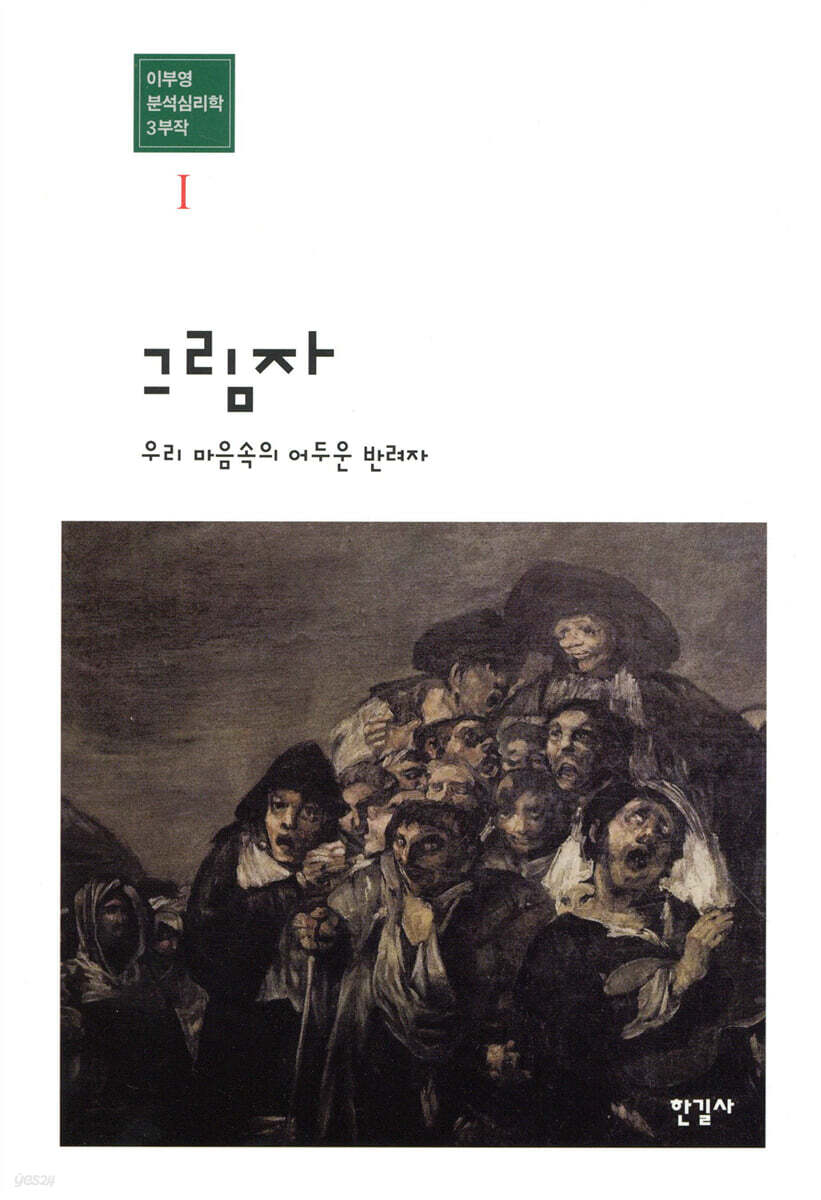
shadow
 |
Description
Book Introduction
Lee Bu-young, a leading figure in Korean analytical psychology, has summarized the process of 'self-actualization' (individualization), the ultimate goal of Jungian analytical psychology.
This is the first book in the 'Lee Bu-young Analytical Psychology Trilogy', and it talks about the 'shadow', the inferior personality of the unconscious and the dark companion of the 'self'.
In psychology, the commonly referred to 'persona' is the behavioral norms or roles of a group society, and is the morality and duty that a group demands of an individual.
We all belong to various social organizations such as family, school, work, and country, and we alternately use various personas that fit each of them.
The unconsciousness suppressed by these personas is the 'shadow'.
The more the ego turns towards the light of consciousness, the larger its shadow becomes without one's knowledge.
Repressed personal unconsciousness is the cause of all kinds of neurosis.
What is socially problematic is the collective unconscious.
The collective projection of shadows can be found in medieval witch hunts and the Crusades, Hitler's genocide of the Jews, and even in regionalism in Korea.
Jung, the founder of analytical psychology, viewed the unconscious as “not merely a storehouse of impulses and a pool of desires, but a fountain of creation that matures the mind.”
Therefore, if we 'make conscious' of the shadow, its negative effects can be transformed into constructive functions.
In this book, author Lee Bu-yeong presents various historical examples from both the East and the West along with the concept of shadow.
He also discusses cases of personal and collective shadow projection among Koreans, and the shadow archetypes revealed in Korean shamanism and folk tales, based on his decades of experience studying analytical psychology and treating patients in the field.
Only those who have faced the shadow can recognize the next task, the anima and animus.
Now, let's have the courage to meet our own 'black agent' shadow.
This is the first book in the 'Lee Bu-young Analytical Psychology Trilogy', and it talks about the 'shadow', the inferior personality of the unconscious and the dark companion of the 'self'.
In psychology, the commonly referred to 'persona' is the behavioral norms or roles of a group society, and is the morality and duty that a group demands of an individual.
We all belong to various social organizations such as family, school, work, and country, and we alternately use various personas that fit each of them.
The unconsciousness suppressed by these personas is the 'shadow'.
The more the ego turns towards the light of consciousness, the larger its shadow becomes without one's knowledge.
Repressed personal unconsciousness is the cause of all kinds of neurosis.
What is socially problematic is the collective unconscious.
The collective projection of shadows can be found in medieval witch hunts and the Crusades, Hitler's genocide of the Jews, and even in regionalism in Korea.
Jung, the founder of analytical psychology, viewed the unconscious as “not merely a storehouse of impulses and a pool of desires, but a fountain of creation that matures the mind.”
Therefore, if we 'make conscious' of the shadow, its negative effects can be transformed into constructive functions.
In this book, author Lee Bu-yeong presents various historical examples from both the East and the West along with the concept of shadow.
He also discusses cases of personal and collective shadow projection among Koreans, and the shadow archetypes revealed in Korean shamanism and folk tales, based on his decades of experience studying analytical psychology and treating patients in the field.
Only those who have faced the shadow can recognize the next task, the anima and animus.
Now, let's have the courage to meet our own 'black agent' shadow.
- You can preview some of the book's contents.
Preview
index
A Time to Reflect on the Human Mind | Prologue
Part 1: The World of the Mind and Shadows
1.
World of the Mind
The mind that knows and the mind that doesn't know
Discovery of the unconscious
Freud and Jung's views on the unconscious
Structure and Function of the Mind
Psychological types
2.
The place of shadows in the world of the mind
Part II: Primitive Concepts of the Shadow and Analytical Psychology
1.
Living Shadows: Shadows Expressed in Primitiveness and Folklore
Living Shadows to Primitive Man
Shadow Spell
Shadow as a subtle entity
Shadowless Being
Shadow as the essence of life
Usage of shadow in Chinese character-speaking countries (Korean, Chinese, and Japanese)
2.
The analytical psychological concept of the shadow
Definition of Shadow
Shadows as Realities - Those Who Have Lost Their Shadows
Awareness of Shadows
Shadow as relative or absolute evil
Part 3: Shadow Projection: Where and How Can We See Shadows?
1.
Shadow projection phenomenon
Image of a shadow
Characteristics of projection phenomena
Shadow Projection and 'Holy Wrath'
The problem of shadows in interpersonal relationships
Shadow figures in political and contemporary events
2.
The phenomenon of shadows appearing in dreams
Among Jung's dream examples
Shadow images appearing in the dreams of Korean analysts
3.
Psychopathology and Shadows
A person without a shadow, a family without a shadow
Shadow with superior function and its mental symptoms
The Archetype of Shadow and Mental Illness
Psychotherapy and Shadow Projection
Part 4: Analysis and the Recognition Process of Shadows
1.
Difficulty recognizing shadows
2.
The process of becoming conscious of the shadow
Part 5: Cultural Responses to Shadows
1.
Shadows and Their Expressions in Folk Culture
Various shadow rituals
Symbolism of Shadows and Their Treatment in Shamanism
2.
Shadow figures in old tales and their solutions
Stories about good and evil pairings, such as Heungbu and Nolbu
Longevity tale
Real and fake
Shadow Archetype Story
How to deal with evil in our folk tales
3.
Shadows and Religious Thought
Christianity and the Problem of Shadows
Eastern Religions and the Perception of Shadows
Discovering Shadows for a Mature Democratic Society | Epilogue
To bring the unconscious into consciousness | In the revised edition
Note
References
Search
Part 1: The World of the Mind and Shadows
1.
World of the Mind
The mind that knows and the mind that doesn't know
Discovery of the unconscious
Freud and Jung's views on the unconscious
Structure and Function of the Mind
Psychological types
2.
The place of shadows in the world of the mind
Part II: Primitive Concepts of the Shadow and Analytical Psychology
1.
Living Shadows: Shadows Expressed in Primitiveness and Folklore
Living Shadows to Primitive Man
Shadow Spell
Shadow as a subtle entity
Shadowless Being
Shadow as the essence of life
Usage of shadow in Chinese character-speaking countries (Korean, Chinese, and Japanese)
2.
The analytical psychological concept of the shadow
Definition of Shadow
Shadows as Realities - Those Who Have Lost Their Shadows
Awareness of Shadows
Shadow as relative or absolute evil
Part 3: Shadow Projection: Where and How Can We See Shadows?
1.
Shadow projection phenomenon
Image of a shadow
Characteristics of projection phenomena
Shadow Projection and 'Holy Wrath'
The problem of shadows in interpersonal relationships
Shadow figures in political and contemporary events
2.
The phenomenon of shadows appearing in dreams
Among Jung's dream examples
Shadow images appearing in the dreams of Korean analysts
3.
Psychopathology and Shadows
A person without a shadow, a family without a shadow
Shadow with superior function and its mental symptoms
The Archetype of Shadow and Mental Illness
Psychotherapy and Shadow Projection
Part 4: Analysis and the Recognition Process of Shadows
1.
Difficulty recognizing shadows
2.
The process of becoming conscious of the shadow
Part 5: Cultural Responses to Shadows
1.
Shadows and Their Expressions in Folk Culture
Various shadow rituals
Symbolism of Shadows and Their Treatment in Shamanism
2.
Shadow figures in old tales and their solutions
Stories about good and evil pairings, such as Heungbu and Nolbu
Longevity tale
Real and fake
Shadow Archetype Story
How to deal with evil in our folk tales
3.
Shadows and Religious Thought
Christianity and the Problem of Shadows
Eastern Religions and the Perception of Shadows
Discovering Shadows for a Mature Democratic Society | Epilogue
To bring the unconscious into consciousness | In the revised edition
Note
References
Search
Into the book
Jung's concept of the shadow is far from the dualistic concepts of the theory of human nature as evil or good, and is neither a fixed, dead concept nor an unchanging psychological condition. Rather, it is a living entity that can move and change.
Although the shadow appears and appears inferior, the shadow of the personal unconscious can be differentiated, developed, and creatively transformed through consciousness, and in the case of the archetypal shadow, even if it expresses an unchangeable and shocking human attribute, its recognition is essential to recognizing the wholeness of human nature.
--- p.77-78
Shadow images are found primarily in dreams, along with all the other unconscious content we possess.
It is a part of all the inferior qualities of character, such as laziness, dishonesty, cowardice, greed, and schemes, which are excluded from consciousness and which consciousness denies as not existing within itself.
Therefore, in order to see shadows and make them conscious, we must analyze dreams, which are expressions of the unconscious.
--- p.90
Warmongers also know well that humans want to give meaning to slaughter and self-sacrifice, so they intentionally stimulate the collective unconsciousness of the people by putting forward myths featuring gods of war, gods of victory, and gods of heroes, thereby promoting the projection of shadow archetypes onto the enemy group, thereby providing a justification for defeating the enemy and fanning the collective frenzy.
--- p.119
The 'witch' was the expression of an instinctive impulse that had been waiting to compensate for the one-sidedness of consciousness in the unconscious of the devout people of the Middle Ages, who espoused high spiritual piety and moral asceticism.
In this way, it was the medieval exorcists (Catholic monks who exorcised demons) who took the lead in very systematically projecting the suppressed instincts of people's hearts, and the people and the religious world who joined them.
It sparked a wave of witch hunts that swept across Europe several times from the 14th to the 17th centuries.
--- p.127
The message of this dream is that dismissing or getting rid of something that seems insignificant will not only not solve the problem, but may also lead to bigger problems.
At the same time, it means that the analysand must listen to the dwarf's criticism of the parking lot intended for him.
The subject associated parking with 'stability' and the car with a large truck like a GM truck.
Unlike other vehicles, trucks are more related to 'work' or 'load' than to being a means of transportation.
The dwarf's quarrel is the voice of the unconscious opponent who dislikes the conscious attitude of stopping work and taking a moment to rest.
--- p.186
It is not known when the "longevity tale" became popular, but it is presumed to have something to do with the hopes for a savior that arose in people's hearts when the country was in chaos and faced with a crisis.
Could it be said that it is the feeling of waiting for a strong general to appear, defeat the thieves of the world, and restore order?
But all of our longevity tales end in tragedy.
There were scales under Jang-su's armpits, and his parents were worried when they saw them.
This is because he is worried that the child may one day become a general and rebel against the king.
Although the shadow appears and appears inferior, the shadow of the personal unconscious can be differentiated, developed, and creatively transformed through consciousness, and in the case of the archetypal shadow, even if it expresses an unchangeable and shocking human attribute, its recognition is essential to recognizing the wholeness of human nature.
--- p.77-78
Shadow images are found primarily in dreams, along with all the other unconscious content we possess.
It is a part of all the inferior qualities of character, such as laziness, dishonesty, cowardice, greed, and schemes, which are excluded from consciousness and which consciousness denies as not existing within itself.
Therefore, in order to see shadows and make them conscious, we must analyze dreams, which are expressions of the unconscious.
--- p.90
Warmongers also know well that humans want to give meaning to slaughter and self-sacrifice, so they intentionally stimulate the collective unconsciousness of the people by putting forward myths featuring gods of war, gods of victory, and gods of heroes, thereby promoting the projection of shadow archetypes onto the enemy group, thereby providing a justification for defeating the enemy and fanning the collective frenzy.
--- p.119
The 'witch' was the expression of an instinctive impulse that had been waiting to compensate for the one-sidedness of consciousness in the unconscious of the devout people of the Middle Ages, who espoused high spiritual piety and moral asceticism.
In this way, it was the medieval exorcists (Catholic monks who exorcised demons) who took the lead in very systematically projecting the suppressed instincts of people's hearts, and the people and the religious world who joined them.
It sparked a wave of witch hunts that swept across Europe several times from the 14th to the 17th centuries.
--- p.127
The message of this dream is that dismissing or getting rid of something that seems insignificant will not only not solve the problem, but may also lead to bigger problems.
At the same time, it means that the analysand must listen to the dwarf's criticism of the parking lot intended for him.
The subject associated parking with 'stability' and the car with a large truck like a GM truck.
Unlike other vehicles, trucks are more related to 'work' or 'load' than to being a means of transportation.
The dwarf's quarrel is the voice of the unconscious opponent who dislikes the conscious attitude of stopping work and taking a moment to rest.
--- p.186
It is not known when the "longevity tale" became popular, but it is presumed to have something to do with the hopes for a savior that arose in people's hearts when the country was in chaos and faced with a crisis.
Could it be said that it is the feeling of waiting for a strong general to appear, defeat the thieves of the world, and restore order?
But all of our longevity tales end in tragedy.
There were scales under Jang-su's armpits, and his parents were worried when they saw them.
This is because he is worried that the child may one day become a general and rebel against the king.
--- p.244
GOODS SPECIFICS
- Publication date: February 10, 2021
- Format: Hardcover book binding method guide
- Page count, weight, size: 340 pages | 728g | 152*225*30mm
- ISBN13: 9788935663583
- ISBN10: 8935663581
You may also like
카테고리
korean


korean

![GQ KOREA Mark (Monthly): December [2025]](http://librairie.coreenne.fr/cdn/shop/files/8ef265dbbfbf186523ed75ba7319009d.jpg?v=1765340328&width=3840)


