

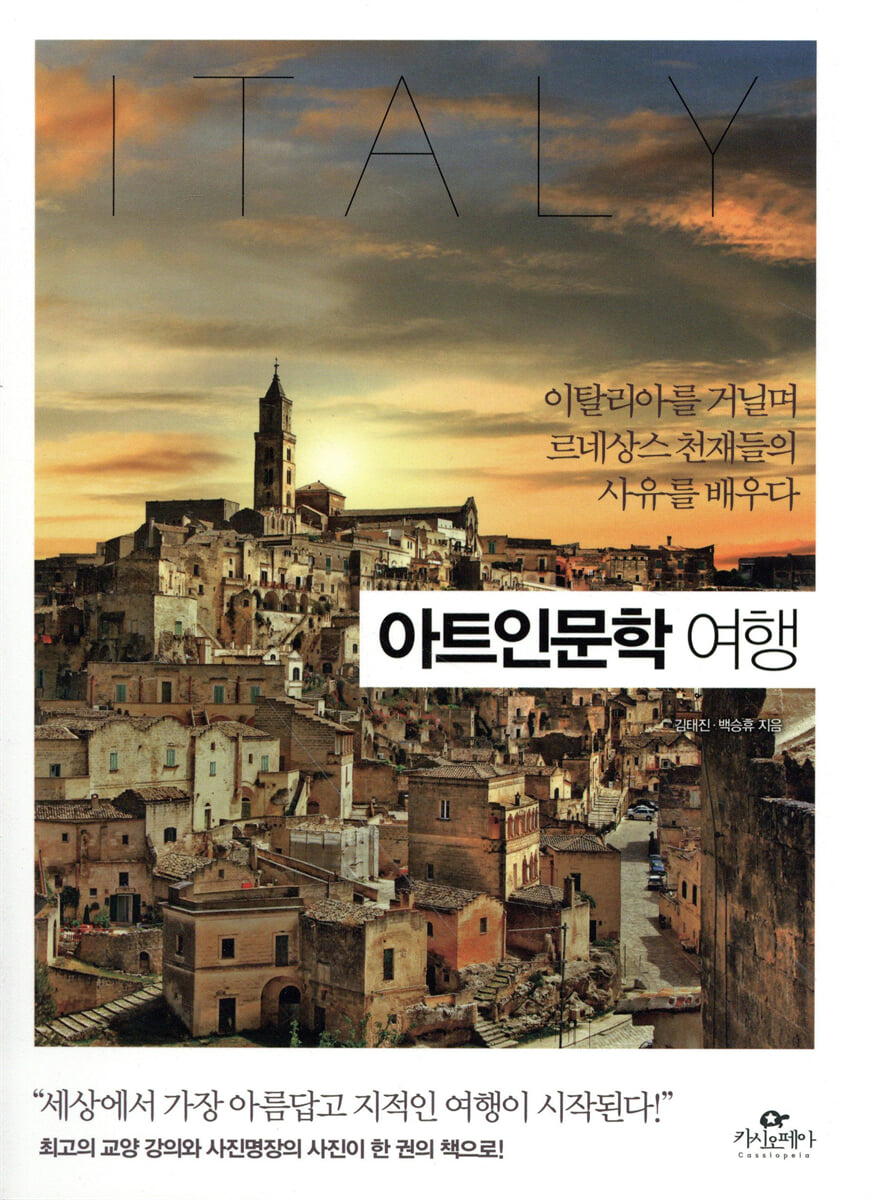
Art and Humanities Journey
 |
Description
Book Introduction
The world's most beautiful and intelligent journey begins!
An invitation to art and humanities that will awaken your dormant artistic cells!
Here's a new journey I propose.
It is an art and humanities journey.
In an age overflowing with humanities books, we combined the humanities, which pursues not only intellectual vanity or as a tool for success, but also discovers the beauty of nature through the eyes of an artist, and the humanities, which allows us to experience a broad seriousness about humanity, with a trip outside of everyday life.
What these three have in common is that they allow us to ‘see reality in a strange way.’
Moreover, the place is the site of the Renaissance, the greatest surge of creativity in human history.
How did Brunelleschi complete the Duomo's cupola, which remained unfinished for over 150 years? How did Botticelli set the standard for the educated of his time? Why is da Vinci, who left behind only a few completed works, still revered today? How was Michelangelo's achievements, which reached the pinnacle of sculpture, painting, and architecture, possible? How were Titian's paintings, said to shame living creatures, possible?
In an era where travel is becoming more common, stories behind paintings are overflowing, and the humanities are booming, Professor Kim Tae-jin of Seoul City University, known as the "honey guru," proposes a completely new kind of travel called "art humanities."
It is not simply about explaining works of art and buildings or touring cultural heritage sites.
The encounters between Italian cities and artists dramatically reveal why the Renaissance, a miracle that shook humanity, had to happen, through the tool of "seeing strangely," and the essence of the miracle they created is traced in detail through the prism of "attitude as process."
Professor Taejin Kim, winner of the 2010 Best Teacher Award and the 2013 Most Inspiring Class, shares his profound knowledge of the humanities, drawing on his experience of traveling to museums across Europe to see and study original paintings.
The stories he tells are entertaining and light-hearted, but the insights he gains from them are profound and moving.
Also, the photos by Professor Seung-Hyu Baek, a photography expert from the Professional Photographers Association of America, are so vivid that it seems as if they were taken straight from the Italian Renaissance.
This book goes beyond simply viewing the paintings of Renaissance masters, and contains a variety of experiences that allow you to 'read' the generations and 'feel' their senses.
An invitation to art and humanities that will awaken your dormant artistic cells!
Here's a new journey I propose.
It is an art and humanities journey.
In an age overflowing with humanities books, we combined the humanities, which pursues not only intellectual vanity or as a tool for success, but also discovers the beauty of nature through the eyes of an artist, and the humanities, which allows us to experience a broad seriousness about humanity, with a trip outside of everyday life.
What these three have in common is that they allow us to ‘see reality in a strange way.’
Moreover, the place is the site of the Renaissance, the greatest surge of creativity in human history.
How did Brunelleschi complete the Duomo's cupola, which remained unfinished for over 150 years? How did Botticelli set the standard for the educated of his time? Why is da Vinci, who left behind only a few completed works, still revered today? How was Michelangelo's achievements, which reached the pinnacle of sculpture, painting, and architecture, possible? How were Titian's paintings, said to shame living creatures, possible?
In an era where travel is becoming more common, stories behind paintings are overflowing, and the humanities are booming, Professor Kim Tae-jin of Seoul City University, known as the "honey guru," proposes a completely new kind of travel called "art humanities."
It is not simply about explaining works of art and buildings or touring cultural heritage sites.
The encounters between Italian cities and artists dramatically reveal why the Renaissance, a miracle that shook humanity, had to happen, through the tool of "seeing strangely," and the essence of the miracle they created is traced in detail through the prism of "attitude as process."
Professor Taejin Kim, winner of the 2010 Best Teacher Award and the 2013 Most Inspiring Class, shares his profound knowledge of the humanities, drawing on his experience of traveling to museums across Europe to see and study original paintings.
The stories he tells are entertaining and light-hearted, but the insights he gains from them are profound and moving.
Also, the photos by Professor Seung-Hyu Baek, a photography expert from the Professional Photographers Association of America, are so vivid that it seems as if they were taken straight from the Italian Renaissance.
This book goes beyond simply viewing the paintings of Renaissance masters, and contains a variety of experiences that allow you to 'read' the generations and 'feel' their senses.
- You can preview some of the book's contents.
Preview
index
Prologue: To See the Invisible, You Must Look at the Visible 4
letter.
The miracle of the Renaissance
Why the Italian Renaissance? 15
What do we need now? 17
How do the impossible become possible? 20
A time when geniuses, who only appear once every 100 years, were born at the same time.
Chapter 1.
Florence, Firenze, Meet Brunelleschi
Walking in Florence_ Part 27
Piazza del Duomo and Ghiberti's Bronze Doors 29
Brunelleschi's Cupola 38
Reviving Ancient Sculptures from a Thousand Years Ago 46
Everything he drew was alive and breathing 54
Brunelleschi's Miracle 63
Makgu-ra's Zoom-In 68
Honey Gura's Zoom-Out 73
Chapter 2.
Florence, Firenze, Meet Botticelli
Walking in Florence_ The Two 81
Hidden Picture Puzzle 84 in The Adoration of the Magi
Presenting the Standards of an Educated Person 91
The Very Pretty Virgin Mary 96
The Great One Saves the Nation 101
Apelles' Mothership 108
Botticelli's Miracle 113
Overlooking Florence 120
Makgu-ra's Zoom-In 125
Honey Gura's Zoom-Out 129
Chapter 3.
Milan, meet da Vinci
Walking through the wonderful city of Milan 137
Why Did Da Vinci Come to Milan? 140
148 when the Duomo was being built
152 in front of La Scala Opera House
Memories of the Sforzesco Castle 156
The Last Supper 161
Da Vinci's Miracle 168
Makgu-ra's Zoom-In 177
Honey Gura's Zoom-Out 182
Chapter 4.
Rome, Meet Michelangelo
Walking Through Great Rome 191
The man who made Rome great again, 193
The Very Young Virgin 197
Vatican Museums Line 204
The Man Rome Loved 209
Painting 216: The Artist Who Made Him a God
Completing Renaissance Architecture 223
Michelangelo's Miracle 231
Makgu-ra's Zoom-In 235
Honey Gura's Zoom-Out 238
Chapter 5.
Venice, Meet Titian
Walking through Venice, the city on water 245
People who visited Venice 248
The Ill-Fated Genius Giorgione 253
The Flying Virgin 261
The King of Conversation 266
Titian's Successors 273
Titian's Miracle 281
Makgu-ra's Zoom-In 289
Honey Gura's Zoom-Out 293
The final chapter.
Dreaming of our Renaissance
When something that is supposed to happen happens, we call it a 'miracle' 299
Epilogue: Concluding the World's Most Beautiful and Intelligent Journey 303
Reference Book 305
letter.
The miracle of the Renaissance
Why the Italian Renaissance? 15
What do we need now? 17
How do the impossible become possible? 20
A time when geniuses, who only appear once every 100 years, were born at the same time.
Chapter 1.
Florence, Firenze, Meet Brunelleschi
Walking in Florence_ Part 27
Piazza del Duomo and Ghiberti's Bronze Doors 29
Brunelleschi's Cupola 38
Reviving Ancient Sculptures from a Thousand Years Ago 46
Everything he drew was alive and breathing 54
Brunelleschi's Miracle 63
Makgu-ra's Zoom-In 68
Honey Gura's Zoom-Out 73
Chapter 2.
Florence, Firenze, Meet Botticelli
Walking in Florence_ The Two 81
Hidden Picture Puzzle 84 in The Adoration of the Magi
Presenting the Standards of an Educated Person 91
The Very Pretty Virgin Mary 96
The Great One Saves the Nation 101
Apelles' Mothership 108
Botticelli's Miracle 113
Overlooking Florence 120
Makgu-ra's Zoom-In 125
Honey Gura's Zoom-Out 129
Chapter 3.
Milan, meet da Vinci
Walking through the wonderful city of Milan 137
Why Did Da Vinci Come to Milan? 140
148 when the Duomo was being built
152 in front of La Scala Opera House
Memories of the Sforzesco Castle 156
The Last Supper 161
Da Vinci's Miracle 168
Makgu-ra's Zoom-In 177
Honey Gura's Zoom-Out 182
Chapter 4.
Rome, Meet Michelangelo
Walking Through Great Rome 191
The man who made Rome great again, 193
The Very Young Virgin 197
Vatican Museums Line 204
The Man Rome Loved 209
Painting 216: The Artist Who Made Him a God
Completing Renaissance Architecture 223
Michelangelo's Miracle 231
Makgu-ra's Zoom-In 235
Honey Gura's Zoom-Out 238
Chapter 5.
Venice, Meet Titian
Walking through Venice, the city on water 245
People who visited Venice 248
The Ill-Fated Genius Giorgione 253
The Flying Virgin 261
The King of Conversation 266
Titian's Successors 273
Titian's Miracle 281
Makgu-ra's Zoom-In 289
Honey Gura's Zoom-Out 293
The final chapter.
Dreaming of our Renaissance
When something that is supposed to happen happens, we call it a 'miracle' 299
Epilogue: Concluding the World's Most Beautiful and Intelligent Journey 303
Reference Book 305
Detailed image
Into the book
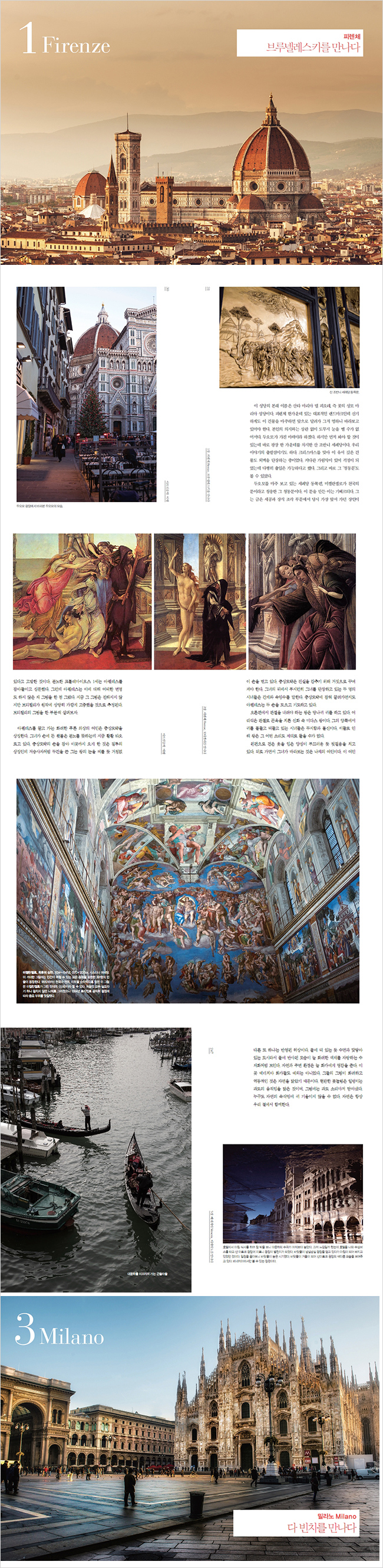
The Renaissance, which began in the 15th century and lasted for 200 years, is particularly noteworthy because Italy at the time was in a similar situation to us today.
At that time, Italy was not a unified nation, but was divided into small countries that were constantly on edge between the great powers. These countries were constantly competing with each other and fighting each other, so the political situation was always unstable.
But then something amazing happened.
A small change that began in Florence filled all of Italy with a fervor of creation, and soon spread rapidly to surrounding countries, becoming a great cultural and artistic revolution that completely turned the world upside down.
---From "How Do Impossible Things Become Possible?"
Botticelli often incorporated Poliziano's poetry into his paintings, but those who had never heard or read the poetry had difficulty understanding the content of the paintings.
People with liberal arts knowledge would just look at the picture and understand what it meant and smile, but those without liberal arts knowledge would become like mutes who had eaten honey.
So, on the day his painting was unveiled, a spectacle unfolded.
It is said that there were people who received prior lessons on drawing and then explained it to others as if they knew everything about it.
It is said that as this kind of thing happened every time, the study of humanities, including ancient mythology, became active even among ordinary people.
In other words, Botticelli presented the 'standard of the educated person of the time'. --- From "Presenting the Standard of the Educated Person"
It's ironic that one of Michelangelo's greatest masterpieces was something he hated doing.
Was Julius II an enemy or a benefactor?
In any case, Julius II, Michelangelo's absolute client, did not get to admire the Sistine Chapel ceiling that he had worked so hard to complete for very long.
Because he died the year after it was completed.
In addition, the ambitiously planned statues of his own tomb were continually reduced in size due to delays in production, and ended up being made much smaller than originally planned.
But this project also gave Michelangelo the opportunity to add another masterpiece to his collection.
This is the Moses statue that occupies the center of the mausoleum. --- From "A Painting That Made an Artist into a God"
There is something about Michelangelo's miracle that cannot be explained by theories of genius or luck alone.
Could you become Michelangelo if you had a special talent and a lot of luck? Probably not.
The first thing to note about his greatness is his attitude towards art.
Many records consistently state that he was a man devoted to art.
It means that he was only focused on creating art, except for when he was eating and sleeping.
He was like a seeker.
At that time, Italy was not a unified nation, but was divided into small countries that were constantly on edge between the great powers. These countries were constantly competing with each other and fighting each other, so the political situation was always unstable.
But then something amazing happened.
A small change that began in Florence filled all of Italy with a fervor of creation, and soon spread rapidly to surrounding countries, becoming a great cultural and artistic revolution that completely turned the world upside down.
---From "How Do Impossible Things Become Possible?"
Botticelli often incorporated Poliziano's poetry into his paintings, but those who had never heard or read the poetry had difficulty understanding the content of the paintings.
People with liberal arts knowledge would just look at the picture and understand what it meant and smile, but those without liberal arts knowledge would become like mutes who had eaten honey.
So, on the day his painting was unveiled, a spectacle unfolded.
It is said that there were people who received prior lessons on drawing and then explained it to others as if they knew everything about it.
It is said that as this kind of thing happened every time, the study of humanities, including ancient mythology, became active even among ordinary people.
In other words, Botticelli presented the 'standard of the educated person of the time'. --- From "Presenting the Standard of the Educated Person"
It's ironic that one of Michelangelo's greatest masterpieces was something he hated doing.
Was Julius II an enemy or a benefactor?
In any case, Julius II, Michelangelo's absolute client, did not get to admire the Sistine Chapel ceiling that he had worked so hard to complete for very long.
Because he died the year after it was completed.
In addition, the ambitiously planned statues of his own tomb were continually reduced in size due to delays in production, and ended up being made much smaller than originally planned.
But this project also gave Michelangelo the opportunity to add another masterpiece to his collection.
This is the Moses statue that occupies the center of the mausoleum. --- From "A Painting That Made an Artist into a God"
There is something about Michelangelo's miracle that cannot be explained by theories of genius or luck alone.
Could you become Michelangelo if you had a special talent and a lot of luck? Probably not.
The first thing to note about his greatness is his attitude towards art.
Many records consistently state that he was a man devoted to art.
It means that he was only focused on creating art, except for when he was eating and sleeping.
He was like a seeker.
---From "Michelangelo's Miracles"
Publisher's Review
Why Art + Humanities + Travel?
The thinking and sensibilities of geniuses learned through 'seeing strangely'
Art, humanities, and travel… … .
So to speak, art and humanities met, and then that met travel.
If you put these three side by side, you will see that they have something in common.
It is what makes us grow and allows us to see reality in a 'strange' way.
'Travel' is departure.
When we step outside our daily routine and meet people who live differently, we gain a more objective perspective.
'Art' is the experience of discovering the beauty hidden in nature through the eyes of an artist.
'Humanities' is learning broad and serious insight into humanity.
At the end of that insight is the ‘strange self.’
When we can see things in a new way, we discover the newness hidden in the familiar.
When we look at things in a strange way, we can finally see things that were previously invisible.
It allows us to see the most important essence, even though it is not immediately visible to the eye.
This book travels through the cities of Italy and meets Renaissance masters who left their mark on human history, such as Brunelleschi, Botticelli, Leonardo da Vinci, Michelangelo, and Titian.
The exhibition has been expanded with over 60 pictorial plates, 40 sculpture photographs, and 60 photos from the Italian field trip.
All of these works are in perfect harmony under the author's elaborate direction, giving the impression of being on a journey to a local place and listening to an explanation.
To capture the detailed texture of the Italian scene, an internationally renowned photographer was involved throughout the entire process.
The moment we open the book, we will feel it.
Sometimes with pictures, sometimes with architecture, sometimes with words.
A beautiful and intellectual journey begins, allowing you to experience the emotion of art with your whole body.
Why the Italian Renaissance?
An invitation to the essence of the miracle that shook humanity: the Renaissance.
One of the book's compelling strengths is its extensive historical knowledge of the birth of a genius and its in-depth understanding of the artist's personal life.
The author does not simply dismiss the extraordinary work as the result of the experiences and inspiration of a single, genius individual.
The geniuses of the Renaissance, a brilliant era not only in the history of Western art but also in the history of mankind, are said to have made the impossible possible, and the works they left behind are said to still be alive and breathing today.
Some say they were simply born geniuses or simply happened to be born at the right time, but that's just looking at the surface.
This book seeks to go beyond such simple definitions through ‘seeing things differently.’
When we read about Brunelleschi's challenge, Botticelli's bold investment, da Vinci's immersion, Michelangelo's dedication, and Titian's openness and reinvention, we come to think that the miracle of the Renaissance was something that was bound to happen.
When something that is supposed to happen happens, we call it a miracle.
This book invites readers into the essence of what created the miracle called the Renaissance.
A vivid depiction of the scene, as if you were in the Italian Renaissance.
An excellent comparative illustration linking one city to one artist.
Detailed commentary with faithful historical knowledge and not missing a single hidden inch.
Above all, the true nature of the art and humanities tour is revealed when, while traveling through the streets of Italy, you stop by an art gallery and see a work of art, and the detailed description of the work is explained in detail, along with the history and socio-cultural background hidden within the work.
Those who followed in the footsteps of Van Gogh and Da Vinci in the alleys of Florence encounter Botticelli at the Uffizi Gallery.
[Athena and the Centaur] This painting explains the characteristics of Botticelli's paintings and naturally encompasses the meaning of the Platonic Academy in which he participated at the time.
What follows is a detailed account of the historical battle between Lorenzo and Pope Sixtus IV and the various meanings of the event, allowing readers to experience the standards of educated people at the time and the atmosphere of the times.
At the Sforzesco Castle in Milan, we hear stories about da Vinci and Ludovico, and at the Vatican Museums in Rome, we focus on Michelangelo.
In Venice, the city on the water, we meet Titian, who marked the end of the Renaissance.
It goes beyond simply describing the paintings and buildings, and the numerous historical figures and detailed explanations behind them heighten the interest.
A humanities storyteller called Honey Gura has appeared!
The best liberal arts lectures and photos from master photographers in one book!
They say we are living in an era of humanities flood.
However, there is also a reality where the humanities, rather than fulfilling their original mission of providing new insights by allowing us to look deeply into the world and ourselves, end up becoming just another means of achieving success or satisfying intellectual vanity.
Professor Kim Tae-jin, the author of this book, discusses "humanities in everyday life," which goes beyond simply providing lofty intellectual satisfaction and instead presents weighty insights into life that are by no means lighthearted, while lightly explaining them through storytelling.
“It was the most interesting and informative lecture I’ve ever heard.”, “I want to take it as a series and listen to other lectures.”, “It had a bigger impact than I expected.”, “I couldn’t be happier the whole time I was listening.” Many people who attended the Arts and Humanities lectures cited it as the best lecture they’ve ever given, and I always received an encore request wherever I went.
Introduction after introduction has led to it becoming quite well known.
Thanks to your support, I was able to publish this book and reach more readers.
Reader reviews of this course attest that the arts, humanities, and travel are life skills that help us grow and see reality in a new light.
Now, I want to provide the same experience to readers who meet me through books.
This is why we are even more excited about the future of Professor Kim Tae-jin, a humanist who will go beyond simply imparting established knowledge and offer a fresh perspective on our reality, leaving us with a profound sense of wonder that will make it impossible to return to our "previous self."
The thinking and sensibilities of geniuses learned through 'seeing strangely'
Art, humanities, and travel… … .
So to speak, art and humanities met, and then that met travel.
If you put these three side by side, you will see that they have something in common.
It is what makes us grow and allows us to see reality in a 'strange' way.
'Travel' is departure.
When we step outside our daily routine and meet people who live differently, we gain a more objective perspective.
'Art' is the experience of discovering the beauty hidden in nature through the eyes of an artist.
'Humanities' is learning broad and serious insight into humanity.
At the end of that insight is the ‘strange self.’
When we can see things in a new way, we discover the newness hidden in the familiar.
When we look at things in a strange way, we can finally see things that were previously invisible.
It allows us to see the most important essence, even though it is not immediately visible to the eye.
This book travels through the cities of Italy and meets Renaissance masters who left their mark on human history, such as Brunelleschi, Botticelli, Leonardo da Vinci, Michelangelo, and Titian.
The exhibition has been expanded with over 60 pictorial plates, 40 sculpture photographs, and 60 photos from the Italian field trip.
All of these works are in perfect harmony under the author's elaborate direction, giving the impression of being on a journey to a local place and listening to an explanation.
To capture the detailed texture of the Italian scene, an internationally renowned photographer was involved throughout the entire process.
The moment we open the book, we will feel it.
Sometimes with pictures, sometimes with architecture, sometimes with words.
A beautiful and intellectual journey begins, allowing you to experience the emotion of art with your whole body.
Why the Italian Renaissance?
An invitation to the essence of the miracle that shook humanity: the Renaissance.
One of the book's compelling strengths is its extensive historical knowledge of the birth of a genius and its in-depth understanding of the artist's personal life.
The author does not simply dismiss the extraordinary work as the result of the experiences and inspiration of a single, genius individual.
The geniuses of the Renaissance, a brilliant era not only in the history of Western art but also in the history of mankind, are said to have made the impossible possible, and the works they left behind are said to still be alive and breathing today.
Some say they were simply born geniuses or simply happened to be born at the right time, but that's just looking at the surface.
This book seeks to go beyond such simple definitions through ‘seeing things differently.’
When we read about Brunelleschi's challenge, Botticelli's bold investment, da Vinci's immersion, Michelangelo's dedication, and Titian's openness and reinvention, we come to think that the miracle of the Renaissance was something that was bound to happen.
When something that is supposed to happen happens, we call it a miracle.
This book invites readers into the essence of what created the miracle called the Renaissance.
A vivid depiction of the scene, as if you were in the Italian Renaissance.
An excellent comparative illustration linking one city to one artist.
Detailed commentary with faithful historical knowledge and not missing a single hidden inch.
Above all, the true nature of the art and humanities tour is revealed when, while traveling through the streets of Italy, you stop by an art gallery and see a work of art, and the detailed description of the work is explained in detail, along with the history and socio-cultural background hidden within the work.
Those who followed in the footsteps of Van Gogh and Da Vinci in the alleys of Florence encounter Botticelli at the Uffizi Gallery.
[Athena and the Centaur] This painting explains the characteristics of Botticelli's paintings and naturally encompasses the meaning of the Platonic Academy in which he participated at the time.
What follows is a detailed account of the historical battle between Lorenzo and Pope Sixtus IV and the various meanings of the event, allowing readers to experience the standards of educated people at the time and the atmosphere of the times.
At the Sforzesco Castle in Milan, we hear stories about da Vinci and Ludovico, and at the Vatican Museums in Rome, we focus on Michelangelo.
In Venice, the city on the water, we meet Titian, who marked the end of the Renaissance.
It goes beyond simply describing the paintings and buildings, and the numerous historical figures and detailed explanations behind them heighten the interest.
A humanities storyteller called Honey Gura has appeared!
The best liberal arts lectures and photos from master photographers in one book!
They say we are living in an era of humanities flood.
However, there is also a reality where the humanities, rather than fulfilling their original mission of providing new insights by allowing us to look deeply into the world and ourselves, end up becoming just another means of achieving success or satisfying intellectual vanity.
Professor Kim Tae-jin, the author of this book, discusses "humanities in everyday life," which goes beyond simply providing lofty intellectual satisfaction and instead presents weighty insights into life that are by no means lighthearted, while lightly explaining them through storytelling.
“It was the most interesting and informative lecture I’ve ever heard.”, “I want to take it as a series and listen to other lectures.”, “It had a bigger impact than I expected.”, “I couldn’t be happier the whole time I was listening.” Many people who attended the Arts and Humanities lectures cited it as the best lecture they’ve ever given, and I always received an encore request wherever I went.
Introduction after introduction has led to it becoming quite well known.
Thanks to your support, I was able to publish this book and reach more readers.
Reader reviews of this course attest that the arts, humanities, and travel are life skills that help us grow and see reality in a new light.
Now, I want to provide the same experience to readers who meet me through books.
This is why we are even more excited about the future of Professor Kim Tae-jin, a humanist who will go beyond simply imparting established knowledge and offer a fresh perspective on our reality, leaving us with a profound sense of wonder that will make it impossible to return to our "previous self."
GOODS SPECIFICS
- Date of issue: May 25, 2015
- Page count, weight, size: 308 pages | 520g | 152*210*30mm
- ISBN13: 9791185952130
- ISBN10: 1185952136
You may also like
카테고리
korean


korean

![GQ KOREA Mark (Monthly): December [2025]](http://librairie.coreenne.fr/cdn/shop/files/8ef265dbbfbf186523ed75ba7319009d.jpg?v=1765340328&width=3840)


