

Shandong Detention Camp
 |
Description
Book Introduction
Selected as one of Christianity Today's "100 Best Books of the 20th Century"!
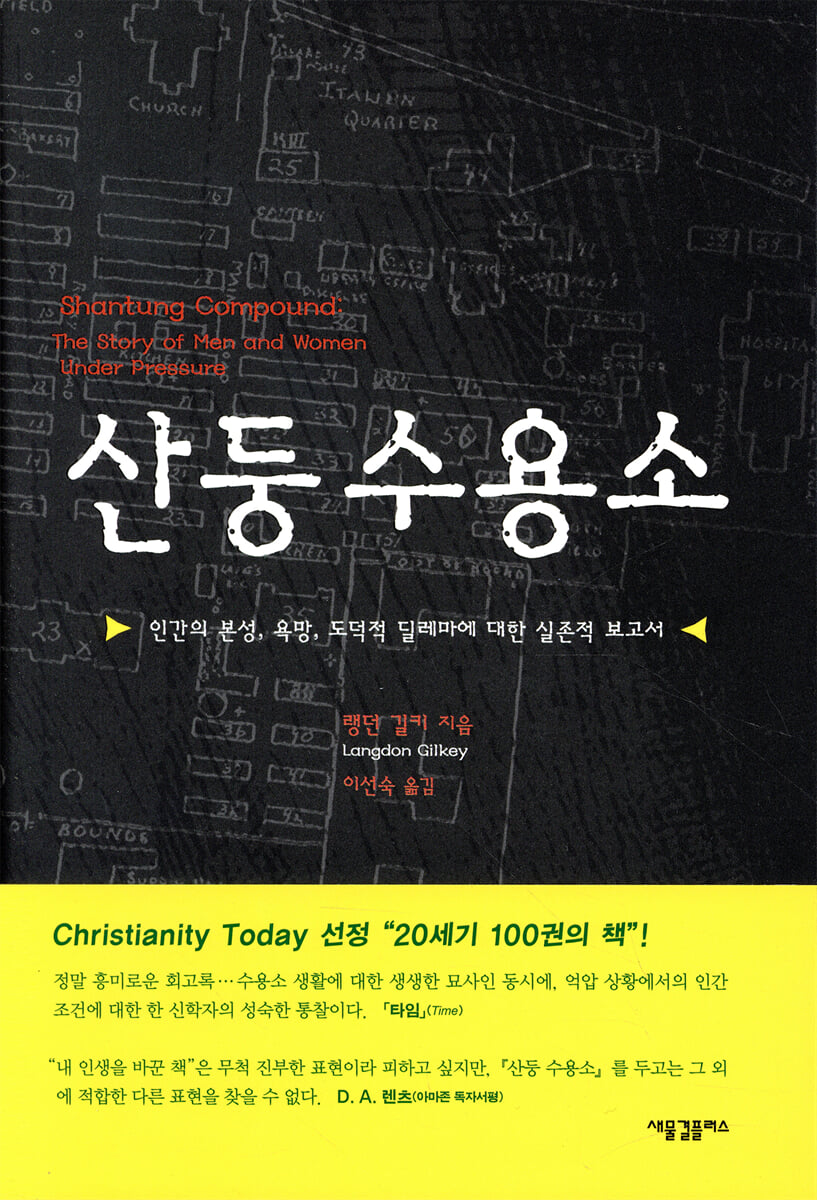
Langdon Gilkey, one of the 2,000 Western prisoners of war interned by the Japanese in the Shandong internment camp in China during World War II, discovered a “small civilization” that could be considered a microcosm of human society among the people from all walks of life gathered in the camp, and observed and recorded its various aspects in detail.
Gilkey's vivid testimony contained in this book offers remarkably relevant insights for our society today, which, on the one hand, still retains faith in human goodness and rationality, but, on the other, struggles to find a solution to various problems.
Langdon Gilkey, one of the 2,000 Western prisoners of war interned by the Japanese in the Shandong internment camp in China during World War II, discovered a “small civilization” that could be considered a microcosm of human society among the people from all walks of life gathered in the camp, and observed and recorded its various aspects in detail.
Gilkey's vivid testimony contained in this book offers remarkably relevant insights for our society today, which, on the one hand, still retains faith in human goodness and rationality, but, on the other, struggles to find a solution to various problems.
Into the book
If we had continued to be tortured and starved, communal life itself might have been impossible.
Or perhaps, if life were a little safer, the fundamental problems of humanity might not have been so apparent.
So, just as an experiment reduces a research group to a manageable size and then applies pressure to it to reveal the structure of the subject, this concentration camp, by reducing a large, complex society to an observable scale and adding the tremendous tension of life, vividly revealed the fundamental structure of human society.
I wrote this book because life in a concentration camp revealed human social and moral problems more clearly than everyday life, and showed the foundation for human coexistence.
The crisis was caused not by a failure of technology, but by a failure of character.
We were required to be more morally honest and self-sacrificing.
The problem with my newfound humanism was not that it trusted human science and technology.
Rather, the problem was that we had an overly naive and unrealistic trust in the rationality and goodness of the humans who wielded such technology.
While it is true that human courage and talent were demonstrated throughout camp life, it was also revealed how unjust and intolerant humans can be in such difficult, painful, and oppressive circumstances.
Father Darby had a secret method for obtaining eggs without being caught.
He pulled out a brick from a wall in a remote corner of the camp wall.
Then, on the other side, a Chinese farmer put an egg in and received it through the same hole.
As the guards appeared, two Trappist monks who had been watching the net from the front began to sing Gregorian chant.
Upon hearing this signal, Father Darby quickly covered the egg with his long robe and knelt down.
By the time the guards arrived, he appeared to be deep in prayer.
For two or three months, Father Darby smuggled eggs in this way.
The guards were afraid of the “holy men” with their long beards and long clothes.
But the day finally came when a guard lifted Father Darby's clothes from his knees beside the fence.
The guard was startled.
To our shame, Father Darby's clothes contained 150 eggs.
I don't know how much the guards admired the magical abilities of Western priests, but they certainly didn't believe they had the ability to lay eggs!
It's rare to meet a saint in life, but Eric was the closest thing I've ever met to a saint.
During my last year in the camp, I often had the opportunity to pass by the rooms where the missionaries and youth stayed (I used to go there to meet my girlfriend).
Every time I peeked into the room, I saw the missionaries cooking for the children.
Most of the time, Eric Liddell was hunched over, playing chess, building model ships, or teaching square dancing.
He devoted all his energy to the care of the children, with warm and affectionate gestures, completely absorbed in them, trying to capture the hearts and imaginations of the poor young people imprisoned in the camp.
If anyone was going to take on the job of caring for young people, Eric Liddell was the man.
Eric, an accomplished track athlete, led Britain to victory at the Olympics in the 1920s and later became a missionary and was sent to China.
Although he was already in his mid-forties during his time in the camp, he was lithe and resilient, and above all, he was brimming with a sense of humor and a love of life.
Eric's passion and charm benefited everyone.
Just before his time in the camp ended, he was suddenly diagnosed with a brain tumor, and on that very day he passed away.
The entire camp, especially the young people, were in shock for a long time, and the void left by Eric was enormous.
Or perhaps, if life were a little safer, the fundamental problems of humanity might not have been so apparent.
So, just as an experiment reduces a research group to a manageable size and then applies pressure to it to reveal the structure of the subject, this concentration camp, by reducing a large, complex society to an observable scale and adding the tremendous tension of life, vividly revealed the fundamental structure of human society.
I wrote this book because life in a concentration camp revealed human social and moral problems more clearly than everyday life, and showed the foundation for human coexistence.
The crisis was caused not by a failure of technology, but by a failure of character.
We were required to be more morally honest and self-sacrificing.
The problem with my newfound humanism was not that it trusted human science and technology.
Rather, the problem was that we had an overly naive and unrealistic trust in the rationality and goodness of the humans who wielded such technology.
While it is true that human courage and talent were demonstrated throughout camp life, it was also revealed how unjust and intolerant humans can be in such difficult, painful, and oppressive circumstances.
Father Darby had a secret method for obtaining eggs without being caught.
He pulled out a brick from a wall in a remote corner of the camp wall.
Then, on the other side, a Chinese farmer put an egg in and received it through the same hole.
As the guards appeared, two Trappist monks who had been watching the net from the front began to sing Gregorian chant.
Upon hearing this signal, Father Darby quickly covered the egg with his long robe and knelt down.
By the time the guards arrived, he appeared to be deep in prayer.
For two or three months, Father Darby smuggled eggs in this way.
The guards were afraid of the “holy men” with their long beards and long clothes.
But the day finally came when a guard lifted Father Darby's clothes from his knees beside the fence.
The guard was startled.
To our shame, Father Darby's clothes contained 150 eggs.
I don't know how much the guards admired the magical abilities of Western priests, but they certainly didn't believe they had the ability to lay eggs!
It's rare to meet a saint in life, but Eric was the closest thing I've ever met to a saint.
During my last year in the camp, I often had the opportunity to pass by the rooms where the missionaries and youth stayed (I used to go there to meet my girlfriend).
Every time I peeked into the room, I saw the missionaries cooking for the children.
Most of the time, Eric Liddell was hunched over, playing chess, building model ships, or teaching square dancing.
He devoted all his energy to the care of the children, with warm and affectionate gestures, completely absorbed in them, trying to capture the hearts and imaginations of the poor young people imprisoned in the camp.
If anyone was going to take on the job of caring for young people, Eric Liddell was the man.
Eric, an accomplished track athlete, led Britain to victory at the Olympics in the 1920s and later became a missionary and was sent to China.
Although he was already in his mid-forties during his time in the camp, he was lithe and resilient, and above all, he was brimming with a sense of humor and a love of life.
Eric's passion and charm benefited everyone.
Just before his time in the camp ended, he was suddenly diagnosed with a brain tumor, and on that very day he passed away.
The entire camp, especially the young people, were in shock for a long time, and the void left by Eric was enormous.
--- From the text
Publisher's Review
Selected as one of Christianity Today's "100 Best Books of the 20th Century"!
A truly fascinating memoir...a vivid description of camp life,
A mature insight from a theologian into the human condition under oppression.
Time
“Our most serious problems come not from our Japanese oppressors, but from ourselves.”
Langdon Gilkey, one of the 2,000 Western prisoners of war interned by the Japanese in the Shandong internment camp in China during World War II, discovered a “small civilization” that could be considered a microcosm of human society among the people from all walks of life gathered in the camp, and observed and recorded its various aspects in detail.
In situations of extreme deprivation and oppression, people demonstrate the courage and wisdom they have accumulated over time and rebuild civilization, but at the same time, the bare face of human nature and moral dilemmas are starkly revealed.
Trapped in a deserted island-like concentration camp, stripped of all outside customs, status, and social prestige, will the social leaders, intellectuals, and Christian ministers be able to maintain their values, faith, and ethics in this tense and unstable situation, where their safety is uncertain? Will they be able to solve problems and care for their neighbors based on the morality and rationality they so confidently espouse?
Drawing on lived experience, the author's voice sharply dissects the gap and division between moral imperatives and innate selfishness within humans, shockingly revealing that the most serious crisis in the human community arises not from material deprivation or external violence, but from our own internal moral failures.
Gilkey's vivid testimony contained in this book offers remarkably relevant insights for our society today, which, on the one hand, still retains faith in human goodness and rationality, but, on the other, struggles to find a solution to various problems.
A truly fascinating memoir...a vivid description of camp life,
A mature insight from a theologian into the human condition under oppression.
Time
“Our most serious problems come not from our Japanese oppressors, but from ourselves.”
Langdon Gilkey, one of the 2,000 Western prisoners of war interned by the Japanese in the Shandong internment camp in China during World War II, discovered a “small civilization” that could be considered a microcosm of human society among the people from all walks of life gathered in the camp, and observed and recorded its various aspects in detail.
In situations of extreme deprivation and oppression, people demonstrate the courage and wisdom they have accumulated over time and rebuild civilization, but at the same time, the bare face of human nature and moral dilemmas are starkly revealed.
Trapped in a deserted island-like concentration camp, stripped of all outside customs, status, and social prestige, will the social leaders, intellectuals, and Christian ministers be able to maintain their values, faith, and ethics in this tense and unstable situation, where their safety is uncertain? Will they be able to solve problems and care for their neighbors based on the morality and rationality they so confidently espouse?
Drawing on lived experience, the author's voice sharply dissects the gap and division between moral imperatives and innate selfishness within humans, shockingly revealing that the most serious crisis in the human community arises not from material deprivation or external violence, but from our own internal moral failures.
Gilkey's vivid testimony contained in this book offers remarkably relevant insights for our society today, which, on the one hand, still retains faith in human goodness and rationality, but, on the other, struggles to find a solution to various problems.
GOODS SPECIFICS
- Date of issue: August 25, 2014
- Page count, weight, size: 474 pages | 616g | 140*206*30mm
- ISBN13: 9788994752792
- ISBN10: 899475279X
You may also like
카테고리
korean


korean

![GQ KOREA Mark (Monthly): December [2025]](http://librairie.coreenne.fr/cdn/shop/files/8ef265dbbfbf186523ed75ba7319009d.jpg?v=1765340328&width=3840)


