![Dandelion (Quarterly): Vol. 155 Spring [2025]](http://librairie.coreenne.fr/cdn/shop/files/b68eab43b8cbac630e5a655e5b05cab8.jpg?v=1765404762&width=3840)

Dandelion (Quarterly): Vol. 155 Spring [2025]
 |
Description
Book Introduction
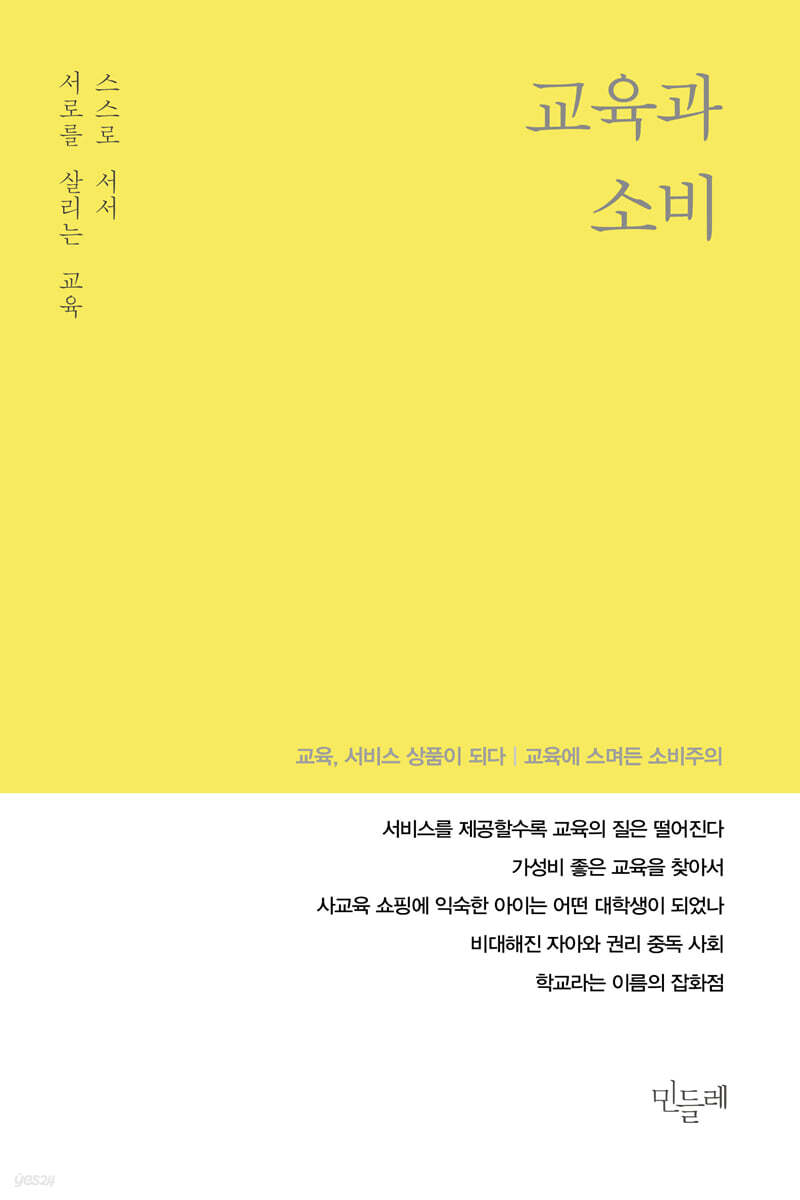
Following the wave of neoliberalism, the ‘marketization of education’ is permeating the educational field.
It seems that the educational system and even its purpose have been changed under the guise of 'freedom and choice'.
In this issue, we examine how education, a public good, has been transformed into a private good and how the school curriculum is being outsourced.
The more 'service' we provide, the more vividly we see the classroom scenes moving away from the essence of education.
“How did I raise you?” is a phrase that has been a constant in parents’ repertoire for a long time.
Since the output does not match the investment, it makes you think about the principal.
They say that parental love is something that is given without asking for anything in return, but in these tough times, parenting and education seem to have become a more blatant form of 'investment.'
What will be the outcome of raising children, which has become an investment, or perhaps a speculation?
It would be good to think about the world in which education is bought and sold.
It seems that the educational system and even its purpose have been changed under the guise of 'freedom and choice'.
In this issue, we examine how education, a public good, has been transformed into a private good and how the school curriculum is being outsourced.
The more 'service' we provide, the more vividly we see the classroom scenes moving away from the essence of education.
“How did I raise you?” is a phrase that has been a constant in parents’ repertoire for a long time.
Since the output does not match the investment, it makes you think about the principal.
They say that parental love is something that is given without asking for anything in return, but in these tough times, parenting and education seem to have become a more blatant form of 'investment.'
What will be the outcome of raising children, which has become an investment, or perhaps a speculation?
It would be good to think about the world in which education is bought and sold.
- You can preview some of the book's contents.
Preview
index
Planning 1: Education Becomes a Service Product
The more services you provide, the lower the quality of education_Issey
In Search of Cost-Effective Education_Jang Hee-sook
What kind of college students do children accustomed to private education shopping become? - Nam Yu-jin
Why Education Can't Become a Service Product_Hong Ki-bin
Project 2: Consumerism Permeates Education
How Education, a Public Good, Became Private Good_Lee Jong-heon
Implementation of the High School Credit System and Changes in Schools_Kim Hyeong-seong
A General Store Called School_Lee Jae-nam
A society of bloated egos and entitlement addiction_Hanara
Will your choice set you free?_Hyun Byung-ho
Another Window: What I Desire Instead of Luxury Padding_Lee Seol-gi
Education Weather Vane: The Number of Sick Teachers Is Rising_Editorial Office
Reading the World: Why Young Women Are More Depressed_Kim Jeong-hwan
Breaking the mold: Can AI teach children? - Jaepo Lee
Learning Center Story: Reading and Writing in the Digital Age_Jeong Ah-reum
Balanced Parenting in an Age of Information Overflowing Open Forum_An Yu-rim
Parents' Diary: I Decided to Become a Nosy Mom_Kwon Joo-ri
The more services you provide, the lower the quality of education_Issey
In Search of Cost-Effective Education_Jang Hee-sook
What kind of college students do children accustomed to private education shopping become? - Nam Yu-jin
Why Education Can't Become a Service Product_Hong Ki-bin
Project 2: Consumerism Permeates Education
How Education, a Public Good, Became Private Good_Lee Jong-heon
Implementation of the High School Credit System and Changes in Schools_Kim Hyeong-seong
A General Store Called School_Lee Jae-nam
A society of bloated egos and entitlement addiction_Hanara
Will your choice set you free?_Hyun Byung-ho
Another Window: What I Desire Instead of Luxury Padding_Lee Seol-gi
Education Weather Vane: The Number of Sick Teachers Is Rising_Editorial Office
Reading the World: Why Young Women Are More Depressed_Kim Jeong-hwan
Breaking the mold: Can AI teach children? - Jaepo Lee
Learning Center Story: Reading and Writing in the Digital Age_Jeong Ah-reum
Balanced Parenting in an Age of Information Overflowing Open Forum_An Yu-rim
Parents' Diary: I Decided to Become a Nosy Mom_Kwon Joo-ri
Into the book
I know that the words "I love you" in the parent guide or the long-winded explanations in the kids' notes are a kind of "lip service."
The reason these services are becoming so popular is because they require direct recruitment of children.
As the number of children in primary care centers rapidly declines due to low birth rates, competition has become fiercer, and it has become difficult to intuitively demonstrate that a child care center is excellent. Consequently, various exhibition events and parent services have become, strangely enough, more important.
(...) And parents who have established a solid identity as consumers through going through childcare institutions debut in the public education field as perfect 'customers'.
_Lee Se-ah, the more services you provide, the lower the quality of education.
Life doesn't always go as planned, and people don't always grow in the ways they want.
No one knows what kind of pattern life will unfold as chance and inevitability intertwine as warp and weft.
It is therefore futile to search for a cost-effective education, hoping that someone will make our child great, or believing that we can raise them to be great people.
Education is the act of imagining the invisible.
I have no choice but to stop calculating inputs and outputs and console myself with the thought that this time, this experience, will shine somewhere in my child's life, looking far ahead.
Whether it's true or not.
_Jang Hee-sook, In Search of Cost-Effective Education
Schools, which should be places that provide quality education, are increasingly becoming exhibition halls where welfare is consumed cheaply.
In a reality where schools are desperately trying to keep up with the demands of the times, show-off, consumer-oriented welfare programs are becoming rampant.
(...) As someone who is in charge of education in the midst of this, these are complicated days where I cannot help but ask what school is and what education is.
Today's schools are becoming dens for the government's showy, consumerist policies.
Would it be an exaggeration to say that we are becoming more like Daiso, selling all sorts of things at low prices? Now is the time for extraordinary measures to transform our education and school systems into future-oriented ones.
_Lee Jae-nam, A General Store Called School
With the reality of an inflated ego, people use the word 'rights' to interpret the world in their own favor.
They claim that everyone has the 'right' to be free and happy, and that they absolutely cannot tolerate anything that makes them uncomfortable.
Those who commit the crime of 'hurting my feelings' must be thoroughly punished.
A typical example is when ordering delivery food, writing down a service request as if it were something obvious and then retaliating with a 'star rating terrorism' when the service does not come.
There are more than a few self-employed people who have suffered damage from this behavior.
Rights mean 'the power or qualification that can be naturally demanded.'
Services that make me feel good are not a right I can demand.
It makes us reflect on whether we have lost the ability to distinguish between emotions and rights and become addicted to demanding rights.
_Hanara, a society of bloated egos and entitlement addiction
Although choice may seem to free us, in reality we are forced into a situation where we must choose among the options given to us.
Those who are accustomed to choosing the right answer do not see that they are trapped in the frame of the problem.
We live in an age where people shy away from labor and pursue consumption, but what makes us human is not selective consumption, but silently taking on the tasks before us.
Rather than enjoying infinite choices in a cycle of equivalent exchange, we are willing to be trapped in a cycle of gifting.
Parents and teachers are such beings.
The fruits of parenting and education do not go to parents and teachers, but to the next generation, and more broadly, to all of human society.
Just as we all grew up receiving a lot from our parents and society, the world is maintained through this chain of giving.
_Hyun Byeong-ho, will your choice set you free?
Recently, young women holding cheering sticks in the midst of a civil war have been attracting attention.
Some have praised them, calling them "the first generation to experience a democratized era," "the generation that experienced the Sewol and Itaewon disasters," and "the K-pop generation with a unique worldview of positive influence."
But it seems they have no interest in what they go through in society after the cheering sticks go out, or how many young women are taking antidepressants and visiting counseling centers to get through their daily lives.
Kim Jeong-hwan, Why Young Women Are More Depressed
The reason these services are becoming so popular is because they require direct recruitment of children.
As the number of children in primary care centers rapidly declines due to low birth rates, competition has become fiercer, and it has become difficult to intuitively demonstrate that a child care center is excellent. Consequently, various exhibition events and parent services have become, strangely enough, more important.
(...) And parents who have established a solid identity as consumers through going through childcare institutions debut in the public education field as perfect 'customers'.
_Lee Se-ah, the more services you provide, the lower the quality of education.
Life doesn't always go as planned, and people don't always grow in the ways they want.
No one knows what kind of pattern life will unfold as chance and inevitability intertwine as warp and weft.
It is therefore futile to search for a cost-effective education, hoping that someone will make our child great, or believing that we can raise them to be great people.
Education is the act of imagining the invisible.
I have no choice but to stop calculating inputs and outputs and console myself with the thought that this time, this experience, will shine somewhere in my child's life, looking far ahead.
Whether it's true or not.
_Jang Hee-sook, In Search of Cost-Effective Education
Schools, which should be places that provide quality education, are increasingly becoming exhibition halls where welfare is consumed cheaply.
In a reality where schools are desperately trying to keep up with the demands of the times, show-off, consumer-oriented welfare programs are becoming rampant.
(...) As someone who is in charge of education in the midst of this, these are complicated days where I cannot help but ask what school is and what education is.
Today's schools are becoming dens for the government's showy, consumerist policies.
Would it be an exaggeration to say that we are becoming more like Daiso, selling all sorts of things at low prices? Now is the time for extraordinary measures to transform our education and school systems into future-oriented ones.
_Lee Jae-nam, A General Store Called School
With the reality of an inflated ego, people use the word 'rights' to interpret the world in their own favor.
They claim that everyone has the 'right' to be free and happy, and that they absolutely cannot tolerate anything that makes them uncomfortable.
Those who commit the crime of 'hurting my feelings' must be thoroughly punished.
A typical example is when ordering delivery food, writing down a service request as if it were something obvious and then retaliating with a 'star rating terrorism' when the service does not come.
There are more than a few self-employed people who have suffered damage from this behavior.
Rights mean 'the power or qualification that can be naturally demanded.'
Services that make me feel good are not a right I can demand.
It makes us reflect on whether we have lost the ability to distinguish between emotions and rights and become addicted to demanding rights.
_Hanara, a society of bloated egos and entitlement addiction
Although choice may seem to free us, in reality we are forced into a situation where we must choose among the options given to us.
Those who are accustomed to choosing the right answer do not see that they are trapped in the frame of the problem.
We live in an age where people shy away from labor and pursue consumption, but what makes us human is not selective consumption, but silently taking on the tasks before us.
Rather than enjoying infinite choices in a cycle of equivalent exchange, we are willing to be trapped in a cycle of gifting.
Parents and teachers are such beings.
The fruits of parenting and education do not go to parents and teachers, but to the next generation, and more broadly, to all of human society.
Just as we all grew up receiving a lot from our parents and society, the world is maintained through this chain of giving.
_Hyun Byeong-ho, will your choice set you free?
Recently, young women holding cheering sticks in the midst of a civil war have been attracting attention.
Some have praised them, calling them "the first generation to experience a democratized era," "the generation that experienced the Sewol and Itaewon disasters," and "the K-pop generation with a unique worldview of positive influence."
But it seems they have no interest in what they go through in society after the cheering sticks go out, or how many young women are taking antidepressants and visiting counseling centers to get through their daily lives.
Kim Jeong-hwan, Why Young Women Are More Depressed
--- From the text
GOODS SPECIFICS
- Date of issue: March 1, 2025
- Page count, weight, size: 192 pages | 140*210*20mm
- ISBN13: 9791191621181
- ISBN10: 1191621189
You may also like
카테고리
korean


korean

![GQ KOREA Mark (Monthly): December [2025]](http://librairie.coreenne.fr/cdn/shop/files/8ef265dbbfbf186523ed75ba7319009d.jpg?v=1765340328&width=3840)


