![Dandelion (Quarterly): Vol. 154 Winter [2024]](http://librairie.coreenne.fr/cdn/shop/files/c37d03d3c42f14c70951c8dc4a85f5fd.jpg?v=1765405100&width=3840)

Dandelion (Quarterly): Vol. 154 Winter [2024]
 |
Description
Book Introduction
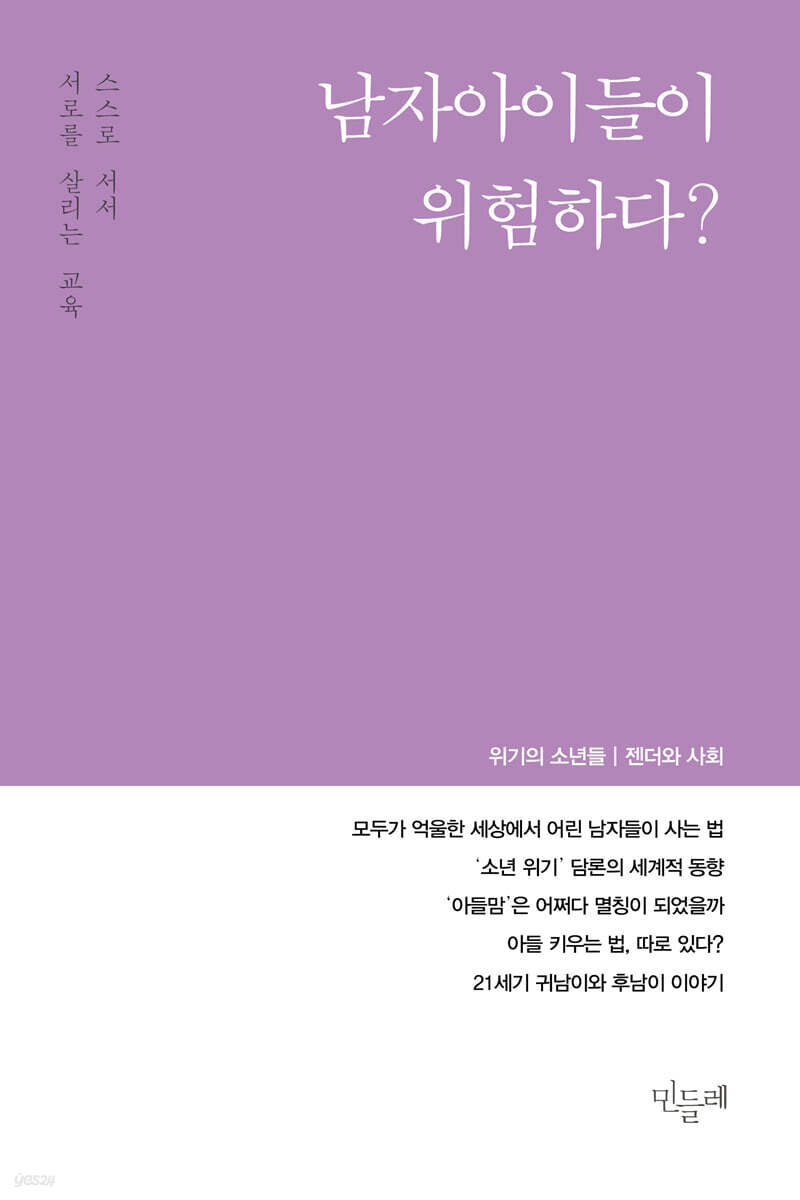
Is the rumor that "boys are developing more slowly" true? Parents of boys are even avoiding co-educational schools, believing that girls are more likely to hold leadership positions, take care of their peers, and excel academically.
The reasons for this include the curriculum and evaluation methods that are advantageous to female students.
Is that really true? As "son's mom" becomes a derogatory term and gender conflict intensifies, we explore whether there are gender differences in the developmental process, whether boys today are truly at risk, or whether the educational environment truly favors women. By examining these questions one by one, we aim to understand human growth and create opportunities for deeper mutual acceptance.
The reasons for this include the curriculum and evaluation methods that are advantageous to female students.
Is that really true? As "son's mom" becomes a derogatory term and gender conflict intensifies, we explore whether there are gender differences in the developmental process, whether boys today are truly at risk, or whether the educational environment truly favors women. By examining these questions one by one, we aim to understand human growth and create opportunities for deeper mutual acceptance.
- You can preview some of the book's contents.
Preview
index
Editor's Note
The strange and beautiful world of boys
Special Feature_ Are boys in danger?
1.
Boys in Crisis
How young men live in a world where everyone is treated unfairly_ Ahn Jung-seon
Is coeducation disadvantageous to male students? - Kim Hyung-seong
Global Trends in the "Childhood Crisis" Discourse_ Hyejin Eom
Is there a separate way to raise a son? _ Lee Seo-ri
2.
Gender and Society
Sex Education for Men: Seeing Hope_Namdar Sex Education Research Institute
The Story of Gwinam and Hunam in the 21st Century_ Jang Hee-sook
How did "son's mom" become a derogatory term? _ Lee Seol-gi
Why My Son Was Diagnosed with ADHD_ Moon Ji-seong
Regarding the saying, "A man is still a child even when he gets older" - Kisoyeon
Suggestion
The problem isn't education_Hyun Byeong-ho
Breaking the stereotypes
For adults who say games are harmful_ Pyeonhaemun
Learning Center Story
The Principle of Collaborative Self-Direction Discovered in the Classroom_ Shin Seung-yeop
Teacher's Diary
Can a teacher teach?_ Kwak No-geun
Education Weather Vane
Emergency Measures for Education: The "Prevention of Elementary School Medical Classes" Act_ Baek Byeong-hwan
open yard
The Dreams of Elementary School Students Today_ Lee Su-jin
Parents' Diary
What Happens When Parents Read Books Together_ Yoon Hyun-hee
The strange and beautiful world of boys
Special Feature_ Are boys in danger?
1.
Boys in Crisis
How young men live in a world where everyone is treated unfairly_ Ahn Jung-seon
Is coeducation disadvantageous to male students? - Kim Hyung-seong
Global Trends in the "Childhood Crisis" Discourse_ Hyejin Eom
Is there a separate way to raise a son? _ Lee Seo-ri
2.
Gender and Society
Sex Education for Men: Seeing Hope_Namdar Sex Education Research Institute
The Story of Gwinam and Hunam in the 21st Century_ Jang Hee-sook
How did "son's mom" become a derogatory term? _ Lee Seol-gi
Why My Son Was Diagnosed with ADHD_ Moon Ji-seong
Regarding the saying, "A man is still a child even when he gets older" - Kisoyeon
Suggestion
The problem isn't education_Hyun Byeong-ho
Breaking the stereotypes
For adults who say games are harmful_ Pyeonhaemun
Learning Center Story
The Principle of Collaborative Self-Direction Discovered in the Classroom_ Shin Seung-yeop
Teacher's Diary
Can a teacher teach?_ Kwak No-geun
Education Weather Vane
Emergency Measures for Education: The "Prevention of Elementary School Medical Classes" Act_ Baek Byeong-hwan
open yard
The Dreams of Elementary School Students Today_ Lee Su-jin
Parents' Diary
What Happens When Parents Read Books Together_ Yoon Hyun-hee
Into the book
“How good is your daughter.
There's a world of difference between raising a son and raising a daughter.
“A mother should have a daughter!” There is no malice in their words.
Far from being malicious, it is closer to good intentions.
Strangers who try to remind me, who has to raise two sons, how fulfilling the happiness a daughter brings.
I won't be the only one going through this situation.
This seems to align with a widespread perception in society, as several people have said the same thing to me.
(...) The recognition that raising a son is inherently different from raising a daughter, and that raising a son is much more difficult than raising a daughter.
A culture where it is implicitly agreed that parents raising daughters should protect them from danger, while parents raising sons should simply keep quiet about such issues.
_ Lee Seo-ri, "Is There a Different Way to Raise a Son?"
The premise behind the claim that female students are excellent at managing their grades is the 'meticulousness' and 'carefulness' that are unique to women.
But when I meet children in the field, I feel that this is also just a tendency that is learned socially.
Could this be the result of us casually using expressions like 'not being neat', 'not being careful', and 'not being meticulous' to teach girls?
Even I, who oppose the dichotomous reductionism that demarcates the boundaries between masculinity and femininity, have reproduced the essential gender difference of '-ness' while guiding students.
Perhaps the roots of this type of education, both at home and in school, are much deeper and more solid than we realize.
Kim Hyung-seong, "Will Co-ed Schools Be Disadvantaging Male Students?"
Dopke and Zilibotti, who studied the relationship between inequality and parenting styles, analyzed that as the importance of investing time and capital in education increases today, PISA scores show a high correlation with parenting styles.
(...) They argue that the increased role of parents in countries with high inequality was a rational response to the growing rewards of education, and they cite the United States and South Korea as representative countries.
The cohort of alpha girls is comprised of women born after the 1980s, a time when this intensive parenting increased, and they are predominantly white female students from families with economic well-being in all aspects, including education, employment, and mental health.
In other words, alpha girls are the result of a combination of the individual efforts of ambitious young women who want to overcome the structural gender discrimination that exists in the labor market, as well as the support of their class-based parents.
Rather than considering this structure, the discourses of the "boy crisis" and the "alpha girl" approach it solely as a competition based on gender-based comparative standards of academic achievement, thereby shifting the problems and costs of the competitive education system onto girls and women.
_ Hyejin Eom, "Global Trends in the 'Children's Crisis' Discourse"
Of course, raising a daughter doesn't mean you naturally acquire gender perspectives.
She raises her daughter in a way that does not contribute to women's rights, and even brags about it subtly.
A case in point is the term 'daughter fool', which refers to a father who is infinitely kind and generous to his daughter.
(...) The reason why a father 'loves his daughter' is because he sees her as a harmless being who comforts him with her charm and smile when he is tired from the endless competition in the society.
This perspective, which confines daughters to harmless beings, reproduces gendered stereotypes.
Moreover, it cannot be said that giving indiscriminate affection and only doting is a desirable parenting attitude.
The daughter-foolish parenting style makes it difficult for women to take responsibility for their own lives, as they become accustomed to receiving love in the form of charity.
_ Lee Seul-gi, "How Did 'Son's Mom' Become a Derogatory Name?"
There are no benefits, anxiety is high, and the desire for the opposite sex is intense.
A young man's life is full of imbalance and disharmony.
Young women, while equally anxious and insecure, tend to seek self-esteem in a more communal direction, whereas men are more culturally vulnerable.
They can't find their own world to calm their minds other than games and exercise.
Perhaps, he is pouring out his unresolved anxiety on women, who are weaker.
_ Ahn Jung-seon, "How Young Men Live in a World Where Everyone is Unjust"
There's a world of difference between raising a son and raising a daughter.
“A mother should have a daughter!” There is no malice in their words.
Far from being malicious, it is closer to good intentions.
Strangers who try to remind me, who has to raise two sons, how fulfilling the happiness a daughter brings.
I won't be the only one going through this situation.
This seems to align with a widespread perception in society, as several people have said the same thing to me.
(...) The recognition that raising a son is inherently different from raising a daughter, and that raising a son is much more difficult than raising a daughter.
A culture where it is implicitly agreed that parents raising daughters should protect them from danger, while parents raising sons should simply keep quiet about such issues.
_ Lee Seo-ri, "Is There a Different Way to Raise a Son?"
The premise behind the claim that female students are excellent at managing their grades is the 'meticulousness' and 'carefulness' that are unique to women.
But when I meet children in the field, I feel that this is also just a tendency that is learned socially.
Could this be the result of us casually using expressions like 'not being neat', 'not being careful', and 'not being meticulous' to teach girls?
Even I, who oppose the dichotomous reductionism that demarcates the boundaries between masculinity and femininity, have reproduced the essential gender difference of '-ness' while guiding students.
Perhaps the roots of this type of education, both at home and in school, are much deeper and more solid than we realize.
Kim Hyung-seong, "Will Co-ed Schools Be Disadvantaging Male Students?"
Dopke and Zilibotti, who studied the relationship between inequality and parenting styles, analyzed that as the importance of investing time and capital in education increases today, PISA scores show a high correlation with parenting styles.
(...) They argue that the increased role of parents in countries with high inequality was a rational response to the growing rewards of education, and they cite the United States and South Korea as representative countries.
The cohort of alpha girls is comprised of women born after the 1980s, a time when this intensive parenting increased, and they are predominantly white female students from families with economic well-being in all aspects, including education, employment, and mental health.
In other words, alpha girls are the result of a combination of the individual efforts of ambitious young women who want to overcome the structural gender discrimination that exists in the labor market, as well as the support of their class-based parents.
Rather than considering this structure, the discourses of the "boy crisis" and the "alpha girl" approach it solely as a competition based on gender-based comparative standards of academic achievement, thereby shifting the problems and costs of the competitive education system onto girls and women.
_ Hyejin Eom, "Global Trends in the 'Children's Crisis' Discourse"
Of course, raising a daughter doesn't mean you naturally acquire gender perspectives.
She raises her daughter in a way that does not contribute to women's rights, and even brags about it subtly.
A case in point is the term 'daughter fool', which refers to a father who is infinitely kind and generous to his daughter.
(...) The reason why a father 'loves his daughter' is because he sees her as a harmless being who comforts him with her charm and smile when he is tired from the endless competition in the society.
This perspective, which confines daughters to harmless beings, reproduces gendered stereotypes.
Moreover, it cannot be said that giving indiscriminate affection and only doting is a desirable parenting attitude.
The daughter-foolish parenting style makes it difficult for women to take responsibility for their own lives, as they become accustomed to receiving love in the form of charity.
_ Lee Seul-gi, "How Did 'Son's Mom' Become a Derogatory Name?"
There are no benefits, anxiety is high, and the desire for the opposite sex is intense.
A young man's life is full of imbalance and disharmony.
Young women, while equally anxious and insecure, tend to seek self-esteem in a more communal direction, whereas men are more culturally vulnerable.
They can't find their own world to calm their minds other than games and exercise.
Perhaps, he is pouring out his unresolved anxiety on women, who are weaker.
_ Ahn Jung-seon, "How Young Men Live in a World Where Everyone is Unjust"
--- From the text
GOODS SPECIFICS
- Date of issue: December 1, 2024
- Page count, weight, size: 200 pages | 140*210*20mm
- ISBN13: 9791191621174
- ISBN10: 1191621170
You may also like
카테고리
korean


korean

![GQ KOREA Mark (Monthly): December [2025]](http://librairie.coreenne.fr/cdn/shop/files/8ef265dbbfbf186523ed75ba7319009d.jpg?v=1765340328&width=3840)


