![Magazine G: Issue 3 [2021]](http://librairie.coreenne.fr/cdn/shop/files/e8005e938a212dcca552ffdaa1265083.jpg?v=1765405350&width=3840)

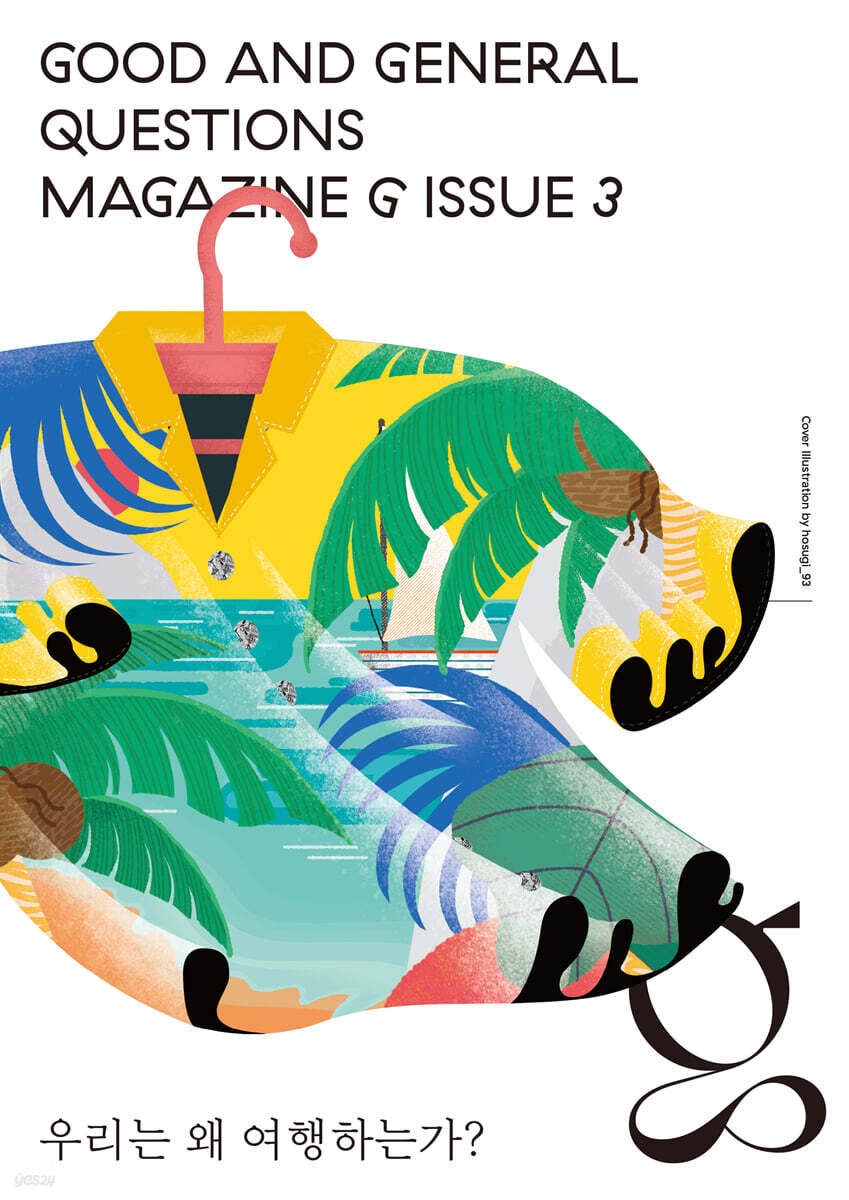
Magazine G: Issue 3 [2021]
 |
Description
Book Introduction
The intellectual habit of facing inevitable questions
Magazine G's third question: "Why do we travel?"
Despite our instinct to seek safety and comfort, we are constantly on the move.
Why are we willing to embark on unfamiliar and uncomfortable journeys?
What do we gain from repeating leaving and returning?
What makes us travelers?
The third question of 『Magazine G』, which started by asking about ‘me’ and examined the boundary between ‘friend and enemy’, is “Why do we travel?”
Set in a world where movement has ceased, we hear the stories of twenty travelers.
From the daily life of a travel writer whose feet have stopped moving to issues related to the right to mobility for people with disabilities.
From the vision of the future of space travel that is just around the corner to the everyday scenes of Okinawa that still harbor long-held pain.
From travel tips for the sensitive to travel stories of contemplatives traveling between the East and the West.
The traveler's insight is based on the will not to lose sight of the curious eyes of the stranger.
Meet the eyes of travelers who revisit familiar things and embrace new things with a generous heart.
Magazine G's third question: "Why do we travel?"
Despite our instinct to seek safety and comfort, we are constantly on the move.
Why are we willing to embark on unfamiliar and uncomfortable journeys?
What do we gain from repeating leaving and returning?
What makes us travelers?
The third question of 『Magazine G』, which started by asking about ‘me’ and examined the boundary between ‘friend and enemy’, is “Why do we travel?”
Set in a world where movement has ceased, we hear the stories of twenty travelers.
From the daily life of a travel writer whose feet have stopped moving to issues related to the right to mobility for people with disabilities.
From the vision of the future of space travel that is just around the corner to the everyday scenes of Okinawa that still harbor long-held pain.
From travel tips for the sensitive to travel stories of contemplatives traveling between the East and the West.
The traveler's insight is based on the will not to lose sight of the curious eyes of the stranger.
Meet the eyes of travelers who revisit familiar things and embrace new things with a generous heart.
- You can preview some of the book's contents.
Preview
index
prolog
Alone Together_Kim Dae-sik
TENDENCY
You Can't Be a Traveler Without Leaving_Kim Won-young
In an era where travel has come to a halt, how to keep the journey alive in everyday life_Jeon Myeong-yoon
Traveling Mind_Im Hee-seon
A Tale of Two Cities_Jeong Ha-jin
SURROUNDINGS
I don't enjoy tourism_Masahiko Kishi
Archaeologist's 'Salty Tour'_Kang In-wook
What does travel do?_Park Se-jin
A Journey You Don't Know_An Jin-guk
INSPIRING
Other People's Landscapes_Kim Seon-o
Where the photo reached_Im Min-ji
The Case of Investor Min Young-ha_Sim Neul
Stranger Things: The Psychology of My Strange Self and an Even Stranger Society 1 - Join or Leave_Park Han-seon
MECHANISM
Why Do We Want to Leave?_Kim Dae-sik
Movement in Dynamic Balance: Toward Liberation or Toward Destruction?_Jeon Hyeon-woo
Journey to the Moon_Hwang Jeong-ah
Sensitive Travelers_Jeon Hong-jin
The Taste of That Place: How Travel Becomes Memories_Jeong Yeon-ju X Editorial Department
INNER SIDE
My Journey in This Life_Hanjakyung
Time Travel to an Abandoned Temple Site_Yoon Gwang-jun
Travel Knows No Twilight_Im Jun-su
Epilogue
Contributor
Appendix [These days, food, clothing, shelter, and pleasure]_Kang Hye-bin, Seo Yi-je, Seo Jang-won, Woo Da-young
Alone Together_Kim Dae-sik
TENDENCY
You Can't Be a Traveler Without Leaving_Kim Won-young
In an era where travel has come to a halt, how to keep the journey alive in everyday life_Jeon Myeong-yoon
Traveling Mind_Im Hee-seon
A Tale of Two Cities_Jeong Ha-jin
SURROUNDINGS
I don't enjoy tourism_Masahiko Kishi
Archaeologist's 'Salty Tour'_Kang In-wook
What does travel do?_Park Se-jin
A Journey You Don't Know_An Jin-guk
INSPIRING
Other People's Landscapes_Kim Seon-o
Where the photo reached_Im Min-ji
The Case of Investor Min Young-ha_Sim Neul
Stranger Things: The Psychology of My Strange Self and an Even Stranger Society 1 - Join or Leave_Park Han-seon
MECHANISM
Why Do We Want to Leave?_Kim Dae-sik
Movement in Dynamic Balance: Toward Liberation or Toward Destruction?_Jeon Hyeon-woo
Journey to the Moon_Hwang Jeong-ah
Sensitive Travelers_Jeon Hong-jin
The Taste of That Place: How Travel Becomes Memories_Jeong Yeon-ju X Editorial Department
INNER SIDE
My Journey in This Life_Hanjakyung
Time Travel to an Abandoned Temple Site_Yoon Gwang-jun
Travel Knows No Twilight_Im Jun-su
Epilogue
Contributor
Appendix [These days, food, clothing, shelter, and pleasure]_Kang Hye-bin, Seo Yi-je, Seo Jang-won, Woo Da-young
Detailed image

Into the book
There is no way to be a traveler without leaving.
Even without moving from familiar places, familiar sensations, and familiar order, you can still be an enjoyable tourist if you are supported by excellent technology and content.
But I can't be a traveler forever.
The attempt to see what is invisible, the inevitable movement toward a space that seems out of place, the thrill of touching the unknown – these are the things that make us travelers.
--- p.
19
After the war, Okinawa became a US military base.
An autonomous government called the "Ryukyu Government" was established, but the final decision-making authority on its policies lay with the US military government.
The US military occupation lasted 27 years until Okinawa was returned to Japan in 1972.
Meanwhile, a vast US military base was built around the main island of Okinawa.
The base remains to this day, even after Okinawa was returned to Japan.
The Japanese government is currently planning to build a huge new military base by reclaiming land from the sea near the remote town of Henoko.
Within this history and structure, how can the desire to say, “I like Okinawa,” as a “Japanese” (of course, “Japanese” here is used to distinguish it from Okinawans) be justified?
--- p.
45
The human journey began when early humans left Africa 1.7 million years ago.
Since then, humans have made countless journeys.
One of them, the archaeologist's journey, can be defined in one word as 'day drinking'.
Drinking during the day may feel good to you, but it is a sad thing that makes people watching you click their tongues.
The archaeologist's journey seems similar.
It's not a tourist destination that everyone else goes to, but a destiny where you do research in mountains and forests that you've never heard of, get bitten by mosquitoes, and tap away at your laptop while driving on unpaved roads.
So archaeologists spend most of their lives on the road.
They rarely see treasures like gold, and spend their lives fiddling with pottery shards dug up from the dirt.
But if it weren't for that one joy, there wouldn't be any of the museum's numerous artifacts.
--- p.
57
The self that embodies the structure of a bottomless pit, the self that is caught in the cycle of lack of enjoyment and surplus enjoyment, is today's traveler.
Travel promises this self a surplus of enjoyment, but never fills what he lacks.
So, perhaps we too should hate traveling for similar reasons to Levi-Strauss's.
Travel renews our bodies and minds to be ready for wage labor again.
Travel reproduces the self defined through the cycle of wage labor and consumption, the cycle of lack of enjoyment and surplus enjoyment.
The further you go, the more firmly you affirm life here and now.
"If I could travel abroad once a year, wouldn't this be a decent lifestyle?"
--- p.
61
I want to stop this nonsense now.
If it's writing that substitutes external things for the self, it's a bit boring.
If things that 'looked pretty good after writing them down' no longer look as good as they used to, what should I write now, and what can I write again?
This is a concern that has persisted since my visit to Tunisia.
In a foreign land where I can only exist as a thorough observer, my self-reflection as a writer by profession deepens day by day.
The more inspiration I received from traveling, the more this was true.
--- p.
82
Migration is a phenomenon that cannot be explained solely by benefits such as the ‘pleasure of travel’ or the ‘fruits of growth’.
Mobility imposes certain costs on individuals, society, and ecosystems.
If the cost exceeds a certain level, it may be stopped altogether.
The 'balance between benefits and costs' and the 'changes in balance' that occur between the two elements over time are the most important frameworks for reflecting on the past and present of movement and travel and envisioning its future.
Without finding that dynamic balance point, which is realized in a unique space-time and appears quite robust, but can actually collapse even with a small shock, no movement can be realized in reality.
--- p.
123
The memories that taste unlocks are not just about a bowl of food and a table, but also about the feelings for the people who shared it, the atmosphere of the restaurant, the music that flowed, the reason why one was there at that time, and the trajectory of life that led one to that path.
When you experience that taste again at the right time and place, you remember and understand places and times you thought you had forgotten, and sometimes even the circumstances of others you had never experienced.
That's why people go out of their way to visit El Floridita, where Hemingway drank his daiquiri, and recreate the movie's menu, which includes jajangmyeon with chae-kkeut-sal.
--- p.
152
The inspiration you get from common tourist destinations and attractions across the country is usually similar.
This happens because of stuffed information and standardized approaches.
All we can do is fill in the gaps in time with vague imagination through stories excerpted from history or restored buildings.
Finding a temple site is a little different.
Only traces of the once prosperous temple remain in the empty lot.
Here and there, stones that were used as foundation stones for buildings have broken through the ground, and there are a few remains scattered around.
If you pay a little attention here, you will see that there are preserved stone objects that have been covered with the thickness of time collected in the area.
The fun lies in wandering through a vast, empty space, using your own imagination to create images of the past.
It's empty, so there's a lot to discover, and there's content to fill in the gaps with imagination and analogy.
Perhaps it can be said that in a space of contradiction, one feels pleasure.
Even without moving from familiar places, familiar sensations, and familiar order, you can still be an enjoyable tourist if you are supported by excellent technology and content.
But I can't be a traveler forever.
The attempt to see what is invisible, the inevitable movement toward a space that seems out of place, the thrill of touching the unknown – these are the things that make us travelers.
--- p.
19
After the war, Okinawa became a US military base.
An autonomous government called the "Ryukyu Government" was established, but the final decision-making authority on its policies lay with the US military government.
The US military occupation lasted 27 years until Okinawa was returned to Japan in 1972.
Meanwhile, a vast US military base was built around the main island of Okinawa.
The base remains to this day, even after Okinawa was returned to Japan.
The Japanese government is currently planning to build a huge new military base by reclaiming land from the sea near the remote town of Henoko.
Within this history and structure, how can the desire to say, “I like Okinawa,” as a “Japanese” (of course, “Japanese” here is used to distinguish it from Okinawans) be justified?
--- p.
45
The human journey began when early humans left Africa 1.7 million years ago.
Since then, humans have made countless journeys.
One of them, the archaeologist's journey, can be defined in one word as 'day drinking'.
Drinking during the day may feel good to you, but it is a sad thing that makes people watching you click their tongues.
The archaeologist's journey seems similar.
It's not a tourist destination that everyone else goes to, but a destiny where you do research in mountains and forests that you've never heard of, get bitten by mosquitoes, and tap away at your laptop while driving on unpaved roads.
So archaeologists spend most of their lives on the road.
They rarely see treasures like gold, and spend their lives fiddling with pottery shards dug up from the dirt.
But if it weren't for that one joy, there wouldn't be any of the museum's numerous artifacts.
--- p.
57
The self that embodies the structure of a bottomless pit, the self that is caught in the cycle of lack of enjoyment and surplus enjoyment, is today's traveler.
Travel promises this self a surplus of enjoyment, but never fills what he lacks.
So, perhaps we too should hate traveling for similar reasons to Levi-Strauss's.
Travel renews our bodies and minds to be ready for wage labor again.
Travel reproduces the self defined through the cycle of wage labor and consumption, the cycle of lack of enjoyment and surplus enjoyment.
The further you go, the more firmly you affirm life here and now.
"If I could travel abroad once a year, wouldn't this be a decent lifestyle?"
--- p.
61
I want to stop this nonsense now.
If it's writing that substitutes external things for the self, it's a bit boring.
If things that 'looked pretty good after writing them down' no longer look as good as they used to, what should I write now, and what can I write again?
This is a concern that has persisted since my visit to Tunisia.
In a foreign land where I can only exist as a thorough observer, my self-reflection as a writer by profession deepens day by day.
The more inspiration I received from traveling, the more this was true.
--- p.
82
Migration is a phenomenon that cannot be explained solely by benefits such as the ‘pleasure of travel’ or the ‘fruits of growth’.
Mobility imposes certain costs on individuals, society, and ecosystems.
If the cost exceeds a certain level, it may be stopped altogether.
The 'balance between benefits and costs' and the 'changes in balance' that occur between the two elements over time are the most important frameworks for reflecting on the past and present of movement and travel and envisioning its future.
Without finding that dynamic balance point, which is realized in a unique space-time and appears quite robust, but can actually collapse even with a small shock, no movement can be realized in reality.
--- p.
123
The memories that taste unlocks are not just about a bowl of food and a table, but also about the feelings for the people who shared it, the atmosphere of the restaurant, the music that flowed, the reason why one was there at that time, and the trajectory of life that led one to that path.
When you experience that taste again at the right time and place, you remember and understand places and times you thought you had forgotten, and sometimes even the circumstances of others you had never experienced.
That's why people go out of their way to visit El Floridita, where Hemingway drank his daiquiri, and recreate the movie's menu, which includes jajangmyeon with chae-kkeut-sal.
--- p.
152
The inspiration you get from common tourist destinations and attractions across the country is usually similar.
This happens because of stuffed information and standardized approaches.
All we can do is fill in the gaps in time with vague imagination through stories excerpted from history or restored buildings.
Finding a temple site is a little different.
Only traces of the once prosperous temple remain in the empty lot.
Here and there, stones that were used as foundation stones for buildings have broken through the ground, and there are a few remains scattered around.
If you pay a little attention here, you will see that there are preserved stone objects that have been covered with the thickness of time collected in the area.
The fun lies in wandering through a vast, empty space, using your own imagination to create images of the past.
It's empty, so there's a lot to discover, and there's content to fill in the gaps with imagination and analogy.
Perhaps it can be said that in a space of contradiction, one feels pleasure.
--- p.
177
177
Publisher's Review
“Travel knows no twilight.”
An era where movement has stopped and encounters have ceased
Good and General Questions that Expand the Meaning of Travel
Until just a few years ago, about half of us traveled abroad every year.
Every vacation season, we were busy sharing the anticipation before our trip, and after returning, we consoled ourselves with the regret by sharing photos of the foreign scenery and food on social media.
This is an era when 20 million people travel abroad annually.
This kind of sight is nowhere to be seen now.
Not only overseas travel, but even domestic travel has become more cautious, and there is a trend of reducing meetings with family and friends who live far away.
These days, we all endure a period of 'harmless isolation' as we look forward to the day when we can travel again.
As the days passed without me being able to leave freely, one thing became clear.
It is human nature to dream of places that are not here, places that are not familiar, places that are unfamiliar, places that one has never been to or wants to go back to.
During this period of rest, when everyone is taking a long breather, [Magazine G] calmly asks the meaning of travel.
What is travel?
What makes us set out on a journey?
What do we hope for when we embark on this journey, and what do we gain when we arrive and return here?
It conveys the privileges of a traveler, the insights gained by those who venture into the unknown.
Archaeological notes and lunar probes, art galleries and abandoned temples, mobility and consumer culture
Twenty Meanings of Travel from Experienced Travelers
Travel is a movement toward an unfamiliar place, an unknown place, rather than a familiar place.
When we reach a point where we want to “break away from our routine and find ourselves in a new environment,” we pack our bags (Im Hee-seon, Picture Essay, p. 29).
There are times when it becomes essential to recharge and re-inspire by going to an unfamiliar place, and in Germany, the need for this change of environment is expressed as “the need to change the wallpaper” (Jeong Ha-jin, Graphic Novel, p. 36).
What travelers expect from travel is not just a change of space, but a transformation of the world around them.
Of course, travel isn't always romantic.
We often imagine an Indiana Jones-like situation, but for archaeologist Kang In-wook, travel is more of an arduous process of “traveling across Eurasia in a limited time, playing hide-and-seek with hidden artifacts (and sometimes with local police)” (p. 51).
According to psychiatrist Jeon Hong-jin, for sensitive people who “think what others don’t think, see what others don’t see, and hear what others don’t hear,” unfamiliar and crowded travel destinations can only cause fatigue rather than inspiration, so they need to be extra careful (p. 141).
The reward of unearthing humanity's heritage and the memories that soothe the weary mind of everyday life will compensate for this.
On the other hand, travel is not always free and harmless.
The writings of anthropologist Park Se-jin (page 58), who points out that travel has increasingly degenerated into a 'consumption pilgrimage,' and transportation researcher Jeon Hyeon-woo (page 122), who addresses the issue of carbon emissions generated during travel, make us reconsider the other side of travel that we have overlooked.
Sociologist Masahiko Kishi's confession (page 40) that he can no longer carelessly say, "I like Okinawa as a tourist destination," after learning about the structure of poverty and exploitation that supports Okinawa, makes us think about the social dimension of travel that goes beyond the individual.
If you simply enjoy the scenery, you may miss the opportunity to explore the broader and deeper meaning of your trip.
“There is no way to be a traveler without leaving.” (Page 19) This is what attorney Kim Won-young said about the situation in which social media and the latest virtual space technologies are replacing physical travel.
The meaning of travel is as varied as the number of travelers, but one thing is clear.
The truth is that there is no way to know what it means until you actually leave.
If we want to change, we must first leave.
To reject inertia and create our own stories, we need a 'new journey' in the future.
Analog print travel instead of digital LAN travel
Travel with a travel book that talks about travel
[Magazine G] Issue 3 tells the stories of twenty travelers in a world where movement has stopped.
From the daily life of a travel writer whose feet have stopped moving to the issue of mobility rights for the disabled, from the vision of the future of space travel that is just around the corner to the everyday scenery of Okinawa that holds long-held pain, from travel tips for the sensitive to a contemplative travelogue that travels between the East and the West.
It captures the perspectives of travelers who see familiar things again and embrace new things with a generous heart.
In addition, it includes paintings, photographs, graphic novels, and science fiction novels that vary the theme in various ways, and the separate volume [The Food, Clothing, and Shelter of Today] is specially organized in the form of travel postcards and contains messages of greetings from four authors in an age when encounters have been cut off.
Even though movement and contact are restricted these days, people still crave special experiences and warm connections.
The feeling of eagerly awaiting the day I can travel again will also be in line with this wish.
Why not read these twenty essays, filled with the unique insights and sentiments of travelers, and reminisce about your past travels and imagine your next?
An era where movement has stopped and encounters have ceased
Good and General Questions that Expand the Meaning of Travel
Until just a few years ago, about half of us traveled abroad every year.
Every vacation season, we were busy sharing the anticipation before our trip, and after returning, we consoled ourselves with the regret by sharing photos of the foreign scenery and food on social media.
This is an era when 20 million people travel abroad annually.
This kind of sight is nowhere to be seen now.
Not only overseas travel, but even domestic travel has become more cautious, and there is a trend of reducing meetings with family and friends who live far away.
These days, we all endure a period of 'harmless isolation' as we look forward to the day when we can travel again.
As the days passed without me being able to leave freely, one thing became clear.
It is human nature to dream of places that are not here, places that are not familiar, places that are unfamiliar, places that one has never been to or wants to go back to.
During this period of rest, when everyone is taking a long breather, [Magazine G] calmly asks the meaning of travel.
What is travel?
What makes us set out on a journey?
What do we hope for when we embark on this journey, and what do we gain when we arrive and return here?
It conveys the privileges of a traveler, the insights gained by those who venture into the unknown.
Archaeological notes and lunar probes, art galleries and abandoned temples, mobility and consumer culture
Twenty Meanings of Travel from Experienced Travelers
Travel is a movement toward an unfamiliar place, an unknown place, rather than a familiar place.
When we reach a point where we want to “break away from our routine and find ourselves in a new environment,” we pack our bags (Im Hee-seon, Picture Essay, p. 29).
There are times when it becomes essential to recharge and re-inspire by going to an unfamiliar place, and in Germany, the need for this change of environment is expressed as “the need to change the wallpaper” (Jeong Ha-jin, Graphic Novel, p. 36).
What travelers expect from travel is not just a change of space, but a transformation of the world around them.
Of course, travel isn't always romantic.
We often imagine an Indiana Jones-like situation, but for archaeologist Kang In-wook, travel is more of an arduous process of “traveling across Eurasia in a limited time, playing hide-and-seek with hidden artifacts (and sometimes with local police)” (p. 51).
According to psychiatrist Jeon Hong-jin, for sensitive people who “think what others don’t think, see what others don’t see, and hear what others don’t hear,” unfamiliar and crowded travel destinations can only cause fatigue rather than inspiration, so they need to be extra careful (p. 141).
The reward of unearthing humanity's heritage and the memories that soothe the weary mind of everyday life will compensate for this.
On the other hand, travel is not always free and harmless.
The writings of anthropologist Park Se-jin (page 58), who points out that travel has increasingly degenerated into a 'consumption pilgrimage,' and transportation researcher Jeon Hyeon-woo (page 122), who addresses the issue of carbon emissions generated during travel, make us reconsider the other side of travel that we have overlooked.
Sociologist Masahiko Kishi's confession (page 40) that he can no longer carelessly say, "I like Okinawa as a tourist destination," after learning about the structure of poverty and exploitation that supports Okinawa, makes us think about the social dimension of travel that goes beyond the individual.
If you simply enjoy the scenery, you may miss the opportunity to explore the broader and deeper meaning of your trip.
“There is no way to be a traveler without leaving.” (Page 19) This is what attorney Kim Won-young said about the situation in which social media and the latest virtual space technologies are replacing physical travel.
The meaning of travel is as varied as the number of travelers, but one thing is clear.
The truth is that there is no way to know what it means until you actually leave.
If we want to change, we must first leave.
To reject inertia and create our own stories, we need a 'new journey' in the future.
Analog print travel instead of digital LAN travel
Travel with a travel book that talks about travel
[Magazine G] Issue 3 tells the stories of twenty travelers in a world where movement has stopped.
From the daily life of a travel writer whose feet have stopped moving to the issue of mobility rights for the disabled, from the vision of the future of space travel that is just around the corner to the everyday scenery of Okinawa that holds long-held pain, from travel tips for the sensitive to a contemplative travelogue that travels between the East and the West.
It captures the perspectives of travelers who see familiar things again and embrace new things with a generous heart.
In addition, it includes paintings, photographs, graphic novels, and science fiction novels that vary the theme in various ways, and the separate volume [The Food, Clothing, and Shelter of Today] is specially organized in the form of travel postcards and contains messages of greetings from four authors in an age when encounters have been cut off.
Even though movement and contact are restricted these days, people still crave special experiences and warm connections.
The feeling of eagerly awaiting the day I can travel again will also be in line with this wish.
Why not read these twenty essays, filled with the unique insights and sentiments of travelers, and reminisce about your past travels and imagine your next?
GOODS SPECIFICS
- Publication date: August 30, 2021
- Page count, weight, size: 196 pages | 478g | 170*240*12mm
- ISBN13: 9788934980001
- ISBN10: 8934980001
You may also like
카테고리
korean


korean

![GQ KOREA Mark (Monthly): December [2025]](http://librairie.coreenne.fr/cdn/shop/files/8ef265dbbfbf186523ed75ba7319009d.jpg?v=1765340328&width=3840)


