

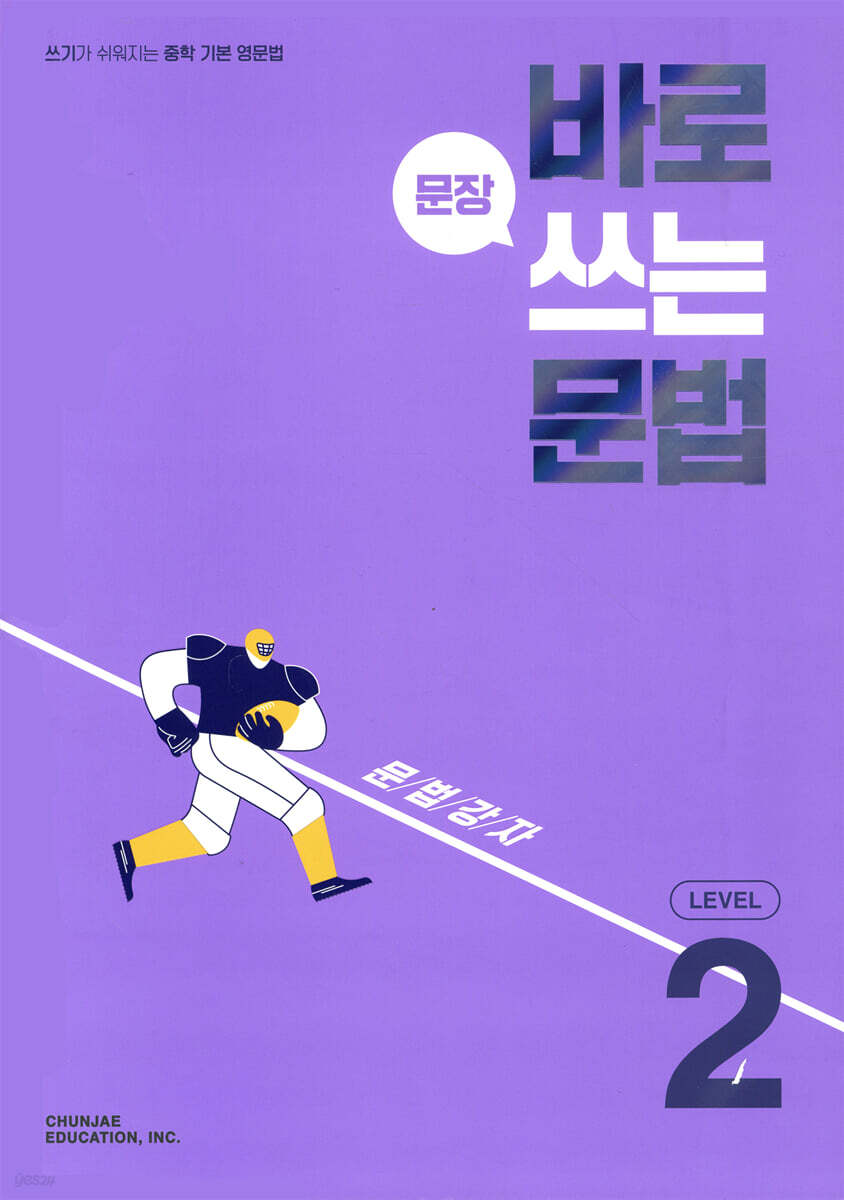
Grammar Level 2: Writing Sentences Right Away
 |
Description
Book Introduction
The "Right to Use Grammar" series is a grammar book that thoroughly analyzes and reflects the 13 types of middle school textbooks from the 15th revision, allowing you to thoroughly master the core middle school grammar through [solving drill-type problems + writing textbook sentences + solving school exam question types].
The essential middle school grammar that you must know is broken down in detail, making it easy to learn the concepts, and you can solidify your grammar by repeatedly organizing the concepts in the concept confirmation notes.
By using sentences from the new textbook, you can see how grammar is applied in practice and prepare for descriptive questions in school.
Additionally, you will develop the practical skills necessary to prepare for the internal exam by repeatedly practicing with the most recent representative questions from the internal exam.
[Key Concept Notes] that organize only the concepts are also provided.
The essential middle school grammar that you must know is broken down in detail, making it easy to learn the concepts, and you can solidify your grammar by repeatedly organizing the concepts in the concept confirmation notes.
By using sentences from the new textbook, you can see how grammar is applied in practice and prepare for descriptive questions in school.
Additionally, you will develop the practical skills necessary to prepare for the internal exam by repeatedly practicing with the most recent representative questions from the internal exam.
[Key Concept Notes] that organize only the concepts are also provided.
- You can preview some of the book's contents.
Preview
index
UNIT 01 Sentence Format
Concept 01 Type 1 and Type 2
Concept 02 Type 3 and Type 4
Concept 03 5 Format 1
Concept 04 5 Format 2
UNIT 02 Tense
Concept 05 Past, Present, and Future Tenses
Concept 06 Progressive Tense
Concept 07 Present Perfect Tense 1
Concept 08 Present Perfect Tense 2
UNIT 03 Auxiliary Verbs
Concept 09 can / may / will
Concept 10 must / should / used to
UNIT 04 to-infinitive
Concept 11 Nominal Use of the Infinitive
Concept 12 It ~ to / to-infinitive semantic subject
Concept 13 Interrogative + to-infinitive
Concept 14 Adjectival Use of the Infinitive
Concept 15 Adverbial Use of the Infinitive
Concept 16 too ~ to / enough to
UNIT 05 Gerunds
Concept 17 Use of Gerunds
Concept 18 Gerunds and to-infinitives
UNIT 06 Participles and Participle Phrases
Concept 19 Present Participle and Past Participle
Concept 20 Participles expressing emotions
Concept 21 Participle Phrase 1
Concept 22 Participle Phrase 2
UNIT 07 Pronouns
Concept 23 Indefinite Pronouns
Concept 24 Reflexive Pronouns
UNIT 08 Passive Voice
Concept 25 Meaning and Form of Passive Voice
Concept 26 Negative and Interrogative Sentences in the Passive Voice
Concept 27 Passive voice in type 4 sentences
Concept 28 Passive Voice in 5-Format Sentences 1
Concept 29 Passive Voice in Type 5 Sentences 2
Concept 30: Passive Voice to Watch Out For
UNIT 09 Affiliates
Concept 31 Nominative Relative Pronouns
Concept 32 Objective Relative Pronouns
Concept 33 Possessive Relative Pronouns
Concept 34 Relative Pronouns that vs.
Conjunction that
Concept 35 Relative Pronoun what
Concept 36 Relative Adverbs
UNIT 10 CONJUNCTIONS
Concept 37 Correlative Conjunctions
Concept 38 Imperatives, and / or
Concept 39 that leading to a noun clause
Concept 40 Indirect Questions
Concept 41 Conjunctions Leading Adverbial Clauses 1: Time, Reason
Concept 42: Conjunctions Leading Adverbial Clauses 2: Condition, Concession, Result
UNIT 11 Comparison Syntax
Concept 43: Creating Comparatives and Superlatives
Concept 44: Comparison of original grades / Comparison of multiples
Concept 45 Various comparative expressions / Emphasis on comparative expressions
Concept 46 Various superlative expressions
UNIT 12 CONDITIONAL MOVEMENT
Concept 47 Past Subjunctive
Concept 48 I wish conditional / as if conditional
Concept 01 Type 1 and Type 2
Concept 02 Type 3 and Type 4
Concept 03 5 Format 1
Concept 04 5 Format 2
UNIT 02 Tense
Concept 05 Past, Present, and Future Tenses
Concept 06 Progressive Tense
Concept 07 Present Perfect Tense 1
Concept 08 Present Perfect Tense 2
UNIT 03 Auxiliary Verbs
Concept 09 can / may / will
Concept 10 must / should / used to
UNIT 04 to-infinitive
Concept 11 Nominal Use of the Infinitive
Concept 12 It ~ to / to-infinitive semantic subject
Concept 13 Interrogative + to-infinitive
Concept 14 Adjectival Use of the Infinitive
Concept 15 Adverbial Use of the Infinitive
Concept 16 too ~ to / enough to
UNIT 05 Gerunds
Concept 17 Use of Gerunds
Concept 18 Gerunds and to-infinitives
UNIT 06 Participles and Participle Phrases
Concept 19 Present Participle and Past Participle
Concept 20 Participles expressing emotions
Concept 21 Participle Phrase 1
Concept 22 Participle Phrase 2
UNIT 07 Pronouns
Concept 23 Indefinite Pronouns
Concept 24 Reflexive Pronouns
UNIT 08 Passive Voice
Concept 25 Meaning and Form of Passive Voice
Concept 26 Negative and Interrogative Sentences in the Passive Voice
Concept 27 Passive voice in type 4 sentences
Concept 28 Passive Voice in 5-Format Sentences 1
Concept 29 Passive Voice in Type 5 Sentences 2
Concept 30: Passive Voice to Watch Out For
UNIT 09 Affiliates
Concept 31 Nominative Relative Pronouns
Concept 32 Objective Relative Pronouns
Concept 33 Possessive Relative Pronouns
Concept 34 Relative Pronouns that vs.
Conjunction that
Concept 35 Relative Pronoun what
Concept 36 Relative Adverbs
UNIT 10 CONJUNCTIONS
Concept 37 Correlative Conjunctions
Concept 38 Imperatives, and / or
Concept 39 that leading to a noun clause
Concept 40 Indirect Questions
Concept 41 Conjunctions Leading Adverbial Clauses 1: Time, Reason
Concept 42: Conjunctions Leading Adverbial Clauses 2: Condition, Concession, Result
UNIT 11 Comparison Syntax
Concept 43: Creating Comparatives and Superlatives
Concept 44: Comparison of original grades / Comparison of multiples
Concept 45 Various comparative expressions / Emphasis on comparative expressions
Concept 46 Various superlative expressions
UNIT 12 CONDITIONAL MOVEMENT
Concept 47 Past Subjunctive
Concept 48 I wish conditional / as if conditional
Publisher's Review
〈Grammar for Writing Sentences Right Away〉 analyzes all 13 middle school textbooks and organizes the grammar you must know.
We've broken down grammar concepts into detailed sections and organized the explanations in an easy-to-understand way.
We also increased the learning effect by allowing you to repeatedly organize concepts in the concept confirmation notes and basic confirmation notes.
In particular, we strengthened the connection with school grades by applying the concepts learned to writing textbook sentences.
If you repeatedly practice the representative questions from previous exams in the Review Test and organize what you've learned by solving quizzes, middle school grammar will not feel difficult.
We've broken down grammar concepts into detailed sections and organized the explanations in an easy-to-understand way.
We also increased the learning effect by allowing you to repeatedly organize concepts in the concept confirmation notes and basic confirmation notes.
In particular, we strengthened the connection with school grades by applying the concepts learned to writing textbook sentences.
If you repeatedly practice the representative questions from previous exams in the Review Test and organize what you've learned by solving quizzes, middle school grammar will not feel difficult.
GOODS SPECIFICS
- Date of issue: May 27, 2022
- Page count, weight, size: 240 pages | 724g | 210*297*11mm
- ISBN13: 9791125970118
- ISBN10: 1125970111
- Reference book for use in grades: Common for middle school students
- Reference book usage semester: Common semester
- Reference book difficulty: Medium Reference book difficulty guide
You may also like
카테고리
korean


korean

![GQ KOREA Mark (Monthly): December [2025]](http://librairie.coreenne.fr/cdn/shop/files/8ef265dbbfbf186523ed75ba7319009d.jpg?v=1765340328&width=3840)


