

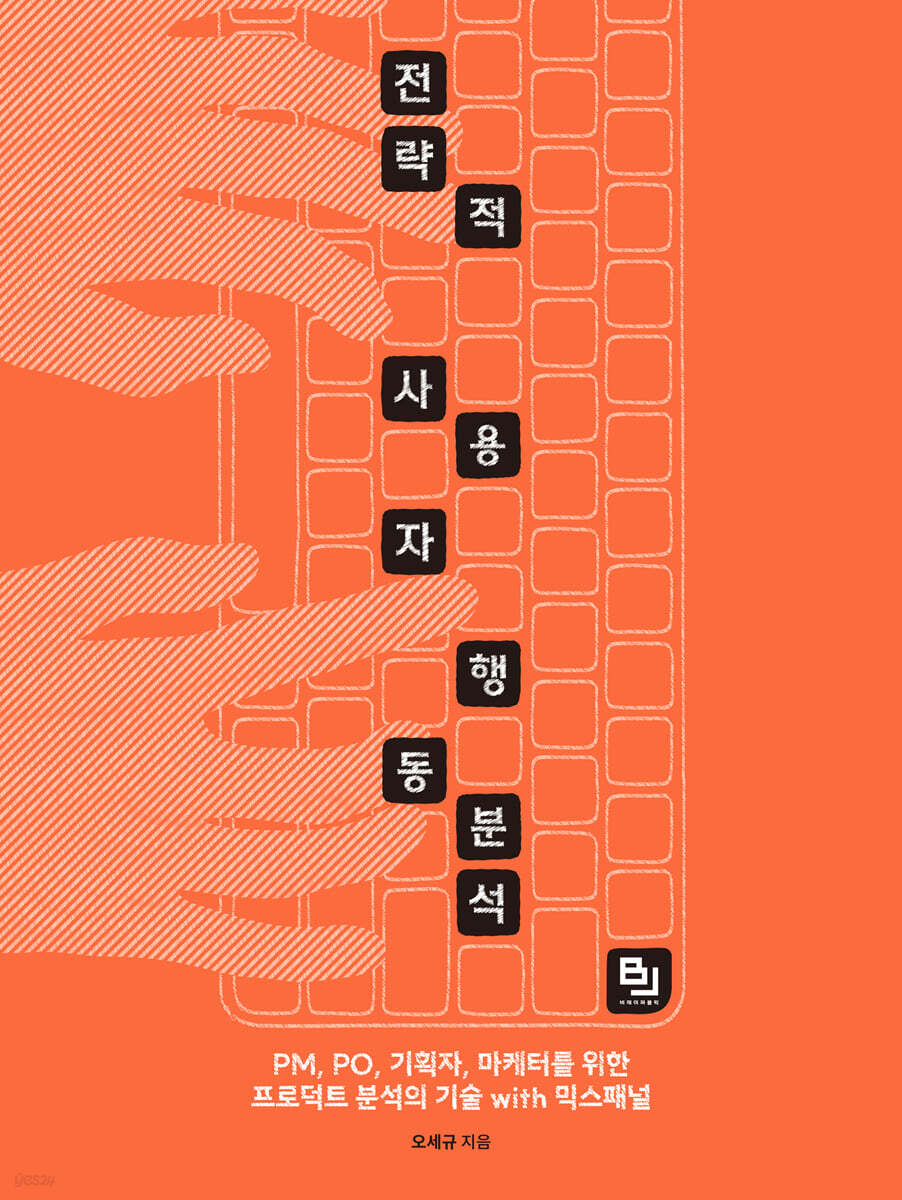
Strategic User Behavior Analysis
 |
Description
Book Introduction
Ideation of analysis strategies for users and
Practical Applications with Mixpanel, Google Tag Manager, and Generative AI
Most product analytics uses programming languages, SQL, Mixpanel, Amplitude, etc.
But as time goes by, better tools will surely emerge.
Therefore, we must adhere to the core principles so that we can adapt to any environment.
Therefore, 『Strategic User Behavior Analysis』 focuses on the mindset of what and how to ask questions about user behavior, which is the core of product analysis.
For those working in product and service fields but new to data, or for those preparing for employment or a career transition into product and service fields based on data capabilities, we explain data analysis terminology and basic concepts specific to "product" and "user behavior."
We present various situations and examples to help you imagine and immerse yourself, and we even look at the thought process of planning and designing what to analyze and how to analyze data.
We'll guide you step-by-step through everything from event and property design to hands-on practice with Mixpanel, Google Tag Manager, and generative AI. By following along step-by-step, you'll be able to pinpoint the root cause, resolve issues, and broaden your perspective on users faster than anyone else.
Practical Applications with Mixpanel, Google Tag Manager, and Generative AI
Most product analytics uses programming languages, SQL, Mixpanel, Amplitude, etc.
But as time goes by, better tools will surely emerge.
Therefore, we must adhere to the core principles so that we can adapt to any environment.
Therefore, 『Strategic User Behavior Analysis』 focuses on the mindset of what and how to ask questions about user behavior, which is the core of product analysis.
For those working in product and service fields but new to data, or for those preparing for employment or a career transition into product and service fields based on data capabilities, we explain data analysis terminology and basic concepts specific to "product" and "user behavior."
We present various situations and examples to help you imagine and immerse yourself, and we even look at the thought process of planning and designing what to analyze and how to analyze data.
We'll guide you step-by-step through everything from event and property design to hands-on practice with Mixpanel, Google Tag Manager, and generative AI. By following along step-by-step, you'll be able to pinpoint the root cause, resolve issues, and broaden your perspective on users faster than anyone else.
- You can preview some of the book's contents.
Preview
index
Chapter 01 When Product Analysis Is Needed
_1.1 What is a Product?
_1.2 Product work cycle
_1.3 Relationship between product and user
Chapter 02 Product Data, Events, and Properties
_2.1 What is Data and Analysis?
_2.2 What is product data?
_2.3 Two ways to record product data
_2.4 The Core of Product Analysis: Events and Properties
_2.5 User profiles that describe the user
Chapter 03 Designing and Managing Events and Properties
_3.1 Tracking Plan and Taxonomy
_3.2 Design examples and know-how for events and properties
__3.2.1 What to Measure
__3.2.2 What should I call it?
__3.2.3 How detailed will the measurements be?
__3.2.4 At what point will it be recorded?
__3.2.5 Where to record
__3.2.6 Where to measure from and to where
__3.2.7 What Not to Measure
_3.3 Practical Design of Events and Properties
__3.3.1 New Product Release
__3.3.2 New Features Released
_3.4 User Profile Practical Design
__3.4.1 Unique ID that identifies the user
__3.4.2 User profile design method
_3.5 Understanding Google Tag Manager for Managing Events and Properties
_3.6 Setting up events and properties with Google Tag Manager
__Step 1 Visit Google Tag Manager
__Step 2 Creating an account and container
__Step 3 Installing the Template
__Step 4 Creating a Trigger
__Step 5 Creating Variables
__Step 6 Creating Tags
__Step 7 Submit
_3.7 Setting up user profiles with Google Tag Manager
__3.7.1 Creating a User Identification Tag
__3.7.2 Creating a user profile tag (1) - increment
__3.7.3 Creating a user profile tag (2) - set_once
__3.7.4 Creating User Profile Tags (3) - set
_3.8 Checking for data collection abnormalities
Chapter 04 Key Concepts of Product Analysis
_4.1 Key Indicators of Product Analysis
_4.2 Key Units of Product Analysis
_4.3 Key Perspectives of Product Analysis
__4.3.1 Filter
__4.3.2 Breakdown
__4.3.3 Cohort
Chapter 05: Exploring the Mix Panel
_5.1 Starting the Mix Panel
_5.2 Main menu of the Mix Panel
_5.3 Mixpanel Chart Configuration
__5.3.1 Selecting the data query period
__5.3.2 Choosing a Data Visualization Method
__5.3.3 Selecting indicators
__5.3.4 Filtering
__5.3.5 Creating a Cohort
__5.3.6 Breakdown
Chapter 06: Practical Product Analysis through Mix Panel
_6.1 Insights
__6.1.1 How many users will the service have?
__6.1.2 How much has the service grown over the years?
__6.1.3 What is the average usage per user?
__6.1.4 What are the total monthly sales and average price per customer?
__6.1.5 Wouldn't there be differences depending on the user type?
__6.1.6 Will this feature help your product grow?
_6.2 Funnels
__6.2.1 How should we define funnels and conversion rates?
__6.2.2 How long will the transition take?
__6.2.3 What are the conversion rates and trends by stage?
__6.2.4 Wouldn't the conversion rate also be different for each user?
__6.2.5 What actions can help improve conversion rates?
__6.2.6 What is the intersection of two actions?
_6.3 Retention
__6.3.1 How should we define retention?
__6.3.2 What is the retention trend?
__6.3.3 Is there a peak season for retention?
__6.3.4 How long is the reuse cycle according to the user's life cycle?
__6.3.5 But can't we make it more frequent?
_6.4 Flows
__6.4.1 What is the first thing you do after signing up?
__6.4.2 Where do churned users go?
__6.4.3 What happens after visiting the first page and before completing payment?
_6.5 Understanding Core Users and Aha Moments
__6.5.1 What is the core behavior of the product?
__6.5.2 What is the appropriate level of core?
__6.5.3 Aha moments discovered through differences with other users
Chapter 07 Product Analysis Know-How
_7.1 Analysis is also a plan
_7.2 Know-how for defining problems and establishing hypotheses
_7.3 Understanding the Service Metrics Structure
_7.4 Know-how in Indicator Selection and Design
_7.5 Know-how for setting good KPIs
_7.6 Know-how for good cohort design
_7.7 Know-how for examining data in depth and in various ways
_7.8 Looking at data
__7.8.1 Letting go of perfection
__7.8.2 Speed is more important than you think
__7.8.3 Between Gaetteok and Chaltteok
__7.8.4 Between Planning and Development
__7.8.5 Curiosity that becomes both medicine and poison
__7.8.6 There is an answer and there is no answer
__7.8.7 Analysis in the AI Era
Chapter 08 Learn More
_8.1 Event and Property Design Using Generative AI
__Step 1: Assigning Roles
__Step 2 Product Description
__Step 3: Generating Analysis Questions
__Step 4 Designing Events and Properties
__Step 5 Complete the document
_8.2 Additional features of Mixpanel that are useful in practice
__8.2.1 Events
__8.2.2 Users
__8.2.3 Alerts
_8.3 Managing MixPanel Data
__8.3.1 Lexicon
__8.3.2 When there is an abnormality in the data
_8.4 Aggregating RFM Using User Profiles
Conclusion
_1.1 What is a Product?
_1.2 Product work cycle
_1.3 Relationship between product and user
Chapter 02 Product Data, Events, and Properties
_2.1 What is Data and Analysis?
_2.2 What is product data?
_2.3 Two ways to record product data
_2.4 The Core of Product Analysis: Events and Properties
_2.5 User profiles that describe the user
Chapter 03 Designing and Managing Events and Properties
_3.1 Tracking Plan and Taxonomy
_3.2 Design examples and know-how for events and properties
__3.2.1 What to Measure
__3.2.2 What should I call it?
__3.2.3 How detailed will the measurements be?
__3.2.4 At what point will it be recorded?
__3.2.5 Where to record
__3.2.6 Where to measure from and to where
__3.2.7 What Not to Measure
_3.3 Practical Design of Events and Properties
__3.3.1 New Product Release
__3.3.2 New Features Released
_3.4 User Profile Practical Design
__3.4.1 Unique ID that identifies the user
__3.4.2 User profile design method
_3.5 Understanding Google Tag Manager for Managing Events and Properties
_3.6 Setting up events and properties with Google Tag Manager
__Step 1 Visit Google Tag Manager
__Step 2 Creating an account and container
__Step 3 Installing the Template
__Step 4 Creating a Trigger
__Step 5 Creating Variables
__Step 6 Creating Tags
__Step 7 Submit
_3.7 Setting up user profiles with Google Tag Manager
__3.7.1 Creating a User Identification Tag
__3.7.2 Creating a user profile tag (1) - increment
__3.7.3 Creating a user profile tag (2) - set_once
__3.7.4 Creating User Profile Tags (3) - set
_3.8 Checking for data collection abnormalities
Chapter 04 Key Concepts of Product Analysis
_4.1 Key Indicators of Product Analysis
_4.2 Key Units of Product Analysis
_4.3 Key Perspectives of Product Analysis
__4.3.1 Filter
__4.3.2 Breakdown
__4.3.3 Cohort
Chapter 05: Exploring the Mix Panel
_5.1 Starting the Mix Panel
_5.2 Main menu of the Mix Panel
_5.3 Mixpanel Chart Configuration
__5.3.1 Selecting the data query period
__5.3.2 Choosing a Data Visualization Method
__5.3.3 Selecting indicators
__5.3.4 Filtering
__5.3.5 Creating a Cohort
__5.3.6 Breakdown
Chapter 06: Practical Product Analysis through Mix Panel
_6.1 Insights
__6.1.1 How many users will the service have?
__6.1.2 How much has the service grown over the years?
__6.1.3 What is the average usage per user?
__6.1.4 What are the total monthly sales and average price per customer?
__6.1.5 Wouldn't there be differences depending on the user type?
__6.1.6 Will this feature help your product grow?
_6.2 Funnels
__6.2.1 How should we define funnels and conversion rates?
__6.2.2 How long will the transition take?
__6.2.3 What are the conversion rates and trends by stage?
__6.2.4 Wouldn't the conversion rate also be different for each user?
__6.2.5 What actions can help improve conversion rates?
__6.2.6 What is the intersection of two actions?
_6.3 Retention
__6.3.1 How should we define retention?
__6.3.2 What is the retention trend?
__6.3.3 Is there a peak season for retention?
__6.3.4 How long is the reuse cycle according to the user's life cycle?
__6.3.5 But can't we make it more frequent?
_6.4 Flows
__6.4.1 What is the first thing you do after signing up?
__6.4.2 Where do churned users go?
__6.4.3 What happens after visiting the first page and before completing payment?
_6.5 Understanding Core Users and Aha Moments
__6.5.1 What is the core behavior of the product?
__6.5.2 What is the appropriate level of core?
__6.5.3 Aha moments discovered through differences with other users
Chapter 07 Product Analysis Know-How
_7.1 Analysis is also a plan
_7.2 Know-how for defining problems and establishing hypotheses
_7.3 Understanding the Service Metrics Structure
_7.4 Know-how in Indicator Selection and Design
_7.5 Know-how for setting good KPIs
_7.6 Know-how for good cohort design
_7.7 Know-how for examining data in depth and in various ways
_7.8 Looking at data
__7.8.1 Letting go of perfection
__7.8.2 Speed is more important than you think
__7.8.3 Between Gaetteok and Chaltteok
__7.8.4 Between Planning and Development
__7.8.5 Curiosity that becomes both medicine and poison
__7.8.6 There is an answer and there is no answer
__7.8.7 Analysis in the AI Era
Chapter 08 Learn More
_8.1 Event and Property Design Using Generative AI
__Step 1: Assigning Roles
__Step 2 Product Description
__Step 3: Generating Analysis Questions
__Step 4 Designing Events and Properties
__Step 5 Complete the document
_8.2 Additional features of Mixpanel that are useful in practice
__8.2.1 Events
__8.2.2 Users
__8.2.3 Alerts
_8.3 Managing MixPanel Data
__8.3.1 Lexicon
__8.3.2 When there is an abnormality in the data
_8.4 Aggregating RFM Using User Profiles
Conclusion
Detailed image

Publisher's Review
Readers who need this book
- Relevant personnel responsible for planning and improving products and services
- Service planners new to data analysis
- Product owners who feel that their products and services require user analysis.
- Junior product managers who want to acquire practical skills in management and user analysis.
- Marketers who want to analyze user behavior beyond numbers such as number of users and sales.
- Those who are preparing for employment or job transition in product and service-related fields based on data capabilities
- Anyone curious about the careers of product manager, service planner, and digital marketer
- Relevant personnel responsible for planning and improving products and services
- Service planners new to data analysis
- Product owners who feel that their products and services require user analysis.
- Junior product managers who want to acquire practical skills in management and user analysis.
- Marketers who want to analyze user behavior beyond numbers such as number of users and sales.
- Those who are preparing for employment or job transition in product and service-related fields based on data capabilities
- Anyone curious about the careers of product manager, service planner, and digital marketer
GOODS SPECIFICS
- Date of issue: February 24, 2025
- Page count, weight, size: 408 pages | 173*230*30mm
- ISBN13: 9791165923181
- ISBN10: 1165923181
You may also like
카테고리
korean


korean

![GQ KOREA Mark (Monthly): December [2025]](http://librairie.coreenne.fr/cdn/shop/files/8ef265dbbfbf186523ed75ba7319009d.jpg?v=1765340328&width=3840)


