

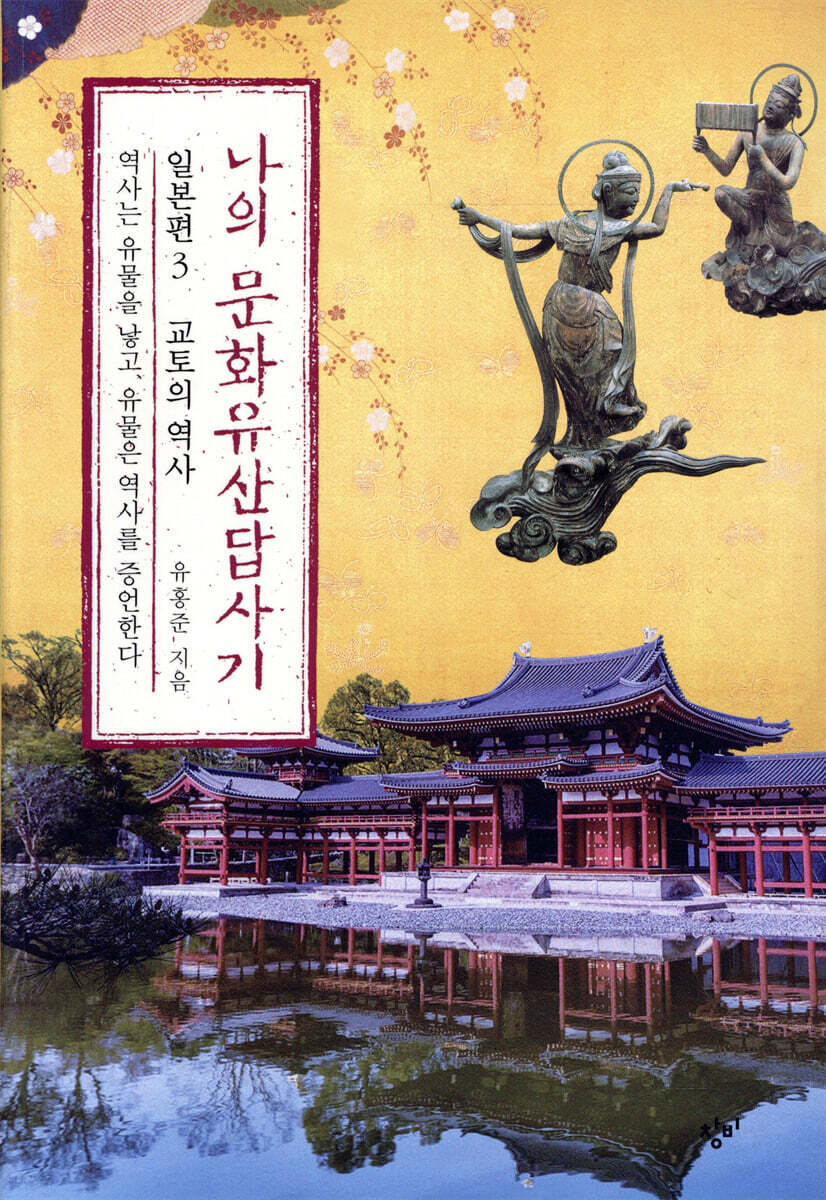
My Cultural Heritage Tour: Japan, Part 3: The History of Kyoto
 |
Description
Book Introduction
Yoo Hong-jun's fresh perspective reveals the roots and essence of Japanese culture.
The 2020 revised edition of "My Cultural Heritage Tour" Japan Edition has been published!
Starting with the first volume, "Namdo Exploration No. 1" in 1993, and continuing with the seventh volume, "Jeju" in 2012, "Where is Dolhareubang, the Sensei Gwang?" in Jeju, Yoo Hong-jun's "My Cultural Heritage Exploration," which has been loved by 3.3 million readers for 20 years and recorded as the first million-seller in Korean humanities, is now heading to Japan in search of "Korean culture in Japan" and "the essence of Japanese culture."
The Japan edition of 'Research Report' began with the intention of approaching the issue of past history, which has been a major topic in Korea-Japan relations, from a cultural-historical perspective. It searches for traces of Korea's cultural influence on Japan and explores the process by which Japanese culture blossomed on that basis.
The author, who is well-versed in art history and cultural heritage, argues that it is future-oriented to shed the one-sided historical perceptions and complexes of Korea and Japan and to understand history from a bilateral perspective, and even from an East Asian perspective.
If the domestic edition of 'Dapjagi' contributed to promoting the cultural heritage of our country and encouraging appreciation for it, the recently published Japanese edition confirms the cultural excellence of our ancestors through Japan's cultural heritage and awakens us to the true nature of cultures that develop through mutual exchange and intermingling.
The Japanese edition of 'Dapsagi' has been consistently loved by many readers since its first publication in 2013.
However, many people said that the book was too large and heavy to be used as a practical guide for overseas field trips.
Accordingly, the new format applied from the ‘Dapsagi’ mountain temple pilgrimage section was also used in this revised Japanese edition, and the length of each volume was adjusted to re-edit it into 5 volumes.
The newly reborn "Travelogue" Japan edition, with its smaller size and hand-held design, is a vivid storybook that alleviates the regret of Japan, a place that has become difficult to visit recently for various reasons. It will approach readers as a guide that faithfully captures the historical awareness that forms the foundation of Korea-Japan relations, especially the consideration of cultural influence and exchange.
The 2020 revised edition of "My Cultural Heritage Tour" Japan Edition has been published!
Starting with the first volume, "Namdo Exploration No. 1" in 1993, and continuing with the seventh volume, "Jeju" in 2012, "Where is Dolhareubang, the Sensei Gwang?" in Jeju, Yoo Hong-jun's "My Cultural Heritage Exploration," which has been loved by 3.3 million readers for 20 years and recorded as the first million-seller in Korean humanities, is now heading to Japan in search of "Korean culture in Japan" and "the essence of Japanese culture."
The Japan edition of 'Research Report' began with the intention of approaching the issue of past history, which has been a major topic in Korea-Japan relations, from a cultural-historical perspective. It searches for traces of Korea's cultural influence on Japan and explores the process by which Japanese culture blossomed on that basis.
The author, who is well-versed in art history and cultural heritage, argues that it is future-oriented to shed the one-sided historical perceptions and complexes of Korea and Japan and to understand history from a bilateral perspective, and even from an East Asian perspective.
If the domestic edition of 'Dapjagi' contributed to promoting the cultural heritage of our country and encouraging appreciation for it, the recently published Japanese edition confirms the cultural excellence of our ancestors through Japan's cultural heritage and awakens us to the true nature of cultures that develop through mutual exchange and intermingling.
The Japanese edition of 'Dapsagi' has been consistently loved by many readers since its first publication in 2013.
However, many people said that the book was too large and heavy to be used as a practical guide for overseas field trips.
Accordingly, the new format applied from the ‘Dapsagi’ mountain temple pilgrimage section was also used in this revised Japanese edition, and the length of each volume was adjusted to re-edit it into 5 volumes.
The newly reborn "Travelogue" Japan edition, with its smaller size and hand-held design, is a vivid storybook that alleviates the regret of Japan, a place that has become difficult to visit recently for various reasons. It will approach readers as a guide that faithfully captures the historical awareness that forms the foundation of Korea-Japan relations, especially the consideration of cultural influence and exchange.
- You can preview some of the book's contents.
Preview
index
Preface: Calculus Solutions from the Kyoto Field Trip
Part 1: Before the Heian Period
Gwangryungsa Temple: Japan's National Treasure No. 1 and the resident monk Jinhasung
Pilgrimage to the Hata Clan Ruins: The History of Kyoto's Development by the New Hata Clan
Yasaka Shrine and the Gion Matsuri: Kyoto Never Withers Thanks to Gion
Part 2: Heian Period
Fushimi Inari Shrine and the Goryeo Temple Site: Passersby, please reflect in your hearts.
Heian-kyo verb: Even though the flowers are gorgeous, they will eventually wither.
Hieisan History: Light and Shadow on the Sacred Mountain
Kiyomizu-dera Temple in Higashiyama: The legend of the "Stage of Kiyomizu" didn't just happen.
Wooji Pyeonggyeongwon: If you want to see paradise, come here.
supplement
UNESCO World Heritage Sites in Kyoto
Field Trip Schedule
Part 1: Before the Heian Period
Gwangryungsa Temple: Japan's National Treasure No. 1 and the resident monk Jinhasung
Pilgrimage to the Hata Clan Ruins: The History of Kyoto's Development by the New Hata Clan
Yasaka Shrine and the Gion Matsuri: Kyoto Never Withers Thanks to Gion
Part 2: Heian Period
Fushimi Inari Shrine and the Goryeo Temple Site: Passersby, please reflect in your hearts.
Heian-kyo verb: Even though the flowers are gorgeous, they will eventually wither.
Hieisan History: Light and Shadow on the Sacred Mountain
Kiyomizu-dera Temple in Higashiyama: The legend of the "Stage of Kiyomizu" didn't just happen.
Wooji Pyeonggyeongwon: If you want to see paradise, come here.
supplement
UNESCO World Heritage Sites in Kyoto
Field Trip Schedule
Publisher's Review
Kyoto, the #1 destination for Japanese cultural exploration
: Reading Japanese history through Kyoto's cultural heritage
Volume 3 of the Japan edition, "Kyoto's History," allows you to experience an even more advanced "travelogue" that showcases relics and ruins from the pre-Heian period to the Kamakura period, using Kyoto's history as a thread to examine the true face of the thousand-year-old ancient capital, Kyoto.
The process of creating today's Japanese "national culture" based on the culture of the people who arrived on the Korean Peninsula is depicted through vivid explanations and images.
Just as it is impossible to discuss Korean culture without mentioning Gyeongju, it is impossible to talk about Japan without mentioning Kyoto.
Because Kyoto served as the capital of Japan for a thousand years, it is no exaggeration to say that the essence of Japanese culture is gathered here and that the flower of Japanese beauty bloomed here.
Its status is also proven by numbers, with over 3,030 temples and 1,770 shrines in Kyoto Prefecture.
Among them, there are 17 sites in total that are registered as UNESCO World Heritage Sites: 13 temples, 3 shrines, and 1 castle.
Every year, 8 million people from home and abroad flock to see this, making Kyoto a world-class historical tourist city.
That wasn't the only reason Professor Yoo Hong-jun visited Kyoto.
The book reveals throughout its pages the author's intention to narrow the cultural gap between Japan and Korea by tracing the fact that there were people who crossed the sea from the Korean Peninsula and successfully settled in Kyoto.
More than any other place, Kyoto is a place that cannot be discussed without mentioning people who came from the Korean Peninsula.
If it had not been for the hidden achievements of the Hata clan, who built dams and waterways in the devastated Kyoto and turned it into fertile land, the relocation of the capital to Heian-kyo (present-day Kyoto) might have been impossible (see pages 42-47 of the text).
At Koryuji Temple, which houses the wooden Maitreya Pensive Bodhisattva, Japan's National Treasure No. 1, the breath of the Silla immigrants remains intact, and the closest to life portraits of Wonhyo and Uisang, who enjoyed international fame not only in their time but even today, are preserved at Ninnaji Temple.
Also, Dongfukuji Temple (東福寺, Tofukuji), which is familiar to us through the Shinan underwater relics, was a great temple of the time that was the destination of the 'Shinan Ship' that carried numerous treasures.
In this way, 'Travelogue: Kyoto' transforms Kyoto from a simple tourist destination into a familiar place where our history is intertwined.
By following the recommended course of this book, which Professor Yoo Hong-jun describes as a "calculus solution to Kyoto tour," which divides Kyoto's space into Nakuchu (洛中) and Nakuai (洛外) and even considers a route that follows Japan's history, you will be able to enjoy a new kind of pleasure in Kyoto tour that you have never experienced before.
Here, you can truly experience the joy of reading a travelogue that combines humanity, art, and history.
Goguryeo, Baekje, and Silla became one in a foreign land
: The three kingdoms located in the mountains (Goguryeo), fields (Baekje), and rivers (Silla) of Japan
Traces of people who came from the Korean Peninsula can be easily found throughout Kyoto.
For example, Yasaka Shrine, which hosts the Gion Matsuri, one of Japan's three major festivals, was founded by the Yasaka clan, who came from Goguryeo.
So why haven't we noticed this fact in our travel destinations until now? It's because books and tourist guides published in Japan just 20-30 years ago clearly documented this fact, but today, they often omit it or intentionally distort it.
In the case of the Hata clan (秦氏), although the academic world recognizes that they are definitely descendants of Silla, the general public still has the incorrect common sense that they are descendants of Qin Shi Huang.
If you look at the relics and ruins within the context of Japanese history, rather than at local tourist information boards, traces of the arrivals quickly become apparent.
The representative places are Gwangryungsa Temple and the shrines in the area that Professor Yoo Hong-jun first visited.
The Hata clan of Silla was the one who introduced silk weaving techniques to Japan, and the technique developed rapidly in the late 5th century with the introduction of Hanjik (漢織) of Baekje and Ojik (吳織) of Goguryeo.
The Osake Shrine that Professor Yoo Hong-jun visited is a place where the Hata clan of Silla, the Aya clan of Baekje, and the Kure clan of Goguryeo are enshrined and worshipped together. It is a symbolic place that shows the three kingdoms in Japan peacefully united, while the three kingdoms in Korea were at the center of fierce conflict (pages 63-67 of the text).
The author, who visited all the areas where immigrants settled, said, “If you look at the places pioneered by immigrants (on the Korean Peninsula), the Hata clan of Silla lineage was the wetlands along the Katsura River, the Yasaka clan of Goguryeo lineage was the foothills of Higashiyama, and the Aya clan of Baekje lineage was the fields of Asuka.
“The mountains, fields, and rivers, the characteristics of the Three Kingdoms can be read in this way here as well,” he said.
The Evolution of Travelogue: Yoo Hong-jun's Kyoto Travel Course
History creates relics, and relics create history.
Yoo Hong-jun's travelogue of Kyoto does not stop at finding traces left behind by people who arrived on the Korean Peninsula.
This book details the process by which Kyoto became firmly established as the capital of Japanese culture, through the efforts of the immigrants who made Kyoto a cradle of civilization, the subsequent learning of Tang Dynasty culture (Tangfeng), and the attempts to cultivate culture on one's own since the mid-Heian period (Fujiwara period) (Kokufeng). It also explains in detail the process by which Kyoto became firmly established as the capital of Japanese culture, through the relics and ruins of Kyoto.
There are as many books introducing Kyoto as there are for Kyoto's status.
However, most books only emphasize convenience of transportation and time saving, introducing historical sites along the way.
In this way, Kyoto is a place that is difficult to truly understand if you only think about space and not about the origins of time.
Professor Yoo Hong-jun presents a five-part "model course" for exploring Kyoto, based on the downtown area of Nakchu and the outer area of Nakwai, and arranging the historical time period from before the Heian period to the Kamakura period.
The following is the Kyoto tour course by Yu Hong-jun, starting from Gwangryong-ji Temple, which was formed before the Heian period and where you can feel the breath of the Silla immigrants, and ending at Inhwa-sa Temple, which shows the essence of the Japanese royal temples of the Kamakura period.
First branch: Gwangryungsa Temple, Daeoncheon Stream, Fushimi Inari Shrine, and the Japanese National Treasure No. 1 Wooden Maitreya Pensive Bodhisattva, which are relics of the Hata clan who came from Silla; Yasaka Shrine, the five-story pagoda of Beopgwansa Temple, and the Goryeo Temple site, which were built by the Goguryeo clan.
Second branch: Dongsa and Yeonryuksa, which were founded with the beginning of the Heian period.
Third branch: Uji's Byōkyōin, the clan of the Fujiwara clan, a powerful family during the Heian period.
Fourth branch: Kiyomizu-dera Temple in Higashiyama, built by Baekje immigrants.
The Six Paramita Shrines and the Thirty-Three Halls, which showcase the true face of Kamakura period sculpture.
Fifth branch: Dongfukuji Temple, the largest Zen temple in Kyoto built during the Kamakura period; Inhwaji Temple, which shows the dignity of a Japanese royal temple; and Gosanji Temple, which houses portraits of Wonhyo and Uisang.
This is a recommended model course that goes beyond simply explaining the aesthetics and significance of relics and historical sites to also consider a route that follows the history of Japan.
In addition, you can truly experience the true flavor of a 'travelogue' where humanity, art, and history come together in this book.
Professor Yoo Hong-jun pauses at a highlight of Japanese culture among the five courses, brightening the readers' perspectives with his characteristic wit and extensive knowledge.
This book guides readers to spaces where they can experience the essence of Japanese beauty, including the Phoenix Hall building of Pyongyewon (cover image) built during the golden age of Japanese culture, and the Bonsangkan, a treasure exhibition hall of Pyongyewon built in the 21st century in response to its beauty, Kiyomizu-dera Temple in Higashiyama, which erected 391 pillars to fill the air to create a spectacular stage space, the five-storied pagoda of Toji Temple, which shows the aesthetics of solitude (sabishii) that the Japanese call it, and the Karesansui garden of Tofuku-ji Temple, which is decorated only with stones and white sand without using water.
: Reading Japanese history through Kyoto's cultural heritage
Volume 3 of the Japan edition, "Kyoto's History," allows you to experience an even more advanced "travelogue" that showcases relics and ruins from the pre-Heian period to the Kamakura period, using Kyoto's history as a thread to examine the true face of the thousand-year-old ancient capital, Kyoto.
The process of creating today's Japanese "national culture" based on the culture of the people who arrived on the Korean Peninsula is depicted through vivid explanations and images.
Just as it is impossible to discuss Korean culture without mentioning Gyeongju, it is impossible to talk about Japan without mentioning Kyoto.
Because Kyoto served as the capital of Japan for a thousand years, it is no exaggeration to say that the essence of Japanese culture is gathered here and that the flower of Japanese beauty bloomed here.
Its status is also proven by numbers, with over 3,030 temples and 1,770 shrines in Kyoto Prefecture.
Among them, there are 17 sites in total that are registered as UNESCO World Heritage Sites: 13 temples, 3 shrines, and 1 castle.
Every year, 8 million people from home and abroad flock to see this, making Kyoto a world-class historical tourist city.
That wasn't the only reason Professor Yoo Hong-jun visited Kyoto.
The book reveals throughout its pages the author's intention to narrow the cultural gap between Japan and Korea by tracing the fact that there were people who crossed the sea from the Korean Peninsula and successfully settled in Kyoto.
More than any other place, Kyoto is a place that cannot be discussed without mentioning people who came from the Korean Peninsula.
If it had not been for the hidden achievements of the Hata clan, who built dams and waterways in the devastated Kyoto and turned it into fertile land, the relocation of the capital to Heian-kyo (present-day Kyoto) might have been impossible (see pages 42-47 of the text).
At Koryuji Temple, which houses the wooden Maitreya Pensive Bodhisattva, Japan's National Treasure No. 1, the breath of the Silla immigrants remains intact, and the closest to life portraits of Wonhyo and Uisang, who enjoyed international fame not only in their time but even today, are preserved at Ninnaji Temple.
Also, Dongfukuji Temple (東福寺, Tofukuji), which is familiar to us through the Shinan underwater relics, was a great temple of the time that was the destination of the 'Shinan Ship' that carried numerous treasures.
In this way, 'Travelogue: Kyoto' transforms Kyoto from a simple tourist destination into a familiar place where our history is intertwined.
By following the recommended course of this book, which Professor Yoo Hong-jun describes as a "calculus solution to Kyoto tour," which divides Kyoto's space into Nakuchu (洛中) and Nakuai (洛外) and even considers a route that follows Japan's history, you will be able to enjoy a new kind of pleasure in Kyoto tour that you have never experienced before.
Here, you can truly experience the joy of reading a travelogue that combines humanity, art, and history.
Goguryeo, Baekje, and Silla became one in a foreign land
: The three kingdoms located in the mountains (Goguryeo), fields (Baekje), and rivers (Silla) of Japan
Traces of people who came from the Korean Peninsula can be easily found throughout Kyoto.
For example, Yasaka Shrine, which hosts the Gion Matsuri, one of Japan's three major festivals, was founded by the Yasaka clan, who came from Goguryeo.
So why haven't we noticed this fact in our travel destinations until now? It's because books and tourist guides published in Japan just 20-30 years ago clearly documented this fact, but today, they often omit it or intentionally distort it.
In the case of the Hata clan (秦氏), although the academic world recognizes that they are definitely descendants of Silla, the general public still has the incorrect common sense that they are descendants of Qin Shi Huang.
If you look at the relics and ruins within the context of Japanese history, rather than at local tourist information boards, traces of the arrivals quickly become apparent.
The representative places are Gwangryungsa Temple and the shrines in the area that Professor Yoo Hong-jun first visited.
The Hata clan of Silla was the one who introduced silk weaving techniques to Japan, and the technique developed rapidly in the late 5th century with the introduction of Hanjik (漢織) of Baekje and Ojik (吳織) of Goguryeo.
The Osake Shrine that Professor Yoo Hong-jun visited is a place where the Hata clan of Silla, the Aya clan of Baekje, and the Kure clan of Goguryeo are enshrined and worshipped together. It is a symbolic place that shows the three kingdoms in Japan peacefully united, while the three kingdoms in Korea were at the center of fierce conflict (pages 63-67 of the text).
The author, who visited all the areas where immigrants settled, said, “If you look at the places pioneered by immigrants (on the Korean Peninsula), the Hata clan of Silla lineage was the wetlands along the Katsura River, the Yasaka clan of Goguryeo lineage was the foothills of Higashiyama, and the Aya clan of Baekje lineage was the fields of Asuka.
“The mountains, fields, and rivers, the characteristics of the Three Kingdoms can be read in this way here as well,” he said.
The Evolution of Travelogue: Yoo Hong-jun's Kyoto Travel Course
History creates relics, and relics create history.
Yoo Hong-jun's travelogue of Kyoto does not stop at finding traces left behind by people who arrived on the Korean Peninsula.
This book details the process by which Kyoto became firmly established as the capital of Japanese culture, through the efforts of the immigrants who made Kyoto a cradle of civilization, the subsequent learning of Tang Dynasty culture (Tangfeng), and the attempts to cultivate culture on one's own since the mid-Heian period (Fujiwara period) (Kokufeng). It also explains in detail the process by which Kyoto became firmly established as the capital of Japanese culture, through the relics and ruins of Kyoto.
There are as many books introducing Kyoto as there are for Kyoto's status.
However, most books only emphasize convenience of transportation and time saving, introducing historical sites along the way.
In this way, Kyoto is a place that is difficult to truly understand if you only think about space and not about the origins of time.
Professor Yoo Hong-jun presents a five-part "model course" for exploring Kyoto, based on the downtown area of Nakchu and the outer area of Nakwai, and arranging the historical time period from before the Heian period to the Kamakura period.
The following is the Kyoto tour course by Yu Hong-jun, starting from Gwangryong-ji Temple, which was formed before the Heian period and where you can feel the breath of the Silla immigrants, and ending at Inhwa-sa Temple, which shows the essence of the Japanese royal temples of the Kamakura period.
First branch: Gwangryungsa Temple, Daeoncheon Stream, Fushimi Inari Shrine, and the Japanese National Treasure No. 1 Wooden Maitreya Pensive Bodhisattva, which are relics of the Hata clan who came from Silla; Yasaka Shrine, the five-story pagoda of Beopgwansa Temple, and the Goryeo Temple site, which were built by the Goguryeo clan.
Second branch: Dongsa and Yeonryuksa, which were founded with the beginning of the Heian period.
Third branch: Uji's Byōkyōin, the clan of the Fujiwara clan, a powerful family during the Heian period.
Fourth branch: Kiyomizu-dera Temple in Higashiyama, built by Baekje immigrants.
The Six Paramita Shrines and the Thirty-Three Halls, which showcase the true face of Kamakura period sculpture.
Fifth branch: Dongfukuji Temple, the largest Zen temple in Kyoto built during the Kamakura period; Inhwaji Temple, which shows the dignity of a Japanese royal temple; and Gosanji Temple, which houses portraits of Wonhyo and Uisang.
This is a recommended model course that goes beyond simply explaining the aesthetics and significance of relics and historical sites to also consider a route that follows the history of Japan.
In addition, you can truly experience the true flavor of a 'travelogue' where humanity, art, and history come together in this book.
Professor Yoo Hong-jun pauses at a highlight of Japanese culture among the five courses, brightening the readers' perspectives with his characteristic wit and extensive knowledge.
This book guides readers to spaces where they can experience the essence of Japanese beauty, including the Phoenix Hall building of Pyongyewon (cover image) built during the golden age of Japanese culture, and the Bonsangkan, a treasure exhibition hall of Pyongyewon built in the 21st century in response to its beauty, Kiyomizu-dera Temple in Higashiyama, which erected 391 pillars to fill the air to create a spectacular stage space, the five-storied pagoda of Toji Temple, which shows the aesthetics of solitude (sabishii) that the Japanese call it, and the Karesansui garden of Tofuku-ji Temple, which is decorated only with stones and white sand without using water.
GOODS SPECIFICS
- Date of issue: September 20, 2020
- Page count, weight, size: 312 pages | 492g | 147*214*18mm
- ISBN13: 9788936478001
- ISBN10: 8936478001
You may also like
카테고리
korean


korean

![GQ KOREA Mark (Monthly): December [2025]](http://librairie.coreenne.fr/cdn/shop/files/8ef265dbbfbf186523ed75ba7319009d.jpg?v=1765340328&width=3840)


