

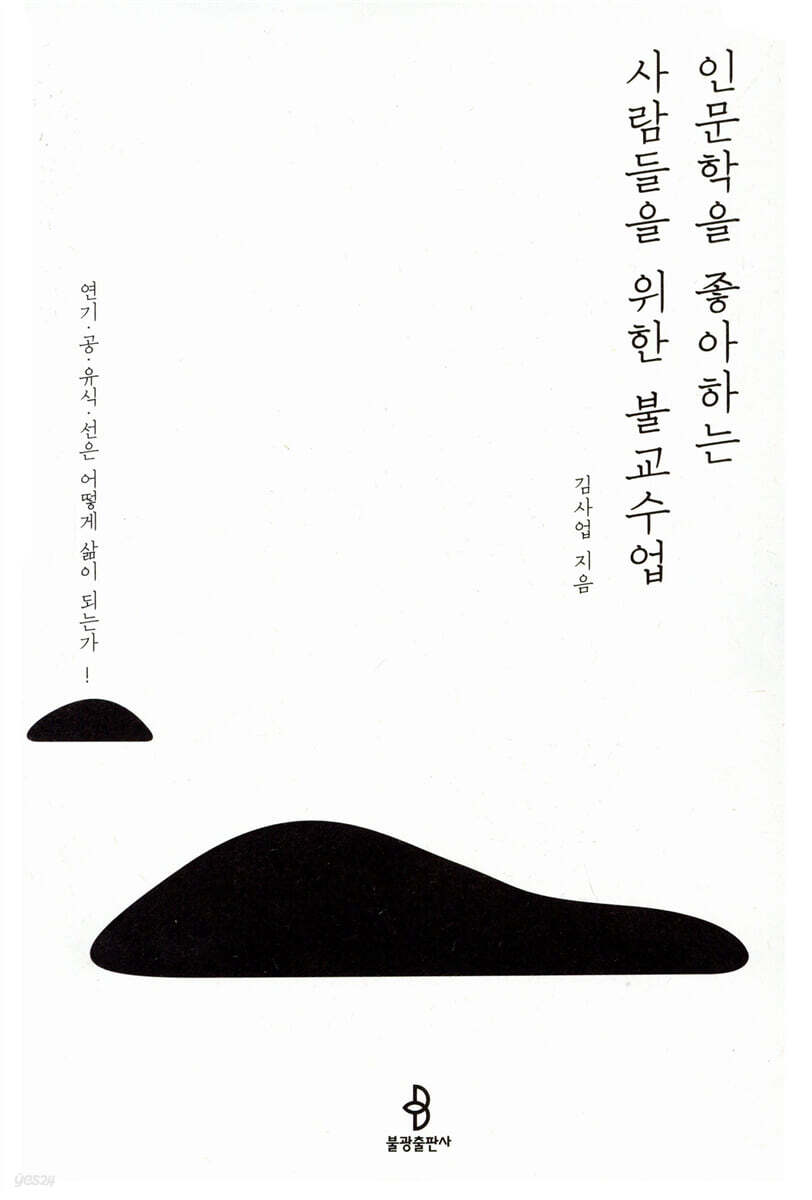
Buddhist classes for those who enjoy the humanities
 |
Description
Book Introduction
Reaching the pinnacle of humanities spirit
A decisive gift!
Dr. Kim Sae-saeng, author of “Buddhist Classes for People Who Love the Humanities,” is already a famous figure among Buddhists.
His story of giving up his professorship to become a professional practitioner has become a hot topic, but he is also widely known for his excellent Buddhist lectures that are both accurate and relatable.
Listening to his lectures, you will be surprised to the point where you will wonder, 'Is Buddhism such a friendly and interesting teaching?'
This book is a complete collection of his famous lectures that are said to move people's hearts immediately after hearing them once.
The author graduated from Seoul National University's English Department and began his career at a large corporation.
I started my social life by taking the elite course that everyone envies, but I felt that it alone could not solve the 'endless questions about life', so I quit after about a year and transferred to the Department of Buddhist Studies at Dongguk University.
After receiving his master's and doctoral degrees, he studied abroad at Kyoto University in Japan and completed his doctoral course in Buddhist studies.
After returning to Korea, I taught Buddhism at a university for several years, but I left the podium after realizing that 'doctrines that are not practiced as they are known' are nothing but lame.
And he went to the remote island of Ogokdo on the southern coast and devoted himself to practicing Ganhwaseon, and 16 years have passed since then, leading up to today.
In the meantime, he traveled around the world to visit famous training centers and practice with great monks and receive teachings.
The text of this book was first serialized for two years and six months in the Buddhist monthly magazine "Bulkwang."
At the time of serialization, it received overwhelming response from readers and also received great attention from practitioners.
Above all, it is because it contains Buddhism that is truly learned through the body, where theory and practice, doctrine and practice, are united.
He also clearly explained Buddhist ideas such as ‘anatta, dependent origination, emptiness, self-nature, karma, mind, consciousness, reincarnation, nirvana, and liberation’, which seem like islands in the fog but are barely reachable, by applying them to our daily lives.
It was like a light turning on in the darkness, opening up my understanding of myself and the world.
It will soon become the crucial key to solving the life problems that are oppressing me now.
A free life is the first step towards true happiness.
A decisive gift!
Dr. Kim Sae-saeng, author of “Buddhist Classes for People Who Love the Humanities,” is already a famous figure among Buddhists.
His story of giving up his professorship to become a professional practitioner has become a hot topic, but he is also widely known for his excellent Buddhist lectures that are both accurate and relatable.
Listening to his lectures, you will be surprised to the point where you will wonder, 'Is Buddhism such a friendly and interesting teaching?'
This book is a complete collection of his famous lectures that are said to move people's hearts immediately after hearing them once.
The author graduated from Seoul National University's English Department and began his career at a large corporation.
I started my social life by taking the elite course that everyone envies, but I felt that it alone could not solve the 'endless questions about life', so I quit after about a year and transferred to the Department of Buddhist Studies at Dongguk University.
After receiving his master's and doctoral degrees, he studied abroad at Kyoto University in Japan and completed his doctoral course in Buddhist studies.
After returning to Korea, I taught Buddhism at a university for several years, but I left the podium after realizing that 'doctrines that are not practiced as they are known' are nothing but lame.
And he went to the remote island of Ogokdo on the southern coast and devoted himself to practicing Ganhwaseon, and 16 years have passed since then, leading up to today.
In the meantime, he traveled around the world to visit famous training centers and practice with great monks and receive teachings.
The text of this book was first serialized for two years and six months in the Buddhist monthly magazine "Bulkwang."
At the time of serialization, it received overwhelming response from readers and also received great attention from practitioners.
Above all, it is because it contains Buddhism that is truly learned through the body, where theory and practice, doctrine and practice, are united.
He also clearly explained Buddhist ideas such as ‘anatta, dependent origination, emptiness, self-nature, karma, mind, consciousness, reincarnation, nirvana, and liberation’, which seem like islands in the fog but are barely reachable, by applying them to our daily lives.
It was like a light turning on in the darkness, opening up my understanding of myself and the world.
It will soon become the crucial key to solving the life problems that are oppressing me now.
A free life is the first step towards true happiness.
- You can preview some of the book's contents.
Preview
index
Prologue_ Buddhism that lives and moves within me, not knowledge trapped in my head
Chapter 1: People Who Live by the Truth
What is bothering and holding you back?
Is there no medicine that can save this child?
I, the void that is not bruised even by lightning
Where does my beginning and where does my end?
Chapter 2 Nothing Lasts Forever
What is a ball?
Nirvana is to correctly understand the impermanent reality.
Where is heaven and where is hell?
Who makes you despair?
Arrows of Criticism Turn into Flowers
Chapter 3 Who am I?
The fallacy of 'the professor carries it all'
I have been watching the past and present, there is nothing that is not me.
The world looks different depending on the language
Public and private topics
Chapter 4: Living Every Moment Truly
Bare winter trees in the cold wind
I will send the stars back up again
Preach the law with your whole body
Reincarnation, Atman, and Emptiness
About the desire that cannot be filled even if filled
But it's not too late
Chapter 5: What is the mind of Buddha like?
Nothing I do just disappears.
The structure in which each individual's world is formed
The Two Faces of Ups and Downs Buddhism
Seeing things as they are, the koan, and consciousness
Is there really such a thing as an ugly person?
The person who is angry is me
Chapter 6 How to Be Free?
Only when you hear with your eyes can you know with your whole body.
There is no liberation unless the obsession with me ceases.
Wisdom and virtue, the necessities for reaching enlightenment
Don't come empty-handed and don't leave empty-handed
A poignant and painful awakening to freedom
Epilogue: Doctrine that is not practiced as it is known is nothing but a lame thing.
Chapter 1: People Who Live by the Truth
What is bothering and holding you back?
Is there no medicine that can save this child?
I, the void that is not bruised even by lightning
Where does my beginning and where does my end?
Chapter 2 Nothing Lasts Forever
What is a ball?
Nirvana is to correctly understand the impermanent reality.
Where is heaven and where is hell?
Who makes you despair?
Arrows of Criticism Turn into Flowers
Chapter 3 Who am I?
The fallacy of 'the professor carries it all'
I have been watching the past and present, there is nothing that is not me.
The world looks different depending on the language
Public and private topics
Chapter 4: Living Every Moment Truly
Bare winter trees in the cold wind
I will send the stars back up again
Preach the law with your whole body
Reincarnation, Atman, and Emptiness
About the desire that cannot be filled even if filled
But it's not too late
Chapter 5: What is the mind of Buddha like?
Nothing I do just disappears.
The structure in which each individual's world is formed
The Two Faces of Ups and Downs Buddhism
Seeing things as they are, the koan, and consciousness
Is there really such a thing as an ugly person?
The person who is angry is me
Chapter 6 How to Be Free?
Only when you hear with your eyes can you know with your whole body.
There is no liberation unless the obsession with me ceases.
Wisdom and virtue, the necessities for reaching enlightenment
Don't come empty-handed and don't leave empty-handed
A poignant and painful awakening to freedom
Epilogue: Doctrine that is not practiced as it is known is nothing but a lame thing.
Into the book
The reason we talk about the lives of our ancestors is because we can see vivid, real-life examples where doctrine and life are in harmony.
When you come to know the vivid life of thoroughly living the doctrine by making the content of the doctrine your own body and mind, not only will your understanding of the doctrine deepen, but you will also gain the compass and motivation to live that way.
The lives of the ancestors serve as a beacon of light for those who wish to live a life in which doctrine and practice are in harmony.
--- p.8
Where does the path to eternal peace and great freedom lie? It lies in truth.
The truth has always existed, whether or not Buddha Shakyamuni appeared, and Buddha Shakyamuni showed that truth.
Ignorance of the truth is ignorance, and through this ignorance arises endless attachment, craving.
Behind ignorance and longing, suffering and bondage follow like shadows.
If we focus our hearts on the truth and live according to it, we can walk the path of eternal peace and freedom that all great free spirits have walked.
The door to that path is always open right in front of you.
--- p.22
Our original nature is like this; we are free and not bound by any situation or circumstance.
Even though I am poor, I am not bound by it and am free.
So when the time comes, you can live well.
I am free and unfettered by success and failure, praise and blame.
I am like the void that is not bruised even by lightning.
--- p.39
When the life before your eyes approaches you as something truly indefinable, you live life 'as it is'.
I look at life with my bare eyes, without wearing the glasses of happiness or unhappiness.
Without wasting unnecessary energy on things called happiness and unhappiness, focus fully on the task at hand.
It's not that I'm absorbed in thinking about the price I'll pay for returning.
It just becomes 'immersive'.
There is no greed to become happier, nor is there any gloomy shadow cast by the thought of unhappiness.
--- p.87
During the Tang Dynasty, a disciple asked Zen Master Shidu Xiqian (石頭希遷, 700-790).
“What is liberation?” Liberation refers to a state of great freedom without any restrictions.
Seokdu Seonsa answered immediately.
“Who is your prisoner?” Those who have eyes will immediately say, “Ah!”
This simple word opens our eyes to a priceless truth we had long forgotten.
Who or what drives me to despair? --- p.101
Let's say someone is struggling with money, housing, childcare issues, etc.
He entered a paradise on earth where there were no such problems.
Now that he is free from the problems that have been bothering him, he will enjoy some happiness.
But his happiness would not last long.
As long as his mind remains unchanged and his body remains, his foolishness and greed will find another target to torment him.
Status, honor, and romantic relationships between men and women may emerge as new issues.
If you do not open your mind's eye and only seek worldly wisdom and techniques, you cannot expect an end to suffering and conflict.
--- p.106
No matter how much wealth a person has, he is poor compared to those who have more than him.
They say they are poor, but there are countless people who have less than they do.
Compared to them, he is rich.
If we don't cling to just one standard that divides rich and poor, if we can be free from that standard, then in fact we are neither rich nor poor.
A free being, untainted by wealth or poverty, this is our 'true' self.
--- p.138
When we are told not to obsess, we try not to do anything.
If you tell them not to be obsessed with studying, they will not study at all, and if you tell them not to be obsessed with money, they will try to stop making money altogether.
However, while clinging to something is an obsession, unilaterally rejecting it is also an obsession.
The middle way is to be free from either attachment or rejection.
When you have to, you have to study hard and earn money honestly.
--- p.187
Whether others know it or not, whether I am conscious of it or not, nothing I do will just disappear.
Just as incense paper has a scent and fish paper has a fishy smell, every action leaves an impact on the person involved the moment it occurs.
Good deeds leave behind the influence to perform more good deeds and bring about good results, while evil deeds leave behind the influence to perform more evil deeds and bring about painful results.
--- p.235
After her older brother passed away, her mother devoted all her devotion to her only remaining son.
When I was in middle school or high school, I woke up to the sound of my mother's dawn prayer coming from the next room.
After finishing the service, he never missed praying for his son.
It was a message of hope that one would study hard and become a great person without any hardships.
The fervent sincerity that comes with the sound of prayer.
I could tell at a glance that you were willing to be turned to dust for your son.
Waking up almost every day to the sound of that prayer, I could never allow myself to stray into sloth or wickedness.
Perhaps it was because of my mother's prayers that I came to follow the path of Buddhism.
--- p.258
When I entered Ogokdo, I had to carry a lot of luggage on my back.
It was carried all year round from the pier to the training center along the steep uphill road, and it is still carried today.
A few years ago, during a major construction project, I saw a backhoe being used to carry loads and dig the ground, and I was particularly struck by its power.
A single machine instantly destroyed dozens of times the load I was carrying without breaking a sweat.
I was deeply impressed by the greatness of the human brain in developing science and technology.
These days, I say that Hwadu is also a great invention of human spiritual civilization, no less than science and technology.
I cannot help but marvel at the wisdom of the great Zen masters who devised the device that allows us to see things as they are, the 'hwadu'.
A topic that allows one to see this broadly and deeply.
When you come to know the vivid life of thoroughly living the doctrine by making the content of the doctrine your own body and mind, not only will your understanding of the doctrine deepen, but you will also gain the compass and motivation to live that way.
The lives of the ancestors serve as a beacon of light for those who wish to live a life in which doctrine and practice are in harmony.
--- p.8
Where does the path to eternal peace and great freedom lie? It lies in truth.
The truth has always existed, whether or not Buddha Shakyamuni appeared, and Buddha Shakyamuni showed that truth.
Ignorance of the truth is ignorance, and through this ignorance arises endless attachment, craving.
Behind ignorance and longing, suffering and bondage follow like shadows.
If we focus our hearts on the truth and live according to it, we can walk the path of eternal peace and freedom that all great free spirits have walked.
The door to that path is always open right in front of you.
--- p.22
Our original nature is like this; we are free and not bound by any situation or circumstance.
Even though I am poor, I am not bound by it and am free.
So when the time comes, you can live well.
I am free and unfettered by success and failure, praise and blame.
I am like the void that is not bruised even by lightning.
--- p.39
When the life before your eyes approaches you as something truly indefinable, you live life 'as it is'.
I look at life with my bare eyes, without wearing the glasses of happiness or unhappiness.
Without wasting unnecessary energy on things called happiness and unhappiness, focus fully on the task at hand.
It's not that I'm absorbed in thinking about the price I'll pay for returning.
It just becomes 'immersive'.
There is no greed to become happier, nor is there any gloomy shadow cast by the thought of unhappiness.
--- p.87
During the Tang Dynasty, a disciple asked Zen Master Shidu Xiqian (石頭希遷, 700-790).
“What is liberation?” Liberation refers to a state of great freedom without any restrictions.
Seokdu Seonsa answered immediately.
“Who is your prisoner?” Those who have eyes will immediately say, “Ah!”
This simple word opens our eyes to a priceless truth we had long forgotten.
Who or what drives me to despair? --- p.101
Let's say someone is struggling with money, housing, childcare issues, etc.
He entered a paradise on earth where there were no such problems.
Now that he is free from the problems that have been bothering him, he will enjoy some happiness.
But his happiness would not last long.
As long as his mind remains unchanged and his body remains, his foolishness and greed will find another target to torment him.
Status, honor, and romantic relationships between men and women may emerge as new issues.
If you do not open your mind's eye and only seek worldly wisdom and techniques, you cannot expect an end to suffering and conflict.
--- p.106
No matter how much wealth a person has, he is poor compared to those who have more than him.
They say they are poor, but there are countless people who have less than they do.
Compared to them, he is rich.
If we don't cling to just one standard that divides rich and poor, if we can be free from that standard, then in fact we are neither rich nor poor.
A free being, untainted by wealth or poverty, this is our 'true' self.
--- p.138
When we are told not to obsess, we try not to do anything.
If you tell them not to be obsessed with studying, they will not study at all, and if you tell them not to be obsessed with money, they will try to stop making money altogether.
However, while clinging to something is an obsession, unilaterally rejecting it is also an obsession.
The middle way is to be free from either attachment or rejection.
When you have to, you have to study hard and earn money honestly.
--- p.187
Whether others know it or not, whether I am conscious of it or not, nothing I do will just disappear.
Just as incense paper has a scent and fish paper has a fishy smell, every action leaves an impact on the person involved the moment it occurs.
Good deeds leave behind the influence to perform more good deeds and bring about good results, while evil deeds leave behind the influence to perform more evil deeds and bring about painful results.
--- p.235
After her older brother passed away, her mother devoted all her devotion to her only remaining son.
When I was in middle school or high school, I woke up to the sound of my mother's dawn prayer coming from the next room.
After finishing the service, he never missed praying for his son.
It was a message of hope that one would study hard and become a great person without any hardships.
The fervent sincerity that comes with the sound of prayer.
I could tell at a glance that you were willing to be turned to dust for your son.
Waking up almost every day to the sound of that prayer, I could never allow myself to stray into sloth or wickedness.
Perhaps it was because of my mother's prayers that I came to follow the path of Buddhism.
--- p.258
When I entered Ogokdo, I had to carry a lot of luggage on my back.
It was carried all year round from the pier to the training center along the steep uphill road, and it is still carried today.
A few years ago, during a major construction project, I saw a backhoe being used to carry loads and dig the ground, and I was particularly struck by its power.
A single machine instantly destroyed dozens of times the load I was carrying without breaking a sweat.
I was deeply impressed by the greatness of the human brain in developing science and technology.
These days, I say that Hwadu is also a great invention of human spiritual civilization, no less than science and technology.
I cannot help but marvel at the wisdom of the great Zen masters who devised the device that allows us to see things as they are, the 'hwadu'.
A topic that allows one to see this broadly and deeply.
--- p.275
Publisher's Review
“Enjoy true happiness without side effects.”
A new masterpiece of our time and a classic of the future!
The structure of this book is concise.
We have extracted only the most important Buddhist doctrines and explained them in the form of stories from our daily lives.
The story is so touching that it completely seeps into your heart, becoming your eyes, ears, and soul.
Based on Zen, it shows the essence of dependent origination, emptiness, and consciousness-only, and through everyday examples that hit the nail on the head, it allows the essence to naturally permeate life.
I also put a lot of effort into writing.
Each word was carefully selected and written through dozens of revisions so that anyone can understand it easily and accurately.
It was a process of making Buddhism a living Buddhism that could be taken out and used at any time, rather than a Buddhism confined to a book.
The author says:
“Buddhism teaches us to know ourselves ‘as we are’ without distorting our own truth, to live a righteous life without being biased to one side, and to enjoy true happiness without side effects.” It is clear that this book is a humanities book.
However, it is also a 'self-help book' in that it does not stop at 'knowing' the moment you read it, but you can immediately apply it to your life to diagnose and correct your own thoughts and lifestyle.
If a book that helps us find the strength within ourselves to lead a beneficial life is called a true humanities book, then this book will become a new masterpiece of our time and a future classic.
At the end of studying humanities such as literature, history, and philosophy,
The answer to the inevitable question!
Buddha said that life is suffering.
If you are an enterprising and energetic young person, that might not make sense.
But everyone feels it as they live.
There are times when, amidst countless wanderings and challenges, achievements and frustrations, laughter and sighs, a desperate question wells up from the depths of my heart.
“What on earth is life?”
So, everyone has at least once read the classics of humanities and listened to the teachings of the sages, but the questions are not easily resolved.
Most people who begin studying Buddhism go through this process, understanding the principles and meaning of life through Buddhism and yearning for a life free from suffering.
But it's not easy.
Even if you can barely understand it in your head, it is difficult to apply the teachings and wisdom when you return to real life.
Why is that?
Buddha left home to resolve the suffering of birth, aging, illness, and death, and attained enlightenment through practice.
He can truly be called the greatest expert in the field of life and living.
The Buddha preached his enlightenment in a very simple way using the language of the people at the time (Pali), so that anyone could understand his words and apply them to their lives to solve their own suffering.
However, as Buddhism was passed down to later generations, Buddha was deified and Buddhist doctrines became more profound and difficult to understand through the power of collective intelligence.
As can be inferred from the term ‘Tripitaka Koreana,’ Buddhist thought has become infinitely vast and has been transformed into a concept of philosophical thought.
In the end, the goal of solving life's problems ended up creating more complex and confusing results.
Reflecting this, numerous Buddhist books are limited to translating scriptures written in classical languages or explaining difficult ideas.
Or, they just put on a fancy facade, ignoring the essence and promoting easy comfort and healing.
This book quenches this thirst.
We are looking directly at the true nature of Buddhism and focusing on our real lives.
It clearly shows how to apply the Buddha's teachings to life to resolve suffering and live freely.
All humanities, including literature, history, and philosophy, are answers to the question, “How should we live?”
Therefore, the ending touches on a religious question, and this book is also a Buddhist answer.
A new masterpiece of our time and a classic of the future!
The structure of this book is concise.
We have extracted only the most important Buddhist doctrines and explained them in the form of stories from our daily lives.
The story is so touching that it completely seeps into your heart, becoming your eyes, ears, and soul.
Based on Zen, it shows the essence of dependent origination, emptiness, and consciousness-only, and through everyday examples that hit the nail on the head, it allows the essence to naturally permeate life.
I also put a lot of effort into writing.
Each word was carefully selected and written through dozens of revisions so that anyone can understand it easily and accurately.
It was a process of making Buddhism a living Buddhism that could be taken out and used at any time, rather than a Buddhism confined to a book.
The author says:
“Buddhism teaches us to know ourselves ‘as we are’ without distorting our own truth, to live a righteous life without being biased to one side, and to enjoy true happiness without side effects.” It is clear that this book is a humanities book.
However, it is also a 'self-help book' in that it does not stop at 'knowing' the moment you read it, but you can immediately apply it to your life to diagnose and correct your own thoughts and lifestyle.
If a book that helps us find the strength within ourselves to lead a beneficial life is called a true humanities book, then this book will become a new masterpiece of our time and a future classic.
At the end of studying humanities such as literature, history, and philosophy,
The answer to the inevitable question!
Buddha said that life is suffering.
If you are an enterprising and energetic young person, that might not make sense.
But everyone feels it as they live.
There are times when, amidst countless wanderings and challenges, achievements and frustrations, laughter and sighs, a desperate question wells up from the depths of my heart.
“What on earth is life?”
So, everyone has at least once read the classics of humanities and listened to the teachings of the sages, but the questions are not easily resolved.
Most people who begin studying Buddhism go through this process, understanding the principles and meaning of life through Buddhism and yearning for a life free from suffering.
But it's not easy.
Even if you can barely understand it in your head, it is difficult to apply the teachings and wisdom when you return to real life.
Why is that?
Buddha left home to resolve the suffering of birth, aging, illness, and death, and attained enlightenment through practice.
He can truly be called the greatest expert in the field of life and living.
The Buddha preached his enlightenment in a very simple way using the language of the people at the time (Pali), so that anyone could understand his words and apply them to their lives to solve their own suffering.
However, as Buddhism was passed down to later generations, Buddha was deified and Buddhist doctrines became more profound and difficult to understand through the power of collective intelligence.
As can be inferred from the term ‘Tripitaka Koreana,’ Buddhist thought has become infinitely vast and has been transformed into a concept of philosophical thought.
In the end, the goal of solving life's problems ended up creating more complex and confusing results.
Reflecting this, numerous Buddhist books are limited to translating scriptures written in classical languages or explaining difficult ideas.
Or, they just put on a fancy facade, ignoring the essence and promoting easy comfort and healing.
This book quenches this thirst.
We are looking directly at the true nature of Buddhism and focusing on our real lives.
It clearly shows how to apply the Buddha's teachings to life to resolve suffering and live freely.
All humanities, including literature, history, and philosophy, are answers to the question, “How should we live?”
Therefore, the ending touches on a religious question, and this book is also a Buddhist answer.
GOODS SPECIFICS
- Date of publication: December 18, 2017
- Page count, weight, size: 364 pages | 614g | 148*225*30mm
- ISBN13: 9788974793739
- ISBN10: 8974793733
You may also like
카테고리
korean


korean

![GQ KOREA Mark (Monthly): December [2025]](http://librairie.coreenne.fr/cdn/shop/files/8ef265dbbfbf186523ed75ba7319009d.jpg?v=1765340328&width=3840)


